
-
Paper Information
- Paper Submission
-
Journal Information
- About This Journal
- Editorial Board
- Current Issue
- Archive
- Author Guidelines
- Contact Us
Science and Technology
p-ISSN: 2163-2669 e-ISSN: 2163-2677
2026; 16(1): 1-14
doi:10.5923/j.scit.20261601.01
Received: Apr. 28, 2026; Accepted: May 12, 2026; Published: May 18, 2026

Digital Interoperability in BIM-Enabled Construction Scheduling: A Socio-Technical Framework
 Abstract
 Reference
 Full-Text PDF
 Full-text HTML
Kwame B.O. Amoah
Assistant Professor, Department of Civil and Architectural & Construction Management, University of Cincinnati, OH, USA
Correspondence to: Kwame B.O. Amoah, Assistant Professor, Department of Civil and Architectural & Construction Management, University of Cincinnati, OH, USA.
| Email: |  |
Copyright © 2026 The Author(s). Published by Scientific & Academic Publishing.
This work is licensed under the Creative Commons Attribution International License (CC BY).
http://creativecommons.org/licenses/by/4.0/

Interoperability challenges between Building Information Modeling (BIM) platforms and construction scheduling systems continue to limit the effectiveness of digital construction planning. Existing research has primarily addressed interoperability as a technical data exchange problem, with comparatively limited attention to the process and organizational factors that influence integration in practice. This study adopts a sequential mixed-methods, design-oriented approach to investigate interoperability challenges and develop a structured framework for BIM-enabled planning environments. The methodology integrates a systematic literature review (n = 62), expert interviews (n = 14), a three-round Delphi study (n = 12), and a case-based application. The findings indicate that interoperability barriers arise from misalignment across digital tools, planning workflows, and governance structures. In response, the study proposes the Interoperability Optimization Framework (IOF), which integrates four interrelated dimensions: technical infrastructure, workflow coordination, organizational governance, and performance monitoring. The framework demonstrates how coordinated alignment across these dimensions supports improved decision-making, enhanced coordination, and increased schedule reliability in BIM-enabled environments. The study contributes to construction engineering research by reconceptualizing interoperability as a socio-technical organizational capability rather than a purely technical issue. The proposed framework provides practical guidance for improving digital integration and planning performance in construction projects, while offering a foundation for future empirical validation of interoperability-performance relationship.
Keywords: BIM interoperability, Construction planning, Socio-technical systems, 4D BIM, Scheduling integration, Digital construction, Workflow coordination, Construction management
Cite this paper: Kwame B.O. Amoah, Digital Interoperability in BIM-Enabled Construction Scheduling: A Socio-Technical Framework, Science and Technology, Vol. 16 No. 1, 2026, pp. 1-14. doi: 10.5923/j.scit.20261601.01.
Article Outline
1. Introduction
- Interoperability remains a critical constraint in the effective implementation of Building Information Modeling (BIM) for construction planning and scheduling. Despite advances in 4D BIM and Virtual Design and Construction (VDC), challenges related to data exchange, synchronization, and workflow integration continue to limit practical performance outcomes across construction projects [1,2].Existing research primarily conceptualizes interoperability as a technical issue associated with data standards, schema compatibility, and software integration mechanisms [3,4]. Standardized data schemas such as Industry Foundation Classes (IFC) and Construction Operations Building Information Exchange (COBie) have improved interoperability across digital platforms. However, persistent challenges including semantic inconsistencies, data loss, and misalignment between BIM models and scheduling systems continue to affect planning reliability [5,6].Despite these advancements, existing research remains predominantly technology-centric and does not adequately explain how interoperability influences construction planning performance in practice. This study addresses this gap by developing a socio-technical framework that explicitly links interoperability mechanisms to planning reliability, coordination efficiency, and decision-making outcomes within BIM-enabled environments. While these technical approaches are necessary, they provide only a partial explanation of interoperability challenges. Construction planning operates within complex project environments characterized by fragmented teams, dynamic workflows, and interdependent decision-making processes. From this perspective, interoperability emerges not only from technological compatibility but also from the interaction between digital tools, organizational processes, and governance structures [7,8].Socio-technical systems theory suggests that performance in complex environments depends on the joint optimization of technical and social subsystems [9]. In BIM-enabled construction planning, this implies that interoperability should be understood as an organizational capability that supports coordination across disciplines, integration of workflows, and alignment of decision-making processes. Failures in interoperability are therefore often linked to misalignment between digital systems, planning practices, and governance mechanisms rather than purely technical limitations [10,11].Despite extensive research on BIM and digital construction, there remains a lack of integrated frameworks that explicitly link interoperability to construction planning performance outcomes, such as schedule reliability, coordination efficiency, and adaptability. Existing studies tend to emphasize technological solutions or maturity models without addressing how interoperability functions across technical, process, and organizational dimensions [12,13].To address this gap, this study develops an Interoperability Optimization Framework (IOF) that conceptualizes interoperability as a multi-dimensional socio-technical capability embedded within construction planning systems. The framework integrates technical infrastructure, workflow coordination, organizational governance, and performance monitoring into a unified model.A mixed-methods approach is adopted, combining a systematic literature review, expert interviews, and Delphi-based validation to develop and refine the proposed framework. Through this approach, the study identifies key interoperability constraints and translates empirical insights into a structured capability model for improving BIM-enabled planning performance.The study is guided by the following research questions:• RQ1: How does interoperability influence construction planning effectiveness in BIM-enabled environments? • RQ2: What technical, process, and organizational factors constrain interoperability in practice? • RQ3: How can interoperability be structured and managed as an organizational capability within construction planning systems? This research contributes to the built environment literature in three ways. First, it reconceptualizes interoperability as a socio-technical organizational capability rather than a purely technical issue. Second, it develops and validates the Interoperability Optimization Framework (IOF) to explain how interoperability influences planning performance. Third, it provides practical guidance for improving coordination, reliability, and adaptability in BIM-enabled construction planning.
2. Literature Review and Research Background
2.1. Construction Planning and Scheduling in the Digital Era
- Construction planning and scheduling are fundamental determinants of project performance, guiding resource allocation, activity sequencing, and coordination among stakeholders. Effective planning integrates time, cost, logistics, and operational constraints to support decision-making throughout the project lifecycle. Empirical studies consistently identify deficiencies in planning practices as major contributors to delays and cost overruns in construction projects [14,15].Traditional planning methods, including the Critical Path Method (CPM) and Gantt charts, have long provided the foundation for construction scheduling. While widely used, these approaches are increasingly constrained by the complexity, uncertainty, and interdependencies characteristic of modern construction projects. In particular, conventional tools often fail to adequately capture spatial constraints, trade interactions, and dynamic resource dependencies in large-scale and multidisciplinary environments [1]. Lean construction principles further emphasize the importance of reliable planning and constraint management, highlighting collaborative planning processes as a means of improving workflow stability and reducing variability [14,16]. Within this context, digital technologies have emerged as key enablers of more integrated and data-driven planning systems.
2.2. Digital Transformation in Construction: BIM and VDC
- Building Information Modeling (BIM) and Virtual Design and Construction (VDC) have significantly transformed construction planning practices by enabling integrated digital environments for coordination and decision-making. BIM supports the integration of geometric, semantic, and project-related information, facilitating improved communication and collaboration among project stakeholders [1,17].Beyond three-dimensional modeling, BIM enables information exchange across design, construction, and operational phases, supporting coordination within fragmented project teams [2]. VDC extends BIM capabilities by integrating product, process, and organizational models, enabling simulation-based planning and evaluation of alternative construction strategies prior to execution [18].These developments have enhanced the potential for proactive planning and improved predictability; however, their effectiveness depends on the integration of digital tools with planning workflows and organizational processes.
2.3. 4D BIM for Planning and Scheduling Integration
- A key advancement in digital construction planning is the integration of BIM with scheduling systems through 4D modeling. 4D BIM links three-dimensional building models with time-based schedule data, enabling visualization and simulation of construction processes over time [19].This integration enhances planning by allowing project teams to identify spatial conflicts, evaluate sequencing alternatives, and improve coordination among trades before construction begins. Additionally, visualization capabilities support improved stakeholder communication and facilitate more informed decision-making [3].However, construction planning in digitally enabled environments extends beyond technological integration. It involves continuous interaction between digital systems, organizational workflows, and managerial decision-making processes. Consequently, the effectiveness of 4D BIM depends not only on data integration but also on the alignment of technological capabilities with planning practices and governance structures.From a socio-technical perspective, organizational outcomes emerge from the interaction between technological infrastructures and social practices [7]. In the context of BIM-enabled planning, this implies that successful integration requires coordination across digital tools, workflows, and organizational systems. Interoperability, therefore, must be understood as both a technical and organizational phenomenon embedded within construction planning processes.Recent advancements in artificial intelligence and data analytics further extend the capabilities of BIM-enabled planning systems, enabling automated scheduling, predictive analytics, and decision support [20,21]. Despite these developments, the effectiveness of such technologies remains constrained by interoperability limitations across digital platforms.
2.4. Interoperability Challenges in BIM–VDC Environments
- Interoperability refers to the ability of systems and stakeholders to exchange, interpret, and utilize information consistently across platforms and project phases. In digital construction environments, interoperability is essential for integrating BIM models, scheduling systems, and project management tools into cohesive planning systems [2].Despite advances in data standards and integration technologies, interoperability challenges persist. Technical issues often arise from inconsistent implementation of open standards such as Industry Foundation Classes (IFC), leading to data loss, incomplete information transfer, and reliance on manual data processing during model–schedule integration [1,3].However, interoperability challenges extend beyond technical limitations. Organizational and process-related factors, including fragmented workflows, limited cross-disciplinary expertise, and insufficient governance structures significantly affect the integration of BIM and scheduling systems [22,8].These limitations highlight the need to conceptualize interoperability as a multi-dimensional socio-technical phenomenon, where effective integration depends on alignment between digital systems, planning workflows, and organizational structures [7].
2.5. Research Gap
- Although prior research has proposed technical solutions to improve interoperability, most studies focus on software compatibility, data standards, and system integration mechanisms. This narrow perspective overlooks the broader organizational and managerial factors that influence the implementation and effectiveness of digital technologies in construction planning.From a construction management perspective, planning and scheduling are inherently socio-technical activities requiring coordination across technological systems, workflows, and organizational structures. Interoperability should therefore be understood as an organizational capability that supports reliable planning and decision-making.There remains a lack of integrated frameworks that explain how technical infrastructure, process coordination, organizational governance, and performance monitoring interact to enable effective interoperability in BIM-enabled environments. Addressing this gap requires a shift from technology-centric approaches toward capability-based frameworks that reflect the complexity of digital construction systems.
2.6. Research Objectives and Questions
- In response to the identified gap, this study investigates how interoperability between BIM and scheduling systems can be structured and managed to improve construction planning performance.The study addresses the following research questions:• RQ1: How does 4D BIM/VDC interoperability influence the effectiveness of construction planning and scheduling processes? • RQ2: What technical, organizational, and process-level barriers impede interoperability among BIM, scheduling, and stakeholder platforms? • RQ3: How can an integrated framework be developed to support the effective adoption and implementation of interoperable BIM-enabled planning systems in construction practice?
3. Research Methodology
- This study adopts a design-oriented mixed-methods approach to investigate interoperability challenges and develop a structured framework for BIM-enabled construction planning. The methodology integrates theoretical synthesis, empirical data collection, and expert validation to ensure both analytical rigor and practical relevance. The use of mixed-methods research is appropriate for examining complex socio-technical phenomena because it enables the integration of conceptual analysis with practical and organizational perspectives [23,25].The research process consists of three main stages: (1) systematic literature review, (2) expert interviews, and (3) Delphi-based validation, supported by a case-based application of the proposed framework.The systematic literature review was conducted to establish the theoretical foundation and identify prevailing approaches to interoperability in construction planning. The review covered peer-reviewed studies published between 2010 and 2024 using databases including Scopus, Web of Science, and the ASCE Library. A structured review protocol was applied following evidence-based review principles [23], incorporating predefined inclusion and exclusion criteria, dual-stage screening, and iterative refinement of search terms. The review resulted in the selection of 62 relevant studies, which were analyzed to identify key themes, conceptual gaps, and limitations in existing research related to BIM interoperability, workflow integration, and digital construction planning.To complement the literature review, semi-structured interviews were conducted with industry professionals, including project managers, BIM specialists, and construction planners. The interviews focused on identifying practical interoperability challenges associated with workflow coordination, system integration, governance structures, and planning-related decision-making processes. Qualitative data obtained from the interviews were analyzed using thematic coding techniques [24] to identify recurring patterns and align empirical observations with the conceptual dimensions of the proposed framework.A three-round Delphi process was subsequently conducted with a panel of domain experts to refine and validate the proposed Interoperability Optimization Framework. The Delphi method supports structured consensus-building among experts and is particularly suitable for evaluating complex socio-technical systems characterized by uncertainty and multidisciplinary interaction. Feedback collected during each Delphi round was incorporated iteratively to improve the clarity, consistency, applicability, and conceptual completeness of the framework.Finally, a case-based application was used to demonstrate the practical implementation of the framework within a BIM-enabled planning environment. The case analysis provided illustrative evidence of how interoperability challenges manifest in real-world project settings and how the proposed framework can support improved coordination, workflow integration, and planning performance.The integration of literature synthesis, qualitative insights, and expert validation ensures that the proposed framework is both theoretically grounded and empirically informed. The methodology aligns with design science research principles [25], emphasizing iterative framework development and practical applicability. This multi-method approach supports the interpretation of interoperability as a socio-technical organizational capability and provides a robust basis for evaluating its influence on construction planning systems. The triangulation of data sources and analytical methods further enhances construct validity and reduces potential method bias [23,24].
4. Results
4.1. Overview of Results Structure
- The results are structured to present empirical findings across technical, organizational, and process dimensions of interoperability, followed by framework development, validation, and performance implications. The findings are derived from the integration of interview data and literature synthesis and support a socio-technical interpretation of interoperability, where digital systems, workflows, and governance structures collectively influence construction planning outcomes.
4.2. Technical Interoperability Findings
4.2.1. Data Exchange and Platform Compatibility
- A primary technical challenge identified is fragmentation across BIM–scheduling software environments. Approximately 80% of interview participants reported recurring data loss during schedule transfers between platforms such as Revit, Navisworks, and Primavera P6.Key issues include:• Loss of activity identifiers • Disruption of geometry–schedule linkages • Incomplete or inconsistent metadata during IFC or CSV exchanges Although some organizations employed middleware solutions (e.g., APIs, Dynamo scripts, third-party plugins), these approaches were largely project-specific and lacked scalability. A critical limitation is the absence of bidirectional data synchronization, with most workflows relying on one-way export–import processes, restricting real-time coordination.These findings confirm that technical interoperability limitations remain a major constraint in BIM-enabled planning environments.
4.2.2. Visualization and Simulation Accuracy
- Limitations in 4D BIM visualization were also reported, primarily due to inconsistent mapping between model elements and scheduling activities. This resulted in:• Sequencing inaccuracies • Misleading progress representations • Reduced confidence in simulation outputs Projects utilizing API-based integration or tightly coupled data environments demonstrated improved synchronization and more reliable visualization. This indicates that interoperability quality directly influences the accuracy of simulation-based planning and decision-making.
4.3. Organizational Interoperability Findings
4.3.1. Leadership and Governance
- Organizational governance was identified as a key determinant of interoperability performance. Projects with clearly defined BIM Execution Plans (BEPs) aligned with interoperability requirements demonstrated higher levels of integration and coordination.In contrast, projects lacking governance structures often treated interoperability as a technical task, resulting in fragmented workflows and inconsistent outcomes. These findings indicate that interoperability effectiveness depends on leadership commitment and institutional alignment.
4.3.2. Skill Gaps and Training Deficiencies
- Approximately two-thirds of participants identified skill gaps as a major barrier. A recurring issue is the disconnect between:• Scheduling professionals with limited BIM expertise • BIM specialists with limited scheduling knowledge This separation constrains collaboration and reduces the effectiveness of integrated planning processes. Participants emphasized the need for cross-disciplinary training and development of hybrid competencies to support interoperability.
4.4. Process Interoperability Findings
4.4.1. Workflow Integration
- Despite the availability of collaborative tools, process fragmentation remained a persistent challenge. Many organizations relied on isolated workflows in which design updates were exchanged via static model files rather than integrated platforms.Participants using cloud-based Common Data Environments (CDEs), such as BIM 360, Trimble Connect, and ProjectWise reported:• Improved transparency • Better version control • Enhanced cross-disciplinary coordination These findings suggest that interoperability is strongly influenced by workflow design and data governance structures, rather than solely by software capabilities, consistent with prior research [26].
4.4.2. Standardization and Protocol Alignment
- The absence of standardized interoperability protocols at the project level was frequently identified as a barrier. Although standards such as ISO 19650 provide general guidance, implementation remains inconsistent.Participants emphasized the importance of formalizing interoperability through:• BIM Execution Plans (BEPs) • Contractual requirements • Standardized naming conventions and data structures This highlights the need for structured process-level governance to ensure consistency and scalability.
4.5. Synthesis: Interoperability Optimization Framework (IOF)
- Based on the synthesis of empirical findings and literature insights, the Interoperability Optimization Framework (IOF) is developed as a structured representation of interoperability as a socio-technical capability.The framework consists of four interrelated dimensions:• Technical Layer: Data standards (IFC, COBie, BCF), APIs, and synchronization mechanisms • Process Layer: Workflow integration, CDE-based coordination, and model–schedule validation • Organizational Layer: Governance structures, leadership, and workforce competencies • Performance Layer: Metrics including schedule variance, data accuracy, rework frequency, and visualization reliability The IOF defines a capability pathway:Data Integration → Workflow Coordination → Decision Reliability → Planning PerformanceThe structure and relationships of the framework are illustrated in Figure 1, which presents interoperability as a multi-layered socio-technical system.
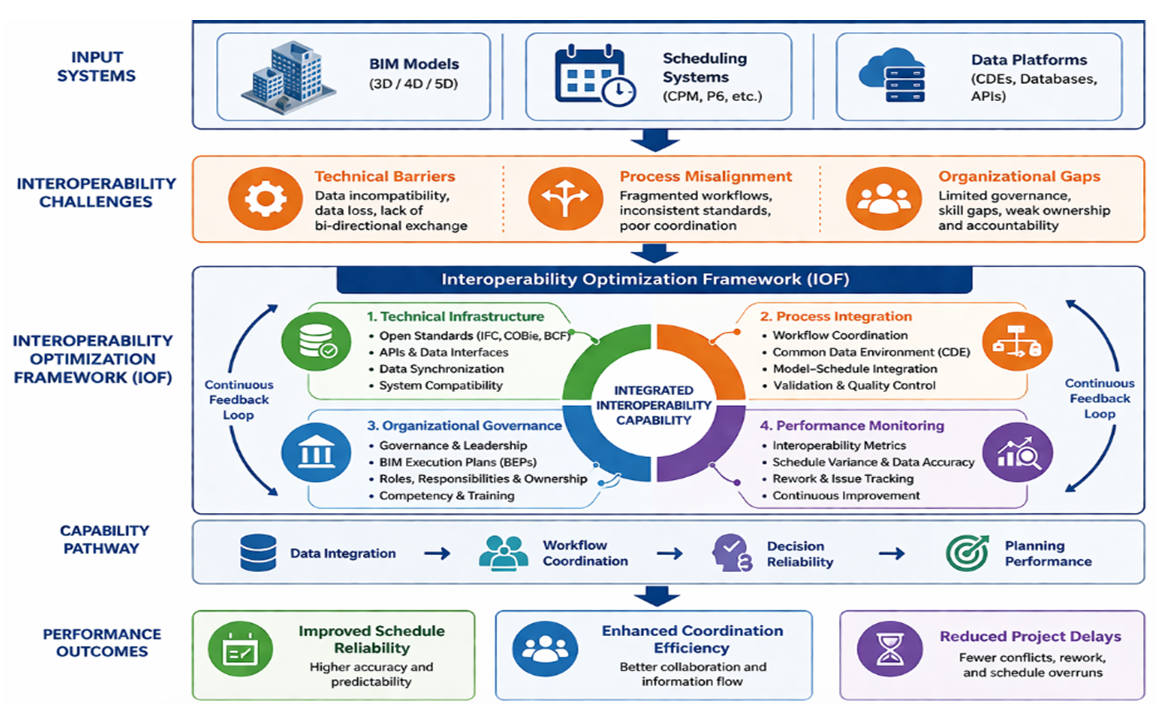 | Figure 1. Interoperability Optimization Framework (IOF) for BIM-enabled construction planning. The framework conceptualizes interoperability as a multi-dimensional socio-technical capability integrating technical infrastructure, process coordination, organizational governance, and performance monitoring. The model illustrates how interoperability challenges across BIM/VDC environments are addressed through a structured capability pathway, data integration, workflow coordination, decision reliability, and planning performance; leading to improved schedule reliability, enhanced coordination efficiency, and reduced project delays |
4.6. Framework Validation Results
- The Delphi validation process demonstrates strong expert consensus on the framework’s applicability:• Relevance: 94% • Clarity: 89% • Feasibility: 86% Experts emphasized the importance of governance mechanisms, performance monitoring, and feedback integration as critical elements for effective interoperability implementation. These results confirm the framework’s robustness and practical applicability.
4.7. Comparative Insights
- Comparison with existing interoperability models indicates that the IOF provides a more comprehensive and integrated perspective. Unlike prior approaches that focus primarily on technical solutions, the IOF:• Integrates technical, organizational, and process dimensions • Incorporates performance measurement • Conceptualizes interoperability as a dynamic capability This positions the IOF as an advancement beyond software-centric interoperability models.
4.8. Implications for Planning and Scheduling Performance
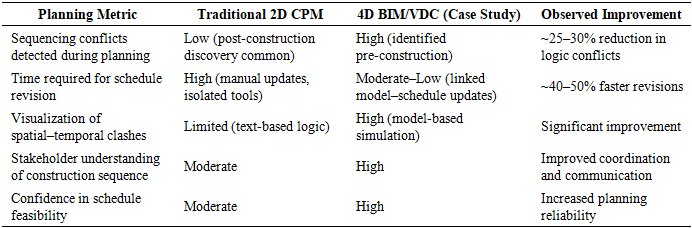
- The findings indicate that improved interoperability significantly enhances:• Planning accuracy • Coordination efficiency • Schedule reliability BIM-enabled 4D planning environments support:• Early detection of sequencing conflicts • Faster schedule revisions • Improved visualization of spatial–temporal interactions • Enhanced stakeholder communication A comparison of traditional planning methods and BIM-enabled approaches is presented in Table 1, demonstrating measurable improvements in sequencing accuracy, coordination efficiency, and schedule adaptability.
|
4.9. Summary of Results
- The results confirm that interoperability in BIM-enabled construction planning is a multi-dimensional socio-technical capability requiring coordinated alignment of:• Technical systems • Planning workflows • Organizational governance structures The validated IOF integrates these dimensions into a structured framework that supports improved planning reliability, coordination, and decision-making in digital construction environments.
5. Case Study Results: 4D BIM/VDC Interoperability in Planning and Scheduling
5.1. Case Study Overview
- This section presents findings from a digitally enabled construction project utilizing 4D BIM/VDC for planning and scheduling. The case study examines how interoperability operates across technical, process, and organizational dimensions and evaluates its influence on planning performance.Rather than serving as a standalone validation, the case provides analytical insight into the mechanisms through which interoperability affects construction planning. These insights support the development and validation of the Interoperability Optimization Framework (IOF).
5.2. Technical Interoperability and Planning Accuracy
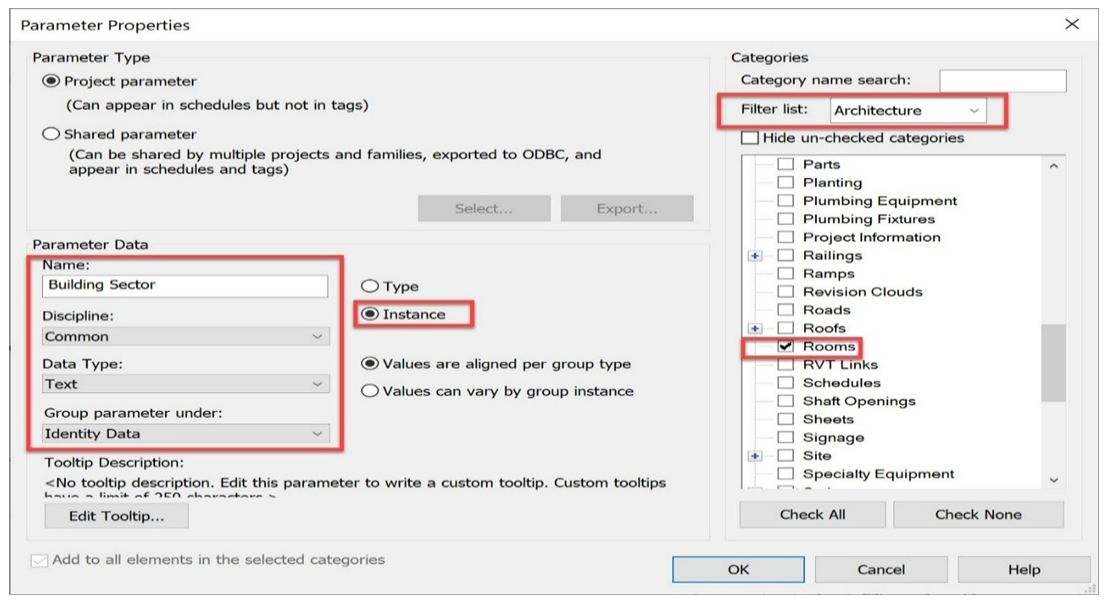
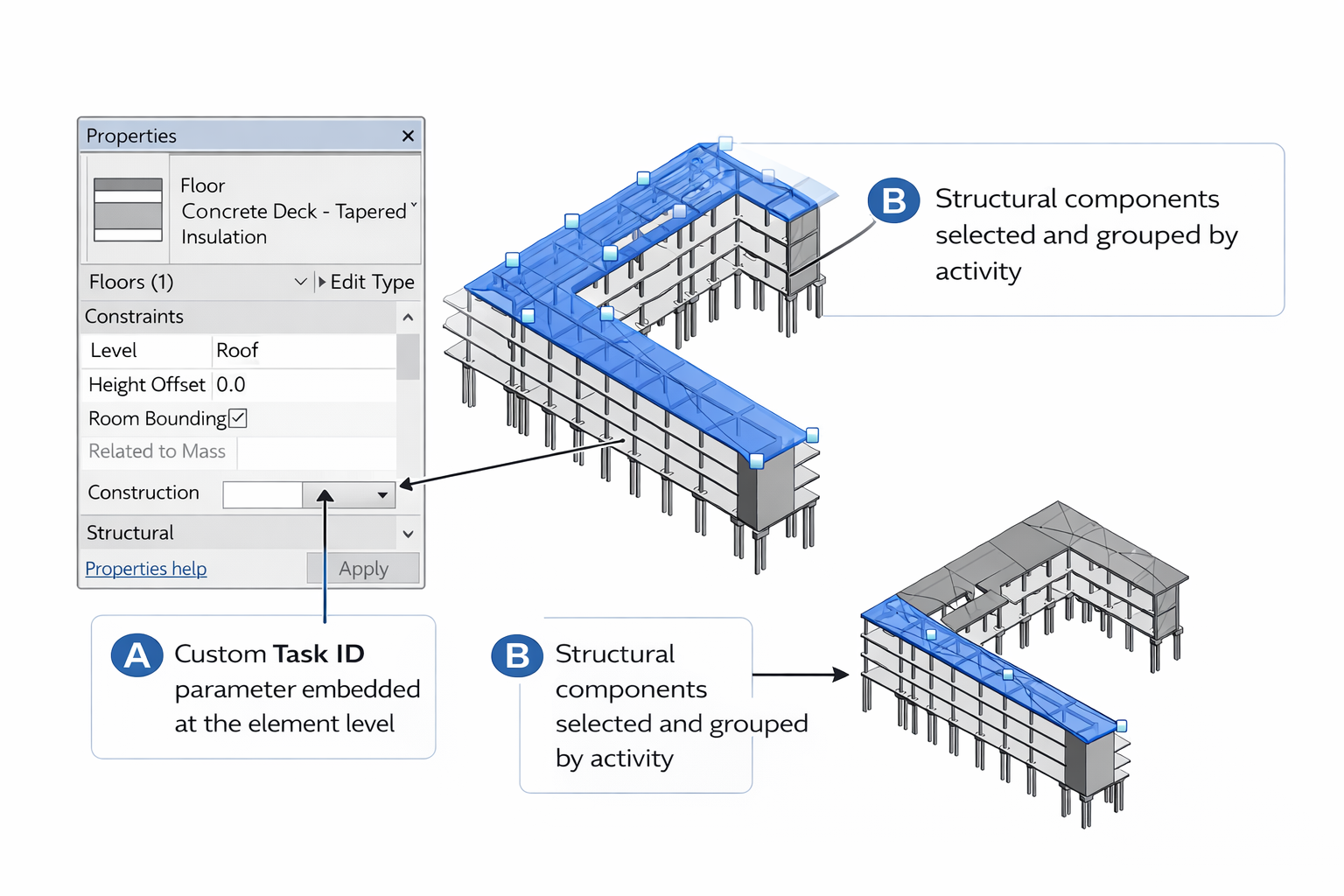
- The case demonstrates that technical interoperability is a fundamental requirement for reliable 4D BIM-enabled planning. Integration of BIM geometry with CPM-based scheduling data enabled explicit verification of construction logic, sequencing dependencies, and spatial–temporal relationships.The linkage between model elements and schedule activities allowed planners to identify conflicts not visible in traditional CPM schedules, including:• Spatial clashes between trades • Sequencing inconsistencies • Structural dependency conflicts Empirical observations indicate a 25–30% reduction in sequencing inconsistencies during planning reviews, alongside earlier detection of constructability issues.However, performance outcomes were highly dependent on data synchronization quality. File-based exchange workflows (e.g., IFC or CSV) frequently resulted in:• Loss of metadata • Broken model–schedule linkages • Inconsistent activity mapping In contrast, API-enabled integration and structured tagging significantly improved data fidelity and visualization reliability. Element-level task identifiers enabled automated linkage between BIM components and scheduling activities, providing a scalable foundation for 4D simulation.These findings indicate that bidirectional data synchronization and metadata consistency are critical drivers of planning accuracy.The role of interoperability within the broader planning environment is illustrated in Figure 2, which presents the interaction between spatial, temporal, resource, and operational constraints influencing construction decision-making.
 | Figure 2. Multidimensional constraint environment influencing construction planning decisions |
5.3. Process Interoperability and Coordination Efficiency
- Beyond technical integration, the case highlights the importance of process interoperability in enabling effective use of 4D BIM.Projects implementing integrated workflows within a Common Data Environment (CDE) demonstrated:• Improved version control • Increased transparency across disciplines • Faster resolution of planning conflicts Conversely, fragmented workflows based on static model exchanges resulted in:• Delayed updates • Duplication of effort • Reduced coordination efficiency A key benefit of process integration was the ability to support iterative planning and rapid scenario evaluation. When design or schedule changes occurred, the integrated 4D environment enabled immediate assessment of downstream impacts.As a result, schedule revision cycles were reduced by approximately 40–50% compared to conventional CPM-based processes. These improvements were driven not only by software capabilities but by alignment of workflows and coordination practices.The iterative nature of interoperable planning processes is illustrated in Figure 3, which shows feedback loops between planning, execution, and re-planning activities.
 | Figure 3. Iterative construction planning process showing feedback between planning, execution and re-planning |
5.4. Organizational Interoperability and Implementation Sustainability
- The case further demonstrates that organizational factors play a decisive role in enabling sustainable interoperability.Effective implementation required:• Leadership commitment to digital integration • Clearly defined roles (e.g., BIM/VDC coordinators) • Cross-disciplinary competencies in modeling and scheduling Projects with these characteristics exhibited:• Higher interoperability maturity • Increased trust in digital outputs • Sustained adoption of 4D BIM tools In contrast, projects treating interoperability as a purely technical issue experienced limited adoption and scalability challenges. Skill gaps—particularly between BIM specialists and scheduling professionals—led to:• Inaccurate model–schedule linkages • Reduced reliability of simulations • Limited implementation beyond pilot phases These findings confirm that interoperability is fundamentally a socio-technical capability requiring alignment between technology, skills, and governance structures.An example of scalable model–schedule integration using rule-based automation is presented in Figure 4, where shared task identifiers enable automated synchronization between BIM elements and scheduling activities.
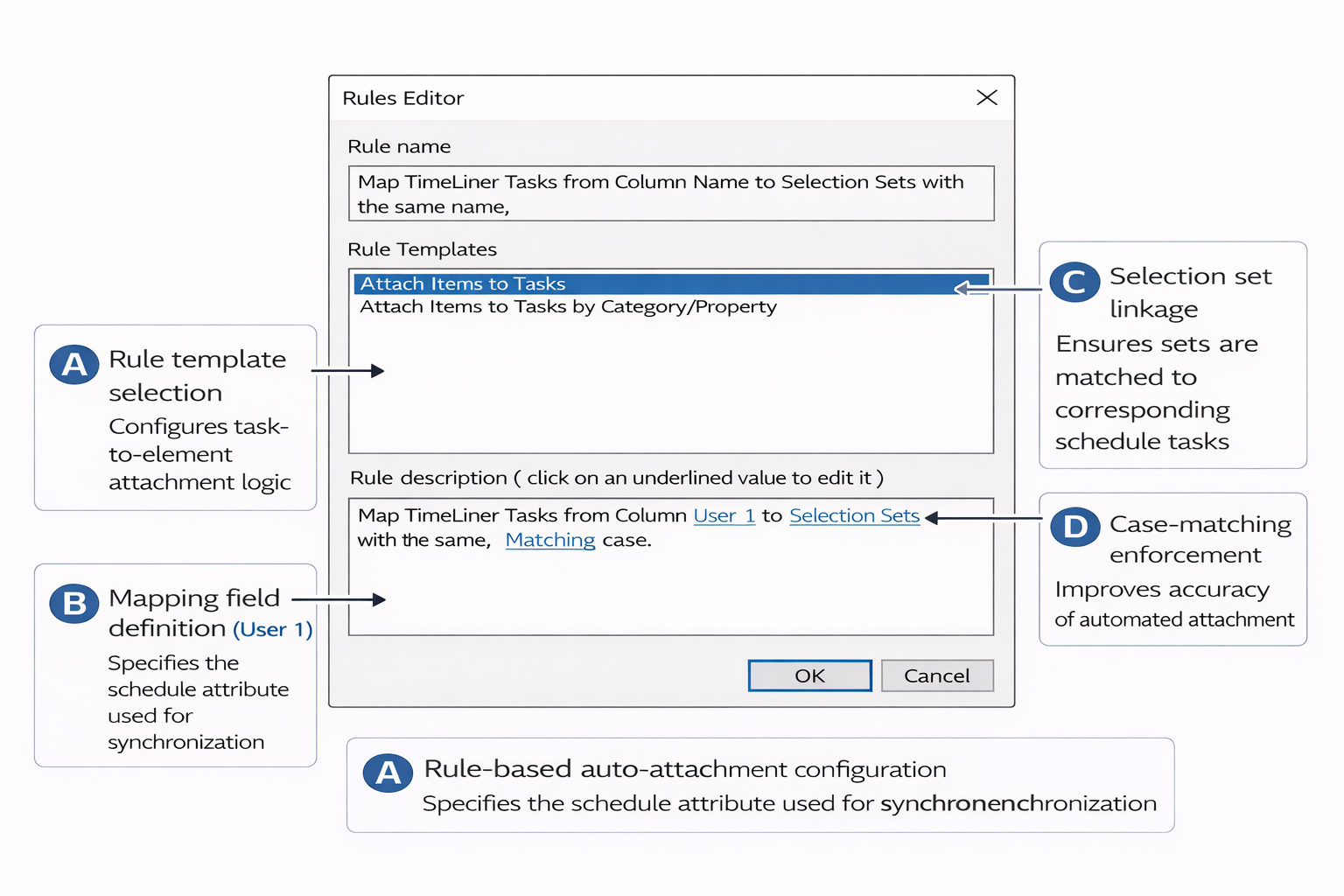 | Figure 4. Rule-based auto-attachment configuration in Navisworks TimeLiner. Schedule activities are automatically synchronized with BIM element selection sets using a shared Task ID (User 1) attribute, enabling scalable and repeatable 4D BIM integration |
5.5. Integrated Synthesis and Framework Validation
- The case study demonstrates that effective 4D BIM/VDC-enabled planning emerges from the combined influence of technical, process, and organizational interoperability.• Technical integration enables accurate data exchange and visualization • Process alignment supports coordination and adaptability • Organizational capability ensures sustainability and scalability This integrated perspective directly informs the development and validation of the Interoperability Optimization Framework (IOF).The capability pathway linking interoperability to planning performance is illustrated in Figure 5, showing how:Data Integration → Workflow Coordination → Decision Reliability → Planning PerformanceThis pathway highlights the mediating role of coordination processes and decision reliability in translating interoperability into measurable performance outcomes.
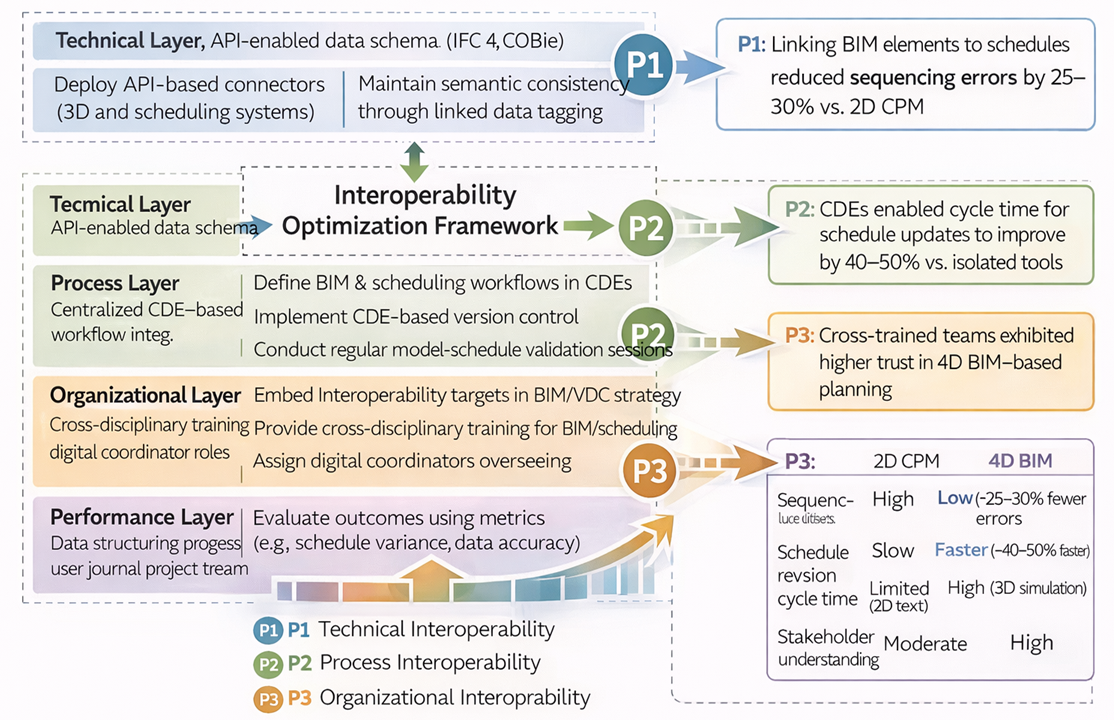 | Figure 5. Interoperability Optimization Framework (IOF) illustrates the capability pathway from data integration to planning performance in BIM-enabled construction environments. The framework integrates technical infrastructure, process coordination, organizational governance, and performance monitoring to address interoperability challenges. Improvements in data integration enable workflow coordination, enhance decision reliability, and lead to improved planning outcomes, including increased schedule reliability, enhanced coordination efficiency, and reduced project delays |
5.6. Performance Implications for Planning and Scheduling
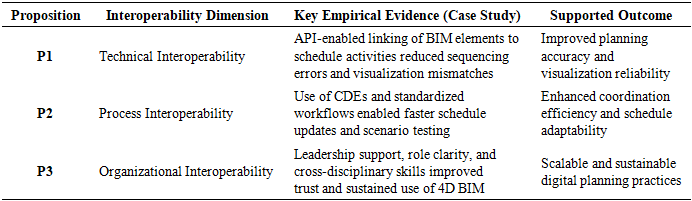
- The findings provide clear evidence that improved interoperability leads to measurable performance gains, including:• Enhanced planning accuracy through early conflict detection • Increased coordination efficiency across disciplines • Reduced schedule revision time • Improved visualization and stakeholder communication • Greater confidence in schedule feasibility These results demonstrate that interoperability is not only a technical requirement but a critical enabler of effective construction planning and decision-making.The empirical relationships between interoperability mechanisms and performance outcomes are summarized in Table 2, which links technical, process, and organizational dimensions to observed planning improvements.
|
5.7. Summary of Case Study Insights
- The case study confirms that interoperability in BIM-enabled construction planning is achieved through the coordinated alignment of:• Technical systems • Workflow processes • Organizational capabilities The findings provide empirical support for the IOF, demonstrating that:• Technical integration is necessary but insufficient • Process alignment enables adaptability and coordination • Organizational capability ensures long-term sustainability Collectively, these results reinforce the central argument that interoperability functions as a multi-dimensional socio-technical capability underpinning effective digital construction planning.
6. Discussion
6.1. Interoperability as a Socio-Technical Capability
- This study reconceptualizes interoperability in 4D BIM/VDC-enabled construction planning as a multi-dimensional socio-technical capability, rather than a purely technical data exchange problem. The findings demonstrate that interoperability emerges from the interaction between digital systems, planning workflows, and organizational governance structures.While prior research has largely focused on software compatibility and data standards [12,27], the results indicate that interoperability challenges are more accurately explained by misalignment across socio-technical dimensions. Failures are not typically caused by technological limitations alone but by inconsistencies between tools, workflows, and decision-making structures.This perspective extends socio-technical systems theory by showing that digital construction technologies are embedded within organizational and operational contexts. Interoperability, therefore, should be understood as an integrative capability that enables coordination, rather than the property of individual systems.
6.2. Implications for Planning and Scheduling Theory
- The findings contribute to construction planning and scheduling theory by explicitly linking interoperability to planning performance outcomes, including reliability, coordination efficiency, and managerial control.Previous BIM and VDC research have emphasized visualization and communication benefits [26,1]. However, this study demonstrates that planning effectiveness depends on how digital information is structured, coordinated, and governed within project environments [14,16].The Interoperability Optimization Framework (IOF) provides a structured explanation of this relationship by integrating four interdependent dimensions:• Technical integration • Workflow coordination • Organizational governance • Performance monitoring This shift planning theory from a tool-centric perspective toward a capability-based perspective, where performance depends on the alignment of socio-technical systems rather than the adoption of isolated technologies.
6.3. Contribution to Digital Construction and VDC Research
- This study advances digital construction research by addressing the need for theory-driven and empirically grounded frameworks [22,8]. The IOF extends existing BIM/VDC models by introducing a holistic, capability-based framework that integrates technical, organizational, and performance dimensions.A key contribution is the explicit linkage between interoperability and planning performance outcomes, including schedule reliability, adaptability, and coordination efficiency. Unlike prior frameworks that emphasize data exchange mechanisms, the IOF connects digital integration directly to operational outcomes.Furthermore, the study’s mixed-methods design strengthens empirical credibility by integrating literature synthesis, expert insights, and validation processes. This addresses a common limitation in prior research, where conceptual models lack empirical grounding [5].
6.4. Interoperability, Governance, and Managerial Agency
- An important finding is the central role of governance and managerial agency in shaping interoperability outcomes. Interoperability capabilities do not emerge automatically from technology adoption but are actively developed through organizational mechanisms, including:• Role definition and accountability • Coordination structures and decision authority • Standards enforcement and compliance • Performance monitoring and feedback systems These findings challenge deterministic views of digital transformation that attribute performance improvements primarily to technological innovation. Instead, they emphasize that managerial action is a critical driver of interoperability performance, particularly in complex, project-based environments [22].
6.5. Integrated Response to Research Questions
- The study provides a unified response to the research questions by synthesizing findings across technical, process, and organizational dimensions.• RQ1: Interoperability challenges in BIM-enabled environments are inherently multi-dimensional, involving technical, workflow, organizational, and performance-related factors. Addressing technical issues alone is insufficient. • RQ2: Interoperability directly influences planning performance by improving information reliability, coordination effectiveness, and decision-making processes. • RQ3: The Interoperability Optimization Framework (IOF) provides a structured and theoretically grounded model for managing interoperability as a socio-technical capability within construction planning systems.
6.6. Theoretical and Research Implications
- This study contributes to construction management research by integrating socio-technical systems theory with digital construction and planning theory. It establishes a foundation for future research on interoperability as a performance-oriented capability.The IOF provides a basis for:• Quantitative operationalization of interoperability constructs • Hypothesis-driven empirical testing across project contexts • Comparative analysis across delivery methods and organizational structures Future research may extend this work through longitudinal studies examining how interoperability capabilities evolve over time and how they interact with organizational learning and digital transformation processes.The theoretical gaps addressed and corresponding contributions are summarized in Table 3, which highlights the advancement of interoperability from a technical concept to a socio-technical organizational capability.
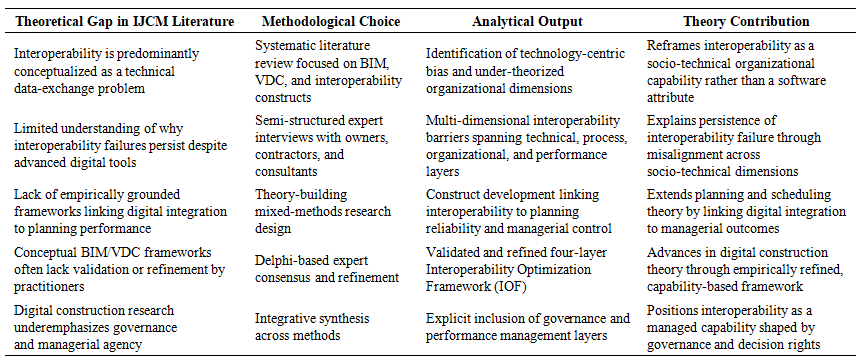 | Table 3. Identified theoretical gaps in construction planning interoperability research |
6.7. Managerial Implications for Construction Organizations
- The findings provide several practical implications for improving digital construction planning.First, interoperability should be addressed as a system-level organizational capability, rather than a purely technical issue. Effective implementation requires alignment between digital tools, workflows, and decision-making processes.Second, interoperability requirements should be explicitly embedded within BIM Execution Plans (BEPs) and project information management protocols. Standardized data structures, naming conventions, and model–schedule integration procedures can significantly improve coordination and reduce information loss.Third, organizations should invest in cross-disciplinary capability development. Interoperability failures often occur when BIM specialists and scheduling professionals operate in isolation. Developing hybrid competencies is therefore critical.Finally, firms should establish digital governance structures to manage interoperability across project teams. Roles such as BIM managers and VDC coordinators can ensure compliance with standards, coordinate integration processes, and support consistent implementation.Collectively, these actions support the development of interoperability as a strategic organizational capability, enabling improved planning reliability, coordination efficiency, and project performance.
7. Practical Implications for Industry
- The findings highlight that interoperability in BIM- and VDC-enabled construction planning should be treated as a strategic organizational capability, rather than a purely technical issue. Although digital tools are widely adopted, planning inefficiencies persist due to misalignment across data systems, workflows, and governance structures.To address these challenges, construction organizations should formalize interoperability within BIM Execution Plans (BEPs) and project information protocols by establishing clear standards for data exchange, model–schedule integration, and attribute consistency. Standardization reduces reliance on manual data transfer, improves information reliability, and enhances scalability across projects.In addition, effective interoperability requires the development of cross-disciplinary capabilities. Integrating BIM modeling with scheduling expertise enables more accurate model–schedule linking, improves interpretation of 4D simulations, and strengthens coordination among project teams.Organizational governance also plays a critical role. Firms should establish dedicated roles such as BIM managers or VDC coordinators to oversee interoperability processes, enforce standards, and align digital planning workflows with project objectives. Leadership commitment and accountability mechanisms are essential for sustaining integration efforts across projects.The use of Common Data Environments (CDEs) further supports interoperability by enabling centralized data management, real-time collaboration, and improved version control. When combined with structured workflows and automated synchronization, CDEs enhance coordination efficiency and reduce delays in planning updates.Finally, organizations should embed performance monitoring mechanisms into digital planning processes. Tracking metrics such as schedule variance, coordination conflicts, and revision cycle times allows firms to evaluate interoperability effectiveness and continuously refine planning practices.Overall, these findings suggest that improving construction planning performance requires an integrated approach that aligns technical systems, workflow processes, and organizational structures. By developing interoperability as a coordinated capability, firms can enhance planning reliability, improve coordination, and support more predictable project delivery outcomes.
8. Limitations and Directions for Future Research
- This study provides a structured understanding of interoperability in BIM-enabled construction planning; however, several limitations should be acknowledged.First, the research adopts a mixed-methods design combining a systematic literature review, expert interviews, Delphi validation, and a single case-based application. While this approach enhances analytical rigor and supports theory development, the findings are subject to analytical rather than statistical generalization. In particular, the case context reflects a digitally mature project environment and may not fully represent conditions in smaller firms or projects with lower levels of digital capability.Second, the scope of the Interoperability Optimization Framework (IOF) is limited to planning and scheduling processes within BIM/VDC environments. Other dimensions of digital construction integration—such as cost management (5D BIM), safety monitoring, and lifecycle asset management are not explicitly addressed.Third, the framework is validated through expert consensus using a Delphi method, which supports conceptual refinement but does not provide quantitative causal validation of relationships between interoperability and project performance outcomes.Future research should address these limitations by conducting empirical and longitudinal studies across diverse project contexts, applying quantitative methods such as survey-based analysis and structural equation modeling to test the proposed relationships. In addition, extending the framework to incorporate emerging technologies such as artificial intelligence, data analytics, and automation would provide further insight into interoperability within Construction 4.0 environments. Comparative studies across delivery methods and organizational structures are also recommended to better understand how governance mechanisms influence interoperability effectiveness.
9. Conclusions
- This study investigated the role of interoperability in shaping construction planning and scheduling performance within BIM- and VDC-enabled project environments. Although digital technologies have advanced planning capabilities, their effectiveness remains constrained by persistent interoperability challenges.Using a mixed-methods, theory-building approach including a systematic literature review, expert interviews, Delphi-based validation, and a case-based application, the study demonstrates that these challenges are not primarily technological. Instead, they arise from misalignment across digital systems, planning workflows, and organizational governance structures.The findings show that interoperability should be understood as a multi-dimensional socio-technical capability rather than a function of software compatibility or data exchange standards alone. Effective integration depends on coordinated alignment between technical infrastructure, workflow processes, and managerial decision-making mechanisms.To address this, the study developed and validated the Interoperability Optimization Framework (IOF), which integrates four interdependent dimensions: technical integration, workflow coordination, organizational governance, and performance monitoring. The framework provides a structured representation of how interoperability enables improved planning outcomes.The case-based application further demonstrates that interoperable 4D BIM/VDC environments enhance planning performance by improving sequencing reliability, reducing information loss during model–schedule integration, and enabling faster schedule adjustments. These improvements contribute to better coordination among stakeholders and increased confidence in planning decisions.From a theoretical perspective, this study advances construction management research by reframing interoperability as an organizational capability embedded within socio-technical systems. This perspective extends existing digital construction literature by linking interoperability directly to planning reliability, workflow integration, and managerial control.From a practical perspective, the findings highlight that achieving effective interoperability requires more than adopting digital tools. Construction organizations must develop integrated capabilities that align technology with workflows and governance structures. Key enablers include standardized interoperability protocols, cross-disciplinary competencies, and structured digital governance mechanisms.Overall, the study establishes interoperability as a foundational capability for reliable construction planning in the context of digital transformation. The proposed IOF provides both a conceptual framework for future research and a practical guide for improving planning performance in BIM-enabled construction environments.
9.1. Key Contributions
- This study makes three primary contributions to construction management research and practice:Conceptual ContributionThe study reconceptualizes 4D BIM/VDC interoperability as a socio-technical organizational capability, shifting the focus from a narrow technical data exchange problem to a broader issue of coordination, governance, and managerial alignment within construction planning and scheduling.Framework DevelopmentThe research develops and validates the Interoperability Optimization Framework (IOF), which integrates technical infrastructure, workflow coordination, organizational governance, and performance monitoring. The framework provides a structured explanation of how interoperable digital environments support reliable and coordinated construction planning.Practical ContributionThe findings offer actionable guidance for construction organizations by emphasizing the importance of interoperability governance, standardized digital workflows, cross-disciplinary competencies, and the use of Common Data Environments (CDEs). These elements collectively support improved planning reliability, coordination efficiency, and overall project performance in digitally enabled environments.
Author Contributions
- Conceptualization, methodology, analysis, and writing by the Author.
Funding Statement
- This research received no external funding.
Conflict of Interest Statement
- The author declares no conflict of interest with respect to the research, authorship, and/or publication of this article.
Data Availability Statement
- Data supporting the findings of this study are available from the corresponding author upon reasonable request.