Resources and Environment

p-ISSN: 2163-2618    e-ISSN: 2163-2634

2014;  4(5): 209-214

doi:10.5923/j.re.20140405.01

Chelant Comparison for Assisted Phytoextraction of Lead in Two Contaminated Soils

Francesca Pedron, Irene Rosellini, Gianniantonio Petruzzelli, Meri Barbafieri

Institute of Ecosystem Study, CNR, Pisa, Italy

Correspondence to: Francesca Pedron, Institute of Ecosystem Study, CNR, Pisa, Italy.

Email:

Copyright © 2014 Scientific & Academic Publishing. All Rights Reserved.

Abstract

Microcosm experiments with Brassica juncea were carried out to evaluate the potentiality of using chelators with a different levels of biodegradability for phytoextraction purposes in two lead contaminated soils. Oxalic acid (OSS) and ethylenediamine-N,N'-disuccinic acid (EDDS) were used at various concentrations (0.2, 2, 10 and 20 mM) and compared with EDTA 2 mM, which is the concentration typically used for lead assisted phytoextraction. All chelators increased Pb concentrations in plants compared with the control. The best efficiency was obtained with an EDDS 10 mM solution, reaching more than twice higher Pb concentration values for both soils compared to controls. Results indicate that EDDS is a valid alternative to EDTA for lead phytoextraction, while oxalic acid does not sufficiently solubilize this metal.

Keywords: EDDS, EDTA, Oxalic acid, Microcosm experiments

Cite this paper: Francesca Pedron, Irene Rosellini, Gianniantonio Petruzzelli, Meri Barbafieri, Chelant Comparison for Assisted Phytoextraction of Lead in Two Contaminated Soils, Resources and Environment, Vol. 4 No. 5, 2014, pp. 209-214. doi: 10.5923/j.re.20140405.01.

1. Introduction

Lead is not essential for humans. However, it can enter the food chain through the ingestion of contaminated edible products at various levels, depending on the metal and soil characteristics. Lead pollution is frequently discovered in contaminated sites. As for other heavy metals many negative consequences both for human health and the environment derived from this kind of pollution.
Phytoremediation can be used to remediate soil contaminated by lead. For this element phytoextraction represents an in situ low-impact approach that has received increasing interest due to its cost effectiveness and environment-friendly nature.
Lead is not easily transferred to above-ground plant biomass, since it is mainly stored in root cells (Meyers et al. 2008; Mellem et al. 2009). As for the other metals, plant uptake is mainly influenced by the bioavailable fractions rather than the total amount in the soil. For the highest efficiency in soil phytoextraction a high availability of soluble forms of the contaminants is required.
Bioavailability depends on the soil characteristics that determine the release of Pb in the soil solution and the ability of plants to uptake and transfer the metal to their tissues. A high cation exchange capacity (CEC) and alkaline pH reduce Pb mobility, and thus the bioavailability. Consequently, in soils contaminated by Pb, phytoextraction has many limitations, deriving from the behavior of the element in the soil environment.
To increase bioavailability and the uptake and translocation of metals, the addition of chelating agents has been extensively used in phytoextraction, with organic acids being particularly effective in increasing the solubility of metals (Quartacci et al. 2005, 2006, Doumett et al. 2008).
Chelating agents action is mainly based on the release of metals from the soil–solid surfaces and the formation of stable metal complexes in soil solution available for plant uptake. The most used chelant is EDTA, which increases the uptake of several metals, particularly Pb (Pereira et al. 2010). However, EDTA tends to persist in the soil and there are consequently risks of metal leaching to groundwater (Bucheli-Witschel and Egli 2001; Egli 2001; Sun et al. 2001; Chen et al. 2004), as well as residual toxicity to plants in the following growing cycles (do Nascimento et al. 2006a). Several low molecular weight organic acids have been proposed (Luo et al. 2005, Doumett et al. 2010) as alternatives to EDTA to provide less phytotoxic and more readily biodegradable chelators in the soil (do Nascimento et al. 2006a; Quartacci et al. 2005; Grčman et al. 2003). In addition, low molecular weight organic acids positively influence the microbial activity and physical properties of the rhizosphere, since they are compounds naturally produced by plant in root exudates.
Our aim was to assess the potential of using chelators oxalic acid (OSS) and ethylenediamine-N,N'-disuccinic acid (EDDS) with different levels of biodegradability for phytoextraction in two soils contaminated by Pb.

2. Materials and Methods

2.1. Soils

The soils (A and B) used in this study were collected from two sites contaminated with Pb deriving from different industrial activities. The soil samples were air-dried and ground to pass through a 2-mm sieve before analysis. Soil pH was determined using a glass electrode at a soil/water ratio of 1:2.5 (Thomas, 1996), cation exchange capacity (CEC) using barium chloride (pH = 8.1) (Sumner and Miller, 1996), and texture (sand, silt, and clay) by the pipette method (Gee and Bauder, 1986). Organic matter was determined by wet combustion (Nelson and Sommers, 1996).

2.2. Extraction of Lead from the Two Soils

The potentially bioavailable Pb fractions in the two soils were determined by a two-step sequential extraction procedure (Petruzzelli et al. 1989; Pedron et al. 2009). In the first step, 4 g of soil was treated with deionized water (20 mL) for 3 h at room temperature; the soil residue was then treated with 1 M KNO3 solution (20 mL) for 3 h at room temperature. The total potentially available fraction was calculated as the sum of the water-soluble and the exchangeable (KNO3) fractions.
To assess whether EDDS and oxalic acid could be used as alternatives to EDTA in assisted phytoextraction, we evaluated the efficiency of Pb solubilization from the two soils using these compounds. A total of 4 g of soil was extracted with 20 mL of the solutions at various concentrations (0.2, 2, 10, 20 mM) of these additives. The results obtained were compared with the amount of extractable Pb by 2 mM EDTA solution. All the extractions were carried out with three replicates.

2.3. Microcosm Experiments

Brassica juncea was selected for microcosm experiments (200g of soil in a 250 mL beaker) because of previous positive results with lead (Wu et al. 2004, Blaylock et al. 1997). B. juncea is a plant typical of European agriculture with a high metal tolerance and accumulation potential in the field (Liu et al. 2000). The trials were carried out in a growth chamber in controlled conditions: 14 h of light, with a temperature of 24°C, and 10 h in dark conditions at 19°C. Relative humidity was maintained at 70%. For sowing, approximately 0.20 g of B. juncea seeds were used. The experimental design consisted of three replicates for each additive (EDDS and oxalic acid) at increasing concentrations: 0.2, 2, 10, 20 mM. Three replicates for each soil were treated with 2 mM EDTA to compare the efficiency of the additives. The original soils without any addition (three replicates for each soil) were used as controls. The additives were added 20 days after sowing. Experiments lasted 30 days, at the end of which the plants were harvested and the aerial parts were separated from the roots and washed with deionised water. The roots were also washed in an ultrasound bath (Branson Sonifier 250 ultrasonic processor, Branson Ultrasonics Corporation, USA) for 10 min to eliminate any soil particles adhering to the root surfaces. Samples were then dried in a ventilated oven at 40°C to a constant weight and the dry weights of the shoots and roots were determined gravimetrically.

2.4. Lead Analysis and Quality Control

Pb concentrations in soils, plants, and sequential extraction solutions were determined via atomic absorption spectrophotometry using flame AAS (Varian AA 240FS).
Quality assurance and quality control were performed by testing two standard solutions (0.5 and 2 mg L−1) every 10 samples. The certified reference materials, CRM ERM – CC141 for soil and CRM ERM - CD281 for plants, were used. The values obtained for CRM ERM – CC 141 were 31.8±1.1 mg kg−1 Pb, which was in good agreement with the certified values of 32.2±1.4 mg kg−1 Pb. For CRM ERM - CD281 the values obtained were 1.68±0.22 mg kg−1 Pb, which was also in good agreement with the certified values of 1.67±0.11 mg kg−1 Pb. The detection limit for Pb was 5 µg L−1 and recovery of spiked samples (5%) ranged from 94% to 101% with a relative standard deviation (RSD) of 1.92% of the mean.

2.5. Statistics

All statistical analysis was performed using STATISTICA version 6.0 (Statsoft, Inc., USA). Treatments effects were analyzed using one-way analysis of variance (ANOVA). Differences between means were compared and a post-hoc analysis of variance was performed using the Tukey honestly significant difference test (P < 0.05).

3. Results and Discussion

3.1. Soil Characteristics

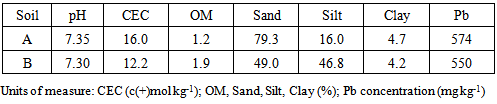
Soils characteristics are reported in Table 1.
Table 1. Soils Characteristics and Total Content of Pb
     
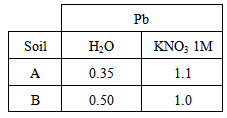
Total Pb concentrations in the two soils were very similar. Considering the aim of this study, it was essential to evaluate the bioavailable fractions of the contaminant. To estimate the mobile (and thus potentially bioavailable) soil fractions, we used the sequential extractions with H2O and KNO3 (Petruzzelli et al. 1989; Pedron et al. 2009). Data are reported in Table 2.
Table 2. Bioavailable Fractions of Pb. Data are expressed as mg kg-1
     
Data showed that the soluble and exchangeable fractions of the metal represented a very low portion of the total. The sum of these two fractions was considered to be the potentially phytoavailable Pb fractions and accounted for only 0.25% of the total Pb in both soils. These amounts were very low, thus it was necessary to use assisted phytoextraction with the addition of mobilizing agents to the contaminated soils. Two more biodegradable chelators than EDTA were tested for phytoextraction. OSS and EDDS at four concentrations (0.2, 2, 10 and 20 mM) were compared with EDTA 2 mM, which is the concentration typically used for lead assisted phytoextraction (Doumett et al. 2008). These chelating agents are able to promote the release of Pb from the soil solid phases essentially by two mechanisms: mobilization of Pb from the solid particles and/or dissolution of metal-containing solid phases, such as iron oxi-hydroxides.
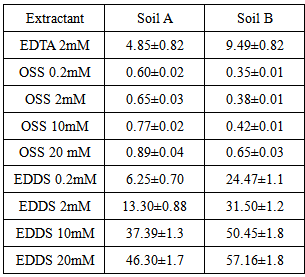
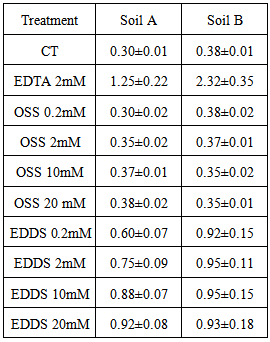
The first step was to evaluate the ability of OSS and EDDS to solubilize Pb in the two soils, after which OSS and EDDS were used as additives in microcosm experiment with the two soils planted with B. juncea. Pb concentrations extractable in the soils are presented in table 3.
Table 3. Bioavailable Pb Concentration from the Extractions with OSS and EDDS in Comparison with EDTA Extractable Metal. Data are expressed as mg kg-1
     
For all four concentrations, OSS extraction resulted in a lower Pb extractability compared to EDTA and there was no significant increase in the amount of Pb extracted by increasing the concentration of the OSS solution. The Pb extracted was about 0.60 mg kg-1 and 0.38 mg kg-1 for the soils A and B, respectively. The stability constant of the complex between oxalate and Pb (logK = 4.0) is much lower than the one of EDTA-Pb complex (logK = 17.9).
On the contrary, EDDS extracted significant quantities of Pb from 6 to 46 mg kg-1 in the soil A and from 24 to 57 mg kg-1 in the soil B. In both soils, the efficiency of EDDS extraction was greater than that of EDTA and for the same concentration (2 mM) it was approximately three times that of EDTA. These results could be due to the calcium present in the soil. In fact, the extraction of lead by EDTA can decrease due to the competition between lead and calcium for this complexing agent. Despite the complex Ca-EDTA having a much lower stability constant (logK = 10.6) than the Pb-EDTA complex, the high solubility of calcium along with its high concentration in the soil make this cation a powerful competitor of Pb. Regarding EDDS the complexation constant (logK = 12.7) with Pb is lower than that of the Pb-EDTA complex (Tandy et al. 2004). However, the low stability of the complex Ca-EDDS (logK = 4.3) did not lead to a significant reduction in the concentration of Pb mobilized, in fact EDDS had an higher extractive efficiency than EDTA in the presence of significant amounts of Ca (Doumett et al. 2008). These results demonstrate that with high concentrations of Ca in the soil the mobilization of Pb greatly reduces due to competition with complexing agent (EDTA) added.

3.2. Microcosm Experiments

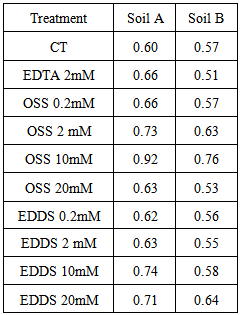
The microcosm experiments were carried out to assess the effect of different complexing agents. They showed no significant differences in the biomass production (table 4).
Table 4. Effect of chelators on shoot biomass production (g dry weight) of B. juncea. Data reported are the mean of 3 replicates
     
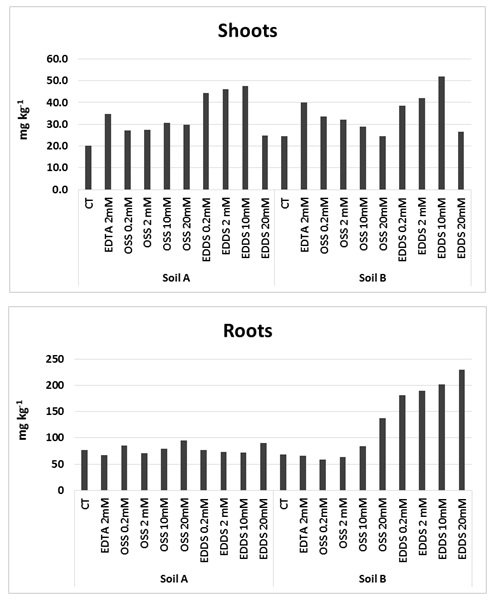
At the end of the growing cycle, the Pb concentrations in the tissues of B. juncea were determined (Figure 1).
Figure 1. Pb concentrations (mg kg-1) in shoots and roots of B. juncea after chelators addition
In general, the results of the present experiment showed that all chelators increased Pb concentrations in shoots compared with the control.
The best efficiency was obtained with the EDDS 10 mM solution, reaching more than twice higher Pb concentration values for both soils compared to controls. In the case of soil A, the Pb concentration increased from 20.3 to 47.4 mg kg-1 and for soil B from 24.7 to 52 mg kg-1. Also at lower concentrations, of 0.2 and 2 mM, the EDDS addition produced the highest increase in the amounts of Pb in the shoots. However, at EDDS 20 mM the concentration of Pb drastically decreased to 24.8 and 26.5 mg kg-1 for soil A and soil B, respectively. These values were not statistically different from the controls.
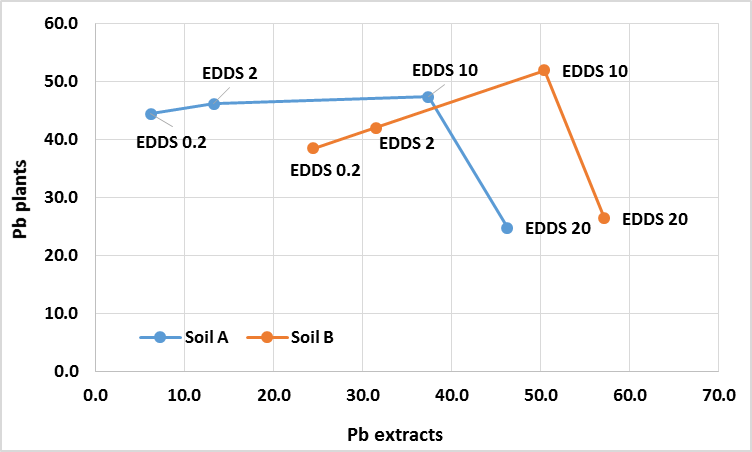
The addition of EDDS from 0.2 to 10mM to soil dramatically increased the soil solution concentrations of Pb. Shoot Pb content significantly increased up to 10 mM EDDS only in soil B. A further raise in EDDS concentration increased the Pb concentration in soil solution (Pb extracts) but the plant uptake (Pb plants) decreased, as depicted in Figure 2.
Figure 2. Relation between Pb concentration extracted by EDDS in soils and Pb concentrations in plants shoots in EDDS treated microcosms. Data are expressed as mg kg-1
This can be ascribed to a toxic effect of the Pb uptake; in fact some stress symptoms appeared in the plants.
In the root portion of plants grown in the soil A, the addition of chelators did not significantly change the concentration of Pb compared to the control, with a mean concentration of about 78 mg kg-1. In contrast, in soil B the Pb concentration in the roots increased following OSS 20 mM treatment from 68.4 mg kg-1 in the control to 138 mg kg-1. EDDS increased the amount of Pb in the roots to a maximum of 230 mg kg-1 following the addition of this chelator at a 20 mM concentration. The results of adding EDDS were supported by the chelator metal extraction (Table 1), in which EDDS solubilised Pb more effectively than the other chelators.
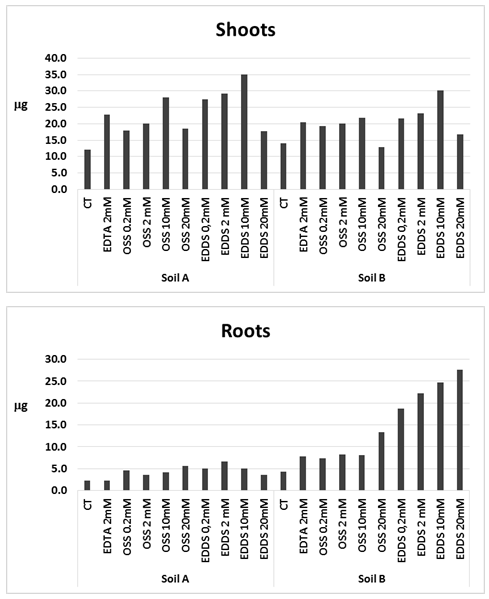
The efficiency of phytoextraction can be evaluated by calculating the total amount of metal removed from the soil resulting from the product of the Pb concentration for plant biomass (Pedron et al. 2013). This is particularly important in terms of the total accumulation in the aerial part of the plant. The results are summarized in Figure 3.
Figure 3. Pb total uptake (μg) in shoots of B. juncea after chelators addition
The values of total accumulation are related to those of Pb concentration in plants, with similar patterns both in shoots and in roots for each chelator added. All the chelators increased total accumulation in the aerial part, the best results were obtained in both soils with the use of 10 mM EDDS, while with the highest concentration of EDDS the amount of Pb accumulated in the shoots decreased. The total amount of Pb accumulated in the shoots in soil A after treatment with 10 mM EDDS accounted for 35.1 μg. This value was higher than that found both in the controls (12.1 μg) and in the microcosms treated with 2 mM EDTA (22.8 μg).
The same result occurred in soil B with a value of total accumulation of 30.1 μg after treatment with 10 mM EDDS compared to values of 14.0 and 24.4 μg detected in the controls and in the microcosms treated with 2 mM EDTA, respectively.
Similar results to those found for Pb concentrations in plants were detected in the root portions, and also in this case in soil B the total uptake was the highest (27.6μg) in the microcosms treated with 20 mM EDDS.
Plants absorbed and translocated a fraction of the metal mobilised by the treatments. This means that a certain amounts remained in the soil solution with an increased risk of percolation. Thus, the persistence of a high mobility of Pb after harvest should be avoided, which in the field could leach into the groundwater. Leaching can be countered by the degradation of the chelating agent with the consequent restabilization of the contaminants. Therefore, the effects induced by the addition of chelating agents should be considered not only in relation to the increased Pb uptake by plants but also to the residual effects in the soil.
To examine the mobility of the residual Pb, an extraction with H2O was carried out. This procedure can detect any residual amounts in the soil solution after treatment with the additives and the growth of the plants (Table 5). Three weeks after the harvest, the Pb concentration values extracted from control soils did not differ significantly from those observed prior to the growth of the plants. In the microcosms treated with EDTA the concentration levels of Pb were still quite high. Following treatment with OSS, Pb residue values were similar to those of the control, while slightly higher values were found in the microcosms after treatment with EDDS.
Table 5. Pb Concentration (mg kg-1) in Soil Solution Three Weeks after Harvesting. The Extraction was carried out with H2O
     
It is important that the residual concentration of Pb in the soil solution after treatment with mobilizing additives is not too high after plant harvest. This is because the absence of an actively transpiring crop able to uptake lead, greatly increases the risk of leaching of the mobilised species (Souza et al. 2013, do Nascimento 2006b, Kos and Leštan 2003; Jaworska et al. 1999).
It is thus essential to use mobilizing agents that degrade in a short period such as EDDS and OSS, rather than EDTA. Our results agree with previous findings (Meers et al. 2005, 2008) on the degradability of EDTA and EDDS.

4. Conclusions

In assisted phytoextraction, chelators that have a short life-span in the soil should be used. The induced mobilization of Pb must be effective only during the time needed to increase the uptake of the plants and then must disappear quickly enough to prevent its leaching. Assisted phytoextraction is not feasible using substances such as EDTA, which remains in the soil for a long time after harvest, leaving the residue metal in soluble forms.
Our results indicate that EDDS can be a valid alternative to EDTA for lead phytoextraction, while oxalic acid does not promote a sufficient solubility of this metal. Based on these results, phytoremediation has been planned at field scale with the use of 10 mM EDDS. It is essential to confirm the results obtained by the use of biodegradable chelating agents in different kind of soils contaminated by lead and other heavy metals.

References

[1]  Blaylock, M.J., D.E. Salt, S. Dushenkov, O. Zakharova, C. Gussman, Y. Kapulnik, B.D. Ensley, I. Raskin. 1997. Enhanced accumulation of Pb in Indian mustard by soil-applied chelating agents. Environ. Sci. Technol. 31: 860–865.
[2]  Bucheli-Witschel, M., T. Egli. 2001. Environmental fate and microbial degradation of aminopolycarboxylic acids. FEMS Microbiol. Lett. 25: 69-106.
[3]  Chen, Y., X. Li, Z. Shen. 2004. Leaching and uptake of heavy metals by ten different species of plants during an EDTA-assisted phytoextraction process. Chemosphere 57: 187–196.
[4]  do Nascimento, C.W.A. 2006b. Organic acids effects on desorption of heavy metals from a contaminated soil. Scientia Agricola 63: 276-280.
[5]  do Nascimento, C.W.A., D. Amarasiriwardena, B.S. Xing. 2006a. Comparison of natural organic acids and synthetic chelates at enhancing phytoextraction of metals from a multi-metal contaminated soil. Environmental Pollution 140: 114-123.
[6]  Doumett, S., D. Fibbi, E. Azzarello, S. Mancuso, S. Mugnai, G. Petruzzelli, M. Del Bubba. 2011. Influence of the Application Renewal of Glutamate and Tartrate on Cd, Cu, Pb and Zn Distribution Between Contaminated Soil and Paulownia Tomentosa in a Pilot-Scale Assisted Phytoremediation Study. Int. J. Phytoremediat. 13: 1-17.
[7]  Doumett, S., L. Lamperi, L. Checchini, E. Azzarello, S. Mugnai, S. Mancuso, G. Petruzzelli, M. Del Bubba. 2008. Heavy metal distribution between contaminated soil and Paulownia tomentosa, in a pilot-scale assisted phytoremediation study: Influence of different complexing agents. Chemosphere 72: 1481-1490.
[8]  Egli, T. 2001. Biodegradation of metal-complexing aminopolycarboxylic acids. J. Biosci. Bioeng. 92: 89-97.
[9]  Gee, G.W., J.W. Bauder. 1986. Particle-size analysis. In Klute, A. (Ed.) Methods of Soil Analysis. Part 1. Physical and Mineralogical Methods. Agronomy Monograph No. 9. 2nd edition. American Society of Agronomy/Soil Science Society of America, Madison. pp. 383–411.
[10]  Grčman, H., D. Vodnik, Š. Velikonja-Bolta, D. Leštan. 2003. Ethylenediaminedisuccinate as a new chelate for environmentally safe enhanced lead phytoextraction. J. Environ. Qual. 32: 500–506.
[11]  Jaworska, J.S., D. Schowanek, T.C.J. Feijtel. 1999. Environmental risk assessment for trisodium [S,S]-ethylene diamine disuccinate, a biodegradable chelator used in detergent applications. Chemosphere 38: 3597–3625.
[12]  Kos, B., D. Leštan. 2003. Induced phytoextraction/soil washing of lead using biodegradable chelate and permeable barriers. Environ. Sci. Technol. 37: 624–629.
[13]  Liu, D., W. Jiang, C. Liu, C. Xin, W. Hou. 2000. Uptake and accumulation of lead by roots, hypocotyls and shoots of Indian mustard [Brassica juncea (L.)]. Bioresource Technology 71: 273-277.
[14]  Luo, C., Z. Shen, X. Li. 2005. Enhanced phytoextraction of Cu, Pb, Zn and Cd with EDTA and EDDS. Chemosphere 59: 1-11.
[15]  Meers, E., A. Ruttens, M.J. Hopgood, D. Samson, F.M.G. Tack. 2005. Comparison of EDTA and EDDS as potential soil amendments for enhanced phytoextraction of heavy metals. Chemosphere 58: 1011–1022.
[16]  Meers, E., F.M.G. Tack, M.G. Verloo. 2008. Degradability of ethylenediaminedisuccinic acid (EDDS) in metal contaminated soils: Implications for its use soil remediation. Chemosphere 70: 358-363.
[17]  Mellem, J., H. Baijanth, B. Odhav. 2009. Translocation and accumulation of Cr, Hg, As, Pb, Cu and Ni by Amaranthus dubius (Amaranthaceae) from contaminated sites. J. Environ. Sci. Health 44: 568-575.
[18]  Meyers, D.E.R., G.J. Auchterlonie, R.I. Webb, B. Wood. 2008. Uptake and localisation of lead in the root system of Brassica juncea. Environmental Pollution 153:323-332.
[19]  Nelson, D.W., L.E. Sommers. 1996. Total carbon, organic carbon and organic matter. In Sparks, D.L. (Ed.) Methods of Soil Analysis. Part 3. Chemical Methods. Soil Science Society of America Book Series. Soil Science Society of America Inc., Madison. pp. 961–1010.
[20]  Pedron, F., G. Petruzzelli, M. Barbafieri, E. Tassi. 2009. Strategies to use phytoextraction in very acidic soil contaminated by heavy metals. Chemosphere 75: 808–814.
[21]  Pedron, F., G. Petruzzelli, M. Barbafieri, E. Tassi. 2013. Remediation of a Mercury-Contaminated Industrial Soil Using Bioavailable Contaminant Stripping. Pedosphere 23: 104-110.
[22]  Pereira, B.F.F., C.A. de Abreu, U. Herpin, M.F. de Abreu, R.S. Berton. 2010. Phytoremediation of lead by jack beans on a Rhodic Hapludox amended with EDTA. Scientia Agricola 67: 308-318.
[23]  Petruzzelli, G., L. Lubrano, G. Guidi. 1989. Uptake by corn and chemical extractability of heavy metals from a four year compost treated soil. Plant Soil 116: 23–27.
[24]  Quartacci, M.F., A. Argilla, A.J.M. Baker, F. Navari-Izzo. 2006. Phytoextraction of metals from a multiply contaminated soil by Indian mustard. Chemosphere 63: 918-925.
[25]  Quartacci, M.F., A.J.M. Baker, F. Navari-Izzo. 2005. Nitrilotriacetate- and citric acid-assisted phytoextraction of cadmium by Indian mustard (Brassica juncea (L.) Czernj, Brassicaceae). Chemosphere 59: 1249–1255.
[26]  Souza, L.A., F.A. Piotto, R.C. Nogueirol, R.A. Azevedo. 2013. Use of non-hyperaccumulator plant species for the phytoextraction of heavy metals using chelating agents. Sci. Agric. 70: 290-295.
[27]  Sumner, M.E., W.P. Miller. 1996. Cation exchange capacity and exchange coefficients. In Sparks, D.L. (Ed.) Methods of Soil Analysis. Part 3. Chemical Methods. Soil Science Society of America Book Series. Soil Science Society of America Inc., Madison. pp. 1201–1230.
[28]  Sun, B., F.J. Zhao, E. Lombi, S.P. McGrath. 2001. Leaching of heavy metals from contaminated soils using EDTA. Environ. Pollut. 113: 111–120.
[29]  Tandy, S., K. Bossart, R. Mueller, J. Ritschel, L. Hauser, R. Schulin, B. Nowack. 2004. Extraction of heavy metals from soils using biodegradable chelating agents. Environ. Sci. Technol. 38: 937–944.
[30]  Thomas, G.W. 1996. Soil pH and soil acidity. In Sparks, D.L. (Ed.) Methods of Soil Analysis. Part 3. Chemical Methods. Soil Science Society of America Book Series. Soil Science Society of America Inc., Madison. pp. 475–490.
[31]  Wu, L.H., Y.M. Luo, X.R. Xing, P. Christie. 2004. EDTA-enhanced phytoremediation of heavy metal contaminated soil with Indian mustard and associated potential leaching risk. Agriculture, Ecosystems and Environment 102: 307–318.