
-
Paper Information
- Paper Submission
-
Journal Information
- About This Journal
- Editorial Board
- Current Issue
- Archive
- Author Guidelines
- Contact Us
International Journal of Nursing Science
p-ISSN: 2167-7441 e-ISSN: 2167-745X
2015; 5(4): 123-130
doi:10.5923/j.nursing.20150504.01
The Effect of Oral Nursing Intervention on Antidepressants -Induced Xerostomia among Patients with Depression
 Abstract
 Reference
 Full-Text PDF
 Full-text HTML
Lamiaa Hassnin Eita1, Asmaa Hamed Abd Elhy2, Samah M. Abd Elgaphar2
1Lecturer of Psychiatric and Mental Health Nursing, Faculty of Nursing, Menoufia University, Egypt
2Lecturer of Adult Health Nursing, Faculty of Nursing, Menoufia University, Egypt
Correspondence to: Lamiaa Hassnin Eita, Lecturer of Psychiatric and Mental Health Nursing, Faculty of Nursing, Menoufia University, Egypt.
| Email: |  |
Copyright © 2015 Scientific & Academic Publishing. All Rights Reserved.
Background: Xerostomia is a subjective sensation of mouth dryness often occurring as an unwanted effect of antidepressant drugs. These medications used to treat the depression magnify the xerostomia and increase the incidence of dental disease. Aim: The aim of this study was to evaluate the effectiveness oforal nursing interventions on xerostomia –related symptoms among patients with depression. Subjects: A purposive sample of 50 patients with depression was recruited for this study. They were received oral nursing intervention (verbal-written) instructions, regular tooth brushing 3 times a day and follow-up visits for oral hygiene instructions and maintenance care). Tools: 1- Interviewing questionnaire to assess demographic data and xerostomia symptoms. 2- Visual analog scale to assess degree of xerostomia-related symptoms. Results: The results revealed statistical significance improvement of xerostomia after oral nursing intervention, P<0.001. Conclusions: Oral Nursing Intervention exhibited significantly improvement of xerostomia among patient with depression.
Keywords: Depression, Antidepressants, Xerostomia, Psychiatric Patient, Oral nursing intervention
Cite this paper: Lamiaa Hassnin Eita, Asmaa Hamed Abd Elhy, Samah M. Abd Elgaphar, The Effect of Oral Nursing Intervention on Antidepressants -Induced Xerostomia among Patients with Depression, International Journal of Nursing Science, Vol. 5 No. 4, 2015, pp. 123-130. doi: 10.5923/j.nursing.20150504.01.
Article Outline
1. Introduction
- Psychiatric patients’ oral health status often is poor compared to normal population. Mental illness and its various medications can cause a range of oral complications and side effects with tooth decay, periodontal diseases, and xerostomia being encountered most frequently [1, 2].Depression may be associated with extensive dental disease, and people may seek dental treatment before becoming aware of their psychiatric illness [3]. Patients with depression are at increased risk of oral problems due to disinterest in performing appropriate oral hygiene techniques, preference for carbohydrates due to reduced serotonin levels, and drug-induced xerostomia such as commonly antidepressants [4]. The decrease in salivary flow by itself and due to certain medications, and the dietary changes, might make it likely that patients with depression are at a substantially higher risk of caries and poor oral health [5].Indeed, research has shown that depression is accompanied by a decreased salivary flow [6, 7], which promotes the growth of cariogenic bacteria and thus ultimately the development of carious lesions. Antilla et al [8] found a correlation between depressive symptoms and an abundant growth of salivary lactobacilli, a microorganism that has been implicated in dental caries. A study has shown that depression affects patients’ dietary choices and that these patients tend to increase their intake of food with more fermentable carbohydrates—further encouraging the growth of cariogenic bacteria [7]. Antidepressants also can affect the amount of saliva secreted and may alter the composition of saliva and predisposes individuals to Xerostomia [9].Xerostomia is the most prevalent side effects of antidepressants, and it is the fourth most distressing symptom known. It is defined as the subjective sensation of dryness of the mouth that may or may not be associated with a marked decrease in saliva secretion and may frequently occur as an unwanted effect of psychotropic drugs. In general, antidepressants enhance the availability of naturally occurring chemicals called neurotransmitters to the brain and are categorized into groups based on the chemicals in the brain they affect. There are three types of antidepressants that block the action of the neurotransmitter, acetylcholine. One function of acetylcholine is to control the function of the gastrointestinal tract. Blocking acetylcholine reduces the production of mucus and saliva secretions causing dry mouth [4].Xerostomia is commonly associated with oral symptoms such as taste disturbances, bad breath, and mouth ulcers and affects oral functions such as speech, chewing, and swallowing. As a result, there is alteration in the microbial colonization of the oral cavity, reduction in prostheses retention, mucosal dehydration, and reduced lubrication in the oral mucosa. These complications manifest as extensive dental caries, candidiasis, mucosal atrophy and burning sensation, difficulty in denture retention, compromised speech and swallowing, and reduced or altered taste sensation, thus restricting daily activities, along with a negative impact on quality of life [10]. Management of xerostomia includes symptomatic relief, prevention or correction of the squeal of saliva hypo function, and treatment of any underlying disease. Adequate hydration of the oral tissues (frequent sips of water) is the standard treatment of xerostomia. Indeed, drug-induced xerostomia can sometimes be alleviated with chewing gum or taste stimulation using gustatory substances. Treatment plan of patient with psychiatric disorders and medication induced xerostomia is complicated by the fact that medication can not be stopped, replaced or changed [11, 12]. Few psychiatrists routinely screen patients for xerostomia. Therefore it is crucial for nurses to be aware of potential problems related to dry mouth and the impact it can have on their patients. Screen patients for xerostomia, educate them about treatment options, good oral hygiene and follow-up dental services are essential nursing roles [13, 14].
2. Significance of the study
- Xerostomia (the feeling of dry mouth) is the fourth most distressing symptom known with a variety of causes and high prevalence rate that approximately 20% in the general population [4, 15, 16, 17]. Little is known about the dental health status of institutionalized Egyptian psychiatric patients. Hospitalized psychiatric patients in other countries appear to constitute a high-risk group of patients with respect to dental disease and require special attention.Among all reported side effects of antidepressants, xerostomia often is the most prevalent complaint. In clinical practice, xerostomia is often underestimated by clinicians and patients themselves. To date, only a few randomized controlled trials have addressed the problem of relief of drug induced xerostomia [18]. Untreated xerostomia can result in major dental problems and chronic systemic inflammatory conditions [14]. Therefore in the coming years dentists and nurses should be familiar with its diagnosis and treatment. Hence this study is an attempt to shed light on the effect of oral nursing interventions on xerostomia in patient with depression. Data from this study might be helpful to nurses in planning and implementing oral health promoting program of those category of patients.
3. Subjects and Method
3.1. Aim of the Study
- The aim of this study was to evaluate the effectiveness of oral nursing interventions on xerostomia –related symptoms among patients with depression.
3.2. Research Hypothesis
- Oral nursing interventions will be effective in improving xerostomia –related symptoms among patients with depression as compared to prior participation in nursing intervention.
3.3. Research Design
- A quasi-experimental research (pre-test/post-test design) design was utilized to achieve the aim of this study.
3.4. Setting
- The study was conducted at Meet Khalaf inpatient psychiatric hospital, Menoufia governorate.
3.5. Subjects
- A purposive sample of 50 patients with depression was recruited for this study. Criteria for inclusion were; adult patient, medically diagnosed with depression, will be inpatient for at least one month, both genders, long term receiving antidepressants drug, have xerostomia, conscious and willing to participate in the study. Exclusion criteria were: Smokers, patients receiving radiotherapy or chemotherapy, patients with debilitating disease e.g. diabetes mellitus, gastrointestinal disturbance, hypertension, oral related disorders as: parotitis, oral ulcers and patients receiving antihistamines or diuretics.
3.6. Tools
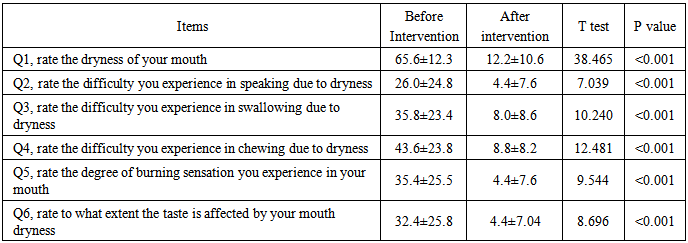
- For the purpose of this study and to collect the necessary data two tools were utilized by the researchers based on the review of the related literature. Tool (I)-Structured Interviewing Questionnaire: This tool was developed by the researcher after reviewing the related literature and consisted of two parts:Part (1) Bio socio-demographic data as age, gender, level of education, antidepressants group prescribed.Part (2) xerostomia - related symptoms consisted of 15 statements based on dichotomous scale in which the patient responded by 'yes' or 'no'.Tool (II): Visual analogue scale (VAS) to assess xerostomia-related symptoms, [19]. Subjects rated for each symptom on a 100-cm-long visual analog scale with higher scores indicating greater dryness or discomfort because of dryness. Anchor points of the VAS score were 0, representing normal (i.e., no dry mouth symptoms), and 100, representing the worst imaginable (dry mouth symptoms). The questions addressed were: Q1, rate the dryness of your mouth (to what extent your mouth is dry); Q2, rate the difficulty you experience in speaking due to dryness; Q3, rate the difficulty you experience in swallowing due to dryness; Q4, rate the difficulty you experience in chewing due to dryness; Q5, rate the degree of burning sensation you experience in your mouth; Q6, rate to what extent the taste is affected by your mouth dryness.
3.7. Content Validity
- Before starting, the data collection tools were translated into Arabic and tested for its content validity by group of experts in the psychiatric medicine and nursing staff to check the relevance, coverage of the content and clarity of the questions. The required modification was carried out accordingly. The tools were translated into Arabic then back translation was done to English to ensure translation accuracy.
3.8. Reliability of the Tools
- All tools were tested; a Pearson correlation coefficient formula was used. It was 0.79 for tool I part two and 0.63 for tool II.
4. Pilot Study
- A pilot study was conducted on number of 10% of the study sample with the same of inclusion criteria to evaluate the applicability of the study and clarity of tools. Necessary modifications were carried out. Patients who participated in the pilot study were excluded from the study sample.
5. Procedure of Data Collection
- - Data were collect over a period of 5 months from the beginning of September 2014 to January 2015.-At baseline each participant individually interviewed and the researchers initiated data collection by assessing socio-demographic data, then clinical assessment of xerostomia was performed using previous illustrated tools.- The participants were assessed two times during the research period pre- intervention and 4 weeks post- intervention.- A proposed oral nursing interventions (health education related to xerostomia, oral hygiene instructions, regular tooth brushing 3 times a day and follow-up visits for oral hygiene instructions and maintenance care) were implemented to depressed patients with xerostomia. Health education and oral hygiene instructions were given in two sessions of 20-30 minute of each.- In the first session, the participants and their relatives and nursing staff were provided with verbal instructions about xerostomia (factors affecting xerostomia, symptoms, preventive measures and management). These instructions were supplemented by written materials that are supplemented with colored pictures as an illustrative guide for more clarification (brochure). Management /dry mouth comfort tips of xerostomia included (1)-Sip water or sugar-free drinks or suck ice chips throughout the day to moisten mouth, (2)- drink water during meals to aid chewing and swallowing, (3)-encourage the patient to increase herbal drinks such as green tea (4)-Chew sugar-free gum or suck on sugar-free hard candies, (5)-Avoid hard or species food, (6) Breathe through nose, not mouth, (7)-Moisturize lips to soothe dry or cracked areas, (8)-Avoid or minimize products that can make symptoms worse (Caffeine and alcohol, mouthwash that contains alcohol, tobacco). (9)- Avoid or minimize salt intake. (10)-Eating partly frozen melon or pineapple chunks. - In the second session: demonstration and redemonstration about the technique of oral hygiene using tooth paste which include fluoride & tooth brush was illustrated. Then the researchers asked bedside nurses in hospital to perform regular tooth brushing 3 times a day for 4 weeks. Then follow-up visits for oral hygiene instructions and maintenance care occurred.-Evaluation of xerostomia -related symptom before and after intervention (from week 0 to week 4) was compared.
6. Ethical Consideration
- An official letter from faculty of nursing was delivered to responsible authorities of hospital and approval was obtained to conduct this study after explanation of the purpose of the study.- Informed consents to participate in the current study were obtained from the patients before starting the procedure and after explanation of the purpose of the study. Confidentiality of obtained data, as well as respect of participant's privacy was totally ensured.
7. Statistical Analysis
- Data was coded and entered into computer system. Data was described using mean, SD, number, percent, and tables. Chi Square test was used, specifically McNemar test, for qualitative data pre-post test. Paired t-test was used for quantitative data pre-post. Pearson correlation was used to compare quantitative total scores pre-post. SPSS PASW version 18 was used.
8. Results
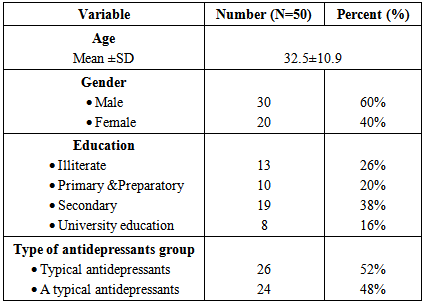
- Table (1) illustrated distribution of socio-demographic characteristic of studied sample. It revealed that, the mean age of studied sample was 32.5±10.9.
|
 | Figure (1). Percentage distribution of performing mouth care among studied sample before and after intervention |
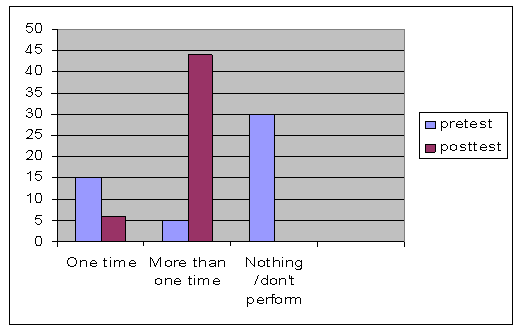 | Figure (2). Number and percent distribution of frequency of mouth care among studied sample before and after oral nursing intervention |
|
|
|
|

9. Discussions
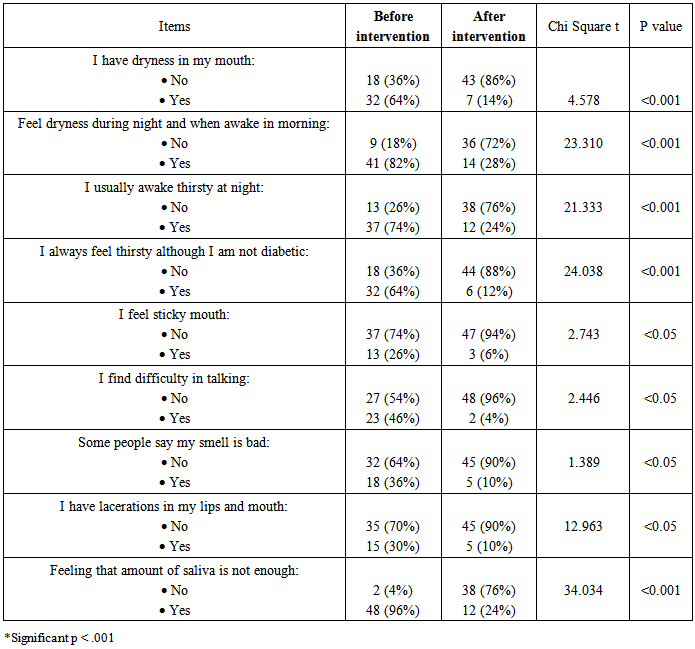
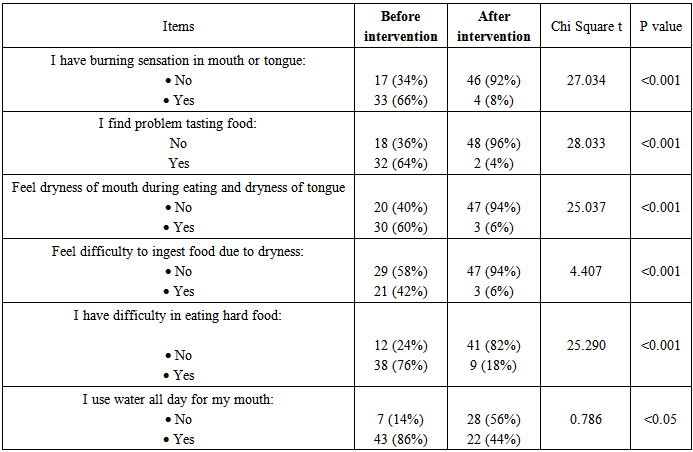
- Patients with depression are at increased risk of oral problems due to antidepressants-induced xerostomia, oral hygiene neglect, and preference for carbohydrates due to reduced serotonin levels [4, 20, and 21]. The present study showed that more half of sample put on typical antidepressants. This result inconsistent with Keene [22] who found that selective serotonin reuptake inhibitors were most commonly prescribed, followed by tricyclic antidepressants, atypical and third-generation antidepressants, and monoamine oxidase inhibitors. The tricyclic drugs were prominent among the first generation of medications used to treat depression. These drugs were effective because they enhanced serotoninergic and/or noradrenergic mechanisms. Unfortunately, they also blocked histaminic, cholinergic and alpha-1-adrenergic receptor sites. This action brought about a number of unwanted side effects; especially, dry mouth. Based on extensive evaluation of clinically relevant symptoms of xerostomia, this study conducted in patients under real conditions of treatment by antidepressant drugs, with drug-induced xerostomia. In this study, we reported a protocol of oral nursing intervention (oral hygiene instructions and regular tooth brushing 3 times a day) for antidepressant drug- induced xerostomia in adult patient with depression and evaluated its clinical effectiveness in minimizing the severity of xerostomia-related symptoms. The clinical findings of this study showed that oral nursing intervention exhibited significantly improvement of xerostomia-related symptoms in patient with depression. The results of this study support the recommendations of many researchers that have suggested that the oral health of people with psychiatric disabilities can be improved with education, instructions, and tooth brushing [23, 24, and 25]. This result also consistent with Heinssen et al., [26] who indicating that people with psychiatric disabilities can learn new skills when provided with adaptive education which in turn improve oral hygiene and oral health.In the current study the significant improvement of xerostomia-related symptoms may be contributed to improve patient knowledge about dry mouth comfort tips and oral hygiene practices, including brushing with toothpaste containing fluoride. On the same line, patient awareness with dry mouth comfort tips such as frequent sips of water and brushing with toothpaste containing fluoride may be useful for reducing the sensation of dry mouth, facilitate speech and swallowing [27, 28]. Another study by Visvanathan [29] found that sucking ice chips or frequent sips of cold water may provide sufficient relief for those with mild symptoms together with reducing or avoiding irritants, such as alcohol, caffeine, smoking or hot, spicy foods. Several dental researchers illustrated that before patients can be motivated to complete the appropriate regime, they must understand the knowledge and skills included in the specific actions they are required to take because difficulties with self care may reflect a lack of knowledge about disease or lack of rationale for treatment [30]. Dental researchers also found that effective oral hygiene instructions are characterized by patient involvement and participation with instruction specifically directed to the needs of the patient. These same characteristics, active involvement and a foundation regarding rationale for behavior, are important to the success of skill training programs [25]. Indeed instructions, and feedback produce positive results for all behaviors.The results of this study provide empirical support for programs targeting oral nursing intervention in people with psychiatric disabilities. Friedlander and Mahler [5] suggested that appropriate dental management requires a vigorous dental education program. This study provides additional support for the importance of training psychiatric nurses, dentists, and dental hygienists to provide services for this vulnerable population. Moreover, Weeks and Fiske [31] showed that improvement in oral care by nursing staff can be encouraged by improving their knowledge of oral health care problems in people with serious mental illness. Therefore, this study provides oral hygienists with effective strategies that may enhance the dental health of people with psychiatric disabilities.Indeed, good oral health for people with psychiatric disabilities may enhance self-esteem, promote general health by reducing pain and suffering related to dental diseases, reduce the cost of dental visits significantly since preventive measures such as tooth brushing are less expensive than restorative measures (Kisely et al. [32, 22, 33, 5]. Therefore, good oral health is clearly related to well-being and quality of life when measured in functional, psychological, and economic dimensions. Since this study indicates that oral hygiene instructions along with regular tooth brush can be effective; this approach might be viable in settings that provide services to people with psychiatric disabilities.
10. Conclusions
- In the light of the present study results, it can be concluded that this study adds to the scientific evidence in regard to the effectiveness of oral nursing intervention for improving xerostomia symptoms and its degree.
11. Recommendations for Practice and Research
- 1. Psychiatrists, psychiatric nurses, caregivers, hospital administrators, must be aware of antidepressants -induced xerostomia side effect and its effects on oral health of mentally ill people and coordinate their efforts to facilitate prevention and access to oral care.2. Trained nurses are needed for daily oral hygiene: every patient needs to be checked that he/she has a toothbrush and toothpaste. The primary preventive effort has to focus on tooth brushing.3. Health professionals should therefore be aware of the impact of mental illness and its treatment on oral health. Health personnel should receive training to support and provide all possible services to this vulnerable population.4. Psychiatric patients and their caregivers should be given a written instruction plan for their self-management measures to xerostomia and they should understand the importance of regular visits to the dentist at 3 months to prevent the oral complications induced by dry mouth.5. Increasing the tendency for prescribing atypical antidepressants than atypical antidepressants.
ACKNOWLEDGEMENTS
- First of all, deepest thanks go to "Allah" for giving us the power to complete this work. Also, gratitude is extended to all psychiatric patients and psychiatric nursing staff who participate in this study. Respect goes to all those who assisted us in accomplishing this work.