Journal of Civil Engineering Research

p-ISSN: 2163-2316    e-ISSN: 2163-2340

2026;  16(1): 1-13

doi:10.5923/j.jce.20261601.01

Received: Dec. 17, 2025; Accepted: Jan. 12, 2026; Published: Apr. 25, 2026


Engineering Characterization of Granitic Laterites from Bamendou (West Cameroon) for Sustainable Road Pavement Applications

Guimezap Kenou Willy Chance1, Keubou Tatapzia Vladimir Willianov1, 2, Nie Noumsi Thierry Constant3, Kamga Djoumen Tatiana3, Ngapgue François3

1Pôle de Recherche de l’Inovation et de l’Entreprenariat (PRIE), Institut Universitaire de la côte, Douala, Cameroon

2Faculty of Sciences, University of Dschang, Dschang, Cameroon

3Department of Civil Engineering, FOTSO Victor University Institute of Technology, University of Dschang, Bandjoun, Cameroon

Correspondence to: Guimezap Kenou Willy Chance, Pôle de Recherche de l’Inovation et de l’Entreprenariat (PRIE), Institut Universitaire de la côte, Douala, Cameroon.

Email:

Copyright © 2026 The Author(s). Published by Scientific & Academic Publishing.

This work is licensed under the Creative Commons Attribution International License (CC BY).
http://creativecommons.org/licenses/by/4.0/

Abstract

Stabilisation is a process leading to the improvement of the physical, chemical or mechanical characteristics of a material for a given use. There are several stabilisation methods, including granular correction, compaction and addition of hydraulic binder. This research focuses on the impact of cement addition on the improvement of the bearing capacity of roadbed soils in Western Cameroon. To carry out this study, nine lateritic soil samples were selected and taken. Following this, several tests were carried out on them in order to determine their geotechnical parameters. The results obtained show that they have an average plasticity index of 12.13. The average percentage of fines is 44.53% for a dry density of 1.58 g/cm3. The average CBR value is 8.29%.The multiple linear regression performed between CBR, percentage of fines and plasticity index shows a correlation coefficient of 0.72; however, a correlation between CBR value, liquidity limit and plasticity index shows a correlation coefficient of 0.85, characteristic of a strong correlation between the variables. Following these results, Cement stabilisation was carried out at proportions of 2%, 4%, 6% and 8% in order to improve the bearing capacity of the soils studied. The results obtained show that for a change from 2% to 4% cement, the average CBR value obtained is doubled, from 21.27% to 42.77%. Moreover, this average value increases with the increase of the stabilizer rate, but no longer to a great extent. It was concluded that cement modifies the geotechnical properties of the treated materials, making them more able to withstand overloads. It was possible to make proposals for the prescription of a cement stabilisation rate for use as a pavement subgrade; it was found that from an economic and technical point of view, the best stabilisation rate for engineers is 4% cement.

Keywords: CBR, Stabilisation, Cement, Lateritic materials

Cite this paper: Guimezap Kenou Willy Chance, Keubou Tatapzia Vladimir Willianov, Nie Noumsi Thierry Constant, Kamga Djoumen Tatiana, Ngapgue François, Engineering Characterization of Granitic Laterites from Bamendou (West Cameroon) for Sustainable Road Pavement Applications, Journal of Civil Engineering Research, Vol. 16 No. 1, 2026, pp. 1-13. doi: 10.5923/j.jce.20261601.01.

1. Introduction

Laterite is formed by the decomposition of a parent rock such as basalt, gneiss or granite in a humid tropical climate [1]. These geotechnical properties range from poor to excellent [2]. Some of these materials have very good characteristics, allowing their use in road construction [3,4,5,6,7,8]. However, some soils with low bearing capacity are of poor quality for use. It is therefore important to treat them for use. Road pavement functionality is strictly related to the properties and conditions of several intrinsic and extrinsic factors [48]. Among all the variables affecting functionality of the pavement structure during its service life, the stability of the subgrade significantly affects its performance in the long term [48]. The subgrade, as well as each layer of the pavement system, must satisfy specified structural quality standards in order to prevent permanent deformations, resist shear and fatigue, and safeguard the integrity of the overlying layers. Locally available materials often do not meet these requirements as they lack performance properties to answer both traffic and environmental demands [49 and 50 in 48]. Subgrade conditions dramatically impact the pavement life, the initial cost of the pavement, as well as its maintenance costs [51]. Several works in the world in general and in Cameroon in particular have focused on the valorization of lateritic materials in road construction, notably the works of [9,10,11,12,57]. Some authors have shown that in Africa, roads are generally subject to rapid degradation [13,14,15,16,17]. However, the CBR value and the traffic are the key parameters for the design of pavement structures in tropical climates [18]. A low CBR value implies a low bearing capacity pavement and vice versa [10]. Stabilization is an effective solution to improve the properties of soil subgrades. Specific engineering properties such as strength, permeability, and volume stability can be improved in order to obtain a material of required or desired specifications of work [52]. Although the main engineering advantage of stabilization is to improve the strength and durability of the soil that is unsuitable for use in the pavement structure, this practice can also be used to reduce dust generation, control volume changes, and improve workability [53,58,59,60].
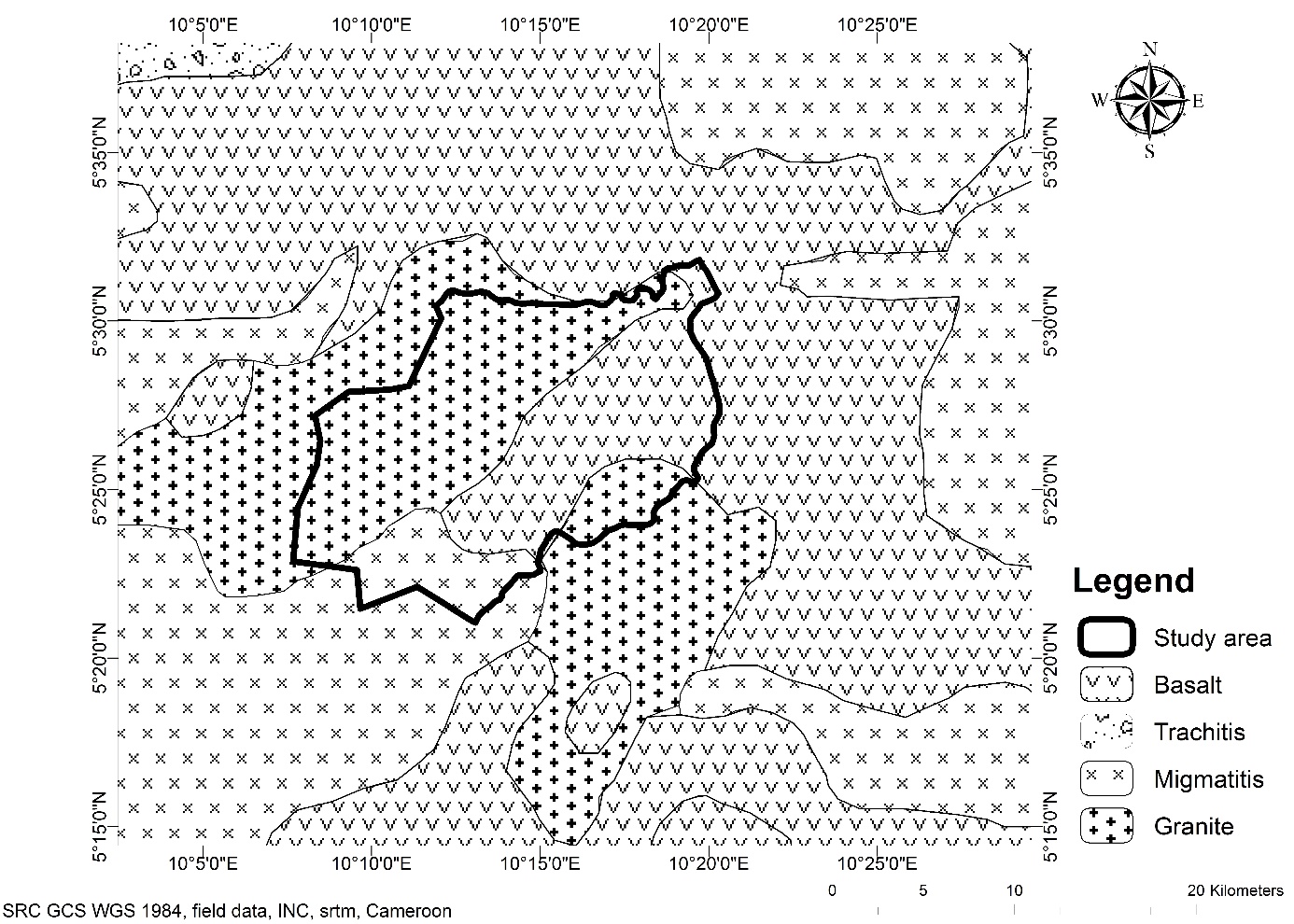
There are several methods of stabilising roadbed and pavement foundation soils, including the use of industrial waste, coconut, slaked lime and quicklime [54,55,61,62]. Of all the additives, lime is probably the most widely used for stabilising subgrade soils [56]. In road construction, an interesting and economical example is the use of cement in well-defined proportions to improve the geo-mechanical parameters of pavement-bearing soils. Cement is a construction material used to bind different elements together to form solid structures. It is composed mainly of limestone, clay and minerals that are ground and mixed with water to form a thick paste. It then hardens as it dries, forming a strong, durable bond. Cement is widely used in the construction industry to make concrete, mortar and other building materials. Bamendou is a locality in the Bamileke highlands in western Cameroon. In this area, of which the study area is part, the altitudes vary between 1400 metres and 1600 metres (Figure 1). The geological formations present are the granitoids and orthogniess. These granitoids are dated between 558 and 564 Ma and consist of alkali feldspar, plagioclase, quartz, microcline, biotite and hornblende [19]. The weathered basement materials have produced large quantities of lateritic materials which are used in road construction. However, some time after the construction of the structure, pathologies such as potholes, rutting, generalized or differential settlements and others result, which in some cases lead to the total ruin of the infrastructure. On this basis, the objective of this work is to contribute to an improvement in the service life of the pavements in and around the study area. This requires characterisation and optimisation of the geo-mechanical parameters of the Bamendou-West Cameroon materials. Furthermore, the study reports an investigation on the strength and performance characteristics of a cement treated sandy clayey soil.

2. Materials and Methods

2.1. General Setting of the Study Area

The study area (Fig 1) extends between the northern parallels of 5°23' and 5°28'N and the eastern meridians of 10°08' to 10°13'E. It is located in the Arrondissement of Penka Michel, Menoua Department, West Cameroon Region. It is located on the southern slopes of the Bamboutos Mountains, belonging to the Western Highlands.
Figure 1. Location and geological setting of the Bamendou study area
The type of rocks of the Bambouto mountain varies from basanites to phonolites, passing by alkaline basalts, tephrites, trachytes, trachy-andesites, and rhyolites [20]. Meanwhile, the study area is characterized by different volcanic products (trachyte, ignimbrite, tuffs, basalt and phonolite) and basement rocks made up of granite and gneiss [21]. The geological formations are granites, basalts and gneisses [22]. The climate is humid tropical with an average annual rainfall of 1700mm and an average annual temperature of 21°C [22].

2.2. Materials

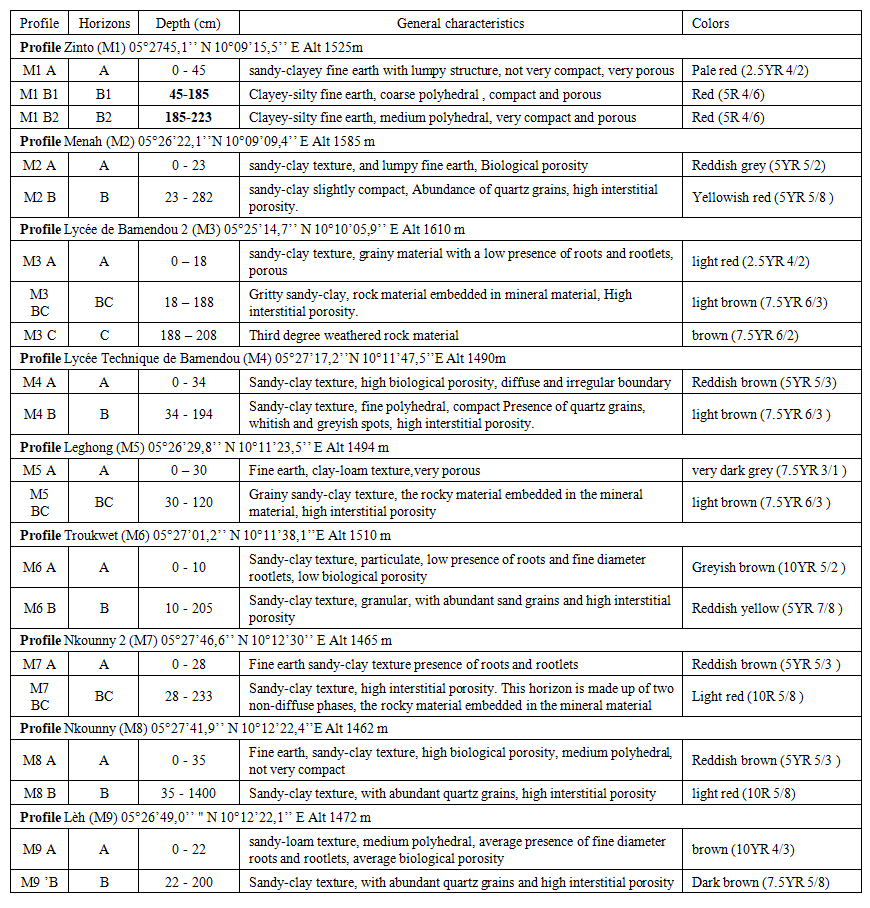
Field investigation consisted of general prospecting in order to locate lateritic soil deposits. Specifically, nine samples were collected and stored in polystyrene bags and transported to the laboratory. In each site, a lateritic soil profile was described macroscopically after [23], using road sections and hand dug pits (Table 1). In this work, the soil profiles are truncated and do not exceed the B or BC horizons where most of the lateritic material used is concentrated (Figure. 2). Samples were then collected in the different B or BC horizons of each soil profile following the [24] standard.
Table 1. Macroscopic characteristics of lateritic soil profiles over granit in Bamendou

2.3. Methods

In the laboratory, the work consisted of standard identification and mechanical behavior tests. Several tests were carried out, in particular the determination of the natural water content according to the French standard [25]. The particle size analysis was carried out by dry method after washing according to the [26] standard and by sedimentometry according to the standard [27]. The absolute density was determined using a pycnometer in accordance with standard [28]. The study of consistency parameters was carried out in accordance with standard [29]. The modified Proctor and CBR tests were carried out in accordance with the standards [30] and [31] respectively. The classification of the materials studied was carried out according to several systems, in particular the classification GTR, AASHTO, HRB, USCS and USDA.
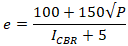
For the pavement to hold, the distributed vertical stress, according to BOUSSINESQ's theory, must be less than a limit stress which is proportional to the CBR index. The peltier formula [32] was used to design the pavement structure. This method is based on two complementary abacuses which give the total thickness of the pavement as a function of the CBR of the platform.
This thickness is given by the formula:
With:
- e: equivalent thickness
- ICBR: CBR index (ground support)
- P: load per wheel P = 6.5 t (13 t axle)
All these analyses were performed at the Laboratory of Civil Engineering of the Fotso Victor University Institute of Technology (Bandjoun), and in the Laboratory of Civil Engineering of the Coast University Institute of Douala.
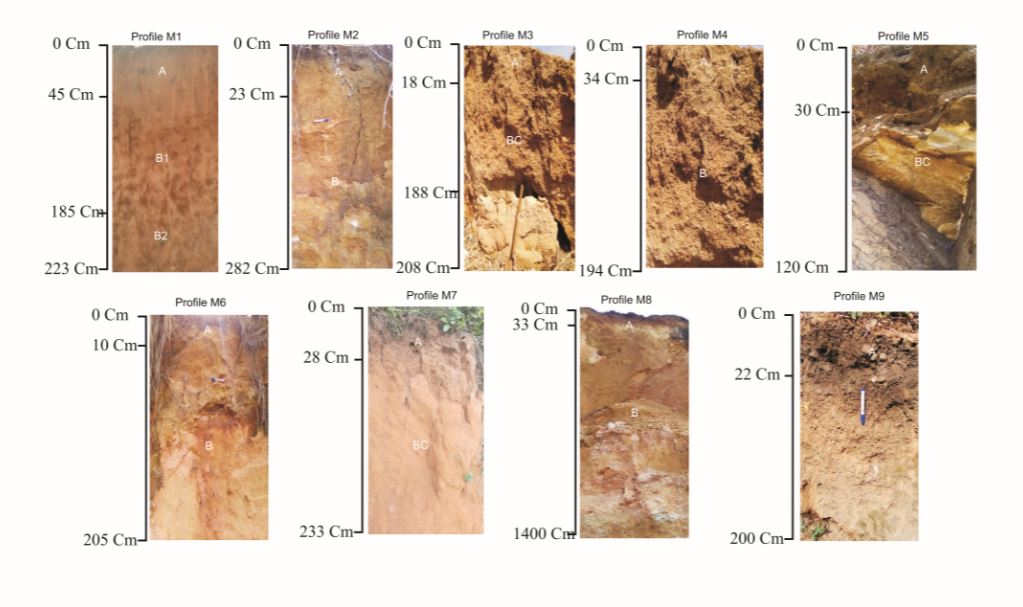
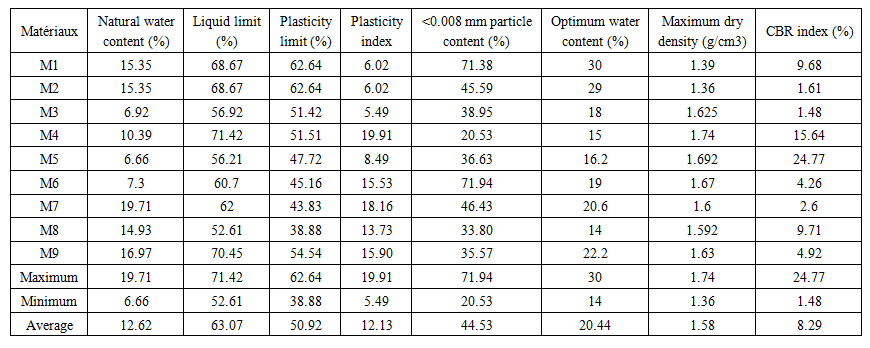
Figure 2. Photographs of the studied lateritic soils profiles

3. Results and Discussions

3.1. Characterisation of Natural Materials

The natural water content (𝜔𝑛𝑎𝑡), Atterberg limits, Optimum water content, Maximum dry density (𝛾𝑑𝒎𝒂𝒙) and CBR index of the studied samples are presented in Table 2.
Table 2. Water content and density parameters of materials
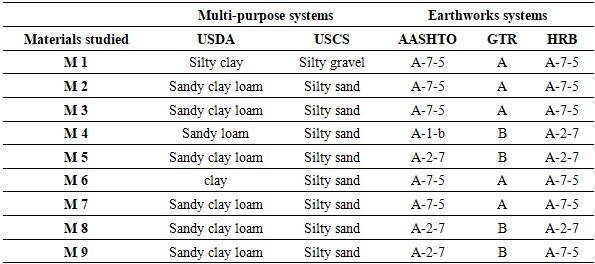
Looking at Table 2 above, we can see that for an optimum average compaction water content of 20.44%, we obtain a maximum dry density of 1.58 and a CBR index of 8.29%. This relatively low bearing capacity is the likely cause of early deterioration of the pavements in and around the study area. As the average plasticity index is 12.13, cement stabilisation is required to increase the CBR index. Table 3 below summarises the geotechnical classification of the materials studied.
Table 3. Geotechnical classification of the materials studied
     

3.2. Discussions and Interpretations

3.2.1. Granularity Parameters
In view of the clay particle content of the materials studied (Table 2) and Figures 3 and 4, the work of [33] shows that these soils should have a medium or even low sensitivity to groundwater movements. However, work by [34] has shown that the more fine particles present in a soil component, the lower its bearing capacity. Also, the American AASHTO soil classification system shows that soils with a fines content (passing an 80 μm sieve) greater than 35% offer low bearing capacities (CBR 10), or even acceptable (10 CBR30). In view of the particle size composition of the materials developed on granitic bedrock, in particular the fine content, averaging 44.53%, a value which is higher than the 35% prescribed by the AASHTO classification, these materials should offer mediocre and at best acceptable bearing capacities. Furthermore, this fine particle value is close to that obtained by Saliu Alade (2018) in south-west Nigeria (%Fine Avg=46.71).
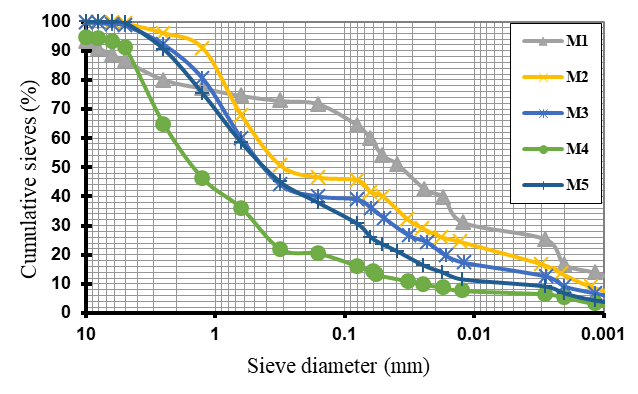
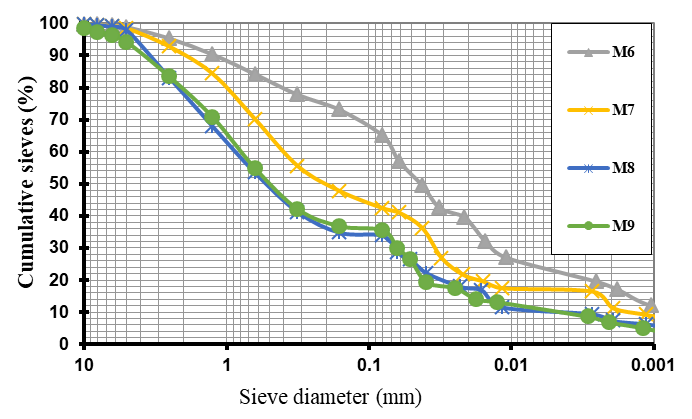
Figure 3. Particle size distribution of materials M1 to M5
Figure 4. Particle size distribution of materials M6 to M9
As for the gradation of the materials studied, the uniformity coefficient of all the materials studied being >6, the granulometry is said to be varied or spread out. This demonstrates the presence of a wide range of materials of different sizes. Of the materials studied, five samples had a coefficient of curvature (Cc) in the range 1Cc3, demonstrating the presence of a wide variety of diameters in these materials in equitable proportions. Knowing that a Cc that is too large or too small indicates the absence of certain diameters between the effective diameters D10 and D60, four materials therefore present a poorly graded granulometry. In view of these data on gradation, it can be concluded that, in general, the materials studied present a fair predisposition to compaction, and consequently to mediocre mechanical performance.

3.2.2. Consistency Parameters
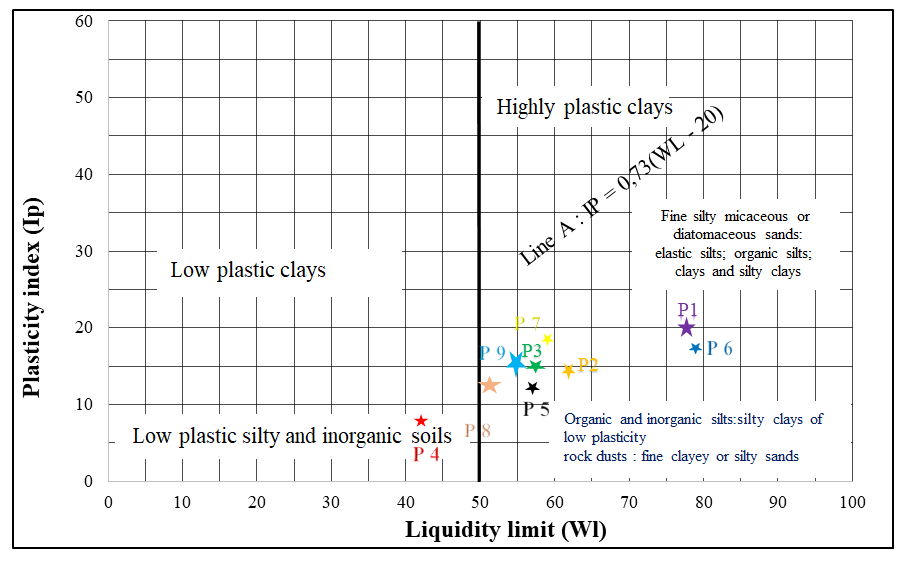
Table 2 and Figure 5 show that the liquidity limits (Wl) vary between 41.42 and 79.1, with an average of 58.26. Consistency index values (Ic) greater than 1 indicate the solid state of the materials at their natural water content. Similarly, the plasticity index (PI) of the materials ranged from 9.91 to 20.93, with an average of 15.04. Apart from M6 and M1, which have a high plasticity index (Ip>20) characteristic of very plastic materials, the other materials have intermediate plasticity. These consistency values (mean Wl =58.26% and mean IP= 15.04) are close to those obtained by [35] on the characterisation of materials from the Santchou-Melon road section (West-Cameroon) for use in road geotechnics and those obtained by [8] in Cameroon (mean Wl =58, 99% for the Banfeko site, average Wl =66.17% for the Bakoye site, and average Wl =65.27% for the Ketcho site). These same values are very close to those obtained by [36] whose characterisation study of materials from the Sindia quarry in western Senegal for use in road geotechnics (IP=13.3). However, the average plasticity index of the soil samples studied is slightly lower than those obtained by [2] in Hunan Province, China (IP=21.1), during a study on the characterisation of laterites in Hunan Province for use in road geotechnics. However, the average plasticity index values of the samples studied are a long way from those obtained by [37] in Chad, more specifically on the use of soil from the town of Amtiman as a foundation (PI= 28.5). This higher value of plasticity index would be due to the high presence of fine particles in these materials.
Figure 5. Plasticity diagram classifying the samples studied
3.2.3. Mechanical Parameters
According to [38], given the high content of fine particles in the materials studied, the expected CBR value should be between 5 and 40, a range in which 55.55% of the samples remain, and 44.44% do not, as they have lower CBR values. In addition, the average CBR value of the samples studied is 8.74. According to [39], M4 and M5 materials with a CBR of between 10 and 30% belong to the class of clayey sands. The other materials belong to soils with a high concentration of silt and clay, which predisposes them to poor drainage and a high susceptibility to frost. The low bearing capacity values of natural materials are a far cry from those obtained by [36] on the characterisation of materials from the Sindia quarry in western Senegal for use in road geotechnics (CBR=72), and those obtained by [8] at Banka Ouest-Cameroun (CBR Moy= 42.02). However, the average CBR value of the natural materials studied is close to those obtained [40] in Nigeria (CBR= 6.28).

4. Prediction of Mechanical Parameters from Identification Parameters

One of the methods used in geotechnical and geological engineering to establish a predictive model from the relevant soil parameters is regression analysis. In statistics, the two main regression analyses are: Simple regression and multiple regression. For this research work, the analysis method used is multiple linear regression, which incorporates several explanatory variables and the regression equation becomes y= ax1 + bx2+...
Several studies have been carried out on the correlation between identification parameters and mechanical parameters. This is the case with the work [41] on the correlation between CBR values and soil identification properties, on the study of Ibiono, Oron and Onna soils in Akwa Ibom State.
§ Determination of the mathematical model of the geotechnical parameters of the soils studied using the multiple linear regression method
The multiple linear regression (Table 4) carried out between the CBR index, the percentage of fines and the plasticity index shows a correlation coefficient of 0.72, characteristic of a strong correlation between the variables. However, a correlation between the CBR value, the liquidity limit and the plasticity index shows a correlation coefficient of 0.85, characteristic of a strong correlation between the variables. The multiple regression equation resulting in an R2 of 0.85 is as follows: CBR= 13.8 + 1.774*Wl -7.22*IP.
Table 4. Characteristics of established models
     

5. Proposal for Better Use of Bamendou Laterites

In their natural state, the materials studied do not have satisfactory mechanical performance characteristics to guarantee the stability of a good quality road infrastructure. In order to contribute to improving the mechanical characteristics of these materials, an improvement by adding cement is envisaged. This involves mixing soil + cement in the correct percentages (modification and consolidation methods).

5.1. Justification for Using Cement as a Binder

As part of this study, investigations and tests were first carried out to obtain results that enabled us to characterise the support soils studied. Based on the criteria for the selection of stabilisation methods proposed by [42], he recommends the use of cement for soils with a plasticity index less than or equal to 15, so the percentage of those passing the 80µm sieve is greater than 25%. However, the work of [43] has also led us to choose cement as a stabiliser. Environmental factors such as the region's climate, relief and hydrography will also be taken into account in justifying the selection of cement as a stabilising agent.

5.2. Impact of Cement Stabilisation on Mechanical Behaviour

The mechanical behaviour of soils indicates a change in their characteristics as a function of variations in cement content. The Proctor curves for compaction parameters illustrate how soil reacts to compaction according to its cement content.

5.3. Compaction Parameters

The compaction parameters of interest here are the maximum dry density to which corresponds an optimum compaction water content. An increase in cement content leads to a change in the dry density and optimum water content for compaction of the soil samples. Thus, we observe a sawtooth evolution of both the optimum water content for compaction and the maximum dry densities obtained. However, starting from an initial correction percentage of 0%, a clear increase in the final dry density is obtained at 8%.
5.3.1. Evolution of Optimum Water Content for Compaction
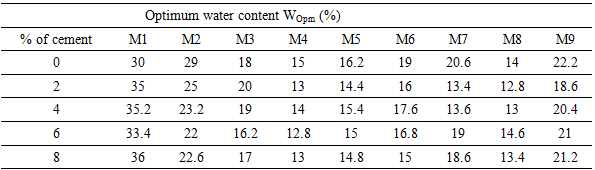
The values of the optimum water content for compaction of the materials studied at different cement percentages are given in Table 5.
Table 5. Evolution of optimum water content as a function of cement content
     
Looking at Table 5 above, it can be seen that, overall, the optimum water content varies in a sawtooth pattern.
5.3.2. Maximum dry Density after Stabilization
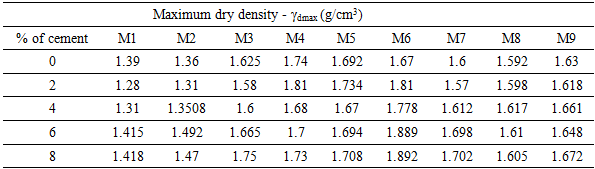
Table 6 shows the impact of cement stabilisation on the maximum dry density of the soil samples studied.
Table 6. Evolution of maximum dry densities as a function of cement content
     
With the exception of material 4, the rest of the materials show an increase in dry density of between 0% and 8% when corrected with cement. Material 1, for example, shows an increase in γdmax of around 2.8%, while materials 2 and 3 show increases of 11% and 12.5% respectively. Material 6 has the highest rate of increase in maximum dry density, at 22.2%. Treating the materials studied with cement will be beneficial because during the life of the pavement, the mechanical stresses induced by traffic and the weight of the pavement structure will have a reduced effect on the compaction of the subgrade.

5.4. CBR Index

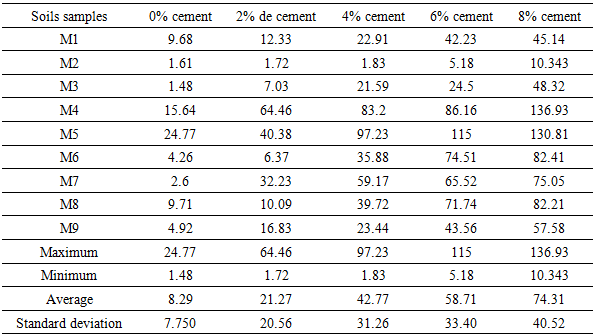
Table 7 shows the bearing capacity values of the Bamendou materials, in their natural and stabilised states. Generally speaking, the Californian bearing capacity index increases with the addition of cement. The progressive increase in cement content leads to a significant and almost exponential improvement in the CBR index, with a particularly marked gain from 4% onwards and an apparent technical optimum around 6%, beyond which the mechanical yield becomes less proportional.
Table 7. CBR index for natural and treated soils
     
The maximum CBR value for the natural materials studied is 24.77, while the minimum value is 1.48 for an average of 8.3. However, the materials improved with 2, 4, 6 and 8% cement have average CBR values of 21.27, 42.77, 58.71, and 74.31. Although the minimum punching strengths vary very little after the cement treatments, the changes in overall performance expressed by the average CBR values are more noticeable. These changes can be explained by the influence of the setting reaction with the soil particles, which leads to an increase in bearing capacity up to the cement content threshold [44, 45]. In addition, the work of [36] on the use of laterites in western Senegal shows that the addition of cement increases the CBR value of the materials from 64 for natural materials to 192 for materials corrected with 6% cement. In addition to Diop's work [40] has worked on assessing the effect of cement and hot on soil properties. Based on the work [46, 47], it has been shown that chemical reactions occur during the mixing of soil and cement, including the hydration of the two anhydrous calcium silicates (3CaO. SiO2 (C3S) and 2CaO. SiO2 (C2S)), the main constituents of cement, to form two new compounds: calcium hydroxide (hydrated lime known as portlandite) and hydrated calcium silicate (CSH), the main binder in concrete. This reaction occurs according to equation (1): Cement + H20 → CSH + Ca (OH) 2. . The results obtained from his work show that for a natural material, the CBR value is 6.28; however, following stabilisation with cement at a content of 7.5%, the CBR value obtained is 53.16. This increase is justified by the reactions produced by cement mixed with laterite.
Table 7 shows that the average performance of the soils is doubled with the addition of 4% cement. Thus, as a platform soil, the proposed performance of the materials studied, some of which were acceptable before stabilisation, becomes better with the addition of 4% cement. However, the fact that the change in average CBR values with 6 and 8% cement is not as great as with a change from 2 to 4% cement shows that it would be beneficial, particularly from an economic point of view, if engineers did not exceed a 4% cement content for the improvement of these materials.

6. Suggested Prescription for Cement Stabilisation

By way of suggestion, we can say that, in view of the different cement dosages prescribed for improving mechanical performance, one of the parameters to be taken into account here is the economic cost of stabilising the materials. It is obvious that the more cement is used, the higher the total construction cost of the road infrastructure. Also, this increase in cement content can lead to the transition from a semi-rigid pavement to a more rigid one which, under the successive passage of vehicles, will be subject to brittle deformation, thus causing the more advanced destruction of the structure.
§ Checking the validity of the proposals drawn up to improve materials at Bamendou
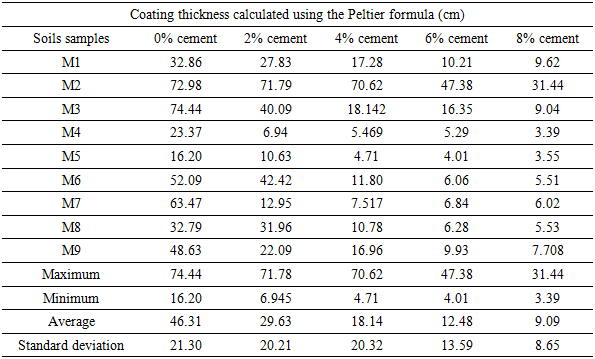
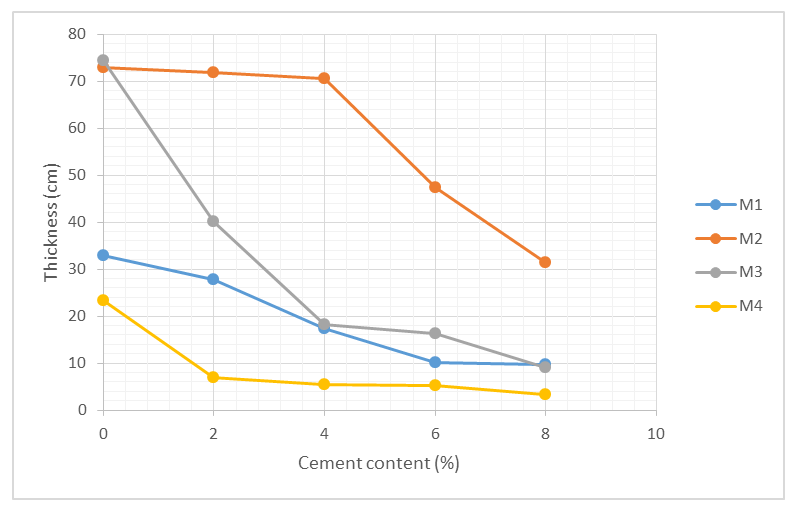
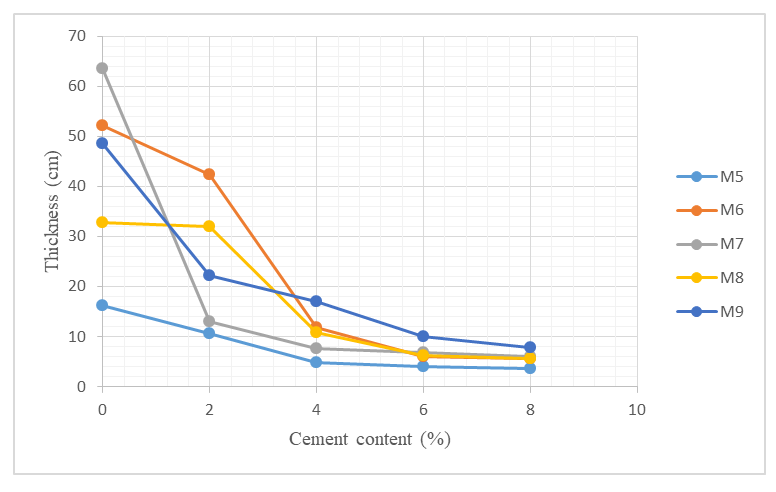
As improving the mechanical characteristics of Bamendou materials is one of the main objectives of this study, this section assesses the validity of the proposals put forward for cement treatment at cement percentages of 2, 4, 6 and 8% respectively. Knowing that the higher the CBR value of a soil, the smaller the thickness of the pavement layer, we were able to use the CBR method to design pavements, while using Peltier's formula [32], to estimate the total thickness of the pavement. Table 8 shows the evolution of the total thickness of the pavement as a function of the percentage of cement treatment.
Table 8. Evolution of total pavement thickness at different cement stabilisation rates
     
Table 8 above and Figures 6 and 7 below use Peltier's formula to illustrate the influence of cement content on the thickness of the pavement body. When the CBR index increases, the thickness of the pavement body decreases, leading to an increase in admissible traffic and a reduction in borrow materials. With regard to the evolution of the CBR index and pavement thicknesses after stabilisation of the natural soil samples with cement, the conclusion drawn after a descriptive statistical study is that for soil samples 1 and 2, stabilisation with 6% cement should be recommended. However, for samples 3, 5, 6, 7, 8 and 9, the best stabilisation rate is 4% cement. Finally, for sample 4, the ideal stabilisation rate is 2% cement. We can also see that for an average change from 0% cement to 4% cement, the thickness of the pavement body is reduced by more than half, i.e. by 28.17 cm, while the CBR value is increased by 34.48. This increase in load-bearing capacity modifies the permissible vehicle traffic volume by authorising an additional volume of traffic depending on the axle load.
Figure 6. Variation in pavement thickness as a function of cement addition for materials 1, 2, 3 and 4
Figure 7. Variation in pavement thickness as a function of cement addition for materials 5, 6, 7, 8 and 9

7. Conclusions

Numerous tests were carried out to characterise the raw laterite borrowings at Bamendou, and to assess the effects of chemical stabilisation by adding cement on the mechanical properties of the laterites. The results show that these lateritic soils have an average plasticity index of 12.13. The average percentage of fines is 44.53% for a dry density of 1.58 g/cm3. The average CBR value is 8.29%. The multiple linear regression carried out between the CBR value, the percentage of fines and the plasticity index shows a correlation coefficient of 0.72. However, a correlation between the CBR value, the liquidity limit and the plasticity index shows a correlation coefficient of 0.85, characteristic of a strong correlation between the variables. Following a complete identification of the samples, the mechanical characteristics obtained were then compared with the recommended performance for road surfaces. This comparison showed that the natural materials as a whole had insufficient characteristics. This led to the improvement of these materials by adding cement (CIMENCAM 32.5) at different percentages (2, 4, 6 and 8%). This resulted in an increase in the load-bearing capacity of the materials, depending on the rate of stabilisation. It was possible to make proposals for prescribing a cement stabilisation rate for use as a roadbed. The result is that, from an economic and technical point of view, the best stabilisation rate for engineers is 4% cement.

References

[1]  Maignien., 1966. Compte rendu de recherches sur les latérites, Paris: UNESCO, 155 p.
[2]  Yunzhi Tan., Mozhen Hu., Dianqing Li., 2016. Effects of agglomerate size on California bearing ratio of lime treated lateritic soils. Original Article/Research, International Journal of Sustainable Built Environment 5, 168–175.
[3]  Nyemb BJF., Onana VL., Ntoh NG., Pianta Tadida CV & EkodeckGE., 2013. Caractérisation minéralogique, chimique et géotechnique des graveleux latéritiques du tronçon routier Bahouan-Bamendjou-Batchum (Ouest Cameroun).Colloque Géosciences et Appui au Développement, Université de Douala, Cameroun, pp 16–17.
[4]  Manefouet Bertille Ilalie., 2016. Caractérisation altérologique et géotechnique des argiles et graveleux latéritiques de la zone basse du versant Sud des monts bambouto – traitements aux liants hydrauliques. PhD, Université de Yaoundé I,Yaoundé.
[5]  Hyoumbi Tchungouelieu W., Pizette P., Wouatong ASL., Abriak NE., 2018. Mineralogical, chemical, geotechnical and mechanical investigations of Bafang lateritic fine soils formed on basalts (West-Cameroon) for road embankment purpose. Earth Sci Res 7(2): 42–57. https://doi.org/10.5539/esr.v7n2p42.
[6]  Katte YV., Mfoyet Moupe S., Manefouet B., Wouatong ASL., Bezeng Aleh L., 2018.Correlation of California bearing ratio (CBR) value with soil properties of road subgrade soil. Geotech Geol Eng. https://doi.org/10.1007/s10706-018- 0604-x.
[7]  Takala BH., Mbessa M., 2018. Geotechnical characterization of the Bafoufam lateritic gravels (west Cameroon) for road construction purpose. Conf Arab J Geosci. https:// doi.org/10.1007/ 978-3- 030-01665-4_29.
[8]  Keyangue Tchouata JH., Gouafo C., Katte VY., Ngapgue F., Djambou Tchiadjeu C., Kamdjo G., Zoyem Gouafo M., 2019. Characterization of Lateritic Banka Gravelous (West Cameroon) for Their Use in Road Geotechnical. Am Sci Res J Eng Tech Sci 55(1): 92–103.
[9]  Chindaprasirt, Prinya., Arkhom, Sriyoratch., Anukun, Arngbunta., Panatchai, Chetchotisak., Peerapong, Jitsangiam., Apichit, Kampala., 2022. Estimation of modulus of elasticity of compacted loess soil and lateritic-loess soil from laboratory plate bearing test. J. Case Studies in Construction Materials 16 (2022) e00837.
[10]  Foko Tamba Carlos., Kengni Lucas., Tematio Paul., Manefouet Bertile Ilalie., Kenfack Jean Victor., 2021. Assessment of Lateritic Gravelled Materials for Use in Road Pavements in Cameroon. J. Geotech Geol Eng, https://doi.org/10.1007/s10706-022-02151-4.
[11]  Demanou Messe Malick Rosvelt., Kenfack Jean Victor., Ngapgue François., Wouatong Armand Sylvain Ludovic., Makem Elvise Abasoh., Ngako Keuni., 2021. Lineaments analysis of Bafoussam (West-Cameroon) using remote sensing and vertical electrical sounding: Hydrogeological implication. The Egyptian Journal of Remote Sensing and Space Sciences 24 (2021) 1023–1036.
[12]  Tene Fongang Brice., Tassongwa Bernard., Manefouet Bertille Ilalie., Yemeli Claude Martial., Ngapgue François., 2022. Contribution to the flexible pavement design guides evaluation used in tropical zone: Application to lateritic materials of Bamougoum (West, Cameroon). Case Studies in Construction Materials 16 (2022) e01064.
[13]  Combere M., 2008. Problématique du dimensionnement des chaussées souples au Burkina Faso. Mem. Maitr. Univ, Thies, p 164.
[14]  Diop S., Gbaguidi I., Diome F., Samb M., 2015. On the geotechnical properties of lateritic gravels from the quarries of LamLam and Mont-Rolland (Western Senegal), implications for their use in road construction. Int J Sci Technol Soc 3(5): 260–264.
[15]  Onana VL., Nzabakurikiza A., Ndome Effoudou E., Likiby B., Kamgang Kabeyene V., Ekodeck EG., 2015. Geotechnical, mechanical and geological characterization of lateritic gravels of Boumpial (Cameroon) used in road construction. J. Camer. Acad. Sci 12(1): 45–54.
[16]  Issiakou Souley M., 2016. Caractérisation et valorisation des matériaux latéritiques utilisés en construction routière au Niger. Thèse Doct., Univ. Bordeaux, 323 p + annexes 349.
[17]  Kanda Sandjong J., Nkotto Ntom IL., Djangue Nankap M., Ndam Ngoupayou RJ., Feumba R.
[18]  CEBTP., 1984. Guide pratique de dimensionnement des chaussées pour les pays tropicaux. Centre d’expertise du bâtiment et des travaux publics, Saint-Rémy-lès-Chevreuse, p 155p.
[19]  Djouka-Fonkwé, M.L., Schulz, B., Schüssler, U., Tchouankoué, J.-P., Nzolang, C., 2008. Geochemistry of the Bafoussam Pan-African I- and S-type granitoids in western Cameroon. J. Afr. Earth Sc. 50 (2-4), 148–167.
[20]  Fabien Szymkiewicz., 2011.Évaluation des propriétés mécaniques d’un sol traité au ciment. Thèse de doctorat, spécialité géotechnique.Université Paris-Est. 245p.
[21]  Youmen, D., Schmincke, H.U., Lissom, J., Etame, J. Données géochronologiques: mise en évidence des différentes phases volcaniques au Miocène dans les monts Bambouto (Ligne du Cameroun). Science Technologie Développement 2005, 11(1), 49-57.
[22]  Kwekam, M., Liegeois, J.P., Njonfang, E., Affaton, P., Hartmann, G., Tchoua, F., (2010). Nature, origin and significance of the Fomopéa Pan-African high-K calc-alkaline plutonic complex in the Central African Fold Belt (Cameroon). Journal of African Earth Sciences, 57, 79-95.
[23]  Nono., Likeng., Wabo., Tabue Youmbi., BIAYA., 2009. Influence of the lithological nature and geological structures on the quality and dynamics of groundwater in the highlands of West Cameroon. Int. J. Biol. Chem. Sci. 3(2): 218-239.
[24]  Tardy., 1997. Petrology of laterites and tropical soils. A.A. Balkema. 9054106786.
[25]  NF EN 206/CN. Concrete-specifications, performance, production and conformity. AFNOR 2014, Paris, 24p.
[26]  NF P 94 – 050., 1995. Soils: reconnaissance and testing. Determination of the water content by weight of materials by the steaming method. AFNOR, Paris.
[27]  NF P 94-056., 1996. « Soils: reconnaissance and testing. Granulometric analysis of soils. Dry sieving method after washing », AFNOR, Paris, 16p.
[28]  NFP 94- 057., 1994. Soil particle size analysis by sedimentometry. Afnor, Paris.
[29]  NF P 94-054., 1991. « Soils Recognition and testing. Determination of the density of solid particles in soils. Water pycnometer methods», AFNOR, Paris, 8p.
[30]  NFP 94- 051., 1994. Determination of Atterberg limits - cup limit - roller limit plasticity limit at the roller. AFNOR, Paris.
[31]  NF P94-093., 1993. Determination of soil compaction characteristics, normal Proctor test, modified Proctor test, AFNOR, 14p.
[32]  NF P94 – 078., 1007. Soils: Recognition, CBR index after immersion, Immediate CBR index, Immediate bearing index. Afnor, Paris
[33]  THIAW, Sandoumbé., 2006. Mechanistic-empirical design of pavement structures: Application to the Séo-Diourbel section. CHEIKH ANTA DIOP University of Dakar. 104 pages.
[34]  Daramola., Malomo., AsiwajuBello., 2018. « Premature failure of a major highway in southwestern Nigeria»: the case of Ipele–Isua highway. International journal of geo-Engineering.
[35]  Inan I., Mampearachchi., W K Udayanga., 2016. Effect of Fine Percentage on the Properties of Sub-base Material. Engineer - Vol. XLIX, No. 04, pp. [15-25], 2016 © The Institution of Engineers, Sri Lanka.
[36]  NGAPGUE François., GUIMEZAP KENOU Willy Chance., KEYANGUE TCHOUATA Jules Hermann., KEUBOU TATAPZIA Vladimir Willianov., 2020. Geotechnical identification and classification of soils as flexible pavement subgrade of the section Fongo Tongo-Melong. Journal of Geoscience and Environment Protection, 2020. https://www.scirp.org/journal/gep.
[37]  Seybatou Diop., Momar Samb., Fary Diome., Meissa Fall., 2015. Etude de caractérisation des matériaux de la carrière de Sindia (Sénégal occidental) pour une utilisation en géotechnique routière. Revue du cames sciences appliquées et de l’ingénieur. Vol. 1(2), pp. 79-85, Online January 2015.
[38]  Al-hadj Hamid ZAGALO., François NGAPGUE., Maurice KWEKAM., Idriss Goudja TCHERE., 2017. Caractérisation physique des sols de la ville d’Amtiman (Tchad) comme assises de fondation. Revue du CAMES Sciences Appliquées et de l’Ingénieur, Vol. 2(2), pp. 54-58.
[39]  Moayed, R, Lahiji, B, Daghigh, Y. (2013). Effect of wetting- drying cycles on CBR values of silty subgrade soil of Karaj railway. Proceedings of the 18th international conference on soil mechanics and geotechnical engineering. Vol:1, p.1321- 1324.
[40]  Rollings M P., Rollings R S., 1996. Geotechnical Materials in Construction.New York: McGraw-Hill.
[41]  Afolayan, Olaniyi D., 2017. Evaluation of the effect of lime and cement on the engineering properties of selected soil in a university in southwestern nigeria. Journal of advancement in engineering and technology journal homepage: http://scienceq.org/journals/jaet.php.
[42]  Okon Bassey Bassey, Imoh Christopher Attah, Edidiong Eseme Ambrose, Roland Kufre Etim, (2017). Correlation between CBR Values and Index Properties of Soils: A Case Study of Ibiono, Oron and Onna in Akwa Ibom State. Scientific & Academic Publishing. All Rights Reserved.
[43]  TRAN Van Duy., 2013. Étude de l'amélioration des sols par traitement à la chaux. Thèse de master en Ingénieur Civil des Constructions. Faculté des Sciences Appliquées, Université de Liège. Liège, belgique.
[44]  Belabbaci Z., 2015. Stabilisation des sols gonflants ; thèse de doctorat ; université Abou Bekr Belkaid Tlemcen.
[45]  A1-Rawi N., 1981. The Effect of Curing Temperature on Lime Stabilization. Proceedings of the 2nd Australasian Conference on Engineering Materials, Sydney, 611-662.
[46]  Khunt K., Mishra C., and Amin A., 2014. Improvement in Soil Strength Using Stabilizers in Pavement. International Journal of Engineering Research & Technology, 3, 1266-1269.
[47]  Tremblay, H., 1998. Amelioration Mecanique et Prediction de Compressibilite des Sols Fins du Quebec; (PhD). Thesis; University Laval: Montreal, QC, Canada.
[48]  Billong, N., Melo, U.C., Louvet, F.and Njopwouo D., 2009. Properties of compressed lateritic soil stabilized with a burnt clay lime binder: Effect of mixture components. Construct. Build. Mater., 23, 2357-2360.
[49]  Vaiana, R., Oliviero Rossi, C., & Perri, G. (2021). An eco-sustainable stabilization of clayey road subgrades by lignin treatment: An overview and a comparative experimental investigation. Applied Sciences, 11(24), 11720.
[50]  National Research Council. (2009). The New Orleans hurricane protection system: Assessing pre-Katrina vulnerability and improving mitigation and preparedness. National Academies Press.
[51]  Ciampa, D., Cioffi, R., Colangelo, F., Diomedi, M., Farina, I., & Olita, S. (2020). Use of unbound materials for sustainable road infrastructures. Applied Sciences, 10(10), 3465.
[52]  Geiman, C. M. (2005). Stabilization of soft clay subgrades in Virginia phase I laboratory study (Doctoral dissertation, Virginia Tech).
[53]  Danyluk, L. S. (1986). Stabilization of fine-grained soil for road and airfield construction (Vol. 86, No. 21). US Army Corps of Engineers, Cold Regions Research & Engineering Laboratory.
[54]  Little, D. N., Thompson, M. R., Terrell, R. L., Epps, J. A., & Barenberg, E. J. (1987). Soil stabilization for roadways and airfields. Engineering & Services Laboratory Air Force Engineering & Services Center: Tyndall Air Force Base, FL, USA.
[55]  Vijayakumar, A., Kumar, S. N., & Tejareddy, P. A. (2019). Utilization of waste materials for the strengthening of pavement subgrade-a research. Int. J. Innov. Technol. Explor. Eng, 8, 209-212.
[56]  Xu, G., Wang, H., & Zhu, H. (2017). Rheological properties and anti-aging performance of asphalt binder modified with wood lignin. Construction and Building Materials, 151, 801-808.
[57]  Bell, F. G. (1996). Lime stabilization of clay minerals and soils. Engineering geology, 42(4), 223-237.
[58]  Perri, G., De Rose, M., Domitrović, J., & Vaiana, R. (2023). CO2 Impact Analysis for Road Embankment Construction: Comparison of Lignin and Lime Soil Stabilization Treatments. Sustainability, 15(3), 1912.
[59]  Afès, M., & Didier, G. (2000). Stabilisation des sols gonflants: cas d'une argile en provenance de Mila (Algérie). Bulletin of Engineering Geology & the Environment, 59(1).
[60]  Driss, A. A. E., Harichane, K., & Ghrici, M. (2018). Effet de la chaux sur la stabilisation des proprietes geotechniques d’un sol argileux. In 8th International Symposium on construction in seismic zone (SICZS 2018), Chlef on (Vol. 10).
[61]  Paterne, C. B., Alinabiwe, A., Nelly, M. B., Germaine, B., Katumbi, K., Badesire, P., & Ngapgue, F. (2023). Etude de la stabilisation du sol de Buganga en RDC par ciment et chaux en vue de l'utilisation dans la construction routière. International Journal of Innovation and Applied Studies, 40(1), 212-218.
[62]  Nguyen, T. T. H. (2015). Stabilisation des sols traités à la chaux et leur comportement au gel (Doctoral dissertation, Paris Est).
[63]  Oumnih, S. (2020). Étude de valorisation du phosphogypse par désulfuration et par ajout à la stabilisation des sols gonflants.