
-
Paper Information
- Paper Submission
-
Journal Information
- About This Journal
- Editorial Board
- Current Issue
- Archive
- Author Guidelines
- Contact Us
International Journal of Virology and Molecular Biology
p-ISSN: 2163-2219 e-ISSN: 2163-2227
2026; 15(8): 175-182
doi:10.5923/j.ijvmb.20261508.01
Received: Sep. 27; Accepted: Oct. 22, 2026; Published: Oct. 26, 2026

Morphological Indicators of Stevia rebaudiana Bertoni Under the Soil and Climatic Conditions of the Khorezm Region
 Abstract
 Reference
 Full-Text PDF
 Full-text HTML
Feruza Saidova, Ikrom Abdullayev
Khorezm Mamun Academy, Khiva, Uzbekistan
Correspondence to: Feruza Saidova, Khorezm Mamun Academy, Khiva, Uzbekistan.
| Email: |  |
Copyright © 2026 The Author(s). Published by Scientific & Academic Publishing.
This work is licensed under the Creative Commons Attribution International License (CC BY).
http://creativecommons.org/licenses/by/4.0/

The article presents the results of a study on the morphophysiological indicators of the medicinal plant Stevia rebaudiana Bertoni under the soil and climatic conditions of the Khorezm region. Researchers conducted field experiments during 2023-2025 in experimental plots in the Urgench and Khiva districts to evaluate the effects of different fertilization systems on plant growth and development. The main morphological indicators studied included plant height, number of leaves, leaf surface area, and root mass. The results showed that applying mineral and organic fertilizers significantly affected the morphological development of stevia plants. The highest values were recorded under the combined application of mineral and organic fertilizers, with plant height reaching 72.6 cm, leaf surface area 168.7 cm², and root mass 27.8 g. Statistical analysis confirmed the reliability of differences between experimental variants (p ≤ 0.05). Correlation analysis revealed a very strong positive relationship between plant height and leaf area (r = 0.99; R² = 0.998), indicating a close relationship between growth processes and the formation of the photosynthetic apparatus of the plant. The obtained results confirm the potential for cultivating Stevia rebaudiana Bertoni under the conditions of the Khorezm region and the effectiveness of the combined fertilization system for increasing crop productivity.
Keywords: Stevia rebaudiana Bertoni, Morphophysiological indicators, Khorezm region, Mineral fertilizers, Organic fertilizers, Correlation analysis, Leaf area, Plant growth
Cite this paper: Feruza Saidova, Ikrom Abdullayev, Morphological Indicators of Stevia rebaudiana Bertoni Under the Soil and Climatic Conditions of the Khorezm Region, International Journal of Virology and Molecular Biology, Vol. 15 No. 8, 2026, pp. 175-182. doi: 10.5923/j.ijvmb.20261508.01.
1. Introduction
- Currently, there is growing worldwide interest in medicinal and sugar-substitute plants with high biological value and ecological adaptability [1]. One of the most promising crops is Stevia rebaudiana Bertoni, a perennial plant of the Asteraceae family whose leaves contain steviol glycosides characterized by a high degree of sweetness and low calorie content. Owing to these properties, stevia is widely used in the food industry, pharmacology, and dietary nutrition as a natural sugar substitute [2].In recent years, stevia has been actively introduced into various soil and climatic zones of the world, including arid and semi-arid regions [3]. Studies show that the productivity of Stevia rebaudiana depends significantly on agrotechnical growing conditions, the level of mineral nutrition, air temperature, and soil moisture [4]. Of particular importance are the morphological indicators of the plant, such as plant height, leaf surface area, number of leaves, and root system development, since they determine the intensity of photosynthesis and the biological productivity of the crop [5,6,7].The Khorezm region is characterized by a sharply continental climate, high solar radiation, a deficit of atmospheric precipitation, and varying degrees of soil salinity. These factors significantly affect the growth and development of introduced crops [8,9,10]. Under arid climate conditions, the development of effective fertilization systems that ensure sustainable plant development and increased productivity becomes particularly relevant [11,12].According to P.K.Pal et al. (2013–2017), under conditions of water deficit and high temperature, the morphological and physiological processes of stevia plants change, which affects the formation of the leaf surface and the accumulation of biomass [13,14,15]. Studies have established that the combined application of organic and mineral fertilizers activates plant growth, improves the development of the leaf apparatus, and increases stevia yield.Despite a considerable number of studies devoted to the biology and agricultural technology of Stevia rebaudiana Bertoni, the features of the morphological adaptation of this crop under the conditions of the Khorezm region have not been sufficiently studied. In this regard, the study of stevia morphological indicators under different fertilization systems in the irrigated agriculture of the Khorezm region is of scientific and practical interest.The aim of this study was to investigate the morphological indicators of Stevia rebaudiana Bertoni under different agrotechnical variants in the soil and climatic conditions of the Khorezm region.For the first time in the soil and climatic conditions of the Khorezm region, a comprehensive assessment of the morphological indicators of Stevia rebaudiana Bertoni under different fertilization systems was carried out. The effect of the combined use of mineral and organic fertilizers on plant growth, the formation of the leaf apparatus, and the development of the stevia root system under the arid climate of the region was established. Statistically significant correlations between the main morphological traits of the plants were identified.
2. Materials and Methods
- Field studies were conducted in 2023–2025 on experimental plots in the Urgench and Khiva districts of the Khorezm region. The soils of the experimental plots belonged to the meadow-alluvial type with a medium degree of salinity. The climate of the study area is characterized by hot and dry summers, low atmospheric precipitation, and high solar insolation (Table 1).
|

3. Results
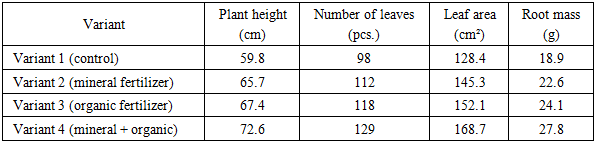
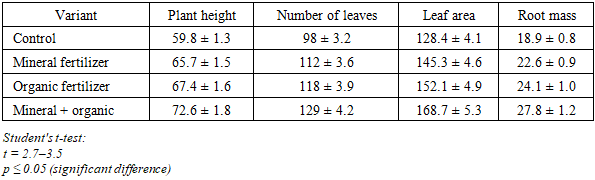
- During the field experiments conducted in 2023-2025 in the Urgench and Khiva districts of the Khorezm region, the morphological indicators of the medicinal plant stevia (Stevia rebaudiana Bertoni) were studied under the influence of different agrotechnical variants (Tables 2 and 3).
|
|
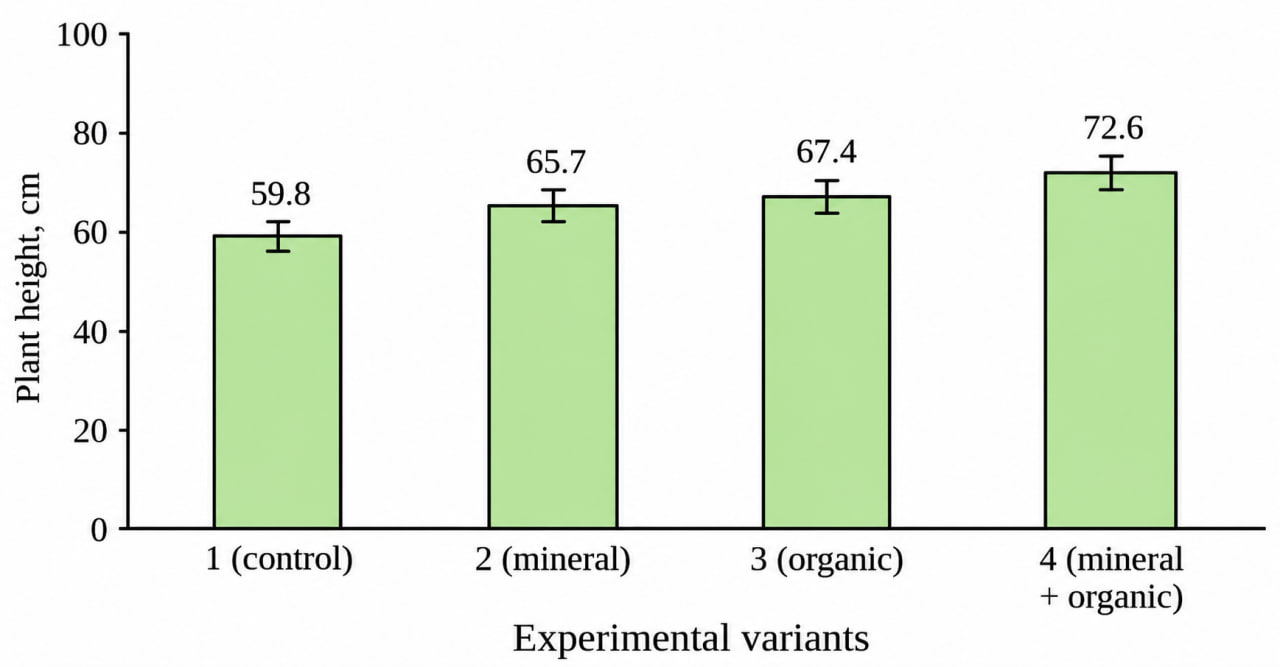 | Figure 1. Height of stevia plants by experimental variant (mean for 2023–2025) |
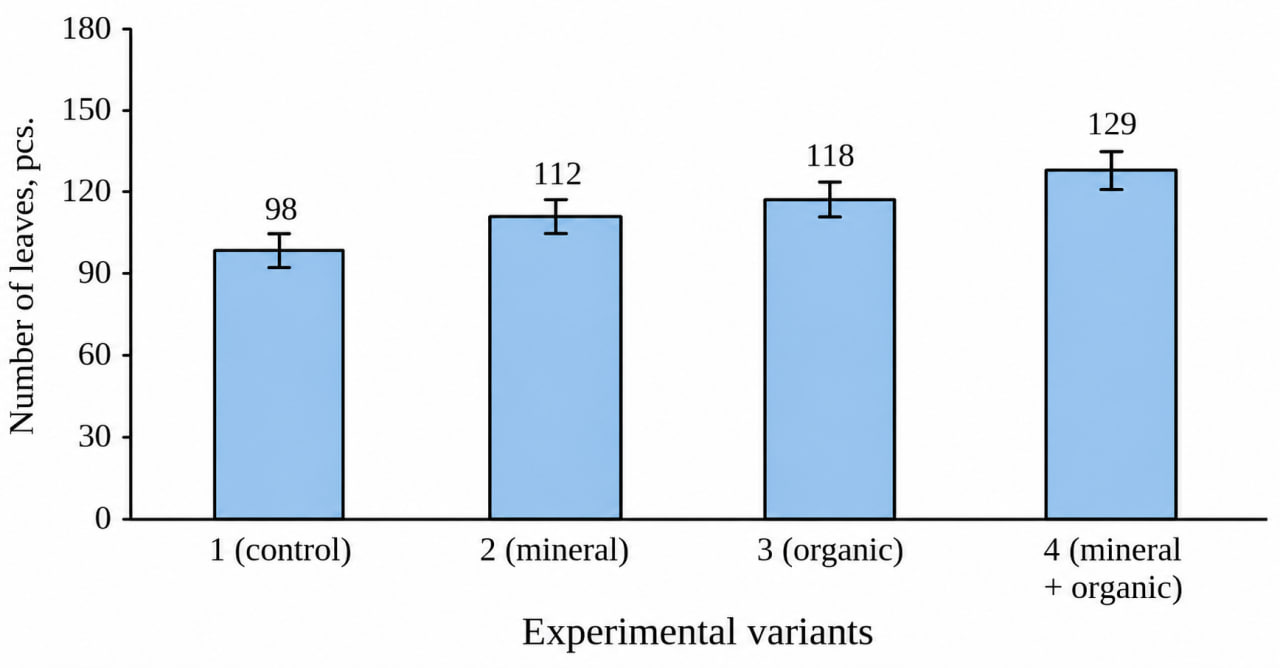 | Figure 2. Number of stevia leaves by experimental variant (mean for 2023–2025) |
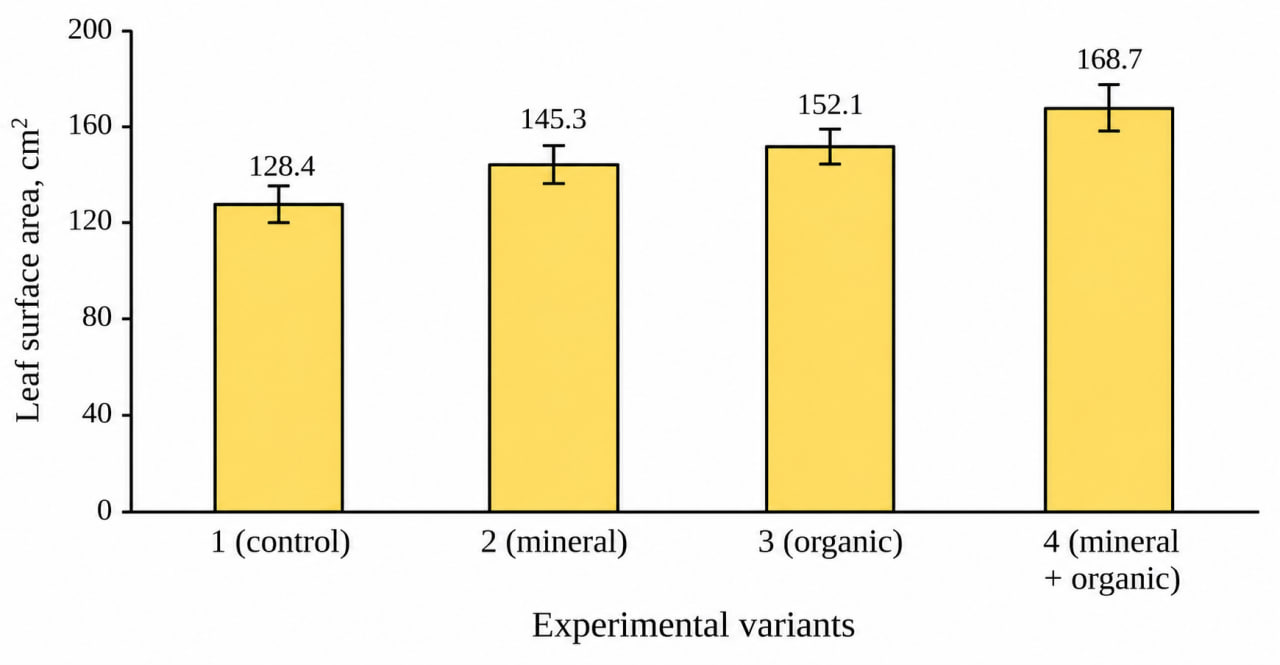 | Figure 3. Leaf surface area of stevia by experimental variant (mean for 2023–2025) |
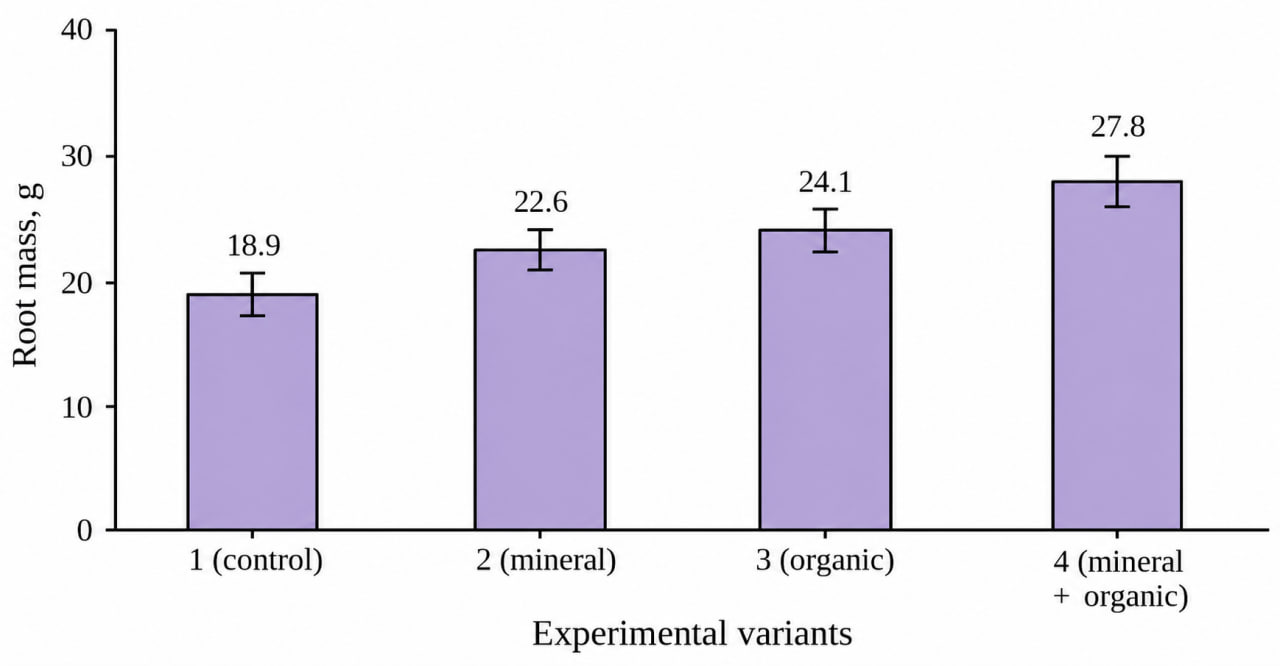 | Figure 4. Root mass of stevia by experimental variant (mean for 2023–2025) |
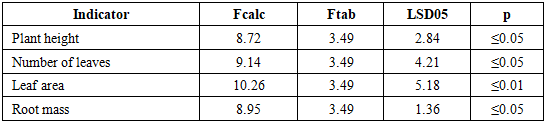
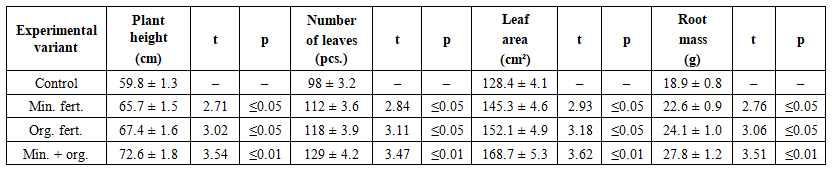 | Table 4. Statistical analysis of stevia morphological indicators by experimental variant(mean data for 2023–2025) |
|
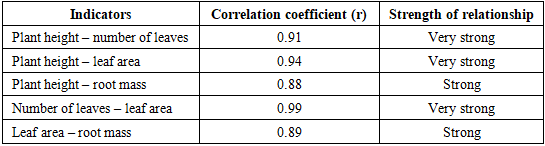
|
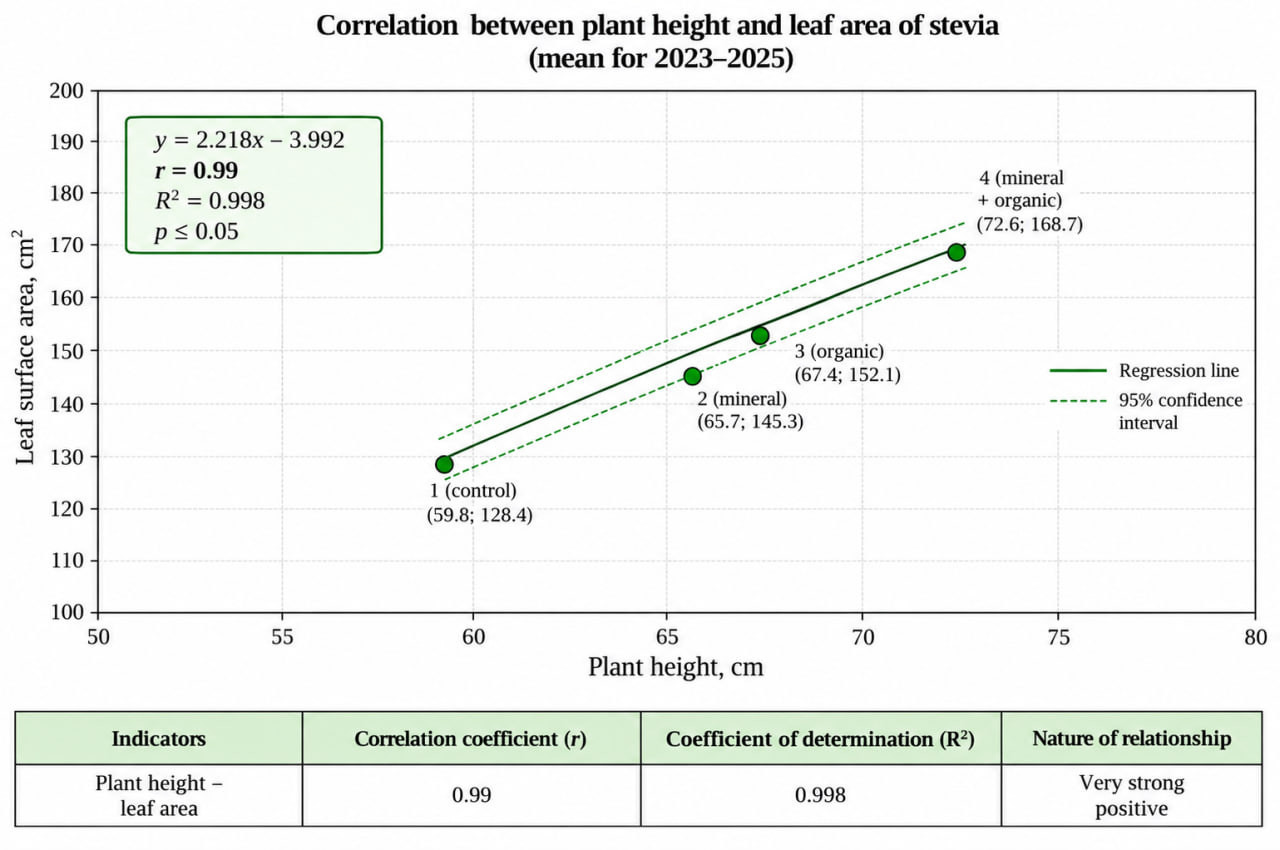 | Figure 5. Correlation between plant height and leaf area of stevia (mean for 2023–2025). (Note: r – Pearson correlation coefficient; R² – coefficient of determination; p ≤ 0.05 – significant relationship.) |
4. Discussion
- This study demonstrates that, given the soil and climate of the Khorezm region, the fertilisation regime had a significant impact on the early morphological development of Stevia rebaudiana Bertoni. Plant height, leaf number, leaf area, and root mass varied considerably between treatments. Plants treated with both organic and mineral fertilisers produced the greatest results in each attribute, indicating that an integrated approach to feeding promotes the growth of both roots and shoots. The complementary nature of the two types of fertiliser is a plausible explanation.Mineral fertilisers promote quick vegetative development by releasing nutrients in forms that plants can absorb right away. In addition to improving soil biological activity and structure, organic fertilisers release nutrients more slowly, allowing for longer-term growth. In the Khorezm, where soil and climate frequently restrict crop development, this could be important. Since soil nutrient status, plant nutrient uptake, and microbial activity were not measured, the mechanism was not explicitly tested here; hence, it should be regarded as a working hypothesis. Stevia and other crops have been shown to benefit from combination nutrition sources. Since leaves are the primary photosynthetic surface of the plant, the response of leaf area is very significant. A more evolved photosynthetic machinery is shown by the biggest leaf area during combined fertilisation. Taller plants have a greater absorbing surface because leaf area was likewise strongly correlated with plant height (r = 0.99). Coordinated growth above and below ground is indicated by the positive relationships between leaf number and leaf area and root mass (r = 0.88 and r = 0.89, respectively). Therefore, rather than a particular characteristic, improved nutrition seems to have spurred the plant's entire development. Greater aboveground growth may be supported by a larger root system's capacity to absorb more nutrients and water. Be cautious when interpreting these associations. The extremely high correlation between height and leaf area may partially indicate both qualities reacting to the same treatment effect, since they express association rather than causation. The coefficients are likely overstated if they were computed using treatment means rather than individual plants. The statistical significance of the treatment differences was verified using the analysis of variance. Fisher's F-values exceeded the threshold values at p < 0.05 and varied from 8.72 to 10.26. Leaf development seems particularly sensitive to the fertilisation regime, as evidenced by the strongest response from leaf area (F = 10.26, p < 0.01). These findings suggest that the variations between treatments are not likely to be the result of pure chance. Post-hoc comparisons are necessary to determine which treatments differ from one another and how much in comparison to the control. The results are useful for growing stevia in the area. Under similar circumstances, coupled fertilisation is a promising part of cultivation technology because it caused the strongest growth in the primary morphological features. Vigorous growth and increased biomass may be supported by the concurrent increases in leaf area and root development. However, there are a few restrictions. If the combined treatment received a larger total nutrient dose, its benefit might be due to the dose rather than the combination itself. The results are based on a single type of soil. Furthermore, morphological superiority by itself does not indicate a larger steviol glycoside concentration or an improved commercial yield.In conclusion, the fertilisation method used had a direct impact on the morphological development of S. rebaudiana in the Khorezm region. With statistically significant differences across treatments, combined mineral and organic fertilisation produced the highest plant height, leaf number, leaf area, and root mass. This suggests that proper nutrient management can enhance stevia development in the investigated conditions, especially when combined with the high connections among features. Future research should assess dry leaf yield, steviol glycoside content, and economic returns, compare various fertiliser ratios and doses, repeat the trials over multiple years and locations, and test the suggested pathways using soil and plant tissue analysis.
5. Conclusions
- The results obtained are consistent with studies by a number of foreign authors who investigated the effect of fertilization systems on the growth and development of Stevia rebaudiana Bertoni. According to C. Clemente et al. (2021) [19], the application of organic fertilizers increases leaf surface area and activates the vegetative growth of stevia plants. Similar results were obtained by B.T. Kumar et al. (2025) [20], who noted an increase in plant biomass with the combined use of mineral and organic fertilizers.The results of the present study also confirm the data of K. Ashrafi et al. (2022) [21], according to which, in an arid climate, an organo-mineral fertilization system has a positive effect on root system development and plant resistance to environmental stress factors. The high positive correlation found between plant height and leaf area (r = 0.99) is consistent with the data of current studies on stevia morphophysiology. The results of the analysis of variance also confirmed the statistical significance of the effect of agrotechnical measures on stevia growth and development. In all cases, the calculated values of Fisher’s F-test exceeded the tabulated values, confirming the substantial influence of the studied factors on the morphophysiological indicators of Stevia rebaudiana Bertoni under the conditions of the Khorezm region.The results obtained can be used in developing an adaptive agrotechnology for the cultivation of Stevia rebaudiana Bertoni under irrigated agriculture in the Khorezm region. The use of a combined system of mineral and organic fertilizers improves the morphological indicators of plants and increases their productivity. The results of the study can be recommended to farms and agrobiological research institutions engaged in the introduction of medicinal and sugar-substitute crops in the arid regions of Uzbekistan. It was established that in the soil and climatic conditions of the Khorezm region, Stevia rebaudiana Bertoni is characterized by stable growth and the ability to adapt to elevated temperatures and moderate soil salinity. The highest morphological indicators of the plants were recorded in the variant with the combined application of mineral and organic fertilizers. In this variant, plant height reached 72.6 cm, the number of leaves was 129, leaf surface area was 168.7 cm², and root mass reached 27.8 g. The application of organic and mineral fertilizers activated vegetative plant growth, improved the development of the leaf apparatus, and enhanced root system formation. Correlation analysis revealed a very strong positive relationship between plant height and leaf surface area (r = 0.99; R² = 0.998), indicating a close relationship between growth processes and the photosynthetic activity of plants. Statistical analysis confirmed the significance of differences between the experimental variants (p ≤ 0.05), indicating a substantial influence of the studied agrotechnical factors on the morphophysiological indicators of stevia. The results obtained indicate the high potential for cultivating Stevia rebaudiana Bertoni in the Khorezm region and the advisability of using a combined fertilization system to increase crop productivity.