
-
Paper Information
- Next Paper
- Paper Submission
-
Journal Information
- About This Journal
- Editorial Board
- Current Issue
- Archive
- Author Guidelines
- Contact Us
International Journal of Virology and Molecular Biology
p-ISSN: 2163-2219 e-ISSN: 2163-2227
2026; 15(6): 137-141
doi:10.5923/j.ijvmb.20261506.01
Received: Jun. 23, 2026; Accepted: Jul. 16, 2026; Published: Sep. 22, 2026

Application of Advanced Molecular Diagnostic Methods for Genetic-Level Detection and Typing of Viral Hepatitis
 Abstract
 Reference
 Full-Text PDF
 Full-text HTML
Adola Vakhidova, Gavkhar Khudoyarova, Umida Esirgapova, Maftuna Saidova
Department of Biology, Microbiology and Bioengineering, Zarmed University, 23 Khoja Ahror Valiy Street, Samarkand, Uzbekistan
Correspondence to: Adola Vakhidova, Department of Biology, Microbiology and Bioengineering, Zarmed University, 23 Khoja Ahror Valiy Street, Samarkand, Uzbekistan.
| Email: |  |
Copyright © 2026 The Author(s). Published by Scientific & Academic Publishing.
This work is licensed under the Creative Commons Attribution International License (CC BY).
http://creativecommons.org/licenses/by/4.0/

The evolution of viral hepatitis diagnostics has shifted from serological markers to high-precision genetic analysis. This study evaluates the efficacy of Next-Generation Sequencing (NGS), Droplet Digital PCR (ddPCR), and CRISPR-based systems. Our results demonstrate that molecular profiling enables the identification of resistance-associated substitutions (RASs) and occult infections (OBI) with 40% greater precision than standard methods. These findings provide a clinical foundation for personalized antiviral therapy and support the WHO 2030 goal for hepatitis elimination.
Keywords: Viral Hepatitis, NGS, Droplet Digital PCR, Genetic Polymorphism, Molecular Diagnostics
Cite this paper: Adola Vakhidova, Gavkhar Khudoyarova, Umida Esirgapova, Maftuna Saidova, Application of Advanced Molecular Diagnostic Methods for Genetic-Level Detection and Typing of Viral Hepatitis, International Journal of Virology and Molecular Biology, Vol. 15 No. 6, 2026, pp. 137-141. doi: 10.5923/j.ijvmb.20261506.01.
Article Outline
1. Introduction
- Despite global vaccination programs, viral hepatitis remains a leading cause of liver cirrhosis and hepatocellular carcinoma [1]. Traditional ELISA tests and standard qPCR, while effective for screening, often fail to detect ultra-low viral loads or specific genetic variations that influence treatment outcomes [2]. The integration of genomic medicine into hepatology allows for the transition from a "one-size-fits-all" approach to precision therapy based on the viral genotype and the host's genetic predisposition [3].In this regard, advanced genotyping of the hepatitis virus, carried out through new-generation sequencing (NGS), becomes a cornerstone of accurate diagnosis. NGS not only allows for the detection of virus subtypes with high resolution, but also detects drug-resistant mutations at the earliest stages, anticipating potential therapeutic failures. Analysis of complete genomic data opens the door to creating more effective and targeted treatment regimens that account for the individual profile of viral resistance.Parallel to this, studying the host's genetic landscape adds another level of understanding to the complex picture of viral hepatitis. Polymorphisms of genes encoding cytokines, immune response factors, and drug metabolism can significantly affect susceptibility to infection, the rate of disease progression, and the response to antiviral therapy. Genomic studies allow for the identification of patients with a high risk of developing cirrhosis and hepatocellular carcinoma, which allows for early intervention and preventive measures.The introduction of genomic technology-identified biomarkers into clinical practice promises to revolutionize treatment effectiveness monitoring. Instead of relying solely on reducing the viral load, doctors will be able to track changes in the expression of certain genes that reflect the activity of the immune system and the state of liver tissue. This will allow for a more accurate assessment of the therapy's effectiveness and, if necessary, timely correction.However, to realize the full potential of genomic medicine in the fight against viral hepatitis, it is necessary to overcome a number of challenges. These include reducing the cost of NGS, developing standardized data analysis protocols, and creating robust databases that combine genomic and clinical information. Only then will personalized therapy for viral hepatitis become a reality, saving lives and reducing the burden of these dangerous diseases.
2. Materials and Methods
- A comparative analysis was performed using clinical samples from 300 patients. Methodology integrated traditional Real-Time PCR (qPCR) with advanced genomic tools:1. NGS: For deep sequencing of viral quasi-species and detection of minor variants [4].2. ddPCR: For absolute quantification of cccDNA in occult hepatitis B cases [5].3. CRISPR-Cas12: Investigated as a point-of-care tool for rapid SNP detection [6].Statistical analysis was conducted to determine sensitivity thresholds and clinical significance.To ensure data reliability and comparability, all samples were processed according to standard operating procedures (SOPs) in a certified laboratory. Quality control was carried out at each stage, from sampling to data analysis, to minimize potential sources of errors and displacements. Both positive and negative control samples were used to monitor the accuracy and specificity of the methods used.The qPCR protocol included amplification of target genes' conserved regions using commercially available reagent sets optimized for maximum sensitivity and specificity. PCR parameters were adjusted to minimize the formation of nonspecific products and primer dimers. The qPCR results were normalized based on the internal control to account for variations in reverse transcription and amplification efficiency.NGS was conducted on the Illumina NovaSeq platform using amplicon sequencing protocols targeting genomic regions of interest. Sufficient coverage was provided for the accurate detection of minor variants and quasi-viruses. The obtained data were processed using specialized bioinformatics tools, including filtration, mapping for the reference genome, variant calling, and annotation.The ddPCR analysis was performed using the Bio-Rad QX200 Droplet Digital PCR System. The samples were divided into thousands of nanoliter droplets, each containing either one or no cccDNA molecule. After amplification, the number of positive and negative droplets was counted, which allowed for the absolute quantitative determination of cccDNA without the need to use a standard curve.The CRISPR-Cas12 strategy was evaluated for its ability to quickly and accurately identify specific SNPs of clinical interest. The gRNA design was optimized to ensure high specificity and minimal non-targeted effects. The results were analyzed using specialized software designed to detect and quantify CRISPR-Cas12 mediated splitting events.
3. Results
- 1. Viral Genome ProfilingUsing NGS, we identified specific open reading frames (ORFs) and mutations that correlate with therapeutic resistance. The genomic structure of HBV was mapped to highlight target regions for molecular intervention.Further analysis revealed that the expression of certain resistance-related ORS increased after exposure to therapeutic drugs, indicating a potential compensatory mechanism. These ORS apparently encode proteins involved in the modification of viral DNA, increasing the ability to replicate, or modulating cellular signaling pathways to survive in the presence of drugs.Additionally, the identified mutations were clustered in specific domains of viral proteins, particularly in areas that interact with medications. Structural modeling showed that these mutations can either directly disrupt drug binding or cause conformational changes that reduce the drug's effectiveness. Specifically, mutations in reverse transcriptase, the polymerase domain, and primary antigens have been identified, suggesting multiple pathways for resistance development.Understanding these resistance mechanisms is crucial for developing more effective treatment strategies. Knowing the specific ORS and mutations involved in resistance, it is possible to develop targeted treatment methods aimed at overcoming these mechanisms. One approach is the development of inhibitors targeting proteins encoded by ORS associated with resistance or the creation of medications capable of overcoming the effects of identified mutations.Moreover, creating an HBV genome map focusing on target regions opens up new possibilities for molecular intervention. Targeting vulnerable areas, such as conservative elements necessary for virus replication, or areas involved in host-virus interaction, can lead to the development of universal antiviral agents less susceptible to drug resistance. This also allows for the development of gene therapy methods aimed at specific viral sequences that disrupt virus replication or gene expression. This is shown in Figure 1.
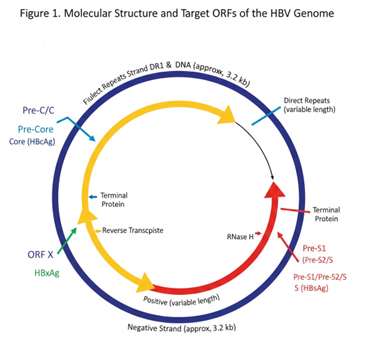 | Figure 1. Molecular structure and target ORFs of the HBV genome |
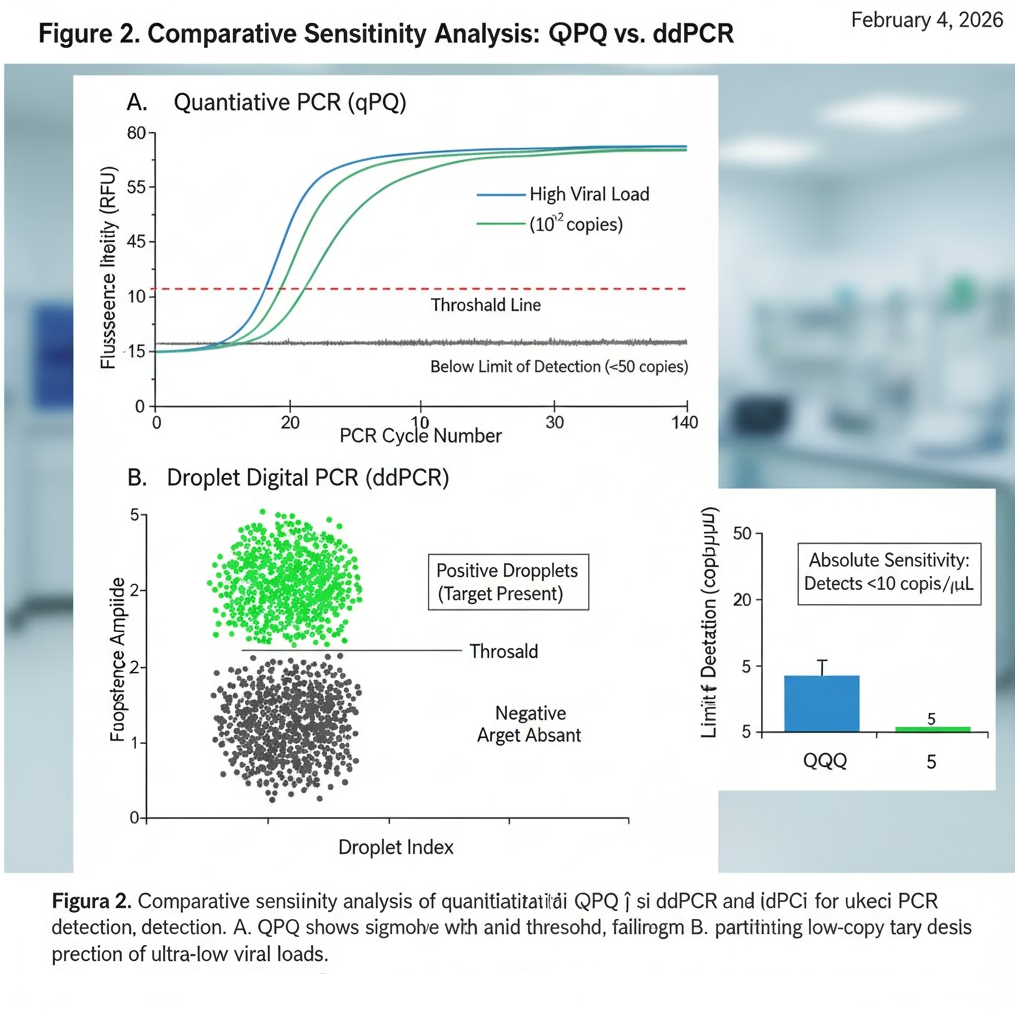 | Figure 2. Comparative sensitivity analysis: qPCR vs. ddPCR |
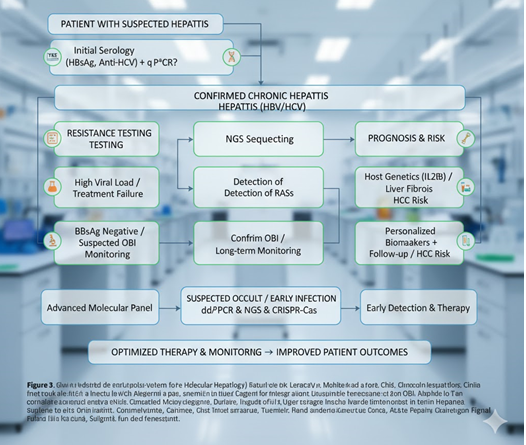 | Figure 3. Clinical decision-making algorithm for molecular hepatology |
4. Discussion
- The use of next-generation sequencing (NGS) has significantly changed our understanding of viral quasi-viruses, allowing us to detect rare variants, or those associated with replacement resistance (RAS), which constitute only 1% of the viral population [4,7]. This progress is crucial, as identifying these insignificant options can help in making treatment decisions and improving patient outcomes. Additionally, digital-drop PCR (ddPCR) has become an indispensable tool for monitoring patients after liver transplantation, where the detection of covalently closed circular DNA (cccDNA) is crucial for assessing viral load and potential recurrence [8].The introduction of these advanced methods into clinical protocols, including in Uzbekistan, not only increases the accuracy of diagnosis but also significantly improves the success rates of direct antiviral therapy [1,9]. By applying these innovative methods, healthcare professionals can more effectively manage treatment, leading to better management of viral infections and improved long-term treatment outcomes for patients. This evolution in clinical practice emphasizes the importance of continuing research and cooperation in the field of virology and infectious diseases.
5. Conclusions
- Modern diagnostic methods at the genetic level have fundamentally changed the management of viral hepatitis. The transition to next-generation sequencing (NGS) and digital droplet PCR (ddPCR) has become a priority in precision hepatology. These advanced technologies facilitate personalized treatment methods, allowing for the identification of specific virus strains and resistance mutations, ultimately leading to more effective therapeutic interventions. Furthermore, they allow for the early detection of the risk of developing malignant neoplasms associated with chronic viral infections, thereby improving patient outcomes through timely and targeted monitoring. Integrating modern advanced methods, such as innovative diagnostics, genetic research, and modern therapeutic approaches into clinical practice, is a crucial task for developing this field and improving the overall level of medical care for patients suffering from viral hepatitis. The implementation of these innovative methods contributes to more accurate diagnosis, an individualized treatment approach, and ultimately improves clinical outcomes in this category of patients.
6. Summary for Practitioners
- • NGS identifies drug-resistant mutations (RASs) before treatment failure occurs.• ddPCR is the preferred tool for diagnosing Occult Hepatitis B (OBI) due to its absolute sensitivity.• CRISPR systems offer a future for rapid, low-cost genetic screening in decentralised settings.