International Journal of Virology and Molecular Biology

p-ISSN: 2163-2219    e-ISSN: 2163-2227

2025;  14(6): 151-155

doi:10.5923/j.ijvmb.20251406.12

Received: Nov. 24, 2025; Accepted: Dec. 17, 2025; Published: Dec. 22, 2025

 

The Effect of Biostimulants for the Prevention of Immune System Disorders in Highly Productive Cows to Improve Milk Quality

Kaxorov Bolta Abdugaforovich, Kataeva Yulduzkhon Albertovna

National University of Uzbekistan named after M. Ulugbek, Uzbekistan

Correspondence to: Kaxorov Bolta Abdugaforovich, National University of Uzbekistan named after M. Ulugbek, Uzbekistan.

Email:

Copyright © 2025 The Author(s). Published by Scientific & Academic Publishing.

This work is licensed under the Creative Commons Attribution International License (CC BY).
http://creativecommons.org/licenses/by/4.0/

Abstract

In practice, feed additives with various biological properties are used, such as biostimulants, modifiers, antioxidants, enzymes, phytobiotics, when fed to ruminants, an optimal rumen environment is created for microbial activity and digestion of food substrates in the diet. The research was to study biostimulants on milk production and the state of the immune system in cattle. The nutritional quality of ruminant animals must be improved and optimized in terms of the number of degradable and non-degradable parts. Therefore, one of the ways to solve this problem on farms is to study the targeted effects of probiotic preparations on the intestinal microflora of ruminant animals. The prevention of metabolic diseases in animals is facilitated by the rational use of dietary nutrients. It is to improve the quality of milk obtained from animals. The results of the study showed that the introduction of biostimulants into the animals' bodies changed milk production. Biologically active substances in milk correspond to the physiological norm. The intensification of cattle breeding and the use of industrial technologies significantly increases the load on the cow’s body and contributes to the strain of its functionality. Changing technological conditions of detention do not always correspond to the physiological needs of animals, and in this situation diseases arise, which are based on metabolic disorders.

Keywords: Feed additives, Correction, Immunostimulants, Biostimulants, Milk, Livestock, Antitelo, Leukocytes

Cite this paper: Kaxorov Bolta Abdugaforovich, Kataeva Yulduzkhon Albertovna, The Effect of Biostimulants for the Prevention of Immune System Disorders in Highly Productive Cows to Improve Milk Quality, International Journal of Virology and Molecular Biology, Vol. 14 No. 6, 2025, pp. 151-155. doi: 10.5923/j.ijvmb.20251406.12.

1. Introduction

Livestock breeding is one of the strategically important branches of agriculture. Milk obtained from a cow is processed into dairy products such as butter – a source of energy and fat-soluble vitamins, kefir – a source of beneficial lacto bacteria and easily digestible milk protein, cheese – a source of protein and calcium, etc. To meet the population's needs for dairy products and not depend on imports, it is necessary to increase the milk productivity of cows. The main role in this issue is given to proper feeding. The domestic feed base has a sufficient range of feed for the needs of dairy cattle farming, but given today's high demands on animals and the high degree of influence of stress factors on their bodies, it is impossible to do without the use of feed additives. The positive properties of feed additives are widely known [1]. Various mineral, vitamin, protein supplements, and biostimulants have been used productively in animal husbandry for many years. Particularly valuable in this regard are feed additives with biologically active properties (vitamins, minerals, natural compounds, such as humic acids, etc.), which not only replenish the animals' diet with missing nutritional elements, but also serve as activators of metabolic processes, providing a comprehensive positive effect on the entire body [1,2]. It is known that the intensification of cattle breeding and the use of industrial technologies significantly increase the load on the cow's body and contribute to the stress on its functionality. Changing technological conditions of keeping do not always correspond to the physiological needs of animals, and in this situation, diseases associated with disruption of metabolic processes arise [3]. Among the complex of external conditions that influence the physicochemical parameters of milk and their biological value, special attention should be paid to the feeding of dairy cattle. In addition, feed not only directly affects the productivity and quality of milk, but also indirectly affects the immune system [4]. In maintaining the efficiency of dairy farming, two main strategic directions can be identified: ensuring the health and high productivity of cows, direct milk producers, and raising strong, high-quality young animals for reparation and replenishment of the herd.
In this study, the authors examine the use of feed additives based on humic acids for growing young cattle and biostimulants in the diets of highly productive dairy cows.
In recent years, much attention has been paid in animal husbandry to the development of a variety of additives that can increase milk production, milk fat content, improve feed digestibility, and stimulate metabolic processes. And these additives are mineral and probiotic feed additives [5]. In practice, feed additives with various biological properties are used, such as biostimulants, modifiers, antioxidants, enzymes, phytobiotics, when fed to ruminants, an optimal rumen environment is created for microbial activity and digestion of food substrates in the diet [6]. Taking into account the above, a pressing issue is the creation and introduction into production of biostimulants intended for inclusion in the composition of compound feeds and diets that have a beneficial effect on metabolism, animal productivity, quality and safety of animal products [7].
Due to the insufficient protein and mineral nutrition of animals in agriculture, there is a need to create new feed additives that would combine the role of protein biostimulants and microelements. Taking this into account, there is a need to develop new drugs and feed additives with a complex effect in order to improve metabolic processes and safety, as well as to determine the spectrum of effectiveness of their use.

2. Purpose of the Research

The main objective of the study was to investigate the effect of biostimulants on milk productivity and the state of the immune system in cattle.
To achieve this goal, the following tasks were set:
1. To determine the influence of feed biostimulant on the milk productivity of cows and the quality of raw milk.
2. To study the biochemical parameters of cows’ blood when using a biostimulant.
3. To evaluate the economic efficiency of introducing biostimulants into diets of highly productive cows.

3. Materials and Methods

The studies were conducted using clinical-physiological, immunological, microbiological, veterinary-sanitary, zootechnical and mathematical methods. The influence of biostimulants in different doses on metabolic processes, productivity and milk quality of cows was studied [12].
The studies were conducted on 32 dairy cows in the Zangi-Ota district of the Tashkent region in 2023.mAnimals in the control and experimental groups received a diet consisting of wheat straw (0.6 kg), corn silage (23.0 kg), wheat silage (50.0 kg), complete feed (14.58 kg), antigen (0.05 kg) and alfalfa haylage (6.50 kg). Animals of the experimental groups, in addition to the basic diet (BD) as part of the complete feed, received a mineral feed biostimulant at a dose of 300 g daily.

4. Results and Discussion

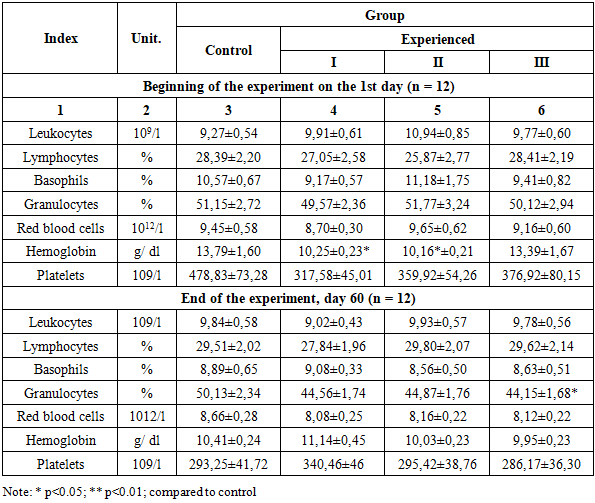
In accordance with the accepted scheme of zootechnical analysis of feed, dry matter (DM) of feed is the carrier of the nutritional value of feed. The higher the dry matter content of the feed, the higher its nutritional value. It is known that the DM consumption of bulky feeds depends on the concentration of metabolic energy in them and the level of productivity. Biostimulants were administered to animals for 30 days, 10 ml. intramuscularly. Hematological parameters of the blood of experimental cows are presented in Table 1. Over the entire period of the experiment, the concentration of leukocytes in the control and experimental groups was within physiological norms and had an average value of 9.5 109/l in the control group and 9.9 109/l in the experimental groups. The lymphocyte content at the beginning and end of the experiment in the control and experimental groups was within physiological norms and no significant changes were observed. Control group – average content for the entire period – 33.9%. Experimental groups: I – 27.4%; II – 27.8%; III – 29.01%.
Table 1. Hematological parameters of the blood of experimental cows
     
The ratio of basophils at the beginning and end of the experiment tended to decrease, namely in the control group it decreased by 15.9%. In the experimental groups, this indicator was 0.99%, 23.4%, and 8.3%, respectively. All indicators were within physiological norms, and no significant changes were observed. The content of granulocytes for the entire period of the experiment was determined in comparison with the control in the experimental groups; it decreased by 11.2%, 10.5 and 11.9%, respectively, while remaining within the physiological norms. At the beginning of the experiment, the erythrocyte count was within the limits and maximum values of physiological norms (5-10*1012/l), at the end of the experiment it decreased to average values, namely in the control group - 8.66 (1012/l), in the experimental group - 8.12 (1012/l). The hemoglobin level of the experimental groups at the beginning of the experiment was lower than the values of the control group: in I – by 25.7%; in II – by 26.3%; in III – by 2.9%. The indicators of the control group and the third experimental group were higher than physiological norms at the beginning of the experiment. At the end of the experiment, all indicators were within physiological norms and determined the average indicator: control group - 10.41 g/l and experimental groups - 10.37 g/l. Hematocrit values were within physiological norms (35-45%) throughout the entire experimental period, and no significant changes were observed. The average values were: control group – 39.48%; group I – 35.5%; group II – 40.38%; group III – 38.72%.
The number of platelets at the beginning of the experiment in the experimental groups was within physiological norms (250-450 1012/l), while the indicators in the control were higher. At the end of the experiment, all indicators were within physiological norms and no significant changes were observed. Data on milk productivity of animals for 100 days of lactation were obtained on the basis of daily records during each milking. The study period was divided into 5 additional periods of 20 days each. Overall, the research results showed that the trend in milk productivity levels is increasing, with the subsequent increase likely associated with the stabilization of the energy balance in the body of dairy cows.
When biostimulants are introduced, this indicator in milk increases, however, the authors did not observe exceeding the upper limit of the norm. In addition, the authors found that, in accordance with the selected analysis criteria, in the studied animal population, the biostimulant corresponded to optimal values in 17.05% of cows. The biostimulant tended to decrease as the milk productivity of animals increased, and increased as soon as the milk productivity of animals began to decrease in the dynamics of milking days. The effectiveness of feeding the feed regulator biostimulant in the diet of cows is determined by calculating the economic feasibility of its use. The main indicators in the economic assessment were: the cost of feed, average daily milk yield and the market price of milk.
In general, the results of the studies conducted by the authors showed that the trends in the change in the introduction of biostimulants and the level of milk productivity are opposite and the turning point in the decrease in the effectiveness of the biostimulant and its subsequent increase is probably associated with the stabilization of the energy balance in the body of dairy cows.
When the biostimulant acts in accordance with the physiological norm, the content of active substances in milk is the lowest. When the action of the biostimulant is shifted to the lower side, the concentration of lactose in milk increases, however, the authors did not observe exceeding the upper limit of the norm. When the concentration of the biostimulant deviates downwards, an average negative reliable relationship with the acetone level arises, and average positive reliable relationships were established between the content of the biostimulant, regardless of the concentration of the biostimulant. In addition, it was established that, in accordance with the selected analysis criteria in the studied animal population, the effect of the biostimulant corresponded to optimal values in 17.05% of cows and in 82.95% it deviated downwards and amounted to 1.10 or less.
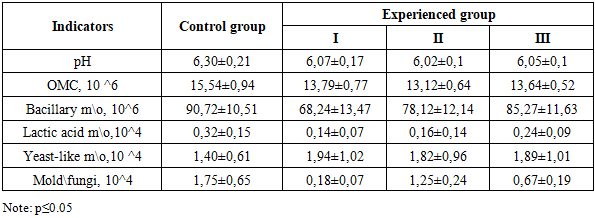
The effect of the biostimulant tended to decrease as the milk productivity of animals increased, and increased as soon as the milk productivity of animals began to decrease in the dynamics of milking days. In the group of animals with a biostimulant effect of 1.10 or less, the lactose content in milk was significantly (by 80.0%, p≤0.01) higher than the content in animals with normal biostimulant values. In cows with normal lactose values in milk, the content was 28.57% higher than the threshold value, and in animals with low biostimulant values, the established reliable excess was 141.43% (p≤0.05). When biostimulant levels were lower, a significant average negative correlation was found between this indicator and acetone levels (r = -0.572, p ≤ 0.01). A significant average positive correlation was found between lactose content for biostimulant levels less than 1.10 and for levels between 1.11 and 1.50, with the former being the more pronounced. Microflora activity analysis showed that pH did not change significantly during the experiment, but decreased in the experimental group compared to the control by 3.66%, 4.45%, and 3.97%, meeting physiological norms. The total microbial count in the experimental group also decreased by 11.27%, 15.58%, and 12.23%, respectively (Table 2).
Table 2. Indicators of rumen fluid of cows
     
The largest increase was observed in the assessment of yeast-like microorganisms, with increases in the experimental group of 38.5%, 30%, and 35%, respectively. All indicators were within normal limits.

5. Conclusions

In accordance with the stated objective, further research was aimed at studying the influence of biostimulants on productivity and metabolism in high-yielding cows. It is known that feeding, and as a consequence, the introduction of biostimulants, is one of the leading factors in ensuring high productivity of dairy livestock. This is explained by the fact that during the lactation period, the animal's body is in a state of increased functional activity; complex processes of feed fermentation occur in the forestomach through a huge number of bacteria, fungi, and protozoa, as well as the absorption of nutrients and the synthesis of new ones.
All this provides the animal with the necessary energy and nutrients, affects the physiological processes occurring in the body, which in turn contributes to the strengthening of metabolic processes, productive and reproductive phenomena. An important point in these processes is the ability to control rumen digestion by adjusting the diet using various biostimulants.

References

[1]  Aboneev, V.V. Fattening and meat qualities of the offspring of different selection options in commercial herds [Text] / V.V. Aboneev, L.N. Skorykh // Zootechnics. - 2013. - No. 1. - Pp. 5-8.
[2]  Avdalyan, Ya.V. Meat productivity of bulls of different breeds [Text] / Ya.V. Avdalyan, I.V. Zizyukov, N.F. Shchegolkov // Zootechnics. - 2016. - No. 2. - Pp. 12-15.
[3]  Azhmuldinov, E.A. Fattening of bulls on beet pulp [Text] / E.A. Azhmuldinov, Z.I. Bigbulatov // Dairy and beef cattle breeding. – 1996. – No. 3. – P. 12–15.
[4]  Azhmuldinov, E. A. Improving the Efficiency of Beef Production: monograph [Text] / E. A. Azhmuldinov, G. I. Belkov, V. I. Levakhin. – Orenburg: Publishing house of the Orenburg State Agrarian University, 2000. – 247 p.
[5]  Alekhina, L. T. Technology of Meat and Meat Products [Text] / L. T. Alekhina, A. S. Bolshakov, V. G. Boreskov, et al.; edited by I. A. Rogov. – Moscow: Agropromizdat, 1988. – 576 p.
[6]  Amerkhanov, Kh. Fattening of cattle is an important factor in the intensification of meat production [Text] / Kh. Amerkhanov // Zootechnics. – 2000. – No. 12. – P. 2–5.
[7]  Amerkhanov, Kh.A. Project “Concepts for sustainable development of beef cattle breeding in the Russian Federation for the period until 2030” [Text] / Kh.A. Amerkhanov, S.A. Miroshnikov, R.V. Kostyuk // Bulletin of beef cattle breeding. – 2017. – No. 1 (97). – P. 7–12.
[8]  Amerkhanov, Kh.A. A short guide to beef cattle breeding [Text] / Kh.A. Amerkhanov, N.G. Pervov, N.D. Gudenko. – Dubrovitsy: Research Institute of Animal Husbandry of the Russian Agricultural Academy, 2014. – 100 p.
[9]  Amerhanov, H.A. Beef Cattle Breeding: a textbook for students of higher educational institutions [Text] / H.A. Amerhanov, F.G. Kayumov. – Moscow, 2016. – 314 p.
[10]  Baimukanov, A. Technology of Keeping Beef Cattle and Producing Beef: a textbook [Text] / A. Baimukanov, H.A. Amerhanov, Yu.A. Yuldashbaev, et al. – Almaty: Evero, 2016. – 424 p.
[11]  Belomyttsev, E.S. Ways to Increase Beef Production in Beef Cattle Breeding Based on Improving Technology in Various Natural and Economic Zones [Text]: Abstract of a PhD thesis. ... Doctor of Agricultural Sciences: 06.02.04 / E.S. Belomytsev. - Orenburg, 1994. - 64 p.
[12]  Vostroylov, A.V. Use of dairy bulls in beef production in Transnistria [Text] / A.V. Vostroylov, L.N. Syarova // Feeding of farm animals and forage production. - 2020. - No. 1. - Pp. 36-49.
[13]  Vostroylov, A.V. Meat productivity of Salers bulls and heifers in the Central Black Earth Region of Russia [Text] / A.V. Vostroylov, S.V. Saenko // Bulletin of Michurinsk State Agrarian University. - 2020. - No. 3 (62). - Pp. 63-67.
[14]  Vostroylov, A.V. Meat productivity of culled Salers cows in the Central Black Earth Region of the Russian Federation [Text] / A.V. Vostroylov, S.V. Saenko // Bulletin of Michurinsk State Agrarian University. - 2020. - No. 3 (62). - P. 56-59.
[15]  Gamarnik, N.G. Biotechnological foundations for the creation and development of beef cattle breeding in the Northern Trans-Urals [Text] / N.G. Gamarnik, V.A. Soloshchenko, A.A. Gorokhov, et al. - Novosibirsk: Siberian Branch of the Russian Academy of Agricultural Sciences, 2000. - 220 p.
[16]  Heterosis in animal husbandry [Text] / edited by prof. M.M. Lebedev. – L.: Kolos (Leningrad branch), 1965. – 264 p.
[17]  State program for the development of agriculture and regulation of markets for agricultural products, raw materials and food for 2013–2020 [Text] (approved by RF Government Resolution of July 14, 2012 No. 717 [Electronic resource]. – Access mode: https://base.garant.ru/70210644/ (date of access: 01/28/2021).
[18]  Gritsai, E.V. Slaughter of cattle and cutting of carcasses: a textbook for vocational schools [Text] / E.V. Gritsai, N.P. Gritsai. – 3rd ed., revised and enlarged. – M.: Light and food industry, 1983. – 262 p.
[19]  Draganov, I.F. Cattle Feeding: A Textbook for Students of Higher Education Institutions / I.F. Draganov, V.V. Kalashnikov, H.A. Amerhanov, et al. - Moscow: Russian State Agrarian University - Moscow Agricultural Academy named after K.A. Timiryazev, 2013. - 302 p. 20. Ignatyeva, T.Yu. Meat Productivity of Limousin Bulls and Their Crosses with Simmentals [Text] / T.Yu. Ignatyeva, A.V. Vostroylov // Innovative Technologies and Technical Means for the AIC: Proc. of the International Scientific and Practical Conf. of Young Scientists and Specialists (Voronezh, November 15-17, 2016). – Voronezh: Voronezh State Agrarian University, 2016. – P. 186–188.
[20]  Ignatyeva, T. Yu. Growth and meat productivity characteristics of Limousin and Simmental-Limousin crossbred bulls [Text] / T. Yu. Ignatyeva, A. V. Vostroylov, E. A. Andrianov // Bulletin of the Voronezh State Agrarian University. – 2017. – No. 1 (52). – P. 77–81.
[21]  Kubatbekov, T. S. Meat productivity of cattle and factors influencing product quality [Text] / T. S. Kubatbekov, V. I. Kosilov, A. N. Arylov, et al. – Bishkek: Kut-Ber, 2017. – 288 p.
[22]  Mironenko, S.I. Rational Use of Genetic Resources of Cattle of Different Productivity Lines to Increase Beef Production: Abstract of Doctor of Agricultural Sciences (Ag. Dissertation): 06.02.10 / S.I. Mironenko. – Orenburg, 2012. – 46 p.
[23]  Cattle Breeding: Textbook for Students of Higher Education Institutions Studying in the Specialty "Animal Science" [Text] / G.V. Rodionov, Yu.S. Izilov, S.N. Kharitonov, L.P. Tabakova. – Moscow: KolosS, 2007. – 405 p.
[24]  A Bioeconomic Model for Comparing Beef Cattle Genotypes at Their Optimal Economic Slaughter End Point / P.R. Amer, R.A. Kemp, J.G. Buchana-Smih, et al. // Journal of Animal Science. – 1994. – Vol. 72 (1). – Pp. 38–50.10.2527/1994.72138x.
[25]  Beef Cattle Body Condition Scoring 9-Point System. University of Arkansas System, Division of Agriculture. PowerPoint PPT Presentation. – Retrieved from: https://www.slideserve.com/lucas/beef-cattle-body-condition-scoring-9-point-system (accessed: 17.11.2020).
[26]  Muravyova, E. D. Tissue preparations of plant origin as a source of biogenic stimulants / E. D. Muravyova, M. V. Topchiy. – Text: direct // Physicochemical Biology: Proceedings of the VII International Scientific Internet Conference (Stavropol, November 15, 2019). – Stavropol: Stavropol State Medical University, 2019. – P. 52-55.
[27]  Sotnikova, E. P. Stages of development of tissue therapy and prospects for the use of biogenic preparations in practical medicine / E. P. Sotnikova, V. I. Saldan, G. S. Fesyunova. – Text: direct // News of medicine and pharmacy: newspaper. – 2010. – No. 324 (thematic issue).
[28]  Daricheva, N. N. Tissue therapy in veterinary medicine: monograph / N. N. Daricheva, V. A. Ermolaev. – Ulyanovsk: UGSKhA, 2011. – 168 p. – Text: direct.
[29]  Shulyumova, E. S. 15 years of studying and using tissue preparations according to V. P. Filatov in veterinary medicine and animal husbandry / E. S. Shulyumova. - Text: direct // Tissue preparations in animal husbandry. - Kyiv, 1962. - Pp. 25-29. 5. Khatamov, T. T. Use of biogenic stimulants in veterinary medicine and pharmaceutical requirements for them / T. T. Khatamov. - Text: direct // Life Sciences and Agriculture. - 2020. - No. 3 (7). - Pp. 44-46. 31. Greco, D. S., Harpold, L. M. (1994). Immunity and the endocrine system. The Veterinary Clinics of North America. Small animal practice, 24 (4), 765–782. https://doi.org/10.1016/s0195 5616(94)50083-4.
[30]  Zinchenko D.A. Influence of tissue biostimulators on the animal organism / D.A. Zinchenko // International journal of applied and fundamen 92 Bulletin of the Altai State Agrarian University, No. 12 (218), 2022 VETERINARY SCIENCE AND ZOOTECHNICS talnykh issledovanii. – 2014. – No. 3-1. – P. 124-125.
[31]  Yarkinboeva, M. R., & Kahorov, B. A. (2024). SPECIFIC CHARACTERISTICS OF THE DETERMINATION OF BIOLOGICAL TRACES OF CRIME. Spectrum Journal of Innovation, Reforms and Development, 28, 32-33.
[32]  Kakhorov, B. A., Rasulova, S. L., Zhumakulova, G. S., & Shavkatova, H. R. (2024). COMPLEX EVALUATION OF BIOSTIMULANTS FOR PREVENTION OF IMMUNE SYSTEM DISORDERS AND HIGHLY PRODUCTIVE COWS AND IMPROVEMENT OF MILK QUALITY. American Journal Of Biomedical Science & Pharmaceutical Innovation, 4(01), 39-45.
[33]  Kahorov, B. A., & Rasulova, S. L. (2023). INFLUENCE OF MODIFIED PEPTIDES FROM THE FETAL THYMUS ON THE ACTIVITY OF T-LYMPHOCYTES AND NATURAL KILLERS IN EXPERIMENTAL VIRAL HEPATITIS. American Journal Of Biomedical Science & Pharmaceutical Innovation, 3(12), 48-55.
[34]  GARIB, F. Y., KAKHOROV, B. A., KHUZHAMKULOVA, M. Z., & KUCHBOEV, A. E. (2021). Effect of modified peptides from fetal thymus on the activity of T-lymphocytes and natural killers and interferonindual activity of sanogen and betaleukin. International Journal of Pharmaceutical Research (09752366), 13(3).
[35]  Kayumov, K., Kuchkarova, L., & Kakhorov, B. (2021). Etiology of Pancreatitis and Rutin Treatment of the Disease. Annals of the Romanian Society for Cell Biology, 585-589.
[36]  Adilbekov, T. T., & Kakharov, B. A. (2021). PHARMACOLOGICAL SUPPORT OF THE PHYSICAL TRAINING PROCESS OF ATHLETES. Academic research in educational sciences, 2(2), 1128-1133.
[37]  KAKHOROV, B. (2024). INFLUENCE OF MODIFIED PEPTIDES FROM FETAL THYMUS ON THE ACTIVITY OF T-LYMPHOCYTES AND NATURAL KILLERS. World of Scientific news in Science, 2(6), 382-397.