International Journal of Genetic Engineering

p-ISSN: 2167-7239    e-ISSN: 2167-7220

2026;  14(10): 270-280

doi:10.5923/j.ijge.20261410.03

Received: Sep. 26; Accepted: Oct. 16, 2026; Published: Oct. 20, 2026

 

Molecular Identification of Deficient Chromosomes in Monosomic Lines of Cotton (Gossypium hirsutum L.) Using Chromosome-Specific SSR Markers

J. S. Uralov1, M. F. Sanamyan1, Sh. U. Bobokhujayev1, Sh. B. Abdukarimov2

1National University of Uzbekistan named after Mirzo Ulugbek, Tashkent, Uzbekistan

2Center of Genomics and Bioinformatics, Academy of Sciences of the Republic of Uzbekistan, Tashkent Region, Kibray District, Uzbekistan

Correspondence to: J. S. Uralov, National University of Uzbekistan named after Mirzo Ulugbek, Tashkent, Uzbekistan.

Email:

Copyright © 2026 The Author(s). Published by Scientific & Academic Publishing.

This work is licensed under the Creative Commons Attribution International License (CC BY).
http://creativecommons.org/licenses/by/4.0/

Abstract

In this study, to identify the deficient chromosomes in monosomic lines of Gossypium hirsutum L., the lines were crossed with the Pima 3-79 line of G. barbadense L., and SSR marker-based molecular analyses were performed on the resulting BC1F1 and BC2F1 hybrid plants. The study material comprised 8 monosomic lines (Mo1, Mo39, Mo41, Mo50, Mo62, Mo63, Mo65, Mo84) from the Unique Cytogenetic Collection of the National University of Uzbekistan (NUUz), together with their hybrid and backcross progenies. Genomic DNA was extracted from young leaf tissues by the CTAB method; PCR amplification was carried out with a “hot-start” program using a set of 198 pairs of chromosome-specific SSR primers of the BNL, CIR, CM, GH, JESPR, TMB, DPL, MUCS, STV, MUSB and NAU types, and the products were separated by electrophoresis in 3.5% agarose gel. As a result, the Mo63 line was found to be monosomic for chromosome 7 (primer Gh548), and the Mo62 line for chromosome 22 (primer BNL358). In the Mo50 line, only the paternal (Pima 3-79) allele was detected with markers specific to chromosome 9, confirming monosomy for this chromosome. In the Mo65 line, 78 SSR markers specific to chromosomes 14–26 of the Dt subgenome were applied, showing that the chromosomal deficiency does not involve this subgenome. The results provide a scientific basis for the cytogenetic and molecular identification stage required for developing chromosome substitution (CS) lines in cotton.

Keywords: Fiber quality QTLs, Alien chromosome introgression, Allotetraploid cotton, Chromosome substitution lines (CSLs), Marker-assisted selection (MAS)

Cite this paper: J. S. Uralov, M. F. Sanamyan, Sh. U. Bobokhujayev, Sh. B. Abdukarimov, Molecular Identification of Deficient Chromosomes in Monosomic Lines of Cotton (Gossypium hirsutum L.) Using Chromosome-Specific SSR Markers, International Journal of Genetic Engineering, Vol. 14 No. 10, 2026, pp. 270-280. doi: 10.5923/j.ijge.20261410.03.

1. Introduction

Gossypium hirsutum L. is the main source of industrial fiber worldwide. However, because this species developed on a limited genetic base during its breeding history, genetic diversity among existing cultivars is insufficient [45]. This situation makes the development of new high-quality cultivars in breeding programs considerably more difficult. In particular, low genetic potential for traits such as fiber quality and disease resistance is regarded as a serious problem. Therefore, the transfer of individual chromosomes or chromosome segments from other tetraploid species, primarily from the gene pool of G. barbadense L., into the genome of G. hirsutum L. cotton – that is, the development of chromosome substitution lines (CSLs) – has become one of the promising directions of cotton genetics [27]. Microsatellite DNA markers, i.e., SSR markers, are an important tool for constructing genetic linkage maps in cotton species with complex genomes, such as Gossypium hirsutum L. To develop new Gh microsatellite markers for G. hirsutum, 700 primer pairs were designed, 86% of which yielded successful PCR amplification; polymorphism between TM-1 and 3-79 was determined with high accuracy, and 165 polymorphic markers were used to genotype a recombinant inbred population [14].
In cotton, the population structure of a germplasm panel of 99 cultivars was studied with 177 SSR markers, and genealogical relationships among the cultivars were established [1]. Markers such as GH486, JESPR151 and TMB1484 proved effective in confirming the genetic purity of hybrids [36]. These data show that SSR markers can reliably distinguish paternal and maternal alleles in interspecific hybrids and justify their choice as the main tool for chromosome identification.
Quantitative trait loci (QTLs) of cotton have been mapped using SSR and SNP markers. For fiber quality traits, 9 QTLs in the A subgenome and 7 in the D subgenome were identified in 19 genotypes [6]. Using a linkage map constructed from 3,009 SNPs in a RIL population, 32 QTLs located on 15 chromosomes were identified, 24 of which were shown to lie in the D subgenome [46]. In a MAGIC population of 960 lines, 52 significant loci associated with six fiber traits were identified using 284 polymorphic SSR markers, and markers BNL1231 and BNL3452 were confirmed as “hotspots” [15].
For drought stress, 100 of 2,365 SSR primers were polymorphic, and nine QTLs were identified on seven chromosomes [2]. In 466 F2 progeny derived from a cross between wild and cultivated G. hirsutum, 120 QTLs were identified, more than half of which were located in the A subgenome, whereas QTLs associated with the major fiber traits were mostly located in the D subgenome [12]. For wild species, 1,060 SNP markers developed from transcriptome sequencing were tested [5], and more than 10,000 SNPs were identified in three genotypes of Pima cotton [19]. In addition, the leaf shape locus (L-A2, L-D1) was mapped using SSR and STS markers [3,18], markers BL1646 and DOW047 associated with jassid resistance were identified [39], and 38 of 48 SSR markers were found to be polymorphic for tolerance to waterlogging in cotton [37]. In Gossypium hirsutum, 336 SSR markers and 157 F2 progeny were analyzed for photoperiod sensitivity, and five flowering-related QTLs were found to be located on chromosomes At-05, At-11 and Dt-07 [20].
Chromosome segment substitution lines (CSSLs) are a set of lines with nearly identical genotypes, each carrying a single homozygous chromosome segment transferred from the donor parent; they are considered the most convenient material for QTL mapping [40]. Using marker-assisted selection and whole-genome resequencing, 1,211 chromosome segments were identified and 64 QTLs associated with yield, fiber quality and seed oil content were mapped [45]; in 17 chromosome segment substitution lines, the positive and negative effects of individual Pima chromosomes in the TM-1 background were described in detail [43]. In a primary introgression population, 7 stable QTLs and 5 QTL clusters were identified, and candidate genes belonging to a cluster associated with fiber length and strength were found in a segment of chromosome 7 [10].
The key step in developing chromosome substitution lines is to determine precisely which chromosome is deficient in the monosomic line used for crossing with the donor line. The presence of a univalent at metaphase I of meiosis and its relative size indicate the deficient chromosome only approximately – at the subgenome level – because in the allotetraploid cotton genome (2n = 4x = 52) large univalents usually belong to the Aₜ subgenome and small ones to the Dₜ subgenome; however, chromosomes within each subgenome are similar in size, and medium-sized univalents cannot be reliably assigned even to a subgenome [11,48]. Moreover, the potential of cytogenetic analysis is even more limited in lines carrying translocations [34]. For this reason, molecular genetic identification with chromosome-specific microsatellite (SSR) markers is regarded as the final step that completes cytogenetic analysis.
Chromosome substitution lines in cotton were first developed in the USA, and their agronomically valuable traits have been studied extensively. When 13 CS-B lines and the parents TM-1 and 3-79 were tested in three states in 2002, chromosomes 2, 6, 16, 18, 5sh, 22Lo and 22sh were found to increase lint percentage, chromosome 25 to reduce micronaire and increase fiber strength, and chromosomes 14sh, 15sh and 25 to increase fiber length [25,26]. In G. hirsutum cotton cultivars, chromosomes 2 and 25 were found to carry gene segments that increase fiber strength, whereas chromosome 17 had a negative effect on fiber quality [27]. The CS-B18 line improved the leaf content of nitrogen, potassium, manganese and zinc, while CS-B15Lo and CS-B18 improved fiber strength and elongation [29]. Chromosome substitution was also found to affect seed macronutrient levels and gossypol enantiomer levels [7,8], and the mechanisms of tolerance to the herbicide 2,4-D were studied in the CS-B15sh line [23].
Over the past three decades, Uzbek scientists established the Unique Cytogenetic Collection based on monosomic and monotelodisomic lines of G. hirsutum L.; in addition, this collection contains 33 homozygous translocation lines and more than 100 primary monosomic and desynaptic forms [31,32,33,49]. Sanamyan and colleagues developed, for the first time, a scheme for obtaining individual chromosome substitution lines in cotton, in which hypoaneuploid lines from the collection are crossed with the donor line Pima 3-79, and the resulting hybrids from F1 and BC1F1 through BC5F1 are analyzed cytogenetically and molecular-genetically [34,35,50]. Within this approach and scheme, introgression of G. barbadense chromosomes 4, 6 and 12 of the At subgenome and chromosome 22 of the Dt subgenome predominated in BC2F1 hybrids, whereas, conversely, elimination of chromosomes 2 and 7 of the At subgenome and chromosome 18 of the Dt subgenome was observed for the first time in cotton during the development of chromosome substitution lines [34]. When the crossability of 31 monosomic lines of G. hirsutum with Pima 3-79 was evaluated, the crossing rate was found to be reduced in lines lacking chromosomes 2, 4, 6, 7, 12, 17, 18, 21 and 22 [35]. Analysis of the biomorphological traits of F1 monosomic hybrids showed that hybrids with a substituted chromosome 4 were tall and had large bolls [9]. Nevertheless, the deficient chromosome of many monosomic lines in the collection has not yet been identified, and this constitutes the direct subject of the present study.
The aim of this study is to identify the deficient chromosomes using SSR markers in F1 and backcross BC1F1–BC2F1 hybrids obtained by crossing monosomic lines of G. hirsutum L. from the Unique Cytogenetic Collection of the National University of Uzbekistan with the Pima 3-79 line of G. barbadense L. The objectives were: to isolate genomic DNA from interspecific monosomic F1 and backcross BC1F1–BC2F1 hybrids; to determine polymorphism between the parental lines for chromosome-specific SSR markers; and to identify the deficient chromosome by genotyping the presence or loss of paternal and maternal alleles in monosomic F1 and backcross BC1F1–BC2F1 hybrid plants.

2. Materials and Methods

Plant material
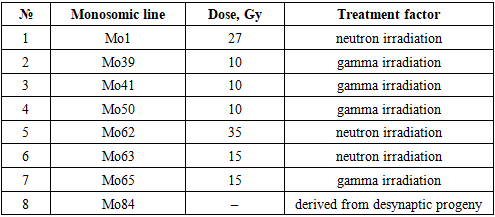
In this study, the monosomic lines Mo1, Mo39, Mo41, Mo50, Mo62, Mo63, Mo65 and Mo84 of G. hirsutum (2n=51), the line Pima 3-79 of G. barbadense (2n=52), the interspecific hybrids F1(Mo×Pima 3-79), the BC1F1 hybrids involving lines Mo1, Mo39, Mo41, Mo50, Mo62 and Mo84, and the BC2F1 hybrids involving lines Mo1, Mo41, Mo62 and Mo84 were studied. The parental plants of these interspecific hybrids included monosomic lines derived from the primary monosomics Mo39, Mo41, Mo50, Mo62, Mo63, Mo65 and Mo84, which were induced in the first generation by pollinating flowers of line L-458, emasculated the day before, with gamma-irradiated pollen of the same line at doses of 10–35 Gy (Table 1). The monosomic lines were crossed as female parents with the line Pima 3-79 of G. barbadense, which was derived from a doubled haploid (DH), is therefore highly homozygous, and is the genetic standard for this cotton species in the USA [11]. This line is characterized by long, high-quality fiber; therefore, we use it as the donor parent of the substituted chromosome when developing new chromosome substitution lines of cotton. The monosomic lines, Pima 3-79 and the hybrids F1(Mo×Pima 3-79), BC1F1 and BC2F1 were grown in a plastic-film greenhouse under natural temperature and light during the summer and under film cover at a day/night temperature of 30/15 °C during the autumn–winter period.
Table 1. Monosomic lines used in the study and the doses of gamma and neutron irradiation used to obtain them [47,49]
     
Cytological tests. Chromosome behavior was studied in pollen mother cells (PMCs) at metaphase I (MI) and at the tetrad stage of meiosis. For this purpose, 2–3 mm buds were fixed in an ethanol–acetic acid mixture (7:3). The PMCs were then stained with iron acetocarmine. The pattern of chromosome pairing at the MI stage was scored on temporary squash preparations. To analyze the tetrad stage, three buds were analyzed from each plant, and the percentage of normal tetrads was calculated from their total number. To analyze pollen fertility, open flowers were collected in the morning on the day of flowering, and temporary acetocarmine preparations were made, placed in Petri dishes and kept in a refrigerator for one day to improve staining of the pollen grains. Then, 10 fields of view were analyzed for each flower. Cytological analysis was performed according to the method we described previously [51].
All cytological observations were carried out using AxioScope A1 and Laboval microscopes (Carl Zeiss, Germany) and a Biomed microscope (Leica, Switzerland) with 10× and 100× objectives, a 1.6× binocular attachment, GF 12.5 × 120 and a 10× eyepiece. Photomicrographs were taken with an AxioCam ERc5s digital microscope camera. A green optical filter (ZS-11) was used during exposure. Statistical processing of the data obtained was carried out according to B.A. Dospekhov (1985) [55].
DNA extraction and genotyping. Genomic DNA was isolated by the CTAB method from young leaf samples of cytogenetically identified monosomic F1 and backcross hybrids and from young seedlings of hybrid plants (BC1F1–BC2F1) [51,52]. Genomic DNA was checked by electrophoresis in 0.9% agarose gel, and the DNA was diluted in 15 μl to a working concentration using a control solution of HindIII-digested λ phage DNA (25 ng/μl). PCR amplification was carried out in 10 μl of reaction mixture containing 1.0 μl of 10× PCR buffer (with 25 mM MgCl2), 0.2 μl BSA, 0.08 μl dNTPs (25 mM), 0.2 μl of primers, 0.1 μl Taq polymerase and 2 μl of DNA template. PCR was performed with initial DNA denaturation at 94 °C for 2 min, followed by 35 cycles of 94 °C for 20 s (step 1), 55 °C for 30 s (step 2) and 72 °C for 50 s (step 3). After 35 cycles, a final extension at 72 °C was held for 7 min. The PCR products were separated in a 3.5% high-resolution agarose gel, stained with ethidium bromide and photodocumented using an Alpha Imager gel documentation system (Innotech Inc., USA).
Primer pairs for codominant chromosome-specific SSR markers were synthesized in accordance with genetic mapping data [21,52]. A set of 198 primer pairs for SSR markers of the BNL, CIR, CM, GH, JESPR, TMB, DPL, MUCS, STV, MUSB and NAU types was used to determine microsatellite polymorphism between the parental genotypes; the primers were manufactured by Integrated DNA Technologies (IDT, USA) and supplied by Hayot Technology. Chromosome-specific markers were selected according to [53,14,41,44,28,52].
The SSR electropherogram results were scored as a/b/h, where the a allele corresponded to the recipient L-458, the b allele to the donor line Pima 3-79, and the h genotype to the disomic F1, BC1F1 and BC2F1 hybrids. Elimination of G. hirsutum chromosomes in the monosomic cotton hybrids BC1F1 and BC2F1 was determined by the absence of marker amplification from G. hirsutum (maternal) chromosomes and the presence of only the allele-specific PCR products of G. barbadense (paternal) [53].

3. Results

Hybrid forms obtained by crossing 8 monosomic lines of G. hirsutum L. with the Pima 3-79 line of G. barbadense L. were used to identify the monosomic lines with SSR markers. Because small univalents were observed at metaphase I of meiosis in most F1 monosomic hybrids, and medium-sized univalents in some of them, the analysis was started with SSR markers of the Dt subgenome.
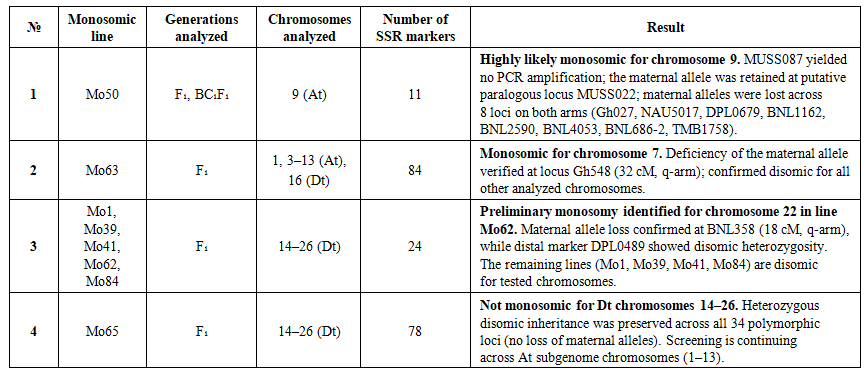
Molecular genetic analysis of interspecific monosomic F1 hybrids with 163 markers specific to the Dt subgenome of cotton. Genomic DNA was isolated from young leaves of monosomic F1 plants of the combinations F1 (Mo1×Pima 3-79, Mo39×Pima 3-79, Mo41×Pima 3-79, Mo62×Pima 3-79, Mo84×Pima 3-79), and PCR analyses were performed with 163 SSR markers specific to chromosomes 14–26 of the Dt subgenome. With primers BNL3932 and BNL3267 specific to chromosome 14, all interspecific monosomic F1 hybrid plants were found to carry both alleles, indicating that they are not monosomic for chromosome 14. Similar results were obtained for chromosome 15 (BNL3902, BNL2920), chromosome 17 (BNL1606, JESPR0304), chromosome 18 (BNL3280, TMB1664), chromosome 19 (Gh109, NAU1221), chromosome 20 (TMB1630, BNL3646) and chromosome 21 (BNL1705, BNL1034): in all cases, the alleles of the paternal and maternal control plants were present in the electropherograms of the DNA amplicons. Two primers were selected for chromosome 22. With primer DPL0489, the paternal control plant and the control F1 plant gave the same reaction, precluding the differentiation of parental alleles in the F1 hybrid. However, with primer BNL358, only the allele of the paternal control was observed in the monosomic F1 (Mo62×Pima 3-79) (5321) plant derived from the monosomic line Mo62. Thus, the molecular genetic studies preliminarily revealed that the monosomic line Mo62 is monosomic for chromosome 22. With the primers for chromosome 23 (BNL3383, BNL3511), chromosome 24 (BNL2568, BNL3638), chromosome 25 (BNL3806, BNL3190) and chromosome 26 (BNL840, BNL3368) of the Dt subgenome, the markers were monomorphic, while in some cases the alleles of the parental controls were found to be present in the genome.
In the molecular genetic analyses of the following monosomic hybrid plants – F1(Mo50×Pima3-79) (6935), BC1F1 Mo50×F1(6935)(2977), Mo50×F1(6935)(7834), Mo50×F1(6935)(7835) and Mo50×F1(6935) (7836) – the allele of the paternal control was observed with the At-subgenome-specific primers BNL1162 and TMB1758 in the F1(Mo50×Pima3-79)(6935) and BC1F1(Mo50×F1(6935) (7836) plants. With markers DPL0679, BNL4053 and BNL2590 of cotton chromosome 9, the presence of the allele of the paternal line Pima 3-79 and the absence of the allele of the maternal line L-458 were also recorded in the F1 and BC1F1 backcross progenies; with primers BNL686-2, Gh027 and NAU5017, the Pima 3-79 allele was likewise observed in the BC1F1 backcross progenies, whereas the allele of the maternal line L-458 was absent. To ensure the reliability of the results, PCR was repeated for the BC1F1 plant Mo50×F1(6935)(2977) with primers Gh027, MUSS087, NAU5017, DPL0679, BNL1162 and BNL2590 of chromosome 9: primer MUSS087 gave no amplification, whereas the remaining primers showed the presence of the allele of the donor line Pima 3-79 and the absence of the allele of the maternal line L-458. In the backcross BC1F1 progenies, among primers BNL686-2, BNL2590, BNL4053, MUSS022, JESPR208 and TMB1758, the allele of the maternal line L-458 was observed only with MUSS022; since the analyzed plant was a BC1F1 backcross progeny, the region amplified by primer MUSS022 may also be located on a chromosome other than chromosome 9. Thus, the monosomic line Mo50 of G. hirsutum L. was found to be highly likely monosomic for chromosome 9 (Figure 1).
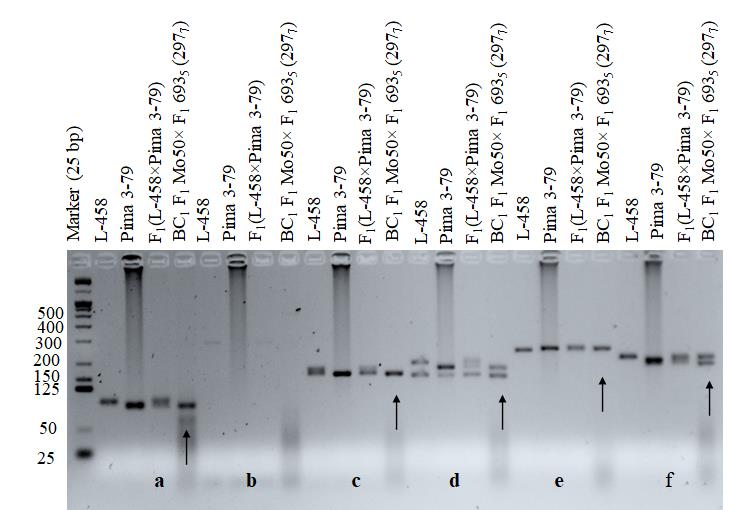
Figure 1. Electropherogram of DNA amplicons of SSR markers specific to chromosome 9 of the At subgenome in the monosomic backcross hybrid plant BC₁F₁ Mo50×(F₁6935) (2977) of cotton: a) Gh027 (9 chr); b) MUSS087 (9 chr); c) NAU5017 (9 chr); d) DPL0679 (9 chr); e) BNL1162 (9 chr); f) BNL2590 (9 chr). Arrows indicate the hemizygous state in the monosomic hybrid (presence of the paternal Pima 3-79 allele and loss of the maternal L-458 allele)
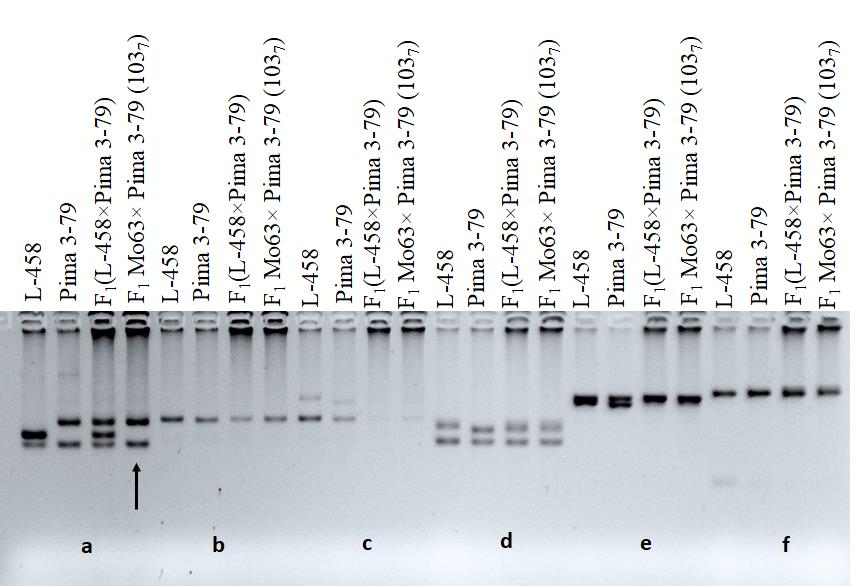
In the combination F1(Mo63×Pima3-79) (103n) obtained by interspecific crossing, cytogenetic analysis at metaphase I of meiosis showed that plant (1037) was monosomic; because 23 bivalents and one large univalent, as well as one quadrivalent, were observed, it could be identified only by molecular genetic methods. Given that large univalents usually belong to the At subgenome, the analysis was started with At-subgenome-specific markers. In the monosomic plant F1(Mo63×Pima 3-79)(1037), both alleles of the parental control plants were detected with 6 markers of chromosome 1 (BNL3848, BNL3580, NAU2437, TMB0283, CIR009, DPL0752) and with the markers of chromosome 3 (TMB0564, NAU862, TMB0605, BNL1379, BNL226, BNL3408), chromosome 4 (TMB0809, Gh117, DPL0273, Gh124, BNL2572, BNL530), chromosome 5 (BNL3556, BNL3255, CIR373, BNL3029, NAU4057, BNL3995), chromosome 6 (TMB1538, TMB0853, TMB1277, TMB0154, TMB1346, NAU4946), chromosome 8 (CIR244, BNL3559, JESPR232, BNL2772, NAU1164, BNL1646), chromosome 9 (NAU5017, BNL4053, BNL2590, BNL686-2, Gh027, DPL0679), chromosome 11 (NAU5064, BNL1034, BNL1681, BNL2632, TMB0043, BNL4094), chromosome 12 (BNL2709, BNL3599-2, TMB1660, BNL4059, NAU2176, CIR148) and chromosome 13 (BNL1660, BNL1495, NAU2285, TMB0820, MUSS550, NAU6699). Of the 6 primers applied to chromosome 10, TMB0325 failed to amplify, while the remaining Gh283, TMB1288, DPL0431, BNL0256 and BNL1665 showed a disomic state. For chromosome 16 of the Dt subgenome of cotton, a total of 12 markers (TMB2068, CIR175, BNL1395, DPL0511, TMB0564, TMB1271, Gh684, BNL2986, JESPR297, CIR107, TMB2036, DPL0800) were applied in two rounds, and the parental alleles were observed with all of them.
In the PCR analyses with primers Gh548, CIR169, CIR141, CML60, TMB0180 and BNL1597 of chromosome 7, only the allele of the Pima 3-79 line was observed with marker Gh548 in the monosomic hybrid F1(Mo63×Pima 3-79) (1037), and the allele of the maternal line L-458 was not observed with primer Gh548. On this basis, the monosomic line Mo63 was found to be highly likely monosomic for chromosome 7 (Figure 2). In total, 84 SSR markers for 13 chromosomes were included in the analysis.
Figure 2. Electropherogram of DNA amplicons of At-subgenome-specific SSR markers in the interspecific monosomic hybrid plant F₁(Mo63×Pima 3-79) (1037) of cotton: a) Gh548 (7 chr); b) CIR169 (7 chr); c) CIR141 (7 chr); d) CML60 (7 chr); e) TMB0180 (7 chr); f) BNL1597 (7 chr). Arrows indicate the hemizygous state in the monosomic hybrid (presence of the paternal Pima 3-79 allele and loss of the maternal L-458 allele)
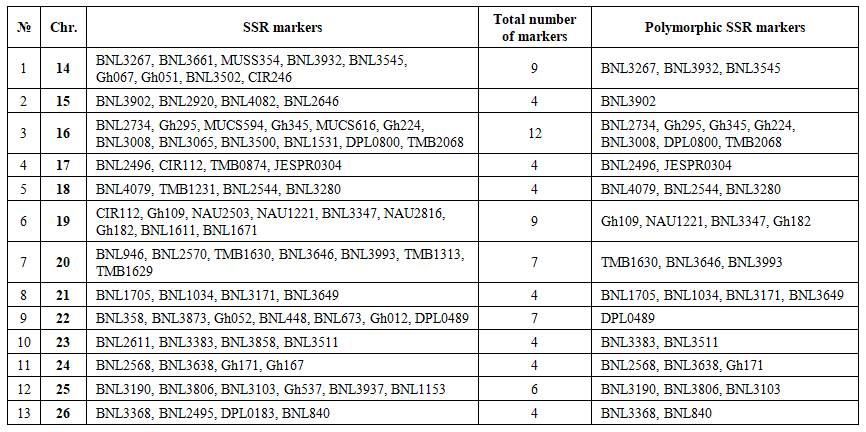
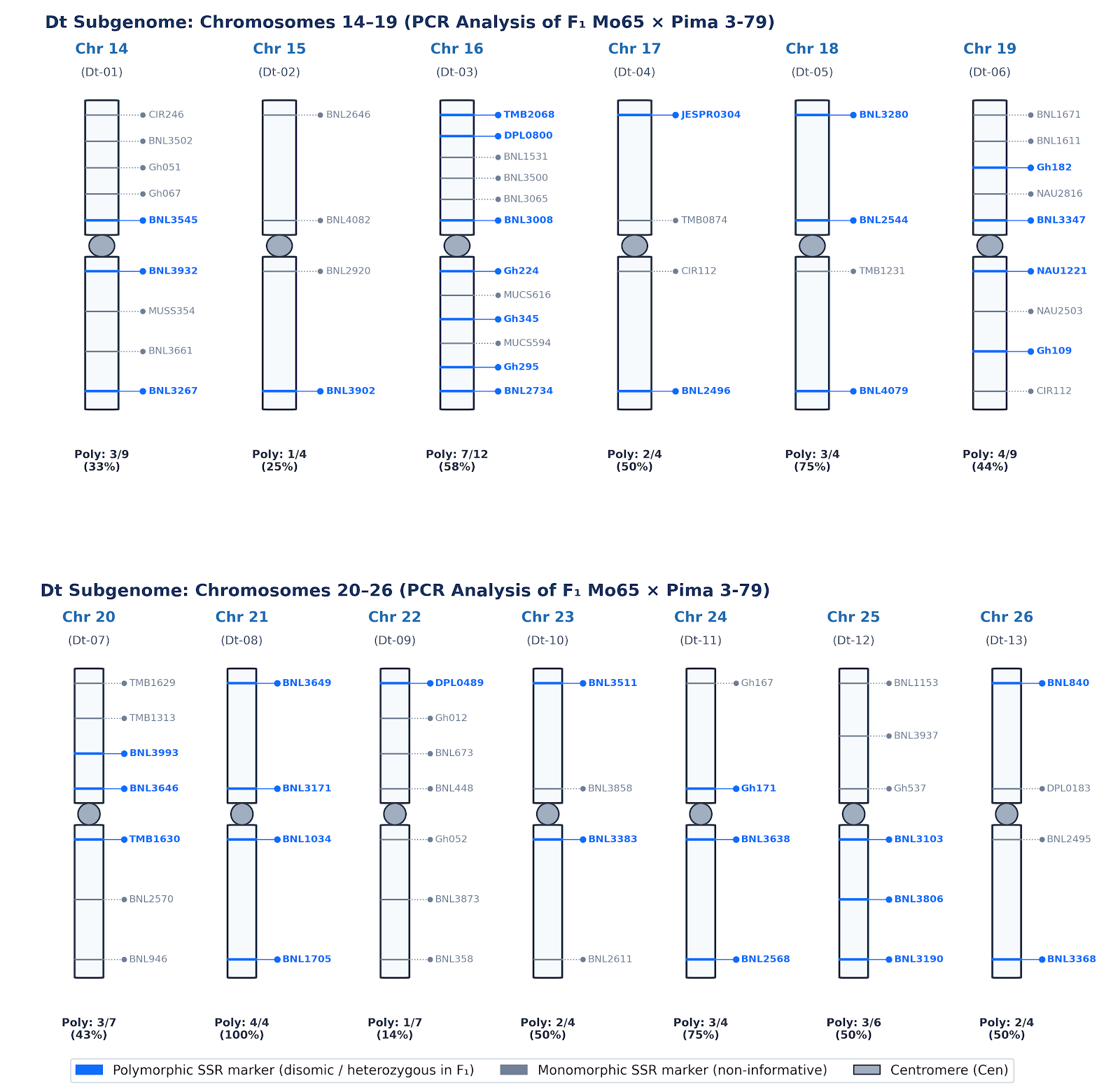
In addition, another cross combination, F1(Mo65×Pima 3-79), was obtained. Four interspecific hybrid families (60n, 61n, 62n, 63n) were included in the study. Examination of metaphase I of meiosis revealed 25 bivalents and one small univalent in two interspecific monosomic hybrids (604 and 6110). For the small univalent, 4 to 12 SSR markers specific to each of the 13 chromosomes of the Dt subgenome of cotton, i.e., chromosomes 14 through 26, were selected. The PCR screening showed the following: for chromosome 14, 9 SSR markers of 4 types (BNL, MUSS, Gh, CIR) were used. Of these SSR markers, only BNL3267, BNL3932 and BNL3545 were polymorphic, and Gh067 was monomorphic; for chromosome 15, of 4 primers, BNL3902 was polymorphic and the other three were monomorphic; for chromosome 16, polymorphism was observed in 7 of 12 primers; for chromosome 17, of 4 primers, two (BNL2496 and JESPR0304) were polymorphic, one marker (CIR112) was monomorphic and one (TMB0874) was not amplified; for chromosome 18, markers BNL4079, BNL2544 and BNL3280 were polymorphic and marker TMB1231 was monomorphic; for chromosome 19, of 9 primers, Gh109, NAU1221, BNL3347 and Gh182 were polymorphic, NAU2816 was monomorphic and 4 were not amplified; for chromosome 20, of 7 primers, TMB1630, BNL3646 and BNL3993 were polymorphic; for chromosome 21, BNL1705, BNL1034, BNL3171 and BNL3649 were polymorphic; for chromosome 22, of 8 primers, DPL0489 was polymorphic; for chromosome 23, BNL3383 and BNL3511 were polymorphic, and BNL2611 and BNL3858 were monomorphic; for chromosome 24, of 4 primers, BNL2568, BNL3638 and Gh171 were polymorphic; for chromosome 25, of 6 primers, BNL3190, BNL3806 and BNL3103 were polymorphic; and for chromosome 26, BNL3368 and BNL840 were polymorphic. Thus, a total of 78 SSR markers were used for the 13 chromosomes (Table 2), and it was shown that the chromosome deficiency in the Mo65 line does not involve chromosome pairs 14–26; studies are continuing with markers specific to chromosomes 1–13 (Figure 3).
Table 2. SSR markers used in the PCR analysis of interspecific F₁(Mo65×Pima 3-79) cotton hybrids and markers showing polymorphism
Figure 3. A comprehensive scheme illustrating the chromosomal locations, polymorphism levels, and disomic status of 78 SSR markers analyzed across all 13 chromosomes of the Dt subgenome in F₁ (Mo65 × Pima 3-79) hybrids
Overall, molecular genetic studies of hybrid plants obtained by crossing the monosomic lines (Mo1, Mo39, Mo41, Mo50, Mo62, Mo63, Mo65, Mo84) with the Pima 3-79 line of G. barbadense L. were carried out on the following forms: interspecific monosomic F1 hybrids obtained from 8 combinations; backcross monosomic BC1F1 hybrids obtained involving 6 monosomic lines (Mo1, Mo39, Mo41, Mo50, Mo62, Mo84); and backcross monosomic BC2F1 hybrids obtained with the participation of 4 monosomic lines (Mo1, Mo41, Mo62, Mo84). As a result, the monosomic line Mo63 was found to be highly likely monosomic for chromosome 7 of the At subgenome, and probable monosomy was recorded for chromosome 9 of the At subgenome in the monosomic line Mo50 and for chromosome 22 of the Dt subgenome in the monosomic line Mo62. In the remaining lines, parental alleles were observed with the chromosome markers applied, indicating that these lines are not monosomic for those chromosomes (Table 3).
Table 3. Results of the molecular genetic analysis of monosomic lines using SSR markers

4. Discussion

The results confirmed once again that the most delicate step in developing individual chromosome substitution lines in cotton is the identification of the univalent chromosome in a monosomic line. Cytogenetic analysis provides information on the presence of a univalent and its relative size, but it does not show exactly which chromosome the univalent is. In this study, precisely this gap was filled with chromosome-specific SSR markers: for markers polymorphic between the paternal line Pima 3-79 (G. barbadense L.) and the maternal line L-458 (G. hirsutum L.), the loss of one allele in the hybrid plant in gel electrophoresis directly indicated the deficient chromosome. In the monosomic line Mo63, 23 bivalents and one large univalent, as well as one quadrivalent, were observed in meiosis, which makes it difficult to draw a conclusion by cytogenetic means. Of the 84 At-subgenome-specific markers, only marker Gh548 exhibited the loss of the maternal (L-458) allele, confirming a hemizygous state (presence of only the paternal Pima 3-79 allele), which allowed us to identify this line as putatively monosomic for chromosome 7.
During the analysis, two important limitations related to the identity of SSR markers in the paternal and maternal lines were also identified. The first is monomorphism: with markers such as Gh067 (14 chr), CIR112 (17 chr), TMB1231 (18 chr), NAU2816 (19 chr), DPL0489 (22 chr), and BNL2611 and BNL3858 (23 chr), the paternal and maternal lines were monomorphic, which did not allow differences between the generations to be distinguished. The second is the presence of several loci of a marker in the genome: the result obtained with marker MUSS022 indicates that this primer may also be located on a chromosome other than chromosome 9. The high level of sequence conservation between the At and Dt subgenomes of the allotetraploid genome [44] increases the likelihood of such homeologous amplification. In addition, no amplification at all was observed for some markers (MUSS087, TMB0325, and five primers specific to chromosomes 17 and 19). These limitations require the use of at least six to nine markers per chromosome and basing conclusions on concordant results from several independent SSR markers – the approach that was applied in this study.
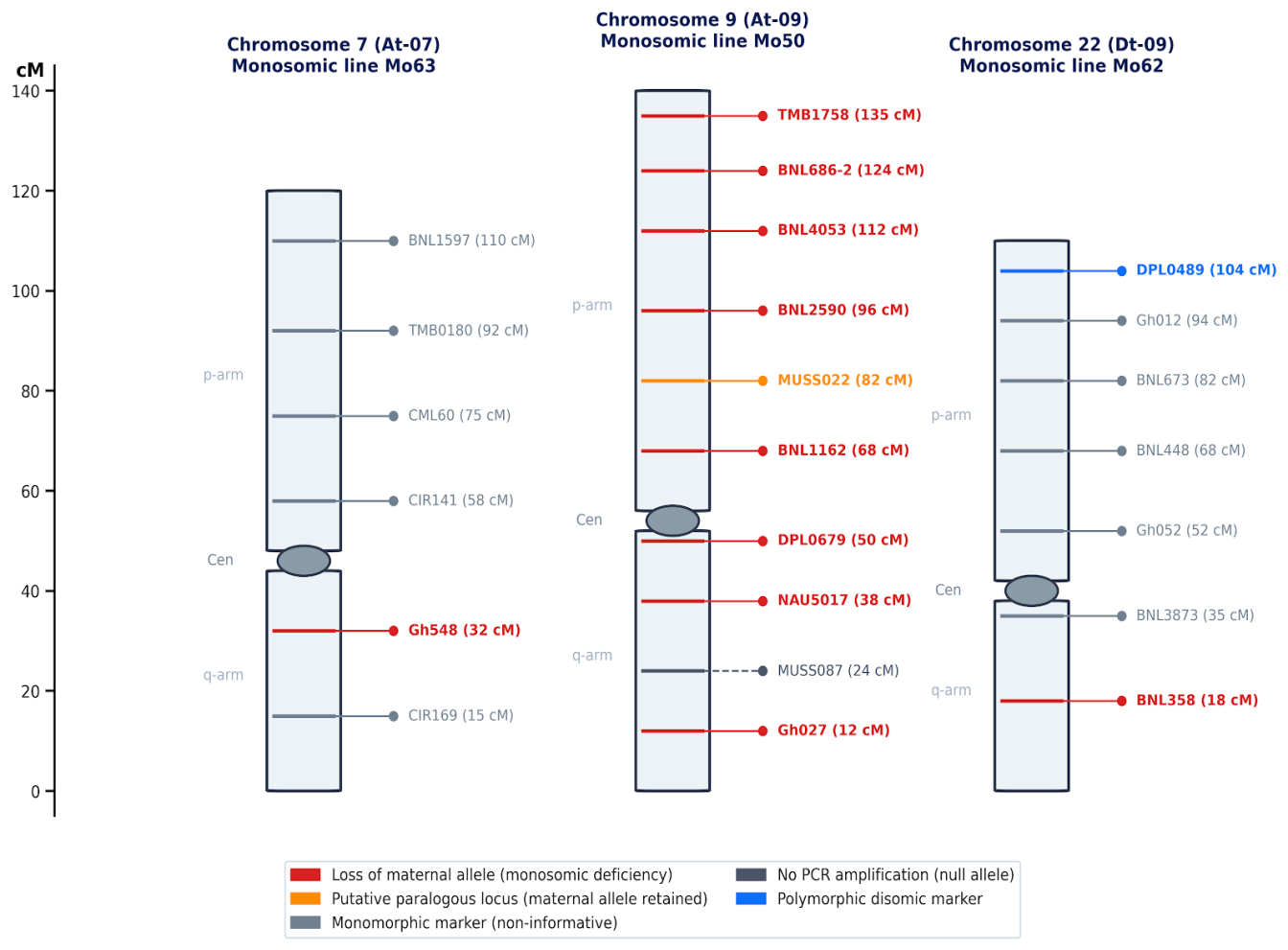
Figure 4. Schematic map of the positions of chromosome-specific SSR markers on chromosomes 7 (At-07) and 9 (At-09) of the At subgenome and chromosome 22 (Dt-09) of the Dt subgenome in the monosomic lines Mo63, Mo50 and Mo62 of cotton (genetic distances in cM). Red – loss of the maternal allele (monosomic deficiency); grey – monomorphic marker (non-informative); blue – polymorphic disomic marker; orange – putative homoeologous locus (maternal allele retained); dark grey, dashed line – no PCR amplification (null allele); Cen – centromere
The “negative” result obtained for the monosomic line Mo65 is also of practical importance: 78 markers were applied for all 13 chromosomes (14–26) of the Dt subgenome, which increases the probability that the line is not monosomic for the Dt subgenome. This does not support the assumption that a small univalent automatically belongs to the Dt subgenome, and it directs further research toward chromosomes 1–13. Similarly, the consistent presence of the paternal allele with several SSR markers specific to chromosome 9 in the Mo50 line gives grounds to assess the probability of monosomy for chromosome 9 in this line as high; however, the contradictory result obtained with MUSS022 indicates that additional analysis is required for a final conclusion. Likewise, confirmation of the preliminary result of monosomy for chromosome 22 recorded with marker BNL358 in the Mo62 line requires the inclusion of additional polymorphic markers specific to this chromosome.
It has been reported that a QTL cluster associated with fiber length and strength is located in a segment of chromosome 7 of the At subgenome of cotton G. barbadense L. and that the related candidate genes have been identified [10], and that fiber quality parameters can be improved through interspecific introgression [25,27]. From this perspective, the identification of chromosome 7 of the At subgenome in the monosomic line Mo63 opens up the possibility of developing a new chromosome substitution line specifically for genetics and breeding. At the same time, the earlier report, made for the first time in cotton, that chromosome 7 may be eliminated in BC1F1 monosomic backcross forms [34] indicates that, in subsequent backcross generations based on the monosomic line Mo63, introgression must be monitored with SSR markers at every stage.
Thus, genes for fiber length and strength are known to be located on chromosome 7 of the At subgenome of cotton, and loci for phytochrome and stress tolerance on chromosome 9 of the At subgenome. Accordingly, the Mo63 (chromosome 7) and Mo50 (chromosome 9) lines may in future serve as initial donors for specific practical breeding goals (e.g., increasing fiber strength, wilt resistance).

5. Conclusions

SSR marker analysis of hybrids between monosomic lines of G. hirsutum L. from the Unique Cytogenetic Collection of the National University of Uzbekistan and G. barbadense L. (Pima 3-79) substantiated at the molecular level, for the first time, that the Mo50 line is monosomic for chromosome 9 of the At subgenome, based on 6 SSR markers (DPL0679, BNL4053, BNL2590, BNL686-2, Gh027, NAU5017), and that the Mo62 line is monosomic for chromosome 22 of the Dt subgenome, based on marker BNL358; the Mo63 line was found to be a putative monosomic line for chromosome 7, and a deficiency of chromosomes 14–26 of the Dt subgenome was ruled out in Mo65. The results demonstrate the necessity of integrating cytogenetic analysis and polymorphic SSR markers for the reliable identification of monosomic lines; the loss of the maternal (L-458) allele at the chromosome 7-specific marker Gh548 established the probability of monosomy of this line for chromosome 7. The lines are recommended as initial sources for developing new chromosome substitution lines and expanding the genetic diversity of cotton.

Funding

This work was carried out within the framework of the fundamental research project F-OT-2021-155 “Creation of new lines based on chromosome substitution from G. barbadense into G. hirsutum” (2021–2026) and the academic mobility project AK-25-30 “Identification of F1 monosomic hybrids using SSR markers” (2025).

References

[1]  Akköse Baytar A. (2021). Molecular genetic analysis in cotton (Gossypium hirsutum L.) // PhD dissertation. Izmir Institute of Technology, Molecular Biology and Genetics. – İzmir, Türkiye. URL: https://hdl.handle.net/11147/11978.
[2]  Amjid M.W. (2014). Genetics of QTLs related to drought tolerance in upland cotton // PhD thesis. University of Agriculture, Department of Plant Breeding and Genetics. – Faisalabad, Pakistan.
[3]  Andres R.J. (2015). Genetic Mapping and Molecular Cloning of the Major Leaf Shape Gene (L-D1) in Upland Cotton (Gossypium hirsutum L.) // PhD dissertation. North Carolina State University. – Raleigh, North Carolina.
[4]  Anjani A. Padma V, Ramana JV and Satish Y (2020). Molecular characterization of cotton (Gossypium hirsutum L.) using simple sequence repeat (SSR) markers // International Journal of Chemical Studies. – Vol. 8(4). – P. 3518–3522. – DOI: 10.22271/chemi.2020.v8.i4ar.10197.
[5]  Hulse-Kemp A.M., Ashrafi H., Zheng X., Wang F., Hoegenauer K.A., Maeda A.B., Yang S.S., Stoffel K., Matvienko M., Clemons K., Udall J.A., Van Deynze A., Jones D.C., Stelly D.M. (2014). Development and bin mapping of gene-associated interspecific SNPs for cotton (Gossypium hirsutum L.) introgression breeding efforts // BMC Genomics. – Vol. 15. – Art. 945. – DOI: 10.1186/1471-2164-15-945. – URL: http://www.biomedcentral.com/1471-2164/15/945.
[6]  Asif M. (2010). Genomic analysis for quality traits in cotton (Gossypium hirsutum L.) by DNA fingerprinting technology // PhD thesis. Bahauddin Zakariya University. – Multan, Pakistan.
[7]  Bellaloui N, Saha S, Tonos JL, Scheffler JA, Jenkins JN, McCarty JC, Stelly DM. (2021a) Effects of Interspecific Chromosome Substitution in Upland Cotton on Cottonseed Macronutrients. Plants; 10(6): 1158. https://doi.org/10.3390/plants10061158.
[8]  Bellaloui N., Saha S., Tonos J.L., Scheffler J.A., Jenkins J.N., McCarty J.C., Stelly D.M. (2021b). Effect of Chromosome Substitution from Alien Tetraploid Cotton Species in Upland Cotton on (+) and (−) Gossypol Enantiomer Levels in Cottonseed // The Journal of Cotton Science. – Vol. 25(1). – P. 7–20. – DOI: 10.56454/DVGJ8361.
[9]  Boboxujayev Sh.U., Sanamyan M.F. (2019). Biomorphological analysis in monosomic hybrids F1 with substitution of individual chromosome // NamDU ilmiy axborotnomasi [Scientific Bulletin of Namangan State University]. – No. 6. – P. 178-182
[10]  Chen Y., Liu G., Ma H., Song Z., Zhang C., Zhang J., Zhang J., Wang F., Zhang J. (2018). Identification of Introgressed Alleles Conferring High Fiber Quality Derived From Gossypium barbadense L. in Secondary Mapping Populations of G. hirsutum L. // Frontiers in Plant Science. – Vol. 9. – Art. 1023. – DOI: 10.3389/fpls.2018.01023.
[11]  Endrizzi J.E., Turcotte E.L., Kohel R.J. (1985). Genetics, cytology, and evolution of Gossypium // Advances in Genetics. – Vol. 23. – P. 273–375.
[12]  Grover C.E., Yoo M.-J., Lin M., Murphy M.D., Harker D.B., Byers R.L., Lipka A.E., Hu G., Yuan D., Conover J.L., Udall J.A., Paterson A.H., Gore M.A., Wendel J.F. (2020). Genetic analysis of the transition from wild to domesticated cotton (Gossypium hirsutum L.) // G3: Genes|Genomes|Genetics. – Vol. 10, No. 2. – P. 731–754. – DOI: 10.1534/g3.119.400909.
[13]  Guo W., Cai C., Wang C., Han Z., Song X., Wang K., Niu X., Wang C., Lu K., Shi B., Zhang T. (2007). A microsatellite-based, gene-rich linkage map reveals genome structure, function and evolution in Gossypium // Genetics. – Vol. 176, No. 1. – P. 527–541. – DOI: 10.1534/genetics.107.070375.
[14]  Hoffman S.M., Yu J.Z., Grum D.S., Xiao J., Kohel R.J., Pepper A.E. (2007). Identification of 700 New Microsatellite Loci from Cotton (G. hirsutum L.) // The Journal of Cotton Science. – Vol. 11, No. 4. – P. 208–241.
[15]  Huang C., Shen C., Wen T., Gao B., Zhu D., Li X., Ahmed M.M., Li D., Lin Z. (2018). SSR-based association mapping of fiber quality in upland cotton using an eight-way MAGIC population // Molecular Genetics and Genomics. – Vol. 293. – P. 793–805. – DOI: 10.1007/s00438-018-1419-4.
[16]  Iqbal M.A. (2016). Association Mapping of Fiber Quality Traits in the Genome of Genus Gossypium: PhD dissertation. – Islamabad: Pakistan Institute of Engineering and Applied Sciences.
[17]  Iqbal M.A., Mehboob-ur-Rahman (2017). Identification of Marker-Trait Associations for Lint Traits in Cotton // Frontiers in Plant Science. – Vol. 8. – Art. 86. – DOI: 10.3389/fpls.2017.00086.
[18]  Kaur B., Andres R., Kuraparthy V. (2016). Major Leaf Shape Genes, Laciniate in Diploid Cotton and Okra in Polyploid Upland Cotton, Map to an Orthologous Genomic Region // Crop Science. – Vol. 56, No. 3. – P. 1–11. – DOI: 10.2135/cropsci2015.10.0627.
[19]  Kottapalli P., Ulloa M., Kottapalli K.R., Payton P., Burke J. (2016). SNP Marker Discovery in Pima Cotton (Gossypium barbadense L.) Leaf Transcriptomes // Genomics Insights. – Vol. 9. – DOI: 10.4137/GEI.S40377.
[20]  Kushanov F.N., Komilov D.J., Turaev O.S., Ernazarova D.K., Amanboyeva R.S., Gapparov B.M., Yu J.Z. (2022). Genetic Analysis of Mutagenesis That Induces the Photoperiod Insensitivity of Wild Cotton Gossypium hirsutum Subsp. purpurascens // Plants. – Vol. 11, No. 22. – Art. 3012. – DOI: 10.3390/plants11223012.
[21]  Dellaporta S.L., Wood J., Hicks J.B. (1983). A Plant DNA Minipreparation Version II // Plant Molecular Biology Reporter. – Vol. 1. – P. 19–21. – DOI: 10.1007/BF02712670.
[22]  Paterson A.H., Brubaker C.L., Wendel J.F. (1993). A rapid method for extraction of cotton (Gossypium spp.) genomic DNA suitable for RFLP or PCR analysis // Plant Molecular Biology Reporter. – Vol. 11. – P. 122–127.
[23]  Perez L.M., Mauleon R., Arick M.A., Magbanua Z.V., Peterson D.G., Dean J.F.D., Tseng T.M. (2022). Transcriptome analysis of the 2,4-dichlorophenoxyacetic acid (2,4-D)-tolerant cotton chromosome substitution line CS-B15sh and its susceptible parental lines G. hirsutum L. cv. Texas Marker-1 and G. barbadense L. cv. Pima 379 // Frontiers in Plant Science. – Vol. 13. – Art. 910369. – DOI: 10.3389/fpls.2022.910369.
[24]  Reinisch A.J., Dong J.M., Brubaker C.L., Stelly D.M., Wendel J.F., Paterson A.H. (1994). A detailed RFLP map of cotton, Gossypium hirsutum×Gossypium barbadense: chromosome organization and evolution in a disomic polyploid genome // Genetics. – Vol. 138, No. 3. – P. 829–847. – DOI: 10.1093/genetics/138.3.829.
[25]  Saha S., Wu J., Jenkins J.N., McCarty J.C., Gutierrez O.A., Stelly D.M., Percy R.G., Raska D.A. (2004). Effect of chromosome substitutions from Gossypium barbadense L. 3-79 into G. hirsutum L. TM-1 on agronomic and fiber traits // The Journal of Cotton Science. – Vol. 8, No. 3. – P. 162–169.
[26]  Saha S., Jenkins J.N., Wu J., McCarty J.C., Gutiérrez O.A., Percy R.G., Cantrell R.G., Stelly D.M. (2006). Effects of Chromosome-Specific Introgression in Upland Cotton on Fiber and Agronomic Traits // Genetics. – Vol. 172, No. 3. – P. 1927–1938. – DOI: 10.1534/genetics.105.053371.
[27]  Saha S., Stelly D.M., Raska D.A. (2012). Chromosome Substitution Lines: Concept, Development and Utilization in the Genetic Improvement of Upland Cotton // Plant Breeding / Ed. I.Y. Abdurakhmonov. – Rijeka: InTech, P. 108–120.
[28]  Saha S., Raska D.A., Stelly D.M., Manchali S., Gutiérrez O.A. (2013). Hypoaneuploid Chromosome Substitution F₁ Hybrids of Gossypium hirsutum L. × G. mustelinum Miers ex Watt // The Journal of Cotton Science. – Vol. 17, No. 2. – P. 102–114.
[29]  Saha S., Tewolde H., Jenkins J.N., McCarty J.C., Stelly D.M. (2022). Chromosome substitution lines with improved essential mineral nutrients and fiber quality traits in Upland cotton // Research Square [Preprint]. – DOI: 10.21203/rs.3.rs-1789116/v1.
[30]  Sambrook J., Russell D.W. (2001). Molecular Cloning: A Laboratory Manual. – 3rd ed. – Cold Spring Harbor, NY: Cold Spring Harbor Laboratory Press, Vol. 1–3. – 2344 p.
[31]  Sanamyan M.F., Petlyakova J.E. (2002). Cytogenetic analysis of cotton monosomics // Biologia Plantarum. – Vol. 45, No. 3. – P. 367–373.
[32]  Sanamyan M.F., Rakhmatullina E.M. (2003). Cytogenetic analysis of translocations in cotton // Plant Breeding. – Vol. 122(6). – P. 511–516.
[33]  Sanamyan M.F., Petlyakova Yu.E., Sharipova E.A., Abdurakhmonov I.Yu. (2011). Cytogenetic Characteristics of New Monosomic Stocks of Cotton (Gossypium hirsutum L.) // Journal of Biomedicine and Biotechnology. – Vol. 2011. – Art. 273642. – P. 1–11. – DOI: 10.4061/2011/273642.
[34]  Sanamyan M.F., Bobokhujayev Sh.U., Abdukarimov Sh.S., Silkova O.G. (2023). Molecular-genetic and cytogenetic analyses of cotton chromosome introgression from Gossypium barbadense L. into the genome of G. hirsutum L. in BC2F1 hybrids // Vavilovskii Zhurnal Genetiki i Selektsii. – Vol. 27, No. 8. – P. 958–970. – DOI: 10.18699/VJGB-23-110.
[35]  Sanamyan M., Bobokhujayev Sh. (2024). Crossing and Setting of Hybrid Seeds in the Creation of Chromosome-Substituted Cotton Lines G. hirsutum L. // BIO Web of Conferences. – Vol. 82. – Art. 02034. – DOI: 10.1051/bioconf/20248202034.
[36]  Santosh H.B., Bargat A., Santhy V., Raghavendra K.P., Kranthi K.R., Waghmare V.N. (2022). Microsatellite marker based DNA fingerprinting of cotton (Gossypium spp.) hybrids and their parents // Electronic Journal of Plant Breeding. – Vol. 13, No. 3. – P. 780–789. – DOI: 10.37992/2022.1303.136.
[37]  Saravanan M., Gotmare V., Sheeba J.A., Kranthi K.R. (2023). Molecular characterization of tolerant and susceptible accessions of cotton (Gossypium hirsutum L.) against waterlogging stress // Journal of Cotton Research and Development. – Vol. 37, No. 1. – P. 25–31.
[38]  Shaheen A., Hussain S.B., Muhammad S.A., Zubair M., Naqqash T. (2021). Molecular and phylogenetic study of CLCuD tolerant cotton cultivars by using microsatellite markers // International Journal of Multidisciplinary Research and Development. – Vol. 8, No. 9. – P. 25–30.
[39]  Venkatesulu S., Makula S.P., Satiha M.B., Puligundla S.K., Koigoora S. (2023). Identification of SSR Molecular Markers for Jassid Resistance in Cotton // Agricultural Science Digest. – Vol. 43, No. 5. – P. 695–700. – DOI: 10.18805/ag.D-5740.
[40]  Wang P., Ding Y., Lu Q., Guo W. (2008). Development of Gossypium barbadense chromosome segment substitution lines in the genetic standard line TM-1 of Gossypium hirsutum // Chinese Science Bulletin. – Vol. 53(10). – P. 1512–1517. – DOI: 10.1007/s11434-008-0220-x.
[41]  Xiao J., Wu K., Fang D.D., Stelly D.M., Yu J., Cantrell R.G. (2009). New SSR Markers for Use in Cotton (Gossypium spp.) Improvement // The Journal of Cotton Science. – Vol. 13, No. 2. – P. 75–157.
[42]  Zhang Y.X., Lin Z.X., Li W., Tu L.L., Nie Y.C., Zhang X.L. (2007). Studies of new EST-SSRs derived from Gossypium barbadense // Chinese Science Bulletin. – Vol. 52. – P. 2522–2531. – DOI: 10.1007/s11434-007-0399-2.
[43]  Zhang J., Percy R.G., McCarty J.C. Jr. (2014). Introgression genetics and breeding between Upland and Pima cotton: a review // Euphytica. – Vol. 198. – P. 1–12. – DOI: 10.1007/s10681-014-1094-4.
[44]  Zhao L., Lv Y., Cai C., Tong X., Chen X., Zhang W., Du H., Guo X., Guo W. (2012). Toward allotetraploid cotton genome assembly: integration of a high-density molecular genetic linkage map with DNA sequence information // BMC Genomics. – Vol. 13. – Art. 539. – DOI: 10.1186/1471-2164-13-539.
[45]  Zhu D., Li X., Wang Z., You C., Nie X., Sun J., Zhang X., Zhang D., Lin Z. (2020). Genetic dissection of an allotetraploid interspecific CSSLs guides interspecific genetics and breeding in cotton // BMC Genomics. – Vol. 21. – Art. 431. – DOI: 10.1186/s12864-020-06800-x.
[46]  Zhu L. (2019). Genetic Diversity Analysis and Mapping of Fiber Quality and Flowering Time Traits in Tetraploid Cotton // PhD dissertation. North Carolina State University, Department of Crop Science. – Raleigh, North Carolina.
[47]  M. Sanamyan and S. Bobokhujaev (2020). “Analysis of pollen fertility in aneuploid hybrids with substitutions for specific chromosomes or their arms in cotton G.hirsutum L.” Biomics 12(3): 376-379 https://doi.org/10.31301/2221-6197.bmcs.2020-26.
[48]  Sanamyan M.F., Petlyakova Yu.E., Sharipova E.A., Abdurakhmonov I.Yu. (2011). Cytogenetic Characteristics of New Monosomic Stocks of Cotton (Gossypium hirsutum L.) // Journal of Biomedicine and Biotechnology. – Vol. Art. 273642. – P. 1–11. – DOI: 10.4061/2011/273642. – PMID: 23533784.
[49]  Sanamyan M., Petlyakova J., Rakhmatullina E., Sharipova E. (2014). Cytogenetic Collection of Uzbekistan // World Cotton Germplasm Resources / ed. I.Y. Abdurakhmonov. – Rijeka: InTech. P. – DOI: 10.5772/58589.
[50]  Sanamyan M.F., Bobokhujayev Sh.U., Abdukarimov Sh.S., Uralov J.S., Rustamov A.B. (2025). Study of the influence of introgression from chromosome 2 of the At subgenome of cotton Gossypium barbadense L. during backcrossing with the original lines of G. hirsutum L. // Vavilov Journal of Genetics and Breeding. – Vol. 29, No. 8. – P. 1184–1194. – DOI: 10.18699/vjgb-25-125.
[51]  Sanamyan M.F., Bobohujayev Sh.U., Abdukarimov Sh.S., Makamov A.Kh., Silkova O.G. (2022). Features of Chromosome Introgression from Gossypium barbadense L. into G. hirsutum L. during the Development of Alien Substitution Lines // Plants. – Vol. 11, No. 4. – Art. 542. – DOI: 10.3390/plants11040542.
[52]  Saha S., Stelly D.M., Makamov A.K., Ayubov M.S., Raska D., Gutiérrez O.A., Manchali S., Jenkins J.N., Deng D., Abdurakhmonov I.Y. (2015). Molecular confirmation of Gossypium hirsutum chromosome substitution lines // Euphytica. DOI: 10.1007/s10681-015-1407-2.
[53]  Liu S., Saha S., Stelly D., Burr B., Cantrell R.G. (2000). Chromosomal assignment of microsatellite loci in cotton // Journal of Heredity. – Vol. 91, No. 4. – P. 326–332. – DOI: 10.1093/jhered/91.4.326.
[54]  Gutierrez O.A., Stelly D.M., Saha S., Jenkins J.N., McCarty J.C. Jr., Raska D.A., Scheffler B.E. (2009). Integrative placement and orientation of non-redundant SSR loci in cotton linkage groups by deficiency analysis // Molecular Breeding. – Vol. 23. – P. 693–707.
[55]  Dospekhov B.A. (1985). Metodika polevogo opyta [Methods of Field Trials]. – Moscow. – (In Russian).