
-
Paper Information
- Next Paper
- Paper Submission
-
Journal Information
- About This Journal
- Editorial Board
- Current Issue
- Archive
- Author Guidelines
- Contact Us
International Journal of Genetic Engineering
p-ISSN: 2167-7239 e-ISSN: 2167-7220
2026; 14(8): 205-209
doi:10.5923/j.ijge.20261408.02
Received: Jul. 22, 2026; Accepted: Aug. 20, 2026; Published: Aug. 22, 2026

Carbohydrate Metabolism and Source–Sink Distribution of Photosynthetic Assimilates in Pistacia Vera L.
 Abstract
 Reference
 Full-Text PDF
 Full-text HTML
Baratov Javohir Muxitdinovich1, Inobat Jurayevna Ruziyeva2
1PhD Student, Denov Institute of Entrepreneurship and Pedagogy, Uzbekistan
2Associate Professor, Navoi University of Innovations, Uzbekistan
Correspondence to: Baratov Javohir Muxitdinovich, PhD Student, Denov Institute of Entrepreneurship and Pedagogy, Uzbekistan.
| Email: |  |
Copyright © 2026 The Author(s). Published by Scientific & Academic Publishing.
This work is licensed under the Creative Commons Attribution International License (CC BY).
http://creativecommons.org/licenses/by/4.0/

The present study investigated the quantitative composition of water-soluble carbohydrates in the leaves and seeds of Pistacia vera L. collected from the Topalang and Bobotog National Nature Parks of Surkhandarya Region using High-Performance Liquid Chromatography (HPLC). The contents of fructose, glucose, sucrose, and maltose were determined, and significant differences were observed depending on the plant organ and the growing location. The highest total carbohydrate content was detected in the leaves collected from the Bobotog area (2.97 mg/g), whereas the lowest value was recorded in the seeds collected from the Topalang area (0.90 mg/g). The predominance of glucose and fructose in the leaves and sucrose in the seeds confirms the physiological characteristics of photosynthetic assimilate distribution within the source–sink system. The obtained results indicate that carbohydrate metabolism in Pistacia vera L. is influenced by environmental conditions and demonstrate that the HPLC method provides reliable quantitative determination of water-soluble carbohydrates. These findings provide a scientific basis for evaluating the physiological and biochemical characteristics of Pistacia vera L., understanding the distribution of photosynthetic assimilates among plant organs, and supporting future fundamental and applied research.
Keywords: Pistacia vera L., Carbohydrate metabolism, Photosynthetic assimilates, Source–sink system, High-performance liquid chromatography (HPLC), Glucose, Fructose, Sucrose, Maltose, Leaves, Seeds, Plant physiology, Biochemistry
Cite this paper: Baratov Javohir Muxitdinovich, Inobat Jurayevna Ruziyeva, Carbohydrate Metabolism and Source–Sink Distribution of Photosynthetic Assimilates in Pistacia Vera L., International Journal of Genetic Engineering, Vol. 14 No. 8, 2026, pp. 205-209. doi: 10.5923/j.ijge.20261408.02.
1. Introduction
- Pistacia vera L. is one of the most economically important nut-bearing tree species widely distributed in arid and semi-arid regions of the world. The productivity of this species, seed quality formation, and adaptation to unfavorable environmental conditions are closely associated with physiological and biochemical processes occurring in the plant, particularly carbohydrate metabolism [1]. As the primary products of photosynthesis, carbohydrates provide cellular energy, regulate metabolic processes, maintain osmotic balance, and serve as the principal carbon source for plant growth and development [2].Leaves function as the primary photosynthetic source organs, where glucose and fructose synthesized during photosynthesis are subsequently converted into sucrose and transported via the phloem to developing fruits, seeds, roots, and other sink organs [3]. The efficiency of the source–sink system depends on photosynthetic activity, carbohydrate translocation, and the metabolic demand of sink tissues, making it one of the key physiological factors determining plant productivity and the accumulation of storage compounds [4].Recent studies on Pistacia vera L. have demonstrated that the relationship between crop load and leaf photosynthetic activity significantly influences photosynthetic efficiency, the production of photosynthetic assimilates, and the accumulation of soluble carbohydrates. Branches bearing a higher fruit load maintain photosynthetic activity for a longer period, exhibit changes in non-structural carbohydrate content, and actively allocate assimilates to developing seeds [5]. These findings indicate that productivity and carbohydrate metabolism in Pistacia vera L. are closely related to the functional status of the source–sink system.The distribution of carbohydrates among plant organs is influenced not only by developmental stages but also by environmental conditions. Temperature, water availability, mineral nutrition, and light intensity significantly affect carbohydrate biosynthesis and assimilate transport [6]. Under drought and salinity stress, the concentrations of soluble sugars such as glucose, fructose, and sucrose are altered, contributing to osmotic adjustment and enhancing plant tolerance to environmental stress [7].In nut-bearing tree species, including Pistacia vera L., sucrose is the principal transport form of photosynthetic assimilates and serves as the major carbon source for the biosynthesis of lipids, proteins, and other storage compounds during seed development [2,5]. Therefore, determining the quantitative distribution of mono- and disaccharides in leaves and seeds is an important physiological and biochemical approach for evaluating the functional activity of the source–sink system [3].Currently, High-Performance Liquid Chromatography (HPLC) is one of the most reliable analytical techniques for the quantitative determination of soluble carbohydrates in plant tissues due to its high sensitivity, selectivity, and reproducibility. This method enables the simultaneous determination of glucose, fructose, sucrose, maltose, and other soluble carbohydrates and is widely used to investigate carbohydrate metabolism and the distribution of photosynthetic assimilates among plant organs [8].From this perspective, a comparative analysis of the soluble carbohydrate composition in the leaves and seeds of Pistacia vera L. collected from the Topalang and Bobotog areas of the Surkhandarya Region provides valuable information on the functional characteristics of the source–sink system, regional differences in carbohydrate metabolism, and the influence of environmental conditions on the distribution of photosynthetic assimilates. Therefore, the aim of the present study was to determine the quantitative composition of soluble carbohydrates in the leaves and seeds of Pistacia vera L. using HPLC and to evaluate the distribution of photosynthetic assimilates within the source–sink system from physiological and biochemical perspectives.
2. Materials and Methods
- Leaves and seeds of Pistacia vera L. collected from the Topalang and Bobotog National Nature Parks in the Surkhandarya Region of Uzbekistan were used as the research material. Plant samples were collected at the physiological maturity stage during the growing season, air-dried under laboratory conditions, ground into a fine powder, and prepared for chromatographic analysis. The primary objective of the study was to determine the quantitative composition of water-soluble carbohydrates in leaves and seeds and to evaluate their distribution within the source–sink system.The quantitative determination of carbohydrates was performed using High-Performance Liquid Chromatography (HPLC). Chromatographic analyses were carried out on an Agilent 1100 HPLC System (Agilent Technologies, USA) equipped with a vacuum degasser (G1379A), quaternary pump (QuatPump G1311A), autosampler (ALS G1313A), column thermostat (ColCom G1316A), refractive index detector (RID G1362A), and Agilent ChemStation Rev. B.01.03 software for data acquisition and processing.Chromatographic separation was performed on a Supelcosil LC-NH₂ aminopropyl column (5 µm, 4.6 × 250 mm, Supelco, USA). Chromatographic conditions were selected and optimized according to the HPLC methodology described by Nollet [9].An isocratic mobile phase consisting of acetonitrile and deionized water (82:18, v/v) was used throughout the analysis. The flow rate was maintained at 1.0 mL min⁻¹, the column temperature was set at 35°C, and the injection volume was 10 µL. Carbohydrates were detected using a refractive index detector (RID).Auxiliary laboratory equipment included adjustable micropipettes (100 and 1000 µL, VWR), a 5 mL pipette (Biohit), an analytical balance (AND GR-202; accuracy ±0.00001 g), a Millipore Simplicity water purification system, an Elmasonic S30H ultrasonic bath, and 0.45 µm nylon membrane filters. HPLC-grade acetonitrile (Sigma-Aldrich, USA) was used for preparation of the mobile phase.Analytical-grade fructose, glucose, sucrose, and maltose standards were used for calibration. Standard solutions of each carbohydrate were prepared and analyzed under identical chromatographic conditions to construct calibration curves. Individual carbohydrates were identified based on their retention times. The average retention times were 4.9 ± 0.2 min for fructose, 5.7 ± 0.2 min for glucose, 10.4 ± 0.2 min for sucrose, and 12.1 ± 0.2 min for maltose.Prior to analysis, all sample extracts were filtered through 0.45 µm nylon membrane filters and injected into the HPLC system. Quantification of carbohydrates was performed by comparing the peak areas of the samples with those obtained from the corresponding calibration curves of the reference standards. The results were expressed as mg g⁻¹ dry weight (DW).The applied HPLC methodology provided accurate, reliable, and reproducible quantitative determination of water-soluble carbohydrates in the leaves and seeds of Pistacia vera L., enabling the physiological and biochemical evaluation of carbohydrate metabolism and the distribution of photosynthetic assimilates within the source–sink system.
3. Results and Discussion
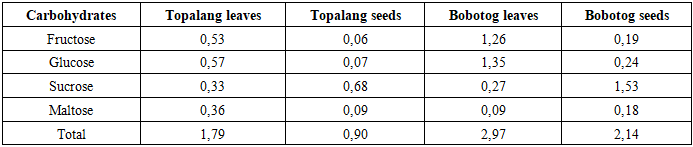
- The quantitative composition of water-soluble carbohydrates in the leaves and seeds of Pistacia vera L. was determined using High-Performance Liquid Chromatography (HPLC). The obtained results are presented in Table 1. The analyses were performed using samples collected from the Topalang and Bobotog National Nature Parks located in the Surkhandarya Region, Uzbekistan. The results demonstrated that the quantitative composition of carbohydrates varied significantly depending on the plant organ and the geographical location of the sampled populations.
|
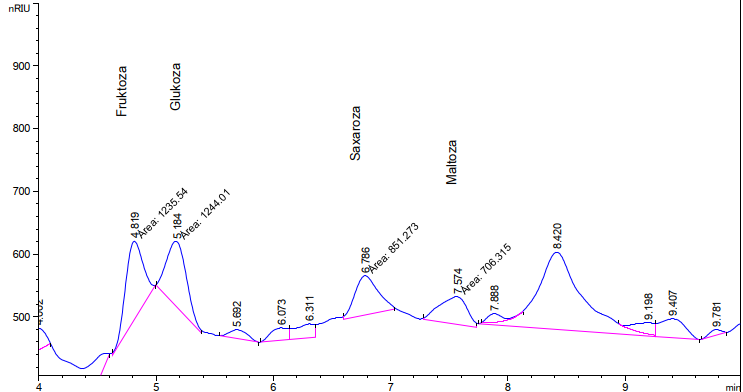 | Figure 1. Topalang leaves |
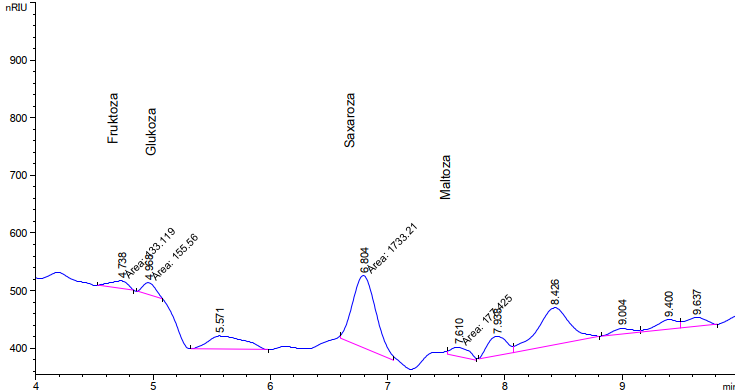 | Figure 2. Topalang seeds |
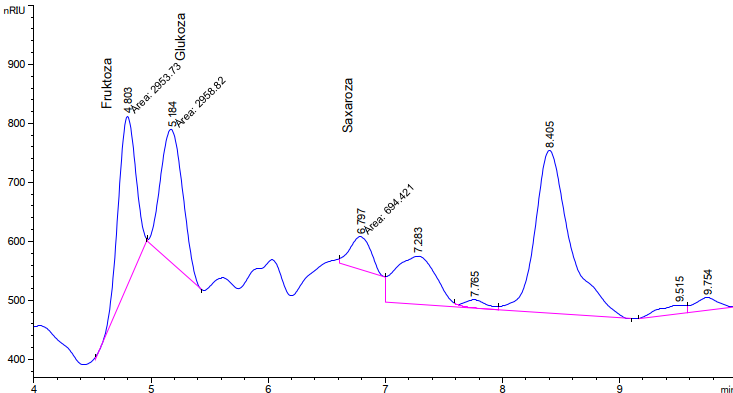 | Figure 3. Bobotog leaves |
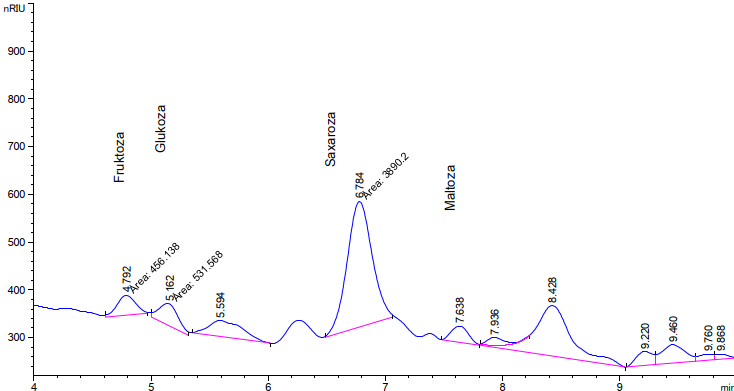 | Figure 4. Bobotog seeds |
4. Conclusions
- The quantitative composition of water-soluble carbohydrates in the leaves and seeds of Pistacia vera L. was determined using High-Performance Liquid Chromatography (HPLC), revealing significant differences according to plant organ and growing location. Leaf and seed samples collected from the Bobotog area exhibited higher total carbohydrate contents than those from the Topalang area. In particular, the total carbohydrate content reached 2.97 mg g⁻¹ DW in the leaves and 2.14 mg g⁻¹ DW in the seeds collected from Bobotog, indicating a relatively higher intensity of carbohydrate metabolism.The results demonstrated that glucose and fructose predominated in the leaves, whereas sucrose was the dominant carbohydrate in the seeds. These findings are consistent with the physiological principles of photosynthetic assimilate partitioning within the source–sink system of Pistacia vera L. Leaves functioned as photosynthetic source organs responsible for carbohydrate synthesis, while seeds acted as sink organs, accumulating sucrose for the biosynthesis of storage compounds.The obtained data indicate that carbohydrate metabolism in Pistacia vera L. is influenced by environmental conditions and that the growing location affects both the production of photosynthetic assimilates and their distribution among plant organs. Furthermore, the HPLC method proved to be a reliable analytical technique for the accurate quantitative determination of water-soluble carbohydrates, providing valuable information on the physiological and biochemical status of Pistacia vera L.Overall, this study provides new insights into carbohydrate metabolism and the source–sink distribution of photosynthetic assimilates in Pistacia vera L. The findings contribute to a better understanding of carbon allocation in this economically important species and may serve as a scientific basis for future studies aimed at improving productivity, evaluating adaptive responses to environmental conditions, and advancing physiological and biochemical research on Pistacia vera L.