
-
Paper Information
- Previous Paper
- Paper Submission
-
Journal Information
- About This Journal
- Editorial Board
- Current Issue
- Archive
- Author Guidelines
- Contact Us
International Journal of Genetic Engineering
p-ISSN: 2167-7239 e-ISSN: 2167-7220
2026; 14(6): 171-179
doi:10.5923/j.ijge.20261406.03
Received: May 25, 2026; Accepted: Jun. 22, 2026; Published: Jun. 25, 2026

Morphofunctional Characteristics of Athletes and Adaptation to Physical Activity
 Abstract
 Reference
 Full-Text PDF
 Full-text HTML
K. U. Rozumbetov1, 2, N. B. Kdirbaeva2, A. T. Matchanov2
1Department of Veterinary Diagnostics and Food Safety, Nukus Branch of the Samarkand State University of Veterinary Medicine, Livestock and Biotechnologies, Nukus, Uzbekistan
2Department of Human and Animal Physiology, Karakalpak State University, Nukus, Uzbekistan
Correspondence to: K. U. Rozumbetov, Department of Veterinary Diagnostics and Food Safety, Nukus Branch of the Samarkand State University of Veterinary Medicine, Livestock and Biotechnologies, Nukus, Uzbekistan.
| Email: |  |
Copyright © 2026 The Author(s). Published by Scientific & Academic Publishing.
This work is licensed under the Creative Commons Attribution International License (CC BY).
http://creativecommons.org/licenses/by/4.0/

The aim of this study is to comprehensively assess the morphofunctional characteristics and level of adaptation to physical activity in student-athletes involved in football, wrestling, and track and field in the Republic of Karakalpakstan. The study included morphofunctional examinations of 87 student-athletes aged 18-20 years, participating in various sports. The study results confirmed that the athletes’ body composition corresponds to the morphofunctional requirements of their specific sport. Wrestlers are characterized by a pronounced mesomorphic type with a well-developed musculoskeletal system, while football players have a balanced mesomorphic profile. Track and field athletes are distinguished by minimal body fat and relatively pronounced ectomorphic features. A series of functional tests revealed a better respiratory system in track and field athletes. Lower scores on the Robinson index, Ruffier test, and adaptive potential in track and field athletes indicate an economical cardiac function. Determining the adaptive potential at a satisfactory level in 100% of track and field athletes confirms the optimal state of their autonomic balance.
Keywords: Student-athletes, Somatotype, Physical development, Cardiorespiratory system, Functional testing
Cite this paper: K. U. Rozumbetov, N. B. Kdirbaeva, A. T. Matchanov, Morphofunctional Characteristics of Athletes and Adaptation to Physical Activity, International Journal of Genetic Engineering, Vol. 14 No. 6, 2026, pp. 171-179. doi: 10.5923/j.ijge.20261406.03.
Article Outline
1. Introduction
- In modern sports physiology, the study of athletes’ morphofunctional characteristics, as well as their adaptation to physical exertion, is of significant scientific and practical importance. Athletes involved in various sports, in particular, exhibit specific development of their body’s morphofunctional capabilities. This is an important factor in improving athletic performance, optimizing training, and maintaining athletes’ health. From this perspective, studying the mechanisms of adaptation in athletes involved in sports such as football, wrestling, and track and field is a pressing issue.In recent years, scientific research has extensively examined the relationship between somatotypological characteristics and athletes’ functional performance. It has been established that body structure, as well as the functional capabilities of the cardiovascular and respiratory systems, develop differently depending on the sport. At the same time, indicators such as the Shtange and Genchi tests, the Ruffier test, the Robinson index, and adaptive potential are used as important diagnostic criteria for assessing athletes’ adaptation to physical activity [1]. However, in the context of Karakalpakstan, research aimed at comprehensively studying these indicators among student-athletes has been insufficiently covered [2]. The environmental and climatic conditions of the Republic of Karakalpakstan (aridity, air pollution, contamination of soil, water, and food products with heavy metals and organochlorine pesticides, and salinization processes) have a specific impact on the development of young organisms and their adaptation to physical activity [2,3]. Therefore, studying the morphofunctional characteristics of students involved in sports in this region has not only theoretical but also important practical significance.The aim of this study is a comprehensive assessment of the morphofunctional characteristics and level of adaptation to physical activity in student-athletes involved in football, wrestling and athletics in the Republic of Karakalpakstan.
2. Materials and Methods
2.1. Participants and Study Design
- The study was conducted in the spring and summer of 2025 among students of Karakalpak State University, enrolled in the Faculty of Physical Education and regularly participating in sports (football, wrestling, track and field) for at least three years, with at least a second-class athletic qualification. A total of 87 student-athletes aged 18-20 participated in the study. The athletes were assessed for performance indicators aimed at developing endurance, speed, flexibility, and strength. The study utilized cyclic (track and field) and acyclic (football, wrestling) sports. The group of student-athletes regularly participated in the selected sports (33 football players, 25 wrestlers, and 29 track and field athletes). These sports are among the most popular among students.Before the study, a warm-up was performed, including a 15-meter sprint, arm and leg exercises, abdominal exercises, squats, and muscle and joint activation exercises [4]. The study was conducted in two stages. The first stage examined the somatotypological characteristics of the student-athletes. The second stage involved measuring physiological parameters and conducting functional tests. All measurements were taken during the spring and summer, at a comfortable temperature, in the morning, in an isolated room with adequate lighting.
2.2. Anthropometric Methods (Body Measurement)
- At baseline, all participants underwent anthropometric measurements using standard methods [5,6].Body length was measured to the nearest 5 mm using a SECA 217 medical stadiometer (Germany). Body weight was determined using a SECA 803 electronic medical scale (Germany) with an accuracy of 50 to 150 g, depending on weight. Chest, upper arm, and lower leg circumference were measured using an inextensible tape measure (accuracy of 0.01 cm) and an electronic tape measure (Measure King, VAHIGCY, China). Bone mass (size) indicators, such as elbow and knee joint width, were measured to the nearest 1 mm using a sliding caliper (Argentum LLC, Russia). To assess the development of the fat component, the thickness of the skin-fat fold (SFT) was determined in the suprailiac and subscapular, triceps, and calf areas using a caliper (Slim Guide Caliper, China) with an accuracy of 0.5 mm, providing equal pressure (10 g/mm2) on both sides of the fold. Wrist muscle strength was determined using a hand-held dynamometer (MEGEON-34090, Russia, 2017) with an accuracy of 0.5 kg. Back muscle strength was assessed using an electronic back dynamometer (DES-300, Russia), designed to measure trunk extensor strength.
2.3. Somatotyping
- The somatotype was assessed using the Heath-Carter method as a three-component profile, with the average values of all components (endomorphy, mesomorphy, and ectomorphy) determined based on the relationship between distance, height, and body mass [7]. To calculate the ecto-, meso-, and endomorphic components, parameters such as body weight, body length, knee and elbow joint diameters, upper arm and calf circumference, and SFT values in the triceps, subscapular, and suprailiac area were used [7].Based on these measurements, the severity of ecto-, meso-, and endomorphy was assessed.Endomorphy


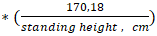 Mesomorphy =

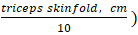

 Ectomorphy was determined using the Height-Weight Ratio (HWR) index.HWR =
 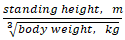 If HWR ≥ 40,75, then Ectomorphy =
  If HWR from 38,25 to 40,75 then Ectomorphy =
  If HWR ≤38,25 then Ectomorphy = 0,5Values of 0.5-2.5 correspond to a very low level; 3-4 to an average level; and 5.5-7 to a high level of ecto-, meso-, and endomorphism. Thus, the subjects were divided into three groups.
2.4. Measuring Physiological Parameters and Conducting Functional Tests
- In the second stage of the study, a series of tests were conducted to assess the athletes’ cardiorespiratory system functions.Respiratory System Function Assessment.Vital capacity (VC) was measured using an Electronic Vital Capacity Tester FCS-10000 (Grows Instrument, China, 2018) [6].Dynamic spirometry allows for assessing changes in VC during physical activity and, based on these changes, determining the functional state of the respiratory system [8]. After determining VC at rest, the subject was asked to perform a standard physical activity (20 squats in 30 seconds). VC was then measured again. The dynamic spirometry value was calculated as the difference between VC at rest and after physical activity. The results were assessed as follows:If the VC does not change, it is considered “satisfactory”;if it decreases by more than 200 ml, it is considered “unsatisfactory”;if it increases by more than 200 ml, it is considered “good” [8].The Shtange test is a physiological test designed to assess the state of the respiratory and cardiovascular systems by measuring the duration of breath-holding after a deep inhalation. This indicator reflects the body’s resistance to hypoxia (oxygen starvation) and the level of the body’s adaptive capacity [9]. On average, untrained individuals hold their breath after a deep inhalation for 40-55 seconds, while trained athletes achieve this value for 60-90 seconds or more.The Genchi test is a diagnostic test used to assess the functional state of the respiratory and cardiovascular systems, based on breath-holding after a full exhalation. It allows one to determine the body’s adaptation to hypoxia [9]. Average values are 25-30 seconds for untrained individuals and 40-60 seconds or more for trained athletes.Cardiovascular Function Assessment.Systolic blood pressure (SBP), diastolic blood pressure (DBP), and heart rate (HR) were measured in study participants using an OMRON 711 (HEM-8712-CM2) electronic tonometer (China, 2017) (OMRON 711 HEM-8712-CM2) using the Korotkoff brachial method [6].The Robinson Index characterizes cardiac systolic function. Furthermore, this indicator reflects myocardial oxygen demand and, along with adaptive potential, is an informative indicator of the functional state of the cardiovascular system and the body’s adaptation mechanisms.The Robinson Index is calculated using the following formula:
 Here, HR – heart rate (beats/min); SBP – systolic blood pressure (mmHg).The higher this indicator during physical activity, the greater the functional capacity of the heart muscle. It is used to assess the level of metabolic and energy processes occurring in the body. The results of the index are interpreted as follows: 69 or fewer units – excellent; 70-84 – good; 85-94 – satisfactory; 95-110 – poor; 111 and above – very poor [10].The Ruffier functional test is used to assess the adaptation of the human cardiovascular system to physical activity, as well as a simple and indirect method for determining physical performance. It is based on a quantitative assessment of the heart rate response to a load of 30 squats in 45 seconds and the rate of its recovery [9].The Ruffier index is calculated using the formula:
  Here: P1 is the heart rate (HR) measured at rest for 15 seconds; P2 is the HR measured during the first 15 seconds after performing 30 squats; P3 is the HR measured in the last 15 seconds of the first minute of the recovery period; 200 is three times the average HR in adults; 10 is a coefficient used for ease of comparison.The resulting index is assessed on the following scale: over 15 – unsatisfactory result, poor cardiac performance, possible severe heart failure; 10-15 – poor result, reduced or moderate cardiac performance, presence of heart failure; 6-9 – satisfactory result, average performance, no failure; 3-5 (normal) – good result, good performance; 0-3 (normal) – excellent result, very high cardiac function [9].The functional change index (adaptation potential) reflects the adaptive capacity of the circulatory system. The functional state of the circulatory system is calculated using the following formula:
 Here: HR – heart rate at rest (beats/min), SBP – systolic arterial pressure (mmHg), DBP – diastolic arterial pressure (mmHg), A – age (years), BW – body weight (kg), BL – body length (cm).Adaptation potential scores: 0-2.6 – circulatory system functions satisfactorily; 2.6-3.1 – functional strain is observed; 3.1-3.5 – functional status is unsatisfactory; 3.5 and above – circulatory system dysfunction is present [11].
2.5. Statistical Analysis Methods
- The mathematical and statistical processing of the study results was performed using modern biostatistical methods. Given the distribution of the obtained data, nonparametric tests were used to identify differences between groups. Statistical hypotheses regarding differences in trends in key indicators in three independent groups were tested using the Kruskal-Wallis test for quantitative variables. In cases where the Kruskal-Wallis test revealed statistically significant differences, a post-hoc analysis was performed to refine paired comparisons between groups. The Mann-Whitney U test was used. To reduce the likelihood of type I errors in multiple comparisons, the Bonferroni correction was applied. Statistical significance was considered at p<0.05.Data processing was performed using Microsoft Office 2010 Excel functions. In addition, Past (version 2.17, Oslo, Norway, 2012) and OriginPro (v.8.5 SR1, Northampton, Massachusetts, USA) were used to improve the accuracy of statistical calculations. All other anthropometric and physiometric parameter results are presented as the mean (µ) and 95% confidence intervals with lower (LL) and upper (UL) limits (µ; LL-UL, 95% CI).
3. Results
- The table below presents a comparative analysis of the body composition of football players, wrestlers, and track and field athletes. The analysis revealed no statistically significant differences between the groups in anthropometric parameters such as body length, calf circumference, suprailiac and subscapular SFT, and left arm muscle strength (p>0.05). However, wrestlers were found to have statistically significantly higher body weight, large joint width (bone density), chest circumference, and upper arm circumference than track and field athletes (p<0.05) (Table 1).
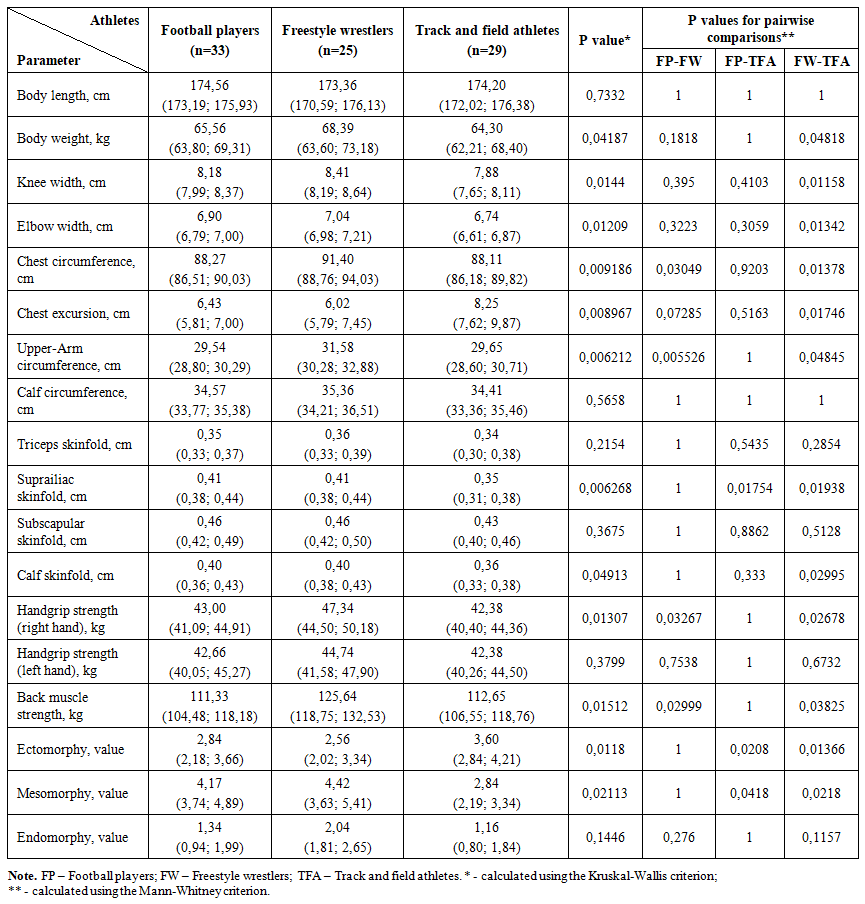 | Table 1. Comparison of morphological indicators and somatotypological features in individual groups of athletes |
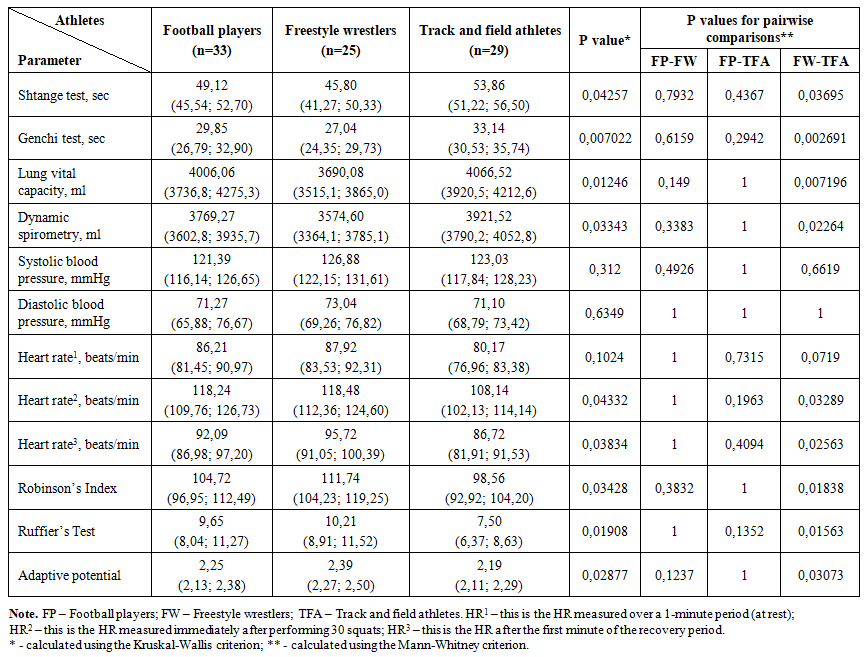 | Table 2. Comparison of physiological parameters and functional characteristics in groups of athletes |
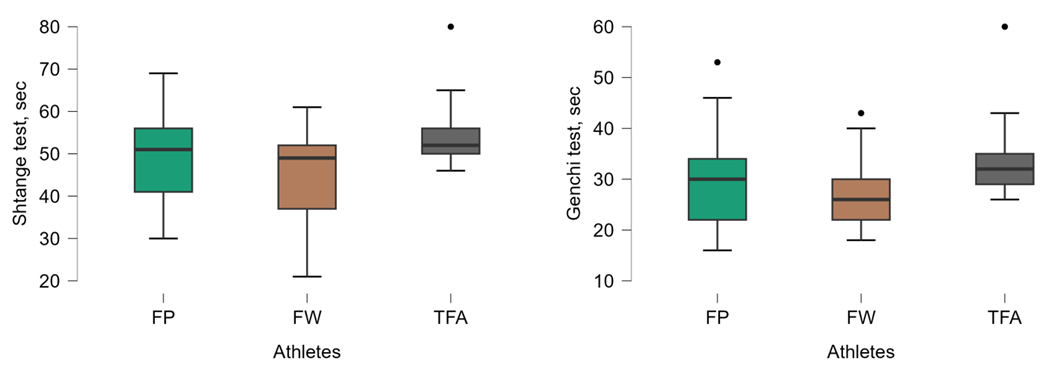 | Figure 1. Comparative analysis of the results of the Shtange and Genchi tests in athletes involved in various sports |
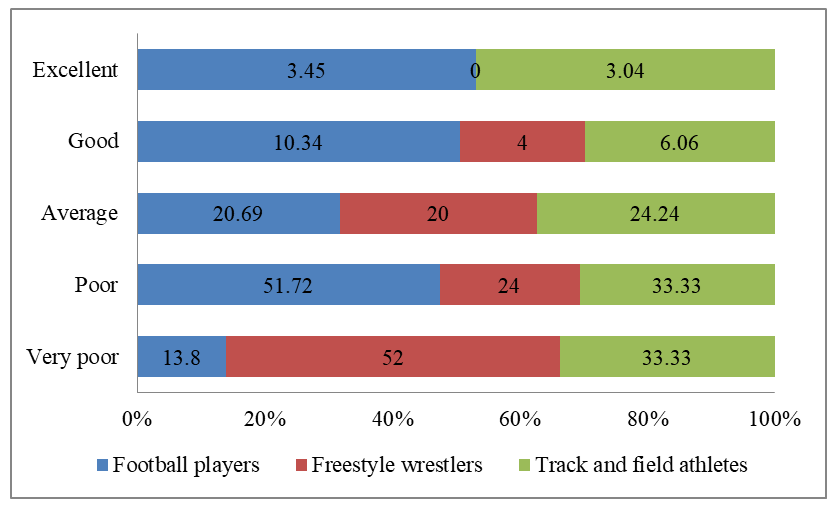 | Figure 2. The state of the cardiovascular system in athletes involved in various sports (Robinson index, %) |
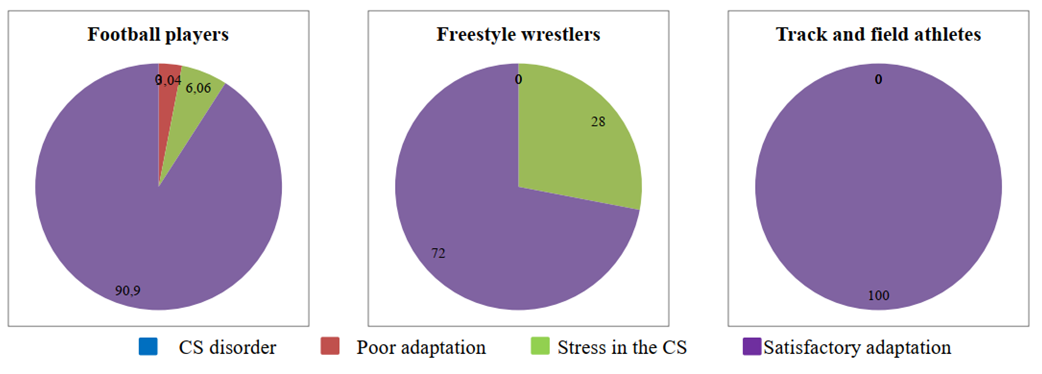 | Figure 3. Results of the index of functional changes in the study groups (in percent) |
4. Discussion
- The results of the study revealed certain differences in morphofunctional parameters between football players, wrestlers, and track and field athletes aged 18-20 years. These findings are consistent with those presented in the current scientific literature on sports morphology and somatotypology [12,13].Our study revealed no statistically significant differences between the groups in body length, calf circumference, thickness of the skin-fat folds on the back of the arm and under the scapula, or left arm muscle strength (p>0.05). According to scientific literature, between the ages of 17-20, body length and overall dimensions are primarily determined by genetic factors and may not show significant differences regardless of sport [14]. Furthermore, the calf muscles are intensively loaded in both football players and track and field athletes, whereas in wrestlers, their development is associated with general static-dynamic loading. This is explained by the combined effects of the training process. Several studies have noted differences in arm circumference, as well as in muscle circumference of the arms and thighs, and the reasons for these differences may be related to the nature of the training process and nutritional strategies [15].Moreover, our study found that wrestlers had significantly higher body mass, large joint width (elbow and knee width – bone mass), chest circumference, and upper arm circumference compared to track and field athletes (p<0.05). These results are consistent with studies by several authors indicating the predominance of the mesomorphic somatotype in strength and speed-strength sports [16]. It is known that wrestlers experience high-intensity static physical exercise aimed at developing strength, which contributes to an increase in muscle mass [17]. Furthermore, they exhibit better bone width and chest volume. Increased back muscle strength also enables wrestlers to perform intense contact movements when engaging an opponent.In football players, the SFT value in the lateral abdominal area was statistically significantly higher than in track and field athletes (p<0.05). This finding is explained by the fact that football is a sport with a mixed energy supply. In football, anaerobic and aerobic exercise alternate, which plays a key role in maintaining high intensity throughout the game [18,19]. An analysis of scientific publications covering the past 30 years shows that endurance athletes exhibit a predominance of the ectomorphic-mesomorphic component, low body fat, and well-developed speed qualities [20]. Therefore, track and field athletes, especially long-distance runners, have minimal SFT values [21]. A decrease in fat mass while simultaneously increasing muscle mass indicates the effectiveness of a physical training program [22]. Controlling subcutaneous fat is important, as one kilogram of adipose tissue contains approximately 1.5 km of blood vessels, which significantly increases the load on the cardiovascular system [22].Furthermore, football players had statistically significantly lower chest circumference, shoulder circumference, right arm strength, and back strength compared to wrestlers (p<0.05). These results may be related to the functional characteristics of different sports. For example, wrestlers are adapted to developing maximum strength, while football players prioritize speed, endurance, and coordination [14]. Therefore, a higher mesomorphic component in wrestlers is a natural phenomenon [16]. According to the somatotypological model of Carter and Heath (1990), athletes in strength sports have a predominantly meso-endomorphic type, while endurance athletes have a more pronounced ectomorphic component [7].Overall, the obtained results confirm that athletes’ body types are shaped in accordance with the morphofunctional requirements of their sport. Wrestlers are characterized by a strength-oriented physique with a predominantly developed musculoskeletal system and an endo-mesomorphic body type (2.7-6.5-1.0), while football players have a more balanced mesomorphic profile (2.5-5.2-2.7) [13]. Track and field athletes, who specialize in short-distance events and especially endurance disciplines, are distinguished by a minimal fat component and a relatively ecto-mesomorphic body type (2.5-5.5-2.9) [13].No statistically significant differences were found between groups for the endomorphic component (p>0.05), indicating that the fat component is, to a certain extent, under control in all sports studied. In modern sports training, excess fat mass has a negative impact on functional indicators, including metabolic disorders, increased incidence of hypertension, and non-alcoholic fatty liver disease. Therefore, athletes typically maintain a moderate or low endomorphic component [23]. These results provide scientific substantiation for the need to consider somatotypological characteristics during athletic selection, initial selection, and individualization of the training process [13,16]. This approach is essential for optimally realizing athletes’ morphofunctional potential and achieving high athletic results.No statistically significant differences were found in systolic and diastolic blood pressure or resting heart rate (p>0.05) between the study groups, indicating a sufficient level of overall cardiovascular adaptation in athletes. This is explained by the stabilization of autonomic regulation, increased parasympathetic influence, and the transition of the myocardium to a more economical mode of functioning as a result of regular training [24,25]. According to the literature, blood pressure and resting heart rate in highly qualified athletes are typically within physiological norms and close to each other, as prolonged training loads contribute to an increase in stroke volume and the development of bradycardia [26].The absence of differences in paired comparisons between “football and wrestling” and “football and track and field” in terms of key physiological parameters and functional tests (p>0.05) indicates that football as a sport has a mixed (aerobic-anaerobic) nature, combining elements of strength and endurance [18,19]. Therefore, the functional indicators of the cardiovascular and respiratory systems in football players are developed at a level close to those of both wrestlers and track and field athletes.When assessing the functional state of the respiratory system, it was found that VC, dynamic spirometry, and the Shtange and Genchi tests were statistically significantly higher in track and field athletes compared to wrestlers (p<0.05), which is directly related to the predominance of endurance loads [27]. As noted by Çelik et al., combining specific inspiratory muscle training with aerobic exercise increases respiratory efficiency, strengthens the respiratory muscles, and improves both endurance and anaerobic performance [28]. High results in the Shtange and Genchi tests reflect more efficient oxygen utilization by tissues and increased resistance to CO2 accumulation [29].In wrestlers, heart rate after exercise and in the first minute of recovery was statistically significantly higher than in track and field athletes (p<0.05), which is explained by the predominance of short-term, high-intensity strength loads [26]. Under these conditions, activation of the sympathoadrenal system is more pronounced, leading to an increase in heart rate. This phenomenon is also associated with the predominance of anaerobic energy supply in strength sports, as confirmed by several studies [30,31].Track and field athletes have lower values for the Robinson Index, Ruffier’s test, and adaptation potential compared to wrestlers (p<0.05), indicating an economical cardiac function. The Robinson Index reflects myocardial oxygen demand [10]. Its low values indicate efficient and economical cardiovascular function [10]. Ruffier’s test results also demonstrate rapid adaptation to exercise and accelerated recovery in endurance athletes [9]. The complete (100%) compliance of track and field athletes with the satisfactory level of adaptation potential (according to Baevsky) confirms the optimal state of their autonomic balance [11].Although dynamic spirometry results showed that track and field athletes predominated in the “good” and “satisfactory” categories, the proportion of athletes (41.38%) classified as “unsatisfactory” requires special attention. This condition may be related to individual fitness levels, training volume, environmental factors, or the functional reserves of the respiratory system [1]. In Karakalpakstan, the dry and hot climate, as well as the presence of dust aerosols, can further increase the strain on the respiratory system [1].The presence of “poor” and “very poor” scores on the Robinson Index and Ruffier test in some football players and wrestlers indicates a strained adaptation process to physical exertion [10]. This points to the need for individualized training loads, enhanced recovery measures, and regular functional monitoring in these athletes.Overall, the obtained results confirm that the specificity of the sport is the leading factor in the development of functional indicators. Endurance athletes (track and field athletes) predominantly utilize economical and stable cardiovascular and respiratory systems, while wrestlers exhibit adaptation to high-intensity loads and pronounced short-term autonomic responses [8,30]. Football players occupy an intermediate position, demonstrating adaptation to mixed energy supply mechanisms [19]. The obtained data have important scientific and practical significance for the selection of athletes, scientifically based planning of training loads and improvement of the system of maintaining the health of athletes in the conditions of Karakalpakstan.
5. Conclusions
- This study comprehensively examined the morphological and functional characteristics of student-athletes living in Karakalpakstan, as well as their adaptive responses to physical activity. Based on the data obtained, the following conclusions were drawn:– The study results confirm that the athletes’ body composition is shaped in accordance with the morphofunctional requirements of their sport. Wrestlers are characterized by strength training and a well-developed musculoskeletal system with a predominantly mesomorphic type, while football players have a balanced mesomorphic profile. Track and field athletes, especially in endurance sports, are distinguished by minimal body fat and relatively pronounced ectomorphic characteristics.– When assessing the functional state of the respiratory system, it was found that VC, dynamic spirometry, and the Shtange and Genchi tests were higher in track and field athletes compared to wrestlers (p<0.05), which may be related to the prevalence of endurance training. Long-term aerobic exercise improves respiratory efficiency, strengthens the respiratory muscles, and increases resistance to hypoxia.– Lower values of the Robinson index, Ruffier test, and adaptive potential in track and field athletes compared to wrestlers (p<0.05) indicate an economical cardiac function. Adaptive potential (Baevsky’s test) was satisfactory in 100% of track and field athletes, confirming an optimal state of autonomic balance.
Conflicts of Interest
- The authors declare no conflict of interest.
Author contributions
- K.U. Rozumbetov: Writing – original draft, Supervision and Project Administration, Conceptualization, Visualization, Methodology, Investigation, Resources, Formal analysis. N.B. Kdirbaeva: Writing – review & editing, Methodology, Investigation, Resources, Data curation. A.T. Matchanov: Writing – review & editing, Supervision.
Funding
- The author(s) reported no funding associated with the work featured in this article.
ACKNOWLEDGEMENTS
- We thank the participants for their participation in this study.