D. K. Kenjayeva, U. K. Abduraximov, I. I. Abdullaev
Khorezm Academy of Mamun, Khiva, Uzbekistan
Copyright © 2026 The Author(s). Published by Scientific & Academic Publishing.
This work is licensed under the Creative Commons Attribution International License (CC BY).
http://creativecommons.org/licenses/by/4.0/

Abstract
This article presents the germination and growth energy of sweet clover plants-indicators that reflect the biological value of seeds, their viability, and their ability to produce uniform and even seedlings under various soil and climatic conditions. The growth energy of seedlings, in turn, is a indicator of great importance, as it determines the speed of seed germination during the initial stage.
Keywords:
Medicinal plants, Pharmaceuticals, Plant breeding, Petri dish, Filter paper, Scarification index, and their importance
Cite this paper: D. K. Kenjayeva, U. K. Abduraximov, I. I. Abdullaev, Xorazm Region Conditions: Biometric Indicators and Some Physiological Characteristics of Sweet Clover Varieties, International Journal of Genetic Engineering, Vol. 14 No. 5, 2026, pp. 142-150. doi: 10.5923/j.ijge.20261405.02.
1. Introduction
It is well known that the quality of seed material is one of the main factors determining crop yield and productivity in plant science practice. The germination capacity of seeds of cultivated agricultural plants-within a specified period-has significant importance. High germination energy of crops promotes uniform growth and development of seedlings, supports their proper formation, helps prevent the spread of weeds in the field, and increases the plant’s resistance to unfavorable and stress factors. [10]. To assess seed quality, it is advisable to consider both germination and growth energy simultaneously, as these two indicators not only ensure stable growth and development of crops in the future, but also determine the productivity and yield of plants. [6]. Due to the hardness of their seeds, sweet clover species are distinguished by the presence of physical dormancy, which can lead to reduced and delayed emergence of seedlings under field conditions. In this regard, assessing the sowing quality of seeds of different white sweet clover varieties and studying the factors affecting their germination is considered one of the аctual issues in plant science, as well as in breeding and seed production practice. [4]. Pre-sowing treatment of white sweet clover seeds, including scarification, significantly increases seed germination and enhances growth energy. [9].
2. Material and Methods
2.1. Study Area
The area is a lowland located in the north-western part of Uzbekistan, along the lower reaches of the Amudarya River, between 60’-61’ longitude and 41’-42’ latitude, at 113-138 m above sea level. The vegetation period of plants is 200-210 days. The climate is extremely continental, with an average annual precipitation of 80-90 mm. The average temperature in January is -5°C and in July, it is +30°C. Meadow, meadow marshy, marsh-sandy, and traditional alkali soils predominate [14]. The deserts of Kyzyl-Kum and Kara-Kum greatly influence on the climate of the oasis. The region is in the steppe zone, in the western part of the Khorezm oasis and the southern part of the Aral Sea, 100 m above sea level. The relief consists of a low plain. It is the old Amu-Darya delta and consists of river sediments. The western and southwestern parts of the region connecting with Kara-Kum are covered with sand. Some minerals include limestone, sand, clay, and other building materials. The study of the route covered all districts of the Khorezm region.
2.2. Methods
In our experiments, in order to study the germination of white sweet clover varieties under laboratory conditions, trials were conducted using Petri dishes lined with filter paper. One hundred seeds were sown in each dish, with three replications, and the results were tested and analyzed. As research objects, the white sweet clover (Melilotus albus (L.)) varieties Almaz, Iney and Voljanin, developed by the Povolzhye Research Institute of Breeding and Seed Production named after P.R. Konstantinov, as well as the local Kibray variety used as a control, were selected. Their phenological, physiological, and biochemical characteristics were studied under the soil and climatic conditions of Khorezm Region. In addition, scientific research was conducted for the first time on the introduction of Melilotus albus (L.) plant varieties into the conditions of Khorezm Region. The classification of Melilotus albus (L.) plant varieties is presented in the appendix.The study of the bioecological characteristics of plants during ontogenesis was carried out according to the method of M.S. Zorina and S.P. Kabanov [18]. The processing of phenological observation data was carried out according to the method of V.N. Nilov, taking additional factors into account [13]. Phenological observations were conducted from seed germination until full maturation. The beginning of a developmental phase was considered when it appeared in 10% of the plants, while the full phase was recorded when it was observed in 75% of the plants [3]. The water retention capacity of assimilating organs was determined according to the method of A.A. Nichiporovich [12].
3. Results
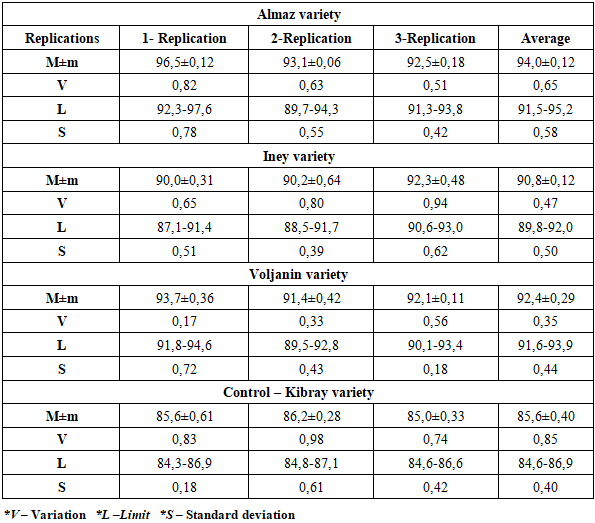
Germination of the white sweet clover seeds sown in the Petri dishes began to be observed after 3-4 days. The results of the experiments showed that the germination rate of white sweet clover varieties was high, averaging 85.6–94.0% (Tab. 1).Table 1. Germination rate of white sweet clover a varieties (%)
 |
| |
|
According to FAO data, the germination rate of untreated white sweet clover seeds ranges from 10% to 30%, while after scarification it can reach 85–95%. The optimal temperature for germination is considered to be 15-25°C, while the minimum temperature is 3-5°C. [1]. In studies conducted by V. Ivanov and N.N. Petrova, it was noted that mechanical scarification of white Qashqarbeda seeds increases the germination rate to 65-85%, while chemical treatment with concentrated sulfuric acid increases it to 80-90%. It was also recorded in experiments that there are significant differences in seed hardness among different varieties of white sweet clover, indicating the possibility of improving this trait through selection. [6]. In our studies on the germination of scarified white sweet clover varieties, it was found that the Almaz variety showed the highest rate 94.0%. The lowest value was observed in the control variety, Kibray, at 85.5%. The Voljanin and Iney varieties occupied intermediate positions, with 92.4% and 90.8%, respectively (Fig. 1).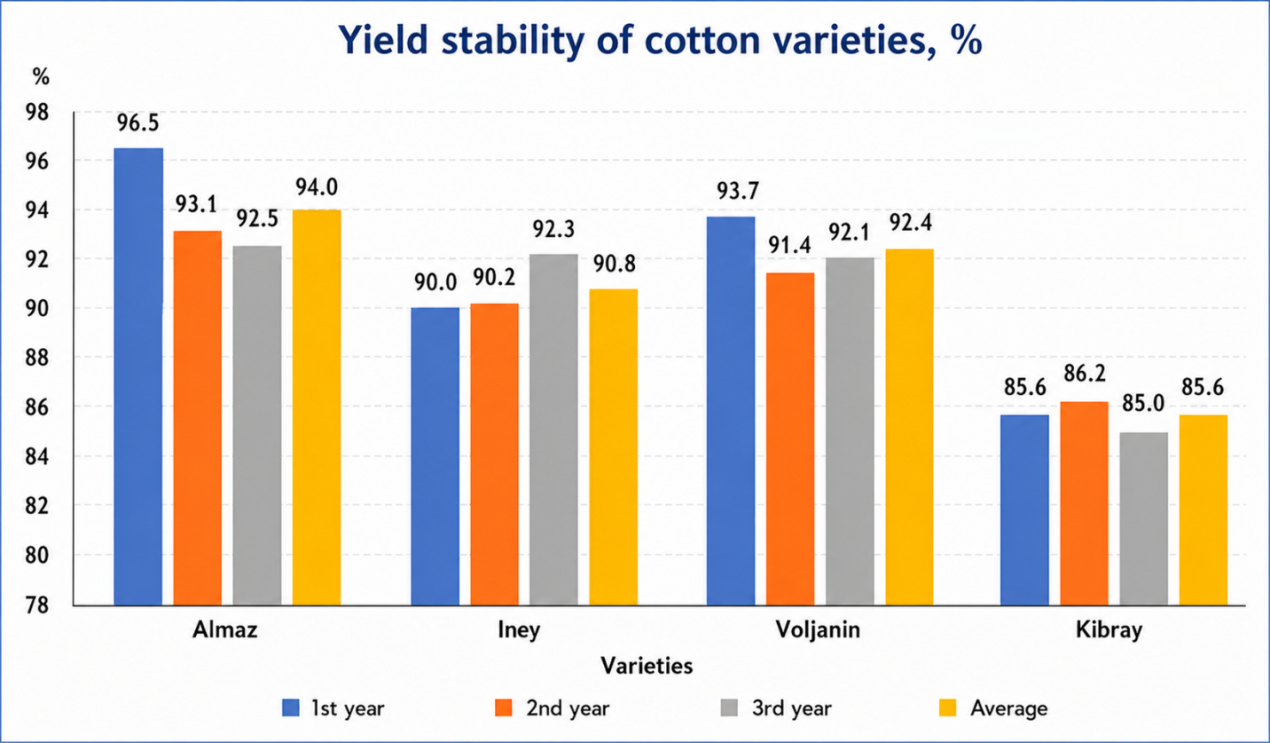 | Figure 1. Germination rate of white sweet clover varieties’ seeds, % |
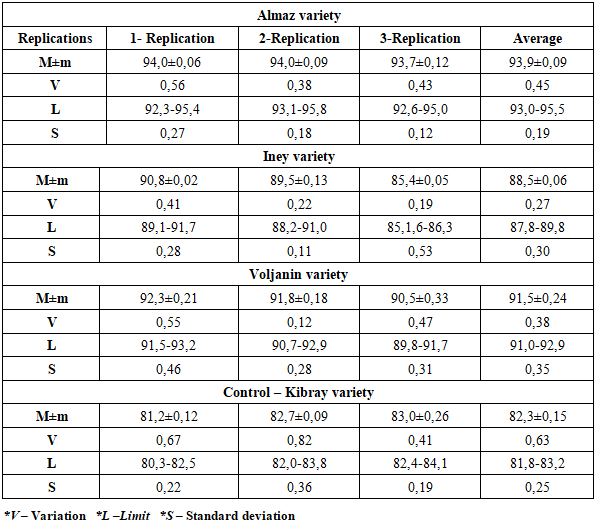
In our experiments, we also determined the growth energy of white sweet clover variety seeds. Based on the results of the conducted research, it can be concluded that the growth energy of white sweet clover variety seeds was high, averaging 82.3-93.9% under laboratory conditions (Tab. 2).Table 2. Growth energy of white sweet clover variety seeds, %
 |
| |
|
In the third replication, the seed growth energy of the white sweet clover variety Almaz ranged from 92.6% to 95.5%, averaging 93.7%, while in the Iney variety it fluctuated between 85.1% and 86.3%, with an average of 85.4%. The seed growth energy of the white sweet clover variety Voljanin ranged from 89.8% to 91.7%, averaging 90.5%, whereas in the Kibray variety the seed germination rate ranged from 82.4% to 84.1%, with an average of 83.0% (Fig. 2).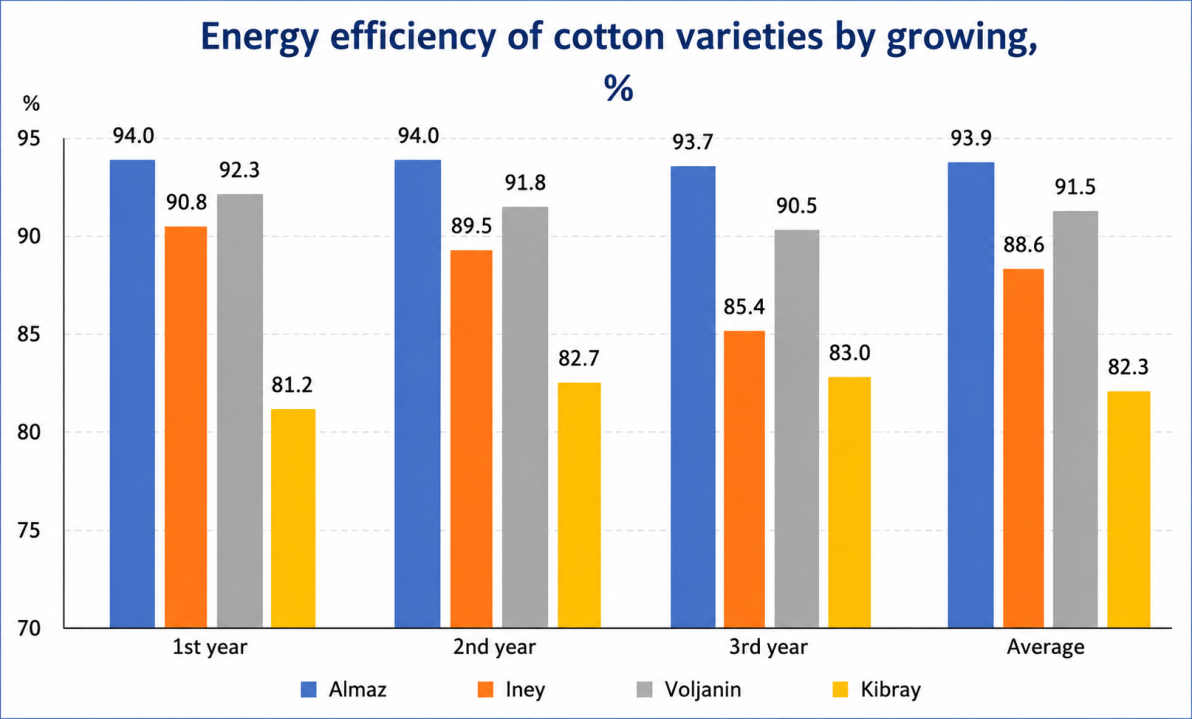 | Figure 2. Growth energy of white sweet clover varieties’ seeds, % |
Biometric indicators of the growth, development, and productivity of white sweet clover varieties.The growth and development of plants is a complex set of morphological and physiological changes occurring throughout the stages of ontogenesis. These processes are reflected in biometric indicators such as plant height, the number of stems and leaves, leaf surface area, as well as the accumulation of aboveground and underground biomass. The analysis of these indicators makes it possible to objectively assess the condition, productivity, and adaptability of plants. [11]. During 2024–2026, the selected white sweet clover varieties were studied in the experimental fields of the Khorezm Mamun Academy experimental research base located in Khiva District. In our studies, certain differences were observed in the growth, development, and productivity of white sweet clover varieties according to their developmental stages. In particular, the height of the Almaz and Voljanin varieties of white sweet clover was higher than that of the other varieties, averaging 150.2 cm and 144.6 cm, respectively. The lowest plant height was observed in the control variety, Kibray, with an average height of 130.5 cm. The Iney variety of white sweet clover occupied an intermediate position, with an average height of 137.4 cm (Fig. 3).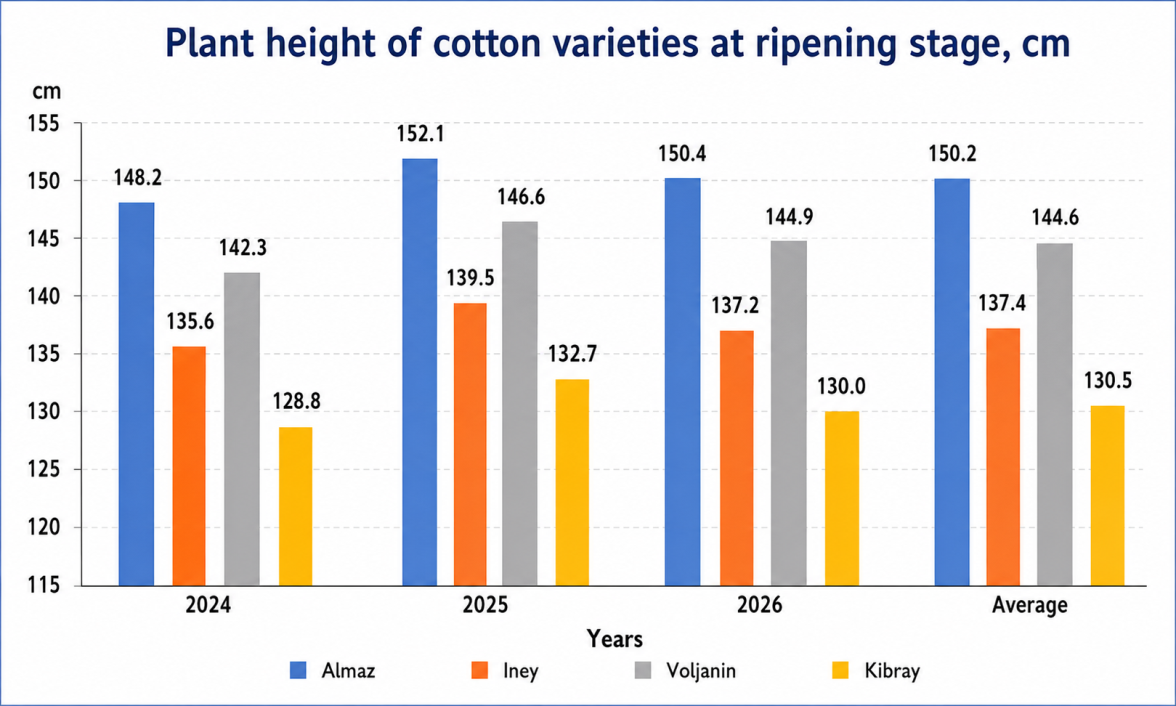 | Figure 3. Plant height of white sweet clover varieties at the end of the developmental stage, cm |
Based on the average results over three years (2024–2026), the weight of one plant of the Almaz variety of white sweet clover was observed to be 125.1 g, while in the Iney variety this indicator was 122.4 g. For the Voljanin variety, the weight of one plant was 137.4 g, and in the control variety Kibray, the weight of one plant was determined to be 114.5 g (Fig. 4).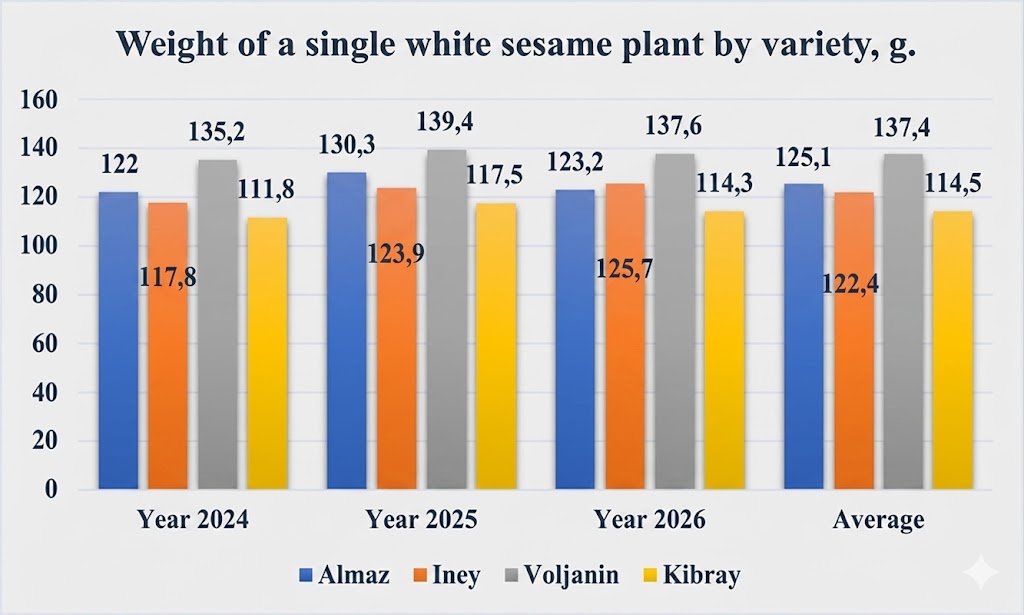 | Figure 4. Weight of one plant in white sweet clover varieties, g |
According to the average results over three years, the number of productive stems per plant in the Almaz variety was found to be 3.48 on average, while in the Iney variety this indicator was 3.33. In the Voljanin variety, it was 3.71, respectively. In the control variety Kibray, the average number of productive stems per plant was recorded as 3.23 (Fig. 5).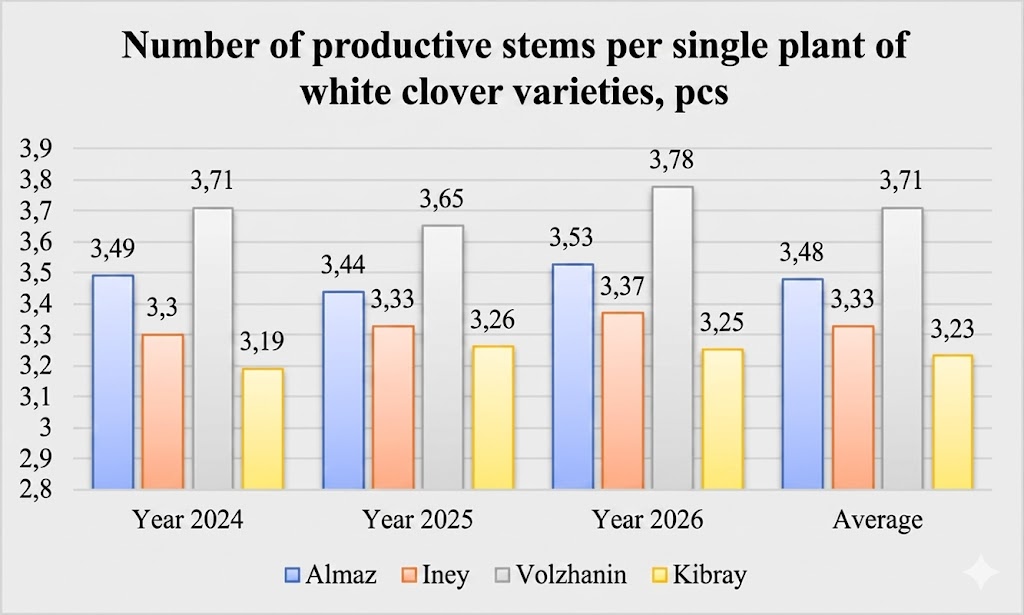 | Figure 5. Number of productive stems per plant in white sweet clover varieties, pcs |
In the Almaz variety of white sweet clover, the number of pods per plant was higher compared to the other studied varieties, averaging 124.5 pods. The lowest number of pods per plant was recorded in the control variety, Kibray, with an average of 107.6 pods. In the Voljanin and Iney varieties of white sweet clover, the number of pods per plant was 118.8 and 111.0 on average, respectively, occupying intermediate positions (Fig. 6).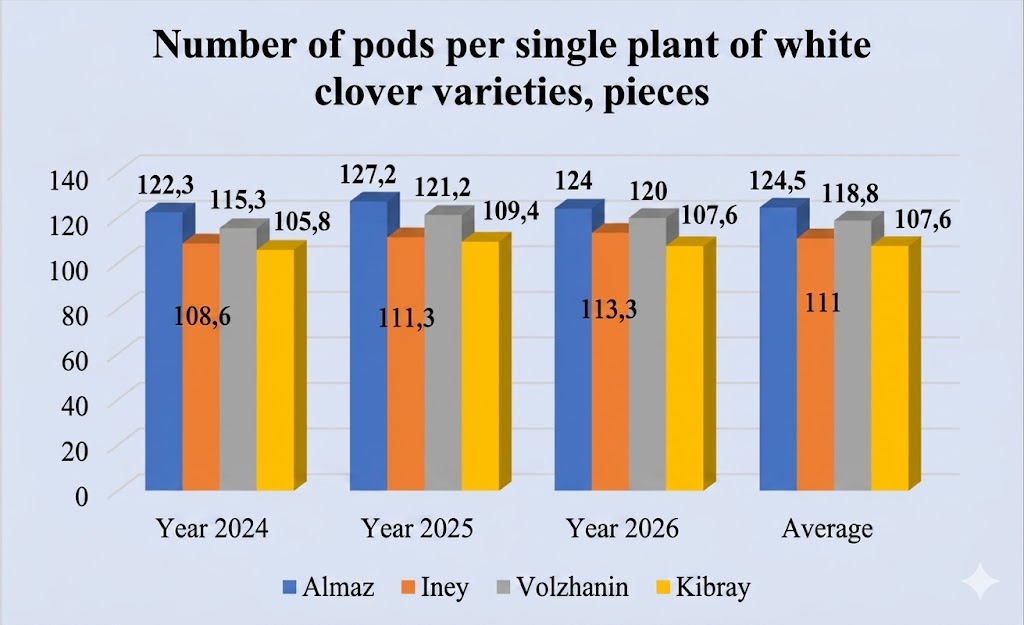 | Figure 6. Number of pods per plant in white sweet clover varieties, pcs |
Based on the average results over three years, the weight of one pod in the Almaz variety of white sweet clover was higher compared to the other studied varieties, averaging 260.0 mg. Among the varieties, the lowest pod weight per plant was observed in the control variety, Kibray, with an average of 203.7 mg. In the Voljanin and Iney varieties of white sweet clover, the weight of one pod was 250.7 mgand 226.0 mg on average, respectively, occupying intermediate positions (Fig. 7).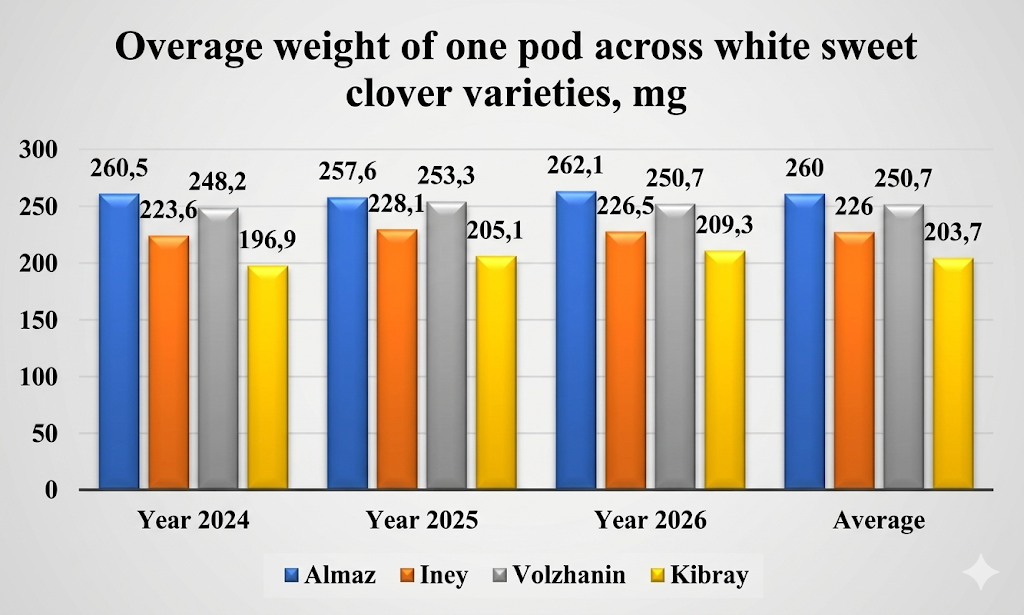 | Figure 7. Weight of one pod in white sweet clover varieties, mg |
Based on the scientific experiments conducted over the three-year average results for 2024–2026, it can be stated that the number of seeds per plant in the Almaz variety of white sweet clover was higher compared to the other studied varieties, averaging 161.8 seeds. Among the introduced varieties, the lowest number of seeds per plant was observed in the control variety, Kibray, with an average of 141.3 seeds (Fig. 8).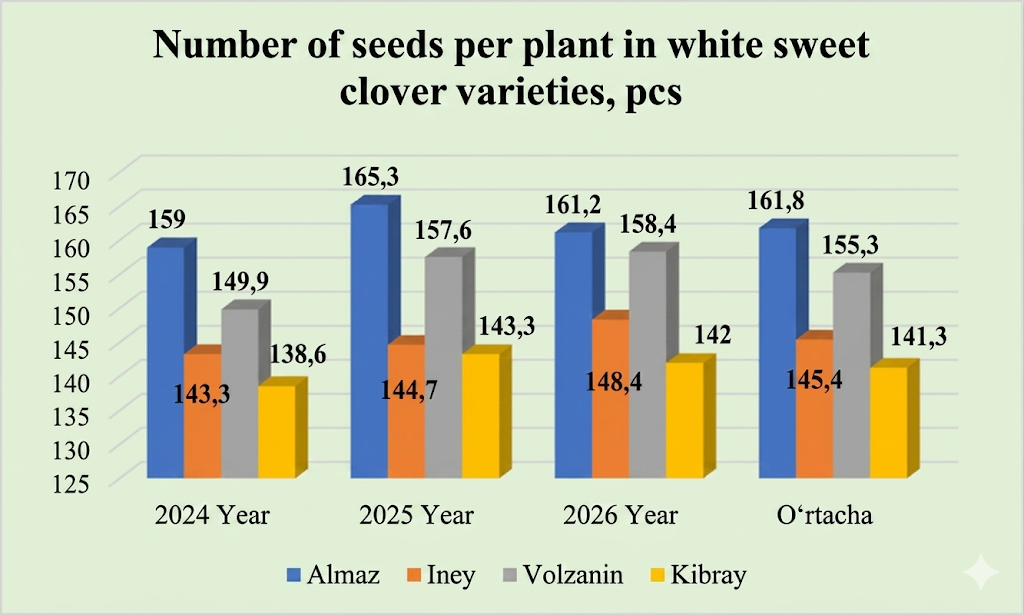 | Figure 8. Number of seeds per plant in white sweet clover varieties, pcs |
In the Almaz and Voljanin varieties of white sweet clover, the thousand-seed weight was higher compared to the other varieties, averaging 2.51 g and 2.37 g, respectively. The lowest value for this indicator was observed in the control variety, Kibray, with an average of 2.11 g. In the Iney variety of white sweet clover, the thousand-seed weight was 2.28 g on average, occupying an intermediate position. The green mass yield of the Almaz and Voljanin varieties of white sweet clover was higher compared to the other studied varieties, averaging 44.5 t/ha and 40.8 t/ha, respectively. The lowest green mass yield was observed in the control variety, Kibray, with an average of 34.0 t/ha. The Iney variety of white sweet clover had an average green mass yield of 37.8 t/ha, occupying an intermediate position (Fig. 9).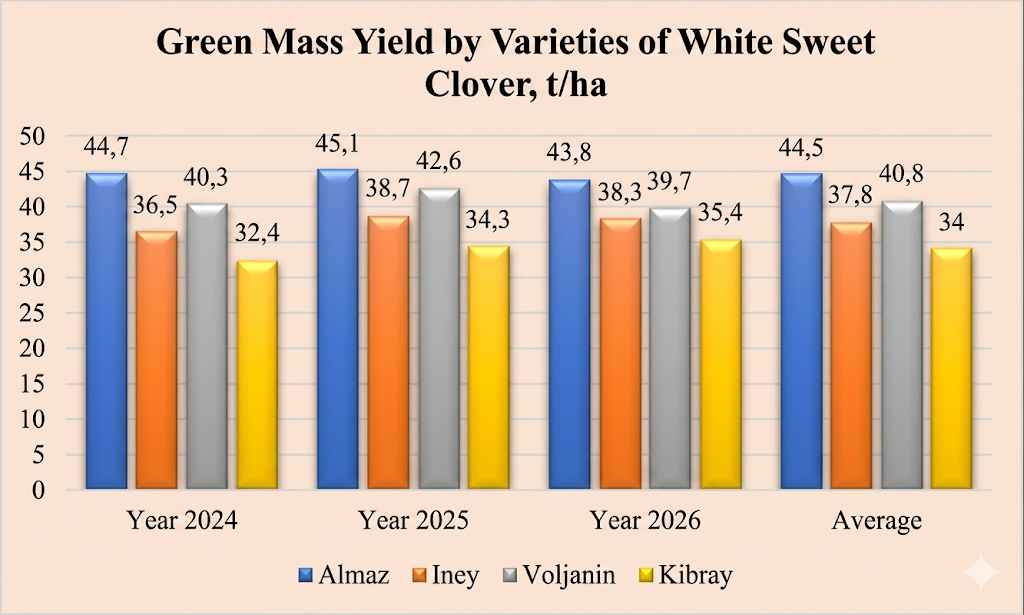 | Figure 9. Green mass yield of white sweet clover varieties, t/ha |
Water-holding capacity of leaves.In recent decades, scientists have recorded global climate change, particularly sharp increases in temperature, which have led to changes in temperature and water regimes across all regions. Worldwide, the frequent occurrence of droughts in recent decades has also become a common phenomenon. Currently, heat and drought periods lasting from one week to one month are observed every summer. Such weather changes pose a particular threat to perennial plants, which must quickly adapt to the new qualitative conditions of the environment. [7]. Therefore, in our scientific research based on biological requirements and conducted under the soil and climatic conditions of the Khorezm Region, we studied certain water exchange characteristics-particularly the water-holding capacity-of white sweet clover varieties Almaz, Iney, Voljanin, and the control variety Kibray, taking into account their ecological and biological properties. In the experiments, the water-holding capacity of the Almaz, Iney, Voljanin, and Kibray varieties of white sweet clover was studied during the vegetation stages of lateral shoot formation, budding, flowering, and ripening. Based on the average three-year results for 2024–2026, the water-holding capacity of the Almaz variety of white sweet clover was 46.8% at the lateral shoot formation stage, 43.2% at the budding stage, 41.0% at the flowering stage, and 27.5% at the ripening stage. In the Iney variety, this indicator was 44.0% at the lateral shoot formation stage, 40.1% at the budding stage, 38.0% at the flowering stage, and 25.7% at the ripening stage. The Voljanin variety showed a water-holding capacity of 47.5% at the lateral shoot formation stage, 43.7% at the budding stage, 41.6% at the flowering stage, and 27.9% at the ripening stage. In the control variety Kibray, the leaf water-holding capacity was 41.1% at the lateral shoot formation stage, 37.2% at the budding stage, 35.1% at the flowering stage, and 24.0% at the ripening stage” (Fig. 10).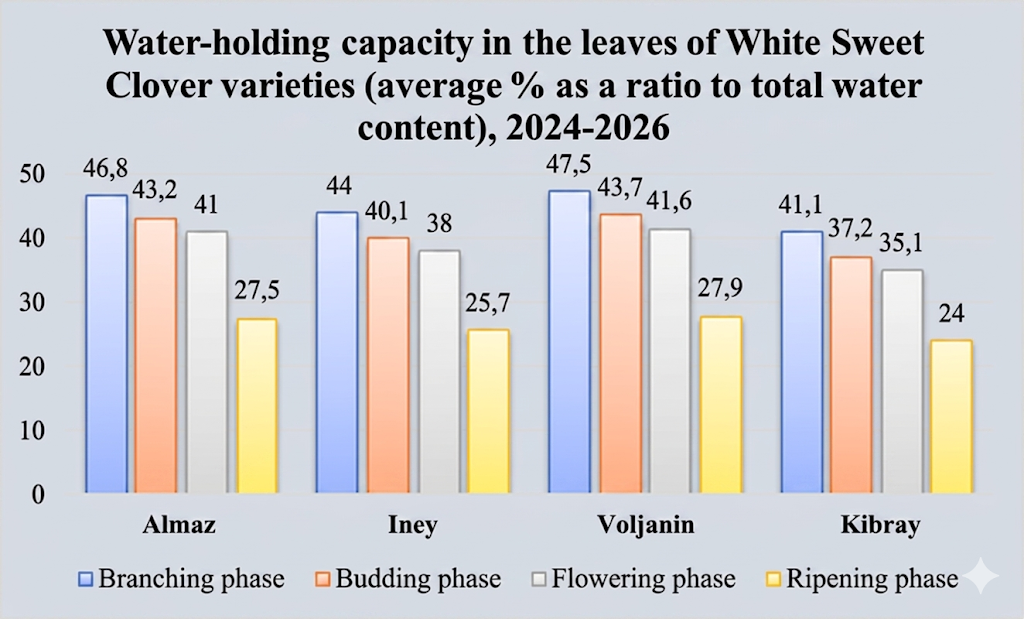 | Figure 10. “Water-holding capacity of leaves of white sweet clover varieties (average % of total water content) |
The conducted research showed that under the conditions of the Khorezm Region there are significant differences between white sweet clover varieties in terms of water-holding capacity. The Almaz and Voljanin varieties demonstrated the highest and most stable adaptability to water stress, which allows them to be recommended for wider introduction into the region’s forage production system. The Iney variety showed average performance, while the control variety Kibray demonstrated the lowest stability.Leaf water deficitIt is known that the occurrence of water deficit in plant organisms is mainly a disruption of water exchange processes, which arises when the intensity of transpiration exceeds the rate of water uptake through the roots. As a result, turgor pressure in the plant decreases, growth slows down, and xeromorphic characteristics develop. [15]. Water deficit in plants is an imbalance of water relations caused by water loss exceeding water uptake. For example, it is manifested by wilting of leaves during midday on sunny summer days. [16]. According to F. Tardieu and T. Simonneau, water deficit is one of the main factors limiting the growth, development, and productivity of agricultural crops. Moisture deficiency leads to a slowdown in cell growth, a decrease in the intensity of photosynthesis, and consequently a reduction in yield. [5].Therefore, in our experiments, we studied water deficit characteristics in the Almaz, Iney, Voljanin, and control Kibray varieties of white sweet clover during the vegetation stages of 2–3 true leaves, lateral shoot formation, budding, and flowering.The results of the conducted research showed that water deficit indicators in white sweet clover varieties change regularly depending on the developmental stages. In all studied varieties, the highest values of water deficit were recorded at the lateral shoot formation stage, which can be explained by increased transpiration processes in plants during this period and the incomplete development of the root system.Leaf transpiration rateIt is known that transpiration is one of the most important physiological processes in plants, which describes the movement of water from the roots throughout the plant and its subsequent release from the leaves in the form of vapor. [1]. The transpiration process is one of the most important processes in plant organisms, ensuring the transport of water and dissolved mineral and nutrient substances from the roots, cooling the plant body (lowering its temperature) under dry conditions and high air temperatures, and maintaining water balance. [8]. It is known that transpiration is one of the most important physiological processes in plants, representing the movement of water from the roots throughout the plant and its subsequent release from the leaves in the form of vapor. [2].The transpiration process is considered one of the most important processes in the plant organism, ensuring the transport of water and dissolved mineral and nutrient substances through the roots, cooling the plant body (reducing temperature) under drought and high air temperature conditions, and maintaining water balance. [17]. Our scientific experiments, when the transpiration intensity of leaves in white sweet clover varieties was studied, certain varietal differences were identified. We believe that these varietal differences may be related to the soil and climatic conditions under which a particular variety was developed. Based on the research results and the conducted experiments, it can be concluded that the transpiration intensity in all varieties of white sweet clover changes throughout the day. In particular, it was observed that the transpiration intensity was relatively low in the morning, around 8:00–10:00 a.m., whereas by midday the transpiration intensity increased sharply (around 12:00–4:00 p.m.). In some varieties, however, a relative decrease in this indicator was recorded during this period. By the end of the day, particularly in the evening hours around 6:00–8:00 p.m., a significant decrease in transpiration intensity was observed. This condition can be explained as follows: during the daytime, transpiration intensity is high because, under the influence of light, the stomata in plant leaves open for photosynthesis, which enhances water evaporation, while high temperatures further accelerate this process. In the evening and at night, transpiration decreases because, in the absence of light, the leaf stomata close, the temperature decreases, and air humidity increases, all of which reduce water evaporation.
ACKNOWLEDGEMENTS
We are grateful to the Khorezm Karakum Station under the Committee for Ecology and Environmental Protection of the Republic of Uzbekistan. for its close cooperation. In addition to the team of Khorezm academy of Mamun of the Academy of Sciences of the Republic of Uzbekistan for granting permission to use.
Conflict of Interests
The authors declare that there is no conflict of interest regarding the publication of this paper.
References
| [1] | Amelin A.V., Fesenko A.N., Chekalin E.I. et al. Photosynthetic energy potential “Klondike” in breeding // Breeding, Seed Production and Genetics. 2016, No. 6, pp. 36–14. |
| [2] | Amelin A.V., Fesenko A.N., Chekalin E.I. et al. Photosynthetic energy potential “Klondike” in breeding // Breeding, Seed Production and Genetics. 2016, No. 6, pp. 36-38. |
| [3] | Ashurmetov O.A. Methodology for Studying Seed Productivity of Plants Using Species of the Genus Glycyrrhiza L. as an Example // Increasing Fodder Production on a Scientific Basis: Conference Abstracts. Tashkent, 1982, pp. 50–52. |
| [4] | Baskin C.C., Baskin J.M. Seeds: Ecology, Biogeography, and Evolution of Dormancy and Germination. Elsevier, 2014. 458 p. |
| [5] | François Tardieu, Thierry Simonneau, Bruno Muller The physiological basis of drought tolerance in crop plants: a scenario-dependent probabilistic approach // Annual Review of Plant Biology. 2018, Vol. 69, pp. 733-759. |
| [6] | Ivanov A. V., Petrova N. N. Effect of pre-sowing seed treatment of white sweet clover on germination // Forage Production. Moscow, 2016, 5(46), pp. 36-42. |
| [7] | Ibragimov K.Kh. Problems of the development of horticulture in Russia under changing climate conditions // Bulletin of Uman National University of Horticulture. 2014, No. 1, pp. 105-106. |
| [8] | Kaipeyen E., Pelkonen P. Optimization of photosynthesis and transpiration in intact willow leaves on short-rotation plantations // Plant Physiology. 2007. Vol. 54, No. 3, pp. 350-355. |
| [9] | Kovalev A.V., Lisitsin Yu.P. Biology of Legume Seeds. St. Petersburg: Nauka, 2000. pp. 98–102. |
| [10] | Melnikova O.V. Germination energy, germination capacity, and biometric characteristics of winter soft wheat (Triticum aestivum L.) seedlings under conditions of varying acidity of the water environment. Siberian Journal of Life Sciences and Agriculture. 2024, 3(39), pp. 63-74. |
| [11] | Mustafina A.S. Growth and development of medicinal plants under conditions of introduction // Botanical Journal. 2017. Vol. 102, No. 6. pp. 812-820. |
| [12] | Nichiporovich A.A. On Water Loss in Cut Plants During Wilting // Journal of Experimental Agronomy of the Southeast – Russia. 1962. Vol. 3, Issue 1, pp. 11–13. |
| [13] | Nilov V.N. Methods of Statistical Processing of Phenological Observation Materials // Journal of Botany. 1980. No. 2 (65), pp. 282–284. |
| [14] | Ruzmetov R., Abdullaev I., Gandjaeva L., Otaev O., Ibragimov S. Fundamentals of using Geographical Information Systems in predicting the distribution of Helicoverpa armigera (Lepidoptera: Noctuidae) // Biodiversitas, 23(6), 2022, pp. 3251-3256. doi: 10.13057/biodiv/d230653. |
| [15] | Sazonova T. A, Kolosova S. V., Isaeva L. G. Water regime of Pinus sylvestris and Picea obovata (Pinaceae) under conditions of industrial pollution // Botanical Journal. 2007. Vol. 92, No. 5. pp. 740-750. |
| [16] | Sazonova T. A., Bolondinsky V. K., Pridacha V. B., Novichonok E. V. Effect of leaf water deficit on photosynthesis in silver birch // International Journal of Applied and Fundamental Research. 2016, No. 10-4, pp. 595-597. |
| [17] | Timofeev V.P. Seed Physiology and Germination. Moscow: Rosselkhozizdat, 2001. pp. 35-40. |
| [18] | Zorina M.S. and Kabanov S.P. Determination of Seed Productivity and Seed Quality of Introduced Plants // Methods of Introduction Research in Kazakhstan. Alma-Ata, 1987, pp. 75–85. |


 Abstract
 Reference
 Full-Text PDF
 Full-text HTML