
-
Paper Information
- Next Paper
- Paper Submission
-
Journal Information
- About This Journal
- Editorial Board
- Current Issue
- Archive
- Author Guidelines
- Contact Us
International Journal of Genetic Engineering
p-ISSN: 2167-7239 e-ISSN: 2167-7220
2026; 14(1): 17-27
doi:10.5923/j.ijge.20261401.04
Received: Jan. 6, 2026; Accepted: Jan. 25, 2026; Published: Feb. 4, 2026

Study of Physical Development Indicators and Characteristics of the Cardiorespiratory System in Female Athletes Engaged in Various Sports
 Abstract
 Reference
 Full-Text PDF
 Full-text HTML
K. U. Rozumbetov1, 2, G. D. Shirliyeva2, A. T. Esimbetov1
1Department of Veterinary Diagnostics and Food Safety, Nukus Branch of the Samarkand State University of Veterinary Medicine, Livestock and Biotechnologies, Uzbekistan
2Department of Physiology, Karakalpak State University, Uzbekistan
Correspondence to: K. U. Rozumbetov, Department of Veterinary Diagnostics and Food Safety, Nukus Branch of the Samarkand State University of Veterinary Medicine, Livestock and Biotechnologies, Uzbekistan.
| Email: |  |
Copyright © 2026 The Author(s). Published by Scientific & Academic Publishing.
This work is licensed under the Creative Commons Attribution International License (CC BY).
http://creativecommons.org/licenses/by/4.0/

The aim of this study was to investigate the physical development indicators, cardiovascular and respiratory system status, and responses to physical load in 19-20-year-old female athletes practicing various sports in the Republic of Karakalpakstan. A total of 149 female athletes from different sports disciplines underwent morphofunctional and physiological assessments. The results revealed statistically significant differences in anthropometric parameters such as body weight, knee joint width, chest circumference, upper-arm circumference, and calf circumference among athletes of different sports. At the same time, the results of the Shtange and Genchi tests were often below normative values, highlighting the need to further develop the functional capacities of the cardiorespiratory system. The Robinson index and Ruffier test showed partial differences in cardiovascular system function depending on the sport type. The functional changes index indicated the highest values in track and field athletes, confirming the well-developed general adaptive potential of their cardiorespiratory system. The study results emphasize the importance of considering sport type, training load intensity, and individual functional capacities when planning sports training.
Keywords: Female athletes, Physical development, Cardiorespiratory system, Sport type, Functional tests
Cite this paper: K. U. Rozumbetov, G. D. Shirliyeva, A. T. Esimbetov, Study of Physical Development Indicators and Characteristics of the Cardiorespiratory System in Female Athletes Engaged in Various Sports, International Journal of Genetic Engineering, Vol. 14 No. 1, 2026, pp. 17-27. doi: 10.5923/j.ijge.20261401.04.
Article Outline
1. Introduction
- In recent years, the development of women’s sports has become one of the priority directions of state policy in our country. The popularization of sports among girls not only promotes a healthy lifestyle but also contributes to the formation of an active, morally mature, and strong-willed generation in society. Under the conditions of the Republic of Karakalpakstan, however, this process requires more complex physiological adaptations. This is due to the fact that the region’s climatic characteristics, environmental background, and social factors have a direct impact on the morphofunctional development of female athletes [1]. Therefore, studying the level of adaptation of female athletes’ bodies to physical loads, as well as their morphological indicators and functional capacities, represents a relevant and important scientific direction.Regular repetition of physical exercises and systematic, long-term training strengthen motor skills and contribute to improving the functional state of trained systems. In order to adequately select physical exercises, it is necessary to have information about the level of physical development of the body and its functional state [2].In practice, to date, numerous functional tests and trials are used to assess the physical indicators of athletes, allowing evaluation of the body’s reserve capacities and the adaptive characteristics of various physiological systems to physical loads. However, it should also be emphasized that athletes must select physical loads that are appropriate to the individual characteristics of their bodies.In this regard, the World Health Organization (WHO) has developed a number of requirements for the selection and implementation of physical loads, including:- the load should be quantitatively measurable and involve at least two-thirds of the muscle mass, ensuring maximal activation of physiological systems;- complex, highly coordinated (coordination-demanding) movements should be limited;- the selected load should be characterized by simplicity and general accessibility;- the possibility of recording physiological parameters during testing should be ensured [2,3].Therefore, in our study, simple and non-strenuous functional tests and trials were applied.The study of cardiovascular system function occupies a central role in assessing the functional state of students engaged in physical education and sports. This is because, during dynamic observations both at rest and in response to physical load, not only the cardiovascular system but also the adaptive state of the entire organism is evaluated. In addition, during late adolescence, growth processes are completed and the main physiological parameters characterizing the level of students’ physical health become stabilized. Studying the functional characteristics of the cardiovascular and respiratory systems is essential for determining the quality of the body’s adaptation to physical loads [4].A number of studies related to athletes have been conducted in Karakalpakstan. In particular, hormonal changes, blood cell counts, and specific features of the somatotype have been investigated in male football players [5]. More recently, total body dimensions have been investigated in boys and girls aged 8-16 years engaged in basketball, and accelerated growth rates were observed at the ages of 15-16 years [6]. In addition, changes in muscle strength and physical endurance, as well as their relationships with hematological parameters, have been identified in adolescents who do not regularly participate in sports [7]. Studies have also been reported on handgrip strength and cardiorespiratory system function in girls who do not engage in regular sports activities [8,9]. Recent scientific studies have shown that identifying the morphological and functional indicators of athletes and analyzing them according to age and type of sport is of great importance for improving the effectiveness of sports training [1].However, under the conditions of the Republic of Karakalpakstan, the morphofunctional characteristics of female athletes and their responses to physical loads across different types of sports have not been sufficiently studied.The aim of the Study is to investigate the indicators of physical development, the state of the cardiorespiratory system, and its responses to physical loads in female athletes under the conditions of the Republic of Karakalpakstan, with consideration of different types of sports.
2. Materials and Methods
2.1. Participants and Study Area
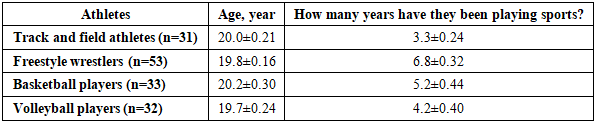
- In the spring season of 2025, morphofunctional examinations were conducted among 149 voluntary female student athletes aged 19-20 years who study at the Faculties of Physical Culture of Karakalpak State University, Nukus State Pedagogical Institute, and the Nukus branch of the Uzbekistan State University of Physical Education and Sport, and who permanently reside in the Republic of Karakalpakstan. Among the participants, 31 athletes regularly practice athletics, 53 are engaged in freestyle wrestling, 33 in basketball, and 32 in volleyball.Information on the age of the participating female athletes and the duration of their engagement in specific sports is presented in Table 1.
|
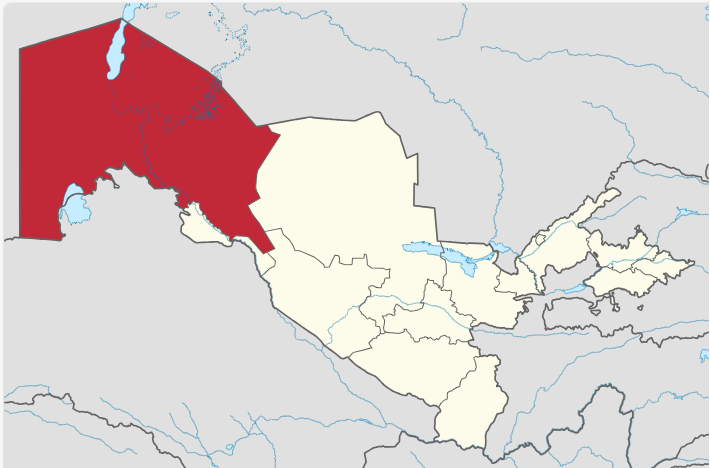 | Figure 1. Location of the Republic of Karakalpakstan in Uzbekistan [16] |
2.2. Measurement of Anthropometric Parameters
- Measurements were conducted in two stages. They were carried out during the spring-summer period, in the morning shift, in a room with comfortable temperature, sufficient lighting, and isolation. At the first stage, anthropometric measurements of all participants were performed using standard accepted methods [19,20]:Body length was measured with a medical stadiometer SECA 217 (Germany) with an accuracy of up to 5 mm.Body weight was measured using an electronic medical scale SECA 803 (Germany) with an accuracy ranging from 50 g to 150 g, depending on the weight.Chest, upper-arm, and calf circumferences were measured using a non-stretchable metric tape (accuracy 0.01 cm) and an electronic tape measure (“Measure King”, VAHIGCY, China).Bone size level indicators, including elbow and knee joint widths, were measured with a movable caliper (“Argentum” LLC, Russia) with an accuracy of 1 mm.The following skinfolds were measured: subscapular skinfold, suprailiac skinfold, triceps skinfold, calf skinfold. The skinfolds were measured using Slim Guide Caliper, China, applying equal pressure (10 g per mm2) with an accuracy of 0.5 mm.Handgrip strength was determined using a hand dynamometer (MEGEON – 34090, Russia, 2017) designed to measure grip strength with an accuracy of 0.5 kg.
2.3. Measurement of Physiological Parameters and Conducting Functional Tests
- In the second stage of the study, a series of tests and examinations were conducted to assess the cardiorespiratory system functions of the athletes.Assessment of Respiratory System Functions:Lung Vital Capacity (LVC) – measured using an electronic vital capacity tester, FCS-10000, Grows Instrument (China, 2018) [20].Dynamic Spirometry allows the evaluation of respiratory system condition by monitoring changes in LVC during physical load [21]. After measuring LVC at rest, the volunteer performs a standard physical load (20 sit-ups in 30 seconds). LVC is then measured again. Dynamic spirometry is calculated as the difference between LVC at rest and after the physical load. The results are interpreted as follows: if LVC does not change – “satisfactory”; if LVC decreases by more than 200 ml – “unsatisfactory”; if LVC increases by more than 200 ml – “good” [21].Shtange Test – a physiological test designed to assess the condition of the respiratory and cardiovascular systems by measuring the duration of breath-holding after a deep inhalation. It reflects the body’s resistance to oxygen deficiency (hypoxia) and its adaptive capabilities [22]. As a reference, untrained individuals can hold their breath for 40-55 seconds after a deep inhalation, while trained individuals can hold it for 60-90 seconds or longer.Genchi Test – this diagnostic test is also aimed at evaluating the respiratory and cardiovascular system functions. It determines the body’s adaptive response to hypoxia (oxygen deficiency) by measuring the duration of breath-holding after a full exhalation [22]. As a reference, untrained individuals can hold their breath for 25-30 seconds after exhalation, whereas trained individuals can hold it for 40-60 seconds or longer.Assessment of Cardiovascular System Functions:Systolic blood pressure (SBP), diastolic blood pressure (DBP), and heart rate (HR) in the participants were measured on the shoulder using the Korotkov method with an OMRON 711 electronic tonometer (HEM-8712-CM2) (China, 2017).Robinson Index describes the systolic function of the heart. Additionally, this index reflects the myocardial oxygen demand and, together with the adaptive potential, serves as an indicator of cardiovascular system condition and the body’s adaptation mechanisms. The Robinson Index is calculated using the following formula:
 Here, HR – heart rate (beats/min); SBP – systolic blood pressure (mmHg).The higher these indicators during physical exertion, the greater the functional capacity of the heart muscles. The index is used to evaluate the level of metabolic and energy processes occurring in the body. The results of the index are interpreted as follows: ≤69 conditional units – excellent; 70-84 – good; 85-94 – average; 95-110 – poor; ≥111 – very poor [23].Ruffier Functional Test is used to assess the cardiovascular system’s adaptation to physical exertion and also serves as a simple and indirect method for determining physical fitness. It is based on quantitatively evaluating the HR response and recovery speed after performing 30 sit-ups in 45 seconds [22,24].The Ruffier index is calculated using the formula:
  Here, P1 – HR measured over 15 seconds at rest; P2 – HR measured over the first 15 seconds after performing 30 sit-ups; P3 – HR measured during the last 15 seconds of the first minute of the recovery period; 200 – triple sum of the average HR in adults; 10 – used to simplify comparison.The resulting index is then evaluated according to the following scale: 15 – unsatisfactory result, poor heart function, possibly severe heart failure; 10-15 – poor result, weak heart function, or moderate heart failure; 6-9 – satisfactory result, average performance, no insufficiency; 3-5 (normal) – good result, good performance; 0-3 (normal) – excellent result, very good heart function [22,24].Functional Changes Index (Adaptation Potential). The functional changes index reflects the adaptive capacity of the circulatory system (CS). The functional state of the CS was evaluated using the following formula:
 Here: HR – heart rate at rest (beats/min), SBP – systolic arterial pressure (mmHg), DBP – diastolic arterial pressure (mmHg), A – age (years), BW – body weight (kg), BL – body length (cm).Evaluation of adaptation potential values: 0-2.6 – CS is functioning satisfactorily; 2.6-3.1 – functional stress is present; 3.1-3.5 – functional state is unsatisfactory; 3.5 and above – dysfunction is present in the CS [25].
2.4. Statistical Analysis
- Statistical hypotheses regarding differences in main trends across the four groups were tested on quantitative variables using the Kruskal-Wallis test. When statistically significant differences were identified, post-hoc comparisons were conducted using the Mann-Whitney test with Bonferroni correction to eliminate inflation of Type I error. Results were considered statistically significant at p < 0.05.All results were obtained using functions in Microsoft Excel (Microsoft Office 2010) and with statistical software Past (version 2.17, Norway, Oslo, 2012) and Origin Pro v.8.5 SR1 (EULA, Northampton, MA 01060-4401, USA).The age of the athletes and the duration of engagement in a specific sport are presented as mean (M) ± standard deviation (m). All other data are presented as mean values (µ) with lower (LL) and upper (UL) bounds of the 95% confidence interval (µ; LL; UL 95% CI) for anthropometric and physiometric parameters.
3. Results
- The anthropometric characteristics of female athletes engaged in various sports and their intragroup comparisons can be seen in Table 2. According to the comparison results, statistically significant intergroup differences were found in body weight, knee joint width, chest circumference, upper-arm circumference, and calf circumference (p < 0.05). Specifically, female athletes practicing wrestling and volleyball had significantly higher body weight compared to those engaged in athletics (p < 0.001). Female wrestlers also exhibited significantly greater knee joint width compared to athletes in track and field (p < 0.05). Furthermore, chest circumference in wrestlers was statistically higher than in track-and-field and basketball athletes (p < 0.05). Upper-arm and calf circumferences were significantly lower in track-and-field athletes compared to wrestlers and volleyball players (p < 0.01). In addition, upper-arm circumference was higher in wrestlers than in basketball players (p < 0.01).
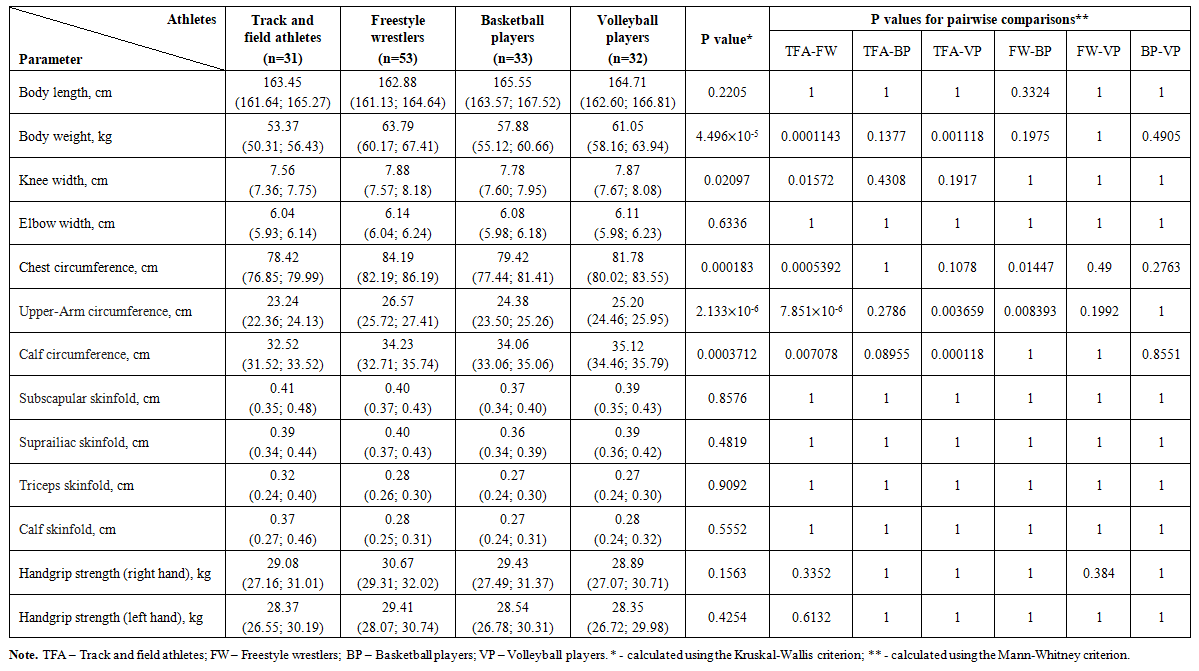 | Table 2. Anthropometric indicators and their comparison in the studied groups |
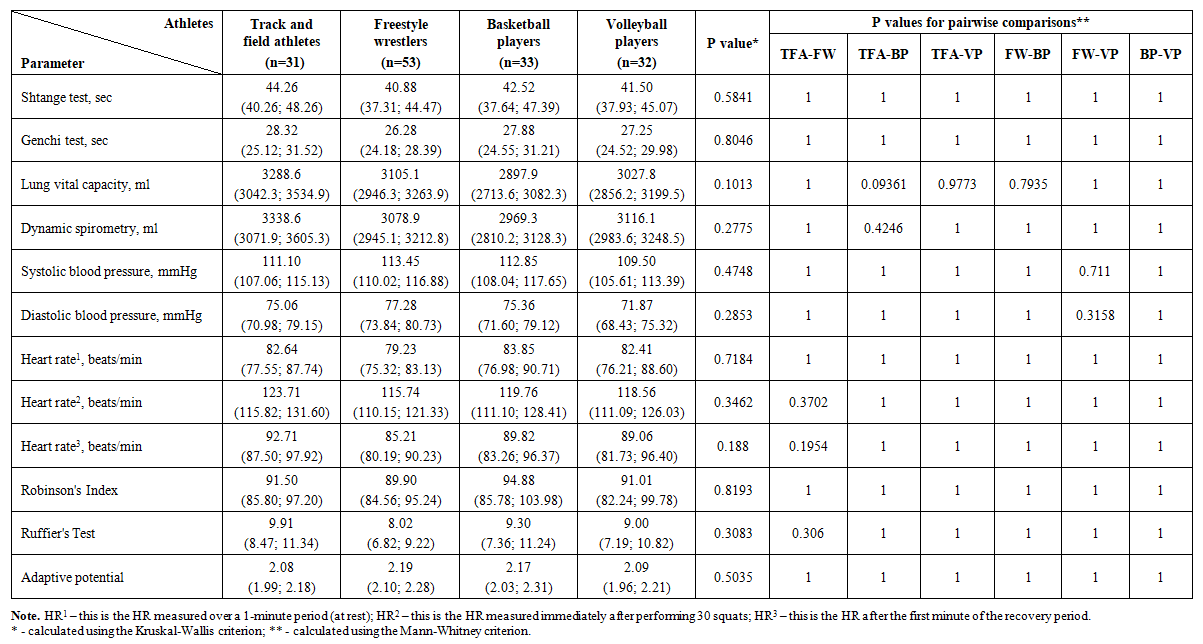 | Table 3. Comparison of the results of physiological parameters and functional tests in the studied groups |
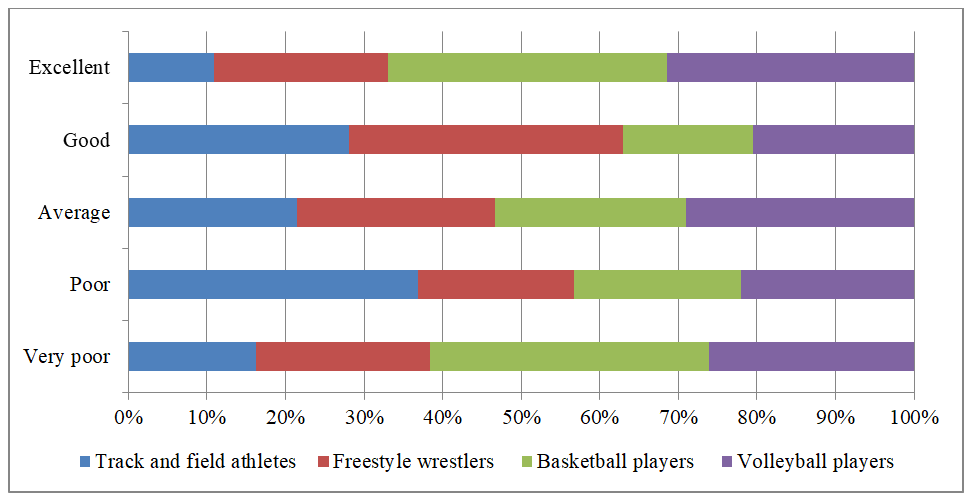 | Figure 2. Robinson index results (%) among female athletes practicing different sports |
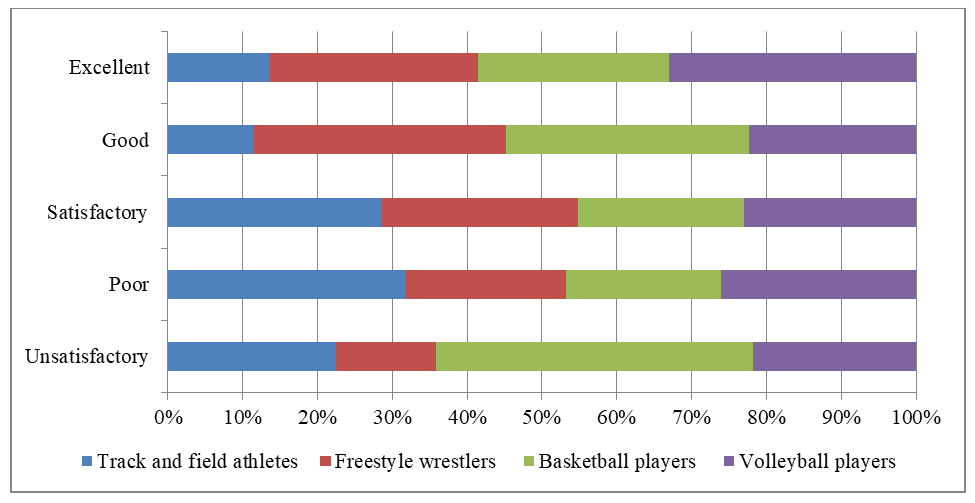 | Figure 3. Assessment of the physical working capacity of female athletes using the Ruffier test (%) |
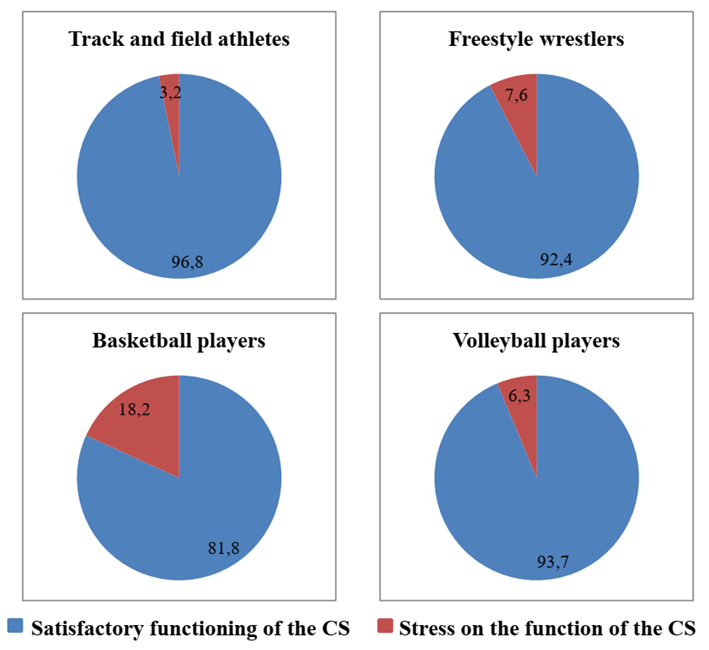 | Figure 4. Functional Changes Index results (%) in the studied groups |
4. Discussion
- The results of the conducted study demonstrated that the physical development indicators of female athletes engaged in different sports are formed depending on their sport specialization. Intergroup comparisons of anthropometric parameters confirmed statistically significant differences in certain morphological characteristics. In particular, the body weight of athletes practicing wrestling and volleyball was significantly higher than that of those engaged in track and field, which can be explained by the relatively greater muscle mass in wrestlers and volleyball players, as well as the predominance of strength and power components [26]. In track and field, the relatively lower body weight is associated with training loads focused on speed and endurance [27].The greater knee joint width observed in female athletes practicing wrestling compared to track and field athletes can be explained by the higher loads placed on the musculoskeletal system in this sport and the adaptive morphological remodeling of the joints [28]. Similarly, the larger chest circumference in wrestlers compared to track and field and basketball athletes indicates better-developed respiratory muscles and thoracic volume [29].Higher values of upper-arm and calf circumferences in wrestlers and volleyball players are associated with pronounced muscle hypertrophy. Additionally, the observation that wrestlers have a greater upper-arm circumference than basketball players reflects the functional adaptation linked to the active involvement of the upper-arm region in wrestling. At the same time, no statistically significant differences were found among the studied groups in indicators such as skinfolds and handgrip strength. This can be attributed to the fact that all female athletes belonged to the same age group, were not part of a sedentary population, and had similar overall levels of physical fitness.No statistically significant differences (p > 0.05) were found in the average values of physiological parameters and functional tests among female athletes regularly engaged in different sports. This indicates that, in the studied age group, general adaptive mechanisms are already well-formed and that sports activity exerts a positive effect on the functional state of the organism.However, analysis of the Shtange and Genchi tests revealed that most of the athletes had insufficient hypoxia tolerance of the respiratory system. The low proportion of athletes meeting the normative standards (20% and 15%, respectively) points to the need for further development of the functional capabilities of the cardiorespiratory system. This is especially relevant for youth living in environmentally challenging conditions. It should also be noted that tissue hypoxia can result not only from environmental oxygen deficiency or respiratory system dysfunction but also from cardiovascular diseases. Literature reports indicate that in pathological conditions, including anemia, breath-holding time is reduced [22]. Furthermore, studies have demonstrated a decrease in vital lung capacity among students living in areas with high atmospheric pollution [30].Subjects who demonstrated high results in hypoxic tests also showed better adaptation to physical loads. Research indicates that 4-8 months of regular aerobic training leads to a decrease in HR and blood pressure, reflecting an improvement in the functional readiness of women aged 25-30 for physical activity [31].Differences in dynamic spirometry results across sports can be explained by the nature of the training. The high proportion of “good” results (42%) among female athletes practicing track and field is associated with the predominance of aerobic loads in this sport and the well-developed respiratory muscles. In contrast, volleyball players showed predominance in the “satisfactory” category, while wrestlers and basketball players more frequently fell into the “unsatisfactory” category, reflecting the predominance of short-term, high-intensity loads in these sports.Results from the Robinson index and Ruffier test demonstrated partial differences in cardiovascular system functionality depending on the type of sport. The presence of “excellent” results among basketball players indicates well-balanced development of speed and endurance qualities. In contrast, the high proportion of “poor” and “very poor” categories among track and field athletes may reflect the one-sided nature of the training load or insufficient recovery measures during the training process.Studies conducted among students revealed relatively low Ruffier index values, highlighting the necessity of regular use of general endurance development tools and methods in physical education sessions [32]. Other research identified that both female and male students had satisfactory to poor physical health, characterized by low heart performance and poor physical work capacity [33]. E.N. Mokasheva et al. reported “poor” (99.85±4.99) and “very poor” (111.15±5.55) Robinson index categories among students, which they interpreted as indicative of extremely poor myocardial oxygen supply regulation [34]. In additional studies, first-year female students showed 10% “poor” and 30% “very poor” categories according to the Robinson index, while second-year female students had 30% “poor” and 10% “very poor” categories [23].The high level of satisfactory adaptation (96.8%) observed in track and field female athletes according to the Functional Changes Index confirms the overall good adaptive capacity of their cardiovascular system. Previous studies have also shown that athletes engaged in track and field exhibit a high functional state of the cardiovascular system [35]. The detection of stress in the CS in some basketball players indicates the need to individualize training loads.Other studies among university students of both sexes have shown a decrease in adaptive potential before and after physical exertion (p < 0.01) [36]. This indicates a sharp reduction in functional capacities of the CS and reflects strain on adaptive mechanisms. According to several authors [37, 38], even in the absence of disease symptoms, a decrease in adaptive capacity signals low health status and increases the risk of disease development. In addition, the unfavorable ecological conditions of the studied region may negatively affect the cardiovascular performance of female athletes. Research has demonstrated a correlation between the nature of technogenic loads and a reduction in adaptive potential in adolescents [30]. Moreover, residents in areas with anthropogenic pollution have shown increases in minute blood volume and systolic volume [39]. Under urban technogenic pollution, a decline in cardiovascular functional state and adaptive capacity has also been observed among male adolescents [4].Overall, the analysis and interpretation of the results indicate that female athletes exhibit a relatively low functional state of the cardiorespiratory system. When organizing physical training for these athletes, it is necessary not only to include strength and speed-strength exercises but also to ensure the inclusion of aerobic exercises. Measures should also be taken to optimize the physical training of female student athletes.
5. Conclusions
- The results suggest that in female athletes engaged in different types of sports, anthropometric characteristics and the functional state of the cardiorespiratory system may be influenced by the type of sport and the ecological conditions of their living environment. This underscores the importance of considering sport type, training load intensity, and individual functional capacities when planning training programs. Such information can be of practical significance for sports coaches in athlete selection, training planning, and monitoring the health of female athletes.
Conflicts of Interest
- The authors declare no conflict of interest.
Author contributions
- K.U. Rozumbetov: Writing – original draft, Supervision and Project Administration, Conceptualization, Visualization, Methodology, Investigation, Resources, Formal analysis. G.D. Shirliyeva: Writing – review & editing, Investigation, Resources, Data curation. A.T. Esimbetov: Writing – review & editing, Validation, Data curation.
Funding
- The author(s) reported no funding associated with the work featured in this article.
ACKNOWLEDGEMENTS
- We thank the participants for their participation in this study.