International Journal of Ecosystem

p-ISSN: 2165-8889    e-ISSN: 2165-8919

2013;  3(5): 115-123

doi:10.5923/j.ije.20130305.03

Evaluation of Soil Moisture Availability in Root Zone: Case Study in Unter-Iwes Drylands, Sumbawa, Indonesia

Ieke Wulan Ayu1, 2, S. Prijono1, 3, Soemarno1, 3

1Environmental Resource Management Master Program, University of Brawijaya, Indonesia

2Department of Agrotechnology, Faculty of Agriculture, University of Samawa, Indonesia

3Department of Soil Science, Faculty of Agriculture, University of Brawijaya, Indonesia

Correspondence to: Ieke Wulan Ayu, Environmental Resource Management Master Program, University of Brawijaya, Indonesia.

Email:

Copyright © 2012 Scientific & Academic Publishing. All Rights Reserved.

Abstract

Dryland ecosystems can be utilized in producing food crops to strengthen the local food security. Implementation any dryland ecosystems can be utilized in producing food crops to strengthen the local food security. Implementation any drylands farming usually are constrained by the serious problems that is a soil moisture stress. Purposes of this research is to evaluate availability of soil moisture at a depth of root zone by using The Model Cropwat 8, it is expected can provide the required informations in decision making in the planting calendar. The model will estimate evapotranspiration, crop water requirement and soil moisture balance; these informations are important in designing drylands cropping pattern, cropping calendar and in assessing crop productivity under dryland conditions. Results of simulation analysis suggest that the crop water requirements can be sufficiently supplied by the available soil moisture and there is no risk of yield losses. The losses of yield would be great if it is not appropriate in determining the planting time of cultivated crops.

Keywords: Available Soil Moisture, Cropwat 8, Root Zone

Cite this paper: Ieke Wulan Ayu, S. Prijono, Soemarno, Evaluation of Soil Moisture Availability in Root Zone: Case Study in Unter-Iwes Drylands, Sumbawa, Indonesia, International Journal of Ecosystem, Vol. 3 No. 5, 2013, pp. 115-123. doi: 10.5923/j.ije.20130305.03.

1. Introduction

Dryland ecosystems is one of the land resources which can be utilized to produce any foodcrops. Sumbawa Regency is one of regencies in West Nusa Tenggara province which has drylands area about 23.795 ha[1]. Rainfed agriculture, especially in dryland areas suggested a high potential in producing foodcrops[2];[3].
Cultivation of dryland agriculture in Sumbawa faced serious problems, one of this serious problems is the soil moisture stress which significantly reduced crop yield. In 2010, drought and drought extremes that occur as a result of the impact of El Nino phenomenon, resulting in the serious crop damages and yield losses, particularly maize planted on drylands[4]. The crop yield reductions were associated with the crop evapotranspiration (ET)[5], soil moisture stress[6]. Effects of drought on soil moisture availability depends on the water holding capacity (WHC) of soils[7]. The crop yield losses due to drought depends on several factors, i.e. periode of water stress, intensity and duration of water stress[8]. Soil moisture stresses and water scarcity significantly inhibited any crop production activities in drylands agriculture[9], farmers are particularly vulnerable to water scarcity, because it has a limited capital to deal with shocks such as crop failures[10]. Many studies have shown the importance of seasonal climate fluctuation in explaining any change of crop yield. Climate changes have suggested the potential effects on crop production, difficulties in determining the time of planting and harvesting, selection of appropriate crop under fluctuating growing period, limited available soil moisture, extreme rainfall, water loss through run-off, crop losses due to extreme environment, decline in soil fertility, pest and diseases risks, change of total seasonal rainfall, and temperature variability[11];[12];[13]. Average annual rainfall in Sumbawa region is relatively low about 114.40 mm in the period 2005 to 2011, with the uneven distribution of rainfall; it is one of the reasons for the scarcity of water and the high risk of water stress in dryland agriculture system[14]
Rainwater is a major source of water in dryland farming systems, the rainfall does not always synchronize with the water requirement of the cropping pattern; it results in sub-optimum crop production. At the moment most of the rainwater can be lost through surface runoff or deep percolation out of the root zone, so that water is not available during the dry periode. Availability of soil moisture for crops is one of limiting factors that determine type and distribution of crop and planting periode. The relationship between crop water requirements and crop yield is verycomplex[15];[16];[17].
Conventional cropping practices by most dryland farmers in the Unter Iwes region were conducted only during the rainy season. This conventional farming practices are regarded as the main cause of drylands degradation[18]. One of the major environmental issues in the twenty-first century is land degradation aridic regions, and it suggests serious implications in global food security and environmental quality[19]. The minimum soil degradation and optimum crop production should be achieved by implementing land management based on climatic resources, suitable crop rotation and soil quality[20].
Climatic informations can be used in determining proper time of planting in a suitable cropping pattern, it is expected can improve water use efficiency to maximize crop production per unit of water. Availability of soil moisture is a determinant factor in dryland farming systems. The computer simulation approaches to evaluate soil moisture balance in root zone could be used in estimating water requirement of dryland crop and in designing the suitable cropping patterns.
Soil-crop simulation models is the valuable tool in designing soil conservation practices, which are economically feasible and environmental friendly[21]. A simulation model can be used as an experimental framework in integrating informations from any complex farming systems, including soil qualities, water availability, mechanical tools and micro climatic data[22].[23], suggested that adequate irrigation scheduling reduced yield losses significantly. Rainwater irrigation were analyzed by using Cropwat-8 methode, it is be sufficient for 0.3 to 0.8 ha of maize[24].
Estimation of soil moisture storage is very important in agricultural hydrology and water management in the annual foodcrop production systems. This study is very important because until now there have been no research on the estimation of soil moisture availability in dryland agricultural crops in Sumbawa and determination of cropping schedules. This is particularly important in relation to the soil and water conservation under the sustainable dryland crop production system. Increase in cropping intensity and provide certainty two crops on dryland is the key to success in the management of drylands in improving agriculture productivity in Sumbawa region. Cropwat-8 is the computer program that involved the FAO Penman-Monteith model in calculating ETo, estimation crop water requirements (ETm) and soil moisture balance[25]. This method can be implemented in irrigation scheduling under various management conditions and water availability conditions, evaluation of dryland crop production, assessment of drought impacts, and efficiency of irrigation practices. Soil moisture balance simulations was aimed to evaluate water requirement of major crops in Unter-Iwes region and effects of groundwater on crop production.

2. Research Methods

Field research was conducted in drylands area of the Unter Iwes District, at position of 832.5,5’S - 832.315’S and 11724.51,8’ E - 11726.312’ E, Sumbawa, Indonesia, for September to November 2012. Evaluation of crop water requirements and soil moisture balance used the Cropwat-8 Model. Meterological data were retrieved from the Brangbiji station at position of 80 south latitude (SL) and 117° east longitude (LE), and at altitude 117 m above sea level.
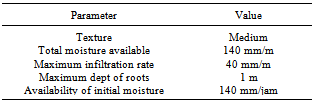
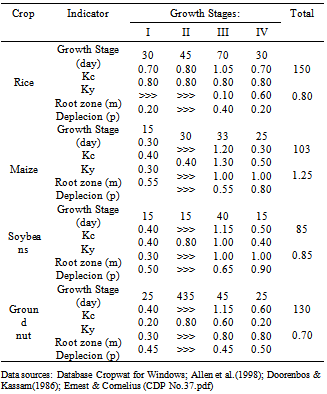
Soil and crop data were retrieved from the data base of the Cropwat-8 (Table 1 and Table 3).
Table 1. Soil Characteristics Used in Simulation
     
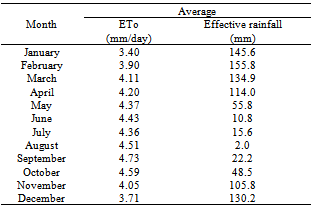
Table 2. Average Of Effective Rainfall (mm) and Potential Evapotranspiration (mm/d) For 2005-2011
     
Table 3. Crop Growth Stages and Its Indicators
     
Cropwat model was originally developed by[26] for planning and management of irrigation projects. The latest version is called Cropwat-8 which can be operated by the window-interface. It is the result of collaboration between the Land and Water Development Division of FAO, the Institute of Irrigation and Development Studies of Southampton-UK, and the National Water Research Center (NWRC) Egypt. Input data include the meteorological data, soil and plants. Estimation of ETP (potential evapotranspiration) used the Penman-Monteith method and estimation of the effective rainfall used "USDA Soil Conservation Service” method.
After all of required data have been completed, the Cropwat-for-Windows can estimated the following parameter in each decade: (1) crop coefficient, (2) crop evapotranspiration, (3) effective rainfall, (4) crop water requirements and (5) percolation.
The soil moisture balances were estimated by the following equation:
(1)
(SMDt and SMDt-1 = soil moisture depletion (mm) in periode of t and t-1; ETc = actual evapotranspiration (mm); PE = effective rainfall (mm); IR = irrigation thickness (mm); RO = runoff (mm); DP = percolation (mm)).
The model involved five scenarios in designing irrigation schedule of each crop: (1) each irrigation is defined by the executor, (2) irrigation below or above the soil water depletion (% RAW), (3) irrigation at fixed intervals on each growth stages, (4) deficit irrigation, and (5) without irrigation. The Cropwat-for-windows Method began to simulate soil moisture balance, involving five factors: (1) duration of irrigation, irrigation date and thickness, (2) depletion of soil moisture, (3) amount of percolation, (4) actual evapotranspiration, and (5) crop yield.
Reduction of crop yield in each growth stages and its cumulative can be calculated by the formula:
(2)
(3)
(i = crop growth stages; Ky = yield reduction factor; Ya and ETa = actual yield and actual ET; Ym and ETm = maximum yield and maximum ET).
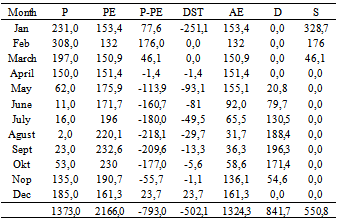
Estimation of soil moisture balance in the Unter Iwes District was performed by using the Thorntwaite-Mather methode. Results of this analysis suggest the monthly soil moisture surplus and deficit, it is used in determining the suitable cropping patterns.
Analysis of soil moisture balance involved a number of crop, that are: rice, maize, soybean and groundnut (Table 3). Simulation of cropping patterns, namely: The annual crop are planted two times a year. Time of planting of the first crop (at the rainy season) is 1st December.

3. Results and Discussion

Results of analysis of soil moisture balance in Krekeh Village are presented in Table 4. It is suggested that a soil moisture surplus for six months and a soil moisture deficit for three months.
Table 4. Moisture balance in region of Krekeh Village
     
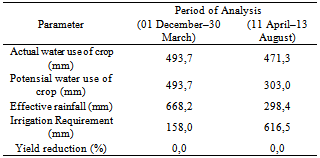
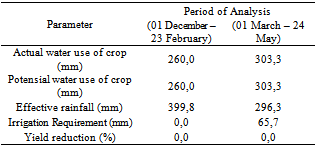
Table 5. Crop Water Requirement and Yield Reduction Of Rice
     
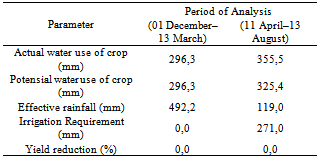
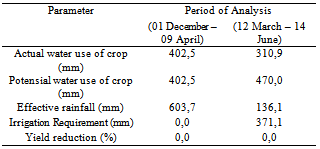
Table 6. Crop Water Requirement and Yield Reduction Of Maize
     
The calculation of crop water requirements by using the Cropwat-8 method showed highly variable values among species and their cropping patterns. The soil moisture balance in the root zone appears a highly variable; also appear the serious threat of yield reduction. This condition suggested a high risk in drylands cultivation due to the soil moisture stresses for three months.
When the amount of available soil moisture is outside the range of crop water requirement, any cultivating crops may experience moisture stress. This stress can take the form of water shortage if soil moisture content is around the lower limit, it will greatly affect growth and yield of crop. Additional water should be supplied into the soil in preventing any disorders of crop growth and any losses of crop yield.
Results showed that crop water requirement is affected by rainfall, temperature, humidity, wind speed and radiation. A high intensity of irradiation results in a high rate of water evaporation from soil and plant surfaces. There are differences in crop water requirements and different time of water supply in the dry season , it depends on species and its planting time. A high amount of rainfall during the rainy season will produce an excess supply of water, otherwise a low rainfall during the dry season will result in a shortage of soil moisture. The effective rainfall during dry season can not meet water requirement of the crop in achieving its potential yield.[29], explains that the most important climatic factors that influence crop growth, and crop yield are solar radiation, temperature and precipitation.
Table 5 shows that the water requirement of rice in the dry season is higher than the effective rainfall. But, no significant decrease in crop yield for the whole growing period, it means that soil moisture in the Village Krekeh sufficiently supply water need of rice. Rice plants need water as much as 180-300 mm /month[27]. This plant is sensitive to the soil moisture stress, especially during the primordia growth stage[28].
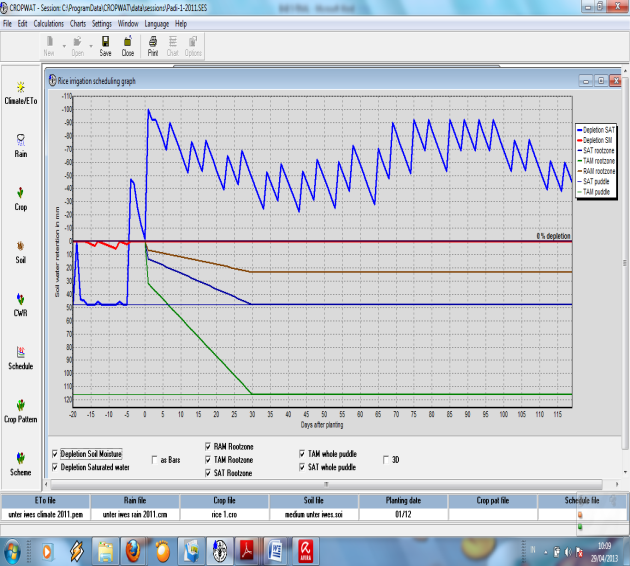
Figure 1. Soil moisture balance in the root zone of rice (wet season)
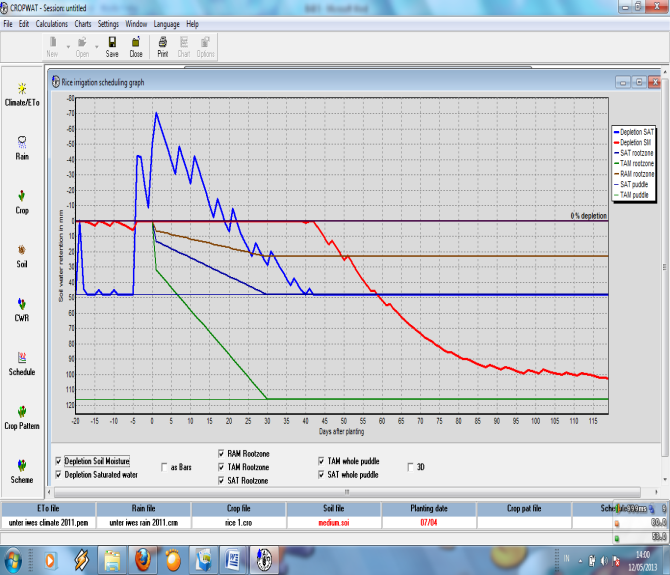
Figure 2. Soil moisture balance in the root zone of rice (dry season)
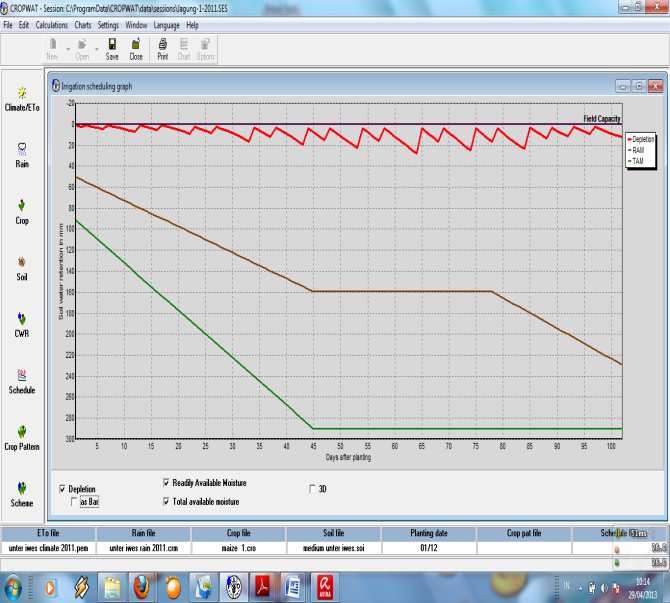
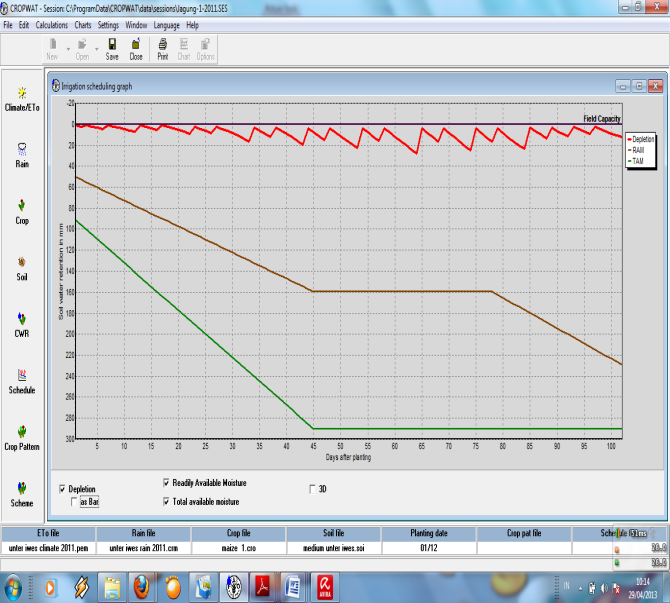
Figure 3. Soil moisture balance in the root zone of maize (wet season)
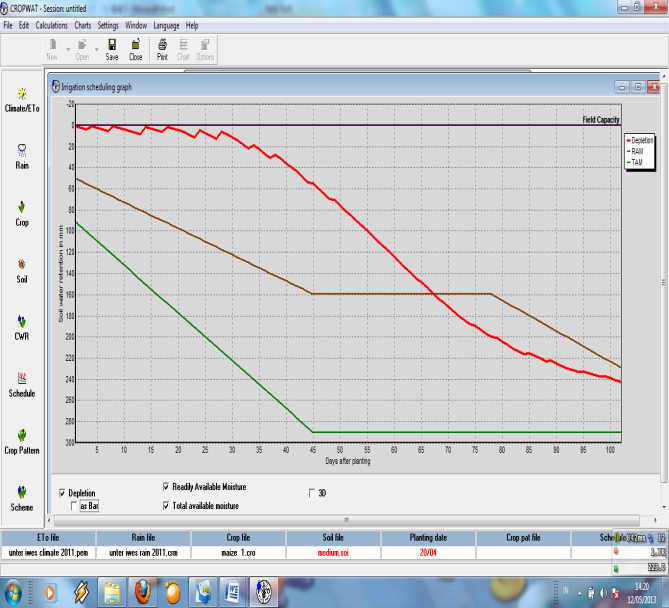
Figure 4. Soil moisture balance in the root zone of maize (dry season)
Figure 5. Soil moisture balance in the root zone of soybean (wet season)
Figure 6. Soil moisture balance in the root zone of soybean (dry season)
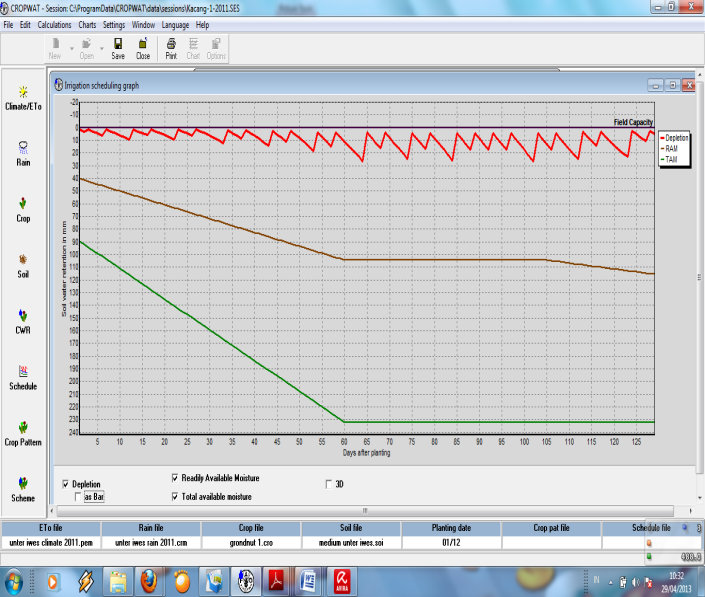
Figure 7. Soil moisture balance in the root zone of groundnut (wet season)
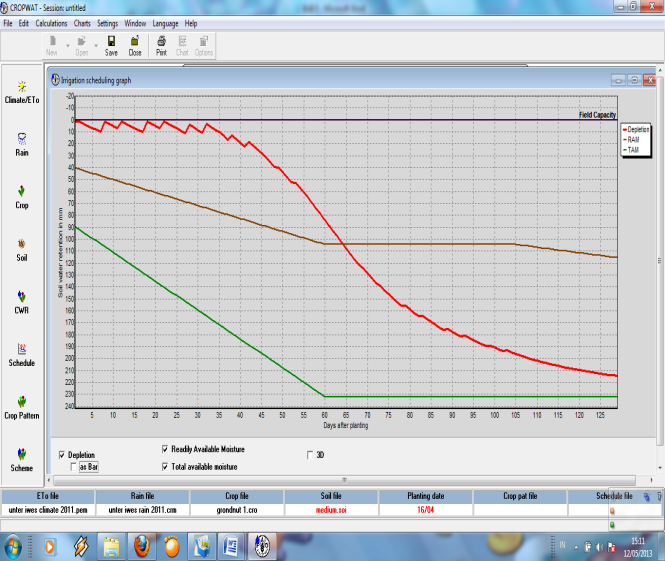
Figure 8. Soil moisture balance in the root zone of groundnut (dry season)
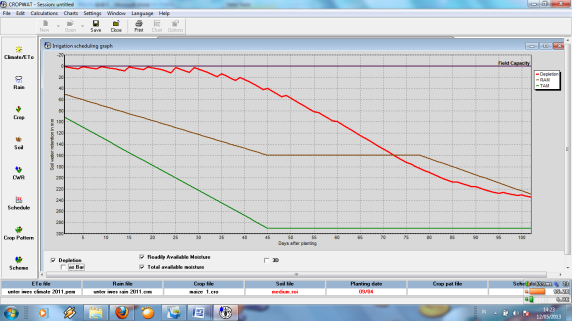
Figure 9. Soil moisture balance in the root zone of maize
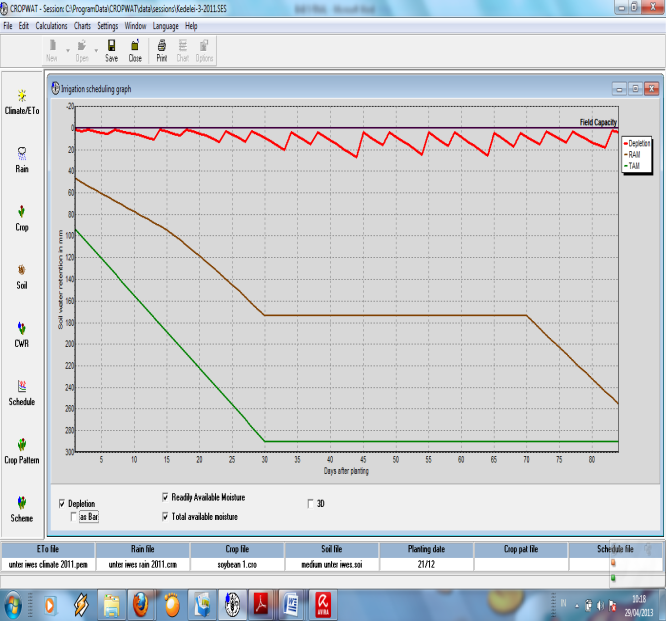
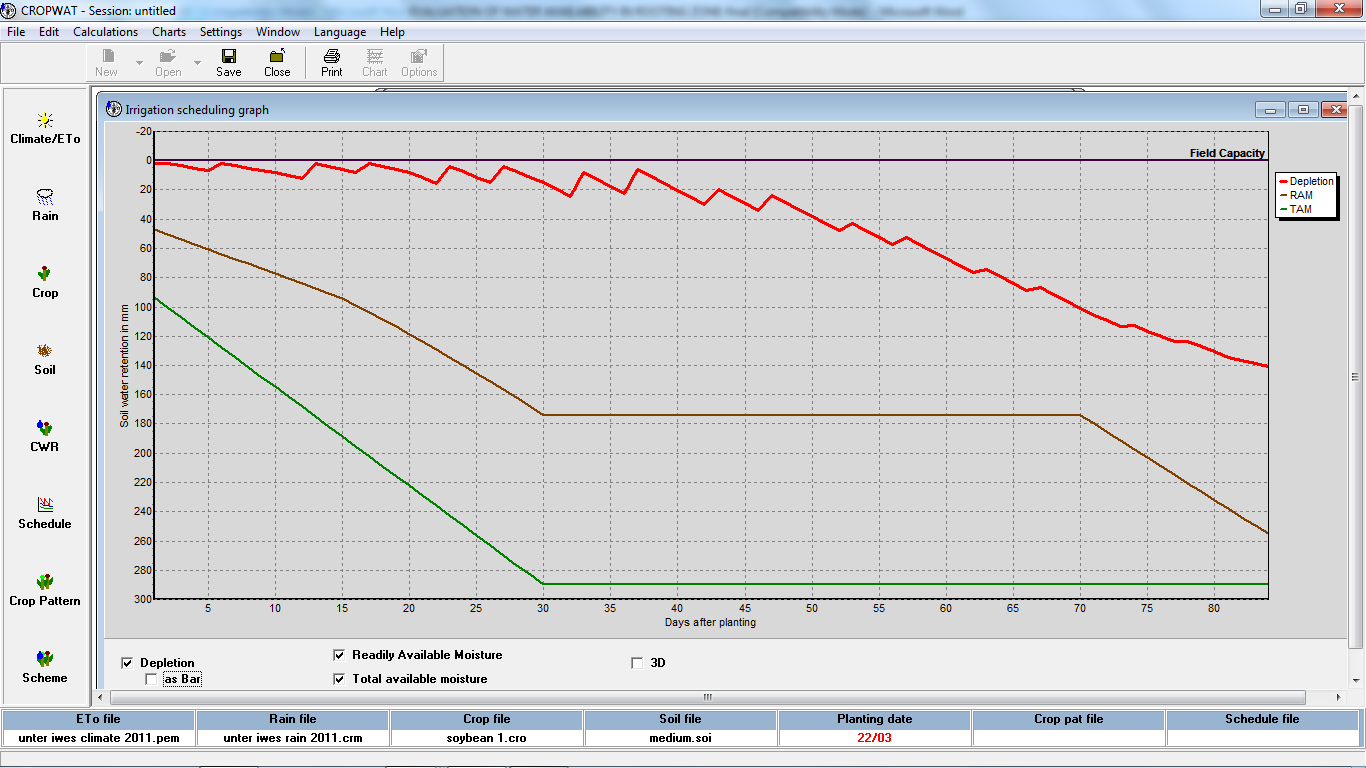
Figure 10. Soil moisture balance in the root zone of soybean
Table 7. Crop Water Requirement and Yield Reduction of Soybean
     
Table 8 shows that the need for water in the dry season for groundnut is higher than the effective rainfall. There are no significant decrease of crop yield for the whole growing period, it means that the soil moisture in the Village Krekeh can fulfill the water needs of groundnut. This water requirement simply divides into the five growth stages, namely germination, vegetative, flowering, pod formation, filling and ripening.
Table 8. Crop water requirement and yield reduction for groundnut
     
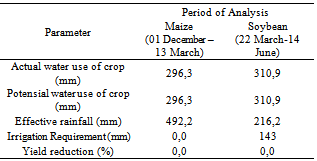
Table 9 shows the soybeans water demand is lower (143 mm) than the effective rainfall (216.2 mm). Results show that water demand in each cropping pattern is not the same, in the dry season plants require the addition of more water, it due to the decrease of soil moisture available.
Table 9. Crop water requirement and yield reduction of maize and soybean
     
The results show that water demand in each cropping pattern is not the same, the cropping pattern in the dry season irrigation water requires the addition of a lot more with the same plant species, this is caused by the decreased availability of soil moisture. Cropping arrangements with the utilization of rainfall during the rainy season and use a suitable commodity can increase the intensity of crop planting once to twice a planting. Cropping pattern based on rainfall during the rainy season and cultivating the suitable crops can increase the drylands cropping intensity; maize as the first crop and soybean or groundnut as a second crop. This cropping pattern not require addition of water and yield reduction is 0%.
Simulation results suggested that the cropping pattern by using soybean and groundnut as a second crop have a low risk with the yield reduction of <50% during the dry season (Figure 9). Increase in crop yields are also determined by arranging time of planting, at the early periode of cropping calendar.[30], suggested that the exact time of planting can improve plant growth and crop yield.

4. Conclusions

Time of planting and cropping patterns significantly effected variation of soil moisture balance in the root zone. ETc is largely determined by soil moisture storage and amount of rainwater falling on the surface of the ground. The crop water requirements and soil moisture balance are should be considered in designing any productive cropping patterns. The main problem in dryland farming is the limited available soil moisture during the crop growing season.

References

[1]  Bappeda Sumbawa. 2011. Regional Planning of the Sumbawa Regency 2011-2025. Sumbawa Besar, Nusa Tenggara Barat, Indonesia.
[2]  De Fraiture, C., and Wichelns, D. 2010. Satisfying Future Water Demands for Agriculture. Agr. Water Managmt. 97, 502–511.
[3]  Rockström, J., Louise, K., Wani, S., Barron, J., Hatibu, N., Oweis, T., Bruggeman, A., Farahani, J. Qiang, Z. 2010. Managing water in rainfed agriculture. The need for a paradigm shift. Agr. Water Manage. 97, 543–550.
[4]  Department of Plant Agriculture. 2012. Actual Reports Sumbawa Regency Plant Food. Sumbawa Besar, Nusa Tenggara Barat, Indonesia.
[5]  Doorenbos, J. and Pruitt, W.D. 1977. Guidelines for Predicting Crop Water Requirement. FAO, Irrigation and Drainage Paper (24). Rome.
[6]  Nielsen, D.C., D.Ardell, Kalvorson., F.V.Merle. 2010. Critical Precipitation Period For Dryland Maize Production. Reid Crops Research 8 (20l0) 259- 263. www.elseviar.com. Accessed 5-2-2012.
[7]  Barron, J., Rockström, J., Gichuki, F., Hatibu, N.,. 2003. Dry spell analysis and maize yields for two semi-arid locations in east Africa. Agricultural and Forest Meteorology 117: 23–37. http://dx.doi.org/10.1016/S0168-1923(03)00037-6. Accessed 10-02-2012.
[8]  Nio, S.A., F.E.F. Kandou. 2000. Growth response of rice (Oryza sativa L.) and Upland Rice on Early Vegetative Phase of the Drought. Eugenia 6:270-273.
[9]  Subagyono, K., U. Haryati, and S.H. Tala'ohu. , 2004. Water Conservation Technology In Dryland Agriculture. Soil Conservation Technology in Dryland slope. Land and Agro-climate Research and Development Center. AARD. Department of Agriculture.
[10]  Kahinda, J.M., Rockström, J., Taigbenu, A.E., Dimes, J. 2007. Rainwater Harvesting To Enhance Water Productivity Of Rainfed Agriculture In The Semi-Arid Zimbabwe. Physics and Chemistry of the Earth. 32: 1068–1073.bscw.ihe.nl/pub/bscw.../Mwenge%20Kahinda1.pdf. Accessed 02-02-2012.
[11]  Gregory, P.J ., J.S.I. Ingram and M. Brklacich. 2005. Climate Change and Food Security. Philosophical Transactions of The Royal Society.http://rstb.royalsocietypublishing.org/content/360/146. Accessed 05-02-2013.
[12]  Thomas, J,R., Eddy D, P., Manzoor, Q., Ahmed A., Mustapha P., Amor, Y., Mustapha El-Bouhssini, Michael, B., Luis Iñiguez dan Kamel, S. 2007. Increasing The Resilience Of Dryland Agro-Ecosystems To Climate Change. International Centre For Agricultural Research In The Dry Areas (ICARDA). www.icrisat.org/journal/specialproject/sp5.pdf. download 1-02-2013.
[13]  Rowhani,P. David B. Lobell. Marc Linderman. Navin Ramankutty . 2011. Climate variability and crop production in Tanzania. Agricultural and Forest Meteorology. Vol. 151, Issue 4, Pages 449–460.http://www.sciencedirect.com/science/article/pii/S0168192310003357. Accessed1-04-2013.
[14]  Awulachew, S. B., Merrey, D. J., Kamara, A. B., Van Koppen, B., Penning de Vries, F., Boelee, E., Makombe, G. 2005. Experiences and Opportunities For PromotingSmall–Scale/Micro Irrigation and Rainwater Harvesting For Food Security in Ethiopia. Colombo, Sri Lanka: IWMI. v. 86p. (Working paper 98).
[15]  Upton, M. 1996. The Economics Of Farming System, Cambridge University Press, UK.
[16]  Al-Jamal, M.S., Sammis, T.W., Ball, S and Smeal, D. 1999. Yield-Based, Irrigated Onion Crop Coefficients. Applied Engineering in Agriculture. 15(6):659-668.
[17]  Rockstron, J. 2001. On Food And Nature In Water Scarce Tropical Countries. Journal of Land and Water International Series 99, pp 4-6.
[18]  Wang, X.B., Cai, D.X., Hoogmoed, W.B., Oenema, O., Perdok, U.D. 2006. Potential Effect Of Conservation Tillage On Sustainable Land Use: A Review Of Global Long-Term Studies. Pedosphere 16, 587–595.www.sciencedirect.com/.../S10020160066009. Accessed 05-07-2012.
[19]  Sankey, J. B., Sujith Ravi, Cynthia S. A. Wallace, Robert H. Webb, And Travis E. Huxman. 2012. Quantifying Soil Surface Change in Degraded Drylands: Shrub Encroachment and Effects of Fire and Vegetation Removal in a Desert Grassland. Journal Of Geophysical Research, Vol. 117 doi:10.1029/2012JG002002.
[20]  Li.Y.X. Li, J.N. Tullberg, D.M. Freebairn, N.B. McLaughlin, H.W. 2008. Effects of Tillage and Traffic on Crop Production In Dryland Farming Systems: II. Long-Term Simulation of Crop Production Using The PERFECT Model. Soil & Tillage Research. doi:10.1016/j.still.2008.04.005.
[21]  Connolly, R.D., 1998. Modelling Effects of Soil Structure on the Water Balance of Soil-Crop Systems: A review. Soil & Tillage Research. 48, 1–19.
[22]  Silburn, D.M., Freebairn, D.M. 1992. Evaluations Of The CREAMS Model. III. Simulation Of The Hydrology of Vertisols. Australian Journal of Soil Research 30, 547–564.
[23]  Nazeer, M. 2009. Simulation Of Maize Crop Under Irrigated and Rainfed Conditions With Cropwat Model. Journal of Agricultural and Biological Science. Vol. 4, No. 2, March 2009 ISSN 1990-6145.
[24]  Keesstra, S., Maaike Hartog., Alemayehu Muluneh., Leo Stroosnijder. 2013. Rainwater Harvesting For Small-Scale Irrigation Of Maize In The Central Rift Valley, Ethiopia. Geophysical Research Abstracts. Vol. 15, EGU2013-3535. meetingorganizer.copernicus.org/.../EGU2013. Accessed 01 - 04-2013.
[25]  Smith, M. 1992. CROPWAT. A Computer Program for Irrigation Planning and Management, Lrigation and Drainage Paper 46. FAO, Rome, Italy.
[26]  FAO. 2012. Database & Software CROPWAT 8. Natural Resources and Environment Departemen. http://www.fao.org. Accessed 7-7-2012.
[27]  Samia, M., El-Marsafawy; M. K. Hassanein; H. El-Ramady and Namait Allah, Y. Mokhtar. 2012. Climatic Changes and Their Impact on the Behaviour of Some Maize Varieties in Egypt. N. Y. Sci. J. 5(11): 83-99. (ISSN: 1554-0200). http://www.sciencepub.net/newyork. download 10-02-2012.
[28]  Yoshida S. 1981. Fundamentals of Rice Crop Science. Los Banos: International Rice Research Institute. 268 p.
[29]  Fischer, K.S. and S. Fukai. 2003. How rice responds to drought. In K. S. Fischer, R. Lafitte, S. Fukai, G. Atlin and B. Hardy. Breeding Rice for Drought- Prone Environments. International Rice Research Institute. Los Banos. p. 32-36.
[30]  Rahimi, A. 2012. Effect of planting date and nitrogen on growth and morphological traits of dry land wheat in Yasooj region of Iran. Annals of Biological Research. 3 (7): 3263-326. (http://scholarsresearchlibrary.com/archive.html. Accessed 02 -02-2013.