
-
Paper Information
- Paper Submission
-
Journal Information
- About This Journal
- Editorial Board
- Current Issue
- Archive
- Author Guidelines
- Contact Us
International Journal of Construction Engineering and Management
p-ISSN: 2326-1080 e-ISSN: 2326-1102
2025; 14(4): 105-115
doi:10.5923/j.ijcem.20251404.01
Received: Oct. 22, 2025; Accepted: Nov. 12, 2025; Published: Nov. 18, 2025

A Systematic Review of the Determinants of Green Construction Finance Adoption in Kenya
 Abstract
 Reference
 Full-Text PDF
 Full-text HTML
Dorcas Mutheu Musingi1, Shadrack Mutungi Simon2
1Department of Building and Civil Engineering, Technical University of Mombasa, Kenya
2Department of Construction Management, Jomo Kenyatta University of Agriculture and Technology, Kenya
Correspondence to: Dorcas Mutheu Musingi, Department of Building and Civil Engineering, Technical University of Mombasa, Kenya.
| Email: |  |
Copyright © 2025 The Author(s). Published by Scientific & Academic Publishing.
This work is licensed under the Creative Commons Attribution International License (CC BY).
http://creativecommons.org/licenses/by/4.0/

This paper presents a conceptual literature review on the determinants influencing the uptake of Green Construction Finance (GCF) in Kenya. As the country grapples with climate change and urbanization challenges, green finance emerges as a critical enabler for sustainable construction. The study adopts a desk review methodology, analyzing literature from 2015 to 2025 across academic databases, institutional reports, and policy documents. The findings reveal that GCF adoption is shaped by a complex interplay of factors, including stakeholder awareness, availability and accessibility of green finance products, institutional and regulatory frameworks, financial and cost considerations, environmental and technological readiness, risk perception, and socio-cultural dynamics. Despite Kenya’s progress in climate policy and green building advocacy, systemic barriers such as fragmented regulations, high upfront costs, limited technical capacity, and weak institutional coordination persist. The study recommends strengthening policy frameworks, enhancing stakeholder awareness, promoting financial innovation, improving data systems, and fostering multi-stakeholder collaboration. The paper contributes to the growing discourse on sustainable finance in developing economies and offers practical insights for policymakers, financial institutions, and construction industry stakeholders seeking to scale up green construction initiatives. Addressing the identified barriers is essential for unlocking the full potential of GCF and achieving Kenya’s sustainable development and climate resilience goals.
Keywords: Determinants, Green Construction Finance, Literature Review
Cite this paper: Dorcas Mutheu Musingi, Shadrack Mutungi Simon, A Systematic Review of the Determinants of Green Construction Finance Adoption in Kenya, International Journal of Construction Engineering and Management , Vol. 14 No. 4, 2025, pp. 105-115. doi: 10.5923/j.ijcem.20251404.01.
Article Outline
1. Introduction
1.1. Concept of Green Finance
- The debate surrounding green financing is very active currently. ‘Financing green’ and ‘greening finance’ are two other terminologies that are currently being used in reference to this concept. The former refers to the financing of projects that contribute or intend to contribute to the conservation, restoration, and sustainable use of biodiversity and its services to people [1]. Meanwhile, ‘greening finance’ is focused on directing financial flows away from projects with a negative impact on biodiversity and ecosystems, and towards projects that mitigate the negative impact or pursue positive environmental impact as a co-benefit. However, these concepts are two sides of the same coin, and they enable a response to the climatic challenge by providing an opportunity for improved coherence and depth in efforts to achieve restoration of ecosystems [2].
1.2. Defining Green Finance
- There is no precise and commonly agreed-upon definition for green finance. Either most articles on the subject do not attempt to define it, or the definitions provided vary greatly [3]. According to [4], green finance is a broad term that can be used to describe financial investments for sustainable development initiatives, projects, products, and policies. [5] argued that green finance and green investment can be used interchangeably, though the former is wider in scope as it includes operational costs associated with green investments. In the banking sector, green finance can be defined as financial products and services that consider environmental factors during lending decision-making, ex-post monitoring, and risk management processes, provided to encourage ecologically responsible investments and support low-carbon technologies, industries, projects, and businesses [6]. Green finance is that which promotes better environmental and sustainable outcomes, using various financial instruments such as loans, debt structures, and different investments [7]. Simply put, green finance is an investment or loan that promotes environmentally positive activities, such as the purchase of ecologically friendly goods and services or the construction of green infrastructure [8], [9]. From the foregoing, green finance could be described as having three components; (i) the financing of private and public green investments, (ii) the financing of public policies that encourage the implementation of environmentally conscious projects and initiatives, and (iii) components of the financial system that deal specifically with green investments, including their specific legal, economic, and institutional framework conditions.
1.3. Rationale for Green Finance
- Climate change has emerged as the predominant political and economic issue of this century and is expected to stay so in the foreseeable future. Governments, businesses, investors, and private individuals worldwide are initiating steps and measures to address the climate crisis, with a particular focus on implementing decarbonization techniques [9]. Transitioning to a low-carbon or green economy requires significant amounts of fresh capital investment, notably in the form of green financing [8]. Such investment would be used to support initiatives that reduce greenhouse gas emissions and assist firms in adapting to the impacts of climate change.Green finance provides both economic and environmental benefits to everybody. It widens access to environmentally-friendly products for individuals and firms, equalizing the shift to a low-carbon society, leading to greater social inclusivity and economic growth [9]. As shown in Figure 1, this results in a ‘great green multiplier’ effect whereby both the economy and the environment gain, making it a win-win situation for everyone.
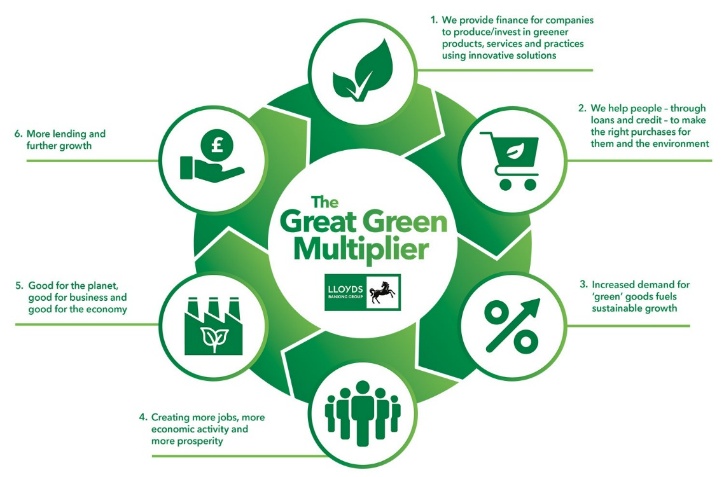 | Figure 1. The Great Green Multiplier Effect (Source: [8]) |
1.4. Challenges Facing Green Construction Finance Adoption
- The low levels of foreign and domestic private capital for green construction in developing countries could be partly explained by market failures within green finance and construction value chains [10]. These failures are often more prominent and widespread in low-income countries. For example, the fragmented structure of the construction industry, the presence of informational imbalances between the segments of the industry and policymakers, extremely localized regulations, and the prevalence of small and medium-sized construction companies hinder finance for green construction [11]. Financial decisions mostly involve multiple stakeholders such as developers and owners, investors, construction professionals, and materials producers, with conflicting interests. Further, in the absence of green codes, regulations, and standards, investors face difficulty in identifying investment opportunities in green construction [12]. Small and medium-sized developers, particularly in economies characterized by high levels of informality, also face financial constraints for green construction. Additionally, the lack of skilled workers in green construction techniques further constrains the potential for investments in green construction [13].Green construction alternatives may also appear to be more expensive than they ought to be due to the current market prices failing to reflect the social costs imposed by emissions from conventional construction methods and materials, thereby reducing expected returns for green construction projects [14]. Consumers and investors may be reluctant or unable to pay an initial extra cost of 1 to 5 percent for green buildings compared to traditional ones, especially in affordable housing intended for lower income households. This is even more challenging in low-income countries that have a few commercially viable green construction investments [15]. Further, the lack of comprehensive data on default rates and the monetary benefits of green construction investment portfolios also plays a role in reduced investment in green construction [12]. Financial markets also tend to underprice climate risk which includes issues such as economic losses resulting from climate hazards [16]. For instance, residential property values frequently fail to consider the risks of extreme climatic events, even in cases when such information is public [17]. This increases the capital costs for green buildings relative to traditional alternatives. This problem can be more severe in developing countries geographically exposed to frequent catastrophic disasters and lacking well-structured financial and insurance markets [13].Private investors may encounter high costs associated with measuring and monitoring environmental performance in green construction projects, especially in “hard-to-abate” materials such as cement and steel [18]. These costs are usually high in developing economies due to lower transparency, inadequate governance and disclosure standards, weaker regulations, and insufficient technical capabilities for the issuance and regulation of green financial instruments [19]. Developing countries may also face constraints in supply. There is often a limited number of viable green construction projects to finance in these markets [20]. This could be attributed to the absence of innovation, lack of economies of scale, limited green technical capacity for implementation, and limited concessional finance resources [21]. Regulatory, currency, macroeconomic, and political risks, coupled with volatility, can also increase costs, hence reducing the profitability of green construction investments [22].
2. Methodology
2.1. Research Design and Justification
- This study adopts a desk review (literature review) approach to explore the determinants of Green Construction Finance (GCF) uptake in Kenya. The desk review method involves systematic identification, evaluation, and synthesis of existing literature and documented evidence related to the research topic. This approach is justified as it enables comprehensive analysis of multiple perspectives and existing knowledge without primary data collection, which is appropriate for conceptual and exploratory studies like this one, focusing on theoretical frameworks and contextual factors in green finance adoption. The desk review approach allows for identifying gaps, trends, and critical factors influencing GCF uptake from a wide range of scholarly articles, policy documents, reports, and case studies.Desk reviews are particularly effective in emerging fields like green finance, where policy, institutional, and market dynamics evolve rapidly. Further, it: (i) is an efficient way to gather extensive background information without resource-intensive fieldwork, (ii) enables triangulation of diverse sources such as academic research, government policies, and industry reports, (iii) facilitates the development of conceptual frameworks and the identification of knowledge gaps, and (iv) appropriate for preliminary investigations where primary data is limited or the subject is novel and evolving.
2.2. Scope, Strategy and Screening Process
- The review focused on literature published between 2015 and 2025, capturing a decade of evolving discourse and policy development around green finance and sustainable construction. The scope included peer-reviewed journal articles, policy documents, institutional reports, and grey literature relevant to Kenya and comparable developing economies. The following databases and repositories were searched: Scopus, Web of Science, Google Scholar, ScienceDirect, SpringerLink, JSTOR, African Journals Online (AJOL), World Bank Open Knowledge Repository, UNEP and IFC Publications, Kenya Green Building Society (KGBS) Reports, and Government of Kenya portals (e.g., Ministry of Environment, Housing).A systematic search strategy was implemented using key phrases and Boolean operators to capture comprehensive literature related to green construction finance. The following keywords were used: "green finance", "green construction finance", "sustainable construction finance", "green building finance Kenya", "green finance uptake", "green bonds", "green loans", "environmental finance policies", "construction project finance", "green building adoption barriers". Boolean combinations (AND, OR) and truncation symbols (*) were applied between keywords to refine results (e.g., "green finance" AND "Kenya" AND "construction"). Filters applied for publication date (2015-2025), document type (peer-reviewed articles, reports, policy briefs), and language (English).Initial screening was done based on titles and abstracts to exclude irrelevant studies. Full-text review for eligibility based on inclusion and exclusion criteria (explained hereafter). Snowballing technique was adopted, where the use of reference lists of key articles was used to identify further relevant sources.
2.3. Inclusion and Exclusion Criteria
- The inclusion criteria included: (i) studies focused on green finance, sustainable construction finance, or environmental finance related to construction, (ii) publications addressing determinants, challenges, or policy frameworks influencing green finance uptake, (iii) articles and reports within the last ten years (2015–2025), (iv) English language sources, (v) Peer-reviewed articles, institutional reports, and policy briefs, and (vi) studies with relevance to developing countries, particularly Kenya or similar contexts.The exclusion criteria included: (i) publications outside the timeframe, (ii) studies unrelated to construction or green finance, (iii) non-English sources, (iv) opinion pieces without empirical or conceptual grounding, and (v) studies not accessible in full text or lacking rigorous methodology.
2.4. Data Extraction
- Key data and qualitative insights were extracted systematically from selected documents, including: (i) author and publication year, (ii) study context and geographical focus, (iii) green finance instruments discussed, (iv) identified determinants and barriers to green finance uptake, (v) relevant policies and institutional frameworks, (vi) methodological approaches used in source studies, and (vii) key findings and recommendations. Extraction was recorded in a structured matrix to facilitate comparison and synthesis. Each source was coded according to thematic relevance.
2.5. Analytical Approach
- The extracted qualitative data underwent thematic analysis to identify recurring patterns, themes, and categories relevant to determinants of GCF uptake. This involved: (i) familiarization with content through repeated reading, (ii) open coding segments of text related to key determinants (e.g., financial, institutional, awareness, technological), (iii) axial coding, that is, grouping codes into broader themes reflecting underlying factors influencing adoption, (iv) selective coding to refine dominant themes, (v) interpretation of themes to develop conceptual insights and identify gaps. Themes were aligned with determinant types (e.g., financial, environmental, regulatory). Thematic analysis enables a comprehensive understanding of complex and multifaceted phenomena such as green finance adoption.
2.6. Credibility Assessment of Data Sources
- To ensure the credibility and reliability of the included literature the following measures were taken: (i) preference was given to peer-reviewed academic journals, reports from reputable organizations (World Bank, IFC, UNEP), (ii) verification of author qualifications and affiliations, (iii) assessment of publication outlet reputation, (iv) cross-checking findings against multiple independent sources, (v) use of recent and regionally relevant data prioritized. Each source was rated for credibility (high, moderate, low) based on origin, methodology, and relevance.
2.7. Bias Reduction Procedures
- To minimize bias: (i) multiple databases were used to avoid source concentration and reduce selection bias, (ii) inclusion and exclusion criteria were strictly applied, (iii) cross-validation of findings across sources was performed, (iv) diverse stakeholder perspectives were considered, (v) thematic saturation was used to ensure comprehensive coverage, (v) multiple screening stages to ensure only relevant and quality literature included, (vi) transparent documentation of search terms and criteria, and (vii) triangulation of findings across types of literature (academic, policy, reports).
2.8. Limitations
- Due to the adopted research design, the study suffers from the following limitations: (i) reliance on secondary data sources without primary empirical validation, (ii) potential for publication bias affecting which studies are available, (iii) exclusion of non-English sources, and (iv) contextual differences in studies may limit generalizability.
3. Findings
- The decision to adopt GCF depends on a myriad of financial, political, economic, environmental, technological, and social factors. This paper categorized the determinants as follows;
3.1. Extent of Awareness of Green Finance Products
- The extent of awareness among various stakeholders in the construction industry significantly affects the adoption of green finance for construction projects. Insufficient awareness among developers and construction companies about the benefits of green construction and available green funding options can hamper adoption greatly. This may lead to not seeing the business case for investing in green construction practices without comprehending the long-term savings and other advantages. A lack of familiarity with green finance instruments and products tailored for the construction sector can make investors reluctant to provide funding for green construction projects [23]. Raising awareness about the reduced risk profile and returns of green assets is important in unlocking investment. Further, limited awareness among both county and national government officials and policymakers about the social, economic, and environmental benefits of green construction may lead to inadequate policy support and provision of incentives. This can impede the adoption of GCF. Low awareness among the public about the advantages of green buildings in terms of comfort, health, and environmental impact can also limit demand for green financing. Increased awareness helps in creating a market pull for green construction practices [24]. Insufficient knowledge and skills among construction professionals, such as architects and engineers, and contractors, regarding green construction design, construction methods, and technologies can also hamper adoption.
3.2. Availability and Accessibility of Green Finance Products
- The availability of green finance tools tailored specifically for the construction sector is a key determinant. The adoption of GCF can be boosted significantly if developers and contractors have access to a range of green finance instruments such as green loans, green equity funds, green bonds, and other sustainable finance options. However, the development of green finance in Kenya's construction industry is still lagging, and the existing financial instruments may not meet the diverse green financing needs of the construction sector. Limited availability of green finance products is one of the biggest barriers to wider adoption [25].Even if green construction finance products exist, their accessibility for investors, developers, and contractors is equally important. Factors such as eligibility criteria, transaction costs, application processes, and the geographical reach of green finance providers can affect accessibility either positively or negatively, depending on the situation. Construction firms and developers, especially the smaller players, may face challenges in accessing green finance products due to strict requirements or their lack of awareness about the available options [26].
3.3. Institutional and Regulatory-related Factors
- Institutional and regulatory-related factors play a crucial role in driving the adoption of green finance for construction projects in Kenya. Government commitment to climate change mitigation, as evidenced by the formulation of policies like the National Climate Change Action Plan, can promote the adoption of green construction finance. Other supportive government policies, such as green procurement regulations and guidelines, green building codes, and tax incentives for green construction, can significantly encourage the adoption of green construction finance. However, while the Kenyan government has made some progress in promoting green construction through initiatives like the Green Building Council of Kenya (GBCK), there is still a need for more comprehensive policies and regulations to fully support the adoption of green construction finance [27]. Regulatory frameworks with a provision for preferential capital treatment or lower risk weightings for green building assets can encourage financial institutions, such as commercial banks, to allocate more capital towards green construction projects. For example, the introduction of regulations that incentivize banks to offer green loans for green buildings would play a big role. The effective implementation of green construction finance policies requires strong institutional capacity and inter-agency coordination among various government agencies, such as the Ministry of Transport, Infrastructure, Housing, Urban Development, and Public Works, the Ministry of Environment and Forestry, and the Central Bank of Kenya. The presence of gaps in institutional capacity and coordination can slow down or even prevent the adoption of green finance. Further, robust enforcement and monitoring mechanisms are critical to ensure compliance with regulations and standards of green building and the effective utilization of green construction finance. Inadequate enforcement of regulations can undermine the impact of supportive regulations and policies [28]. Meaningful and productive engagement and collaboration between various stakeholders, such as the private sector, government, and civil society, is crucial for formulating and implementing effective green construction finance policies.
3.4. Financial and Cost-related Factors
- Financial and cost-related factors also play an important role in determining the adoption of GCF in Kenya. The availability of specialized green finance instruments tailored for the construction sector is a key determinant. Green loans, green equity funds, green bonds, and other sustainability-linked finance options can significantly drive adoption. However, the development of green finance in Kenya's construction industry is still low, and the existing financial products may not fully meet the diverse green financing needs of the sector. Even if green finance products exist, their accessibility for developers and construction firms is equally important. Factors like eligibility criteria, transaction costs, application processes, and the geographical span of green finance providers can affect accessibility. Construction companies and developers, especially smaller players, may face constraints in accessing green finance due to stringent requirements or a lack of awareness about available options [29]. The cost of green finance, including interest rates and fees, can also influence the adoption of green construction finance. When green construction finance is more expensive compared to traditional financing products, developers and construction companies may be hesitant to adopt it. However, it has been reported that green construction finance can offer long-term savings and environmental benefits that offset higher upfront costs.High initial costs associated with green construction can be a barrier to adoption. Developers may need to invest more in green construction practices, which can prove to be a significant financial burden. Split incentives, where the costs and benefits of green buildings are not evenly distributed among stakeholders, can also hinder adoption [30]. For instance, if the developer bears the cost of green construction but the tenant does not benefit from it, this can create a disincentive to adopt green construction finance. Further, limited private investment in green construction projects can restrict the flow of green finance. Developers may not have access to sufficient private capital to finance green projects, which can limit the adoption of green construction finance. Insufficient management support and resources can also negatively affect the adoption of green finance. Additionally, construction companies may lack the necessary resources, expertise, and organizational support to execute and manage green construction projects, which can make them less attractive to investors.
3.5. Environmental-related Factors
- Some of the environmental-related factors that affect the adoption of green finance for green building projects in Kenya include; environmental concerns and sustainability awareness, regulatory frameworks and environmental policies, collaboration with environmental stakeholders, and demonstration of environmental benefits. Public and industry awareness and concern about environmental challenges, such as resource depletion, climate change, and pollution, can affect the demand for green construction and the associated finance [31]. As environmental awareness and the desire to achieve SDGs increase, there is even greater pressure on the construction sector to adopt more eco-friendly practices. When developers and investors recognize the environmental benefits of green construction, such as energy savings and water conservation, they are more inclined to pursue green finance options to support such projects.Government policies and regulations that prioritize sustainable development and environmental protection can create an enabling environment for increased adoption of green finance in the construction sector. For instance, the implementation of energy efficiency standards, green building codes, and environmental impact assessments (EIAs) can incentivize developers to pursue green construction projects and access associated green finance. Collaboration between construction companies, developers, financial institutions, and environmental organizations can also help promote the adoption of green finance. Environmental NGOs, Non-Profit Organizations (NPOs), international organizations, and other advocacy groups can provide technical expertise, raise awareness, and facilitate access to green finance for green building projects. Organizations such as the KGBS play a role in advocating for green construction practices and collaborating with other stakeholders to drive the adoption of green finance [32], [33]. When developers can demonstrate the environmental benefits of their green building projects, it can help create confidence and drive further adoption of green finance among investors and the broader industry.
3.6. Technological and Technical-related Factors
- The following are some of the technological and technical factors that affect the adoption of green construction finance in Kenya; green building technologies, digital tools and platforms, certification and standards, technical expertise and capacity building, project management and execution, and monitoring and evaluation. The availability, accessibility, and affordability of green construction technologies, such as renewable energy sources, sustainable materials, and energy-efficient systems, are critical for the adoption of green construction project finance [34]. Developers and construction firms need access to these technologies to adopt green building practices. Kenya has made progress in adopting green building technologies, with initiatives like the Lake Turkana Wind Power Project (LTWPP) and the Nationally Appropriate Mitigation Action (NAMA) to accelerate geothermal power development. Digital tools and platforms can facilitate the adoption of GCF by providing access to information, training, and needed technical support [32]. For instance, online platforms can offer project management tools, educational resources, and networking opportunities for stakeholders involved in green building projects. Digital tools can help streamline processes, reduce costs, and improve transparency, thereby enhancing the adoption of green finance. The adoption of globally recognized green building certifications, such as IFC’s EDGE and the Green Star, can provide a framework for developers and construction firms to adopt green building practices and access GCF [35]. These certifications ensure that green buildings meet specific sustainability and environmental standards. The availability of technical expertise and skilled labor is crucial for the successful execution of green construction projects. Developers, professionals, and contractors need to have the necessary knowledge and skills to design, build, manage, and operate green buildings. There is a need for capacity building in Kenya to enhance the green construction technical expertise of construction industry stakeholders [36]. This can be achieved through training programs, knowledge-sharing platforms, and workshops. Effective project management and execution are also important for the successful implementation of green building projects. Technical factors such as project planning, scheduling, monitoring, and control are crucial in ensuring that green buildings are built to the required standards and meet set environmental targets [37]. Construction project management ensures that green construction projects are completed on time and within budget, which is crucial for developers and investors. Constant monitoring and evaluation of green construction projects is necessary to ensure that they meet their sustainability targets. This includes tracking water usage, energy consumption, and waste management. Monitoring and evaluation are key factors in the adoption of GCF, as they provide data and insights that can inform future projects and further improve sustainability outcomes.
3.7. Risk-related Factors
- Risk-related factors that influence the adoption of green construction finance in Kenya include, but are not limited to, risk perception and assessment, higher upfront costs, longer payback periods, uncertainty about long-term benefits, regulatory and policy risks, regulatory uncertainty, policy inconsistencies, and financial risks, such as the availability and accessibility of green finance. Risk perception and assessment are crucial in determining the willingness of developers and investors to adopt green construction finance [38]. Some of the perceived risks associated with green building projects, such as higher capital costs, longer payback periods, and uncertainty about the long-term benefits due to their newness in the market, can deter investors and financial institutions from providing green finance. Developers may face higher initial costs when adopting green building practices, which can escalate the perceived risk of investing in these projects [39]. This includes the high cost of green building materials, sustainable technologies, and energy-efficient systems, which is usually more expensive than traditional building methods.Due to the increased capital costs, the payback period for green building projects ends up being longer than for conventional projects, as the benefits of sustainability may not be immediately evident. This leads to a higher risk perception, as investors and financial institutions may be reluctant to commit to projects with uncertain returns. The long-term benefits of green building projects, such as improved environmental performance and reduced energy consumption, may not be quantifiable or fully understood. This uncertainty further increases the perceived risk of green project investments, making it harder to secure green finance.Regulatory and policy risks can also affect the adoption of GCF. Uncertainty about the effectiveness and stability of green building regulations, standards, codes, and policies can create a risk environment that discourages investment in green construction projects. The absence of clear and consistent regulations on green construction practices and green finance can also create uncertainty for developers, investors, and construction companies. This uncertainty can lead to increased costs, delays, and a higher risk perception, making it harder to secure green construction finance. Inconsistencies in green building regulations and policies across different jurisdictions, due to the county government structure, can create additional risks. For example, if one county has more stringent regulations than another, developers may be reluctant to invest in green projects due to the increased risk of non-compliance. Financial risks, such as the availability and accessibility of GCF, can also affect the adoption of green construction finance.
3.8. Social and Cultural-related
- The following social norms and cultural values significantly influence the adoption of green construction finance; community expectations, cultural heritage, social responsibility, environmental consciousness, sustainability, and community involvement, among others. In regions where community expectations are high for sustainable practices, developers may be more likely to adopt green construction finance to meet these expectations. For instance, in areas where environmental conservation is a core value, developers may prioritize green building projects to maintain the trust and support of the community. Cultural traditions and heritage can influence the adoption of GCF [40]. For instance, in areas where conventional building methods are valued, developers might integrate green technologies that align with these methods to maintain the community’s cultural identity. Social responsibility is a key driver of GCF adoption [38]. Developers and investors may adopt green construction finance to showcase their commitment to social responsibility and also to contribute to the broader social and environmental objectives of their communities.Regions with high environmental consciousness have a higher likelihood of adopting green construction finance. For instance, areas where environmental conservation is a core cultural value might prioritize green building projects to reduce their environmental impact. Cultural values that emphasize sustainable development can drive the adoption of GCF. Therefore, in areas where sustainability is a key cultural principle, developers might prioritize green building practices to align with such values. Cultural values that emphasize community participation and involvement can influence the adoption of GCF [39]. For example, in regions where community engagement is a cultural norm, developers might engage local communities in the design and implementation of green construction projects to ensure their support and participation.
3.9. Conceptualizing the Interplay among the Determinants
- The eight groups of factors influencing the uptake of GCF in Kenya are deeply interrelated and collectively shape the landscape of green finance adoption. Awareness of GCF concepts, benefits, and procedures forms the foundational layer upon which all other factors rest. Limited knowledge of financing options, application processes, and incentives constrains developers’ capacity to access and trust green finance products. Awareness directly influences perceptions of availability, accessibility, and risk, as developers who are unfamiliar or uncertain about green finance are less likely to seek or successfully engage with it. For instance, low awareness of tax benefits and financing options impairs the perceived availability and accessibility of GCF products. Without understanding what is available or how to apply, even well-structured institutional frameworks and regulatory supports may be underutilized. Enhanced awareness facilitates smoother navigation of institutional and regulatory processes, reducing perceived barriers and encouraging proactive adoption.The actual and perceived availability and accessibility of GCF are closely linked to institutional and regulatory factors. Developers perceive that while green finance products exist, accessing them can be cumbersome due to complex application processes and inconsistent policy support. Strong institutional roles, especially by green certification agencies and professional bodies, improve the legitimacy and market acceptance of green finance, thereby enhancing availability. Conversely, the perceived inadequacy, instability, or complexity of government regulations creates bottlenecks, increasing application delays and procedural barriers, which in turn reduce real accessibility. These bottlenecks amplify perceived risk factors, especially regulatory delays and procedural uncertainties.The financial attractiveness of GCF, dominated by long-term gains and moderate cost terms, interacts dynamically with risk perceptions and awareness. The recognition of long-term financial benefits encourages developer interest, but lingering concerns over high upfront costs and short-term financial gains highlight the need for clear communication and better financial product design. Risk perceptions about economic variability, technology failures, and supply chains tend to weigh heavily on decisions, especially when financial benefits are anticipated only in the long term. Effective policymaking can bridge this gap by providing risk mitigation instruments (e.g., loan guarantees) that lower financial barriers, thus enhancing positive perceptions of cost and risk.Environmental drivers (e.g., climate change urgency, resource efficiencies), coupled with easy access to technological innovations (renewable energy, digital tools) and established technical frameworks (building rating systems), reinforce the rationale for green investments. Environmental regulations motivate demand for GCF, which is further facilitated by technological advancements that improve project feasibility and reduce implementation risks. Technological readiness and clear performance metrics reduce uncertainties, mitigating some risk-related concerns and supporting financiers' confidence to extend green finance. However, gaps in skilled human resources and knowledge databases weaken the positive impact of technological readiness, creating a feedback loop with awareness and risk factors.Risk perceptions (financial, operational, technological, and regulatory) permeate all other factor groups. For example, perceived high upfront costs and supply chain vulnerabilities reduce perceived accessibility and increase financial caution. Uncertainty about performance metrics and lack of standardized criteria elevate risk and hinder trust, directly tied to institutional and regulatory insufficiencies. Risk concerns feed back into low awareness: where high risk is perceived, knowledge-seeking may be stifled, and vice versa. Addressing risk comprehensively is, therefore, critical to unlocking other positive factors.Social norms, cultural attitudes, and educational levels influence demand-side perceptions and acceptance of green finance, mediating the effectiveness of awareness, institutional support, and market development. Social demand and public awareness influence developers’ risk tolerance and willingness to invest in green projects. Cultural attitudes and trust levels shape how financiers and communities perceive the benefits of green construction. Educational programs targeting social acceptance enhance awareness, reduce scepticism, and encourage community support, thereby facilitating smoother regulatory and institutional processes.
4. Policy Implications
- Policy implications for GCF adoption in Kenya include strengthening regulatory frameworks, enhancing institutional coordination, and aligning financial instruments with climate goals. Key national policies such as the National Climate Finance Policy (2018) and the Green Economy Strategy and Implementation Plan (GESIP) provide foundational support.The findings from the reviewed literature underscore the need for targeted policy interventions to address systemic barriers and catalyze the adoption of Green Construction Finance (GCF) in Kenya. Below are the key policy implications aligned with Kenya’s existing climate and development frameworks:1. Strengthening Regulatory and Institutional Frameworks• National Climate Finance Policy (2018): This policy provides a legal and institutional framework to mobilize climate finance and promote low-carbon development. It should be expanded to include sector-specific provisions for green construction, such as preferential capital treatment for green buildings and streamlined approval processes for green projects.• Green Economy Strategy and Implementation Plan (GESIP): GESIP outlines Kenya’s transition to a green economy. It should be operationalized through sectoral action plans that integrate GCF into housing, infrastructure, and urban development programs.• Policy Recommendation: Introduce mandatory green building codes and standards under the Building Code of Kenya, with enforcement mechanisms and incentives for compliance. This would reduce regulatory fragmentation and improve investor confidence.2. Enhancing Stakeholder Awareness and Capacity Building• Policy Gap: Limited awareness among developers, financial institutions, and government officials hinders GCF uptake.• Policy Recommendation: The Ministry of Environment and Forestry, in collaboration with the Kenya Green Building Society (KGBS), should launch national awareness campaigns and technical training programs targeting architects, engineers, and financiers. These should be embedded within the National Climate Change Action Plan (NCCAP) implementation strategy.3. Promoting Financial Innovation and Accessibility• Policy Opportunity: Kenya’s financial sector has begun exploring green bonds and sustainability-linked loans, but uptake remains low.• Policy Recommendation: The Central Bank of Kenya (CBK) should develop guidelines for green lending, including risk-weight adjustments and concessional financing for certified green projects. The National Treasury should expand the Green Bond Programme to include construction-specific instruments and provide guarantees for small and medium-sized developers.4. Improving Data Systems and Transparency• Policy Gap: Lack of reliable data on green building performance and climate risk pricing limits investment.• Policy Recommendation: Establish a national green building registry and performance database under the Kenya National Bureau of Statistics (KNBS), integrated with climate risk analytics. This would support evidence-based policymaking and investor due diligence.5. Fostering Multi-Stakeholder Collaboration• Policy Opportunity: Kenya’s climate finance landscape is fragmented across ministries and agencies.• Policy Recommendation: Create an inter-agency Green Construction Finance Taskforce under the Council of Governors and the Ministry of Lands, Housing, and Urban Development. This body would coordinate policy implementation, monitor progress, and engage private sector and civil society actors.6. Leveraging International Climate Finance• Policy Recommendation: Kenya should align its GCF strategy with global climate finance mechanisms such as the Green Climate Fund and the Climate Investment Funds (CIF). This includes developing bankable green construction proposals and strengthening institutional readiness for fund absorption.It is evident that Kenya’s policy landscape offers a strong foundation for scaling up GCF, but targeted reforms and coordinated implementation are essential. By aligning national policies with sector-specific needs and international best practices, Kenya can unlock the transformative potential of green construction finance and advance its climate resilience and sustainable development goals.
5. Conclusions
- This conceptual literature review has explored the multifaceted determinants influencing the uptake of GCF in Kenya. The findings reveal that GCF adoption is shaped by a complex interplay of financial, institutional, regulatory, technological, environmental, social, and cultural factors. Despite growing global and national interest in sustainable development, Kenya’s construction sector faces significant barriers to embracing green finance mechanisms.Key determinants include limited awareness among stakeholders, inadequate availability and accessibility of tailored green finance products, weak institutional frameworks, high upfront costs, fragmented regulations, and insufficient technical capacity. Moreover, risk perception, cultural norms, and a lack of robust data further constrain investment flows into green construction projects.The review underscores that while Kenya has made commendable strides, such as the establishment of the Green Building Council and the development of climate action plans, systemic gaps persist. These gaps hinder the mainstreaming of green finance in construction and limit the sector’s contribution to climate resilience, environmental sustainability, and inclusive economic growth.
6. Recommendations
- To enhance the uptake of GCF in Kenya’s construction industry, the following strategic recommendations are proposed:1. Policy and Regulatory Strengthening• Develop and enforce comprehensive green building codes and standards across counties.• Introduce fiscal incentives such as tax rebates, subsidies, and preferential loan terms for green construction projects.• Harmonize regulations to reduce uncertainty and attract investment.2. Awareness and Capacity Building• Launch nationwide awareness campaigns targeting developers, contractors, financiers, and the public.• Integrate green construction modules into professional training curricula.• Support knowledge-sharing platforms and technical workshops across the value chain.3. Financial Innovation and Accessibility• Encourage financial institutions to develop diverse green finance products tailored to construction needs.• Simplify application procedures and reduce transaction costs for SMEs and informal developers.• Promote blended finance models combining public, private, and donor funding to de-risk green investments.4. Institutional Coordination and Stakeholder Engagement• Strengthen inter-agency coordination among ministries, regulators, and industry bodies.• Foster public-private partnerships to mobilize resources and share risks.• Engage civil society and community organizations to ensure inclusive and culturally sensitive practices.5. Data, Monitoring, and Evaluation• Establish centralized databases to track green construction projects and financing flows.• Promote digital tools for project monitoring, certification, and performance evaluation.• Conduct periodic impact assessments to inform policy and investment decisions.6. Risk Mitigation and Investment Confidence• Introduce guarantee schemes and insurance products to reduce perceived risks.• Provide transparent data on ROI, default rates, and long-term benefits of green buildings.• Encourage adoption of internationally recognized certification systems to enhance credibility.
ACKNOWLEDGEMENTS
- The author hereby acknowledges and takes full responsibility for any errors contained in this research article.