
-
Paper Information
- Paper Submission
-
Journal Information
- About This Journal
- Editorial Board
- Current Issue
- Archive
- Author Guidelines
- Contact Us
International Journal of Applied Psychology
p-ISSN: 2168-5010 e-ISSN: 2168-5029
2026; 16(1): 1-10
doi:10.5923/j.ijap.20261601.01
Received: Feb. 1, 2026; Accepted: Feb. 20, 2026; Published: Feb. 28, 2026

Association Between Sleep Quality and Burnout Among Primary and Secondary School Teachers
 Abstract
 Reference
 Full-Text PDF
 Full-text HTML
G. Nerguibaatar1, B. Munkh-Erdene2, T. Norowsuren2, T. Chantsaldulam2
1Department of Psychology, National University of Mongolia, Ulaanbaatar, Mongolia
2Department of Educational Studies, Mongolian State University of Education, Arkhangai Province, Mongolia
Correspondence to: G. Nerguibaatar, Department of Psychology, National University of Mongolia, Ulaanbaatar, Mongolia.
| Email: |  |
Copyright © 2026 The Author(s). Published by Scientific & Academic Publishing.
This work is licensed under the Creative Commons Attribution International License (CC BY).
http://creativecommons.org/licenses/by/4.0/

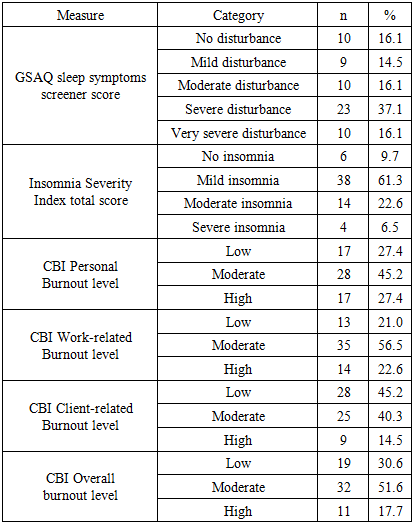
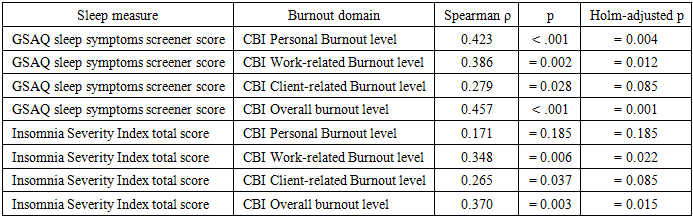
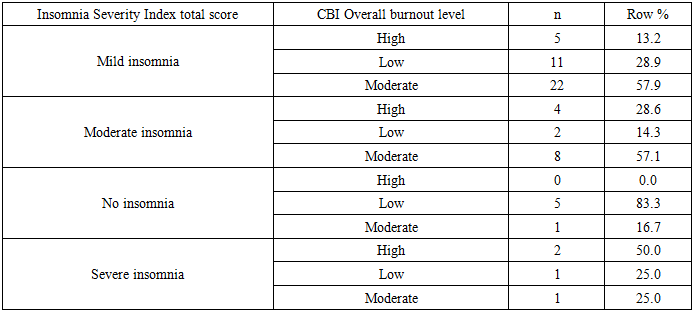
Sleep problems and burnout are increasingly recognized as intertwined occupational health concerns in school settings. This study examined the association between sleep quality and burnout syndrome among general education school teachers in Mongolia. A cross-sectional design was used with 62 teachers (87.1% female; 79.0% secondary level). Sleep-related complaints were assessed using the World Health Organization Global Sleep Assessment Questionnaire (GSAQ) and the Insomnia Severity Index (ISI), and burnout was measured with the Copenhagen Burnout Inventory (CBI). Descriptive statistics, chi-square tests, Spearman correlations with Holm adjustment, and ordinal logistic regression were conducted (SPSS 24). Most teachers reported some level of sleep disturbance on the GSAQ (83.9%), with 53.2% classified as severe/very severe. ISI results indicated that 90.3% had at least mild insomnia symptoms, and 29.1% had moderate-to-severe insomnia. Overall burnout was predominantly moderate (51.6%), with 17.7% high burnout. Sleep disturbance showed significant positive associations with overall burnout (ρ=0.457, p<.001) and with personal and work-related burnout domains. In ordinal logistic regression, GSAQ sleep disturbance significantly predicted higher overall burnout levels (OR=1.946, 95% CI 1.201–3.152, p=0.007), whereas ISI severity was not significant after adjustment. These findings suggest that broad sleep-related symptom burden is a robust correlate of burnout severity among teachers, supporting routine screening and targeted sleep-focused and occupational stress interventions in educational workplaces.
Keywords: Sleep, Sleep quality, Burnout syndrome, Occupational burnout, K–12 teacher, Secondary school teacher, Well-being
Cite this paper: G. Nerguibaatar, B. Munkh-Erdene, T. Norowsuren, T. Chantsaldulam, Association Between Sleep Quality and Burnout Among Primary and Secondary School Teachers, International Journal of Applied Psychology, Vol. 16 No. 1, 2026, pp. 1-10. doi: 10.5923/j.ijap.20261601.01.
Article Outline
1. Introduction
1.1. Background
- In a study conducted by Belinda Agyapong et al. [1], the authors reported that teacher stress and occupational burnout have been increasing globally, which in turn may contribute to the emergence of mental health problems, including anxiety and depression. Based on a synthesis of approximately 70 studies, the reported prevalence ranged from 25.12% to 74% for teacher burnout, 8.3% to 87.1% for stress, 38% to 41.2% for anxiety, and 4% to 77% for depression.General education school teachers have encountered specific psychological challenges associated with their professional activities and have addressed them through various coping strategies. Protecting teachers’ mental health not only positively influences social relationships and the quality of education, but also constitutes a substantial contribution to a country’s future development. Nevertheless, there remains a persistent lack of empirical evidence that could serve as a foundation for providing professional support and for accurately assessing and interpreting the situation.Teachers represent the primary human resource underpinning educational quality. Diverse work-related pressures create a stressful occupational environment for teachers and, over time, increase the risk of occupational burnout. Burnout manifests across three dimensions—psychological exhaustion, interpersonal detachment, and a reduced sense of professional accomplishment—and adversely affects the quality of instruction, students’ learning outcomes, and organizational productivity.Conversely, sleep quality is a fundamental physiological need that is directly associated with psychological equilibrium, attention and concentration, decision-making, and emotion regulation. International studies indicate that teachers may be at increased risk of sleep disruption due to various adverse work- and life-related influences. The literature commonly suggests that poorer sleep quality is linked to heightened psychological fatigue and stress, whereas good sleep is associated with a stronger sense of professional accomplishment.Accordingly, in the Mongolian context, identifying the association between teachers’ sleep quality and burnout, as well as the contributing factors, can support evidence-informed decision-making by policymakers and school leaders. It may also help teachers protect their mental health, maintain overall well-being, and create conditions conducive to sustained productivity at work.
1.2. Research Aim
- To determine the association between sleep quality and occupational burnout among general education school teachers and to examine the factors influencing this relationship.
1.3. Scientific Hypotheses
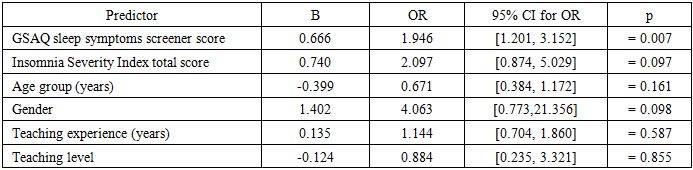
- H1 (directed). Higher sleep-related symptom burden (GSAQ) is associated with higher overall burnout (CBI overall) among teachers.H2 (directed). Higher insomnia symptom severity (ISI) is associated with higher overall burnout (CBI overall) among teachers.H3 (directed). GSAQ symptom burden is positively associated with personal and work-related burnout domains (CBI personal; CBI work-related).H4 (directed). After adjustment for demographic covariates, GSAQ severity remains a significant predictor of higher overall burnout level in an ordinal logistic regression model.We tested directed hypotheses of positive associations between sleep-related indicators (GSAQ/ISI) and burnout (CBI) using Spearman correlations and ordinal logistic regression.
2. Literature
- Sleep quality is a multidimensional construct reflecting sleep initiation, maintenance, duration, continuity, and next-day restoration. Poor or insufficient sleep is associated with adverse cardiometabolic and mental-health outcomes and reduced cognitive functioning, which are directly relevant to teachers’ performance and well-being [2,3,4,5]. In this study, sleep-related difficulties were assessed using a broad symptom screener (GSAQ) and a focused insomnia severity measure (ISI).Burnout is commonly defined as a work-related syndrome arising from chronic, poorly managed occupational stress. The ICD-11 description emphasizes exhaustion, mental distance/cynicism, and reduced professional efficacy [6]. Teacher burnout is a persistent international concern with implications for retention, instructional quality, and health outcomes [1,7].Theoretical rationale for linking sleep and burnout is well-established in occupational health models. The Job Demands–Resources (JD–R) model and Effort–Recovery framework conceptualize sleep as a core recovery process; when recovery is incomplete, strain accumulates and increases exhaustion and disengagement [8]. Conservation of Resources theory further frames restorative sleep as a foundational resource that buffers stress-related resource loss cycles [9].Empirical evidence in teachers indicates that sleep disturbance co-occurs with burnout symptoms. Recent teacher studies report positive associations between sleep disturbance and burnout risk and highlight the role of personal and contextual resources (e.g., resilience) in moderating these links [10,11]. Related occupational evidence shows comparable associations between sleep problems and burnout in other high-demand professions [12]. More recent post-pandemic teacher evidence also links sleep quality to stress-related outcomes, underscoring the ongoing relevance of sleep-focused prevention approaches [13].
3. Methodology
3.1. Study Design and Setting
- A cross-sectional survey was conducted among primary and secondary school teachers working in Erdenebulgan soum (Schools No. 1–3) and Ögiinuur soum (K–12 school), Arkhangai Province, Mongolia. The analytic sample included 62 teachers.
3.2. Measures
- Sleep-related complaints and burnout were assessed using validated self-report instruments as described below. Sleep-related complaints were assessed using the Global Sleep Assessment Questionnaire (GSAQ), a brief self-report screening tool developed to identify symptoms consistent with multiple common sleep disorders in community and primary-care contexts. The GSAQ is designed to capture a broad symptom profile (rather than a single disorder), making it appropriate for studies where sleep problems may present heterogeneously (e.g., insomnia symptoms, breathing-related sleep disturbance, restless legs symptoms, and parasomnias). In the original validation work, the GSAQ demonstrated utility in differentiating individuals with sleep disorders from those without sleep disorders, supporting its use as an efficient screening measure in applied research settings [14]. In the present study, internal consistency for the GSAQ symptom screening items/domains was acceptable ([α =0.81]).Insomnia symptom severity was measured using Morin and colleagues’ Insomnia Severity Index (ISI), a widely used 7-item self-report instrument assessing the perceived severity, impact, and distress associated with insomnia symptoms. The ISI evaluates core insomnia domains (e.g., difficulty initiating sleep, difficulty maintaining sleep, and early morning awakenings) together with satisfaction with sleep, interference with daytime functioning, noticeability of impairment, and worry/distress about sleep. Items were rated on a 0–4 Likert scale and summed to yield a total score ranging from 0 to 28, with higher scores indicating greater insomnia severity. Common interpretive bands were 0–7 (no clinically significant insomnia), 8–14 (subthreshold insomnia), 15–21 (moderate clinical insomnia), and 22–28 (severe clinical insomnia) [15]. In the present sample, the ISI showed good internal consistency ([α =0.789]).Burnout was assessed using the Copenhagen Burnout Inventory (CBI) developed by Kristensen and colleagues, which conceptualizes burnout primarily as fatigue and exhaustion and distinguishes three domains: personal burnout, work-related burnout, and client-related burnout. The standard CBI contains 19 items distributed across these subscales (typically 6 personal, 7 work-related, and 6 client-related). Responses were recorded using frequency/intensity-style options that can be transformed to a 0–100 metric (higher scores indicating higher burnout), facilitating interpretation and comparability across subscales. Evidence from validation work supports satisfactory reliability and construct validity of the three-factor structure in occupational research [16,17]. In the present study, internal consistency was acceptable for the personal burnout ([α = 0.767]), work-related burnout ([α = 0.739]), and client-related burnout subscales ([α = 0,760]).Collectively, these measures supported a coherent measurement strategy: the GSAQ provided broad screening of sleep-problem indicators, the ISI yielded a focused and clinically interpretable index of insomnia symptom severity and daytime impact, and the CBI captured multidimensional exhaustion central to burnout. This combination enabled examination of whether insomnia severity and broader sleep-related complaints were associated with (or predicted) personal, work-related, and client-related burnout dimensions in the target population [17,15,14].
3.3. Statistical Analysis
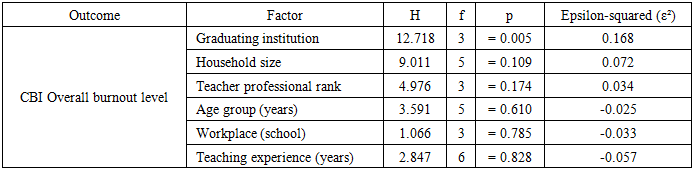
- Analyses were conducted using IBM SPSS Statistics 24. Descriptive statistics were computed, followed by nonparametric tests (Spearman rank correlations with Holm correction; Mann–Whitney U tests; Kruskal–Wallis tests), chi-square tests for cross-tabulations, and ordinal logistic regression.
4. Result
4.1. Participant Characteristics
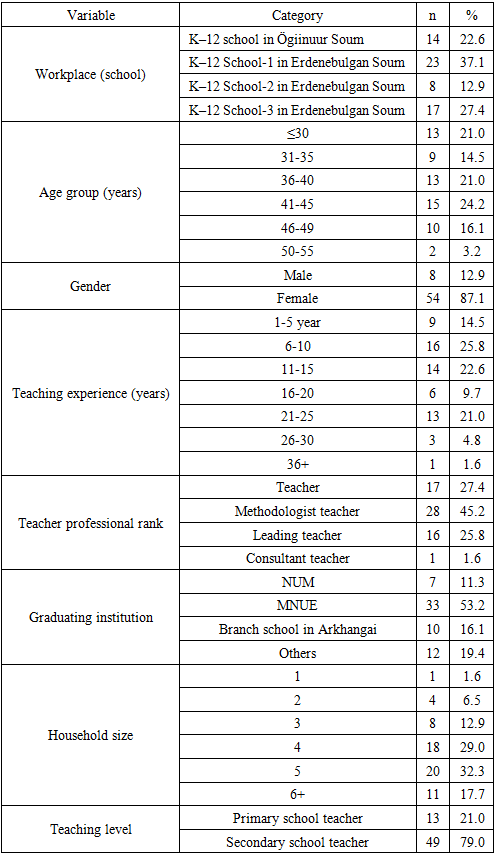
- A total of 62 general education school teachers were included in the analysis (no missing data across study variables). (see Table 1) Most participants were female (87.1%), and the majority were secondary school teachers (79.0%). Age groups were distributed as follows: ≤30 (21.0%), 31–35 (14.5%), 36–40 (21.0%), 41–45 (24.2%), 46–49 (16.1%), and 50–55 (3.2%). Teaching experience was most commonly 6–10 years (25.8%) or 11–15 years (22.6%), with smaller proportions in 1–5 years (14.5%), 16–20 years (9.7%), and 36+ years (1.6%). Professional rank was predominantly methodologist teacher (45.2%), followed by teacher (27.4%) and leading teacher (25.8%).
|
4.2. On the Reliability of Measures
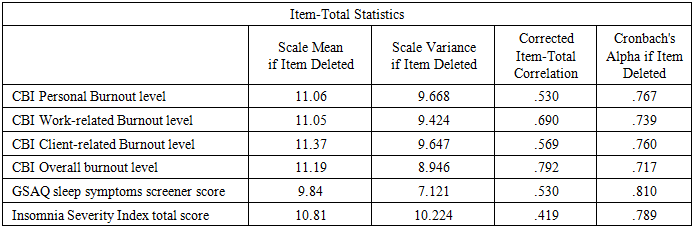
- Internal consistency reliability for the study scales was acceptable. Across the six composite indicators (CBI personal burnout, CBI work-related burnout, CBI client-related burnout, CBI overall burnout, GSAQ sleep symptoms screener score, and ISI total score), Cronbach’s alpha was α = 0.794 (6 items). (see Table 2). Corrected item–total correlations ranged from 0.419 to 0.792, indicating that each composite contributed meaningfully to the overall reliability. Item-deletion diagnostics showed that Cronbach’s alpha would range from 0.717 to 0.810 if any single indicator were removed, suggesting that no individual composite unduly inflated reliability. (see Table 3).
|

|
4.3. Distribution of Sleep Disturbance and Burnout Severity
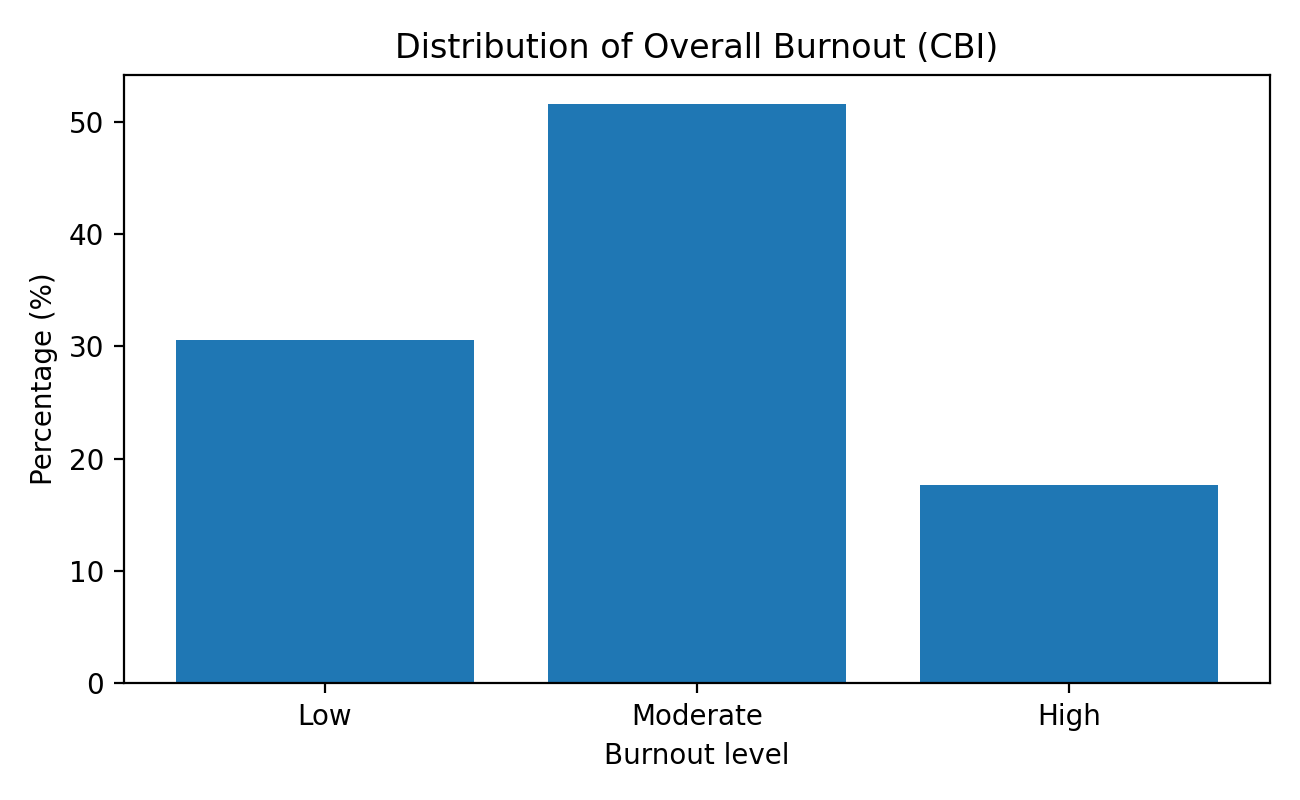 | Figure 1. Distribution of overall burnout levels (CBI overall) |
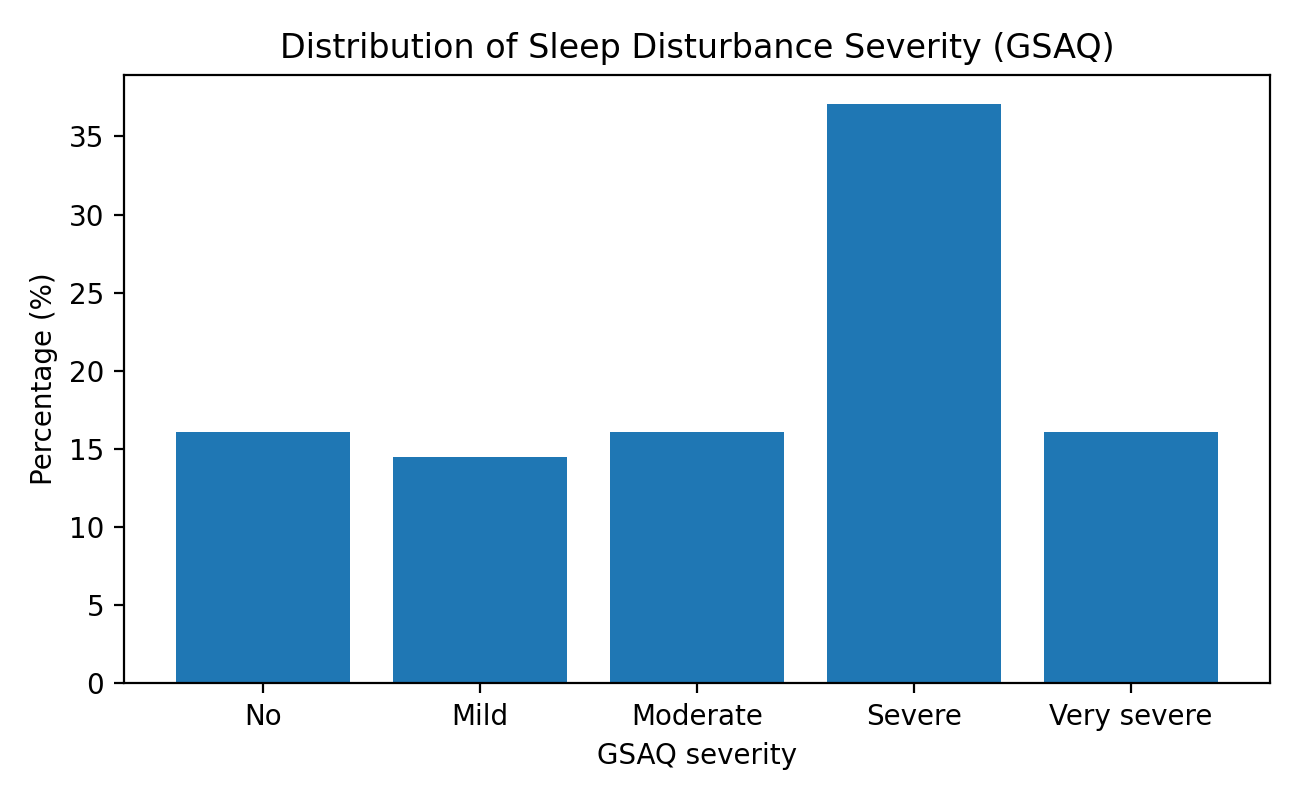 | Figure 2. Distribution of sleep disturbance severity levels (GSAQ) |
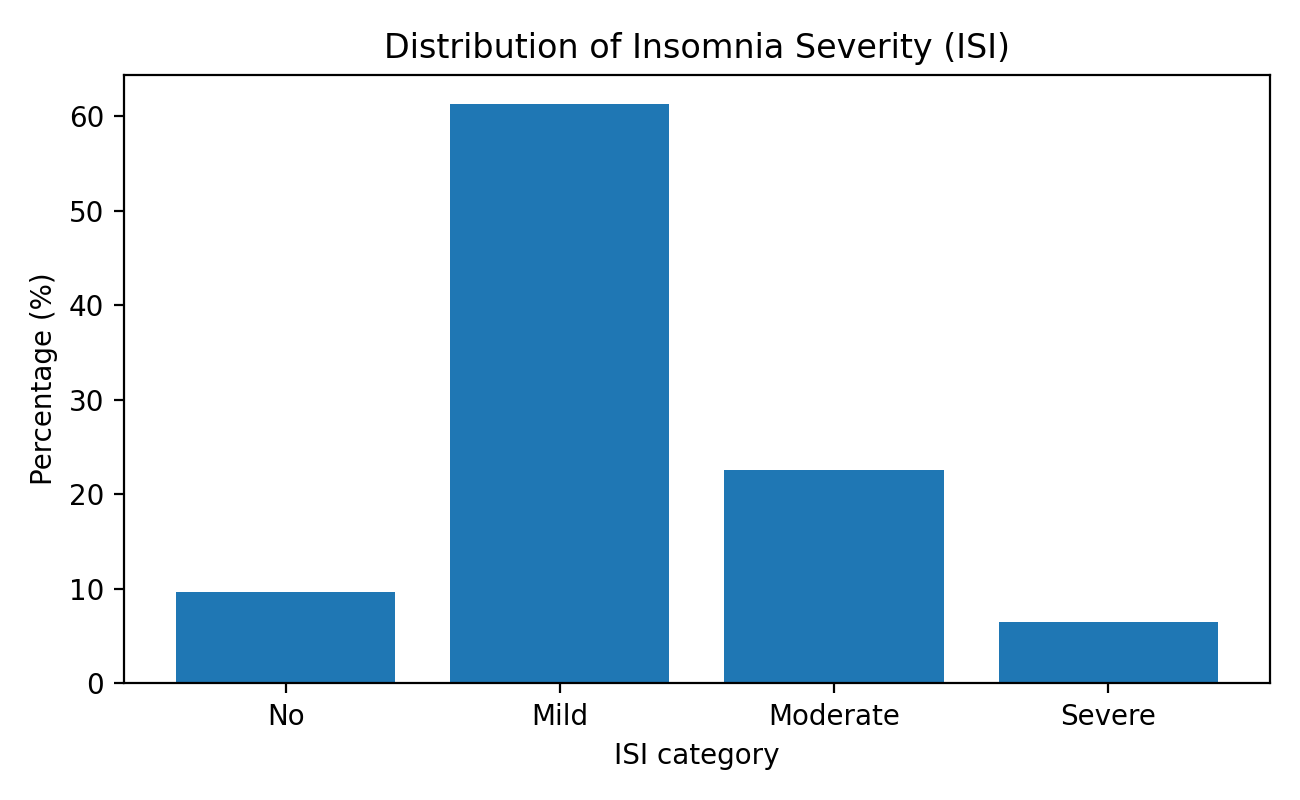 | Figure 3. Distribution of insomnia severity levels (ISI) |
|
4.4. Associations Between Sleep Disturbance and Burnout
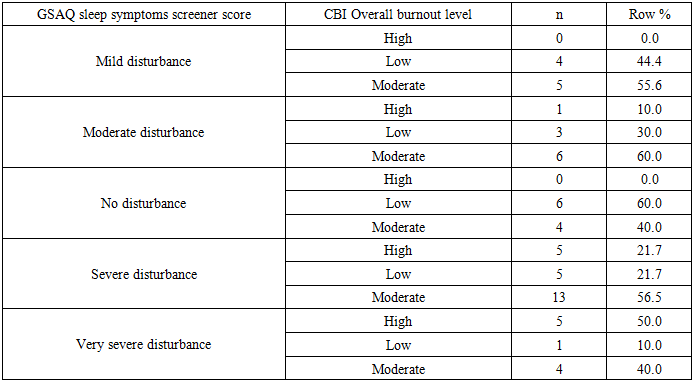
- Spearman rank correlations were used to examine monotonic associations between sleep disturbance severity and burnout severity. To control the familywise error rate across multiple correlation tests, Holm-adjusted p values are also reported (Table 5).
|
|

|
|

|
4.5. Group Differences in Sleep and Burnout Severity
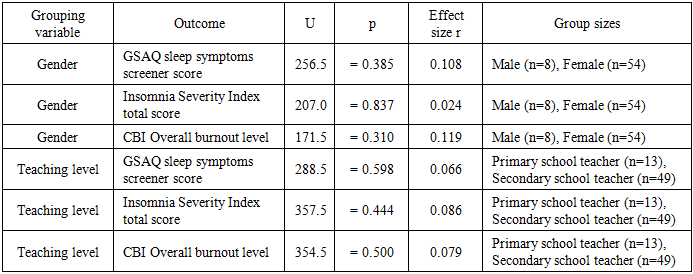
- Nonparametric group comparisons indicated no statistically significant differences in sleep disturbance severity (GSAQ level), insomnia severity (ISI level), or overall burnout level by gender or by teaching level (primary vs secondary). Mann-Whitney U tests yielded p-values of .31 or greater across all comparisons (Table 7), and corresponding effect sizes were small (r = .02 to .12).
|
|
|
|

5. Discussion
- This study examined the relationship between sleep-related difficulties and burnout among general education school teachers. Three key findings emerged. First, sleep problems were highly prevalent in the sample: most teachers reported notable sleep-related complaints on the GSAQ and at least mild insomnia symptoms on the ISI. Second, burnout levels were non-trivial, with the majority reporting moderate burnout and a meaningful minority reporting high burnout. Third, sleep disturbance—operationalized as a broader symptom burden on the GSAQ—showed a consistent positive association with burnout severity and remained an independent predictor of higher overall burnout in ordinal logistic regression, whereas ISI severity did not retain significance after adjustment. Recent evidence further supports the practical relevance of sleep for teacher health. Post-pandemic teacher research has documented that poorer sleep quality is meaningfully related to higher psychological stress and adverse health complaints, highlighting sleep as a key target for occupational well-being initiatives [13]. In parallel, recent work in teachers shows that psychosocial job risks and limited personal resources contribute to burnout vulnerability, strengthening the rationale for integrated interventions that address both recovery (sleep) and work stressors [18].Interpretation of the main associationThe observed positive relationship between sleep disturbance and burnout is theoretically coherent and aligns with what is commonly reported in occupational health research: inadequate or disturbed sleep can undermine recovery and exacerbate fatigue, emotional exhaustion, and reduced work capacity. Teachers perform sustained emotional and cognitive labour (e.g., classroom management, decision-making, student support), and insufficient restorative sleep may reduce self-regulation, attentional control, and stress tolerance. Over time, this can translate into a higher perceived workload, greater emotional exhaustion, and reduced resilience to day-to-day job demands—core features that map onto burnout constructs. At the same time, it is plausible that the relationship is bidirectional: burnout-related stress may worsen sleep through rumination, heightened physiological arousal, and reduced opportunities for recovery. Because the present data are cross-sectional, the direction of influence cannot be determined; however, the strength and consistency of the association support the practical value of screening for sleep issues in teacher well-being initiatives.Why GSAQ predicted burnout, but ISI did not (after adjustment)An important result is that GSAQ sleep disturbance predicted higher burnout levels in regression analyses, while ISI did not remain significant when other variables were included. One interpretation is measurement scope. The ISI focuses specifically on insomnia symptom severity (difficulty initiating or maintaining sleep and related distress), whereas the GSAQ is designed as a broad screener capturing a wider array of sleep-disorder symptom domains. In occupational contexts, burnout may be more strongly linked to an overall “sleep-symptom load” (e.g., fragmented sleep, non-restorative sleep, sleep-related breathing symptoms, restless legs-type complaints, or parasomnia-related disruptions) rather than insomnia symptoms alone. In addition, the GSAQ may capture functional consequences of sleep problems more comprehensively, which may align more closely with work-related exhaustion.A second interpretation concerns statistical overlap. If GSAQ and ISI are correlated, the regression model may attribute shared variance to the predictor that better captures the broader disturbance pattern (GSAQ), leaving ISI with less unique explanatory power. This does not imply that insomnia is unimportant; rather, it suggests that in this dataset, global sleep-related symptom burden was a more robust indicator of burnout severity than insomnia symptom severity alone.Practical implications for schools and occupational healthThe findings have several implications for prevention and support programs for teachers. First, integrating brief sleep screening into routine occupational well-being assessments may help identify individuals at heightened risk of burnout. In particular, a broad screener may be useful as an early warning signal because it captures multiple sleep-related complaints that can accumulate and impair recovery. Second, intervention approaches may be most effective when they address both domains simultaneously: improving sleep-related behaviours and conditions while also reducing work-related strain and supporting recovery. School-level actions could include workload and scheduling reviews (e.g., balancing administrative duties, minimizing late-evening demands), promoting protected recovery time, and providing access to stress-management and sleep-focused behavioural strategies. Individual-level support may include structured sleep hygiene education, brief behavioural interventions for insomnia when indicated, and guidance on managing rumination and pre-sleep arousal. Taken together, these steps may improve daily functioning and reduce the likelihood of progression to more severe burnout.Within Mongolia, where teachers may face resource constraints and high job demands, the strong association between sleep disturbance and burnout underscores the need for feasible, scalable approaches—brief screening, targeted referral pathways, and low-intensity interventions that can be delivered within school systems or community health settings. The use of a World Health Organization–linked screening approach (GSAQ) also supports the feasibility of adopting pragmatic tools in applied educational and occupational contexts.LimitationsSeveral limitations should be noted when interpreting these results. First, the cross-sectional design prevents causal conclusions and cannot clarify whether sleep disturbance contributes to burnout, burnout contributes to sleep disturbance, or both processes occur simultaneously. Second, the sample size was modest and drawn from a specific teacher group; therefore, the generalizability of prevalence estimates and effect sizes may be limited. Third, all measures relied on self-report, which can introduce reporting bias and shared method variance. Fourth, while the analyses used appropriate nonparametric correlations and ordinal regression, unmeasured factors (e.g., comorbid health conditions, medication use, shift-like schedules, family caregiving load, school climate, or seasonal workload variation) could confound or modify the observed associations.Future research directionsFuture studies should use larger, more diverse teacher samples and incorporate longitudinal designs to examine temporal ordering—whether baseline sleep disturbance predicts later increases in burnout or whether rising burnout predicts worsening sleep. Where feasible, adding objective sleep indicators (e.g., actigraphy) or clinically oriented assessments could strengthen measurement validity. Intervention studies are also needed to test whether improving sleep (through behavioural sleep interventions or organizational policy changes that enhance recovery) yields measurable reductions in burnout over time, and to identify which components are most effective for teachers. Finally, examining subgroup differences (e.g., by age, teaching level, workload, or years of experience) may help tailor prevention and support strategies more precisely.Overall, this study highlights that sleep-related difficulties are common among teachers and are closely linked to burnout severity. The results support the inclusion of sleep screening and integrated sleep–stress interventions as practical components of teacher occupational health and well-being programs.
6. Conclusions
- This cross-sectional study of 62 general education school teachers (87.1% female; 79.0% secondary level) in Mongolia demonstrates that sleep-related difficulties are widespread and meaningfully linked to burnout severity. On the GSAQ, 83.9% of teachers reported sleep-disorder–related complaints, with 53.2% classified as severe/very severe. On the ISI, 90.3% reported at least mild insomnia symptoms, including 29.1% with moderate-to-severe insomnia. Burnout was also substantial: 51.6% of teachers reported moderate burnout and 17.7% reported high burnout.Importantly, broader sleep disturbance (GSAQ) showed a moderate positive association with overall burnout (Spearman ρ=0.457, p<.001) and remained an independent predictor of higher burnout levels in ordinal logistic regression (OR=1.946, 95% CI 1.201–3.152, p=0.007). In contrast, insomnia symptom severity (ISI) did not retain statistical significance after adjustment, suggesting that a multi-symptom sleep burden may capture the sleep-related functional load most closely tied to occupational exhaustion. Taken together, these findings support integrating brief sleep screening into teacher occupational health programs and prioritizing combined sleep-focused and work-stress–reduction interventions. However, given the modest sample size, self-report measurement, and cross-sectional design, larger longitudinal and intervention studies are needed to clarify directionality and to test whether improving sleep leads to meaningful reductions in burnout over time.