
-
Paper Information
- Paper Submission
-
Journal Information
- About This Journal
- Editorial Board
- Current Issue
- Archive
- Author Guidelines
- Contact Us
Journal of Health Science
p-ISSN: 2166-5966 e-ISSN: 2166-5990
2016; 6(2): 30-35
doi:10.5923/j.health.20160602.03

A Critical Evaluation of three Level Chronic Lung Infection Response Strategies for the Residents of Inland Empire in California
 Abstract
 Reference
 Full-Text PDF
 Full-text HTML
Paulchris Okpala
Department of Health Science and Human Ecology, California State University, San Bernardino, California, USA
Correspondence to: Paulchris Okpala, Department of Health Science and Human Ecology, California State University, San Bernardino, California, USA.
| Email: |  |
Copyright © 2016 Scientific & Academic Publishing. All Rights Reserved.
This work is licensed under the Creative Commons Attribution International License (CC BY).
http://creativecommons.org/licenses/by/4.0/

This study involved a critical evaluation of a three level chronic lung infection response strategy with the aim of consolidating a formidable evidence-based and a multifaceted approach aimed at reducing the primary impact of pollution on new lung disease cases in the Inland Empire of California. The study was carried out using a qualitative research approach based on the grounded theory and phenomenological approach. The data was collected from five different websites and existing records from nine hospitals in the area. The results indicated that lung cancer patients are less informed about the predisposing factors. The study also indicated that early detection and chemoprevention offers best chance at survival. The results also showed that various treatment and post treatment factors affect the quality of life of lung cancer survivors. Based on the findings of the study, it was suggested that control of lung cancer can be achieved by use of a multifaceted approach that involves the carrying of awareness programs on the risk factors of lung cancer, early detection and treatment and finally the strategies towards improving quality of life of cancer survivors.
Keywords: Early detection, Chemoprevention, Survival, Quality of life, Awareness
Cite this paper: Paulchris Okpala, A Critical Evaluation of three Level Chronic Lung Infection Response Strategies for the Residents of Inland Empire in California, Journal of Health Science, Vol. 6 No. 2, 2016, pp. 30-35. doi: 10.5923/j.health.20160602.03.
Article Outline
1. Introduction
- One of the leading lung infections in the US is the cancer of the lungs [1]. The rapid abnormal growth of cells of the lungs that results in the development of tumors is termed as lung cancer. This form of cancer is the seconding leading form of frequent cancer besides skin cancer. However, it is the leading cause of cancer death in the world. The death due to lung cancer each year is more than the deaths caused by a combination of other forms of cancer such as colon, breast, and prostate. The death that has resulted from lung cancer in 2014 is approximated at 158,080 by the American Cancer Society [2].The new lung cancer cases contribute to over 14% of the global new cancer cases. According to the American Cancer Society, a total of 224,390 cases of new lung cancer individuals have been reported in 2016. The occurrence of cancer varies across the age groups with about 66.7% of the lung cancer cases occurring among the people who are above 65 years old. Only about 2% of the reported cases occur in the individuals with the age group of fewer than 45 years [2]. Various factors are associated with the development of lung cancer, but the major risk factor is tobacco smoking. Various studies suggest that about 80% of deaths that occur due to lung cancer and associated ailments are linked to tobacco smoking. It is reported that over 7,000 mortality cases of lungs cancer associated with secondary smoking are reported annually [3]. Lung cancer is also associated with occupational hazards such as asbestos and x-ray exposure to radiotherapist. Air pollution such as car exhaust and arsenic in drinking water can also cause lung cancer. Medical practices such as x-ray to the chest can also increase the chances of getting lung cancer [4].To reduce the cases of lung cancer in the US and comply with the healthy people 2020 policy, there is a need that concerted and effective strategies are put in place. A single approach such as cessation of smoking, good diet, avoidance of risky chemicals such as asbestos and avoidance of air pollutants have been shown to less effective when applied separately [5]. Other approaches such as early detection have been shown to be effective, but the population of the affected individuals that avail themselves for screening is still minimal. The chances of surviving lung cancer and living a better life as envisaged in one of the objectives of healthy people 2020 are based on the robustness of the medical intervention that is adopted [6]. After being fully cured of lung cancer, it is also important to consider the quality of life of the lung cancer survivor. The control of lung cancer can be more successful if a versatile approach involving the patients, medics and guardians is adopted [5]. It is based on this background that this study was carried out to consolidate a formidable evidence-based and a multifaceted approach that will reduce the primary impact of pollution on new lung disease cases in the Inland Empire of California. The location was chosen since the rate of air pollution is among the highest in the nation based on the 2013 report done by the American Lung Association concerning the State of the Air.
2. Research Design
- This research was conducted using a qualitative research approach based on the grounded theory and phenomenological approach. The qualitative approach based on grounded theory is best suited for this study since the approach the enables the development of the theory through the process of formulation, testing and the redevelopment of the propositions which was the main objective of the study [7]. Based on the grounded theory, the study was conducted by developing a list of questions that guided the data inquiry process. Based on the chosen approach, the range of the perspectives in the study was then evaluated using a constant comparative method where the data sorting and analysis was done in a systematic manner based on theoretical sampling process. The theoretical sampling was done to the saturation point where no new insights could be obtained from the data. Phenomenology approach was also used to address the influence of unique cases in the databases on the research questions [8]. The target sample consisted of five databases and nine hospitals. From the five databases, 10 different data reports were considered based on the recommendations by Creswell [9].A total of 33 hospitals were considered for the study. The consideration of the hospitals as source of data was based on the following inclusion criteria; the hospital should be handling chronic lung infection patients and should be willing to offer the required data. Based on the criteria above, nine hospitals were included in the study. A phenomenological survey that mainly involved reading of the patient records was used to examine the patient data from the hospital records. A set of written questions was used as a guide during the retrieval of the information. The patient data records that did not have complete information such as patient medical history and diagnosis, patient survival or mortality were excluded from the study. A total of 196 existing patient records were considered in the study. The identity of the patient record was concealed by the hospital before handing over the records for the study.
3. Data Collection
- The theoretical sampling process was adopted for this study. The study used data from five different databases including; a) Agency for Healthcare Research and Quality, b) The Aggressive Research Intelligence Facility (ARIF) reviews, c) Clinical Evidence d) DynaMed databases and e) Health-evidence.ca. The five databases were chosen purposefully to facilitate the comparison of the data. The data was also collected from existing hospital records, documents and reports. The hospitals considered for the study were those hospitals in the Inland Empire County willing to avail their existing records. In this study, data from a total of nine such hospitals were used.
3.1. Data Analysis
- The data collected from the sources described above was processed by first coding them using three coding levels [10]. Initially, the data was open coded by dividing the data into similar groups. The open coded data were then axial coded by developing categories from the identified groups. The data was selectively coded where the categories and groups were organized and integrated to articulate the theory of the study. The means of the number of people who smoke tobacco and with risky diet, understanding the effect of secondary smoking and consideration for cancer screening were compared using ANOVA test. The means of the number patients that survived (survivorship) at different stages of cancer infection were also compared using ANOVA test. The means of the number of chronic lung cancer patients identified to be tobacco smokers, secondary smokers, with family history of the disease, diet associated risk and occupation associated risk were compared using ANOVA. For every significant results, Tukey’s range test at p<0.05 were performed to identify the significance difference. The multiple logistic regressions were performed where patient survival was used as the dependent variable while early detection; chemoprevention and elimination of the environmental pollutant were used as the predictor variables. The analysis of data were done at p<0.05. The data was then analyzed using SPSS version 22.0.
4. Results
4.1. Patient Demographics
- The study considered data from 196 patients. The number of male patients was 115 while the female patients were 81. The patients were also made up of different ethnicities that included Latino (34.2%), black patients (26.5%), Asians (20.9%) and whites (18.4%).
4.2. Lung Cancer Patients are Less Informed about the Predisposing Factors
- Assessment of the data obtained from online database on the level of lung cancer awareness among smokers revealed that only 13.88% of the smoking population understood the food that could predispose to development of cancer implying that a larger section of the population (86.12%) do not know the type of diet that can make them more prone to develop lung cancer and related problems. The reports also indicated that only 25.44% indicated to understand how their smoking habit can affect the non-smokers through secondary smoking. The data obtained also showed that only 18.5% of the smoking population were either planning to be screened for lung cancer or knew of the importance of lung cancer screening.
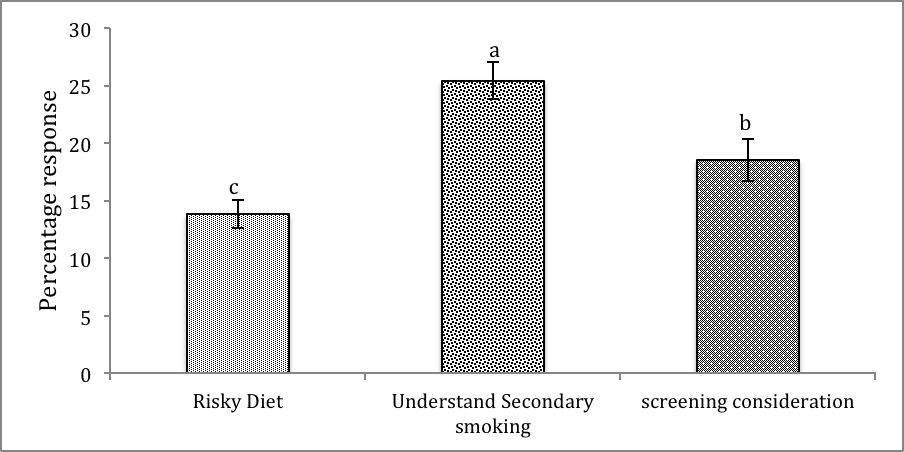 | Figure 1. The response among the smoking population of the various factors associated with lung cancer. The different letters show significance difference at P<0.05 |
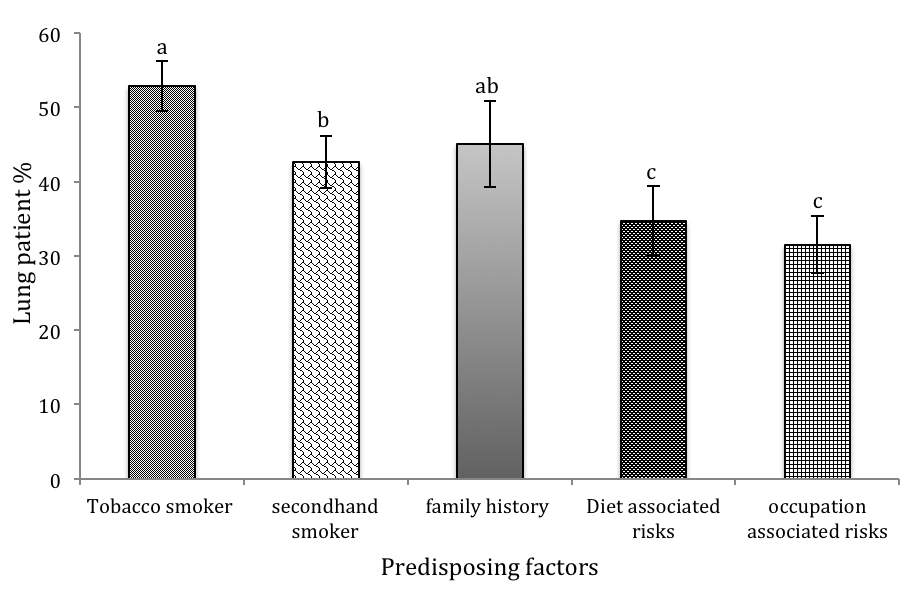 | Figure 2. Trend of the major factors associated with the development of lung cancer. The similar letters show no significant difference at p<0.05 |
4.3. Early Detection and Chemoprevention offers Best Chance at Survival
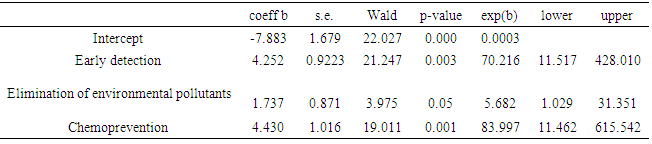
- The data across the databases were collected and modeled to assess the factors that can improve the level of survival among the cancer patients. The effect of early detection, avoidance of environmental pollutants and intervention through chemoprevention on the survival of the lung cancer patients was modeled using multiple logistic regression to establish how the three factors affect the chance that the patient will survive lung cancer to the 5th year after diagnosis. The model was shown to be a good predictor as shown by the R-square value of 0.70 that was significant at p <0.05. From the model, it was shown that the use of chemoprevention has the effect in ensuring survival as shown by an exp(b) value of 84.0 while earlier detection come second with and exp(b) of 70.216. Once the patient has been diagnosed the effect of the avoidance of pollutant had the least effect according to the model. The model, therefore, suggests that early detection and the use of chemoprevention can ensure the survival of the lung cancer patient.
|
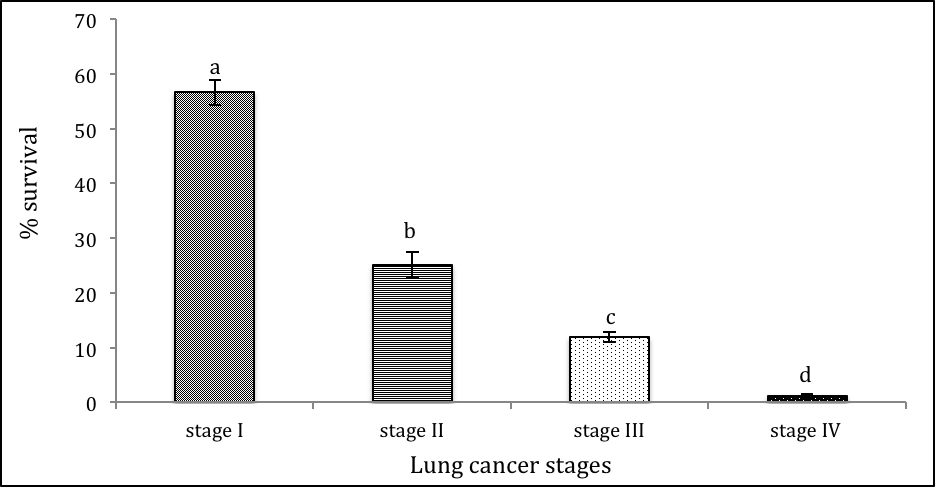 | Figure 3. The effect of chemoprevention on survivorship at different stages of Lung cancer development. The different letters show no significant difference at p<0.05 |
4.4. A need for Improved Quality of Cancer Survivors
- The data across the various factors were assessed and compared to evaluate the different aspects that affect the quality of life of the lung cancer patients. Various factors affect the lung cancer patient from the day he or she is diagnosed with the disease to the day that the patient’s life ends. Some of the factors as observed from the information gathered from the websites and hospital records indicated that the choice of the treatment could influence the quality of life of the cancer survivors. The study revealed that despite surgical resection offering the best medical intervention that ensures survival the pains and incapacitation to perform certain functions because of the altered lung volume hence the quality of life of the patients is greatly affected. Radiotherapy also was shown to affect the patients through pneumonitis while cardio pulmonary complications were reported for the cancer survivors who were subjected to chemotherapy. Post medical issues that affect the quality of life of the survivors was reported to include stigma from those who, by thinking that lung cancer is caused by smoking, perceive the patients to be suffering the consequences to their choices. The social stigma ends up in social morbidity.
5. Discussion
- The results of this study indicate that majority of the patients suffering from lung cancer in Inland Empire California are not aware of the factors that increase their chances of developing lung cancer. This was particularly evident by significantly low high percentage (13.88%, P<0.05) of the smoking population who reported that they are aware of the type of diet that increases their chances of developing lung cancer. The lack of information among this section of the population was further demonstrated by the fact that only 25.44% of them understood the effect of their smoking habit on the non-smokers. The results also showed that the only 18.5% of the population considered undergoing screening for lung cancer. This can be attributed to lack of information on how important early detection of lung cancer is to its control. The results suggest that the observed low level of awareness contributed to the lung cancer cases in the area since 52.89% of the lung patients were reported to be tobacco smokers while 42.67% reported that they have been exposed to secondary smoking. Studies have shown that the level of awareness among types of cancer is equally low [11]. Those who were feeding on food considered to be associated with cancer development such as food rich in beta-carotene was about 34.78% while 31% was established been exposed to a carcinogen in the work place. These findings therefore, suggest that one of the approaches in a three level chronic lung infection response strategy for the residents of Inland Empire in California is the creation of awareness of the risk factors associated with lung cancer development. Medics and other stakeholders should focus more on educating the population on the factors that increase the chance of developing lung cancer. As indicated in earlier studies, the employers and the individuals working in environments that put them in contact with carcinogens should be educated on how to protect themselves from such factors [4]. Some of the studies have indicated that education is an important approach in controlling lung cancer and other diseases by empowering individual to be the first line of action in disease control [12]. This not only ensures a quality life as stipulated in healthy people 2020 but also cut down on the cost of the treating the disease. This critical evaluation study, through the modeling of early detection, avoidance of environmental pollutants and intervention through chemoprevention, showed that the use of the three factors in controlling of lung cancer leads to an increased likelihood of survival (R-square value= 0.70, P <0.05). The results showed that the chances of a lung cancer patient survival in Inland Empire in California are dependent on the stage at which the cancer is diagnosed and the intervention that is adopted. It is evident from the study that early detection of cancer leads to significantly high chances of survival (exp(b)=70.216). The study also shows that the use chemoprevention significantly increases the chances of a patient suffering from lung cancer to survive (exp(b)= 84.0). The stage at which chemoprevention is introduced affects the chances of lung cancer patient survival. The study showed that the introduction of the chemoprevention at an early stage of lung cancer development results in 56.67% survival of the patient while the patient has 25.11%, 11.8% and 1.22% chance of surviving when chemoprevention is an introduction at stages II, III and IV respectively. As suggested by the finding of this critical evaluation study, the other approach in a multi-level chronic lung infection response strategy for the residents of Inland Empire in California is an early detection and chemoprevention of lung cancer. The early detection of disease has been suggested in earlier studies to be vital in the treatment of different types of cancer. Early detection does not only increase the chances of surviving the disease but also reduces that need for life-threatening medical intervention [13]. Chemoprevention is considered as a means of preventing lung cancer rather than a means of treatment [14]. The findings that the survival of lung cancer patient is affected by the stage at which the disease is diagnosed and treated is consistent with earlier studies that suggested that chances of survival are boosted by earlier detection of lung cancer and subsequent chemoprevention intervention [13]. Strategies should, therefore, be put in place to ensure that the public is in a position to access facilities for early detection of lung cancer. Strategies can range from carrying public awareness on the available early lung cancer screen options to funding research on better ways of cancer screening [15]. The study also suggested that various factors affect the quality of life of lung cancer survivors. The study indicated that the factors that affect the quality of life of the lung cancer patients of Inland Empire in California range from the medical approach used in controlling the disease to the care that the patient receives after being discharged from the hospital. The use of medical intervention such as surgical resection was shown to affect the quality of life that a cancer survivor live as it can cause post-thoracotomy pain, persistent cough, and persistent dyspnea. The study however, suggested that the use of post-treatment follow-up for pain and dyspnea correction could alleviate the effect of surgical resection. The study also indicated that the effect of radiotherapy such as Clinical Pneumonitis could be countered through symptom management and education of the caregivers. Counseling and education of caregivers were also indicated to eliminate the effect of stigma and psychologically related effects on the quality of life of lung cancer patients. The study, therefore, suggests that in addition to the treatment of the patient, it is important to put proper strategies in place such as educating of the caregivers and counseling of the patient to prepare him or her psychological to be ready to face the world after cancer treatment. These findings, therefore, suggests that the third approach in a multi-level chronic lung infection response strategy for the residents of Inland Empire in California should be aimed at focusing on the quality of life and well-being of lung cancer survivors. The after treatment follow up not only improve the quality of life of the lung cancer survivors but also ensure that morbidity due social unconformity is reduced [16]. The improved quality of life and reduced deaths through after treatment caring of the lung cancer patient is in line with the first objective of the healthy people 2020 that aims at ensuring that individuals get high-quality health and longer lives.
6. Conclusions
- From the findings of the study, it can be concluded that an effective approach to controlling lung cancer is an elaborate approach that involves all the stakeholders in lung cancer control. This critical evaluation study of chronic lung infection response strategy for the residents of Inland Empire in California has pointed to as three-level response strategy. The first aspect is to focus on prevention of the disease from occurring through the education on the risk factors associated lung cancer such as tobacco cessation and avoidance of occupational exposure to carcinogens. The second aspect is to develop strategies geared towards early detection of lung cancer and subsequent intervention using appropriate means such as the use of chemoprevention. The third aspect is focusing on the quality of life and well being of lung cancer survivors. All the three aspects should be coordinated among all the stakeholders to ensure successful implement.