American Journal of Economics

p-ISSN: 2166-4951    e-ISSN: 2166-496X

2020;  10(3): 187-203

doi:10.5923/j.economics.20201003.08

 

International Labor Migrants and the Impact of Their Remittance on Economic Growth of Mongolia

Shifen Wang 1, Ganchimeg Erdenebayar 2

1Department of Finance, Shanghai University, Shanghai, PRC

2Department of Economics, Shanghai University, Shanghai, PRC

Correspondence to: Ganchimeg Erdenebayar , Department of Economics, Shanghai University, Shanghai, PRC.

Email:

Copyright © 2020 The Author(s). Published by Scientific & Academic Publishing.

This work is licensed under the Creative Commons Attribution International License (CC BY).
http://creativecommons.org/licenses/by/4.0/

Abstract

International migration has been increasing rapidly, and migrant’s remittance has become one of the most significant and major sources of external funding for many low-income as well as developing countries in recent years. As the results of world integration and globalization, international migration of labor workers has dramatically risen in search of economic benefit from other countries. Most of those migrant’s remittances move towards developing country from a developed country. Throughout the last twenty years, Mongolia has been receiving remittances from its migrants, and the country has become one of the top 10 remittance-receiving countries in East Asia by the report of the World Bank in 2018. Thereafter, it is reasonable to think that increasing inflows of remittances have a meaningful impact on the economic growth of Mongolia. However, the increasing trend of remittance inflows have associated with enormous migration outflows of Mongolia. The article aimed to acknowledge this phenomenon to highlight the significant characteristics between remittances and GDP of Mongolia as well as empirical studies conducted in order to find a true relationship between them. The research on the impact of remittances on economic growth has not studied in the case of Mongolia before. The empirical estimation based on Ordinary Least Squares model to represent remittances as a determinant of economic growth in the short term using quarterly data of 10 years from 2009 to 2019. The analysis of regression was consistent with the main hypothesis of the study and expectations of reality. The time series linear regression results demonstrate the remittance inflows to Mongolia have statistically significant and positively affecting the economy.

Keywords: Remittances, Economic growth, Mongolia, International migration

Cite this paper: Shifen Wang , Ganchimeg Erdenebayar , International Labor Migrants and the Impact of Their Remittance on Economic Growth of Mongolia, American Journal of Economics, Vol. 10 No. 3, 2020, pp. 187-203. doi: 10.5923/j.economics.20201003.08.

1. Introduction

Remittance is a phenomenon of financial inflow to the economy and migrants’ nature of sending money to the origin country. Substantial amounts of remittances move between countries and it has become a major source of support for low-income families in developing countries. Remittance can contribute to reducing inequalities and poverty as it is the second-largest financial inflow after FDI in particular, nearly half of the world remittances flow to developing countries.
According to the World Bank [1], official remittance flow to the low- and middle-income countries accounted as 529 billion US dollar in 2018, an increase of 9.6% from the previous year. Global remittance flows to high-income countries accounted for 689 billion US dollar in 2018, and 633 billion US dollar in 2017, respectively. The world bank reported that remittances are now more than three times the size of official development assistance (ODA) in low- and middle-income countries. While foreign direct investment (FDI) has been on a downward trend in recent years, remittances reached close to the level of FDI flowed in internationally in 2018. Data published by world remittances are calculated only official channel remittances which made through commercial banks, money transfer companies and authorized agencies. However, all integrated amount of remittances is unavailable to be recorded as long as a transaction made by different mechanisms. Migrants send their money through official and unofficial channels. Most of the remittances have sent through unofficial channels due to the cost of sending remittances are relatively high. As a result of this remittance cost, migrants decide to send their money through unofficial channels such as individual money swapping, carrying cash themselves or save it until they return home. Therefore, it has believed that remittance inflows from developed countries to developing countries could be even higher than its FDI and official aid.
On the other hand, the unofficial channels transaction is recorded or not, remittance is a crucial point of international migration. There are many drivers impacting to the international migration among countries such as income gaps, economic situations, environment, social networks and benefits, ease of transportation, exchange rate differences and technology development. Income gaps are the most fundamental impact of international migration. Despite the actual number of remittances, international migration records often fail to find as a large number of illegal migrants living and working abroad. It often suggested by international organizations to be lower the cost of remittance and those governments should develop better mechanism to encourage remittance senders to use official channels as reducing the cost of remittance. Reversely, it will also support development of remittance recipient countries as well as advising recipient-families to use remittance as a savings and investment which would affect economic development and growth.
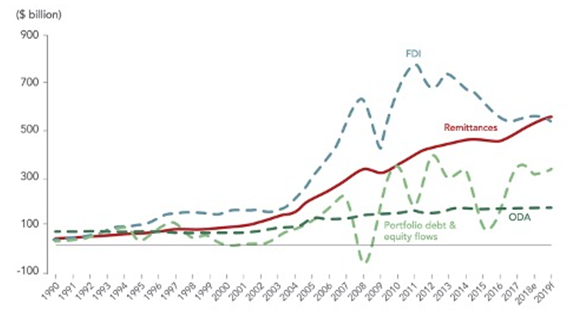
Figure 1. Remittance Flows to Low- and Middle-Income Countries, Official Development Assistance and Private Capital Flows, 1990–2019 (ODA = official development assistance, e = estimate f = forecast) (Source: World Bank staff estimates, World Development Indicators, and International Monetary Fund (IMF) Balance of Payments Statistics [1])
The average income level of high-income countries’ is around 40,000 US dollars compared to 600 US dollars only for low-income countries which are having a ratio of 70:1. For example, if a worker from a country ranked in 80th for income level in the world migrate to the United States, the worker can raise his or her earnings by six times. As ILO Global Wage Report [2], significant income gaps between high-income and low-income countries persist not only in low-skill sectors such as construction and agriculture but also in many higher-skill occupations. High-income countries are in demand for specific types of skilled workers as they cannot provide exceeding services just by themselves. These needs are giving spaces and opportunities to the highly-skilled, even low skilled workers to migrate to high-income countries. For example, nurses make seven times more in Australia than in the Philippines; accountants six times more in the United Kingdom than in Sri Lanka; and doctors five times more in the United States than in Egypt – after controlling for purchasing power parity. The poorest of the poor, however, tend to migrate internally, as they cannot afford the costs associated with international migration. Sometimes, developing countries make more people migrate because this would enable and ease the financial cost of international migration; income gaps would decline eventually. However, this can only be a temporary phenomenon as a country would not want to lose their labor stocks.
Another thought from international migration trends is that after a few decades later, the environmental change would become an essential role of migration because of climate change. Environmental change can affect economic growth in many ways. For example, it could affect the high productivity of a country as agriculture and harvesting. As judged from the factors, international migration trends would be more likely to increase, especially from developing countries to developed countries.
Advantages and disadvantages of International Migration and Remittances
People who move from low-income country to a high-income country are valuable to the world economy. It often benefits to both countries, host and origin country. As I study cumulate results and responses from international labor migration phenomenon with existing literature and case studies, I concluded those advantages and disadvantages to the origin country and host country below.
Host country advantages
1. Increasing human capital. Migrant workers are often more valuable for the host country as developed countries are more in demand for skilled workers.
2. Public purse of host countries broadens. Migrant workers pay more taxes and social contributions than they receive benefits from the host country.
3. Workers from abroad could ease the strained pension system of developed countries as workers will not be benefited by pension or tax refund.
4. Economic benefit. As an example, developed countries could experience cheaper goods and services; houses are clean, babies are taken care of the cheaper cost.
Host country disadvantages
1. Money outflow. Workers send remittances to their family, friends and people in need, which would cause money outflow from the host country. Workers seldom save savings in the host country.
2. The increasing flow of people. The host country will experience adjusting more people in the society, and some sense, quality of living will decrease.
Origin country advantages
1. Reduce poverty. Especially in low-income countries, workers remittances reduce poverty with high numbers.
2. Economic growth. However, it is not certain in any country; most countries are experiencing economic growth by remittances. Because remittances receivers will spend more, and also part of it will go to investment in land, property, savings which contribute to the origin economy and its growth.
3. Fiscal space. Depends on how many workers and how much remittances sent to the origin country; it will create fiscal space for the origin country’s economy.
4. The inflow of foreign currency. Remittances usually sent by most reversible floating currency. The amount of total remittance to the origin country would benefit from the inflow of foreign currency which would support domestic currency performance.
Origin country disadvantages
1. Decreasing the labor force. More labor migrates, the country would suffer from labor shortage which has a negative impact on the country's productivity and further economic growth. As migrant workers offsetting impacts on origin country product, the greater number of remittance inflows to the country should account for a fraction of labor force in the domestic economy.
2. Reducing labor productivity of receivers. Workers family or receiver tend to lose their incentives to work as they compensate for a constant amount of money from workers abroad.
3. Consumption increase. Receivers expenditures will increase. It has predicted that receivers tend to spend more money. For import-dependent country, it will bring trade deficit as remittance receivers spend their money for consumption products from abroad.
4. Overvaluation of the domestic currency. In some sense, domestic currency appreciates against the foreign currency, which will lead the country’s exports will be less competitive in the international markets.
In general terms, international migration and remittances are the gap fillers in the economy. It can assist with many factors in the economy. Depends on remittance receiving countries economic performance and financial system, if it is not developed well, remittances may use for substitution of financial development or support for credit constraints. For those countries with a proper policy environment and developed financial systems, remittances may use for improving physical and human capital, preventing a deficit in the balance of payment et cetera.
Outside of general definitions of migration and migrant, such as those found in dictionaries, there exist various specific definitions of key migration-related terms, including in legal, administrative, research and statistical spheres. There is no universally agreed definition of migration or migrant, however, technical definitions, concepts and categories of migrants and migration are necessarily informed by geographic, legal, political, methodological, temporal and other factors. For example, De Beer [3] defined there are numerous ways in which migration events can be defined, including in relation to the place of birth, citizenship, place of residence and duration of stay. This is important when it comes to quantifying and analyzing the effects of migration and migrants.
International labor migration has been increasing in developing countries as countries open up the gate to other countries. People seek financial benefits from other countries as their country is not potential enough to pay equally as developed countries. Labor migration often refers to total migration as some countries and organizations have different definitions, and also available statistics are unfitted between the two. For statistical purposes, it is common using international migration statistics behalf of pure migration. International migrant’s data includes all who currently employed or unemployed and seeking employment in the residing country. As migrants in a country would exercise in working field as long as they need to pay the cost of living in the host country as in a few cases, migrants from developing countries compensated by their home country.
The benefit of the migration of the country can be identified as workers remittances. Migrants remit because they send money or gifts for those who left behind as a sincere care, social and family responsibility or pay back the cost of migration made in the first place. Remittances have a potential positive impact as a development tool for the recipient countries. Unlike any of private capital inflows, remittances tend to increase when the recipient country suffers an economic and financial crisis, natural disaster, or political conflict. Migrants send more money during the hard times to help their family and friends. A remittance is different from other financial inflows such as FDI and investment by its nature. It has an apparent effect on the current account of the balance of payment of countries.
Impact of Remittance on Economic Performance
The aspect of remittance such as motivation of remittance senders, size of remittance and cost of remittance has widely studied by many economists. However, the impact of remittances on the economy is different in every country due to the macroeconomic conditions are different. The growth effects of remittances can be decomposed into savings, investments, growth, consumption, income distribution and reducing poverty. For the families, remittances are the key source of livelihood as they spend it on food, clothing and housing. Even though the cases differ, some families spend through consumption and some families invest in human capital, the future education of children, savings and real estate investment. For the national economy level, it brings welfare to the economy as well as reduce poverty, generate new standards on the labor market and increases external competitiveness.
Furthermore, remittances can foster a stable macroeconomic environment creating fiscal space to government and it motivates infrastructure and public institutions investment. However, it is up to policymakers to take advantage of these growth opportunities and to use the money transfers to indirectly spur economic activity. In the real world, policy approaches couldn’t sterilize the remittance flows, which makes it unable to find the exact relationship on economic growth. To ensure the remittance flows channeled through economic productivity, appropriate macroeconomic policies will be needed precisely. In particular, easing start-up business climate may be more effective than macroeconomic policies because it will help remittances to flow directly to the investment of productive businesses in the economy.
Many economists expect remittance promotes economy and economic development, although some have failed to find a strong connection between the two. In the worst, remittance act as the negative impact of the economy. This idea has led by the developing countries’ cases where spending of remittance recipients pointed to basic needs such as food, clothing and shelter as an existing apartment rather than productive businesses, investment and savings in that economy. As developing countries spend more of consumption goods and it would increase consumption in the economy which would increase the GDP of the country. But it doesn’t mean the receivers spend those remittances only in domestic products. They are ready to spend on goods imported from foreign countries which would eventually increase the demand for imported goods and services. In this case, a remittance inflow would drag the increase in GDP of the country back.
For instance, Chami [4], covering 113 countries found that remittances had a negative effect on growth. The authors of the study attribute this negative effect on the moral hazard problem that remittances create. Essentially, the study concluded that income from remittances allows receiving families to decrease their own work and productivity, which then translates into a reduction in the labor supply for the developing country.
In a study conducted by IMF [6] about the impact of remittances on growth over an extended period (1970-2003) for 101 developing countries found no statistical link between remittances and per capita output growth, or between remittances and other variables such as education or investment rates. However, this inconclusive result may be attributed to measurement difficulties arising from the fact that remittances may behave countercyclical with respect to growth. Remittance also would have a negative impact on the economy due to housing price or cost of land will increase dramatically. While remittance receiver’s consumption has increased, depends on needs, purchasing house and land will increase. Therefore, there would be some price bubbles in the market due to the excessive demand for certain types of products.
Moreover, researchers found that remittance receivers started to lose their incentives to work. When the receiver receives a certain amount of money in constant let them think that remittance is a stable income. Especially in low-income countries, remittance amount could be higher than the average salary of those who work in the home country. When people receive more and more, they would give up on their jobs. It would drop workers productiveness and efforts. As above cases, remittance cannot be clearly stated as major economic leverage in developing countries’ even though the amount is high as same as countries’ income.
To sum up, remittances has various impact on the economy; increasing household income, developing private sectors as start-up businesses, entrepreneurship and investing in human capital, education and so on. The literature on remittances and economic development can be divided into three possible sections.
Remittances as income generator
Many cross-country studies found and described the relationship between remittances and economic growth. When remittances discussed on the low-income country or developing country, it has been repeatedly said remittance is a way to reduce poverty and provide initial needs. On those economies, remittances are affecting national income through private capital inflow and increasing consumption. Jr. Adams and Page [7] studied the impact of international migration and remittances on poverty in the developing world. In this study, they used the cross-country data to analyze how international migration and remittances affect poverty in the developing world and basic growth poverty model suggested by Ravallion and Chen [8]. This research-based on data set on international migration, remittances, inequality and poverty from 71 developing countries. The results show that both international migration and remittances significantly reduce the depth, severity and level of poverty in the developing world.
In the other study of Giuliano and Ruiz-Arranz [9] had worked on data set of more than 100 developing countries from years 1975–2002 and found that remittances can enhance economic growth only in less financially developed countries. The research concluded that in the economies where the financial system is underdeveloped, remittances may alleviate credit constraints and act as a substitute for financial development. Even when they increase consumption, remittances may increase per capita income levels and reduce poverty and inequality, even if they do not directly impact growth.
On the other hand, large outflow of workers can reduce growth in countries of origin. Nsiah and Fayissa [10] had investigated the relationship between economic growth and remittances through panel data of 64 different countries of African, Asian, and Latin American-Caribbean from 1987–2007. They had employed panel unit root and panel cointegration tests to investigate the exact relationship between remittances and economic growth. They found that there is a positive relationship between remittances and economic growth throughout the whole group. Another study by Vargas-Silva [11], using panel data for more than 20 countries in the Asian region for 1988– 2007, also finds that remittances positively affect home country real gross domestic product (GDP) per capita growth.
Remittances as financial investment
In general, the evidence is mixed with some studies finding that remittances are used mainly to finance investment that are not productive or simply consumed. Study of seven Mediterranean countries, Glytsos [12] finds that investment rises with remittances in six out of seven countries, and in four of these investment rises by more than the initial amount remitted. In the same vein, Leon-Ledesma and Piracha [13] find similar evidence of positive association between remittances and investment for eleven countries in Eastern Europe.
Remittances were found to have a positive effect on cattle accumulation and crop productivity for families of workers in South African mines by Lucas, [14]. Sayan [15] concluded as when remittances are used for investment purposes, they may behave pro-cyclically just as other investment flows do. However, remittances are more likely to be countercyclical in poor countries. Lasagabaster and Maimboand Sriyani [16] have found a positive effect of remittances on growth. They explored that remittances can increase entrepreneurship in the country which will lead to economic growth.
Remittances as human capital development
The common theme in the literature is identifying the impact of migration on human capital outcomes by looking at how remittances are spent by recipient households. In order to remittances to be effective in raising GDP, recipients must invest remittance inflows in the production of human capital such as acquiring education or training to improve their skills. Since remittances are a transitory type of income households tend to spend them more on investment goods (human and physical capital investments) than on consumption goods, and that this can contribute positively to economic development (Yang [17]). In Guatemala, Adams and Cuecuecha [18] used a nationally-representative household data set to analyze how the receipt of remittances affects the marginal spending behavior of households.
Remittances are likely to affect employment and consumption decisions of their recipients as well as the composition of their investment expenditures (Ngoma and Ismail, [19]). From an investment perspective, one feasible indirect effect of migrant remittances has on economic development is its effect on human capital formation through education.
They found that recipient households spend more at the margin on education and housing compared to what they would have spent on these goods without remittances. Acosta [20] found that children from recipient households seem to be more likely to be enrolled at school than those from non-recipient households in El Salvador. In the same vein, Edwards and Ureta [21] likewise found remittances have a large, significant effect on school retention. They estimated that while household income net of remittances has a small impact on the hazard of leaving school in rural and urban areas, remittances have a much larger impact on the hazard of leaving school. Clemens and Tiongson [22] find that migration has important reduced-form effects on households’ financial behavior, including tripling expenditure on education and health, reducing borrowing, and raising savings.
Theoretical approach
For the theoretical approach in the study, a very simple model adopted, namely, a production function and consumption function [23] to address the effects of remittances on the economy. To satisfy certain theoretical sense underlined literature reviews, those basic equations are used to for detailed impact of remittance move the economy ahead. For an economy as a whole, we might think of all the labor and capital used in the economy as producing GDP, the total value of goods and services. A production function is a mathematical relation between inputs and outputs that make an idea of economic growth can be explained as the ability to produce more goods and products. The country’s production depends on how much capital, labor, natural resources and technology they have.
(1)
Y refers to the total production of an economy when it’s in full employment level. Therefore, ability to produce could be explained as those factors and any of factors lead to economic growth.
A refers to total factor productivity which is the overall efficiency of the economy in transforming inputs into outputs. For example, technology will increase productivity, and natural resource is more input which creates more output.
K refers to Capital stock which is the total quantity of manufacturing plants and equipment used in the production. Capital can be valued by different forms such as building, machines, savings and investment lead to more economic growth.
L refers to labor which is often described as a number of people employed in a country. However, workers differ in each country as their capable of working hours, educational background and qualified in certain skills et cetera. As long as capital per worker doesn’t decrease, the increase in labor will lead to more production. Improvements in human capital such as health and education, improve the productivity of labor in the country.
Effect of Remittances
This has needed to be mentioned to because the production function is extremely useful tool for better understanding economic performance and it can be used for explaining the impact of remittances on economic growth. The study stressed on the relationship between remittances and economic growth. An increased migrant generosity, which results in higher remittances, may propel a country to higher levels of per capita incomes or potentially lead it to lower levels of output. As an economic theory, remittance is some kind of capital inflow to the country. If they choose to save or invest the remittances, it will increase capital in the economy, or if they choose to spend all the money, it will also increase consumption of the economy. Both terms support economic growth as the following function.
Production function
(2)
As K, the capital increases output will also increase, consequently it will lead to economic growth.
Consumption function
(3)
as C consumption will increase, investment and saving will also increase in a certain level depend on the nature of the recipient. When either consumption or investment increases in the economy, it will lead to economic growth.
Clearly, the literature on remittances effectiveness can simply be divided into two groups; the impacts on poverty and inequality; and the influences upon investment, macroeconomic expansion and stability. If remittances proceed through investment, they will contribute to output’s growth, or if they spend through consumption, then it will generate positive multiplier effects. In other words, when receivers save and invest more from the remittances, its impact on the economy will be positive as the output of the economy will grow. When remittance receivers spend more on consumption goods and products in the market, those consumption will lead to an increase in aggregate demand in the short-run, as a result, the output will increase.
For some remittance receiving countries, its percentage in GDP is large enough than other foreign aids in the economy which would possibly use for macroeconomic implications. It can enhance the remittance receiving family income at the same time countries will receive certain amount of inflow of foreign exchanges. By generating a constant inflow of foreign currency and increasing foreign exchange reserve in the country, it can improve a country’s creditworthiness for external borrowing and further expansion of financial role in the international capital market. This would lead a country to develop its financial infrastructure by innovative financial mechanisms and other development projects. Meanwhile, constant inflow of remittance can contribute to domestic currency appreciation against foreign currency. However, it will result 2 possible consequences, one is imported consumption goods price would eventually decrease as related to the depreciation of foreign currency, second is exporting goods price will increase in the international market which will have a negative impact on export competitiveness.
Even though the long-term effect of remittances on economic growth is uncertain, remittances appear to ease credit constraints for the undeveloped financial system in the economy and may stimulate economic growth via financing education and health. Unlike the other financial inflows to the economy, such as official development aid ODA and foreign direct investment FDI, the flow of remittance is much stable. It is more likely to grow gradually over periods and increase when the home country’s economic circumstances fall down. Some analysts and scholars argue that remittance benefits are only felt at the individual receiver level, but some case studies suggest that the benefits of remittances to individuals have spill-over effects that can translate into a positive impact on the local economy (Carrasco and Ro, [24]). To the extent that they increase consumption, remittances may increase per capita income levels and reduce poverty and inequality, even if they do not directly impact growth.
Effect of Migration
On the other hand, the large number of outflows of labor workers, especially skilled labor can reduce economic growth. Labor migrants or migrants mean that some people from a country’s labor force left to another country for labor which would decrease the home country’s labor factor. Remittances may also indirectly affect labor supply, by encouraging remittance receivers to lose their incentives to work. A certain amount of constant remittance will impact for those receiving family members to choose leisure rather than labor.
Production function
(4)
as L, migration typically decreases the share of employed individuals in the total population because of the higher concentration of migrants in the working-age population.
This leads to the cut of the labor force and consequently decreases GDP per capita. It could depend on how much workers left the country and how much foreign labor force came to the country; this is going to impact on economic growth negatively. As a macroeconomic theory, where labor is the only factors cannot be replaced by other factors such as capital and land. However, a decrease in L in production function cannot result in a long-term decrease in total output. The home country would experience a shortage of L(labor) in the first place however when capital inflow (remittance) increased, it will converge to a steady-state. In other words, a high rate of migration, along with a high amount of remittances, can lead to an increase in output in the country.
Moreover, there exists differentials in capital per worker and wage of labor in home and host country. For example, assume a skilled worker in home country contributes in output as USD50,000 and compensated USD12,000 each year. That same worker as a migrant contributes in host country for USD200,000 and compensate USD48,000 (example made on assumption of factor that capital per worker in developed countries are often higher.) then the worker remit USD 12,000 or more will either no impact on total output or positively impact on total output.
(5)
if the amount of decrease in L, the increase in K is the same in the total output, there will be no difference and the value of migration can be positive.
Countries receiving a large amount of remittances need to revise appropriate policies to deal with possible outcomes. Whereas policies should focus on sterilization of remittance inflow, encouraging receivers to invest, improve fiscal policy implications and competitiveness of the economy. A decrease in government spending can prevent overheating of the economy in the context of international migrants’ remittances. However, declined government spending need to be equal or much as foreign currency inflow by remittances to stabilize the exchange rate effect. Countries could make an effort to reduce the effect of remittances inflows on external competitiveness by intervening in the foreign exchange market.

2. Migration, Remittances and Economy of Mongolia

Mongolia, one of the developing countries in the world, received only an unnoticeably small share, which is 0.025% of total global remittance flows. However, it has been gradually increasing over time since 1998. Official transaction of workers remittance has recorded in Balance of Payment, Mongolia [25]. The same as most countries, total official and private inflows of remittance records are not able to be measured in Mongolia as individual transactions are popular, technology has improved and facilitated transactions between the countries. It was believed that transaction made by informal channels are significantly larger than transaction made by formal channels.
It has been found that the economic growth of Mongolia has broadly connected to its income generator which is a natural resource production. However, there is another small portion of income which would possibly contribute to economic growth is remittances from workers abroad. There are no studies found on the correlation between remittances and economic growth in Mongolia. This conduct of research initially studied and supported by my own study of the labor migration of Mongolia and its cause of movement. Three possible factors; economic performance, labor market and the unemployment rose to explain the main reason behind the migration. Migrants are increasing as they experience difficulties in attaining a job and doubting economic prosperity and stability in Mongolia. As a free movement of labor, individuals found more benefits and opportunities from foreign countries as wage differences where higher than the Mongolian market. The research believed to provide better understandings on this economic phenomenon in Mongolia.
As economic circumstances, after the collapse of the Soviet Union, the Mongolian economy has devastated with a shortage of high skilled workers [26]. At that time, herding and agriculture were the main leverage of the economy. However, Mongolian economic development has been significantly increased within the help of its abundant natural resources since the beginning of 2000. It turned the country as dependent for its mining sector as 90% of total exports consist of natural resource export. Therefore, economic activity has begun to fluctuate more frequently as the international market price fluctuation of mineral deposits. Despite external shocks that mineral deposit prices and demand in the international market, the country’s economy has been suffered by internal shocks as well. Internally, the country’s financial sector underdeveloped, had unfriendly foreign investment environment and also political argument often raised on mining-related issues. It has not been easy to find appropriate instruments for controlling and managing such a great natural resource allocation. Even though the mining sector was the saviour of the economy, and many people claim that economic development is not going well as its low wages, high inflation and other related problems.
Mongolia has gone through market reform and extensively privatized its former centrally planned economy. Time period of this economic shift is relatively short accounts only 30 years. The initial stage of economic transition started from the 1990s during the revolution of democracy. Mongolia endured deep economic recession by the reform of economic status and extensive privatization. Literatures noted that Mongolian GDP in early years of transition mainly consists of a primary sector which includes livestock and crop production. While the secondary sector, dominated by mining, construction and heavy industries was limited in the 1990s. However, the gradually increasing trend of GDP from 1999 to 2008 is related to the enlargement of the mining sector development of Mongolia. It has become leverage to the development of other sectors consists of wholesale and retail as well as communication and transportation.
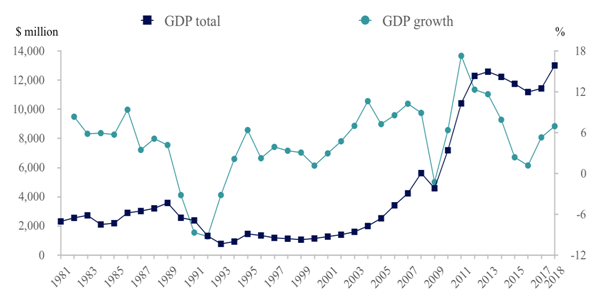
Figure 2. GDP total and GDP growth of Mongolia Annual data from 1981 to 2018 (Source: Data Gathered from World Bank Development Indicators)
More than a decade, Mongolia has been facing a critical economic crisis and a high poverty rate. In the beginning of 2000s, Mongolia has found the extravagant gold mineral reserve in South Gobi of Mongolia. Mongolian government, however had an ongoing big project of gold mining Tavan Tolgoi, copper ore mining Erdenet Mining Corporation, and other molybdenum, coal, petroleum, fluorspar ores and uranium which bring USD 500-600 million each year. The average economic growth of Mongolia was 9% from 2003 to 2007 because the global price of copper and gold production was high. However, by the end of 2008, the economy has been hit by the global financial crisis which brought drastic contraction in Mongolia’s market as GDP growth was only 1.3%. Furthermore, in early 2009, Mongolia reached 236 million USD Standby Arrangement of IMF to tighten financial sector.
In Oct 2009, Mongolia has signed on the long-waited agreement between Oyu Tolgoi and Canadian biggest mining investment company Turquoise Hill Resources (51% of shares owned by Rio Tinto). Oyu Tolgoi when it's in full operation, expected to be one of the top five copper-gold projects in the world and capable of operating for at least 40 years. Total estimated revenue from mineral deposits is USD3 trillion according to the Fisher [27]). Since the project has started, the nominal GDP of Mongolia steeply increased which related to the increase in the foreign direct investment and government bonds were issued just after the biggest mining project [28] has started. At this time, Mongolia deemed as the most potential market in Asia as of attracting 27 billion USD from the international market. Following years, the Mongolia economy had been expanded by 6.37% in 2010, 17.29% in 2011, 12.32% in 2012 and 11.65% in 2013, respectively. The steep growth of GDP was largely on the impact of commodity export and a high government spending. As of dramatic changes in macroeconomic reviews such as rapidly growing GDP, net export and so on the country turned its market to be dependent on the mining sector. Many foreign investors came to Mongolia not only in mining but also in construction, finance and health sectors.
GDP growth, however, couldn't continue to rise forever, has started to slow 7.89% in 2014, 2.37% in 2015 and fall to 1.17% in 2016. Since 2014, the Mongolian economy has suffered from a macroeconomic crisis. Yet, the main reason of falling down of the economy in 2014 was low commodity export than ever before with the government’s overspending. The government spent like as if commodity exports could transform Mongolia into a Dubai overnight. In contrast, Mongolia has spent much of revenues on public welfare and infrastructure of paving around the vast land even its not being used. A high government spending, high consumption importing goods compared to its small net export slowed GDP growth of the country. Furthermore, the economy has unstable factors such as demand of commodity goods are largely depending on the external market, political instability and low performance of Mongolian currency. Perhaps, Mongolia was too vulnerable and not ready to absorb such a huge investment from abroad. The financial system, the banking sector, fiscal management and financial disciplines were unqualified when the economy is booming. Government issued billions of sovereign bonds within high-interest rate. Foreign investors started to question for further expansion of OT project and the mining sector as well as market size was too small for the rest of the markets like real estate, trade, finance and banking et cetera.
Since 2015, Mongolian government tried to restore investors’ confidence and pushed OT underground project II, which would double the national income, to support the economy as rising commodity export and probably issuing more bonds relied on the project. At the end of 2015, after signing the agreement with Turquoise Hill (Investor of OT project), over 20 international banks and financial institutions were agreed to Mongolian government request of financing 4.4 billion USD to the OT project phase II. At the end of 2016, the debt to GDP ratio exceeds 79%, which requires the Mongolian government to ensure the future, as the worst case would be economic default.
To recover the economy, Mongolian government took a multi-donor financing package of USD 5.5 billion bailout from the IMF in 2017 [29]. The extended fund facility program aimed to restore financial discipline, stabilize the economy, reducing sovereign debt to GDP. IMF bailout was secured Mongolia from banking crisis as Mongolia due to pay its first sovereign debt of USD 580 million in Mar, 2017 and another USD 400 million in Jan, 2018. During the crisis, and IMF bailout was made Mongolia to be on list of B3 in Moody’s [30], the IMF predicts GDP growth of Mongolia in 2017 to be o.1%. However, Mongolian GDP growth was 5.3% in 2017 and 6.95% in 2018. In the first half of 2019, Mongolian GDP growth accounted as 7.3% which exceeds the previous year’s growth. Growth directed with resurgence in coal prices in the international market. Following the rise in mining sector of Mongolia, Mongolian government has started to reinvestigate OT projects agreement into corruption surrounding the investment agreement. However, the surging mineral product production of ever-increasing gold and copper, the future looks fairly certain to grow in the future. The demand for those products believed to be continuously robust and Mongolian economic growth should not be underestimated.
Labor supply and demand in Mongolia
Dated in 1921, the most Mongolians were herders as a traditional job nature and monks as the last King of Mongolia Bogd Jivzundamba Khutagt was the leader of the revolution and representative of the Buddhist religion of Mongolia. Foreign labor workers played a major role in the development of the Mongolian economy. Russian and Chinese workers accounted for over 50% of the total labor force in the industrial and construction sector such as roads, apartments and bridges building.
As Soviet splits, all foreigners except Soviets in Mongolia forced to leave the country immediately. Following, Mongolia faced transforming the labor force into a variety of job occupations required by a modern economy. There were labor shortages, illiteracy, inconsistencies in official hour works. However, the labor force has been changing slowly. After World War II, Mongolia has experienced the major transformation of labor force associated large-scale industrialized and cultivation agriculture which makes over 60% of the labor force in the agriculture and forestry sector.
As years of 60s, labor market began to diversified into animal husbandry products, crop raising, transportation, banking and financing, telecommunication and mining within the assistance of Soviet. Many Mongolian-Soviet joint-stock companies established and Ulaanbaatar became the industrial center of the country. It has reported [26] that over 32 thousand Soviets, 15 thousand East Europeans were working in Mongolia. When market expanded, capital city of Mongolia, Ulaanbaatar began pushing industrial plants out of city to other cities near the capital.
In late 1980 up until 2000, the Mongolian labor force has managed by the State Committee on Labor and Wages. Major objectives were filling with all kinds of job with professional workers, positioning appropriate personnel to correctly functioning the economy at full employment, balanced number of workers with available jobs, increasing labor productivity in all sectors. State Committee on Labor and Wages analyzed estimated number of total work and its distribution to the sectors, most importantly given the rights of free choice of job occupation to all employees. Workers choose occupations and also choose commitment time of working period. Workers guaranteed additional training, housing and other benefits. The decision has enabled Mongolian to be trained mostly in technical studies abroad. In 1985, Mongolia had 40 training courses within enrollment of over 27 thousand. Many Mongolians sent to Soviet and other Soviet Union countries to took training courses in various of studies. By 1988, approximately, 10 thousand students and approximately 52 thousand specialists with high education were studying in Soviet Union countries. As a result, the Mongolian labor force increasingly educated and professionalized in technical skills.
Contemporary Mongolia is one of the least populated countries in the world. As its 3.3 million people, the labor force of Mongolia accounted as 1.3 million people. When Mongolian whole economy itself has transformed into a vibrant democracy, educational achievement is broadening as many Mongolian completed their secondary school, high school and university level of education as compared to the 1920s. Along with increasing export and national income, the country created variety of jobs without over-relying on the mining sector.
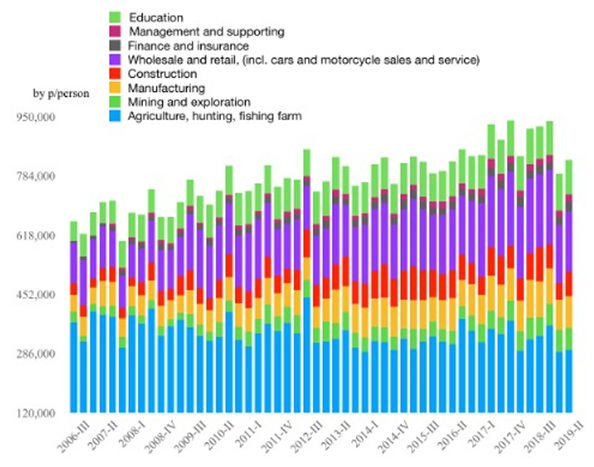
As following shift to market economy, labor participation in market sectors are beginning to change gradually. As describing Mongolian labor force participation in different sectors; agricultural sector employment has dropped over 20% over 10 years, industrial sectors including mining, manufacturing and construction sector are continuously increased over decades. Moreover, service sectors that are wholesales and retails dominated among the workers as self-employment has been rising in the market.
Figure 3. Number of Mongolian labor market participation chosen top sectors quarterly data from 2006Q3 to 2019Q2 (Source: Data Gathered from National Statistical Office of Mongolia)
Number of labors in this period of time increased 74%. In 2019, over 23% of the total labor force is employed in the agricultural sector, compared to 43% in 2006. While share of Mongolian working in agriculture is decreasing, it is still the main sector of employment. Among the labor participation rates in the market, the most increasing occupation is in finance as participation rate has rose by 3.4 times, the second and third are mining and construction sector as of 1.5 times over 13 years. Other sectors such as wholesale and retail, manufacturing and education sectors are having same percentage of increasing workers. Average percentage increment in those 3 sectors were 72%.
Example of rise in the Mongolian labor market participation in the mining sector can be described with a case of Mongolian biggest mining company Oyu Tolgoi. The company has reported in its 2018 report [31] about its salary expenditure has reached USD8.3 billion from 2010 to 2018. Monthly average salary of a high-level engineer in the company is USD7,243 and below managerial level workers average salary is USD1,572 per month. This amount is approximately 6 times bigger than state employees. Foreign invested companies are having doubled, or tripled higher salary compared to the other domestic companies. This trend has attracted many workers in mining and finance sectors.
Unemployment in Mongolia
The unemployment rate of Mongolia could be the key source of labor migration towards abroad. Individuals who cannot find a job are a major concern because they lack the resources necessary to sustain their families. The unemployed are a resource that the country is wasting, as they could be devoting their time productively.
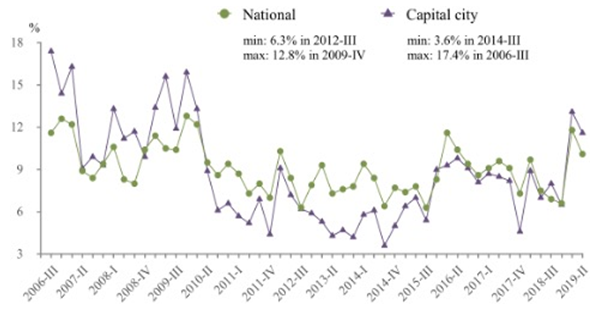
The unemployment rate in the capital city Ulaanbaatar is 11.6%, and the national average is 10.1% by Q2, 2019. Unemployment in the capital city due to unfamiliar with the job, having seasonal job or involved in short-term projects. As young people, they need some time to find their first job because of lack of experience and skills for certain practices. Outside of capital city, province centers suffer high unemployment rate because of underdevelopment, but countryside areas are less affected which has related to all family members are contributing their herding and agriculture, they do not need to search for another job.
Figure 4. Unemployment level of Mongolia quarterly data from 2006Q3 to 2019 Q2 (Source: Data Gathered from National Statistical Office of Mongolia)
Unemployment rate is found that it is decreasing in both state and capital city over time period of 2006 to 2019. Circumstances back to 2006, there was 17.6% of unemployment rate compared to 11% in national level of unemployment. It has been gradually decreasing since then, and from Q4 2009 to Q2 2010, the unemployment rate has dropped by 3.3% in national level, 7% in capital city. This dramatic drop was associated with the biggest mining in Mongolia, Oyu Tolgoi has started its construction and employs a large share of the labor force. Depends on the poor economic performance in recent years, unemployment rate has predicted to increase. As of the latest data, unemployment in Q2 2019 is 10.1% in national level, 11.6% in the capital city. Mongolian unemployment rate could be much higher in real situation because the law stated that a person who is looking for a job but he or she involved in herding or agriculture, would count as employed.
International migration of Mongolia
Centuries ago, migration flow was much more limited than today’s globalization period, however, restrictive policies for the marginal migratory flows are remaining due to the return rate of migration is relatively low for the receiving countries. Since the 1990s, developed countries played a key role in fostering income convergence as receiving many skilled workers from developing countries which also they have demand for its huge industrialization. Following, immigration policies have been developed, more importantly skilled workers are favorable for those countries. Such migration trend will raise a major concern for sending country as they possibly face the brain drain as the receiving country deprive of their most skilled and talented workers. It is the case of there will be loss of skilled and unskilled labor which decreases the output of the country for less populated country like Mongolia. However, it could be alleviated in two cases. First, migrants may return home country with developed skills and it will benefit the growth of home country. Secondly, highly skilled migrants will generate more income in received country therefore it will increase the flow of remittance that may relieve the foreign exchange constraints in the home country.
The study of the movement of people of Mongolia [32] and its destination country would support the main topic which is migration and its remittances impact of the economy. The importance of international migration of Mongolia is to capture and highlight the impact of regional movement and the actions of Mongolian people. Since 1923, Mongolia has diplomatic relationship with 188 countries, all Mongolians had right to migrate to foreign countries freely as before the country historically adopted restrictive immigration policies. Law of migrating to a foreign country has changed 13 times from 1993 to 2019.
International migration of Mongolia covers many discussions such as labor migration, study and living purpose migration, other types of migration and illegal migration as International Organization for Migration (IOM) defines the “migrant” as someone who lived in a country other than his or her country of residence or citizenship. Therefore, both of legal and illegal will be counted as migrants. Legal migrants, generally those who left the country for other countries’ citizenship or usual residence within extended periods of time. However, the case of illegal migrants includes broaden area such as students can become worker without an appropriate visa, the regular resident can overstay in a country without a warrant, or undocumented migrants.
Recent years, international migration study become widely associated with economic development in order to trace migrants’ economic benefit to the home country. Because migration brings material and psychological assets to migrating persons family, friends, relatives and acquaintances by income, employment skills, remittances, savings and cultural effects. It is hard to point single measures to describe migrations impact on economy however studies mainly focus on remittances as it can be captured quantitative data. Migration and its costs and benefits are unevenly distributed on both countries’ (origin and destination) economic development, but many studies have shown a positive impact.
International migration shares of Mongolia would remain very small in East Asian countries. From the perspectives, Mongolian small number of migrants has both positive and negative impacts on international migration. Positive impacts are there would be less emigration and less immigration associated problems, followed less costs for social provisions to support those migrants, limited cultural frictions, less visa violations and misunderstandings between the countries. As the negative side, Mongolia will receive very little benefit from remittances, employment, education and professional development from overseas country and local tax collected from Mongolian workers will be very less in destined countries. Mongolia has been trying to benefit from the international migration, and the flow of migrants has been increased over time. International migration has various reasons, such as job opportunities, improved living conditions and facilities, climate change, higher education and so on. However, the fundamental reason of migration is related to the economic reasons, in search of employment. The most of migrants received their initial knowledge and understanding about their destination countries from their family members, relatives or acquaintances who had returned from living overseas.
Destination countries
Underlined on the economic circumstances, many Mongolians migrate to other countries. According to the Ministry of Justice and Internal Affairs [33], total of 175,687 Mongolian nationals are residing more than 3 months in 76 countries by the year 2018. The number includes all legal and illegal residents in abroad. This means one in twenty Mongolians are living in abroad. It is difficult to find actual number of labor migrants abroad due to the many Mongolian are visiting other countries by tourism, study and other but working illegally. Mongolia does not have an accurate time-series data for international migration given the fact that this is a complex phenomenon.
Mongolia is exporting labor to several countries such as South Korea, Australia, United States, Japan and the Czech Republic. While Mongolian number of labor workers (especially those who are willing to labor migrate) are relatively high when it compared to the host country’s labor demand. As mentioning just one example, over 2,000 Mongolians labor workers go to South Korea based on two countries labor agreement each year. Unfortunately, this is approximately 4 times less than total illegal workers in South Korea.
The most frequent destinations of Mongolian migrants are South Korea, United States, China, Japan and Australia.
1. South Korea - Over 46 thousands of Mongolians live in South Korea, and its 5 thousand are students, 9.5 thousand are working illegally with legal status. Mongolians residing in South Korea as an illegal way, and those illegal migrants do the most difficult and dangerous jobs in the factories without any medical insurance. As from the cases of illegal workers, many of them suffered from the industrial accident, accomplice in crimes or become victims.
2. United States of America - Over 30 thousand citizens are living in the United States. Majority of migrants have relatively high education as motivation of migration most likely to become a student. 60% of citizens enter the US as a student, 34% as tourists and only 3% entered as working visa. Most of migrant’s, they have found their job in stores, restaurants and dry cleaning. Over 45% of citizens are living in the US with their family.
3. The People's Republic of China - As of third most migrating destination China, the majority of migrants are students. 10 thousand people are permanently residing in China by 2019. Any of illegal working hasn’t detected. China is the top receiving country of students from Mongolia, each year over 200 students grant Chinese government scholarship. As our top trading partner, neighboring country and also a fast-growing economy of China has been attracting many Mongolian students to learn Chinese language and culture.
4. Japan - Around 9,794 Mongolians are settling in Japan for over 6 months. Japan has worker agreement with Mongolia. Mongolia and Japan have mutual cooperation with agreement on sending and accepting skilled workers to Japan from Mongolia. All Mongolian who enter Japan as students are allowed to work in a part-time job. This could be the main reason for many Mongolians destined to Japan.
5. The Czech Republic and Other countries – Total of 9,369 Mongolians are in the Czech Republic, 8,000 in Kazakhstan, 7,700 in Sweden, 7,600 in France, 6,500 in Australia, 6,000 in Germany and other 23 thousand people are living in Canada, England, Turkey, Russia, Austria, Hungary and other countries. The European Union countries are maintaining a strict policy and allow only investors, highly educated personnel, and students. However, Mongolians go to Germany, France, and Switzerland more likely to immigrate and when they are not allowed to remain, some started seeking political asylum and making false claims about Mongolian government and other political related issues.
Figure 5. Total Number of Mongolian People Reside Abroad from 1999 to 2018 (Source: Data Gathered from National Statistical Office of Mongolia)
As the graph shows, the international migration and mobility of Mongolians are growing exponentially from 1999 to 2018, approximately 3.7 times bigger and a percentage of migration over total population increased from 1.5% to 4.3%. In the beginning of 2000, especially in its third consecutive years of 2002 to 2005, the number of migrants has rocketed from 52 thousand to 138 thousand. This trend may have associated with the Mongolians movement to South Korea, Great Britain and Sweden has increased (according to Tsuneo Akaha, 2017). While it had been decreasing in the following 3 years up until 74 thousand, it again raised to 113 thousand in 2010.
The increasing trend of international migration of Mongolia is bringing many challenges to the government such as a shortage in labor supply, illegal immigration problems like visa violation, and migrants rights et cetera. Migration has been affecting all level of country’s factors such as social, economic and political. regulating migration has become the key issue. As any reasons of departure of the country; training, education, labor and investment in a foreign country needs to return back to the home country. Return level of Mongolians is low as migrants are having difficulties to settle down, finding expected salaries and jobs, immersing in the society.
There is no doubt that the number of Mongolian migrants will keep increasing in search of economic, educational and social opportunities in other developed countries. As a large share of migrants are influencing to the whole economic factors of Mongolia, it is important that securing those migrants safety and protecting human rights especially on those illegal workers abroad. As a small populated country, the impact of those migrants (4% of total population) is relatively big and their materialistic support bring or expected to bring better conditions for those who left behind. Mongolia will likely remain to migrate in South Korea and the United States because of high wages, economic ties and educational purposes. However, the international migration of Mongolia is expected to increase wider throughout the world.
Official remittance flows to Mongolia
According to the World Bank Report [34], remittances to Mongolia is accounted nearly USD0.4 billion which is a share of 0.3% of total remittance flow into East Asia and Pacific countries and 0.06% of global. For instance, in 2018, Mongolia has included in the top 10 remittance receiving country in East Asia and Pacific region. For that reason, Mongolian economic growth and remittances should be aware in the economic context.
Associated with international migration towards foreign countries from Mongolia, the country’s individual transfer of remittances has been recorded. Each year, as those number of migrants increase, remittance flow to Mongolia has also been increased. Even though remittance flow is quite stable and having natural growth, those inflows in terms of USD would affect the macroeconomic situation in Mongolia.
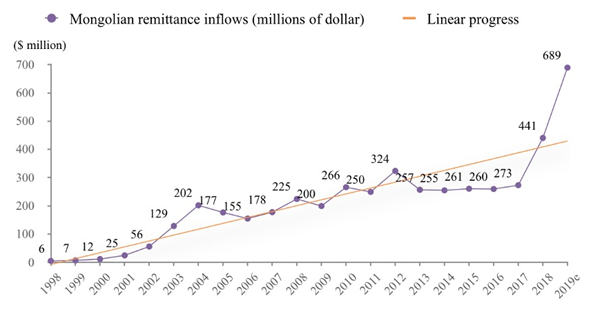
Figure 6. Amount of Remittance Inflows to Mongolia from 1998 to 2018 (includes 2019e - the expected value of remittances in 2019). (Source: Data Gathered from World Bank Remittance Report 2019)
Since the beginning of time of migration phenomenon, the total amount of remittances constantly increased. In the early years from 1998 to 2003, Mongolian remittance inflows were being doubled and rapidly growing. Up until 2011, within a fluctuation in an increment of remittances, it had stabilized in 2013. It is noticeable from the graph that international remittances had rocketed in the year 2017 and 2018. According to this World Bank data [33], expected remittance in 2019 set very high as almost 50% increase from the previous year.
The orange line describes the data trend of standard increment in the whole period of time. The orange linear progress shows that remittance in the first hand, USD 6 million and grown steadily until USD 440 million. During the 21 years of receiving remittances flows, Mongolia has been experiencing the highest growth in recent years. During the period of 2011 to 2018, remittance flow increased from USD 250 million to USD 441 million which is almost doubled.
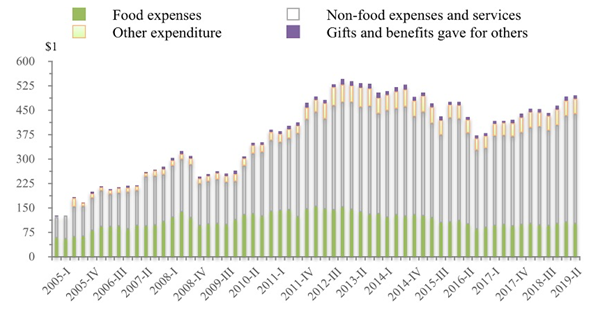
It is unclear that remittance inflows have a positive effect on the Mongolian economy. Even though the amount of remittance has been growing rapidly in recent years. As of macroeconomic theory, remittances have certain effects through GDP as increasing private consumption, investment and fostering foreign exchange pressure to the economy. In other words, remittance receivers spending will rise, whether it will spend on food, clothing and housing or an investment and other financial expenditure. It will rise up private consumption and investment which will lead to an increase in GDP. In some countries, remittances inflow has obvious influence to the economy due to the amount of remittances are equal or higher than its foreign direct investment and composing the biggest part of GDP. However, the case of Mongolia remains uncertain due to remittance inflow to Mongolia is accounted for an average of 3.5% of total GDP. Household consumption of Mongolia can help to understand remittance-receiving family expenditures and consumption behavior [35]. The consumption is divided into three main categories which are food expenses, non-food expenses and services and other expenditures.
Figure 7. Per Household Consumption Breakdown of Mongolia quarterly data from 2005Q1 to 2019Q2 (Source: Data Gathered from National Statistics Office of Mongolia)
Through the chart, it can be seen as non-food expenses of household is rising dramatically compared to food and other expenses. Mongolia is not an industrial country for its commodities consumption. Mongolian ratio of importing good demands versus domestic consumption is very high. Therefore, the figure can be restated as increasing consumption on food and non-food expenses will increase the demand of import. According to the data description, non-food expenses refers to commodities spending such as clothing and home appliances. Other expenditure refers to savings and financial expenditures.
From the figure, there is one possible negative effect which is the remittance would increase the demand of foreign goods and services. Because Mongolia is importing country as 80% of total consumption goods are imported from foreign countries. In this case, remittance expenditure will also increase the import demand and which will further enhance the net import to the country. Even though the import demand has increased, foreign currency demand would not be affected significantly due to the most of Mongolian income transactions (foreign direct investment, government bonds and remittances) made by US dollars.
Remittances to Mongolia recorded by US dollars, as inflow to the country it will alleviate the exchange rate pressure to the country. In the results, it seems to exchange rate of Mongolia would drop and domestic currency would appreciate against US dollars. However, in the real case, Mongolian tugriks continuously depreciate in the last 10 years. Therefore, the impact of the remittance on the foreign exchange would not potential enough to stabilize exchange rates.

3. Research Methodology

Currently, to the best of my knowledge, there is no paper studied the impact of remittances through economic growth setting in case of Mongolia. Therefore, this thesis fills the gap in current literature and investigations on the response of regression. Mongolian workers abroad especially their remittances contribution on the economy and its studies have been neglected. However, in international cases, many economists and analysts have discovered that remittance has certain endowment, especially in developing countries. Remittance can help the economy to maintain and promote as it has deemed as support of consumption and investment. The research has a simple linear regression model using the econometric method to estimate the relationship between remittances and economic growth of Mongolia. It will estimate the relative significance of factor that remittances on output growth among Mongolia overtime period of ten years quarterly data.
While researching on different countries cases about the impact of remittances on economic growth, most of the regressions have been used certain variables; such as export, exchange rate, consumption, employment level, education, trade, government debt and trade. However, I have chosen 3 variables which are exports, consumption and unemployment rate as consisting theoretical basis. Furthermore, the chosen variables were potential to describe the main dependent variable where they are not correlated theoretically. After numerous regression and tests, I have chosen those 3 variables to express the main idea and compatible with the main dependent variable GDP and uncorrelated with the main independent variable Remittance.
In this study, data for all variables were collected from the statistical information published by the National Statistics Office of Mongolia (NSO) and the Bank of Mongolia (BOM). Data set includes the most recent time which is the period from Quarter 1 of 2009 to Quarter 2 of 2019. It is recommended by the international studies to test the stationary of the data when it is having a large sample size, however, this data is not so huge. In order to explore the relationship between workers remittance and economic growth of Mongolia, Ordinary Least Squares (OLS) regression analyzes employed as studies of international economic researches, published materials and quality journals have used simple regression to investigate the impact of worker remittances on economic growth.
To determine the responsiveness of economic growth by remittances, the regression model was the following:

(6)
Dependent variable has explained by 4 independent variables; including 3 control variables. Data set in the ten years period with the quarterly dividend from 2009 to 2019. The dependent variable was the rate of change of the real GDP and the independent variable was the received remittances because the main objective is to study the impact of remittances on the economy. To control for endogeneity, I addressed the problem of the omitted variable by adding three control variables in the model, that have an impact on economic growth: Net Exports, Private Consumption and Unemployment rate. Where represents the constant term or the intercept and t represent the analyzed years.
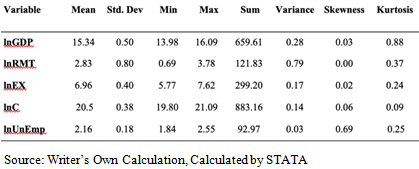
Table 1. Summary table
     
The thesis addresses a straightforward question that is “Does remittances have a positive effect on the economic growth of Mongolia?” the expected answer is “Remittance inflows has a positive effect on the economic growth of Mongolia”. Where remittances are the secondary income of the country accounted in the current account of Balance of Payment. As an inflow to the country, the remittances have expected a positive influence on economic growth. Therefore, I arise my hypothesis as if remittance inflows increase then the economic growth will increase. On the other hand, the null hypothesis will be “In a given period of time, a growing number of remittance inflows has no effect on the economic growth.”
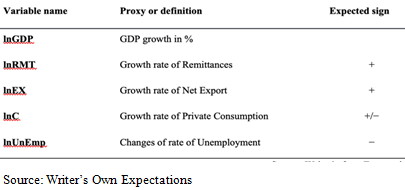
Table 2. Variable description and expected results
     
The independent variables’ expected sign on the regression has shown above. The theoretical relationship between net exports to economic growth is positive. As an exporting country, the GDP of Mongolia consists mainly by its net exports than its investment. Therefore, variable lnEx which is the growing rate of net export predicted to have strong and positive relationship to the economy. Following, the growth rate of consumption’s expected sign is having both positive and negative. Consumption’s effect on the economy is ambiguous as economic theory as increasing consumption will increase the total Y consumption of economy however eventually, high consumption will lead to high demand for foreign goods and services when the domestic supply of goods and services are nonpotential to the needs. As an expected sign for unemployment is negative as the theoretical explanation of the relationship between unemployment and growth is negative.
Empirical results and interpretations
To estimate the parameters corresponding to variables of interest from the data under consideration, I employ an empirical exposition of which is provided in the main model.
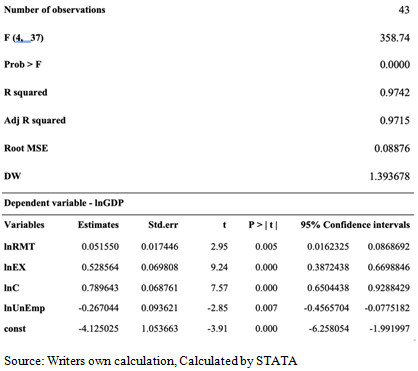
Table 3. Empirical regression results
     
Regression result above explains the relationship between the remittance and GDP of Mongolia whereas other variables set to the control variables. The entire model has taken log form as an effective growth rate. Independent variables are explaining the model’s dependent variable as 97.42% which is highly considerable. Adjusted R2 means that the estimated model explains 97.15% of the variance of the dependent variable (GDP growth). T values test the hypothesis that coefficients are different from 0. All other variables, t-value is over 1.96 (for 95% confidence intervals) which shows a significant influence on the dependent variable GDP. As all parameters are statistically valid as p-value is less than 1 percent in each variable.
The model expresses the impact of remittance inflows on economic growth, where it is clear that remittances have a positive impact of Mongolian economic growth. Remittances coefficient is statistically significant with positive sign means that remittances enlarge the economic growth when other variables are held, increase in remittances with 1 percent change increases GDP by 0.05%. The estimates for the growing rate of net exports, private consumption and unemployment are statistically significant and have the expected signs. A growing rate of export with 1 percent increases GDP by 0.52%. While the increasing rate of private consumption with one percent of GDP rose to 0.78%. The logarithm of the unemployment rate has a negative sign to the Mongolian economic growth as 1% of increase of unemployment in Mongolia can drop 0.26% of GDP growth rate. So, in the above table clearly seen as statistically significant variables that are affecting the economic growth of Mongolia. It rejected the null hypothesis because alpha test F is equal to 0.
After performing OLS regression, I run some estimation tests to check the current method of study is describing the best results. The statistic tests the null hypothesis that the residuals from an ordinary least-squares regression are not auto-correlated against the alternative as the Durbin Watson test run, a value of d-statistic (5, 43) = 1.4 which indicated non-autocorrelation. Moreover, the regression model obtained a mean VIF of 2.72 meant that the model didn’t have a multicollinearity problem. Normality of residuals by kernel = epanechnikov, bandwidth = 0.0358. The result of the test for heteroscedasticity within White’s test, the results are shown as chi2 (14) = 26.56, Prob > chi2 = 0.0219, to reject the null hypothesis of the variance of the residuals is not homogenous within constant variance at 5% significance level. As all of these test results, the model has proved to be the best among the other versions, and the regression model of OLS method has shown appealing predicted result which supports the research’s main idea and concerns.
Results and conclusions of methodology
The thesis methodology was conducted to explore the impact of remittances on the economic growth of Mongolia and utilized simple linear regression analysis of the OLS model applies with quarterly data from 2009 to 2019. Total observation number is 43. The model has shown the result that indicates two main variables economic growth and remittances are positively correlated. In the specifications of total 4 variables were explained the dependent variable by 97% which is a very high correlation. Remittances found to be statistically significant and positively correlated with growth. The equations intercept stood at negative 4.1% which is different from 0.
An added three variables in the model; the net exports private consumption and unemployment besides remittances. In particular, a variable Private Consumption has shown the highest coefficient to the regressor as statistically significant. Within 1% increase in private consumption will generate additional 0.78% of economic growth. Other variables such as export and unemployment reach the theoretical expected sign and statistical significance. Export with 1% increase will shift economy as 0.52%. While unemployment will negatively impact on economic growth as 1% increase in unemployment affect 0.26% drop in economic growth.
Different diagnostic tests are applied in order to confirm the major assumption of regression analysis like autocorrelation, normality, multicollinearity, t-test and heteroskedasticity tests. During the various tests for the OLS model, the model results have been rejected the null hypothesis, all variables have shown as significant to the growth. The regression results derive and supported the assumption of remittances are significant to the economic growth of Mongolia. And rejected the null hypothesis of no effect but had a positive effect of the growth of the economy.

4. Conclusions

The remittances have become a popular issue in the international trade and macroeconomic literature over a decade because of their volume and potential condense to poverty. Recent literature has posited that a positive relationship exists between remittances and economic growth, capital accumulation and poverty alleviation of recipient countries. Though the results seem varied, most of them utilized cross country or panel data and therefore, they are required to validate further into country’s specific case studies. At the very least, it has been demonstrated that remittances differ greatly from foreign direct investment and exports in terms of their motivation and their effects. In this study, it was investigated whether there is any impact of migrant’s remittances on growth in the Mongolian economy. Whereas Mongolia has been one of the remittance receiver countries throughout the last twenty years and increasing rapidly as becoming the largest recipient country in East Asia, it is reasonable to think that remittances are able to have a meaningful impact on the economic growth of Mongolia.
However, unlike some other developing countries in East Asia, remittance inflow in terms of the amount of money was not major leverage and income to the Mongolian economy as compared to its export and investment in GDP. The substantial amount of remittances is taking approximately 3.5% shares of the size of the economy which is a very small percentage. But the main thing is remittance’s productive usage and its impact cannot be neglected as it can help the economic prosperity and growth through condensing poverty, increasing remittance-receiver household’s income, consumption and human capital index. Generally, when the people’s income increased people tend to spend more which will increase consumption demand, and researches have shown significance for human capital as families who receive remittances are more to spend on education for their children for example and more to invest.
To sum up this, the inflow of these remittances has financed private consumption, domestic investment and contributing to national savings and reduces pressures on the current account and support economic growth in the result. Therefore, remittance doesn’t matter how much is the total amount, its economic significance is very high. Though seems quite difficult to conclude that remittances positively impact on economic growth, because in some extent, remittances start boosting negative impact as the consumption demand lead to importing goods demand increase, reducing domestic labor supply and demotivating remittance receivers’ incentives to work. As study has included that international migration outflow of Mongolians, showed that there are very high percentage of migration; approximately 175 thousand Mongolians residing abroad which means 1 person in every 20 people are living abroad. Top 5 destination countries of Mongolians were South Korea, United States of America, the People's Republic of China, Japan and Czech Republic; as those countries receive around 70% of total migrants of Mongolia. This has affected by the macroeconomic situation that aside from labor supply there are potential unemployment rate in Mongolia as accounted for over 10%.
The country is very unique within its structure of labor market as the herders and agricultural dominates in the labor participation over 30%. Anyone who participates in herding activities counted as employed, whereas it makes more complicated that unemployment level of the country could be worse than it seems. Many young talented people have started migrating to other countries to develop their skills, finding good job opportunities as of Mongolian market has hugely relied on its mining sector. All of these matters in some point view, contracting to the economic growth even though there is potential increase in remittances are keep flowing to the economy. Therefore, it was important to examine the impact of remittances on economic growth of Mongolia using econometric analysis which supported the article’s main idea.
The methodology of the thesis employed multiple linear regression using OLS method and estimated the relationship between remittances and economic growth including other control variables (net exports, private consumption and unemployment). And the empirical results have shown that the correlation between two variables were positive as 1% changes in remittances will generate an additional 0.05% growth on the economy. The analysis results were consistent with the research’s main raised idea and major assumption is that remittance’s positive impact has effective through increasing private consumption as well as a financial investment. The findings of the result would assist the government to implement correct policy and strategy on the remittances. Additionally, this significant effect on economic growth will bring individuals spending of remittances to be in the center of attention.
The positive effect of remittance should be encouraged; therefore, the government will need to set a goal to promote motivation of remittance senders, facilitate way of transaction and further. However, it was impossible to perform any actions without the research. This study focused only on the relationship between remittances and economic growth, and initiate and motivate the researchers to study further about this new phenomenon in Mongolian economy in the first place. As any research work, this article could be improved and extended into various directions.

ACKNOWLEDGEMENTS

The article writing was difficult for individuals, but it was finally completed successfully within the help of my supervisor.
First and foremost, I wish to express my sincere thanks to my supervisor Prof. Wang Shifen, thinking back to the entire progress of my work and determining the direction to the completion of the writing. I learned a lot from this research writing and realized the importance of professional knowledge of academic research. It was the mentor that influence me to fully aware of research skills and attitude towards study.
Secondly, Shanghai University is also very important for the development of my postgraduate study ability. During the years of studying at Shanghai University, I have regularly participated in various academic discussions and lectures organized by the school, and often felt the excellent academic ability and academic style of Shanghai University, which really made me realize my growth. Therefore, I must express my most sincere thanks to Shanghai University, its teachers, classmates, and friends.
Finally, my thanks also go to my family and my friends who made this experience as enjoyable as possible. Thank you for your support and encouragement.
Thank you very much.

References

[1]  Figure 1.1. Remittance Flows to Low- and Middle-Income Countries. Adapted from “Migration and Remittances” by World Bank Group, Apr 2019, Migration and Development Brief 31. Washington, DC. April.
[2]  Global Wage Report 2012-13. Retrieved from http://www.ilo.org/global/research/global-reports/global-wage-report/2012/lang--en/index.htm.
[3]  De Beer, J., J. Raymer, R. van den Erf and L. van Wissen. (2010). Overcoming the problems of inconsistent international migration data: A new method applied to flows in Europe. European Journal of Population, 6(4): 459–481.
[4]  Increasing the Macroeconomic Impact of Remittances on Development, Dilip Ratha and Sanket Mohapatra Development Prospects Group The World Bank, Washington D.C. 20433, November 26, 2007.
[5]  Michael T. Gapen, Mr. Ralph Chami, Mr. Peter Montiel, Mr. Adolfo Barajas, Connel Fullenkamp Do Workers' Remittances Promote Economic Growth?.
[6]  IMF (International Monetary Fund). (2016). World economic outlook 2016: Subdued demand: Symptoms and remedies. Washington, DC: Author.
[7]  Jr. Adams, R.H. and J. Page. (2003). The Impact of International Migration and Remittances on poverty. The World Bank. Retrieved Jan 20, 2019, from http://urban.probeinternational.org/impactinternational-migration-and-remittances-poverty.
[8]  Ravallion, Martin, and Shaohua Chen. 1997. “What Can New Survey Data Tell Us about Recent Changes in Distribution and Poverty?” World Bank Economic Review 11(2): 357–82.
[9]  Giuliano, P., and M. Ruiz-Arranz. 2005. “Remittances, Financial Development, and Growth.” Working Paper 05/234. The International Monetary Fund, Washington, DC.
[10]  Bichaka Fayissa & Christian Nsiah, 2011. "Remittances and Economic Growth in Africa, Asia, and Latin American-Caribbean Countries: A Panel Unit Root and Panel Cointegration Analysis," Working Papers 2011.03, Middle Tennessee State University, Department of Economics and Finance.
[11]  Vargas-Silva C, Jha S, Sugiyarto G (2009) Remittances in Asia: Implications for the fight against poverty and the pursuit of economic growth, ADB Economics Working Paper Series.
[12]  Nicholas P. Glytsos (2005) "The contribution of remittances to growth: A dynamic approach and empirical analysis", Journal of Economic Studies, Vol. 32 Issue: 6, pp.468-496.
[13]  Miguel Leon-Ledesma and Matloob Piracha. International Migration and the Role of Remittances in Eastern Europe. Studies in Economics 0113, Department of Economics, University of Kent, 2001.
[14]  Robert E. B. Lucas. International Migration and Economic Development Lessons from Low-Income Countries. Elsevier, Massachusetts, 2005.
[15]  Sayan, S., (2006), Business Cycles and Workers’ Remittances: How Do Migrant Workers Respond to Cyclical Movements of GDP at Home? IMF. Working Papers No. 52, http://www.imf.org/external/pubs/ft/wp/w006/wp0652.
[16]  Lasagabaster, E., Maimbo, S. M., & Sriyani, H. (2005). Sri Lanka’s Migrant Labour Remittances: Enhancing the Quality and Outreach of the Rural Remittance Infrastructure. World Bank.
[17]  Dean Yang. (2008). International Migration, Human Capital, and Entrepreneurship: Evidence from Philippine Migrants’ Exchange Rate Shocks. Economic Journal, 118(528):591– 630, 2008.
[18]  Richard H. Adams and Alfredo Cuecuecha. Remittances, Household Expenditure and Investment in Guatemala. World Development, 38(11):1626–1641, 2010.
[19]  Abubakar Ngoma and Normaz Ismail. Do Migrant Remittances Promote Human Capital Formation? Evidence from 89 Developing Countries. Migration and Development, 2 (1):106–116, 2013.
[20]  Pablo Acosta. Labor Supply, School Attendance, and Remittances from International Migration: The Case of El Salvador. WP-3903, The World Bank, 2006.
[21]  Alejandra Edwards and Manuelita Ureta. International Migration, Remittances, and Schooling: Evidence from El Salvador. Journal of Development Economics, 72(2): 429– 461, 2003.
[22]  Clemens, Michael, and Erwin Tiongson. 2017. “Split Decisions: Household Finance When a Policy Discontinuity Allocates Overseas Work.” Review of Economics and Statistics, 99(3): 531–543.
[23]  Blanchard, O., & Johnson, D. R. (2017). Macroeconomics (6th ed., ISBN-13: 978-0133061635). Harlow: Pearson Education Limited.
[24]  Carrasco, E. & Ro, J. (2007), “Remittances and Development”, Retrieved Mar 21, 2019, http://www.uiowa.edu/ifdebook/ebook2/contents/part4-II.shtml.
[25]  Bank of Mongolia (2019) Balance of payment, Mongolia sheet (1998-2018) https://www.mongolbank.mn/eng/liststatistic.aspx?id=4_1.
[26]  Labor Force of Mongolia by US Congress Library. Retrieved June 25, 2019, from http://countrystudies.us/mongolia/56.htm.
[27]  Fisher, B, et al. (2011) The Development of the Oyu Tolgoi Copper Mine: An Assessment of the Macroeconomic Consequences for Mongolia School of Economic Studies. The National University of Mongolia and BA Economics Pty, Ltd.
[28]  Oyu Tolgoi. (2019, March 21). Oyu Tolgoi as the biggest mining in Mongolia. Retrieved August 4, 2019, from https://www.riotinto.com/mongolia/oyu-tolgoi-26400.aspx.
[29]  Edwards, T. (2017, May 25). IMF approves $5.5 billion bailout package for Mongolia. Retrieved from https://soso.bz/P4z0wxQo3H.
[30]  Moody's upgrades Mongolia's rating to B3. (2018). Retrieved from https://www.montsame.mn/en/read/133171.
[31]  OT Reports. (2018). Retrieved 2019, from https://www.ot.mn/reports/.
[32]  Mongolia. (2019). Retrieved November 15, 2019, from https://www.iom.int/countries/mongolia.
[33]  Statistics of Mongolians living abroad, by country. (2019, September 26). Retrieved November 1, 2019, from http://consul.mn/file/GariinavlagaConsul.mn.pdf.
[34]  World Bank. (2019). “Migration and remittances.” Migration and Development Brief 30. Washington, DC. April.
[35]  World Bank (2015). Migration and remittances: recent developments and outlook. Special Topic: Financing for Development. Migration and Development Brief 24. Washington, DC: World Bank Group.
[36]  Gan-Ochir Doojav, Ariun-Erdene Bayarjargal (2017), Stress testing the household sector in Mongolia. Research and Statistic Department, Bank of Mongolia, Asia Pacific Development Journal Vol.24 No.2.