
-
Paper Information
- Paper Submission
-
Journal Information
- About This Journal
- Editorial Board
- Current Issue
- Archive
- Author Guidelines
- Contact Us
Advances in Life Sciences
p-ISSN: 2163-1387 e-ISSN: 2163-1395
2014; 4(2): 73-78
doi:10.5923/j.als.20140402.06
Assessing the Effect of the Savory (Satureja Hortensis L.) Essence on Some Biochemical Factors in Rat's Blood Serum
 Abstract
 Reference
 Full-Text PDF
 Full-text HTML
Hamid Iranpour Mobarakeh1, H. Soleyman Dehkordi2, M. Jafarian Dehkordi3, F. Khamesipour2
1Faculty of Veterinary Medicine, Islamic Azad University, Shahrekord Branch, Shahrekord, Iran
2Young Researchers and Elite Club, Shahrekord Branch, Islamic Azad University, Shahrekord, Iran
3Department of Pathology, Faculty of Veterinary Medicine, Islamic Azad University, Shahrekord Branch, Shahrekord, Iran
Correspondence to: Hamid Iranpour Mobarakeh, Faculty of Veterinary Medicine, Islamic Azad University, Shahrekord Branch, Shahrekord, Iran.
| Email: |  |
Copyright © 2014 Scientific & Academic Publishing. All Rights Reserved.
Savory is a dicotyledonous, annual plant, with 10 to 30cm height, wide stems, and green to grey colored and long narrow linear tipped leaves belonging to the botanical family Lamiaceae. Leaves surface have numerous sites containing essences. It is used to alleviate neurological, rheumatic, rickets and used as infusion in order to remove digestive, parasitic and urinary disorders. It has carminative and appetizing and sexual stimulant activity too. We investigated the effects of the savory essences on biochemical factors such as (triglyceride, cholesterol, HDL, LDL, ALT, AST and total protein) in rat's blood serum. In this study savory essences in 200 and 400 mg/kg levels were prescribed respectively for animals in two treatment groups through oral administration during 21 days and the third group as control received no composition. In this study it was observed that after measuring biochemical factors of blood serum the savory essences led to decrease cholesterol level significantly in the group which had been received 400mg/kg savory essences. Also it led to a relative reduction of serum AST and ALT level. Moreover with respect to achieved results in present and previous study, savory essence can reinforce antioxidant defense system and prevent free radicals formation in body. According to the obtained results related plant can lead to increase blood serum proteins.
Keywords: Savory, Satureja hortensis L., Biochemical factors, Serum, Rats
Cite this paper: Hamid Iranpour Mobarakeh, H. Soleyman Dehkordi, M. Jafarian Dehkordi, F. Khamesipour, Assessing the Effect of the Savory (Satureja Hortensis L.) Essence on Some Biochemical Factors in Rat's Blood Serum, Advances in Life Sciences, Vol. 4 No. 2, 2014, pp. 73-78. doi: 10.5923/j.als.20140402.06.
Article Outline
1. Introduction
- Savory is a dicotyledonous, annual plant, with 10 to 30cm height, wide stems, and green to grey colored and long narrow linear tipped leaves belonging to the botanical family Lamiaceae. Leaves surface have numerous sites containing essences. It is distributed in western parts of Iran (Azerbaijan) and north (Firuzkooh) [Rechinger, 1982; Najafi et al., 2010; Akbari et al., 2013; Moghtadai Khorasgani et al., 2013]. Savory contains tannin, fatty materials, several sugars, and about 2% essence colored yellow or light brown [Lowerence, 1981; Akbari et al., 2013; Moghtadai Khorasgani et al., 2013]. Additionally it contains some composites like parasimen and carvacrol. Flowering branches could be dried in the shade and used as infusion in order to remove digestive, parasitic and urinary disorders. The extract of savory can be gargled in order to reduce tonsillitis. The herbal bath of it is used to alleviate neurological and rheumatic and rickets [Fathi et al., 2011; Ghalamkari et al., 2011; Chkhikvishvili et al., 2013]. It has carminative and appetizing and sexual stimulant activity too. Savory is commonly used in order to relief toothache and if it be taken in combination with fig it is useful for cough, asthma, and brightening face skin. This medicinal plant is effective to treat Diarrhea and its ointment with olive oil is curative for various abdominal pains [Zimowska, 2010; Ghalamkari et al., 2011; Chkhikvishvili et al., 2013]. Savory can be used to eliminate faint and nausea. Furthermore it can be a good remedy for indigestion, enteric fermentations and flatulence. The numerous flowers of savory producing so much nectar are used by honey bees [Akbari et al., 2013; Chkhikvishvili et al., 2013; Moghtadai Khorasgani et al., 2013]. Besides this plant have antioxidant, anti-diabetic, lowering triglyceride and weight-reducing, anticoagulation and antibacterial activity [Nazari et al., 2006]. Its essential oils and oleoresins are applied in making drinks and perfume industry [Nazari et al., 2006; Fathi et al., 2011]. In this research, we investigated the effects of the savory essences on biochemical factors such as (triglyceride, cholesterol, HDL, LDL, ALT, AST and total protein) in rat's blood serum.
2. Material and Methods
- This study was conducted in spring 2013 in the Islamic Azad University of Shahrekord Branch laboratory. The biochemical factors were measured at Al-Mahdi Medical Diagnostic Laboratories of Shahrekord, Iran. The savory plant tabs were collected and the extract of related plant was produced in the Islamic Azad University of Shahrekord Branch laboratory.
2.1. Drying and Extracting
- The savory plants were collected from Chaharmahal Va Bakhtiari Province, Iran ranges' and they were accurately identified and confirmed by means of adapting the herbarium specimens. Then they were dried at 25-35 C° temperature for 3 hours. After drying they were crushed and extracted using BP [British Pharmacopoeia, 1988]. It should be noted that 1ml essence were obtained per 100g plant.
2.2. Animals
- In the present study 24 series of white wistar rats prepared from university laboratory animals breeding center weighted 215±15 gr were kept in standard cages with easy access to water and food. The rats were divided into 3 eight-groups. In the first and second group the determination of essence dose was carried out through preliminary experiments and no composition was used for control group. The first and second group received 200 and 400 mg/kg savory dose respectively while control used sterile distilled water. Herbal prescription lasted for 21 days among groups and at the end of this period the animals were anesthetized in the specific containers using chloroform. The blood samples were taken by means of cardiac puncture technique [Sumiko et al., 2001] and their serum was isolated via 2000rpm centrifuge and finally biochemical factors such as triglyceride, total protein, cholesterol, HDL, LDL, ALT, and AST were measured. All experiments were carried out under ethical guidelines of the Islamic Azad University of Shahrekord Branch, for the care and use of laboratory animals.
2.3. Statistical Analysis
- The data was analyzed statistically by means of SPSS software 18.0 (SPSS Inc., Chicago, IL, USA) and significance levels (p0.05) were compared by means of Duncan test.
3. Results
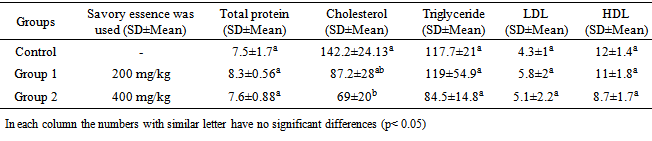
- The level of serum triglyceride in the first group was 119.2±54.9 mg/dl which showed no significant difference in comparison to control group (117.7±21 mg/dl). The level of serum triglyceride in the second group was 84.5±14.8 mg/dl which showed no significant difference in comparison to control group (117.7±21 mg/dl) but a relative reduction (p< 0.05) (Table 1; Figure 1).
|
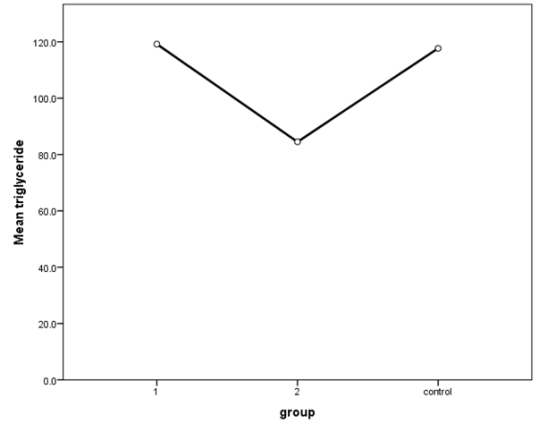 | Figure 1. The effect of savory essence level of triglyceride of rat blood serum |
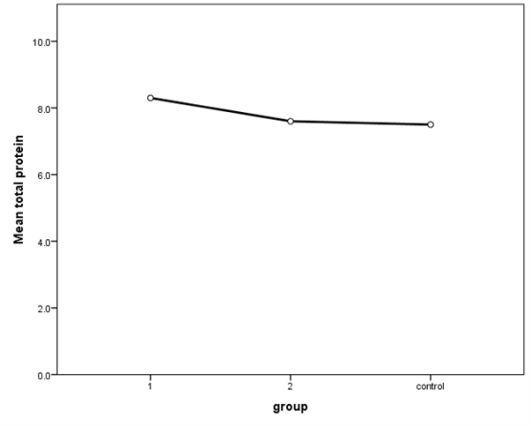 | Figure 2. The effect of savory essence level of total protein of rat blood serum |
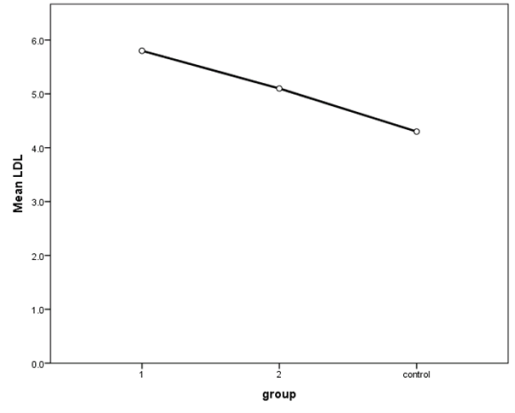 | Figure 3. The effect of savory essence level of LDL of rat blood serum |
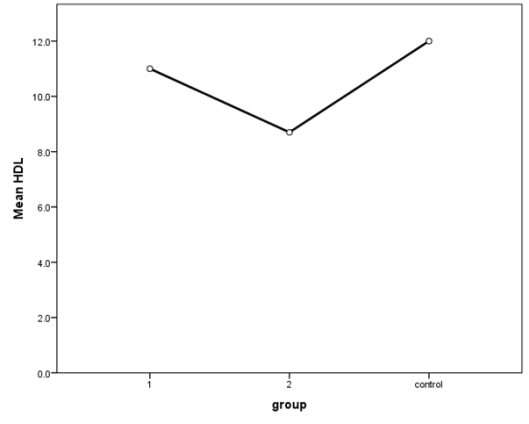 | Figure 4. The effect of savory essence level of HDL of rat blood serum |
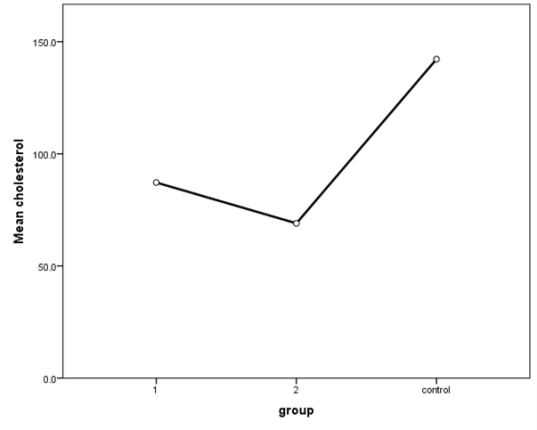 | Figure 5. The effect of savory essence level of cholesterol of rat blood serum |
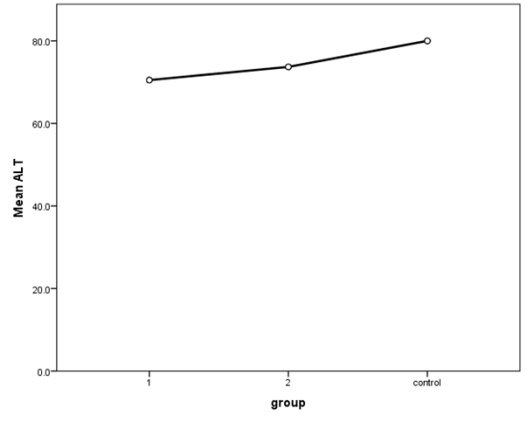 | Figure 6. The effect of savory essence level of ALT of rat blood serum |
|
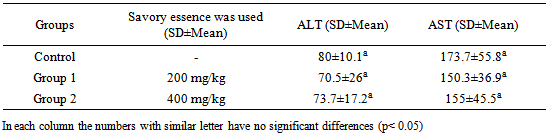
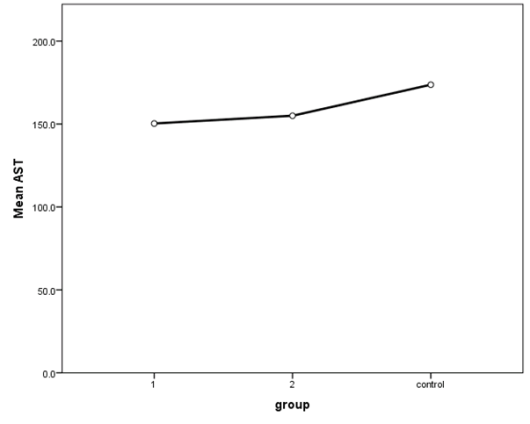 | Figure 7. The effect of savory essence level of AST of rat blood serum |
4. Discussion
- This manuscript aims to assess the effect of the ‘savory’ essence on levels of biochemical factors in rat blood. The triglyceride level in the group received 200mg/kg savory essence had showed a relative increment meanwhile the second group with 400mg/kg savory essence showed a relative reduction than control group. Therefore it can be said that the higher savory essence dose led to more triglyceride level reduction. Moreover the same essence resulted in significantly reduction in rats' weights according to Nazari et al (Nazari et al., 2006). The finding of Nazari et al showed that the triglyceride level decreased as the result of using savory [Nazari et al., 2006].Also, Abdollahi et al., (2003) observed significant reduction in the blood glucose and triglyceride level with Khoozestani savory essence in diabetic and diabetic rats as well as significant reduction in normal lipid peroxidation and increased body antioxidant power [Abdollahi et al., 2003]. Several researchers demonstrated that some plants with natural antioxidants including lycopene, vitamin E and phenols resulted in reducing serum lipid [Jiang and Dusting, 2003]. Herris et al suggested that some of the herbal medicines led to glycation inhibition of lipoproteins, enzymes, and proteins involved in lipid and lipoproteins metabolism and in this way led to lipid serum reduction [Harris et al., 2011] as their results are in accordance with the findings of current study. According to the achieved findings In the present study, the LDL level showed a relative increment in both treatment groups; meanwhile, Ahmadvand et al., (2008) indicated that Khoozestani savory had antioxidant properties and caused inhibiting of LDL oxidation in vitro [Ahmadvand et al., 2008]. Total protein level showed a relative increment in both treatment groups, that could be an indication of increased blood buffer capacity and colloidal osmotic pressure which led to prevent the loss of fluid from the capillaries. Also in a study by Dagnesi et al., (2003) the use of herbal medicines essence Mistletoe (viscum album) and nettle led to enhance blood plasma protein in fishes [Dugenci et al., 2003]. The cholesterol level in the first group of our study with lower received essence (200 mg/kg) showed a relative reduction while in the second group with higher received essence (400 mg/kg) a significant reduction at cholesterol level rather than control group was observed. So it can be suggested that with increasing the dose the cholesterol level can be decreased more and this finding affects the improvement of livestock healthy function. The level of ALT and AST showed a relative reduction in comparison to control group that can be an indication of superior liver performance in condition of using savory. Regarding the survey of Nazari et al., [Nazari et al., 2006] about weight loss in rats, triglyceride and cholesterol reduction and cholesterol reduction in 400mg/kg essence received group, can be attributed to the cholesterol and triglyceride reduction and consequently lipid reduction in rats. In addition, according to the relative reduction in serum ALT and AST level it is concluded that savory essence led to the relative improvement in liver performance, too.
5. Conclusions
- According to the obtained results related plant (savory essence) can lead to increase blood serum proteins. Finally conclude that high dose of savory essence results in increased reduction in triglycerides and increase in total blood proteins.