
-
Paper Information
- Paper Submission
-
Journal Information
- About This Journal
- Editorial Board
- Current Issue
- Archive
- Author Guidelines
- Contact Us
American Journal of Polymer Science
p-ISSN: 2163-1344 e-ISSN: 2163-1352
2026; 15(1): 12-18
doi:10.5923/j.ajps.20261501.03
Received: Aug. 2, 2026; Accepted: Aug. 28, 2026; Published: Sep. 10, 2026

Purification of Ethylene-Containing Contact Gas from COₓ Produced by the Oxidative Coupling of Methane
 Abstract
 Reference
 Full-Text PDF
 Full-text HTML
Normurot Fayzullaev, Nargiza Tursunova
Department of Polymer Chemistry and Chemical Technology, Samarkand State University named after Sharof Rashidov, Samarkand, Uzbekistan
Correspondence to: Normurot Fayzullaev, Department of Polymer Chemistry and Chemical Technology, Samarkand State University named after Sharof Rashidov, Samarkand, Uzbekistan.
| Email: |  |
Copyright © 2026 The Author(s). Published by Scientific & Academic Publishing.
This work is licensed under the Creative Commons Attribution International License (CC BY).
http://creativecommons.org/licenses/by/4.0/

This article examines the formation of ethylene-containing contact gas during the oxidative coupling of methane (OCM), the adverse effects of carbon oxides (CO and CO₂) present in the gas on downstream petrochemical processes, and methods for their removal. The main stages of COₓ removal from the contact gas—low-temperature CO conversion, chemical absorption of CO₂, and methanation of residual CO—are described. The integration of these stages reduces the number of separation and treatment operations, thereby lowering energy consumption and process costs.
Keywords: Methane, Oxidative coupling, OCM, Ethylene-containing contact gas, CO conversion, CO₂ absorption, Methanation, Gas purification, Chemical sorption, Petrochemical synthesis
Cite this paper: Normurot Fayzullaev, Nargiza Tursunova, Purification of Ethylene-Containing Contact Gas from COₓ Produced by the Oxidative Coupling of Methane, American Journal of Polymer Science, Vol. 15 No. 1, 2026, pp. 12-18. doi: 10.5923/j.ajps.20261501.03.
Article Outline
1. Introduction
- Oxidative coupling of methane (OCM) is considered a promising route for ethylene production. Two main technological pathways can be considered for utilizing the ethylene produced by this process. The first involves separating ethylene from the contact gas, whereas the second involves using ethylene directly as a component of the contact gas in downstream petrochemical processes [1–2]. Ethylene recovered through the first pathway is an important feedstock for producing high-value products such as polyethylene, ethylene oxide, ethylbenzene, and vinyl acetate. However, the main disadvantage of this approach is its high operating cost, which results from the need for complex and energy-intensive operations such as cryogenic cooling, compression, and multistage distillation [3–4].The direct use of ethylene-containing contact gas is considered more economical and energy-efficient [5–6]. In addition to ethylene, the contact gas typically contains CO, CO₂, H₂, and other components. This mixture can be used as a feedstock for producing chemicals such as isoparaffins, vinyl chloride, and ethylene oxide [7–8].Carbon oxides, particularly CO, present in the contact gas formed during the OCM process can adversely affect the catalysts used in downstream petrochemical processes by reducing their activity or causing catalyst poisoning [9–10]. Therefore, multistage removal of COₓ components from the contact gas is an important part of the overall technological scheme. A typical purification sequence comprises low-temperature CO conversion, CO₂ absorption, and methanation of residual CO [11–12].During low-temperature CO conversion, CO is converted into CO₂. Chemical sorption methods are then used to remove CO₂, while the residual CO concentration can be reduced to 10–20 ppm through methanation over nickel-based catalysts [13–14]. This treatment makes the gas suitable for subsequent polymerization and petrochemical synthesis processes. Therefore, developing an integrated technology for producing ethylene-containing gas through OCM, removing CO and CO₂, and utilizing the purified stream in downstream petrochemical processes represents an important scientific and practical challenge [15–18].
2. Materials and Methods
- The study examined the technological stages involved in producing ethylene-containing contact gas through the oxidative coupling of methane, purifying it from COₓ components, and using it in downstream petrochemical synthesis processes. The overall process was divided into four principal stages: product-gas formation in the OCM reactor, CO conversion, CO₂ absorption, and methanation of residual CO. The purified ethylene-containing gas was subsequently prepared for use in isoparaffin synthesis. The present study was performed as a technological process assessment rather than as a fixed-capacity industrial or pilot-plant test. Therefore, the process was evaluated using operating parameters that are independent of a specific plant throughput, including temperature, pressure, steam-to-gas ratio, and absorbent concentration. The principal equipment considered in the scheme consisted of an OCM reactor, CO-conversion reactors, a gas compressor, a CO₂ absorption column, and a methanation reactor. This approach permits the same process sequence to be applied at different processing capacities by appropriate sizing of the individual units.During the OCM stage, methane was used as the feedstock and oxygen as the oxidizing agent. The gas mixture was fed into the reactor, where catalytic oxidative coupling of methane produced an ethylene-containing contact gas. Operation at a slight overpressure of approximately 0.15 MPa was considered technologically and energetically feasible. This condition increases the gas density and the frequency of molecular collisions, creating favorable conditions for evaluating the reaction rate, conversion, and selectivity.The resulting contact gas was assumed to contain ethylene, CO, CO₂, H₂, and residual methane. To reduce the concentration of carbon oxides in the contact gas, a CO conversion stage was first introduced. During this stage, the water–gas shift reaction between CO and steam was carried out as follows:
 Because the process is exothermic, it was carried out within the selected temperature range using conventional iron–chromium oxide catalysts for high-temperature CO conversion and copper-based catalysts for low-temperature CO conversion. The operating conditions were selected within a temperature range of 200–500 °C, a pressure range of 0.1–3.0 MPa, and a steam-to-gas ratio of 0.6–1.2. To achieve a higher CO conversion, a two-stage scheme consisting of high-temperature conversion followed by low-temperature conversion was considered optimal.After CO conversion, the gas stream was compressed to 25 bar. This pressure was selected to ensure efficient gas–liquid mass transfer in the subsequent absorption column. Chemical sorption was used to remove CO₂ from the contact gas. The gas and liquid phases interacted in a countercurrent flow within the absorption column, resulting in the removal of most of the CO₂ from the gas stream.After absorption, a methanation step was performed to reduce the residual CO to a safe level for petrochemical processes. This process was carried out over a conventional nickel-based methanation catalyst according to the following reaction:
 The methanation stage was intended to reduce the CO concentration to 10–20 ppm, thereby allowing the purified ethylene-containing gas to be used in polymerization and other petrochemical synthesis processes.To assess the downstream application of the purified gas, it was fed into an isoparaffin synthesis unit. At this stage, the ethylene-containing contact gas and isobutane were introduced into the alkylation reactor in the presence of a zeolite-based catalyst. The principal products were expected to be high-octane isoparaffins. Following the reaction, the products were separated, unreacted isobutane was recycled, and excess gases were discharged. Because the proposed scheme was evaluated independently of a fixed production capacity, the quantities of reactants and catalyst were not assigned to a specific reactor volume. Instead, the technological feasibility was assessed from the required process sequence and operating conditions. At larger capacities, the gas and catalyst inventories can be increased proportionally while maintaining the same principal purification and reaction stages.Thus, an integrated technological scheme was developed for producing ethylene-containing contact gas through OCM, purifying it in successive stages, and using it in downstream petrochemical synthesis.A mixture of methane and oxygen was processed in an OCM reactor at an overpressure of 0.15 MPa to obtain an ethylene-containing contact gas. The CO present in the resulting gas was first converted into CO₂ and H₂ in the presence of steam. The gas was then compressed to 25 bar, and CO₂ was removed using a 30% aqueous K₂CO₃ solution. During the final stage, residual CO was removed through methanation over a nickel-based catalyst, reducing its concentration to 10–20 ppm. The purified ethylene-containing gas was tested in the alkylation process with isobutane. Process performance was assessed from the expected changes in gas composition associated with the individual conversion, absorption, and methanation stages. The present work focuses on the technological integration of these operations; therefore, the reported gas-composition levels represent process targets and literature-supported operating values rather than a separate analytical characterization of an isolated ethylene product. It should be noted that ethylene was not separated as an isolated final product in the proposed scheme; the target stream was the purified ethylene-containing contact gas intended for direct downstream utilization.
3. Results and Discussion
- The industrial production of ethylene through the oxidative coupling of methane can be implemented using two principal technological pathways.1. Recovery of concentrated ethylene. Using this method, ethylene is separated from the reaction product gas mixture. The separated ethylene is an important raw material not only for the production of polyethylene, but also for the synthesis of high-value chemicals such as ethylene oxide, ethylbenzene, and vinyl acetate. Therefore, this direction is of strategic importance in the petrochemical industry.However, the main disadvantages of this process are its high energy demand and operating costs. Ethylene separation from the contact gas requires several complex operations, including cryogenic cooling, compression, and multistage distillation. Consequently, these operations increase process costs and reduce overall economic efficiency.2. Direct use of ethylene in the contact gas. A more economical and energy-efficient approach is to use ethylene directly as a component of the contact gas without separating it. The contact gas typically contains ethylene together with CO, CO₂, H₂, and several other components. This mixture can be used directly in specific technological processes.In particular, the ethylene present in the contact gas can be used directly as a feedstock for isoparaffin synthesis and for producing chemicals such as vinyl chloride and ethylene oxide. Because this approach minimizes the number of separation and treatment stages, it is more economical and energy-efficient than conventional cryogenic separation and multistage distillation.
3.1. Purification of Process Gas from OCM and Its Properties Under Pressure Conditions
- Carbon oxides are removed at relatively low temperatures using a copper-based catalyst. During this process, carbon monoxide reacts with steam through the water–gas shift reaction to form carbon dioxide. Consequently, the CO concentration decreases, and the treated gas becomes more suitable for downstream technological processes.The CO concentration can be reduced to 10–20 ppm through methanation over nickel-based catalysts. During this process, CO is converted into methane, thereby removing a component that can inhibit downstream polymerization processes. CO₂ can subsequently be removed from the contact gas by chemical sorption using the following sorbents:- potassium carbonate solution;- monoethanolamine solution; and- other amine-based or high-performance chemical sorbents.Chemical sorption processes are usually carried out under elevated pressure. Therefore, it is necessary to include a stage of gas stream compression in the technological scheme. This requires an economically and technically sound design of the technological system.There are two approaches to positioning the CO conversion unit relative to the compressor:1. Placement Placement downstream of the compressor. In this arrangement, CO conversion efficiency may be increased. However, the presence of CO in the gas passing through the compressor poses a risk of carbonyl corrosion. Therefore, compressor components must be manufactured from high-chromium steels or corrosion-resistant alloys, which increases the overall project cost.2. Placement upstream of the compressor. In this arrangement, the compressor can be manufactured from conventional materials. However, the reaction gas must be dried because moisture can cause cavitation and erosion of the compressor blades.
3.2. Effect of Pressure on the OCM Process
- Ethylene-containing process gas is widely used in the petrochemical and organic synthesis industries, where many processes are conducted under positive pressure. Accordingly, performing the oxidative coupling of methane under positive pressure is desirable from the perspectives of both technological flexibility and energy efficiency. An increase in gas density per unit reactor volume raises the frequency of molecular collisions and may consequently increase the reaction rate.In this study, the reaction is proposed to be investigated under a slight overpressure of approximately 0.15 MPa. Under these conditions, the reactor design and the selection of construction materials will be simplified, while energy consumption will remain within reasonable limits, thereby facilitating industrial-scale implementation. At the same time, operating within a low overpressure range will enable a more accurate assessment of the reaction kinetics and help establish an optimal balance between selectivity and conversion.
3.3. Use of Ethylene in Contact Gas
- The technological block diagram for utilizing ethylene-containing contact gas is presented in Figure 1. It illustrates an integrated technological scheme for using ethylene produced through the oxidative coupling of methane in downstream petrochemical synthesis processes.
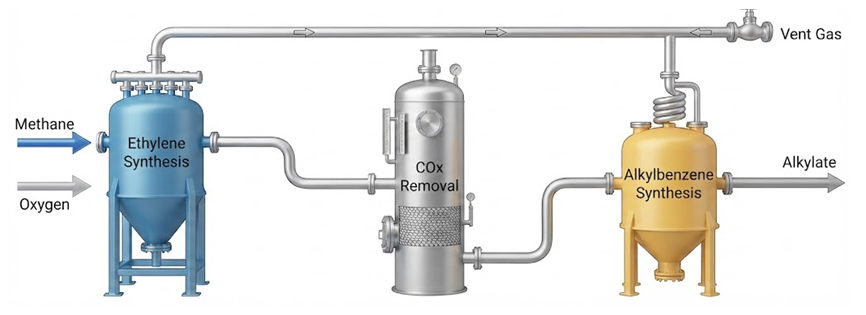 | Figure 1. Schematic flow diagram of the OCM process |
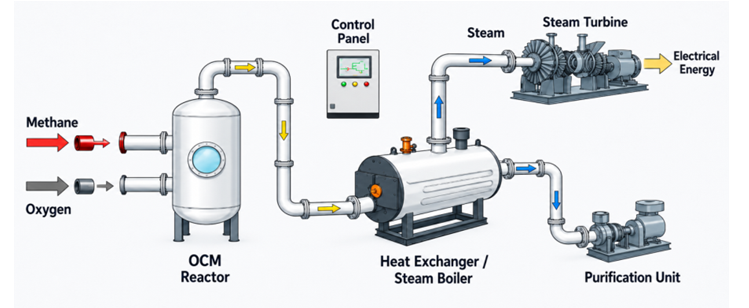 | Figure 2. Process flow diagram of the ethylene synthesis block |
3.3.1. Contact Gas Purification from COx
- Although the primary objective of the OCM process is ethylene production, carbon monoxide (CO) and carbon dioxide (CO₂) are also formed as undesirable by-products. These compounds, particularly CO, can reduce the activity of catalysts used in downstream petrochemical processes or cause catalyst poisoning. Therefore, multistage removal of carbon oxides from the contact gas is required. As shown in Figure 3, the purification train consists of three stages:
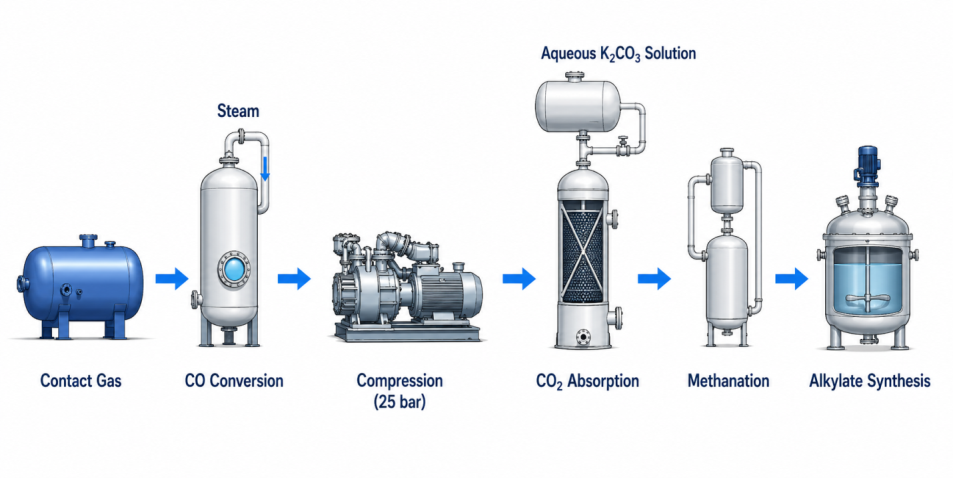 | Figure 3. Process flow diagram for COₓ removal from the contact gas |
 This exothermic reaction is carried out industrially at relatively low temperatures in the presence of suitable catalysts. The following side reactions may also occur under the selected reaction conditions:
 The occurrence of side reactions depends on the catalyst composition, reaction medium, and temperature. Oxides of copper (Cu), zinc (Zn), aluminum (Al), and chromium (Cr) are widely used as components of low-temperature catalysts. The typical operating conditions are as follows:- Temperature: 200-500°C - Pressure: 0.1-3.0 MPa - Steam/gas ratio: 0.6-1.2
3.3.2. CO2 Absorption
- The CO₂ produced during the conversion process is removed from the contact gas through chemical sorption. Sorbents such as potassium carbonate (K₂CO₃) and monoethanolamine (MEA) are commonly used during this stage. Carbon dioxide is absorbed by the sorbent and removed from the contact gas, completing the second stage of the gas-purification process.Methanation of residual CO. In the last step, the residual CO in the contact gas is completely removed by the methanation reaction:
 This reaction is carried out over nickel-based catalysts and produces a purified gas suitable for downstream petrochemical processes.The three-stage contact-gas purification system—conversion, absorption, and methanation—reduces the concentrations of CO and CO₂ to the required levels. This treatment enables the gas to be used effectively in petrochemical processes, particularly for producing high-value-added products such as isoparaffins, vinyl chloride, and ethylene oxide.The first stage is high-temperature CO conversion, which is generally carried out over iron–chromium oxide catalysts at 400–450 °C. At these temperatures, the reaction proceeds rapidly, and most of the CO reacts with H₂O to form CO₂ and H₂. This considerably reduces the CO concentration and creates favorable conditions for the subsequent stage.The second stage is low-temperature CO conversion. A certain amount of CO remains after the first stage and is further converted over copper-based catalysts. This stage is conducted at 200–250 °C because the thermodynamic equilibrium under these conditions favors CO conversion. Consequently, the residual CO concentration decreases considerably.
3.4. Example from Ammonia Production
- The two-stage conversion scheme is widely used in the ammonia industry. In a plant with a production capacity of 1,360 t/day, the following values are achieved:During the first stage, the CO concentration decreases from 12.0 vol.% to 4.0 vol.%.During the second stage, the CO concentration is further reduced to ≤0.65 vol.%.As a result of this two-stage scheme, the residual CO concentration in the synthesis gas is reduced to a level suitable for ammonia synthesis, thereby supporting the long-term operation of the catalysts.The equilibrium relationship for the water–gas shift reaction can be expressed in terms of the component partial pressures as follows:
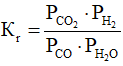 where Kᵣ is the equilibrium constant, and PCO₂, PH₂, PCO, and PH₂O are the partial pressures of the corresponding components. CO₂ Absorption. Chemical sorption is widely used to remove CO₂ from contact gas. In this study, a 30% aqueous potassium carbonate solution was selected as the sorbent because of its high CO₂ absorption capacity. The principal advantage of the selected sorbent solution is as follows:High absorption capacity: CO₂ is efficiently removed from the gas stream.
3.5. Process Advantages of the Aqueous Sorbent Solution
- The use of an aqueous sorbent solution is compatible with the subsequent methanation stage and facilitates the reduction of residual CO to a minimum. As a result, the treated gas achieves a higher degree of purity and becomes suitable for downstream petrochemical processes.The proposed approach is consistent with recent studies emphasizing process integration and optimization as important factors in improving OCM-based ethylene production. Alkathiri et al. [19] demonstrated that optimization of the OCM process configuration and operating conditions can improve the overall performance of ethylene production. In the present scheme, this concept is extended by integrating CO conversion, CO₂ absorption, and residual CO methanation with the direct downstream utilization of the ethylene-containing contact gas. Consequently, the separate recovery of concentrated ethylene can be avoided, reducing the number of separation operations required in the overall process.Because the individual operations used in the proposed scheme—CO conversion, gas compression, chemical absorption, and methanation—are established industrial unit operations, the integrated scheme is technically suitable for further scale-up through conventional equipment sizing.Isoparaffin Synthesis Block. The isoparaffin synthesis block is presented in Figure 4. During this stage, ethylene-containing contact gas and isobutane are fed into the alkylation reactor. The products are subsequently separated and filtered, while the recyclable stream is returned to the OCM section. The principal process sequence is as follows: ethylene-containing gas and isobutane → alkylate synthesis → separation → filtration → isoparaffins.
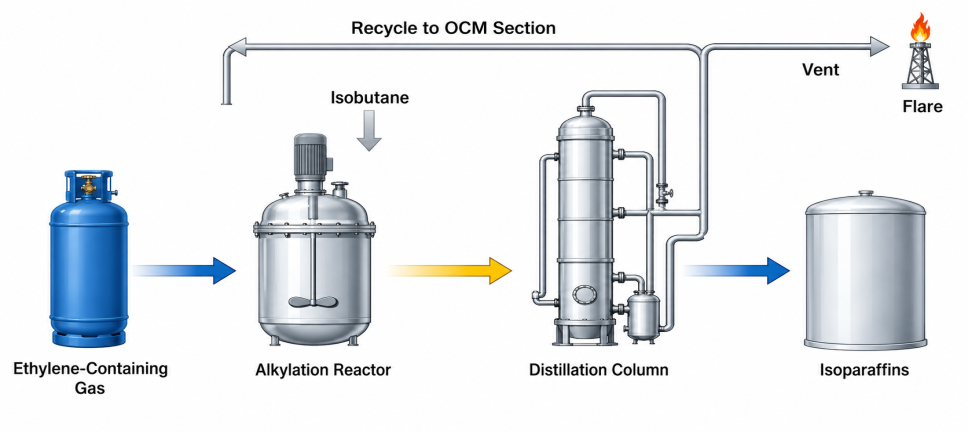 | Figure 4. Isoparaffin synthesis block |
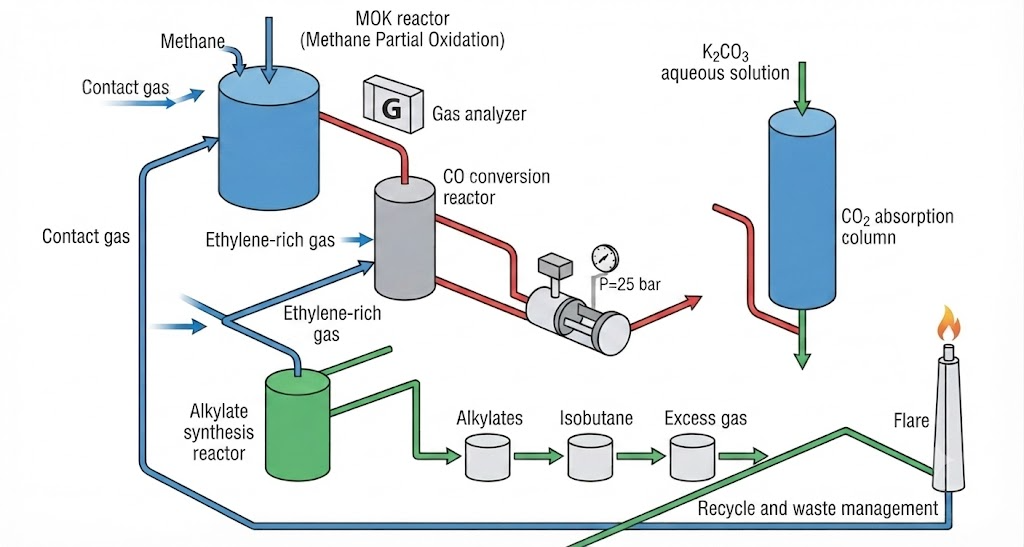 | Figure 5. Integrated technological scheme for the production and purification of methane-derived contact gas and its use in alkylate synthesis |
4. Conclusions
- The results of the study demonstrate that directing the ethylene-containing contact gas produced through the oxidative coupling of methane to downstream petrochemical processes without a separate ethylene-recovery stage is technically and energetically promising. CO and CO₂ present in the contact gas are among the principal components that adversely affect the activity and stability of catalysts used in downstream synthesis processes. Therefore, deep purification of the contact gas from carbon oxides is an essential technological stage.A three-stage technological system is proposed for purifying the contact gas. The system consists of high- and low-temperature CO conversion in the presence of steam, chemical absorption of the resulting CO₂ using a 30% K₂CO₃ solution, and methanation of residual CO over a nickel-based catalyst. This system reduces the concentrations of harmful gas components to the required levels.The proposed approach integrates the stepwise removal of carbon oxides from OCM-derived contact gas with the direct utilization of the contained ethylene in downstream synthesis processes, thereby improving the economic efficiency of methane conversion. The proposed scheme provides a basis for the deep processing of natural gas, the comprehensive utilization of ethylene-containing gas, and the production of high-value-added petrochemical products.
ACKNOWLEDGEMENTS
- The authors gratefully acknowledge the support, technical assistance, and constructive contributions of all individuals and institutions involved in the preparation and completion of this study.
DISCLOSURE
- The authors declare that they have no financial, professional, or personal conflicts of interest that could have influenced the research presented in this article.