Anora Jumaeva1, Matluba Amonova2, Yulduz Khidirova3, Mukhlisa Berdieva4, Murodjon Khidirov4
1Associate Professor, Karshi State Technical University, Karshi, Uzbekistan
2Doctor of Technical Sciences, Bukhara Innovative Education and Medicine University, Bukhara, Uzbekistan
3Professor, Karshi State Technical University, Karshi, Uzbekistan
4Master’s Student, Karshi State Technical University, Karshi, Uzbekistan
Copyright © 2026 The Author(s). Published by Scientific & Academic Publishing.
This work is licensed under the Creative Commons Attribution International License (CC BY).
http://creativecommons.org/licenses/by/4.0/

Abstract
This study investigates the physicochemical, structural, and mechanical properties of polyvinyl chloride (PVC) composites filled with modified natural basalt, with a comparative assessment against conventional mineral fillers such as Belgorod chalk. The research addresses the growing demand for advanced polymer composites with enhanced performance through the rational selection and modification of mineral fillers. PVC compositions were prepared with varying filler types and concentrations, and their morphology, elemental distribution, and interfacial characteristics were systematically analyzed using scanning electron microscopy (SEM) and X-ray analysis. The results reveal that modified basalt significantly influences the structural organization and dispersion behavior within the polymer matrix, leading to improved interfacial interactions. SEM observations confirm a more homogeneous distribution of basalt particles, while elemental analysis indicates a stable composition dominated by carbon, silicon dioxide, and metal oxides. Comparative evaluation of physicomechanical properties—including tensile strength, elongation at break, Young’s modulus, and stress at break—demonstrates that PVC composites filled with modified basalt exhibit performance characteristics comparable to, and in some cases more stable than, those containing traditional fillers. Despite minor reductions in elongation and modulus values, the basalt-filled composites maintain consistent mechanical behavior across multiple processing cycles, indicating their suitability for industrial applications such as pipe production. Additionally, the incorporation of plasticizers enhances surface smoothness and density, contributing to improved mechanical strength and product quality. Overall, the findings confirm that modified basalt is a promising alternative filler for PVC-based composites, offering a balanced combination of structural stability, mechanical performance, and processing efficiency. The study highlights the critical role of filler modification and selection in tailoring the functional properties of polymer composites for advanced engineering applications.
Keywords:
Polyvinyl chloride (PVC), Polymer composites, Mineral fillers, Physic–mechanical properties, Scanning electron microscopy, Surface morphology, Physicochemical methods, Scanning electron microscopy (SEM), Interfacial interactions, Polymer matrix, Proper filler selection
Cite this paper: Anora Jumaeva, Matluba Amonova, Yulduz Khidirova, Mukhlisa Berdieva, Murodjon Khidirov, Investigation of PVC–Based Composites Filled with Modified Basalt Using Physicochemical Methods, American Journal of Polymer Science, Vol. 15 No. 1, 2026, pp. 5-11. doi: 10.5923/j.ajps.20261501.02.
Article Outline
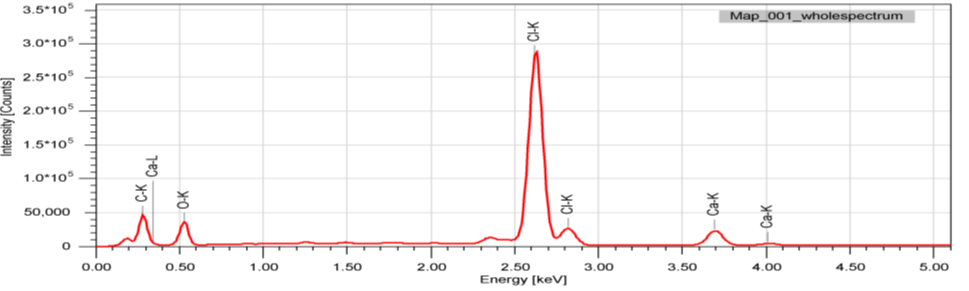
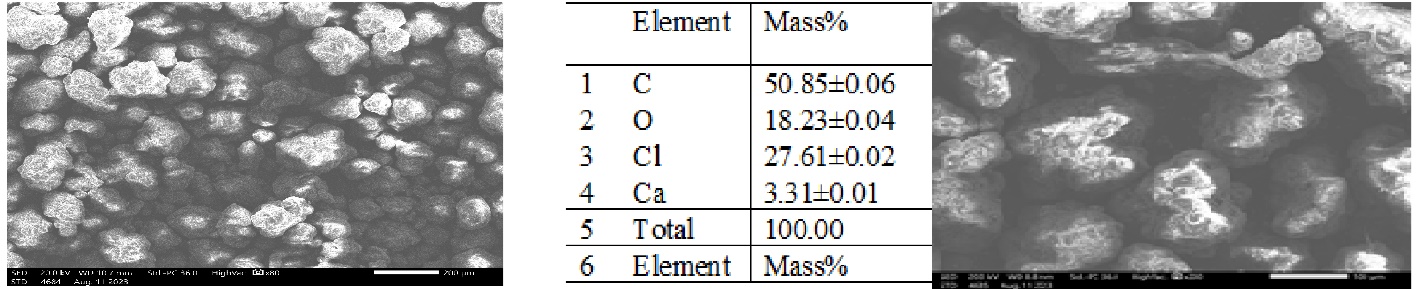
At present, extensive scientific research is being carried out worldwide on the development of new generations of additives and fillers, as well as on the production of composite polymer materials and products based on them. In particular, significant attention is paid to the development of nano–sized organic and inorganic fillers, technologies for modifying mineral fillers with organic oligomers, synthesis of organic accelerators, formulation of composite polymer materials with specific properties, development of plasticizers for polymer composites, and production of nanomaterials based on polymer compositions, as well as the improvement of their composition and processing technologies [1–3].Currently, about 200 types of fillers such as chalk, carbon black, kaolin, asbestos, basalt, and similar materials are used in polymer compositions. Various fillers are also incorporated into composite polymer materials. For example, during the preparation of polyvinyl chloride (PVC) compositions, fillers are added in amounts of up to 3–5 wt. % of the total mass. Belgorod chalk, talc, bentonite, wood flour, shorsite, barite, and other materials are commonly used as fillers [4–6].The primary purpose of introducing fillers into polymer compositions is to improve the physic–mechanical and technological properties of the manufactured products, reduce the consumption of primary raw materials, enhance the appearance of products, and achieve other performance improvements. In addition, the incorporation of certain fillers into PVC compositions can partially increase their thermal stability while simultaneously leading to an increase in the molecular weight of the polymer. This, in turn, results in an increase in the processing temperature of composite materials.Therefore, special attention must be paid to the selection of fillers depending on the type of product to be manufactured and the performance requirements it must meet. Moreover, some fillers produced from natural mineral rocks impart specific coloration properties to the final product.Taking the above into account, this study presents the results of investigating the influence of fillers of different nature on the physic–mechanical and operational properties of PVC using physicochemical research methods [7–12]. The analysis of the surface structure of PVC compositions was carried out using scanning electron microscopy (SEM). SEM makes it possible to study the surface properties and morphology of synthesized samples and, based on the obtained data, to acquire information about subsurface structures to a depth of several micrometers.SEM images of the compositions are presented in Figures 1–7. The main detected elements were C, O, Cl, and Ca, which are represented by different colors in the images. In the initial image, which corresponds to a composition with a conventional formulation, the presence of calcium (Ca) is clearly observed. Such a feature is not detected in the other samples.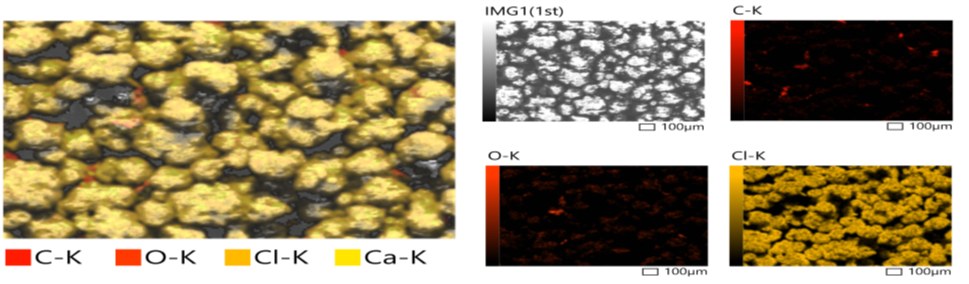 | Figure 1. Images of elemental distribution of a PVC composite sample filled with unmodified Belgorod chalk |
 | Figure 2. Elemental distribution map of a PVC composite sample filled with unmodified Belgorod chalk |
 | Figure 3. SEM images of a PVC composite sample filled with unmodified Belgorod chalk at magnifications of 200х and 500х |
Below are the images obtained from the elemental mapping of the sample (C, O, Na, Si, P, Cl, K, Ti, Fe, Pb), in which each element is clearly distinguished in the images.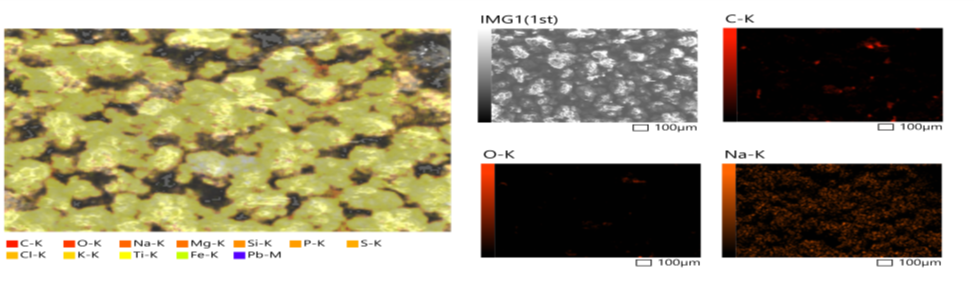 | Figure 4. The images of elemental distribution of an unplasticized PVC composite sample filled with modified basalt |
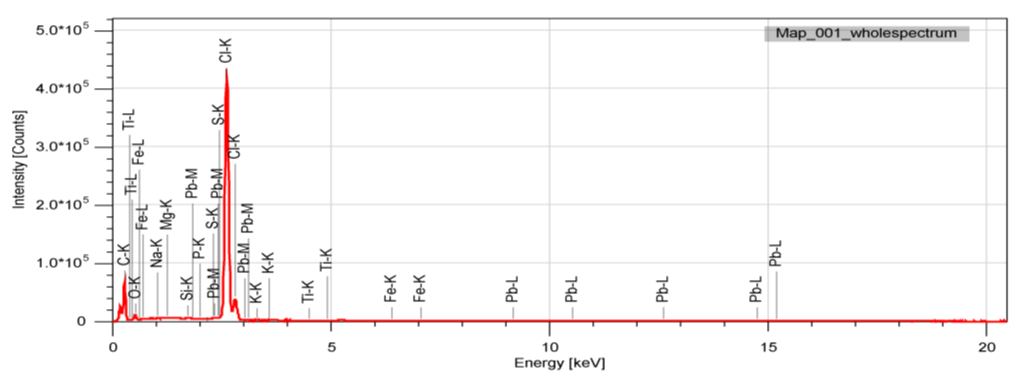 | Figure 5. The graph of an unplasticized PVC composite filled with modified basalt |
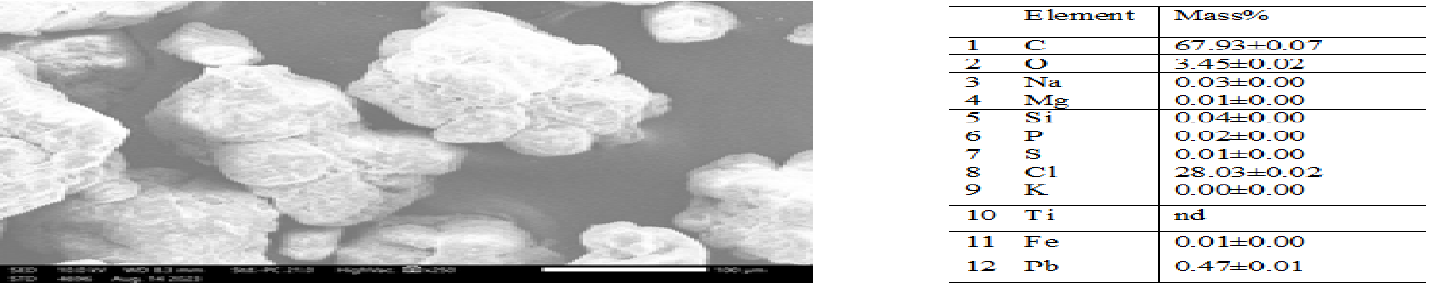 | Figure 6. SEM image of an unplasticized PVC composite filled with modified basalt at a magnification of 250х |
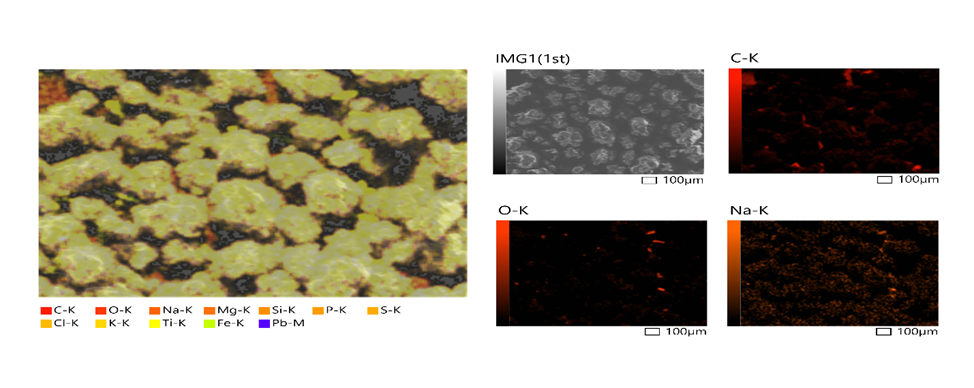 | Figure 7. The images of elemental distribution of a plasticized PVC composite sample filled with modified basalt |
The elemental composition of the plasticized sample (Figure 8), obtained by SEM analysis, is presented in percentage terms, showing a carbon content of 67%, whereas the unplasticized sample (Figure 9) contains 64% carbon. This indicates that the addition of dioctyl phthalate (DOP) to the PVC composition contributes to an increase in the carbon content.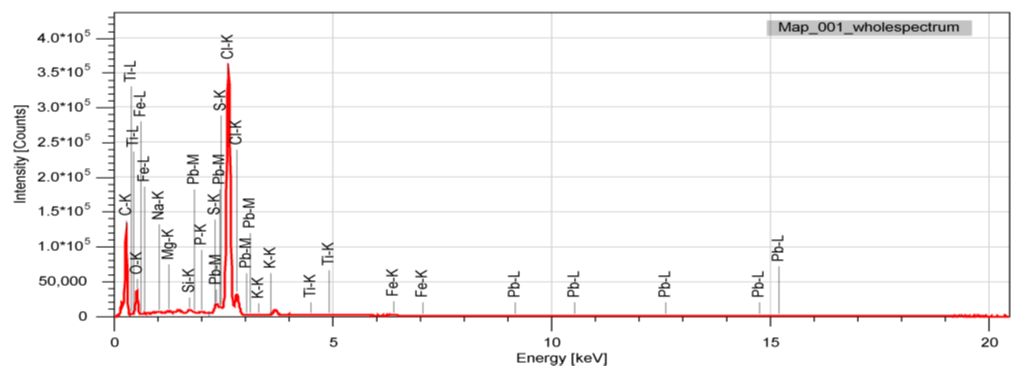 | Figure 8. The elemental distribution map of a plasticized PVC composite sample filled with modified basalt |
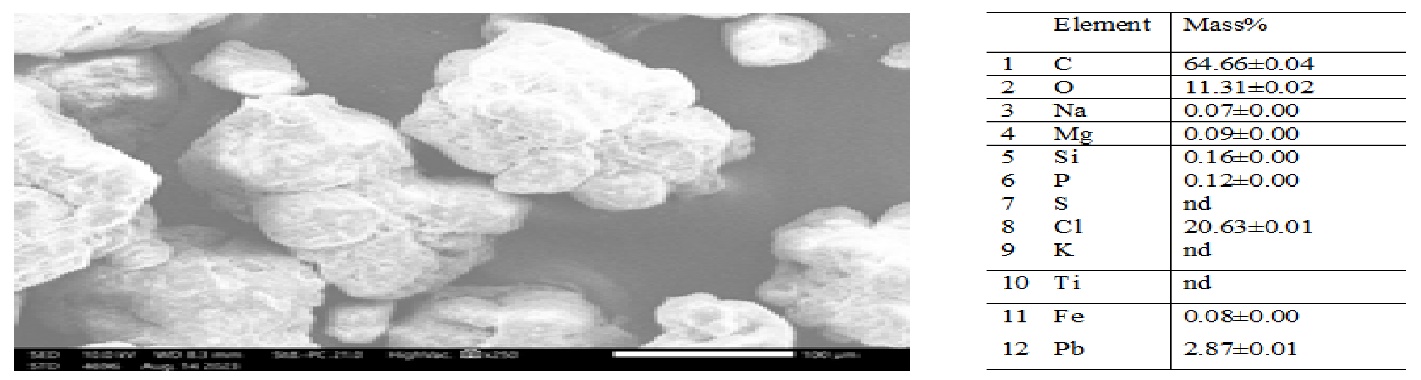 | Figure 9. SEM image of a plasticized PVC composite filled with modified basalt at a magnification of 250х |
The scanning electron microscopy images clearly reveal the smooth surface of the plasticized sample. This suggests that the given composition can be used for rigid PVC products, since higher density provides the composite and the products manufactured from it with a high level of hardness and mechanical strength. The elemental analysis of the obtained samples is presented below (Figure 10).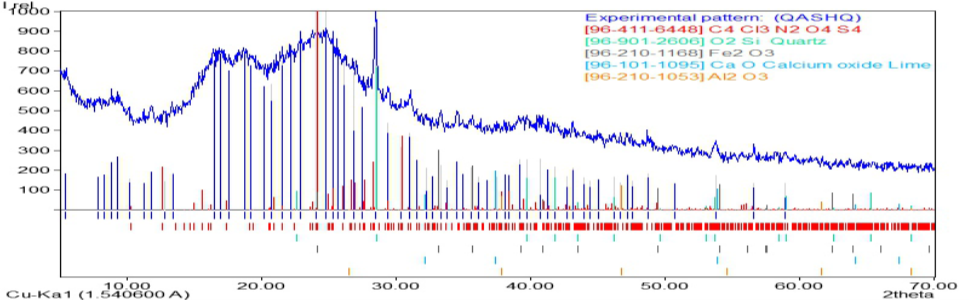 | Figure 10. X–ray analysis of a PVC composite filled with modified basalt |
The X–ray analysis presented above shows that the percentage composition of compounds and elements in the PVC composite filled with modified natural basalt is as follows:Table 1. Percentage composition of compounds identified by X–ray analysis in the PVC composite filled with modified natural basalt
 |
| |
|
The structural–chemical and physic–mechanical properties of PVC–based composites filled with modified basalt differ significantly from those of PVC–based polymers filled with Belgorod chalk. During the processing of PVC composites filled with modified basalt, mechanochemical effects may occur, including thermal, thermo–oxidative, and photo–oxidative degradation. As a result, active centers can be formed, which may act as initiators for oxidation reactions.The most significant changes occur during thermal and photochemical processes taking place in the course of processing and service life of the composites. These changes are irreversible and lead to a gradual deterioration of the physic–mechanical properties of the material.In evaluating the optimal processing regimes of polymer composite materials, their rheological characteristics play an important role. For PVC, although the flowability index is initially low, it increases with increasing external stress.Thus, these parameters increase depending on the number of processing cycles of PVC composites filled with modified basalt. When PVC–based compositions are reprocessed two to three times, a noticeable decrease in strength properties can be observed.When processing PVC composites filled with modified basalt to obtain finished products, achieving a smooth and uniform surface is of great importance. This is because, at present, significant attention is paid worldwide to external design in enhancing the market attractiveness of polymer composite products. Therefore, optical microscopy was employed to investigate the formation of a homogeneous mixture between the filler and the polymer matrix.Figure 11 presents the microscopic images of PVC composites filled with Belgorod chalk and modified basalt.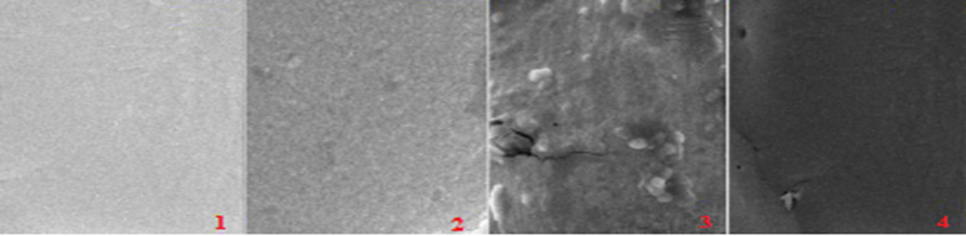 | Figure 11. Microscopic images of PVC composites filled with Belgorod chalk and modified basalt at a magnification of 800×: 1–Belgorod chalk (3.86 wt.%); 2–modified basalt (2 wt.%); 3–modified basalt (3 wt.%); 4–modified basalt (4.0 wt.%) |
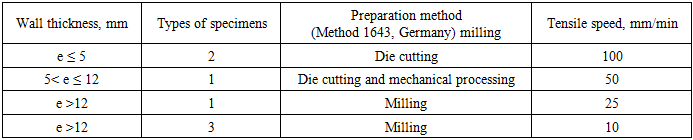
As can be seen in Figure 11, the distribution of the filler throughout the entire volume of the polymer matrix in the PVC composite filled with Belgorod chalk (1) is clearly observed, as well as the distribution of the filler in the PVC composites filled with modified basalt (2, 3, 4) across the entire volume of the polymer composition. The surface roughness observed in samples (2, 3, 4) is the result of the influence of various components present in the basalt composition.According to local regulatory and technical documentation, the relative elongation at break for Type I pipes is accepted to be up to 250%, whereas international standards allow values of up to 350%. For the Type I standard specimen, the tensile testing speed is 50 mm/min; for the Type II specimen, 100 mm/min; and for the Type III specimen, 10 mm/min. Prior to testing, the specimens were conditioned in accordance with GOST 12423 at a temperature of 23 ± 2 °C for a period of not less than 2 hours.The requirements for the polymer samples to be obtained are presented in Table 2.Table 2. The requirements for samples prepared for pipe production
 |
| |
|
Initially, for comparative purposes, the physic–mechanical properties of samples intended for the production of Type I, II, III, and IV pipes based on PVC compositions filled with Belgorod chalk and modified natural basalt are presented (Figure 12).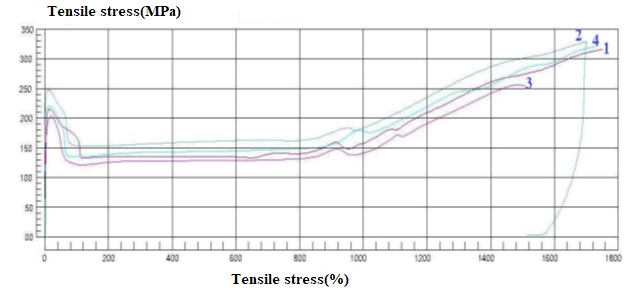 | Figure 12. Physico–mechanical properties of a Type I pipe produced from a conventional PVC composition filled with Belgorod chalk: maximum tensile stress (1), elongation at break (2), Young’s modulus (3), and stress at break (4) |
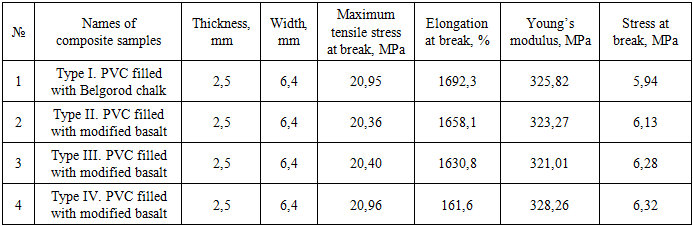
The above–mentioned parameters are almost identical for Type I, II, and III pipes: the tensile stress required for fracture ranges from 19 to 23 MPa, while the elongation at break is in the range of 400–700%.Next, the physicomechanical properties of samples intended for pipe production based on PVC compositions filled with modified basalt are presented.The results of the comparative analysis of the data obtained in Figures 12–15 are presented in Table 3.Table 3
 |
| |
|
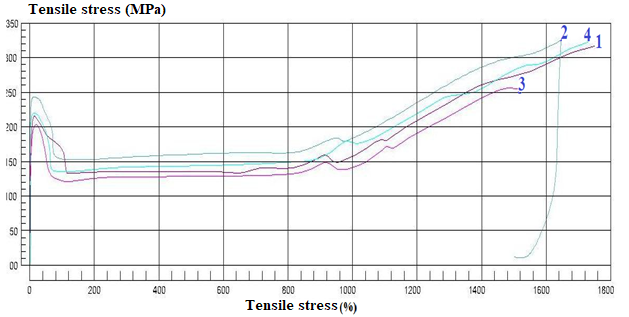 | Figure 13. Physico–mechanical properties of a Type II pipe produced from a PVC composition filled with modified natural basalt (1 wt.%) |
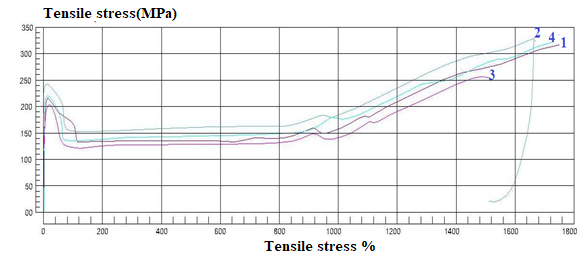 | Figure 14. Physico–mechanical properties of a Type III pipe produced from a PVC composition filled with modified natural basalt (2 wt.%) |
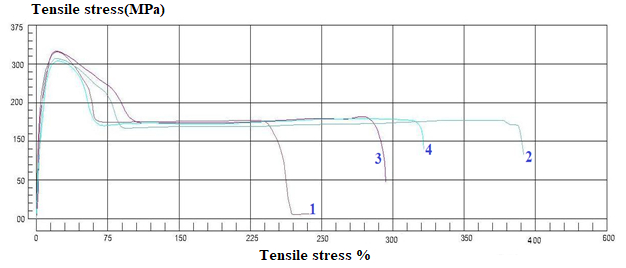 | Figure 15. Physicomechanical properties of a pipe produced from a PVC composition filled with modified natural basalt (3 wt.%) |
Physicomechanical properties of samples prepared for pipe production based on PVC compositions filled with Belgorod chalk and modified basalt.Based on the data presented in Table 3, it can be concluded that the maximum tensile stress at break (MPa), elongation at break (%), Young’s modulus (MPa), and stress at break (MPa) of the samples intended for pipe production of Types I, II, III, and IV remain almost unchanged.However, the samples obtained from PVC compositions filled with modified basalt exhibit slight differences in these parameters: the elongation at break decreases slightly to 1591.6%, Young’s modulus decreases from 325.82 MPa to 317.26 MPa, and the stress at break decreases from 5.94 MPa to 5.82 MPa.This indicates that during the processing of PVC compositions filled with modified basalt, the above–mentioned physicomechanical properties exhibit nearly identical behavior.
References
| [1] | Bikiaris, D. N., & Papageorgiou, G. Z. (2016). Effect of mineral fillers on the mechanical and thermal properties of PVC composites. Polymer Composites, 37 (9), 2706–2716. https://doi.org/10.1002/pc.23461. |
| [2] | Xanthos, M. (2015). Processing and performance of mineral–filled PVC composites. Journal of Vinyl and Additive Technology, 21 (2), 67–75. https://doi.org/10.1002/vnl.21415. |
| [3] | Wang, Y., Chen, G., Li, J., & Zhang, H. (2016). Influence of basalt fillers on the mechanical properties of polymer composites. Materials Science and Engineering A, 667, 286–294. https://doi.org/10.1016/j.msea.2016.04.097. |
| [4] | Czigány, T., & Ronkay, F. (2017). The effect of mineral fillers on the structure and properties of PVC composites. Composites Part B: Engineering, 112, 198–204. https://doi.org/10.1016/j.compositesb.2016.12.042. |
| [5] | Zhan, J., Li, Y., & Wang, Q. (2018). Morphology and mechanical performance of PVC composites filled with modified mineral fillers. Journal of Applied Polymer Science, 135(18). https://doi.org/10.1002/app.46234. |
| [6] | Kord, B., Roohani, M., & Dadbin, S. (2019). Effect of inorganic fillers on rheological and mechanical properties of PVC composites. Polymer Testing, 75, 122–129. https://doi.org/10.1016/j.polymertesting.2019.01.019. |
| [7] | Fiore, V., Scalici, T., & Valenza, A. (2020). Basalt fiber and basalt powder as fillers for polymer composites: A review. Composites Part B: Engineering, 188, 107766. https://doi.org/10.1016/j.compositesb.2020.107766. |
| [8] | Guo, Y., Li, X., & Huang, Y. (2020). SEM and mechanical analysis of PVC composites reinforced with mineral fillers. Materials Today: Proceedings, 28, 231–236. https://doi.org/10.1016/j.matpr.2020.01.401. |
| [9] | Zhang, L., Liu, H., & Zhao, Y. (2021). Effect of filler surface modification on the interfacial properties of PVC composites. Surface and Coatings Technology, 405, 126634. https://doi.org/10.1016/j.surfcoat.2020.126634. |
| [10] | Ahmed, S., Hussain, M., & Khan, M. (2022). Mechanical behavior of PVC composites reinforced with natural mineral fillers. Construction and Building Materials, 314, 125640. https://doi.org/10.1016/j.conbuildmat.2021.125640. |
| [11] | Liu, Y., Chen, Z., & Wang, X. (2023). Influence of mineral filler content on thermal stability and mechanical performance of PVC composites. Polymers, 15(4), 912. https://doi.org/10.3390/polym15040912. |
| [12] | ASTM D638–22. (2022). Standard Test Method for Tensile Properties of Plastics. ASTM International, West Conshohocken, PA. |


 Abstract
 Reference
 Full-Text PDF
 Full-text HTML