
-
Paper Information
- Paper Submission
-
Journal Information
- About This Journal
- Editorial Board
- Current Issue
- Archive
- Author Guidelines
- Contact Us
American Journal of Operational Research
p-ISSN: 2324-6537 e-ISSN: 2324-6545
2026; 16(1): 12-22
doi:10.5923/j.ajor.20261601.02
Received: Jul. 3, 2026; Accepted: Jul. 25, 2026; Published: Jul. 30, 2026

Application of Lean Manufacturing and Quality Management System Methods for Improving Injection Molding Processes
 Abstract
 Reference
 Full-Text PDF
 Full-text HTML
Dilnozakhon Abdusalomovna Boykishiyeva
Independent Researcher at Andijan State Technical Institute, Andijan, Uzbekistan
Correspondence to: Dilnozakhon Abdusalomovna Boykishiyeva, Independent Researcher at Andijan State Technical Institute, Andijan, Uzbekistan.
Copyright © 2026 The Author(s). Published by Scientific & Academic Publishing.
This work is licensed under the Creative Commons Attribution International License (CC BY).
http://creativecommons.org/licenses/by/4.0/

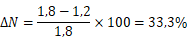
This study investigates the improvement of injection molding processes used to manufacture automotive polymer components by integrating lean manufacturing tools with quality management system requirements. A case study at “Asaka Davr Butlovchi” LLC used direct observation, time measurement, Value Stream Mapping (VSM), Process Failure Mode and Effects Analysis (PFMEA), cause-and-effect analysis, control plans, standardized work, expert assessment, and statistical testing. The novelty of the study is a closed-loop deployment model that links process diagnosis, risk prioritization, preventive control, work standardization, and performance monitoring rather than applying lean tools as separate initiatives. Implementation reduced the operation time per part from 9.5 to 8.7 minutes (8.4%) and the defect rate from 1.8% to 1.2% (33.3%). The manufacturing-process subsystem score increased from 4.6 to 6.7 points. The estimated annual economic benefit was 138.4 million UZS, corresponding to a simple annual return of 46.1% on a 300 million UZS investment and a payback period of approximately 2.2 years. Statistical analysis confirmed the consistency and significance of the organizational improvements at the 95% confidence level. The proposed model provides a practical framework for defect prevention, process stabilization, resource efficiency, and continual improvement in comparable automotive-component manufacturing processes.
Keywords: Injection molding, Lean manufacturing, Quality management system, Value stream mapping, VSM, PFMEA, Control plan, Standardized work, Process optimization, Product defects
Cite this paper: Dilnozakhon Abdusalomovna Boykishiyeva, Application of Lean Manufacturing and Quality Management System Methods for Improving Injection Molding Processes, American Journal of Operational Research, Vol. 16 No. 1, 2026, pp. 12-22. doi: 10.5923/j.ajor.20261601.02.
Article Outline
1. Introduction
- In modern mechanical engineering and the automotive industry, ensuring consistent product quality, reducing production cycle time, using resources efficiently, and minimizing losses arising in technological processes are among the key factors determining enterprise competitiveness. The growing demands of consumers, together with stricter requirements for the dimensional accuracy and appearance of components, require manufacturing processes to be improved not only through final inspection but also through the systematic management of all stages of production. Therefore, integrating the requirements of quality management systems with the principles and tools of lean manufacturing is regarded as one of the most promising approaches for simultaneously improving quality and operational efficiency in industrial enterprises.Injection molding technology is widely used in the automotive industry for the production of polymer- and plastic-based components. This technology provides high productivity, enables the manufacture of parts with complex geometries, and ensures product repeatability. However, the effectiveness of the injection molding process directly depends on the properties of raw materials, drying conditions, the technological settings of the injection molding machine, correct mold installation, injection pressure and temperature, holding time, and cooling time. Deviations of these parameters from specified limits may result in short shots, flash, deformation, burn marks, color non-uniformity, dimensional nonconformities, and surface defects.In practice, problems in injection molding processes are often detected at the final product inspection stage. Such an approach may lead to the late identification of defect causes, additional rework, product sorting, inefficient equipment utilization, and loss of production time. Insufficient consideration of the relationships between individual process stages may also result in repeated nonconformities and corrective actions that fail to deliver sustainable outcomes. Therefore, quality should be managed not only on the basis of final product indicators but also by taking into account the risks and losses that arise at each stage of the technological process.A quality management system provides an organizational and methodological framework for documenting processes, defining quality objectives, establishing control criteria, identifying the causes of nonconformities, and ensuring continual improvement. Lean manufacturing, in turn, is aimed at identifying and reducing losses associated with non-value-adding operations, unnecessary movements, waiting, excessive transportation, excess inventory, rework, and defects. The combined application of these two approaches makes it possible not only to ensure process stability but also to accelerate production flow, optimize resource consumption, and prevent defects.In improving injection molding processes, Value Stream Mapping (VSM) makes it possible to visualize material and information flows between production stages and to distinguish value-adding operations from non-value-adding activities. Process Failure Mode and Effects Analysis (PFMEA) is used to identify potential nonconformities in the process, determine their causes and consequences, and prioritize them according to the level of risk. The control plan serves to define technological parameters, control points, measuring instruments, inspection frequency, and responsible personnel. Standardized work and work element sheets establish a unified procedure for employees by specifying the sequence of operations, time standards, and quality requirements. The integrated application of these methods forms a continual improvement mechanism covering the identification of problems, elimination of their root causes, and stabilization of the achieved results.Existing studies often treat quality management systems and lean manufacturing as separate initiatives or focus on individual tools. Consequently, the literature provides limited process-level evidence on a closed-loop approach that connects flow diagnosis, risk-based prioritization, preventive controls, work standardization, economic evaluation, and statistical verification in injection molding. This study addresses that gap. Its contribution is threefold: first, it develops an integrated sequence linking VSM, PFMEA, 5S, visual management, control plans, standardized work, and the PDCA cycle within the logic of ISO 9001 and IATF 16949; second, it establishes an implementation mechanism covering analysis, prioritization, tool selection, application, monitoring, and corrective action; and third, it validates the model simultaneously through technical, organizational, economic, and statistical indicators. Compared with staged lean frameworks [9], conceptual Lean Quality Management System approaches [10,11], and standardized-work applications [12], the proposed model operationalizes these principles in one coordinated architecture and shifts injection molding management from reactive final inspection to proactive defect prevention and continual improvement.
2. Literature Review
- The literature review was conducted as a focused narrative review to define the research problem and select the methodological tools. Search terms combined “lean manufacturing,” “quality management system,” “injection molding,” “automotive components,” “VSM,” “PFMEA,” “control plan,” and “standardized work.” Sources were included when they were available in full text; directly addressed manufacturing-process improvement, quality-system integration, or injection-molding risks; and provided a clear conceptual framework, implementation method, or measurable result. Recent peer-reviewed studies and conference papers were prioritized, while seminal books and standards were retained when they established the theoretical foundations of quality management or lean production. Duplicate sources, non-manufacturing applications, publications without methodological detail or measurable process outcomes, and studies unrelated to polymer-component production were excluded. These criteria were used to structure the review and identify the unresolved need for an integrated process-level model.Ensuring consistent product quality in mechanical engineering and automotive enterprises is not limited to the final inspection of manufacturing processes. In modern approaches, quality is regarded not as an indicator to be checked only after the product has been completed, but as a result formed at the stages of raw material preparation, determination of technological parameters, equipment setup, execution of basic operations, and product inspection. In particular, during the injection molding of polymer components, variations in such factors as raw material moisture, drying temperature, the technical condition of the mold, injection pressure, barrel temperature, holding time, and cooling time directly affect the geometric dimensions, appearance, and mechanical properties of the finished product. Therefore, the integration of quality management systems and lean manufacturing methods is considered an important scientific and practical direction in improving this process.The systematic foundations of quality management are explained in the studies of E. Deming through the reduction of variability in manufacturing processes, the adoption of management decisions based on reliable data, and the organization of continual improvement. The author emphasizes that most quality-related problems are associated not so much with the performance of individual employees as with the management system and the organization of processes established within the enterprise. This approach indicates that defects identified in the injection molding process should not be assessed solely as operator errors, but should be investigated on the basis of the interaction among technological parameters, equipment, materials, inspection tools, and work methods [1].J. Juran explains quality management through three interrelated processes: quality planning, quality control, and quality improvement. According to this approach, improving product quality requires, first, translating customer requirements into technical characteristics, then monitoring the conformity of the process with these characteristics, and finally eliminating the causes of identified deviations. When applied to the injection molding process, this principle makes it possible to interrelate critical product dimensions, appearance requirements, molding conditions, and inspection criteria. It also supports the view that preventive measures are more effective than the costs associated with detecting defects after they occur [2].The practical foundations of lean manufacturing were developed within the Toyota Production System by T. Ohno. The author identifies losses associated with overproduction, waiting, unnecessary transportation, overprocessing, excess inventory, unnecessary motion, and defects in manufacturing processes. In an injection molding workshop, these losses may appear in the form of excessive raw material stocks, downtime during mold changeovers, unnecessary transportation of semi-finished products, repeated product sorting, rework caused by deviations in technological conditions, and the production of defective parts. Therefore, improving process efficiency involves not only increasing equipment productivity but also systematically identifying and reducing non-value-adding activities [3].J. Womack and D. Jones describe lean manufacturing through the stages of defining value for the customer, analyzing the value stream, ensuring continuous process flow, introducing the pull principle, and striving for perfection. Within this concept, the efficiency of the entire value stream is considered more important than the productivity of individual operations. For the injection molding process, this requires considering all operations, from receiving raw materials into the warehouse to packaging the finished part, as a single integrated flow. Identifying waiting time, excess inventory, and information interruptions between process stages contributes to reducing the production cycle and improving the responsiveness of technological control [4].J. Liker interprets the Toyota Production System not merely as a set of technical tools but as an integrated system based on a long-term management philosophy, stable processes, employee development, and continual problem solving. In his view, the implementation of individual tools such as 5S, Kanban, or visual management does not automatically transform an enterprise into a lean organization. Achieving sustainable results requires management involvement, employee knowledge and skills, standardized work procedures, and a culture of identifying the root causes of problems. This conclusion highlights the need to standardize technological parameters, define operator responsibilities, and strengthen production discipline in the injection molding workshop [5].In the Kaizen concept developed by M. Imai, improvement is regarded not as a one-time major technical modernization, but as a set of small improvements implemented regularly with the participation of all employees. The Kaizen approach is based on observing existing problems at the workplace, identifying their causes, testing practical measures, and standardizing effective solutions. In the injection molding process, measures such as using operators’ practical experience, reducing mold preparation time, improving the raw material feeding procedure, clearly defining control points, and organizing the workplace make it possible to improve the process step by step [6].M. Rother and J. Shook describe Value Stream Mapping (VSM) as a tool for the comprehensive analysis of material and information flows in manufacturing processes. VSM is used to visualize the current state of the process, distinguish value-adding activities from non-value-adding operations, and develop an improved future-state map. In an injection molding workshop, developing a current-state map makes it possible to compare the duration of raw material preparation, equipment setup, injection, cooling, part removal from the mold, visual and dimensional inspection, and packaging operations. As a result, waiting periods and excessive operations that have the greatest impact on the production cycle can be identified [7].Studies by R. Shah and P. Ward demonstrate that lean manufacturing is not a collection of separate tools but a set of interrelated management practices. The authors established that productivity and quality indicators improve when continuous flow, pull production, preventive maintenance, built-in quality, and employee involvement are applied in an integrated manner. These findings indicate that VSM, PFMEA, control plans, standardized work, and visual management should not be implemented separately in the injection molding process, but rather as components of a unified improvement mechanism [8].G. Yadav and T.N. Desai emphasize that the effectiveness of lean manufacturing implementation depends on a sequence involving the assessment of the enterprise’s initial condition, prioritization of problems, selection of appropriate tools, and monitoring of the results achieved. The authors show that the failure of lean initiatives in manufacturing enterprises is often associated with applying methods without considering the technological characteristics of the enterprise. Therefore, when improving the injection molding process, the technological flow, structure of defects, equipment downtime, and operation duration should first be assessed, after which lean manufacturing tools suitable for the identified problems should be selected [9].P. Bacoup, C. Michel, G. Habchi, and M. Pralus examined the transition from a quality management system to a Lean Quality Management System and proposed supplementing the process-regulating capabilities of ISO requirements with lean manufacturing tools aimed at reducing losses. Within this approach, the quality management system establishes requirements, responsibilities, control, and documentation mechanisms for processes, whereas lean manufacturing improves process speed, resource efficiency, and the level of value creation. Thus, integrating ISO 9001 and IATF 16949 requirements with VSM, PFMEA, 5S, standardized work, and visual control in the injection molding process makes it possible to manage quality and productivity simultaneously [10].M. Wirkus and A. Chmielarz note that integrating Lean Management tools with ISO management systems reduces process duplication, coordinates management functions, and strengthens the continual improvement mechanism. While ISO standards are aimed at ensuring the consistent fulfillment of requirements and conformity, Lean methods contribute to process simplification and the reduction of non-value-adding activities. The integration of these approaches ensures that control in the injection molding process is not limited to final product inspection but is also performed during raw material preparation, mold installation, adjustment of technological conditions, and removal of the product from the mold [11].A. Patchong evaluates standardized work as one of the main tools for stabilizing manufacturing processes and sustaining improvement results. Standardized work makes it possible to integrate the sequence of operations, execution time, work method, safety requirements, and quality criteria within a single document. In the injection molding process, standardizing operator work elements, raw material preparation procedures, equipment start-up, first-piece inspection, periodic control, and actions to be taken in the event of nonconformity reduces process variability. At the same time, standardized work serves as a basis for training new employees, monitoring technological discipline, and establishing a reference point for further improvements [12].The reviewed literature shows that although quality management and lean manufacturing approaches pursue closely related objectives, their practical functions differ. A quality management system focuses on ensuring the conformity of products and processes with specified requirements, preventing risks, documenting activities, and establishing control, whereas lean manufacturing is aimed at reducing non-value-adding operations, accelerating production flow, and using resources efficiently. By integrating these approaches, it is possible to ensure the stability of technological parameters in the injection molding process, identify the causes of defects in advance, and reduce excessive operations and waiting time. The recent literature also indicates that implementation effectiveness depends on diagnosing the initial condition, selecting tools according to the identified problem, and monitoring the achieved results [9]. Research on Lean Quality Management emphasizes organizational integration [10,11], while recent process-optimization evidence highlights the operational value of combining lean tools in manufacturing [15]. Nevertheless, previous studies provide limited evidence on a single framework that converts VSM findings into PFMEA priorities, translates those priorities into a control plan and standardized work, and then verifies the outcome through organizational, economic, and statistical measures. This gap is particularly relevant for automotive suppliers operating in emerging industrial environments.
3. Research Methodology
- The technological process of injection molding polymer components at “Asaka Davr Butlovchi” LLC was selected as the research object. The current state was assessed through direct observation, time measurement, examination of technological documentation, and analysis of production records for 2023–2025. Material and information flows were mapped using VSM to identify non-value-adding operations, waiting, excessive transportation, repeated inspection, and unnecessary motion. Potential process failures were prioritized using PFMEA, while 4M cause-and-effect analysis and the 5 Why technique were used to clarify root causes.The intervention followed a closed-loop sequence: current-state analysis; identification of losses and nonconformities; risk prioritization; selection of appropriate lean and quality tools; development of preventive controls; implementation of standardized work; monitoring; and corrective action. PFMEA outputs were converted into a process control plan specifying characteristics, limits, measurement methods, sampling frequency, responsible personnel, and reaction plans. Standard operation documents and work-element sheets were then used to stabilize operator activities and preserve the improved conditions.Effectiveness was assessed by comparing operation time, defect rate, and annual production data before and after implementation. Organizational performance was evaluated through expert scores for the strategic-management, employee-performance, and manufacturing-process subsystems. Pearson’s correlation coefficient and Student’s t-test were applied at a 95% confidence level. Economic feasibility was evaluated using the simple payback period Tpb = I/E and the simple annual return ROI = (E/I) × 100, where I is the one-time implementation investment and E is the annual economic benefit.
4. Results
- At the initial stage of the study, the current state of the injection molding process used for manufacturing GUIDE ASM-BPR RR FASCIA LH/RH polymer components at “Asaka Davr Butlovchi” LLC was analyzed. It was determined that the process comprised the following stages: receiving and preparing raw materials, drying the material, loading it into the hopper of the injection molding machine, installing the mold, setting the technological parameters, injection molding, cooling, removing the product from the mold, quality inspection, and packaging (Figure 1).
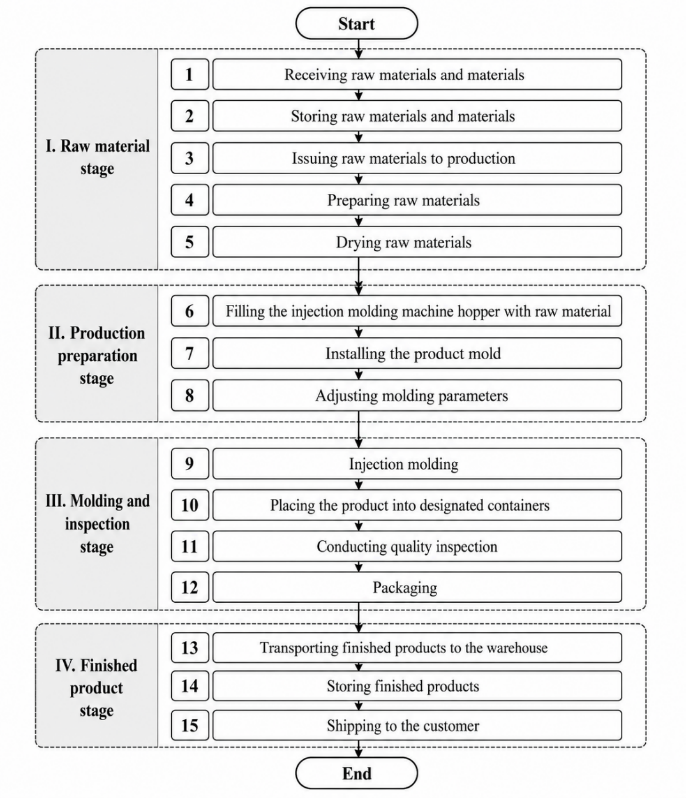 | Figure 1. Technological flow diagram of the injection molding process |
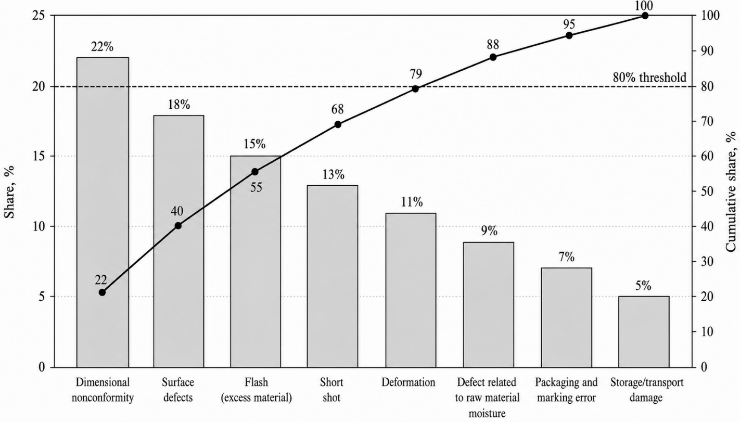 | Figure 2. Share of defects and nonconformities in the injection molding process |
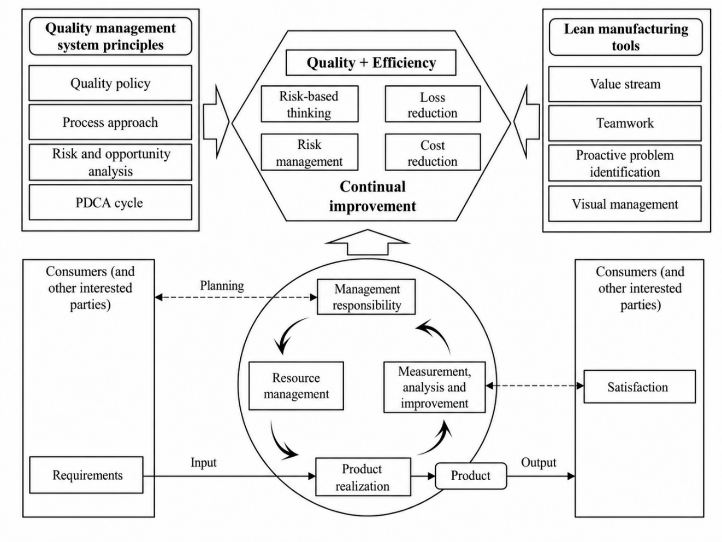 | Figure 3. Model for improving the quality management system based on lean manufacturing |
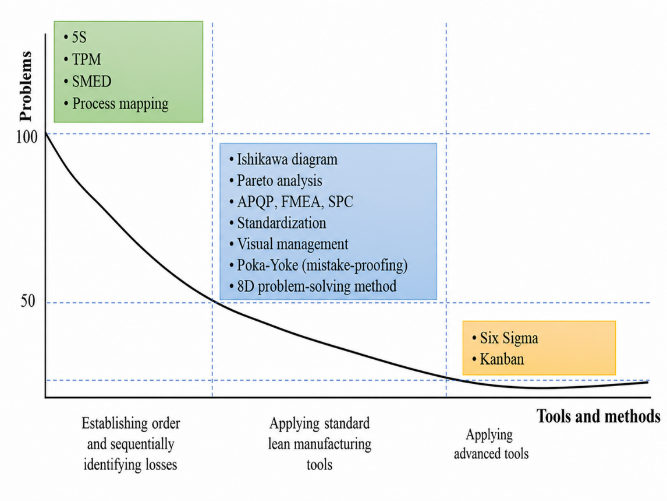 | Figure 4. Chart for selecting lean manufacturing methods |
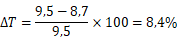 This result was achieved through the improvement of the sequence of operations, better workplace organization, and the reduction of unnecessary operator movements.Before the implementation of the improvement measures, the proportion of defective products was 1.8%. Following the introduction of the proposed measures, this indicator decreased to 1.2%. The absolute reduction in the defect rate was 0.6 percentage points, while the decrease relative to the initial level was:
 The reduction in defects was achieved by stabilizing the raw material drying regime, controlling injection molding parameters, prioritizing high-risk operations based on PFMEA, and introducing standardized operations.The enterprise’s production indicators for 2023–2025 also confirmed a consistent downward trend in the proportion of defective products. The share of defective products in total production was 2.14% in 2023, 1.60% in 2024, and 1.20% in 2025. Thus, compared with 2023, the defect rate in 2025 decreased by 0.94 percentage points, or 43.9% (Table 1).
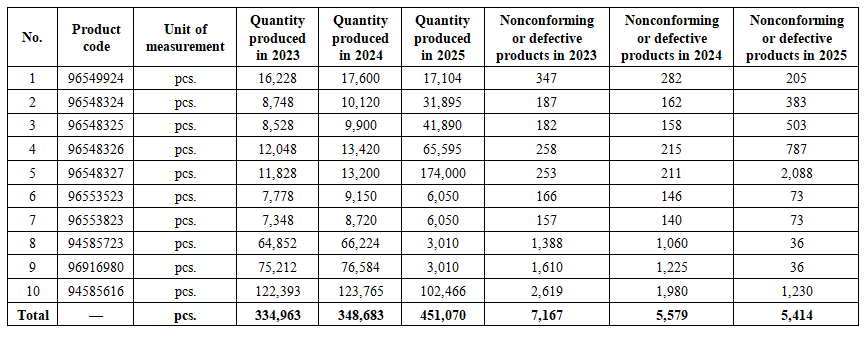 | Table 1. Data on parts manufactured at “Asaka Davr Butlovchi” LLC |
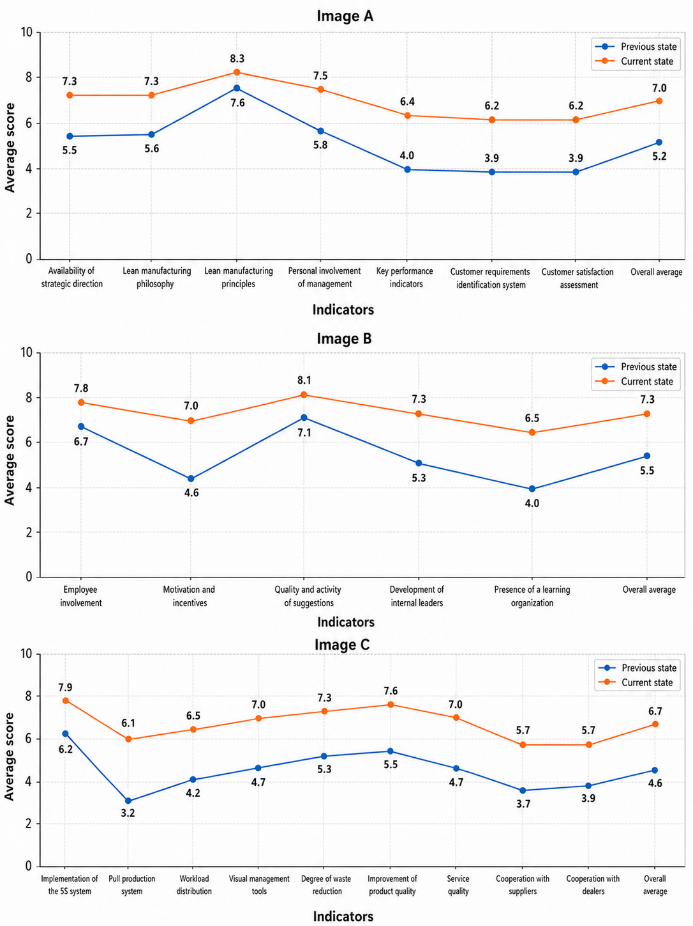 | Figure 5. Expert assessment results before and after improvement |
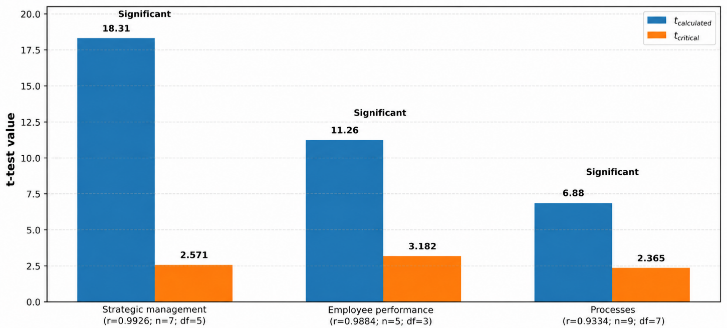 | Figure 6. Assessment of the statistical significance of correlation coefficients using Student’s t-test |
4.1. Economic Assessment of the Improvement Model
- The practical value of the model was evaluated using the enterprise-level economic data contained in the underlying dissertation study. The one-time implementation expenditure was approximately 300.0 million UZS and covered visual-management materials, small tools and equipment, employee training, documentation, and process-monitoring support. The annual economic benefit was formed by reductions in operation time, defects and rework, unnecessary internal transport, work-in-process inventory, material consumption, and use of production area. Using a conservative enterprise estimate, the annual benefit attributable to the improvement model was 138.4 million UZS.The simple payback period was Tpb = 300.0/138.4 = 2.17 years, or approximately 2.2 years. The corresponding simple annual return was ROI = (138.4/300.0) × 100 = 46.1%. These results demonstrate that the observed operational and organizational improvements were not only technically and statistically meaningful but also economically justified.
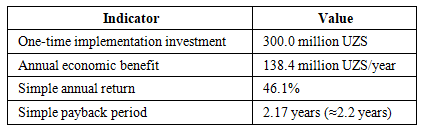 | Table 2. Economic assessment of the proposed improvement model |
5. Discussion
- The findings support the view of Shah and Ward [8] that lean manufacturing produces stronger results when tools are applied as an interrelated bundle rather than as isolated practices. They also agree with the staged implementation logic proposed by Yadav and Desai [9], because the improvements were achieved only after the initial condition had been mapped, high-priority risks had been identified, and tools had been selected for specific causes. In the present case, this coordinated sequence reduced operation time by 8.4% and the defect rate by 33.3%, demonstrating the value of linking flow analysis with risk-based quality control.Compared with the Lean Quality Management System concept described by Bacoup et al. [10] and the ISO–Lean integration discussed by Wirkus and Chmielarz [11], the present study adds an injection-molding-specific deployment pathway. The contribution is not limited to recommending integration at the organizational level; it shows how VSM findings are translated into PFMEA priorities, how those priorities are converted into control-plan requirements, and how standardized work maintains the improved state. The 45.7% increase in the manufacturing-process subsystem score indicates that the technical measures became part of the management system rather than remaining one-time improvement activities.The results are also consistent with Patchong’s emphasis on standardized work as a mechanism for process stability [12] and with recent manufacturing-process optimization findings [15]. However, this study extends earlier work by evaluating four dimensions simultaneously: technical performance, organizational effectiveness, economic benefit, and statistical reliability. The estimated annual benefit of 138.4 million UZS and the approximately 2.2-year payback period make the practical value of the model visible to decision makers and address the common weakness of reporting operational improvements without evaluating their financial consequences.The observed improvements should nevertheless be interpreted critically. Changes in product mix, equipment condition, maintenance activities, operator experience, and annual production volume may also influence cycle time and defect rates. The before-and-after case-study design demonstrates practical effectiveness but cannot isolate every causal factor in the same way as a controlled experiment. Pearson correlation and Student’s t-test confirm the consistency and statistical significance of the expert-assessment changes, but they do not by themselves prove exclusive causation by the proposed model.
5.1. Limitations and Future Research
- The study is limited to one automotive-component enterprise, one injection-molding process, and a defined family of polymer parts; therefore, the findings have analytical rather than statistical generalizability. The expert assessment may contain respondent judgment, and the economic result depends on local wage, energy, material-price, and production-volume assumptions. Long-term sustainability beyond the observation period and comparison with a non-intervention control line were not evaluated. Future research should test the model at multiple automotive and mechanical-engineering enterprises, across different machines, molds, polymers, and product volumes. Multi-site time-series studies, control groups, Overall Equipment Effectiveness and statistical-process-control indicators, digital real-time monitoring, energy and environmental metrics, and sensitivity analysis of economic assumptions are required to establish the robustness and transferability of the model.
6. Conclusions
- This study developed and tested a closed-loop model for improving injection molding processes through the integration of quality management system principles and lean manufacturing methods. The novelty of the proposed model lies in linking VSM-based process diagnosis, PFMEA-based risk prioritization, root-cause analysis, preventive control planning, standardized work, performance monitoring, and PDCA-based corrective actions within a unified process-management architecture. Unlike approaches in which lean and quality management tools are implemented as separate initiatives, the proposed model connects the identification of losses and risks with preventive control, standardization, and continual improvement.The implementation of the model reduced the operation time required to manufacture one part from 9.5 to 8.7 minutes, corresponding to an 8.4% reduction. The proportion of defective products decreased from 1.8% to 1.2%, representing a 33.3% reduction relative to the initial level. These improvements were achieved through the identification of non-value-adding activities using VSM, prioritization of process risks using PFMEA, stabilization of technological parameters, clarification of inspection points, and implementation of standardized work procedures.The organizational effectiveness of the quality management system also improved. The average score of the strategic management subsystem increased from 5.2 to 7.0 points, the employee performance subsystem from 5.5 to 7.3 points, and the manufacturing process subsystem from 4.6 to 6.7 points. Strong positive correlations were identified between the indicators before and after improvement for strategic management (r=0.9926), employee performance (r=0.9884), and manufacturing processes (r=0.9334). The calculated Student’s t-test values exceeded the corresponding critical values, confirming that the observed improvements were statistically significant at the 95% confidence level.The proposed model also demonstrated economic feasibility. With an estimated one-time implementation investment of 300.0 million UZS and an annual economic benefit of 138.4 million UZS, the simple annual return on implementation was approximately 46.1%, while the estimated payback period was approximately 2.2 years. These results demonstrate that the integrated application of VSM, PFMEA, control plans, standardized work, and systematic monitoring can simultaneously improve process stability, product quality, resource efficiency, production performance, and management decision-making.The findings provide a practical methodological basis for adapting the proposed approach to comparable injection molding, automotive-component, and mechanical-engineering processes. However, the study was conducted primarily within a single case enterprise and focused on a specific injection-molded component. Therefore, the generalizability of the results is limited by the enterprise context, equipment configuration, material characteristics, production volume, and observation period. Future research should validate the model across several enterprises, employ longer observation periods and control-group or time-series designs, and assess its robustness under different equipment, material, product, and production-volume conditions.
ACKNOWLEDGEMENTS
- The author expresses sincere gratitude to Andijan State Technical Institute for its scientific and methodological support and to the management and specialists of “Asaka Davr Butlovchi” LLC for providing access to production data, technological documentation, and practical assistance during the study. The author also appreciates the valuable recommendations and professional support provided by the research supervisor and enterprise specialists throughout the research process.
DISCLOSURE
- The author declares that there are no conflicts of interest associated with this study. The research was conducted independently, and no financial, commercial, or personal relationships influenced the research design, data analysis, interpretation of the results, or preparation of the manuscript.