Larisa R. Agababyan, Farzona B. Khurramova
Samarkand State Medical University, Samarkand, Uzbekistan
Copyright © 2026 The Author(s). Published by Scientific & Academic Publishing.
This work is licensed under the Creative Commons Attribution International License (CC BY).
http://creativecommons.org/licenses/by/4.0/

Abstract
Pregnancy is accompanied by substantial endocrine, immune, and metabolic remodeling that may alter the composition and functional activity of the maternal microbiota. Changes in the vaginal and intestinal microbiota are increasingly considered relevant to the health of both the mother and the fetus. Dysbiosis, including depletion of lactobacilli in the vaginal biotope and shifts in the intestinal microbial community, has been associated with preterm birth, urinary tract infections, bacterial vaginosis, preeclampsia, gestational diabetes mellitus, and other adverse pregnancy-related conditions. This literature review summarizes current views on the role of the maternal microbiome in obstetric health and evaluates approaches to correcting microbiocenosis disorders during pregnancy. The main strategies include probiotic supplementation, dietary modification, rational use of antimicrobial agents when clinically indicated, and, in selected non-obstetric contexts, fecal microbiota transplantation. Probiotics containing Lactobacillus and Bifidobacterium strains may help restore the normal composition of vaginal and intestinal microbiota and support local and systemic immune responses. However, available clinical evidence remains heterogeneous with respect to probiotic strains, dosage, duration of administration, and assessed outcomes. Therefore, further well-designed clinical studies are required to define optimal correction strategies and to clarify their safety and efficacy for preventing pregnancy complications.
Keywords:
Pregnancy, Microbiota, Dysbiosis, Vaginal microbiome, Gut microbiome, Probiotics, Preeclampsia, Gestational diabetes mellitus, Preterm birth
Cite this paper: Larisa R. Agababyan, Farzona B. Khurramova, A Contemporary View on the Correction of Microbiota Dysbiosis in the Treatment and Prevention of Pregnancy Complications: A Literature Review, American Journal of Medicine and Medical Sciences, Vol. 16 No. 6, 2026, pp. 2953-2956. doi: 10.5923/j.ajmms.20261606.36.
Article Outline
Abbreviations: GDM - gestational diabetes mellitus; PE - preeclampsia; FMT - fecal microbiota transplantation.The study of the human microbiota, including its role in the health of pregnant women, is a rapidly developing field of medicine. Microbiocenosis disorders, or dysbiosis, are regarded as important contributors to the pathogenesis of many diseases, including obstetric complications. In recent years, increasing attention has been paid to the correction of dysbiosis as a promising direction for the prevention and treatment of pregnancy-related disorders.During pregnancy, physiological adaptation affects the endocrine, immune, and metabolic systems. These changes may influence the balance of the maternal microbiota and, consequently, maternal and fetal health. Disturbances in the vaginal and intestinal microbial ecosystems have been linked to preterm birth, infections of the genitourinary tract, preeclampsia, gestational diabetes mellitus, and other complications. The growing body of evidence highlights the potential importance of correcting dysbiosis as part of comprehensive obstetric care.The human microbiota is a complex community of microorganisms that lives in symbiosis with the host and contributes to the maintenance of homeostasis. In pregnancy, the most clinically significant changes occur in the vaginal and intestinal microbiota. These microbial communities respond to hormonal and immune shifts that accompany gestation.The vaginal microbiota plays a key role in maintaining a stable microbial ecosystem and in preventing infectious complications such as bacterial vaginosis and candidiasis. A Lactobacillus-dominated vaginal microbiota contributes to colonization resistance by lowering vaginal pH and inhibiting the growth of potentially pathogenic microorganisms. Changes in the intestinal microbiota may influence inflammatory responses, immune reactivity, and metabolism, thereby affecting the course of pregnancy and the risk of complications [8,12].The maternal gut microbiome is also considered relevant to fetal and neonatal development. It may affect maternal metabolic status, inflammatory pathways, and immune regulation. In addition, maternal microbial communities are involved in the early formation of the infant microbiome, particularly during and after birth. Figure 1 summarizes key maternal and infant health outcomes that have been associated with the maternal gut microbiome [7].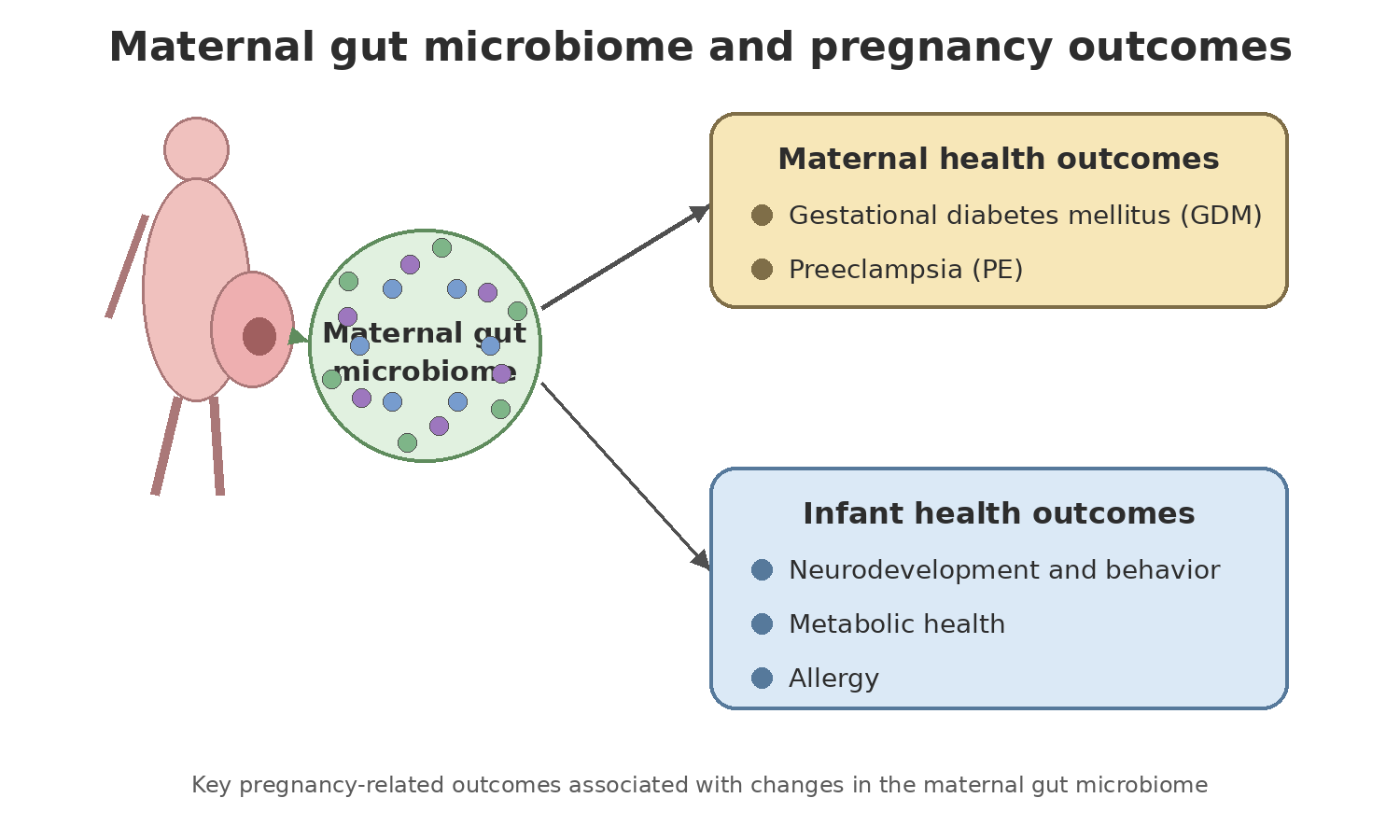 | Figure 1. Main maternal and infant health outcomes related to the maternal gut microbiome [7] |
Accumulated evidence indicates that microbiota disturbances are associated with several obstetric conditions. Although causal mechanisms are still being investigated, microbial imbalance may promote local and systemic inflammation, weaken epithelial barrier function, and increase susceptibility to ascending infections.Vaginal dysbiosis characterized by a reduced abundance of lactobacilli and a predominance of anaerobic bacteria has been associated with an increased risk of preterm birth. One of the main proposed mechanisms is disruption of the protective barrier function of the vaginal microbiota, which may contribute to activation of inflammatory pathways and infection-related processes [8,12].Disruption of the normal vaginal microbiota can increase predisposition to urinary tract infections, including cystitis. This is particularly important during pregnancy, when anatomical and physiological changes already increase the risk of urinary tract complications. Timely diagnosis and correction of microbial imbalance may therefore be relevant to the prevention of ascending infection and adverse obstetric outcomes [2,16].Alterations in the composition of the intestinal microbiota may be associated with the development of preeclampsia through their effects on immune response and inflammatory mechanisms. Reduced microbial diversity and imbalance between gram-positive and gram-negative microorganisms may contribute to chronic inflammation and systemic inflammatory activation, which are considered important components in the pathogenesis of preeclampsia [10].Several studies suggest that the gut microbiota may play a role in the pathogenesis of gestational diabetes mellitus. A decrease in bifidobacteria, an increase in Firmicutes, and other shifts in intestinal microbial composition have been associated with insulin resistance and metabolic disturbances during pregnancy [12,14]. These findings support the need to study microbiome-targeted interventions as part of strategies for improving metabolic health in pregnant women.Correction of microbiota disorders in pregnant women is mainly based on probiotic use, dietary therapy, and, when clinically required, antimicrobial or antiseptic therapy. Selection of any intervention should consider gestational age, clinical symptoms, microbiological findings, safety, and the potential benefit-risk ratio.Probiotics used during pregnancy may contribute to restoration of vaginal and intestinal microbial balance. Preparations containing lactobacilli and bifidobacteria have been reported to support the recovery of normal microbiota composition, suppress opportunistic microorganisms, and improve immune function. Some studies suggest that probiotics may reduce the frequency of genitourinary infections and bacterial vaginosis in pregnant women [9,13].At the same time, probiotic efficacy is not universal and depends on the strain, dose, duration of administration, route of administration, baseline microbiota composition, and clinical indication. The use of probiotic products containing Lactobacillus rhamnosus GR-1 and Lactobacillus reuteri RC-14 has been discussed in the literature as a possible approach to correcting vaginal and intestinal dysbiosis at different stages of gestation [1]. The vaginal microbiota represents the first line of protection against pathogens of the reproductive tract, and disruption of its normal composition may reduce local protective capacity and increase susceptibility to infections of the lower genital tract [2,10].Nutrition is an important factor in microbiota regulation. Diets rich in fiber and fermented foods containing probiotic cultures, such as kefir and yogurt, may support restoration of a healthy gut microbiota. Limiting excessive sugar and fat intake may also help maintain a more favorable intestinal and vaginal microbial profile [2,5]. Diet therapy aimed at supporting microbiota balance should be regarded as an important component of comprehensive prevention of pregnancy complications.When infections require antimicrobial therapy, it is important to minimize unnecessary or prolonged antibiotic exposure in order to reduce further disruption of the microbiota. Nevertheless, antibiotics remain essential in the treatment of clinically significant infections, including urinary tract infections and bacterial vaginosis, because untreated infections may lead to serious pregnancy complications [6,17]. Antimicrobial treatment should therefore be justified, targeted whenever possible, and combined with strategies for restoring normal microbiocenosis after therapy when appropriate.Fecal microbiota transplantation is an innovative method used to restore intestinal microbiota in severe dysbiosis that does not respond to standard treatment. However, its use in obstetric practice requires further investigation, with particular emphasis on maternal-fetal safety, donor screening, long-term outcomes, and ethical considerations [15,16]. At present, fecal microbiota transplantation should not be considered a routine method for correcting dysbiosis during pregnancy.The late twentieth and early twenty-first centuries have been characterized by the development of numerous methods for supplementing Lactobacillus species in the human body, especially in women. The field has evolved from the use of preparations containing relatively small numbers of lactobacilli to modern technologies based on billions of colony-forming units and different combinations of microorganisms and routes of administration [3,4].Because an increasing number of associations have been identified between the maternal gut microbiome and outcomes for both the mother and child, modulation of the gut microbiome is an attractive direction for disease prevention. These data have led to an increase in prebiotic and probiotic interventions aimed at preventing pregnancy complications and optimizing infant health. Among these approaches, probiotics have been studied most extensively.However, the available studies are highly heterogeneous in terms of probiotic strains, duration of administration, route of use, and evaluated complications. This makes it difficult to draw definitive conclusions about clinical effectiveness. A Cochrane systematic review published in 2021 recommended caution when using probiotics during pregnancy. The review included six studies with a total of 1,440 participants and concluded that it remains unclear whether probiotics affect the risk of gestational diabetes mellitus [3,6]. In addition, the review reported uncertainty regarding maternal weight gain and raised concerns about possible effects on preeclampsia risk.Jarde et al. conducted a systematic review of 19 studies including 4,098 participants and did not identify a definitive association between probiotic or prebiotic supplementation and improved clinical outcomes in women and their infants [11,15]. It should also be noted that the benefits of probiotic supplementation for the gut microbiome of healthy non-pregnant adults remain widely debated despite a large number of studies [4,5,17].At the same time, there are data supporting pathogenetically based correction of vaginal and intestinal dysbiosis in pregnant women. These data are based on the role of intestinal and vaginal biotopes in the development of preterm birth, gestational diabetes mellitus, and preeclampsia. Further work is needed to determine which groups of pregnant women are most likely to benefit from microbiome-targeted interventions and which regimens are most effective and safe.Clinical studies conducted at the Department of Obstetrics and Gynecology with a course in Perinatology at RUDN University have reported the effectiveness of L. rhamnosus GR-1 and L. reuteri RC-14 in both pregnant and non-pregnant women. Reported benefits included use during menstruation, adolescence, combination with local therapy, use during the working day, pregnancy complications associated with genital bleeding, and restoration of normal biocenosis in both the intestine and the vagina [3,6].The use of probiotics containing Lactobacillus casei rhamnosus in patients with bacterial vaginosis has also been reported to improve treatment results and promote active normalization of the vaginal microbiocenosis [2,8]. Nevertheless, the protective role of specific Lactobacillus species in the female reproductive tract remains incompletely understood. This knowledge gap limits the development of effective, evidence-based probiotic therapies and highlights the need for further evaluation of their efficacy in preserving and improving reproductive health [2,10].Despite significant progress in understanding the role of microbiota in pregnancy, several important questions remain unresolved. These include optimal probiotic strains, dosing regimens, duration of therapy, timing of initiation, and criteria for treatment monitoring. It is also necessary to consider environmental exposure, stress, nutrition, antimicrobial use, comorbidities, and other factors that may affect the maternal microbiome.The future of microbiocenosis correction in obstetrics is likely to involve personalized approaches based on microbiological diagnosis, clinical risk stratification, and targeted selection of probiotic or other microbiome-modulating interventions. To determine whether probiotics and prebiotics can improve pregnancy outcomes for mothers or infants, additional well-designed, adequately powered, and standardized clinical trials are required.ConclusionCorrection of microbiocenosis disorders in obstetric practice represents an important strategy for the prevention and treatment of pregnancy complications. Vaginal and intestinal dysbiosis may be associated with preterm birth, genitourinary infections, preeclampsia, gestational diabetes mellitus, and adverse infant outcomes. Probiotics, dietary therapy, and rational antimicrobial treatment are the main approaches currently discussed for microbiota correction during pregnancy. However, the clinical evidence remains heterogeneous, and definitive recommendations require further investigation. Future research should focus on the safety, efficacy, and personalization of microbiome-targeted interventions for pregnant women.
References
| [1] | Bondarenko KR, Dobrokhotova YuE, Novik MYu. Opportunities for prevention of late obstetric complications through correction of endogenous microbiota. Meditsinskiy alfavit. 2017; 3(23): 6-14. (In Russian). |
| [2] | Dobrokhotova YuE, Bondarenko KR, Shadrova PA. The role of lactobacilli in restoring normal vaginal microbiota. Voprosy ginekologii, akusherstva i perinatologii. 2021; 20(2): 126-133. (In Russian). |
| [3] | Radzinsky VE, et al. Oral probiotics: a mechanism of dual action in the correction of dysbiosis. What is known? Akusherstvo i ginekologiya: Novosti. Mneniya. Obucheniya. 2023; 11(Suppl): 85-90. (In Russian). |
| [4] | Sobel JD, et al. Microbial causes of vaginitis. Clinical Microbiology Reviews. 2017; 30(3): 577-603. |
| [5] | Kira EF. Probiotics in restoring the vaginal microbiocenosis. Akusherstvo i ginekologiya. 2017; (5): 32-38. (In Russian). |
| [6] | Davidson S, Barrett H, Price S, Callaway L, Dekker Nitert M. Probiotics for preventing gestational diabetes. Cochrane Database Syst Rev. 2021; (4): CD009951. doi: 10.1002/14651858.CD009951.pub3. |
| [7] | DiGiulio DB, Callahan BJ, McMurdie PJ, Costello EK, Lyell DJ, Robaczewska A, Sun CL, Goltsman DSA, Wong RJ, Shaw G, et al. Temporal and spatial variation of the human microbiota during pregnancy. Proc Natl Acad Sci USA. 2015; 112: 11060-11065. |
| [8] | Domingues RM, Rodrigues JF, Santos J, et al. Microbiota dynamics and its impact on vaginal health during pregnancy: a comprehensive review. Curr Opin Microbiol. 2021; 74: 1-8. |
| [9] | Isolauri E, Salminen S, von Wright M, et al. Probiotics and Prebiotics: Basic Principles and Applications. Wiley-Blackwell; 2015. |
| [10] | Jang Y, Kim M, Hong S, et al. Probiotics and their effect on preventing and treating infections during pregnancy: a systematic review. J Korean Med Sci. 2020; 35(1): e72. |
| [11] | Jarde A, Lewis-Mikhael AM, Moayyedi P, Stearns JC, Collins SM, Beyene J, McDonald SD. Pregnancy outcomes in women taking probiotics or prebiotics: a systematic review and meta-analysis. BMC Pregnancy Childbirth. 2018; 18(1): 14. |
| [12] | Koren O, Goodrich JK, Cullender TC, et al. Host remodeling of the gut microbiome and metabolic changes during pregnancy. Cell. 2012; 150(3): 715-725. |
| [13] | Mendling W, Ziklo N, Smith C, et al. Vaginal microbiota and the risk of preterm birth. Eur J Obstet Gynecol Reprod Biol. 2020; 246: 65-69. |
| [14] | Nuriel-Ohayon M, Neuman H, Koren O. Microbial changes during pregnancy, birth, and infancy. Front Microbiol. 2016; 7: 1031. |
| [15] | Vrieze A, Van Nood E, Holleman F, et al. Transfer of intestinal microbiota from lean donors increases insulin sensitivity in individuals with metabolic syndrome. Gastroenterology. 2018; 145(3): 573-583. |
| [16] | Zhang C, Yang L, Yao J, et al. Gut microbiome changes in pregnancy and the development of gestational diabetes. Front Microbiol. 2020; 11: 568. |
| [17] | Zmora N, Zilberman-Schapira G, Suez J, et al. Personalized gut mucosal colonization resistance to empiric probiotics is associated with unique host and microbiome features. Cell. 2018; 174(7): 1388-1405.e21. |


 Abstract
 Reference
 Full-Text PDF
 Full-text HTML