Mirsoliev Shahzod Gulomovich, Safoev Bakodir Barnoyevich, Boltaev Timur Shavkatovich
Bukhara State Medical Institute, Bukhara, Uzbekistan
Correspondence to: Mirsoliev Shahzod Gulomovich, Bukhara State Medical Institute, Bukhara, Uzbekistan.
| Email: |  |
Copyright © 2026 The Author(s). Published by Scientific & Academic Publishing.
This work is licensed under the Creative Commons Attribution International License (CC BY).
http://creativecommons.org/licenses/by/4.0/

Abstract
Purulent wounds of the soft tissues of the limbs remain one of the most complex and socially significant problems in modern surgery. The aim of this study was to improve the treatment results of patients with severe forms of purulent wounds of the soft tissues of the upper and lower extremities by applying an improved physicochemical method and prolonged wound washing. Research materials and methods. The examination and treatment data of 113 patients with purulent diseases of the limbs were analyzed, of whom 65 patients were included in the I comparison group, where traditional treatment methods were used. Group II included 48 patients; in addition to the traditional treatment method, this group of patients underwent ultrasound and prolonged wound washing with a 25% dimexide solution. Results. The use of local ultrasound of the wound and prolonged washing with a 25% dimexide solution in the complex treatment of Group II patients with purulent wounds of the soft tissues of the limbs contributed to the complete cleansing of the wound from infection by the 3rd day of treatment. On the 2nd day, an active dissolution of the infiltrate around the wound was observed in them. The onset of granulation was noted on the 5th day of treatment, and epithelialization on the 6th–7th day. The significant lead time in Group II reached 1.5–2 days. Conclusion. Taking into account the results of the comparative analysis, an optimal method for treating patients with purulent wounds of the soft tissues of the limbs was developed through the combined use of local UV radiation and prolonged wound washing with a 25% dimexide solution.
Keywords:
Wound, Ultraviolet radiation, Prolonged washing, Dimexide
Cite this paper: Mirsoliev Shahzod Gulomovich, Safoev Bakodir Barnoyevich, Boltaev Timur Shavkatovich, Determining the Effectiveness of the Treatment Method for Purulent Wounds of Soft Tissues of Externity Using Physical-Chemical Method and Long-Term Washing, American Journal of Medicine and Medical Sciences, Vol. 16 No. 5, 2026, pp. 2672-2679. doi: 10.5923/j.ajmms.20261605.85.
1. Introduction
Purulent wounds of the soft tissues of the extremities remain one of the most complex and socially significant problems in modern surgery. Their relevance is due to their high prevalence, tendency toward a prolonged and complicated course, significant economic costs for patient treatment and rehabilitation, as well as the risk of disability and death [3,8].According to modern research, purulent-septic infections occupy a leading position in the structure of intra-hospital surgical infections and account for up to 84% of all nosological forms, with approximately 51% accounting for postoperative wound infections. This indicates that the problem of purulent wounds, including soft tissue lesions of the limbs, remains extremely relevant and requires further improvement of treatment approaches [2,4].The frequency of surgical wound infections varies widely and depends on many factors: the nature of the wound, the degree of microbial contamination, the patient's immune state, and the treatment methods used. On average, the incidence of postoperative infections is about 3–6%, but in unfavorable conditions, it can reach 20% or more, and in individual cases, up to 70%. At the same time, the risk of developing infectious complications increases significantly in so-called "contaminated" and "dirty" wounds, where the frequency of complications can reach 30-40% [1,6].Special problems include purulent wounds of the soft tissues of the limbs, which are often formed as a result of injuries, surgical interventions, vascular disorders, and diabetes mellitus. It has been established that the localization of a wound in the lower extremities is in itself a factor of increased infection risk: the probability of infection development in wounds of this localization can increase more than 4 times. This is due to blood supply characteristics, frequent microcirculation disorders, and a high probability of contamination [5,7].Despite significant achievements in modern medicine, including the development of antibacterial therapy, the introduction of minimally invasive technologies, and the improvement of surgical wound treatment methods, the problem of treating purulent wounds remains unresolved. One of the key reasons is the increasing antibiotic resistance of microorganisms, which significantly reduces the effectiveness of standard therapy and requires the search for alternative or combined treatment methods [9].Thus, the high prevalence of purulent wounds of the soft tissues of the limbs, the significant frequency of complications, the limited effectiveness of traditional treatment methods, and the need to implement modern technologies determine the relevance of this study aimed at evaluating the effectiveness of using the physicochemical method and long-term washing in the treatment of this pathology.The purpose of this study was to improve the treatment results of patients with severe forms of purulent wounds of the soft tissues of the upper and lower extremities by applying an improved physicochemical method and prolonged wound washing.
2. Materials and Research Methods
Data from the examination and treatment of 113 patients with purulent diseases of the extremities were analyzed, of whom 65 patients with severe forms of purulent soft tissue diseases of the upper and lower extremities without diabetes who were treated in the surgery department of the Bukhara Regional Multidisciplinary Medical Center and the Bukhara City Medical Association in 2020-2024 were included in the first comparison group. These patients were treated using a traditional treatment method that included local sanation of wounds with an antiseptic solution of 25% dimexide, necrectomy, water-soluble ointment under an aseptic dressing, general detoxification therapy, and mandatory endovascular diagnostics and treatment. The II - main group of our study included 48 patients with severe forms of purulent soft tissue diseases of the upper and lower extremities without diabetes who were treated in the surgery department of the Bukhara Regional Multidisciplinary Medical Center and the Bukhara City Medical Association during 2025-2026 years. During the treatment of this group of patients, in addition to the traditional treatment method, ultrasound and prolonged wound washing with a 25% dimexide solution were performed (Table 1).Table 1. Distribution of patients by type of treatment (n=113)
 |
| |
|
On the day of admission, all examined patients underwent objective, subjective, general clinical, and instrumental examinations to accurately clarify the diagnosis and assess the somatic condition of the patients.After adhering to the main principles of treating purulent wounds, namely: opening the purulent focus, reviewing and sanitizing the purulent cavity with antiseptic solutions, and if necessary, performing necrectomy, as a local treatment for purulent-necrotic lesions of the limbs, we moved to the next stage - treatment using a long-term washing device invented by B.B. Safoev, designed for treating purulent-necrotic wounds of the limbs in a controlled abacterial environment (invention patent No. FAP 20240005 dated 05.01.2024).After each use of the device, its removable elements are disassembled and subjected to sanitary treatment with disinfectants consisting of 1 part 5% sodium hypochlorite (disinfectant) diluted in 9 parts deionized water, and also, after drying, with ultraviolet rays of their own lamps for 30.During the treatment period, an objective assessment of the course of general and local manifestations of the wound process was conducted based on subjective indicators (character of the wound discharge, infiltrate dissolution, condition of wound edges, features of granulation tissue development and epithelialization) and objective data (body temperature, results of general clinical blood analysis, leukocyte index of intoxication, concentration of medium-molecular peptides in blood serum, pH of the wound discharge, calculation of the M. F. Mazurik PCI indicator, percentage of reduction in wound surface area, wound healing rate, results of bacteriological and cytological studies).The sensitivity of aerobic bacteria was determined by diffusion from standard discs in a dense nutrient medium, and anaerobic microbes by diffusion in agar using antiseptic holes.
3. Results and Their Discussions
Group I included 65 patients with purulent diseases of the soft tissues of the upper and lower extremities. Of these, 36 (55.4%) patients had purulent wounds of the upper extremities, and 29 (44.6%) had purulent wounds of the lower extremities.Of the 65 examined patients in this group, 39 (60.0%) were admitted to the clinic with various purulent soft tissue diseases, while 26 (40.0%) were hospitalized with existing extensive purulent wounds of various etiologies, referred from other medical hospitals or outpatient institutions, in the first phase of the wound process. (Fig. 1).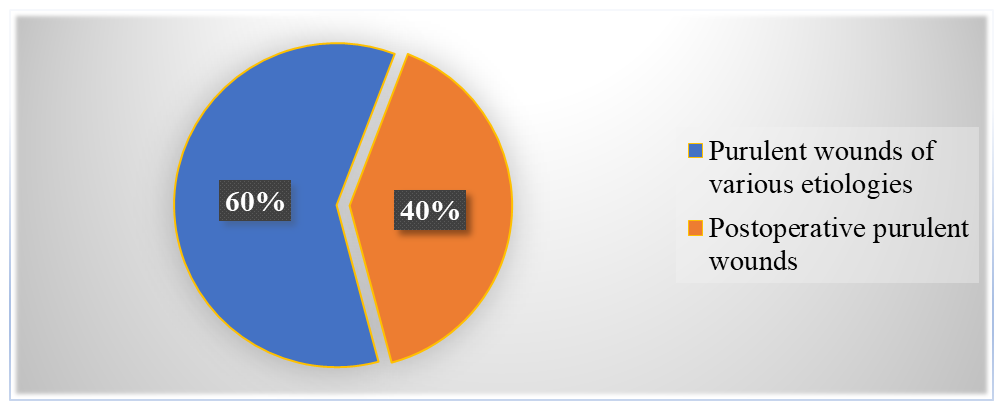 | Figure 1. Distribution of Group I patients by localization |
All 39 patients admitted with various purulent diseases of the soft tissues of the limbs underwent an opening of the purulent focus and wound sanation on the day of admission. Further treatment tactics were identical to those in patients admitted with purulent wounds, including daily treatment of the wound with antiseptic solutions followed by application of "Levomekol" ointment and a 25% dimexide solution under the aseptic dressing.The general condition of patients in both groups upon admission was, in most cases, of moderate severity. According to clinical and laboratory data, general intoxication manifestations predominated: elevated body temperature or persistent subfebrility, pallor, hypodynamia, tachycardia against a background of weak pulse, elevated blood ESR, leukocytosis, and a shift in formula to the left. In parallel with the general symptoms, local manifestations of the disease were pronounced: hyperemia, swelling, and tissue infiltration in the wound area. Palpation revealed a deep, painful infiltration. In patients with postoperative purulent complications, abundant purulent discharge from wounds was noted during suture removal.On the day of admission, during wound treatment in patients admitted with purulent wounds, subcutaneous localization of the purulent process was identified in 41 (63.1%) observations. Intermuscular localization of the purulent process was identified in 6 (9.2%) cases and was primarily observed in patients with purulent wounds of the limbs. Subaponeurotic localization was identified in 12 (18.5%) patients, and in 5 (7.7%) cases, the spread of the purulent process throughout the entire wound was noted (Fig. 2).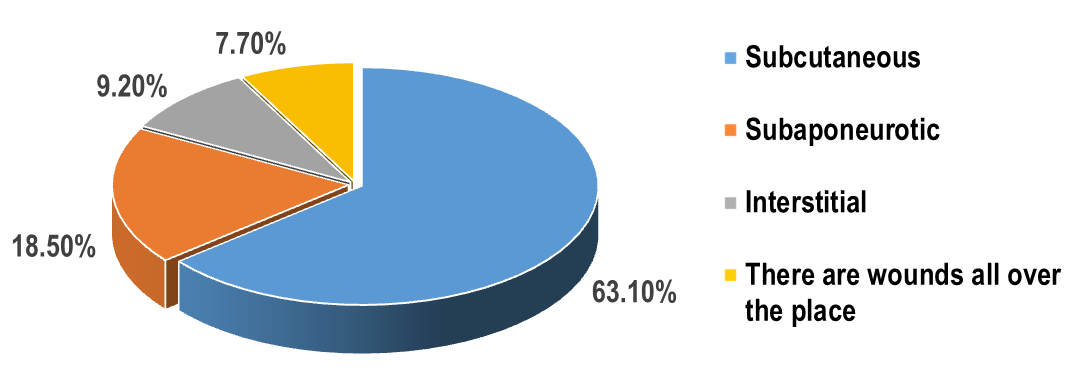 | Figure 2. Distribution of Group I patients with purulent wounds in depending on the prevalence of the purulent process |
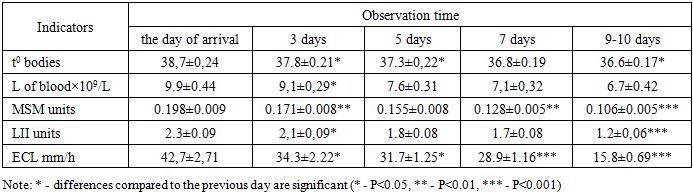
All patients with postoperative wounds were admitted during the first phase of the wound process.It should be noted that, given the pathogenetic features of the disease, patients with comorbid diabetes mellitus were not included in the study.Analysis of the body intoxication indicators in patients with purulent soft tissue diseases in comparison group I revealed the following changes (Table 2). As seen from the table, on the first day of treatment, the body temperature of patients averaged 38.7±0.24°C. The leukocyte content in the blood averaged 9.9±0.44 x 10⁹/L. The volume of average molecules averaged 0.198±0.009 units. Similarly, an increase in LII and ESR was noted.Table 2. Dynamics of intoxication indicators in patients with purulent soft tissue diseases I - comparison group (n=65)
 |
| |
|
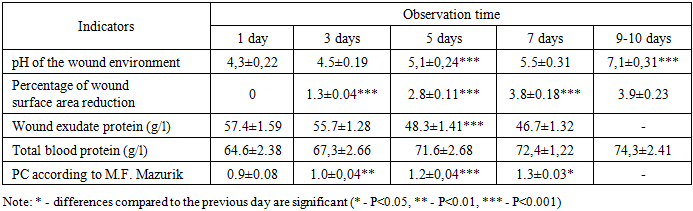
Only by the seventh day of treatment did these figures, although they had a downward trend, remain above the norm.Upon further treatment and observation, by the tenth day, all analyzed intoxication indicators, except for blood ESR, were within the normal range.The next criteria for assessing the dynamics of the wound process in patients were the pH of the wound environment, the percentage of reduction in the wound surface area, and PC parameters according to M.F. Mazurik (Table 3). In the analyzed group of patients, on the first day of inpatient treatment, the initial pH level of the wound medium was significantly lower (acidosis) and averaged 4.3±0,22. Wound exudate protein averaged 57.4±1.59 g/l. At the same time, PC averaged 0.9±0.08 units.Table 3. Dynamics of biochemical indicators and wound healing rate in patients of comparison group I (n=65)
 |
| |
|
By the seventh day, the wound area was 1.3±0.03, and the wound area significantly decreased by 3.8±0.18% per day. The pH of the wound medium averaged 5.5±0.31. Only by the tenth day of treatment did the pH of the wound medium become neutral. The reduction in wound surface area over the past 24 hours was 3.9±0.23%. The secretion of exudate from the wound has ceased, which, in our opinion, is due to the transition of the wound process from phase 1 to phase 2.An important characteristic criterion for assessing the wound process was the identification of microbial contamination, the species composition of the microflora, and the timing of wound cleansing. The species composition of the microflora identified from the exudate of infected wounds in patients with purulent diseases of the soft tissues of the limbs.Dynamic monitoring of the level of microbial contamination of purulent wounds in patients of this subgroup revealed the following: at the time of admission, microbial contamination averaged 108 mt/g; on the following day after surgical treatment of the wound with a ointment bandage, its values were 105 mt/g. By the 4th day of complex treatment, the degree of microbial contamination in these patients was below the critical level and amounted to 102mt/g of tissue.The data presented in Figure 3 indicate that in the analyzed group of patients, the cleansing of wounds from infection occurred on average by 6.0±0.5 days. By the third day, the infiltrates had dissolved.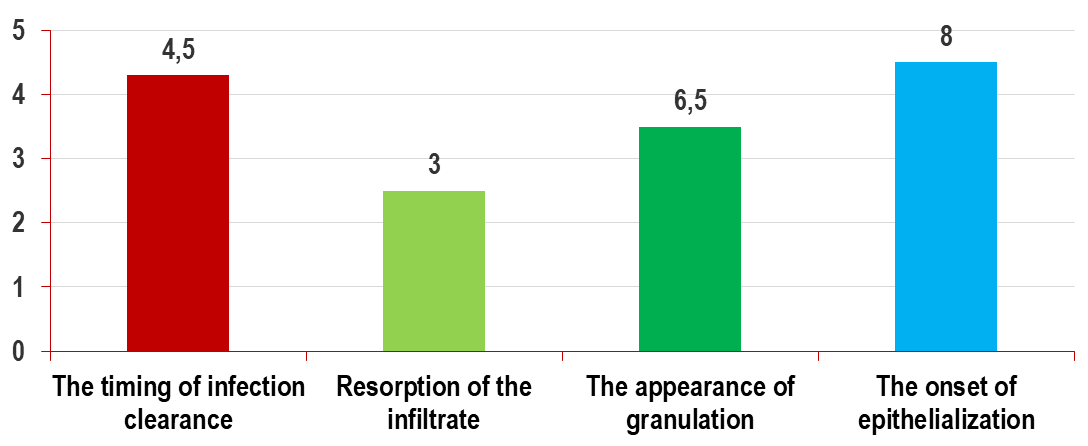 | Figure 3. Periods of wound cleansing and healing in Group I patients comparisons with purulent-necrotic diseases of the extremities (n=65) |
The onset of granulation was noted on average on the sixth day. These data are confirmed by cytological studies. Thus, on the third day, a large number of destructive and degeneratively altered leukocytes, predominantly with incomplete and distorted types of phagocytosis, were identified in cytological preparations.On the fifth day, the cytological picture was predominantly inflammatory and inflammatory-regenerative in nature, and only by the seventh day was a predominantly regenerative type of cytogram identified.The conducted study of patients in the comparison group with purulent-necrotic diseases of the soft tissues of the limbs revealed the following features of the wound process during traditional treatment: the use of "Levomekol" ointment for local treatment of a purulent wound leads to complete cleansing of the wound and normalization of clinical and laboratory indicators of intoxication. At the same time, to assess the course of the wound process, both body intoxication indicators (L, MSM, LII, ESR) and biochemical indicators of wound exudate (pH, wound exudate protein, PC according to Mazurik) are of important diagnostic and prognostic importance.Indicators of the main assessment criteria and the dynamics of the wound process - the late clearing of infection from the wound only by the 4.5th day of treatment, the onset of granulation by the 6-7th day of treatment, and the onset of epithelialization by the 8th-9th day of treatment - leave much to be desired. The biochemical indicators of wound exudate normalize only by the 10th day of treatment. The average treatment duration for patients in the comparison group was 11.5±0.5 days. All of this necessitated the development of additional measures aimed at improving treatment methods for purulent soft tissue diseases.The unsatisfactory results obtained during the application of the traditional treatment method for patients with purulent-necrotic lesions of the soft tissues of the limbs set the task of improving the treatment methods used and developing new methods for complex treatment of this pathology using physicochemical methods in combination with ultrasound of the wound and prolonged washing with a 25% dimexide solution, which possesses anti-inflammatory and antibacterial effects regardless of the type and resistance of the microorganism.Group II included 48 patients with purulent diseases of the soft tissues of the upper and lower extremities. Of these, 25 (52.1%) patients had purulent wounds of the upper limbs, and 23 (47.9%) patients had purulent wounds of the lower limbs. Of the 48 examined patients in the main group, 28 (58.3%) were admitted to the clinic with various purulent soft tissue diseases, and 20 (41.7%) patients were admitted with existing extensive purulent wounds of various etiologies, which were admitted from other medical hospitals or outpatient clinics in the first phase of the wound process (Fig. 4).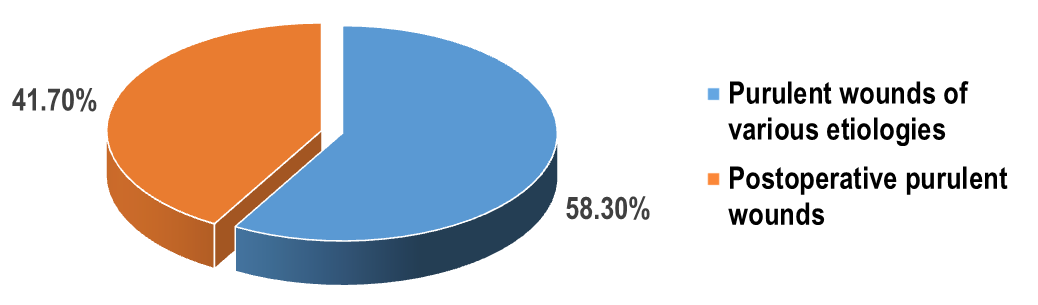 | Figure 4. Distribution of Group II patients by localization |
On the day of admission, all 28 patients admitted with various purulent diseases of the soft tissues of the limbs underwent an incision of the purulent focus and sanation of the wound process.Comprehensive treatment tactics for patients in the second main group, unlike the control group, were as follows: on the day of admission, an emergency operation was performed to open the purulent focus and sanitize the purulent cavity with antiseptic solutions containing a 3% hydrogen peroxide solution. After drying, the wound was sanitized with a 25% dimexide solution, followed by prolonged wound washing using a 25% dimexide solution in a specially developed device in our clinic.It should be noted that on the day of patient admission, prior to the first procedure, material was taken from the wound walls (using a sterile ball) or from the wound secretion (exudate) for bacteriological examination to conduct targeted antibiotic therapy. As the patients' condition improved, the procedure was discontinued one day before discharge. All recovered patients were discharged during the second phase of the wound process.On the day of admission, during wound treatment in patients admitted with purulent wounds, subcutaneous localization of the purulent process was identified in 31 (64.6%) observations. Intermuscular localization of the purulent process was identified in 5 (10.4%) cases and was primarily observed in patients with purulent wounds of the limbs. Subaponeurotic localization was identified in 9 (18.7%) patients, and in 3 (6.3%) cases, the spread of the purulent process throughout the entire wound was noted (Fig. 5). 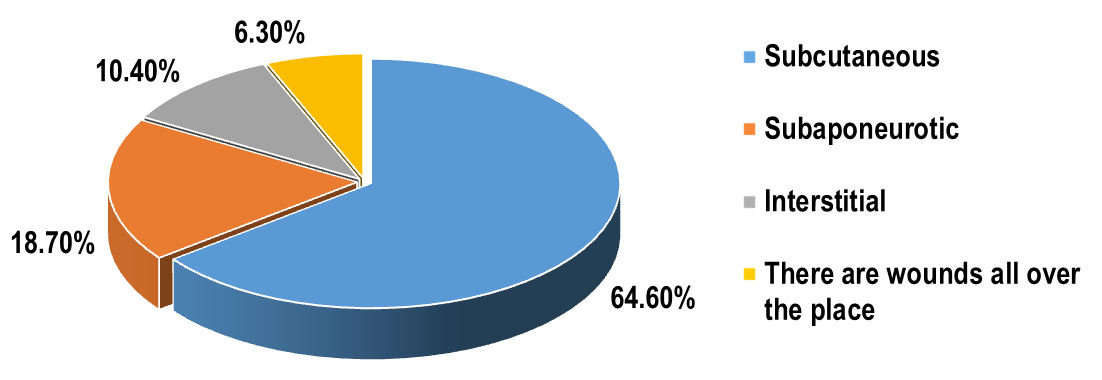 | Figure 5. Distribution of Group II patients with purulent limb wounds depending on the prevalence of the purulent process |
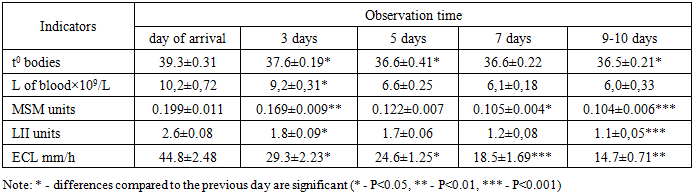
Analysis of the body intoxication indicators in patients with purulent soft tissue diseases of the II-main comparison group revealed the following changes (Table 4). As seen from the table, on the first day of treatment, the body temperature of patients averaged 39.3±0,31°C. The leukocyte content in the blood averaged 10.2±0,72 x 10⁹/L. The volume of the average molecules averaged 0.199±0.011 units. Similarly, an increase in LII and ESR was noted.Table 4. Dynamics of intoxication indicators in patients with purulent soft tissue diseases of the extremities of Group II (n=48)
 |
| |
|
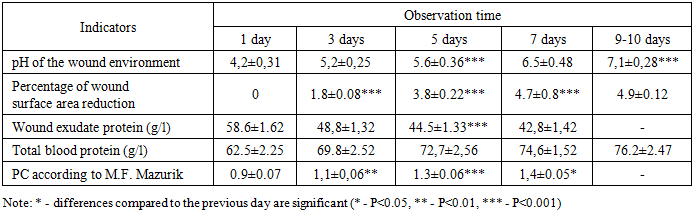
By the fifth day of treatment, there was a trend toward further decrease (36.6±0.41°C). At the same time, for all body intoxication indicators: L, MSM, LII, and blood ESR, a further decrease was noted, indicating a trend toward normalization—6.6±0.25×10⁹; 0.122±0.007; 1.7±0.06; 24.6±1.25 respectively. The following criteria for assessing the dynamics of the wound process in patients were the pH of the wound environment, the percentage of wound surface area reduction, and PC indicators according to M.F. Mazurik (Table 5. In the analyzed group of patients, on the first day of inpatient treatment, the initial pH level of the wound environment was significantly lower (acidosis) and averaged 4.2±0,31. The wound exudate protein averaged 58.6±1.62 g/l. At the same time, the PC averaged 0.9±0.07 units. Table 5. Dynamics of biochemical indicators and wound healing rate in Group II patients (n=48)
 |
| |
|
By the third day of treatment, the pH of the wound medium averaged 5.2±0.25, and the percentage of wound surface area reduction per day averaged 1.8±0.08%. The protein fraction of wound exudate averaged 48.8±1.32 g/l, while in the blood it was 69.8±2.52 g/l, with a PC according to Mazurik at 1.1±0.06. On the fifth day of treatment, the pH of the wound medium reached 5.6±0.36, and the percentage of wound surface area reduction approached normal values at 3.8±0.22% per day. The PC according to M.F. Mazurik was 1.3±0.06 during this period. On the seventh day, the pH of the wound medium approached neutral at 6.5±0.48, while the PC according to Mazurik was 1.4±0.05, and the daily decrease in wound surface was 4.7±0.8%. It should be noted that all analyzed biochemical indicators and wound healing rates were within normal values by the 7th day of treatment (Table 1). 5). Exudate secretion from the wound has ceased, which, in our opinion, is due to the transition of the wound process from phase 1 to phase 2.Dynamic monitoring of the level of microbial contamination of purulent wounds in the analyzed subgroup revealed the following: at the time of admission, the microbial contamination of the wound was comparable to the first group and amounted to 108 Mt/g; after surgical treatment of the wound and local ultrasound of the wound and prolonged washing with a 25% dimexide solution, it decreased by 4 orders of magnitude; during the combined treatment method, a further decrease was noted, and by the 2-3rd day of treatment, the microbial contamination of the wound in these patients was at or below the critical level, amounting to 103 Mt/g – 102 Mt/g of tissue.The use of ultrasonic wound irradiation and prolonged washing with a 25% dimexide solution in the complex treatment of patients with purulent diseases of the body's soft tissues contributed to the complete cleansing of wounds from infection by the 3rd day of treatment. By the 2nd day, active dissolution of the infiltrate around the wound was observed. The onset of granulation was noted by the 5th day of treatment, and epithelialization by the 6th day.A comparative analysis of these indicators with the treatment results of Group I patients (dairy bandages with levomekol ointment) revealed a significant increase in cleansing and wound healing times by 1.5–2 days in Group II patients.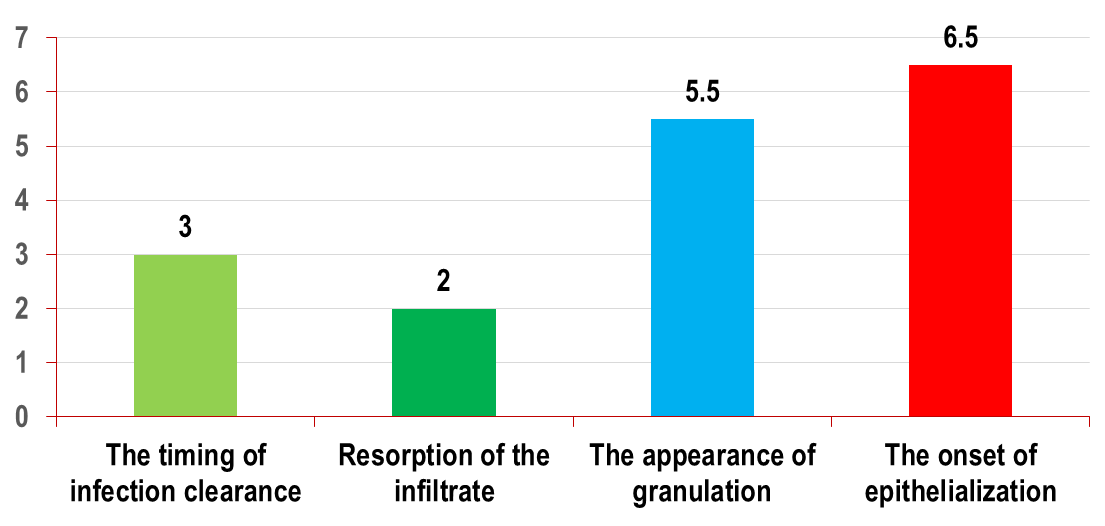 | Figure 6. Periods of wound cleansing and healing in Group II patients with purulent-necrotic diseases of the soft tissues of the extremities (n=48) |
Thus, a comparative analysis of the dynamics of biochemical indicators and the cleansing and healing rate of wounds in patients with purulent diseases of the soft tissues of the limbs in groups I and II revealed the following: the use of UV radiation and prolonged washing with a 25% dimexide solution according to the developed scheme in the complex treatment of local purulent wounds is an effective method. The average duration of treatment in Group II patients was 8.50.8 days.The use of local ultrasound of the wound and prolonged washing with a 25% dimexide solution in the complex treatment of Group II patients with purulent wounds of the soft tissues of the limbs contributed to the complete cleansing of the wound from infection by the 3rd day of treatment. On the 2nd day, an active dissolution of the infiltrate around the wound was observed in them. The onset of granulation was noted on the 5th day of treatment, and epithelialization on the 6th–7th day. The significant lead time in Group II reached 1.5–2 days.Based on all the above, it can be concluded that the use of a combined physicochemical method for treating limb wounds by ultrasound of the wound and prolonged washing with 25% dimethyl sulfoxide solution for 4 hours 2 times a day is the most effective treatment method, which reduces wound cleansing time by 1.5±0.2 days and hospital stay by 3.0±0.5 days, which improves the results of providing medical care to patients with purulent soft tissue diseases.All of the above allows us to recommend the developed methodology for wide application in clinical practice as a modern method of surgical treatment for patients with purulent necrotic wounds of the extremities, which has clinical and economic efficiency due to a reduction in the number of complications and the duration of inpatient treatment.
4. Conclusions
1. When treating patients with purulent diseases of the soft tissues of the limbs using the traditional method using a levomekol ointment under a gauze bandage, the wound clears of infection later (only by the 4th day of treatment), granulation begins to appear by the 6-7th day of treatment, and epithelialization begins to appear by the 8th-9th day of treatment. The biochemical indicators of wound exudate normalize only by the 10th day of treatment. At the same time, the average duration of treatment for patients is 11.5±0.5 days, which requires the development of additional measures aimed at improving treatment methods.2. In the complex treatment of patients with purulent soft tissue diseases of the limbs, the use of local UV radiation and long-term wound washing with a 25% dimexide solution allowed for the clearing of infection within 3.0±0.5 days of treatment, the dissolution of infiltrate within 2.0±0.3 days, the appearance of granulations within 5.5±0.5 days, and epithelialization within 6.5±0.5 days.3. The use of local ultrasound of a wound and prolonged washing with a 25% dimexide solution in the complex treatment of patients with purulent diseases of the soft tissues of the limbs reduces the period of wound cleansing from infection to 2.0±0.5 days of treatment, infiltrate dissolution to 1.0±0.5 days, granulation appearance to 2.0±0.5 days, and epithelialization to 2.0±0.5 days.4. Taking into account the results of comparative analysis, an optimal method for treating patients with purulent wounds of the soft tissues of the limbs was developed through the combined use of local UV radiation and prolonged wound washing with a 25% dimexide solution.
References
| [1] | Borodina M. A., Naser N. R., Batyrshin I. M., Sklizkov D. S., Ryazanova E. P., Kozhevnikova V. B. Objective methods for assessing wound process dynamics // Bulletin of the National Medical and Surgical Center named after N. I. Pirogov. 2021. Vol. 16, No. 2. P. 61-65. |
| [2] | Butyrsky A. G., Butyrskaya I. B. Modern paradigm of treatment for chronic wounds // Taurida Medical and Biological Bulletin. - 2023. – Vol. 26. - No. 4. – P. 57-73. |
| [3] | Dementyev D. I., Konnova S. S., Mitrofanova N. N. On the etiology and comprehensive treatment of purulent-septic infections of open wounds // Bulletin of Penza State University. – 2025. - No. 4 (52). – P. 49-54. |
| [4] | Eszhanova K. K. Treatment of chronic purulent sternomediastinitis with physiotherapy based on ultraviolet and laser irradiation // Medicine and Ecology. – 2026. - No. 4. – P. 211-221. |
| [5] | Kayarliyev A. R. et al. Application of photodynamic therapy in the treatment of purulent wounds (literature review) // Polytrauma. – 2025. - No. 3. – P. 109-116. |
| [6] | Muromtseva E. V. et al. Treatment of wounds depending on the phase of the wound process // Izvestia of Higher Educational Institutions. Volga region. Medical Sciences. – 2022. - No. 3 (63). – P. 93-109. |
| [7] | Privolnev V. V., Karakulina E. V. Basic principles of local treatment of wounds and wound infection // Clinical microbiology and antimicrobial chemotherapy. – 2011. – Vol. 13. - No. 3. – P. 214-222. |
| [8] | Fominykh E. M., Zubritsky V. F. New comprehensive approaches to the prevention of purulent-septic complications of operations // Hospital Medicine Science and Practice. - 2023. – P. 37. |
| [9] | Yakushkina A. S. et al. Modern pathogenetically grounded methods for assessing the reparative process in a wound (literature review) // Izvestia of Higher Education Institutions. Volga region. Medical Sciences. - 2024. - No. 1 (69). – P. 213-233. |


 Abstract
 Reference
 Full-Text PDF
 Full-text HTML