Yunuskhodjayeva H. S., Ibodullayev Z. R., Maxamatjanova N. M.
Tashkent State Medical University, Tashkent, Uzbekistan
Copyright © 2026 The Author(s). Published by Scientific & Academic Publishing.
This work is licensed under the Creative Commons Attribution International License (CC BY).
http://creativecommons.org/licenses/by/4.0/

Abstract
This article explores the influence of personality traits and fundamental typological characteristics on the emergence of psychological disturbances in the post-COVID-19 period. Particular attention is given to conditions such as Obsessive-Compulsive Disorder, anxiety, and depression. The study evaluates stress responses following infection across individuals with different personality profiles, focusing on their psychological defense mechanisms and their responsiveness to integrative psychocorrection interventions. The findings emphasize the importance of developing personalized psychotherapeutic strategies based on individual personality structures.
Keywords:
COVID-19, Obsessive-Compulsive Disorder, Personality traits, Anxiety disorders, Depressive disorders, Psychocorrection
Cite this paper: Yunuskhodjayeva H. S., Ibodullayev Z. R., Maxamatjanova N. M., Personality-Dependent Patterns of Psycho-Emotional Disturbances Following COVID-19: A Medical-Psychological Analysis, American Journal of Medicine and Medical Sciences, Vol. 16 No. 5, 2026, pp. 2549-2553. doi: 10.5923/j.ajmms.20261605.58.
1. Introduction
The global spread of COVID-19 has not only posed a serious threat to physical health but has also led to a substantial increase in mental health disturbances worldwide. According to recent epidemiological data, a significant proportion of individuals recovering from COVID-19 experience persistent neuropsychological symptoms, including anxiety, depression, cognitive impairment, and stress-related disorders [1]. The post-COVID period, often referred to as “long COVID,” is characterized by prolonged psychological and emotional instability, which in many cases persists for months after recovery [2].Among the most commonly reported psychiatric conditions following COVID-19 are Obsessive-Compulsive Disorder, generalized anxiety, and depressive disorders. These conditions are believed to arise not only from the biological effects of viral infection on the central nervous system but also from psychosocial stressors such as isolation, fear of severe illness, and uncertainty about the future [3]. Studies have demonstrated that neuroinflammatory processes, hypoxia, and immune dysregulation may contribute to the development of psychiatric symptoms, thereby complicating the clinical course of post-COVID recovery [4].However, not all individuals exhibit the same level of vulnerability to psycho-emotional disturbances, which suggests that personality-related factors may play a critical role in shaping psychological outcomes. Personality traits, defined as relatively stable patterns of thinking, feeling, and behavior, influence how individuals perceive stress and adapt to challenging circumstances [5]. For example, individuals with high levels of neuroticism are more likely to develop anxiety and depressive symptoms, whereas those with resilient or adaptive personality structures tend to demonstrate better coping mechanisms [6].In this context, the study of personality typology becomes particularly relevant. Classical and contemporary psychological theories emphasize that different personality types are associated with distinct emotional regulation strategies and defense mechanisms [7]. These mechanisms determine how individuals process traumatic experiences, including infectious diseases such as COVID-19. Furthermore, personality-based differences may affect the effectiveness of psychotherapeutic interventions, highlighting the need for individualized treatment approaches [8].Recent research has also focused on the role of psychological defense mechanisms both adaptive and maladaptive in mediating stress responses after infection. Defense mechanisms such as denial, repression, and projection may temporarily reduce emotional distress but can contribute to the persistence or exacerbation of psychiatric symptoms if overused [9]. Conversely, adaptive coping strategies, including cognitive restructuring and emotional regulation, are associated with improved psychological outcomes and faster recovery [10].Despite the growing body of literature on post-COVID mental health, there remains a lack of comprehensive studies integrating personality typology with psycho-emotional outcomes and therapeutic responses. Therefore, investigating the relationship between personality characteristics and the development of disorders such as OCD, anxiety, and depression in the post-COVID period is of considerable scientific and clinical importance. Understanding these relationships will contribute to the development of targeted, personality-oriented psychocorrection strategies aimed at improving mental health outcomes in COVID-19 survivors.The purpose of the study is to conduct a medical-psychological analysis of the dependence of psychoemotional disorders caused by COVID-19 on personality type.
2. Materials and Methods
The study was carried out on 142 patients who had been diagnosed with and treated for COVID-19 infection, with the cohort consisting of individuals aged 18 to 48 years, of whom 46% (n=65) were men and 54% (n=77) were women, and the average age of the subjects was 29±10.5 years. Given that recovery from COVID-19 infection depends on many factors, including psychological personality type, and that understanding these aspects can be useful in determining the most effective treatment and support for patients, the personality types and temperaments of the patients were studied and assessed using the Eysenck questionnaire.
3. Research Results
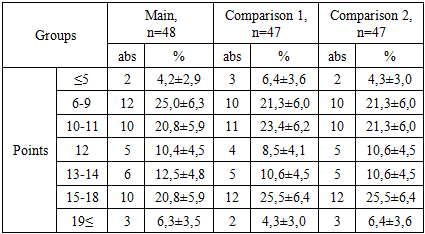
When the introversion and extraversion characteristics of the participants were analyzed according to the Eysenck questionnaire, marked introversion (≤5 points) was observed in 2 patients in the main group, 3 patients in the first comparison group, and 2 patients in the second comparison group, while an introvert profile (6–9 points) was noted in 12 patients in the main group, 10 patients in the first comparison group, and 10 patients in the second comparison group. A tendency toward introversion (10–11 points) was found in 10 patients in the main group, 11 in the first comparison group, and 10 in the second comparison group, whereas 5 patients in the main group, 4 in the first comparison group, and 5 in the second comparison group were found to be neither extraverts nor introverts (12 points). A propensity toward extraversion (13–14 points) was recorded in 6 respondents in the main group, 5 respondents in the first comparison group, and 5 respondents in the second comparison group, while 10 respondents in the main group, 12 in the first comparison group, and 12 in the second comparison group formed the extravert personality type (15–18 points). Finally, a clear extravert personality type (19≤ points) was noted in 3 patients in the main group, 2 in the first comparison group, and 3 in the second comparison group (Table 1).Table 1. Analysis of extraversion and introversion indicators in patients in the main and comparison groups
 |
| |
|
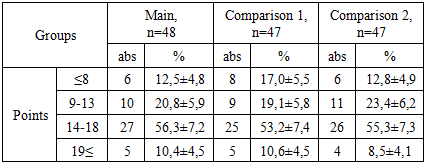
When analyzing the patients according to the neuroticism index in this questionnaire, 6 patients in the main group, 8 in the comparison group 1 and 6 in the comparison group 2 had a low level (≤8 points). Moderate neuroticism (9-13 points) was noted in 10 patients in the main group, 9 in the comparison group 1 and 11 in the comparison group 2. A high level of neuroticism (14-18 points) was detected in 27 patients in the main group, 25 in the comparison group 1 and 26 in the comparison group 2. Very high neuroticism (19≤ points) was noted in 5 respondents in the main group, 5 in the comparison group 1 and 4 in the comparison group 2 (Table 2). Table 2. Analysis of neuroticism scores in the main and comparison groups
 |
| |
|
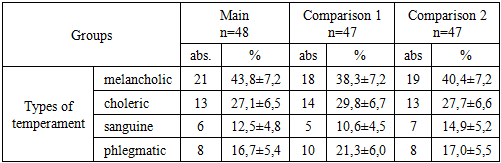
The occurrence of psychoemotional disorders during COVID-19 infection has varied among different personality types. Studies have shown that people with personality traits such as neuroticism and introversion may be more prone to developing mental health problems during the pandemic. These people may experience higher levels of anxiety, depression, and stress in response to the uncertainty and isolation caused by the virus.On the other hand, extroverted and resilient individuals may find it easier to overcome the challenges of COVID-19. They may show greater adaptability and emotional stability, which may help them manage the challenges of the pandemic more effectively.In addition, this questionnaire also identifies temperament types. Temperament refers to the innate personality traits that influence how people perceive and respond to the world around them. There are four main temperaments: sanguine, choleric, melancholic, and phlegmatic. Each of these temperaments is associated with unique characteristics and behavioral tendencies.When analyzing the temperament of patients according to the above indicators of extraversion-introversion and neuroticism, the following results were noted: Melancholic temperament predominated in 21 patients in the main group, 18 in comparison group 1, and 19 in comparison group 2, while choleric temperament prevailed in 13 in the main group, 14 in comparison group 1, and 14 in comparison group 2. It prevailed in 7 respondents. Sanguine temperament predominated in 6 subjects in the main group, 5 in comparison group 1, and 7 in comparison group 2, while phlegmatic temperament predominated in 8 subjects in the main group, 10 in comparison group 1, and 8 in comparison group 2 (Table 3).Table 3. Distribution of patients by temperament in the main and comparison groups
 |
| |
|
The analysis of the results did not reveal any significant differences in personality types between the respondents in the main and comparison groups, and according to the results of the analysis, the most common temperament types in patients were melancholic and choleric individuals, which is explained by their instability in the psychoemotional sphere. Patients with a melancholic temperament may be prone to experiencing high levels of anxiety and depression, especially during the COVID-19 pandemic, since melancholic temperament is characterized by such features as introspection, sensitivity, sadness, and a tendency toward pessimism, meaning that these people may have a high emotional response to stress and difficulties, which can increase feelings of anxiety and depression in the context of a global health crisis such as COVID-19. As a result of our study, it was observed that during the COVID-19 pandemic, patients with a melancholic temperament experienced an increased level of anxiety due to their own health, the health of their loved ones, and uncertainty about the future, while constant news, social distancing measures, and disruptions to daily routines exacerbated their feelings of sadness and anxiety, and this heightened state of anxiety manifested itself in physical symptoms such as restlessness, fatigue, and difficulty concentrating.In addition, patients with a melancholic temperament were more likely to develop depressive symptoms during the COVID-19 pandemic because the isolation, loss of social connections, and changes in routine caused by the pandemic led to feelings of loneliness and hopelessness in patients, and the widespread sadness and sense of doom that characterize melancholic temperament were exacerbated during the crisis, increasing the risk of developing clinical depression. Patients with a melancholic temperament were also more likely to experience OCD symptoms related to rumination or ritualistic behavior in response to uncertainty or fear of harm, and the emotional impact of the pandemic together with the isolation imposed by social distancing measures may have exacerbated these tendencies in melancholic patients, leading to an increase in OCD symptoms.Although individuals with a phlegmatic temperament, characterized by calmness, patience, and emotional stability, are usually known for their ability to remain calm and composed in stressful situations, the unprecedented challenges posed by the pandemic also had a negative impact on their mental health, and in particular, the uncertainty caused by the COVID-19 pandemic, the constant barrage of news, concerns about personal health and safety, and changes in daily routines caused anxiety in patients. The lack of control over external circumstances and the unpredictability of the situation led to increased levels of anxiety in patients with a phlegmatic temperament, and at the same time, prolonged social isolation, economic instability, and fear of illness had a negative impact on mental well-being, even for those who are usually emotionally stable, so that in patients with a phlegmatic temperament, feelings of loneliness, helplessness, and disconnection from others led to the development of depressive symptoms. The increased focus on hygiene and safety measures during the pandemic led to an increase in OCD tendencies in phlegmatic individuals, which led to an increase in the prevalence of OCD symptoms, and patients with a phlegmatic temperament were found to have a predominance of OCD symptoms related to excessive handwashing or cleanliness rituals, mainly in response to a fear of contamination.People with a sanguine temperament, who are characterized by traits such as optimism, sociability, and enthusiasm, also experienced high levels of anxiety and depression during the COVID-19 pandemic, and although sanguine individuals are usually known for their outgoing and positive nature, the difficulties and uncertainties caused by the pandemic affected their mental health in different ways. Our study found that respondents with a sanguine temperament experienced high levels of anxiety in response to the disruptions and changes caused by the COVID-19 pandemic, as constant news updates, health and safety concerns, and restrictions on social interactions caused feelings of anxiety and restlessness in people who are used to being outdoors and social, and the lack of control over external circumstances and the unpredictability of situations led to increased anxiety in sanguine patients. In addition, isolation, loss of social contacts, and changes in routine affected their mood and well-being, leading to feelings of sadness, loneliness, and hopelessness, and the inability to engage in usual activities or social interactions led to the development of depressive symptoms in sanguine patients, who were also found to experience OCD symptoms related to excessive checking behaviors or seeking reassurance in response to fear of harm or illness.Individuals with choleric temperaments, who are characterized by traits such as assertiveness, ambition, and competitiveness, may also experience anxiety and depression during the COVID-19 pandemic, and although choleric individuals are typically known for their strong-willed and goal-oriented natures, our study found that the challenges and uncertainties brought on by the pandemic affected their mental health in different ways. Patients with choleric temperaments showed higher levels of anxiety in response to the disruptions and changes caused by the COVID-19 pandemic, as the uncertainty surrounding the situation, concerns about health and safety, and restrictions on personal freedoms caused feelings of anxiety and restlessness in patients who are accustomed to being in control, and the inability to achieve their goals or maintain their usual level of productivity at work led to increased anxiety in choleric patients. In addition, the isolation, loss of social contacts, and disruption of routine during the COVID-19 pandemic in patients with choleric temperament affected their mood and well-being, leading to feelings of hopelessness, irritability, and sadness, and the inability to engage in usual activities or achieve their goals contributed to the development of depressive symptoms in people with choleric temperament. In choleric temperament respondents, perfectionism or OCD symptoms related to ritualistic rituals were more prevalent in response to the fear of losing control or making mistakes, and it was found that the disruptions and the need to adapt to new routines caused by the pandemic exacerbated these tendencies in choleric individuals and led to an increase in the prevalence of OCD symptoms.In conclusion, the impact of COVID-19 infection on people’s psychoemotional state is significant and may vary depending on the personality type, as the fear, anxiety, depression, and psychological trauma experienced by those infected with the virus may be exacerbated by personality traits such as neuroticism or introversion, meaning that people with these traits may be more prone to high levels of depression and difficulties in coping with the psychological effects of the infection. It is important to recognize that personality type is one of the factors that influence a person’s psychoemotional state in response to COVID-19, and other factors such as social support, coping mechanisms, and access to mental health resources also play a crucial role in determining how people manage the psychological difficulties caused by the virus.
4. Conclusions
OCD, anxiety, and depression observed within the framework of the complications of the COVID-19 pandemic are closely related not only to the transmission of the virus, but also to the constitutional personality traits (temperament) of the patient. Determining the personality type helps to predict which mental disorders the patient is more prone to and, most importantly, to select tailored, individual psychotherapy programs. Integrative psychocorrection methods show high efficiency due to their ability to adapt to this diverse symptomatology.
References
| [1] | Taquet M., Geddes J.R., Husain M., Luciano S., Harrison P.J. 6-month neurological and psychiatric outcomes in 236,379 survivors of COVID-19: a retrospective cohort study using electronic health records. The Lancet Psychiatry. 2021; 8(5): 416–427. doi: 10.1016/S2215-0366(21)00084-5. |
| [2] | Rogers J.P., Chesney E., Oliver D., Pollak T.A., McGuire P., Fusar-Poli P., Zandi M.S., Lewis G., David A.S. Psychiatric and neuropsychiatric presentations associated with severe coronavirus infections: a systematic review and meta-analysis. The Lancet Psychiatry. 2020; 7(7): 611–627. doi: 10.1016/S2215-0366(20)30203-0. |
| [3] | Mazza M.G., De Lorenzo R., Conte C., Poletti S., Vai B., Bollettini I., Melloni E.M.T., Furlan R., Ciceri F., Rovere-Querini P., Benedetti F. Anxiety and depression in COVID-19 survivors: role of inflammatory and clinical predictors. Brain, Behavior, and Immunity. 2020; 89: 594–600. doi: 10.1016/j.bbi.2020.07.037. |
| [4] | Troyer E.A., Kohn J.N., Hong S. Are we facing a crashing wave of neuropsychiatric sequelae of COVID-19? Neuropsychiatric symptoms and potential immunologic mechanisms. Brain, Behavior, and Immunity. 2020; 87: 34–39. doi: 10.1016/j.bbi.2020.04.027. |
| [5] | McCrae R.R., Costa P.T. Personality in adulthood: A five-factor theory perspective. 2nd ed. New York: Guilford Press; 2003. |
| [6] | Kotov R., Gamez W., Schmidt F., Watson D. Linking “big” personality traits to anxiety, depressive, and substance use disorders: a meta-analysis. Psychological Bulletin. 2010; 136(5): 768–821. doi: 10.1037/a0020327. |
| [7] | Carver C.S., Connor-Smith J. Personality and coping. Annual Review of Psychology. 2010; 61: 679–704. doi: 10.1146/annurev.psych.093008.100352. |
| [8] | Hofmann S.G., Asnaani A., Vonk I.J.J., Sawyer A.T., Fang A. The efficacy of cognitive behavioral therapy: A review of meta-analyses. Cognitive Therapy and Research. 2012; 36(5): 427–440. doi: 10.1007/s10608-012-9476-1. |
| [9] | Vaillant G.E. Ego mechanisms of defense: A guide for clinicians and researchers. Washington, DC: American Psychiatric Press; 1992. |
| [10] | Vindegaard N., Benros M.E. COVID-19 pandemic and mental health consequences: systematic review of the current evidence. Brain, Behavior, and Immunity. 2020; 89: 531–542. doi: 10.1016/j.bbi.2020.05.048. |


 Abstract
 Reference
 Full-Text PDF
 Full-text HTML