
-
Paper Information
- Previous Paper
- Paper Submission
-
Journal Information
- About This Journal
- Editorial Board
- Current Issue
- Archive
- Author Guidelines
- Contact Us
American Journal of Medicine and Medical Sciences
p-ISSN: 2165-901X e-ISSN: 2165-9036
2026; 16(5): 2791-2796
doi:10.5923/j.ajmms.20261605.107
Received: May 6, 2026; Accepted: May 27, 2026; Published: May 30, 2026

Optimization of Water Balance Under the Influence of Climate Temperature in Patients with Hypertension
 Abstract
 Reference
 Full-Text PDF
 Full-text HTML
Tursunova Yulduz Jabborovna1, Ruziev Feruz Giyosovich2
1Republican Scientific Center of Emergency Medical Care, Bukhara Branch, Uzbekistan
2Bukhara State Medical Institute, Uzbekistan
Copyright © 2026 The Author(s). Published by Scientific & Academic Publishing.
This work is licensed under the Creative Commons Attribution International License (CC BY).
http://creativecommons.org/licenses/by/4.0/

Background: Hot climatic conditions significantly affect the course of arterial hypertension by disrupting water-electrolyte balance, increasing blood viscosity, and aggravating hemodynamic disorders. High ambient temperatures may increase the frequency of hypertensive complications, especially in populations living in desert climate regions. Objective: To study the influence of hot climate on the clinical course and complications of hypertension and to evaluate the effectiveness of rehydration measures in their prevention. Methods: A total of 112 patients with hypertension treated in the Bukhara branch of the Republican Scientific Center for Emergency Medical Care and regional medical associations during 2022–2023 were examined. Patients were divided into three groups according to climatic living conditions: the basic group consisted of 42 patients from Alat district, comparison group 1 included 38 patients from Peshku district, and comparison group 2 included 32 patients living in Bukhara city. All participants underwent clinical, laboratory, instrumental, and ultrasound examinations. Blood pressure dynamics, lipid metabolism indicators, extracranial brachiocephalic artery parameters, and SCORE scale indicators were assessed during different seasons of the year. Preventive non-pharmacological and rehydration recommendations adapted to climatic conditions were analyzed. Results: The study demonstrated seasonal variations in arterial blood pressure and disease severity. Systolic and diastolic blood pressure values were relatively higher during winter, whereas summer heat contributed to worsening blood rheology and increased complications. Patients living in desert climate regions demonstrated more pronounced clinical symptoms, increased vascular stenosis, and impaired hemodynamic parameters. Ultrasound examination revealed increased intima-media thickness and accelerated blood flow velocity in carotid arteries. The implementation of preventive hydration measures and lifestyle recommendations contributed to stabilization of blood pressure, improvement in quality-of-life indicators, and reduction in complication frequency. SCORE scale assessment showed relatively better recovery dynamics in patients receiving comprehensive preventive recommendations. Conclusions: Hot climate has a significant impact on the progression and complications of hypertension through disturbances of water balance and hemorheological changes. Seasonal preventive strategies, including adequate rehydration and non-pharmacological recommendations combined with standard antihypertensive therapy, may reduce the severity of hypertension and decrease the frequency of complications in patients living in hot climatic regions.
Keywords: Hypertension, Heat stress, Dehydration, Water balance, Cardiovascular risk
Cite this paper: Tursunova Yulduz Jabborovna, Ruziev Feruz Giyosovich, Optimization of Water Balance Under the Influence of Climate Temperature in Patients with Hypertension, American Journal of Medicine and Medical Sciences, Vol. 16 No. 5, 2026, pp. 2791-2796. doi: 10.5923/j.ajmms.20261605.107.
Article Outline
1. Introduction
- Arterial hypertension remains one of the leading causes of cardiovascular morbidity, disability, and mortality worldwide. According to the World Health Organization, more than one billion people suffer from hypertension, and cardiovascular complications associated with elevated blood pressure remain a major public health problem, especially in developing countries. Environmental and climatic factors play an important role in the progression and destabilization of hypertension, particularly in regions characterized by extreme temperatures and arid climate conditions [1,4,7].Exposure to high ambient temperature leads to activation of thermoregulatory mechanisms, including peripheral vasodilation and increased sweating, which may significantly alter hemodynamic parameters and water-electrolyte balance. During prolonged heat exposure, the body loses substantial amounts of fluid and electrolytes, resulting in dehydration, increased blood viscosity, impaired microcirculation, and disturbances in vascular endothelial function. These changes may aggravate arterial hypertension and increase the risk of cardiovascular complications, including hypertensive crises, ischemic events, and cerebrovascular disorders [2,9].In hot climates, sweating becomes the primary mechanism of heat dissipation. However, excessive sweating without adequate compensation of fluid and electrolyte loss may lead to hypovolemia and hemorheological disorders. Previous studies have shown that dehydration negatively affects cardiovascular adaptation and may contribute to increased arterial stiffness, endothelial dysfunction, and deterioration of cerebral and systemic circulation. Patients with hypertension are particularly vulnerable to such changes because many of them already have impaired vascular autoregulation and concomitant metabolic disorders [5,6,10].The Bukhara region of Uzbekistan is characterized by a sharply continental climate with prolonged periods of high summer temperatures, especially in desert areas such as Alat and Peshku districts. Under these environmental conditions, patients with hypertension may experience seasonal fluctuations in blood pressure, worsening of clinical symptoms, and increased frequency of complications. Despite the clinical importance of this problem, the influence of hot climate and water balance disturbances on the course of hypertension remains insufficiently studied in populations living in arid regions [2,8].Recent studies emphasize the importance of preventive non-pharmacological strategies, including adequate hydration, correction of electrolyte imbalance, limitation of heat exposure, and individualized lifestyle recommendations for patients with cardiovascular diseases. Optimization of water balance may improve blood rheology, stabilize hemodynamic parameters, and reduce the severity of hypertension-related complications during periods of extreme heat [1,3,6].Therefore, the present study aimed to investigate the influence of hot climate on the course and complications of arterial hypertension and to evaluate the effectiveness of rehydration and preventive measures in patients living in regions with different climatic conditions [2,4,7].Study objective: To evaluate the influence of hot climate on the clinical course and complications of arterial hypertension and to assess the effectiveness of rehydration measures in the prevention of hypertension-related complications.
2. Materials and Methods
- Study design and participants A prospective observational comparative study was conducted during 2022–2023 at the Bukhara Branch of the Republican Scientific Center for Emergency Medical Care, the emergency cardiotherapy departments, Peshku District Medical Association, and Alat District Medical Association. The study included 112 patients diagnosed with arterial hypertension who had been under follow-up and treatment for 5–10 years.Patients were divided into three groups according to their climatic region of residence. The basic group (BG) consisted of 42 patients living in Alat district, characterized by desert climatic conditions. Comparison group 1 (CG1) included 38 patients from Peshku district, also located in a desert climatic zone. Comparison group 2 (CG2) consisted of 32 patients with hypertension living in Bukhara city, characterized by relatively moderate climatic conditions. The mean age of patients in BG was 57.0±6.4 years, while the mean age in CG1 was 61.2±6.9 years.The inclusion criteria were: confirmed diagnosis of arterial hypertension based on clinical examination and anamnesis, age over 18 years, permanent residence in the investigated climatic region, and informed consent to participate in the study. Exclusion criteria included symptomatic arterial hypertension, acute organ failure, severe concomitant diseases in the decompensation stage, and inability to complete the examination procedures. Patients with acute deterioration of somatic or hemodynamic status during the study period were temporarily withdrawn from examination until stabilization of their condition.Data collection instruments All patients underwent comprehensive clinical, laboratory, and instrumental examinations. Blood pressure was measured dynamically during different seasons of the year using standard sphygmomanometry methods. Respiratory rate, pulse rate, systolic blood pressure (SBP), and diastolic blood pressure (DBP) were assessed repeatedly under standardized conditions.Cardiovascular risk assessment was performed using the SCORE and PROCAM scales. The SCORE scale was used to evaluate the probability of cardiovascular complications and dynamic changes in patients’ condition during seasonal observations.Laboratory investigations included lipid profile assessment. Total cholesterol, triglycerides, low-density lipoprotein cholesterol (LDL-C), and high-density lipoprotein cholesterol (HDL-C) were determined using enzymatic colorimetric methods on the “CYAN Start” automatic analyzer. LDL-C levels were calculated using the Friedewald formula. Hypercholesterolemia was diagnosed at total cholesterol ≥5.0 mmol/L, and hypertriglyceridemia at triglyceride levels ≥1.7 mmol/L.Instrumental examinations included ultrasound Dopplerography of extracranial brachiocephalic arteries. The diameter of arteries (D), intima-media complex thickness (IMT/KIM), and maximum blood flow velocity (Vmax) were evaluated in the common carotid, internal carotid, external carotid, and vertebral arteries.ProceduresAll participants were examined under outpatient and inpatient conditions during seasonal periods characterized by different air temperatures and humidity levels. Clinical examinations were conducted in calm environmental conditions with repeated monitoring of hemodynamic parameters. In cases of abrupt hemodynamic changes, examinations were postponed for 24 hours until stabilization of the patient’s condition.Patients received standard antihypertensive therapy according to current clinical recommendations. Additionally, preventive non-pharmacological measures aimed at optimization of water balance during hot weather conditions were recommended. These included regulated fluid intake according to ambient temperature, limitation of outdoor activity during peak heat hours, avoidance of excessive salt and caffeine consumption, regular blood pressure monitoring, and cautious use of diuretics.Rehydration recommendations were individualized according to air temperature. Fluid intake recommendations ranged from 5 ml/kg/hour at temperatures of 30–35°C to 11 ml/kg/hour at temperatures of 45–50°C. Ethical considerationsThe study was conducted in accordance with the ethical principles of the Declaration of Helsinki for medical research involving human participants. Participation in the study was voluntary, and all patients provided informed consent before inclusion. Confidentiality and anonymity of participants’ personal information were maintained throughout the study process.The study protocol was reviewed and approved by the local ethics committee of the Bukhara State Medical Institute and the Bukhara Branch of the Republican Scientific Center for Emergency Medical Care.Statistical analysisStatistical analysis was performed using standard biomedical statistical methods. Quantitative variables were expressed as mean values and standard error of the mean (M±m). Comparative analysis between groups was carried out using parametric statistical methods with assessment of statistical significance. Differences between indicators were considered statistically significant at p<0.05.Seasonal and intergroup comparisons of hemodynamic, laboratory, and ultrasound parameters were performed to determine the influence of climatic conditions on the course of arterial hypertension. The selected statistical methods allowed objective evaluation of differences between groups and assessment of the effectiveness of preventive and rehydration measures.re also advised regarding adequate electrolyte replacement during periods of excessive sweating.
3. Results
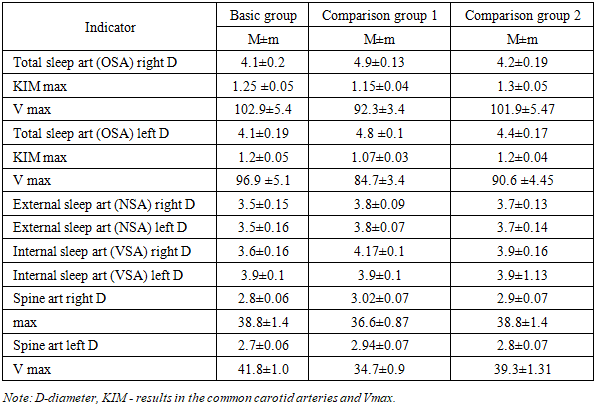
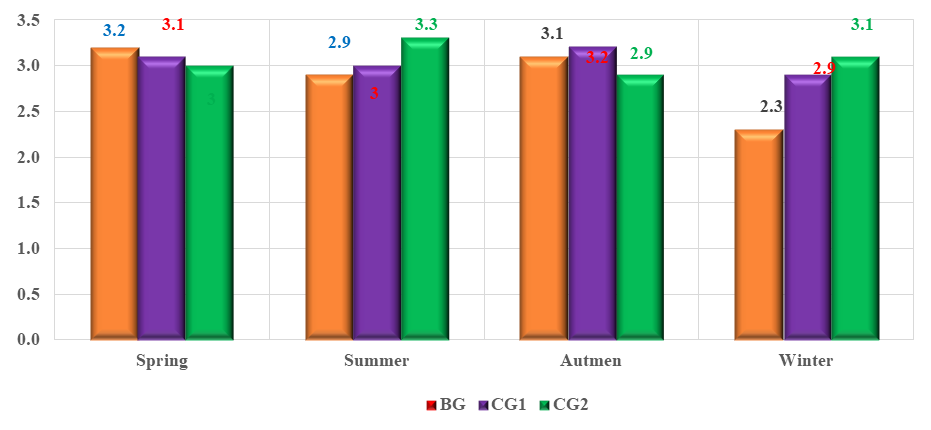
- A total of 112 patients with arterial hypertension were examined under different climatic conditions. Comparative analysis demonstrated significant seasonal and regional differences in hemodynamic parameters, clinical manifestations, and vascular changes among the study groups.Clinical manifestations and subjective complaintsSubjective complaints were more pronounced in patients living in desert climate regions. General complaints were observed in 26.25±4.92% of patients in the basic group (BG) compared with 11.43±3.80% in the comparison groups (p<0.05). Headache was reported in 90.0±3.35% of BG patients and 87.14±4.0% of comparison group patients. Dizziness was observed in 87.5±3.7% and 90.0±3.59% of patients, respectively. Weakness was one of the most common symptoms and occurred in 88.75±3.53% of BG patients and 88.57±3.8% of comparison group patients. Nausea and vomiting were also more frequent in the BG than in comparison groups. These findings indicate that patients exposed to harsh climatic conditions experienced more severe clinical symptoms associated with hypertension.Seasonal dynamics of hemodynamic parametersAnalysis of seasonal hemodynamic changes demonstrated statistically significant fluctuations in blood pressure values depending on ambient temperature and humidity (p<0.05). During the winter season, systolic blood pressure (SBP) reached its highest values in all groups. In the BG, SBP increased to 162.2±0.7 mmHg during winter compared with 152.4±1.1 mmHg during summer. Similar tendencies were observed in CG1 and CG2. Diastolic blood pressure (DBP) also demonstrated seasonal variability, with the highest values observed during winter and relatively lower values during summer.Pulse rate and respiratory rate showed moderate seasonal variations. In spring, respiratory rate averaged 18.3±0.2 breaths/min in BG and 18.4±0.2 breaths/min in CG (p<0.05). Pulse rate during spring reached 83.3±0.9 beats/min in BG and 84.2±0.9 beats/min in CG, while lower values were observed during summer. These findings suggest that climatic temperature significantly influences cardiovascular and respiratory adaptation in patients with hypertension.Ultrasound assessment of extracranial arteriesUltrasound Doppler examination of extracranial brachiocephalic arteries revealed significant vascular alterations among study groups (Table 1). Patients from desert climatic regions demonstrated narrowing of carotid artery diameter, increased intima-media thickness (IMT), and accelerated blood flow velocity compared with patients from relatively moderate climate conditions.As shown in Table 1, the diameter of the right common carotid artery in the BG was 4.1±0.2 mm compared with 4.9±0.13 mm in CG1 and 4.2±0.19 mm in CG2 (p<0.001). Intima-media thickness was increased in BG patients (1.25±0.05 mm), indicating progression of vascular remodeling and stenotic changes. Maximum blood flow velocity (Vmax) was also significantly elevated in BG patients, reflecting compensatory hemodynamic alterations associated with vascular narrowing. Similar changes were observed in the left carotid and vertebral arteries.
|
 | Figure 1. Dynamics of the SCORE scale indicators |
4. Discussion
- The present study aimed to evaluate the influence of hot climate on the clinical course and complications of arterial hypertension and to assess the effectiveness of rehydration measures in preventing hypertension-associated complications. The obtained results demonstrated that climatic temperature significantly affects hemodynamic stability, water-electrolyte balance, and the severity of clinical manifestations in patients with hypertension. Seasonal analysis revealed that arterial blood pressure values were relatively higher during winter, whereas hot summer conditions contributed to deterioration of blood rheology, increased vascular stress, and higher frequency of complications. Patients living in desert climate regions demonstrated more pronounced clinical symptoms, vascular stenotic changes, and impaired ultrasound hemodynamic parameters compared with patients living in relatively moderate climatic conditions. Preventive hydration and lifestyle recommendations contributed to stabilization of blood pressure and improvement of quality-of-life indicators.The findings of the present study are consistent with previous investigations demonstrating the influence of environmental and meteorological factors on cardiovascular diseases. Narzulaeva et al. reported that hot climate conditions contribute to hemorheological disturbances in patients with hypertension, leading to impaired microcirculation and increased cardiovascular risk. Similar observations were obtained in our study, where elevated blood viscosity and worsening vascular parameters were observed during periods of high ambient temperature.The study has several limitations that should be considered during interpretation of the results. First, the sample size was relatively limited and represented specific climatic regions of the Bukhara area, which may restrict generalization of the findings to other populations. Second, long-term follow-up of patients was limited, and some biochemical and inflammatory markers associated with dehydration and endothelial dysfunction were not evaluated. Third, environmental exposure parameters such as exact daily temperature fluctuations and humidity levels were not continuously monitored individually for each participant.Despite these limitations, the study has important strengths. It represents one of the few regional investigations evaluating the combined influence of hot climate, water balance disturbances, and preventive rehydration measures on hypertension progression. The use of comprehensive clinical, laboratory, ultrasound, and cardiovascular risk assessment methods allowed detailed evaluation of seasonal and climatic effects on hypertensive patients.Future studies should include larger multicenter populations, longer observation periods, and broader assessment of biomarkers related to oxidative stress, endothelial dysfunction, and hemorheological changes. Further investigation of individualized hydration protocols and climate-adapted preventive strategies may improve long-term cardiovascular outcomes in patients living in regions with extreme environmental temperatures.
5. Conclusions
- The present study demonstrated that hot climatic conditions significantly influence the clinical course and complications of arterial hypertension through disturbances in water-electrolyte balance, deterioration of blood rheology, and impairment of hemodynamic parameters. Patients living in desert climate regions showed more pronounced clinical manifestations, vascular changes, and higher frequency of hypertension-related complications compared with patients living in relatively moderate climatic conditions. Seasonal analysis revealed that arterial blood pressure values were relatively higher during winter, while summer heat contributed to increased hemorheological disturbances and cardiovascular risk. Implementation of preventive non-pharmacological measures, including optimization of hydration, limitation of excessive heat exposure, regular blood pressure monitoring, and individualized lifestyle recommendations, contributed to stabilization of hemodynamic indicators and reduction of complication frequency. Rehydration strategies adapted to ambient temperature may improve adaptation mechanisms and quality of life in patients with hypertension living in regions characterized by extreme climatic conditions. The obtained findings highlight the importance of developing climate-adapted preventive programs for patients with arterial hypertension, especially in regions with prolonged periods of high environmental temperature. Early implementation of individualized hydration protocols and comprehensive preventive recommendations may reduce cardiovascular complications and improve long-term clinical outcomes in hypertensive patients.
ACKNOWLEDGEMENTS
- The authors express their sincere gratitude to the staff of the Bukhara Branch of the Republican Scientific Center of Emergency Medical Care, Alat District Medical Association, and Peshku District Medical Association for their assistance in patient examination, data collection, and implementation of the study.
Financial Support and Sponsorship
- This research received no specific grant from any funding agency in the public, commercial, or non-profit sectors.
Author’s Contribution
- Tursunova Y.J. contributed to the study conception and design, clinical data collection, patient examination, and manuscript preparation.Ruziev F.G. participated in methodological supervision, statistical analysis, interpretation of results, scientific editing, and final approval of the manuscript.
Conflict of Interest
- The authors declare that there is no conflict of interest regarding the publication of this article.