
-
Paper Information
- Next Paper
- Previous Paper
- Paper Submission
-
Journal Information
- About This Journal
- Editorial Board
- Current Issue
- Archive
- Author Guidelines
- Contact Us
American Journal of Medicine and Medical Sciences
p-ISSN: 2165-901X e-ISSN: 2165-9036
2026; 16(2): 676-678
doi:10.5923/j.ajmms.20261602.59
Received: Dec. 9, 2025; Accepted: Jan. 3, 2026; Published: Feb. 25, 2026

Reactive and Personal Anxiety in Patients with Spinal Tuberculosis
 Abstract
 Reference
 Full-Text PDF
 Full-text HTML
Nazirov Primkul Khujamovich1, Alimova Gulrukh Salimovna2
1Republican Specialized Scientific and Practical Medical Center of Phthisiology and Pulmonology named after Academician Sh. A. Alimov, Tashkent, Uzbekistan
2Bukhara State Medical Institute, the Department of Phthisiology and Pulmonology, Bukhara, Uzbekistan
Correspondence to: Nazirov Primkul Khujamovich, Republican Specialized Scientific and Practical Medical Center of Phthisiology and Pulmonology named after Academician Sh. A. Alimov, Tashkent, Uzbekistan.
| Email: |  |
Copyright © 2026 The Author(s). Published by Scientific & Academic Publishing.
This work is licensed under the Creative Commons Attribution International License (CC BY).
http://creativecommons.org/licenses/by/4.0/

Studying anxiety levels is of great clinical importance, as psychoemotional factors influence the course of the disease, quality of life, and the effectiveness of therapy. Aim: To study the characteristics of reactive and personal anxiety in patients with spinal tuberculosis, and to determine their relationship with clinical and social factors. Of these, 45 (45.9%) were men and 53 (54.1%) women aged 20 to 76 years (mean age 49.9 ± 13.5 years). According to the study results, most patients had a high level of both reactive and personal anxiety. In patients with complicated spinal tuberculosis, high levels of reactive anxiety were observed in 28.8% of those examined, and very high levels in 48.1%. Indicators of personal anxiety were similar: 30.7% of patients had high levels, and 36.5% had very high levels. In the control group, a moderate level of anxiety predominated (70%), indicating psychoemotional stability in healthy individuals. A direct relationship was established between the level of anxiety, the severity of the disease, and the social status of patients. Conclusion: Patients with spinal tuberculosis exhibit increased levels of reactive and personal anxiety, manifested in psychoemotional stress and reduced adaptive capacity. High levels of anxiety reduce the effectiveness of treatment and indicate the need to include psychological assistance in the comprehensive rehabilitation system. The Spielberger -Khanin scale is recommended as a reliable diagnostic method for assessing the psychoemotional state of patients.
Keywords: Spinal tuberculosis, Anxiety, Spielberg-Khanin anxiety scale, Reactive anxiety, Personal anxiety, Psycho-emotional state
Cite this paper: Nazirov Primkul Khujamovich, Alimova Gulrukh Salimovna, Reactive and Personal Anxiety in Patients with Spinal Tuberculosis, American Journal of Medicine and Medical Sciences, Vol. 16 No. 2, 2026, pp. 676-678. doi: 10.5923/j.ajmms.20261602.59.
Article Outline
1. Introduction
- Spinal tuberculosis is one of the most severe forms of osteoarticular tuberculosis, characterized by a prolonged course, pain, limited mobility, and severe neurological impairment. Chronic disease often leads to the development of emotional and personality disorders, including increased anxiety, depressive reactions, and impaired adaptive mechanisms [1,2,3,4].Studying anxiety levels is of great clinical importance, as psychoemotional factors influence the course of the disease, quality of life, and the effectiveness of therapy. The Spielberg-Khanin Anxiety Scale is one of the most reliable methods for quantifying anxiety as a state (reactive) and as a stable personality trait [5,6,7,8,9,10].
2. Main Body
- The aim of the study was to study the characteristics of reactive and personal anxiety in patients with spinal tuberculosis and determine its relationship with clinical and social factors.
3. Materials and Methods
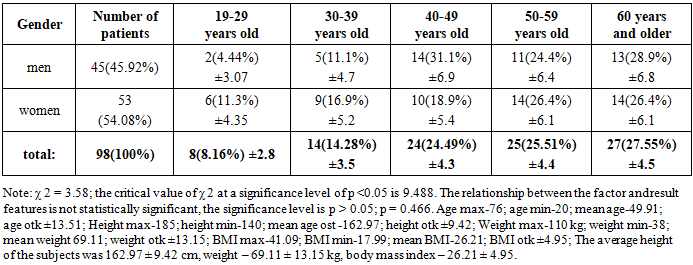
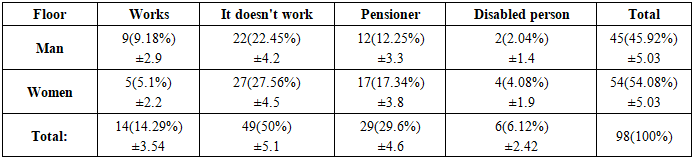
- The study was conducted at the Republican Specialized Scientific and Practical Medical Center for Phthisiology and Pulmonology and the Bukhara Regional Specialized Scientific and Practical Medical Center for Phthisiology and Pulmonology.98 patients with spinal tuberculosis aged 20 to 76 years (mean age 49.91 ± 13.51 years) were examined. Of these, 45 were men (45.92%) and 53 were women (54.08%).
|
|
4. Results and Discussion
- Reactive anxietyWhen analyzing situational anxiety, it was revealed that the majority of patients with spinal tuberculosis had high anxiety levels, especially in complicated forms of the disease. A χ² analysis (χ² = 43.72; df = 6; p = 0.000000084) revealed statistically significant differences in anxiety levels between the groups. Patients with complicated tuberculous spondylitis significantly more often exhibited high and very high levels of anxiety, reflecting severe emotional stress and depletion of the body's adaptive capacity disorders. Patients with limited spinal tuberculosis exhibit moderate anxiety levels, while the majority of those in the control (healthy) group exhibited low to moderate anxiety levels. These data indicate a direct correlation between the severity of the tuberculosis process and the severity of psychoemotional disturbances.In patients with complicated spondylitis, high anxiety levels were observed in 28.8%, and very high anxiety levels were observed in 48.1%. In patients with limited forms of tuberculosis, these figures were 30.4% and 34.8%, respectively. In the control group (healthy individuals), the average anxiety level was predominant—70%.Thus, the degree of expression of reactive anxiety is directly related to the severity of the pathological process and reflects psychoemotional stress caused by physical suffering and social maladjustment.Indicators of personal anxiety also tended to increase in patients with spinal tuberculosis.High and very high levels of trait anxiety were prevalent in patients with complicated (30.7% and 36.5%) and limited (30.4% and 36.9%) spondylitis. In the control group, average levels (55%) predominated, which corresponds to the physiological norm.This indicates that anxiety in patients with spinal tuberculosis has a stable personal character and is not limited to a reaction to the current state, but is formed as a long-term emotional feature.
5. Conclusions
- 1. In patients with spinal tuberculosis, elevated levels of both reactive and personal anxiety were detected, especially in patients with complicated forms of the disease.2. High levels of anxiety negatively impact adaptive capacity, increase psycho-emotional stress and can reduce the effectiveness of treatment.3. The obtained data confirm the need to include psychological correction and psychotherapeutic support in the comprehensive rehabilitation system for patients with spinal tuberculosis.4. The Spielberg-Khanin scale is a reliable and informative tool for assessing the psychoemotional state and monitoring the dynamics of treatment.