
-
Paper Information
- Next Paper
- Paper Submission
-
Journal Information
- About This Journal
- Editorial Board
- Current Issue
- Archive
- Author Guidelines
- Contact Us
American Journal of Medicine and Medical Sciences
p-ISSN: 2165-901X e-ISSN: 2165-9036
2026; 16(2): 397-402
doi:10.5923/j.ajmms.20261602.01
Received: Dec. 28, 2025; Accepted: Jan. 26, 2026; Published: Feb. 3, 2026

Clinical and Morphological Features of Metastasis in Bone and Soft Tissue Tumors in the Khorezm Region
 Abstract
 Reference
 Full-Text PDF
 Full-text HTML
Otakhonov Botir Rejabovich
PhD, Associate Professor, Department of Traumatology and Orthopedics, Urgench State Medical Institute, Uzbekistan
Correspondence to: Otakhonov Botir Rejabovich, PhD, Associate Professor, Department of Traumatology and Orthopedics, Urgench State Medical Institute, Uzbekistan.
| Email: |  |
Copyright © 2026 The Author(s). Published by Scientific & Academic Publishing.
This work is licensed under the Creative Commons Attribution International License (CC BY).
http://creativecommons.org/licenses/by/4.0/

This article presents an analysis of the clinical and pathomorphological features of metastasis in bone and soft tissue tumors among patients from the Khorezm region. The study was retrospective and included clinical records, histological reports, and pathomorphological findings of 214 cancer patients treated between 2023 and 2025. The localization and frequency of metastases, TNM staging, clinical groups, and characteristics of multiple metastatic involvement were analyzed. Morphological evaluation was performed using histological and immunohistochemical methods. The results showed that metastases in bone and soft tissue tumors are predominantly detected at advanced stages of the disease and are associated with a poorer clinical prognosis. Patients with multiple metastatic sites demonstrated a higher rate of complications. The findings may contribute to improving pathomorphological diagnostics and optimizing clinical management strategies.
Keywords: Bone tumors, Soft tissue tumors, Metastasis, Pathomorphology, Clinical and morphological analysis, Khorezm region
Cite this paper: Otakhonov Botir Rejabovich, Clinical and Morphological Features of Metastasis in Bone and Soft Tissue Tumors in the Khorezm Region, American Journal of Medicine and Medical Sciences, Vol. 16 No. 2, 2026, pp. 397-402. doi: 10.5923/j.ajmms.20261602.01.
Article Outline
1. Introduction
- Today, oncological diseases are one of the most pressing problems facing the global health system. According to the World Health Organization (WHO), more than 19 million new cases of oncological diseases are recorded worldwide every year, of which more than 9.6 million end in death [1]. It is noted that the majority of deaths are associated not with local tumor growth, but with the development of metastatic processes [2,5,6]. In particular, metastasis in bone and soft tissue tumors leads to a worsening of the clinical prognosis, a decrease in the effectiveness of treatment, and a sharp deterioration in the patient's quality of life. Despite the fact that bone and soft tissue tumors are relatively rare tumors, they are characterized by a highly aggressive course, early metastasis, and resistance to treatment. According to international oncological studies, metastases are detected in 30–50% of cases of soft tissue sarcomas, and in 40–70% of patients with bone tumors [3,4]. The most common localizations of metastases are the lungs, bones, liver and brain. The presence of metastases sharply increases the stage of the disease according to the TNM system and reduces 5–year survival rates several times.Although the molecular–genetic, clinical and radiological aspects of metastasis processes in bone and soft tissue tumors have been widely studied in foreign literature, there are not enough studies devoted to pathomorphological features, especially morphological variants and patterns of metastasis in regional populations. Certain differences in the clinical and morphological course of tumors can be observed in different geographical regions under the influence of ecological, socio–economic and genetic factors. In the Republic of Uzbekistan, oncological diseases have also shown a steady growth trend in recent years. According to the Republican Oncology Service, although bone and soft tissue tumors make up a relatively small share of the total number of oncological diseases, they are characterized by high mortality and disability [4]. In most cases, patients are diagnosed with metastases, since they often present to medical institutions at late stages of the disease. Khorezm region is considered one of the ecologically complex regions, and its proximity to the Aral Sea region, the negative impact of environmental factors, and the high incidence of chronic diseases among the population can lead to a specific course of oncological pathologies. However, to date, there are few comprehensive studies covering the clinical and morphological characteristics of metastases in bone and soft tissue tumors in Khorezm region, and the available data have not been systematized. Therefore, this study is aimed at in–depth analysis of the clinical and pathomorphological characteristics of metastatic processes in bone and soft tissue tumors in the Khorezm region, assessment of their localization, distribution patterns and clinical significance, and is of urgent importance for modern oncomorphology and practical oncology. The results obtained will serve to improve pathomorphological diagnosis, early identification of risk groups and optimization of patient management tactics.Research objective. The aim of the study is to determine the clinical and pathomorphological characteristics of metastatic processes in patients with bone and soft tissue tumors in the Khorezm region, to assess the localization and spread patterns of metastases, and their clinical significance.To achieve this goal, the following tasks were set:to analyze the distribution of patients with bone and soft tissue tumors in the khorezm region by age and gender;to determine the frequency of occurrence of tumors by anatomical types (bone and soft tissue);to assess the overall frequency and main localizations of metastases (bone, lung, liver, brain, etc.);to study the clinical course of single and multiple localized metastases;to determine the relationship between the presence of metastases and the stage of the disease and clinical groups according to the TNM system;to develop practical recommendations aimed at improving pathomorphological diagnosis and clinical tactics based on the results obtained.
2. Materials and Methods
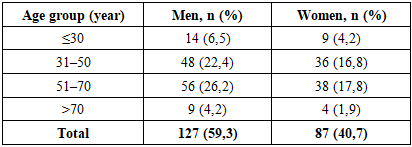
- This study is retrospective, observational in nature and was conducted based on the analysis of medical records of 214 patients with bone and soft tissue tumors treated in oncological institutions of the Khorezm region during 2023–2025.The following were studied as research materials:outpatient and inpatient medical records of patients;clinical diagnoses and medical history data;cytological and histological conclusions;postoperative materials;clinical and morphological data on metastases.Clinical and classification assessment. The stages of the disease were assessed based on the international TNM classification. All patients were divided into clinical groups. Metastases were analyzed as single and multiple localized forms.Statistical analysis. Statistical processing of the obtained data was carried out using Microsoft Office Excel and STATISTICA for Windows software. Quantitative indicators were analyzed based on descriptive statistical methods, and the results were expressed in absolute values (n) and percentages (%). The reliability of differences between groups was assessed at the p<0.05 level.Results obtained. General characteristics of the research contingent. The study was conducted on the basis of data from 214 patients treated with bone and soft tissue tumors in the Khorezm region during 2023–2025. The average age of the patients was 52.4 ± 1.8 years. The analysis of the distribution by age and gender showed a predominance of male patients (table 1).
|
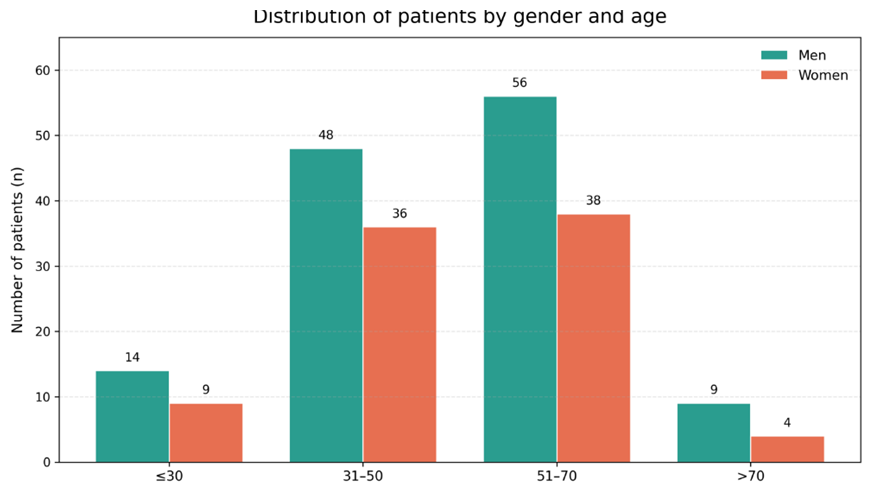 | Diagram 1. Distribution of patients with bone and soft tissue tumors by age group and gender |
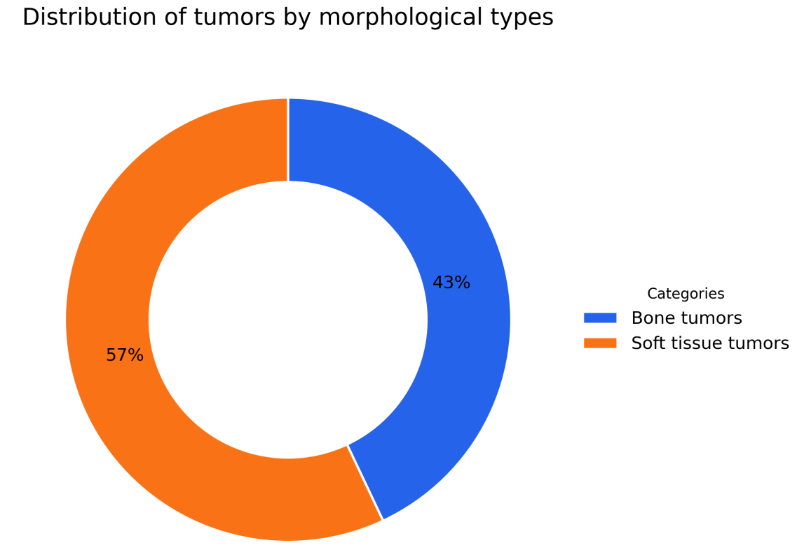 | Diagram 2. The proportion of bone and soft tissue tumors |
|
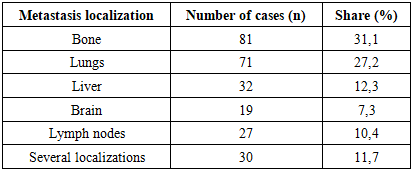
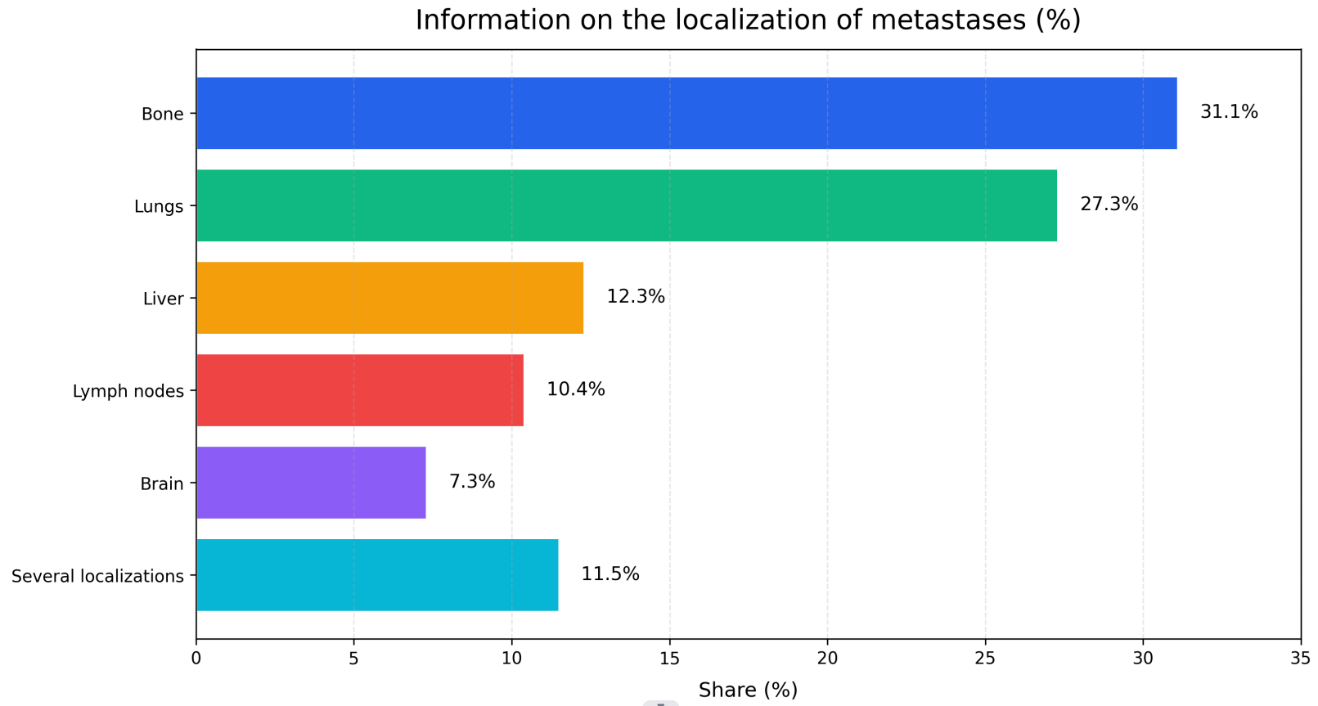 | Diagram 3. Comparative frequency of metastasis locations |
|

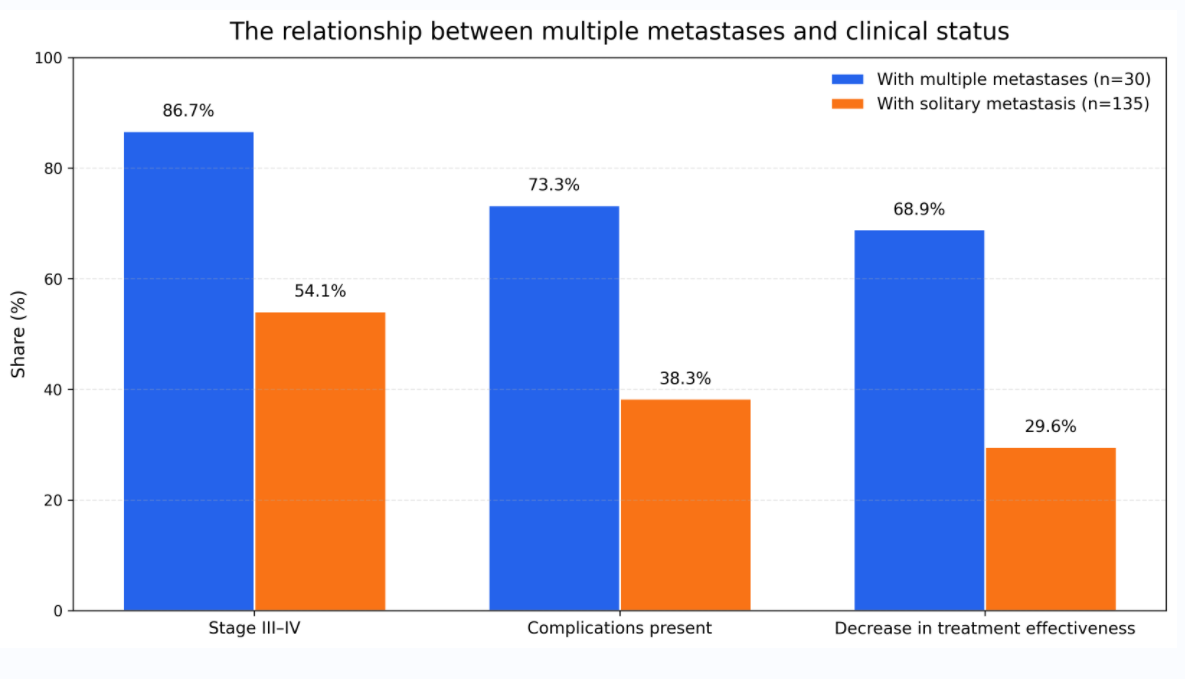 | Diagram 4. Comparison of clinical complications in patients with single and multiple metastases |
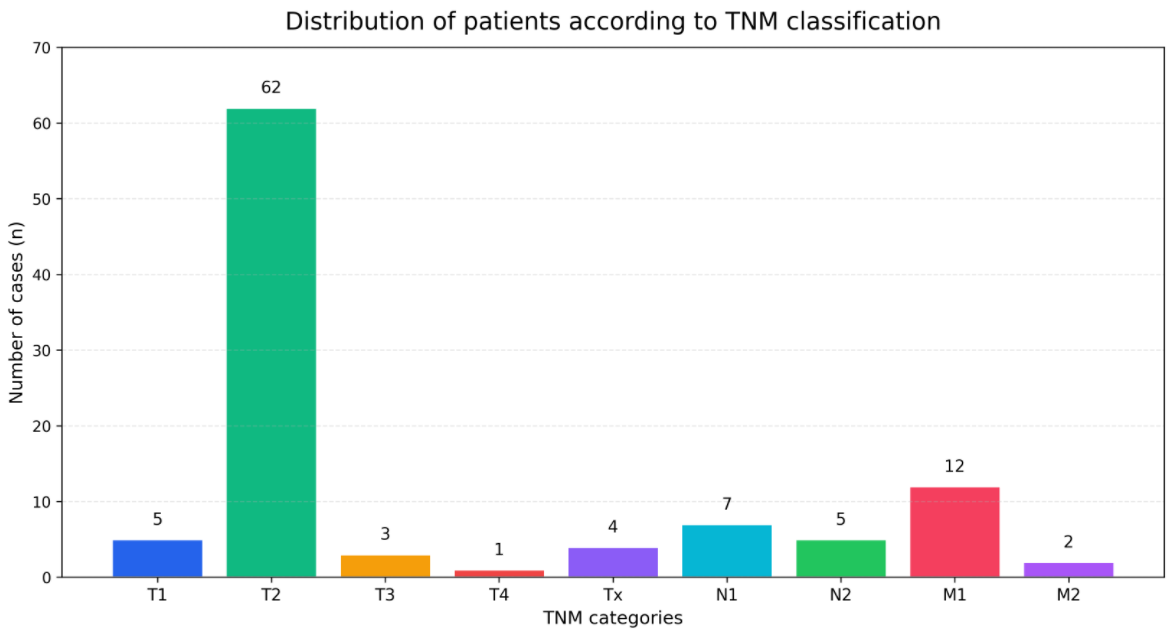 | Diagram 5. Distribution of patients by clinical groups |
3. Discussion of Results
- The results showed that in Khorezm region, bone and soft tissue tumors have a high frequency of metastasis, with metastatic foci detected in 77.1% of patients. This figure is consistent with the data presented in the international literature. In particular, in European and North American studies, the frequency of metastasis in soft tissue sarcomas was noted to be 30–50%, and in bone tumors – 40–70% [7]. The high rate in our study can be explained by the fact that patients mainly apply to medical institutions in the late stages of the disease. In the analysis of the localization of metastases, bone (31.1%) and lung (27.2%) took the leading place. This confirms the hematogenous spread mechanism typical for bone and soft tissue tumors. The literature also notes that metastasis to the lungs first, and then to bone tissue, is typical for these tumors [8,10,11,12,13,14]. The relatively low incidence of metastases to the liver and brain is due to their manifestation at a much later stage of the disease. Multi–localized metastases were noted in 11.7% of patients, and most of them belonged to clinical groups III–IV. In this group, a high frequency of complications and a decrease in the effectiveness of treatment were reliably determined. International studies also noted a sharp deterioration in the prognosis and a decrease in life expectancy in patients with multiple metastases [9]. Therefore, multi–localized metastases should be considered the most dangerous form clinically. In the analysis according to the TNM system, the predominance of T3-T4 and M1 indicators was observed. This indicates an aggressive course of the tumor and a tendency to early hematogenous spread. A similar trend was observed in some studies conducted on a republican scale, emphasizing the urgent problem of early diagnosis in bone and soft tissue tumors. Thus, the results obtained showed that metastasis in bone and soft tissue tumors in the Khorezm region is clinically and pathomorphologically severe, and an approach is required that takes into account regional characteristics.
4. Conclusions
- Based on the above theoretical analysis and practical approaches, the following conclusions can be formed:in the khorezm region, metastasis in bone and soft tissue tumors has a high frequency, with metastatic foci detected in 77.1% of patients;the most common localizations of metastases are bone and lungs, which confirms the predominance of hematogenous spread for these tumors;multiple localization metastases were noted in 11.7% of cases, which mainly corresponded to late (III–IV) stages of the disease;it was found that patients with multiple metastases have a high frequency of complications and low treatment efficacy;the predominance of t3-t4 and m1 cases according to the tnm classification indicates the problem of late diagnosis in bone and soft tissue tumors;the results obtained confirm the need for a comprehensive assessment of pathomorphological analysis with clinical data.
5. Practical Recommendations
- 1. It is recommended to conduct a pathomorphological examination in bone and soft tissue tumors at early stages and conduct a comprehensive assessment with clinical data.2. For patients with a high risk of metastasis, mandatory dynamic monitoring of lung and bone tissue is necessary.3. In patients with multiple localized metastases, individualized treatment tactics should be developed.4. In the conditions of the Khorezm region, it is advisable to strengthen oncomorphological monitoring and form a regional database.5. Establishing multidisciplinary cooperation between pathomorphologists and clinicians will increase the effectiveness of diagnosis and treatment.