American Journal of Medicine and Medical Sciences

p-ISSN: 2165-901X    e-ISSN: 2165-9036

2026;  16(1): 105-110

doi:10.5923/j.ajmms.20261601.25

Received: Dec. 22, 2025; Accepted: Jan. 13, 2026; Published: Jan. 16, 2026

 

Comparative Analysis of Treatment Outcomes in Patients According to CYP11B2 (–344 T/C) Polymorphism Genotypes

Tosheva Kh. B.1, Gadayev A. G.2, Boboev A. T.3, Turakulov R. I.2

1Bukhara State Medical Institute, Bukhara, Uzbekistan

2Tashkent Medical University, Tashkent, Uzbekistan

3Republican Specialized Scientific-Practical Medical Center of Hematology, Tashkent, Uzbekistan

Copyright © 2026 The Author(s). Published by Scientific & Academic Publishing.

This work is licensed under the Creative Commons Attribution International License (CC BY).
http://creativecommons.org/licenses/by/4.0/

Abstract

This article presents a comparative analysis of treatment outcomes in patients with chronic heart failure (CHF) and cardiorenal syndrome (CRS) according to the aldosterone synthase gene CYP11B2 (–344 T/C) polymorphism. The study included 200 CHF patients (100 with CRS, 100 without CRS) and 40 apparently healthy controls. CYP11B2 –344 T/C genotypes (TT, TC, CC) were determined by PCR–RFLP. Clinical status, 6 minute walk distance, echocardiographic indices, and serum levels of aldosterone, TGF β1 and collagen IV were assessed before and after 6 months of guideline directed medical therapy (ACEI/ARB, β blocker, mineralocorticoid receptor antagonist) combined with the SGLT2 inhibitor dapagliflozin. The TT genotype and T allele were associated with higher aldosterone and profibrotic biomarker levels, more pronounced renal dysfunction and a poorer response to therapy. In contrast, the CC genotype and C allele showed a more favourable clinical and haemodynamic response and lower fibrosis activity. These findings suggest that CYP11B2 (–344 T/C) polymorphism may serve as a useful prognostic marker for risk stratification and personalization of therapy in CHF patients with cardiorenal syndrome.

Keywords: Cardiorenal syndrome, СHF, CYP11B2 polymorphism, Aldosterone synthase gene, TGF-β1, Genetic polymorphism, Fibrosis biomarkers (collagen IV, TGF-β1), Renal dysfunction, Renin–angiotensin–aldosterone system, Mineralocorticoid receptor antagonists, SGLT2 inhibitors

Cite this paper: Tosheva Kh. B., Gadayev A. G., Boboev A. T., Turakulov R. I., Comparative Analysis of Treatment Outcomes in Patients According to CYP11B2 (–344 T/C) Polymorphism Genotypes, American Journal of Medicine and Medical Sciences, Vol. 16 No. 1, 2026, pp. 105-110. doi: 10.5923/j.ajmms.20261601.25.

Article Outline

1. Introduction

1. Introduction

Chronic heart failure (CHF) is a major global health problem associated with high morbidity, mortality, and healthcare costs [6,11,21]. Cardiorenal syndrome (CRS), characterized by the bidirectional interaction between cardiac and renal dysfunction, significantly worsens the prognosis in CHF patients [7,20]. The renin-angiotensin-aldosterone system (RAAS) plays a central role in the pathophysiology of both conditions [13,17]. Aldosterone, synthesized by aldosterone synthase (CYP11B2) in the adrenal cortex, is the key effector hormone of the RAAS [10,12]. Beyond its classical effects on sodium retention, aldosterone promotes cardiac and renal fibrosis, endothelial dysfunction, and inflammation [4,18]. Elevated aldosterone levels are associated with increased cardiovascular events and accelerated decline in renal function [11,15,16]. Aldosterone breakthrough during ACEI/ARB therapy remains a significant clinical challenge [13].
The CYP11B2 gene –344 T/C polymorphism (rs1799998) directly influences aldosterone synthase transcription and aldosterone production [10,12,19]. The T allele has been consistently associated with higher aldosterone levels, elevated blood pressure, reduced glomerular filtration rate, and worse cardiovascular outcomes [15,19,22]. Current guideline-directed medical therapy for CHF includes RAAS inhibitors, beta-blockers, and mineralocorticoid receptor antagonists (MRAs) [2,3,5,21]. MRAs have shown substantial benefits in reducing mortality and hospitalizations [2,3,8]. Novel therapeutic agents, including SGLT2 inhibitors and nonsteroidal MRAs, have demonstrated additional cardioprotective and nephroprotective effects [1,6,7]. However, individual response to these therapies varies considerably among patients.
Genetic factors may significantly influence treatment response in CHF patients [9,14]. Given that CYP11B2 polymorphism affects aldosterone levels and RAAS activity, it may also modulate the efficacy of aldosterone-targeted therapies [19,22]. Understanding the relationship between CYP11B2 genotype and treatment outcomes could enable personalized therapeutic approaches and improve clinical results [11,16,18,20]. The aim of this study was to perform a comparative analysis of treatment outcomes in CHF patients with cardiorenal syndrome according to CYP11B2 (–344 T/C) polymorphism genotypes, evaluating the efficacy of standard therapy combined with SGLT2 inhibitor dapagliflozin.
The patients included in the study were divided into three groups according to the distribution of CYP11B2 (–344 T/C) aldosterone synthase gene polymorphism genotypes: group 1 – carriers of the TC genotype (n=95), group 2 – carriers of the TT genotype (n=45), and group 3 – carriers of the CC genotype (n=60). In these groups, the efficacy of standard therapy was assessed after 6 months of prospective follow-up based on the analysis of clinical and functional status, quality of life, and central hemodynamic parameters (Figure 1).
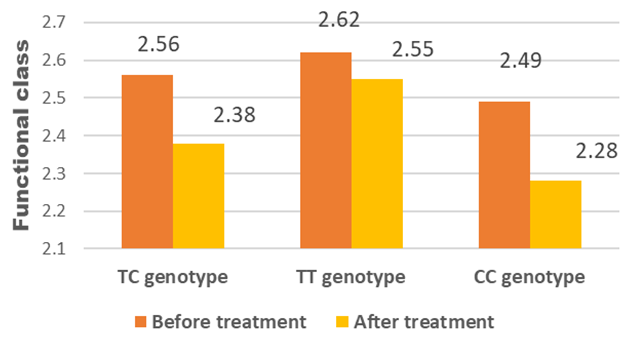
Figure 1. Dynamics of functional classes in the observed patients
On the background of standard therapy including an SGLT2 (sodium–glucose cotransporter 2) inhibitor, patients with the CC genotype demonstrated the most pronounced improvement in clinical and biochemical parameters. The functional class decreased by 8.4% (p<0.01).
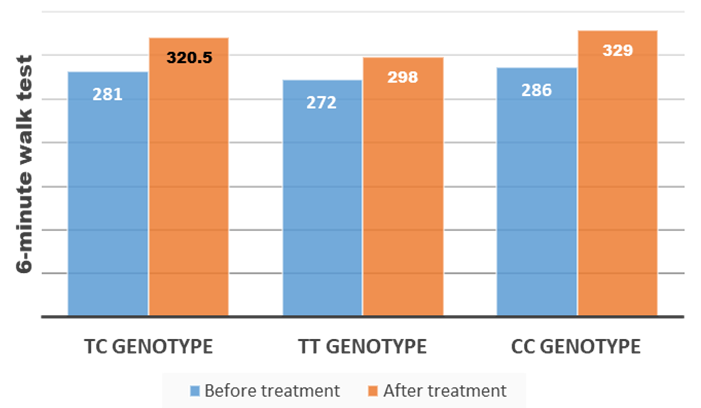
Figure 2. Dynamics of exercise tolerance (meters) in the observed patients
Figure 2 presents the dynamics of exercise tolerance (6-minute walk test) in the observed patients according to different genotypes. In the group carrying the TC genotype, the baseline distance was 281±10.8 m; after treatment, a significant increase to 320.5±10.6 m was observed (p<0.01). In the TT genotype group, the baseline value was 272±7.6 m, rising significantly to 298±7.4 m after treatment (p<0.05). The greatest improvement was recorded in the CC genotype group: the distance increased from 286±10.5 m at baseline to 329±10.2 m after therapy (p<0.001). Overall, although all groups showed a significant increase in exercise tolerance in response to therapy, the magnitude of improvement was greatest in patients with the CC genotype, confirming the impact of genetic factors on therapeutic effectiveness.
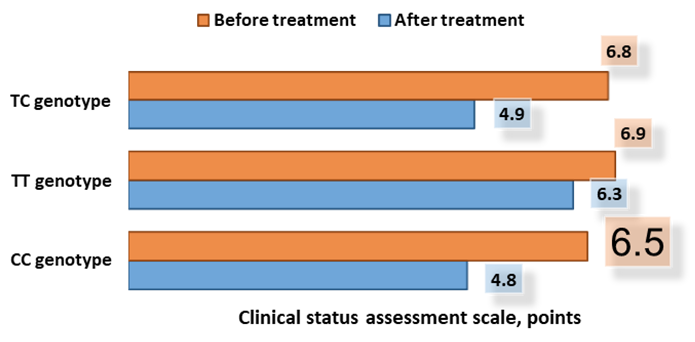
Figure 3. Dynamics of clinical status (scores) in the observed patients
Thus, in the TC genotype group, the clinical status score decreased from 6.8±0.2 at baseline to 4.9±0.2 after therapy (p<0.001). In the TT genotype group, this parameter declined from 6.9±0.2 to 6.3±0.2 (p<0.05). The greatest treatment effect was observed in the CC genotype group, where the initial score of 6.5±0.3 fell to 4.8±0.2 after therapy (p<0.0001). Overall, clinical status indicators improved significantly after treatment in all genotype groups. This improvement was most pronounced in the CC genotype group, where a marked reduction in clinical symptoms and a substantial enhancement in the patients’ general condition were observed, confirming the important role of genetic factors in clinical treatment efficacy.
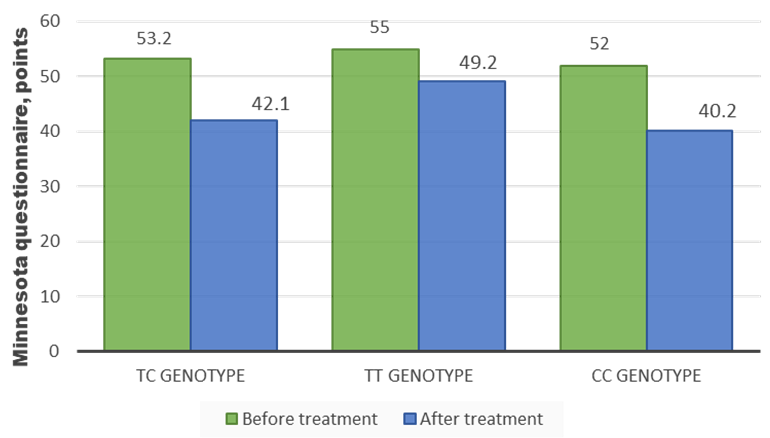
Figure 4. Dynamics of quality-of-life scores before and after treatment in the observed patients (Minnesota questionnaire)
As shown in Figure 4, the dynamics of quality-of-life scores (Minnesota Living with Heart Failure Questionnaire) were compared across genotypes before and after treatment. In the TC genotype group, the baseline score was 53.2±1.4 points and decreased to 42.1±1.4 points after therapy (p<0.001). In the TT genotype group, the score declined from 55.0±1.1 to 49.2±1.0 points (p<0.001). The greatest improvement was observed in the CC genotype group, where the initial score of 52.0±1.5 points fell to 40.2±1.13 points after treatment (p<0.001). Comparative analysis showed that quality-of-life indices improved significantly in all genotypes after therapy, with the most pronounced and statistically robust reduction in the CC group, indicating the highest treatment efficacy in carriers of this genotype.
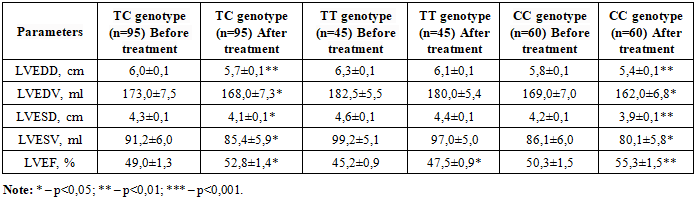
Table 1. Dynamics of the effect of treatment efficacy on intracardiac hemodynamic parameters according to aldosterone synthase gene –344 T/C polymorphism genotypes
     
The table above presents a comparative analysis of intracardiac hemodynamic parameters before and after treatment in patients stratified by aldosterone synthase gene T/C polymorphism. In the TC genotype group, treatment led to a decrease in LV end‑diastolic dimension (EDD) and end‑diastolic volume (EDV), with a statistically significant increase in left ventricular ejection fraction (LVEF) (p<0.01). In the TT genotype group, no marked changes were observed in the main parameters (EDD, EDV, ESD, ESV), and LVEF increased only slightly. In the CC genotype group, a reduction in EDD and EDV was accompanied by a significant rise in LVEF (55.3±1.5%; p<0.01).
These findings indicate that treatment efficacy, in terms of improvement of intracardiac hemodynamics, is most pronounced in patients with the TC and especially the CC genotypes.
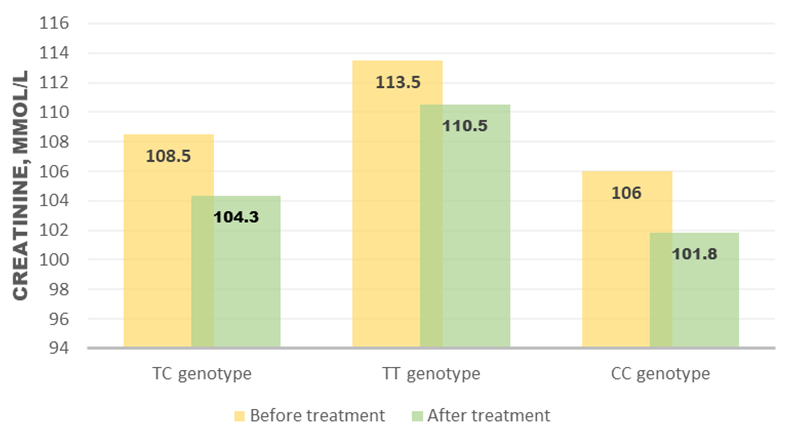
Figure 5. Dynamics of serum creatinine according to aldosterone synthase gene –344 T/C polymorphism genotypes
As shown in Figure 5, a comparative analysis was performed of changes in serum creatinine before and after treatment in patients stratified by aldosterone synthase gene T/C polymorphism. In the TC genotype group, creatinine decreased from 108.5±4.8 µmol/L at baseline to 104.3±4.6 µmol/L after therapy (p<0.05). In carriers of the TT genotype, creatinine fell from 113.5±4.9 to 110.5±4.8 µmol/L (p<0.05). The greatest effect was observed in the CC genotype group: baseline creatinine declined from 106.0±4.7 to 101.8±4.5 µmol/L (p<0.05).
Although all genotypes demonstrated a tendency toward reduction in serum creatinine following treatment, the decrease was most pronounced and consistent in CC carriers, indicating higher therapeutic efficacy in this genotype.
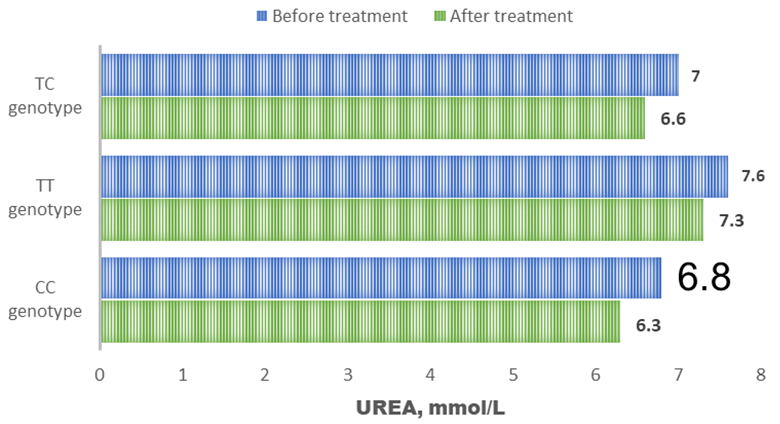
Figure 6. Dynamics of serum urea under treatment
Figure 6 shows the effect of treatment on serum urea levels in different genotype groups. In the TC genotype group, urea decreased significantly from 7.0±0.4 mmol/L at baseline to 6.6±0.3 mmol/L after therapy (p<0.05). In the TT genotype group, urea fell from 7.6±0.3 to 7.3±0.3 mmol/L, but this change was not statistically significant. In carriers of the CC genotype, baseline urea was 6.8±0.3 mmol/L and decreased to 6.3±0.3 mmol/L after treatment, which is also clinically relevant. Overall, all genotypes showed a downward trend in serum urea levels following therapy, with statistically significant reductions in the TC and CC groups, indicating an important contribution of genetic factors to treatment efficacy.
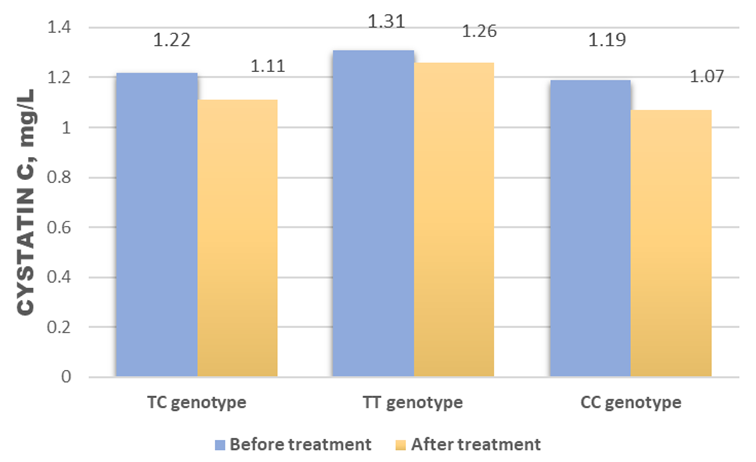
Figure 7. Dynamics of serum cystatin C under treatment
Figure 7 presents data on the effect of therapy on serum cystatin C levels in different genotype groups. In the TC genotype group, cystatin C decreased from 1.22±0.06 mg/L at baseline to 1.11±0.05 mg/L after treatment (p<0.05). In the TT genotype group, the baseline value was 1.31±0.07 mg/L and declined to 1.26±0.06 mg/L after therapy, but this change was not statistically significant. The greatest effect was observed in the CC genotype group, where cystatin C fell from 1.19±0.06 mg/L to 1.07±0.05 mg/L after treatment (p<0.01). Thus, the results indicate that, for the aldosterone synthase gene T/C polymorphism, standard therapy is most effective in CC genotype (C allele) carriers, whereas the TT genotype and T allele are associated with more severe disease and a poorer response to treatment.

References

[1]  Bakris G.L., Agarwal R., Chan J.C., Cooper M.E., Gansevoort R.T., Haller H., Remuzzi G., Rossing P., Schmieder R.E., Nowack C., et al. Effect of finerenone on albuminuria in patients with diabetic nephropathy: A randomized clinical trial. JAMA. 2015; 314: 884–894.
[2]  Baran W., Krzemińska J., Szlagor M., Wronka M., Młynarska E., Franczyk B., Rysz J. Mineralocorticoid receptor antagonists – use in chronic kidney disease. Int J Mol Sci. 2021; 22: 9995.
[3]  Bauersachs J., López-Andrés N. Mineralocorticoid receptor in cardiovascular diseases – Clinical trials and mechanistic insights. Br J Pharmacol. 2022; 179: 3119–3134.
[4]  Chen Z.W., Tsai C.H., Pan C.T., Chou C.H., Liao C.W., Hung C.S., Wu V.C., Lin Y.H.; TAIPAI Study Group. Endothelial dysfunction in primary aldosteronism. Int J Mol Sci. 2019; 20: 5214.
[5]  Dudenbostel T., Calhoun D.A. Use of aldosterone antagonists for treatment of uncontrolled resistant hypertension. Am J Hypertens. 2016; 30: 103–109.
[6]  Fan Y., Li F., Tan X., et al. Abnormal circulating steroids refine risk of progression to heart failure in ischemic heart disease. Eur J Clin Invest. 2024; 54: e14156.
[7]  Fernández-Argüeso M., Pascual-Corrales E., Bengoa Rojano N., García Cano A., Jiménez Mendiguchía L., Araujo-Castro M. Higher risk of chronic kidney disease and progressive kidney function impairment in primary aldosteronism than in essential hypertension. Endocrine. 2021; 73: 439–446.
[8]  Furuzono S., Meguro M., Miyauchi S., Inoue S., Homma T., Yamada K., Tagawa Y.I., Nara F., Nagayama T. A novel aldosterone synthase inhibitor ameliorates mortality in pressure-overload mice with heart failure. Eur J Pharmacol. 2017; 795: 58–65.
[9]  Grewal S., Fosam A., Chalk L., Deven A., Suzuki M., Correa R.R., Blau J.E., Demidowich A.P., Stratakis C.A., Muniyappa R. Insulin sensitivity and pancreatic β-cell function in patients with primary aldosteronism. Endocrine. 2021; 72: 96–103.
[10]  Hattangady N.G., Olala L.O., Bollag W.B., Rainey W.E. Acute and chronic regulation of aldosterone production. Mol Cell Endocrinol. 2012; 350(2): 151–162.
[11]  Monticone S., D’Ascenzo F., Moretti C., Williams T.A., Veglio F., Gaita F., Mulatero P. Cardiovascular events and target organ damage in primary aldosteronism compared with essential hypertension: A systematic review and meta-analysis. Lancet Diabetes Endocrinol. 2018; 6: 41–50.
[12]  Nakamura Y., Yamazaki Y., Konosu-Fukaya S., Ise K., Satoh F., Sasano H. Aldosterone biosynthesis in the human adrenal cortex and associated disorders. J Steroid Biochem Mol Biol. 2015; 153: 57–62.
[13]  Navaneethan S.D., Bravo E.L. Aldosterone breakthrough during angiotensin receptor blocker use: More questions than answers? Clin J Am Soc Nephrol. 2013; 8: 1637–1639.
[14]  Ohno Y., Sone M., Inagaki N., Yamasaki T., Ogawa O., Takeda Y., Kurihara I., Umakoshi H., Ichijo T., Katabami T., et al. Obesity as a key factor underlying idiopathic hyperaldosteronism. J Clin Endocrinol Metab. 2018; 103: 4456–4464.
[15]  Reincke M., Rump L.C., Quinkler M., Hahner S., Diederich S., Lorenz R., Seufert J., Schirpenbach C., Beuschlein F., Bidlingmaier M., et al. Risk factors associated with a low glomerular filtration rate in primary aldosteronism. J Clin Endocrinol Metab. 2009; 94: 869–875.
[16]  Reincke M., Fischer E., Gerum S., Merkle K., Schulz S., Pallauf A., Quinkler M., Hanslik G., Lang K., Hahner S., et al. Observational study: mortality in treated primary aldosteronism – The German Conn’s registry. Hypertension. 2012; 60: 618–624.
[17]  Rafiq K., Hitomi H., Nakano D., Nishiyama A. Pathophysiological roles of aldosterone and mineralocorticoid receptor in the kidney. J Pharmacol Sci. 2011; 115: 1–7.
[18]  Spencer S., Wheeler-Jones C., Elliott J. Aldosterone and the mineralocorticoid receptor in renal injury: A potential therapeutic target in chronic kidney disease. J Vet Pharmacol Ther. 2020; 43: 243–267.
[19]  Sydorchuk L., Dzhuryak V., Sydorchuk A., Levytska S., Petrynych V., Knut R., Kshanovska A., Iftoda O., Tkachuk O., Kyfiak P., Popovich A., Khomko O., Sydorchuk R. The cytochrome 11B2 aldosterone synthase gene rs1799998 single nucleotide polymorphism determines elevated aldosterone, higher blood pressure, and reduced glomerular filtration, especially in diabetic female patients. Endocr Regul. 2020; 54(3): 217–226.
[20]  Verma A., Vaidya A., Subudhi S., Waikar S.S. Aldosterone in chronic kidney disease and renal outcomes. Eur Heart J. 2022; 43: 3781–3791.
[21]  “The Role of Aldosterone in the Development of Chronic Heart Failure and the Effectiveness of Mineralocorticoid Receptor Antagonists in its Treatment.” Web of Semantic: Universal Journal on Innovative Education. 2023; 2(5): 223–227.
[22]  Yilmaz M., Sari I., Bagci B., Gumus E., Ozdemir O. Aldosterone Synthase CYP11B2 Gene Promoter Polymorphism in a Turkish Population With Chronic Kidney Disease. Iran J Kidney Dis. 2015; 9(3): 209–214.