American Journal of Medicine and Medical Sciences

p-ISSN: 2165-901X    e-ISSN: 2165-9036

2025;  15(12): 4692-4697

doi:10.5923/j.ajmms.20251512.110

Received: Nov. 16, 2025; Accepted: Dec. 21, 2025; Published: Dec. 29, 2025

 

Results of Assessment of the Effect of Various Groups of Chemotherapeutic Drugs on the Organs and Tissues of the Oral Cavity of Cancer Patients

Nurova Shohsanam

PhD., Department of Orthopedic Dentistry and Orthodontics Bukhara State Medical Institute, Bukhara, Uzbekistan

Correspondence to: Nurova Shohsanam, PhD., Department of Orthopedic Dentistry and Orthodontics Bukhara State Medical Institute, Bukhara, Uzbekistan.

Email:

Copyright © 2025 The Author(s). Published by Scientific & Academic Publishing.

This work is licensed under the Creative Commons Attribution International License (CC BY).
http://creativecommons.org/licenses/by/4.0/

Abstract

One of the current methods of treatment of oncological diseases is chemotherapy, which has been recognized by Russian and foreign authors that during treatment, complications that occur in the organs and tissues of the oral cavity are very common. The probability of developing complications when using chemotherapy at standard doses is 20-80% gacha, while at high doses of chemotherapy it reaches up to 100%.

Keywords: Dental defects, Periodontal disease, Hormones, Densitometer, Menopause, Periodontal pocket depth, Osteocalcin, Resorption

Cite this paper: Nurova Shohsanam, Results of Assessment of the Effect of Various Groups of Chemotherapeutic Drugs on the Organs and Tissues of the Oral Cavity of Cancer Patients, American Journal of Medicine and Medical Sciences, Vol. 15 No. 12, 2025, pp. 4692-4697. doi: 10.5923/j.ajmms.20251512.110.

1. Introduction

Russian and foreign authors distinguish factors that affect the likelihood of the occurrence of complications and the degree of their manifestation. They can be divided into systemic and local factors [20]. Systemic factors include the types of agents used in chemotherapy, a slowdown in the functions of the immune system, long-term alcohol consumption during life and smoking tobacco, systemic diseases (diabetes mellitus, HIV-infection, diseases of the cardiovascular system, kidney diseases) [18,13].
That said, in terms of predicting complications in the organs and tissues of the oral cavity, among all chemotherapy agents, 5-fluoruracil, methotrexate, doxorubicin attract special attention [18]. The biggest disadvantage of drugs used in chemotherapy is their cytotoxicity. 5 – fluoruracil is an anti-tumor agent and belongs to the group of metabolites. Fluoruracil disrupts DNA synthesis, enhances the formation of an unfinished structure of RNA, thereby silencing the division of tumor cells [16]. 5-fluorouracil is used for the treatment of tumors of the gastrointestinal tract, thoracic qaafa, head and neck areas [16,19].
A study of the pathogenesis of the effect of 5-fluoruracil on mice showed that the agent leads to atrophy of the oral mucosa, in which proliferation slows down, cell death increases, the detachment of inflammatory mediators is activated, and the protective function of the oral mucosa decreases [18,19]. Genetic factors can influence the development of oral mucositis against the background of 5-fluoruracil. Gene chemotherapeutic agents can affect metabolizing enzymes. Hence, the dihydropyrimidine dihydrogenase defect may increase the potentially toxic effect of 5-fluoruracil. Methotrexate is a cytostatic agent calculated from antimetabolites, a group of folic acid antagonists.
By blocking tetrahydrofolate synthesis, the agent disrupts DNA synthesis, which inhibits proliferative processes in the cell. Methotrexate belongs to vital medicines according to the World Health Organization and is used in the treatment of acute Lymphoblast leukoses, nervous system edema, osteosarcoma and a number of autoimmune diseases [12]. Doscorubicin is a cytotoxic anthracycline antibiotic that induces structural changes in the nucleotide base, thinning the replication of nucleotides and DNA - and RNA - polymerase activity. It is this condition that leads to the development of toxic effects on various organs.
Doxorubicin is used to treat breast cancer, esophageal cancer, gastric cancer, malignant tumors of the brain and neck area, ovarian cancer, cervical cancer, and a number of other tumors [24].
There are various microorganisms in the oral cavity: according to recent data, their species exceeded 700 [10,14]. Such diversity makes the oral cavity the most abundant environment of the human body by post-intestinal microorganisms [4]. In the composition of the flora, 50-200 species are distinguished, they are widespread, they are found in almost every person.
They are distributed to microorganisms that fertilize the tooth surfaces (above the gums) and live under the gums. The former include Actinomyces, Campilobacter, Capnocytophaga, Corynebacterium, Fusobacterium, Granulicatella, Neisseria, Prevotella, Streptococcus, Veilonella.
The second group includes Filifactor, Fusobacterium, Parvimonas, Porphyromonas, Prevotella, Tannerella, Treponema. Almost half of the oral resident microflora consists of anaerobic streptococci-S. mutans, S. mitis, S. sanguis, manifested by peptostreptococci [14].
The oral microbiome plays an important role in the application of special and non-specific, humoral and cellular mechanisms of immunity. Bifidobacteria have a positive effect on the development of the lymphoid apparatus and stimulate the formation of a protective barrier, increase the ratio of properdin protein, lysosym enzyme, prevent the development of bacteremia and sepsis [10].
Research was carried out in 2021-2023 at the Bukhara branch of the Republican specialized scientific practical medical center of oncology and radiology and at the dental scientific practical Center under the Bukhara State Medical Institute. The total number of patients examined was 703, of which 154 were controlled patients. 154 patients with moderate to severe diffuse periodontitis, aged between 55 and 65 years, with at least 5 years of postmenopause, were examined and treated in our control patients.
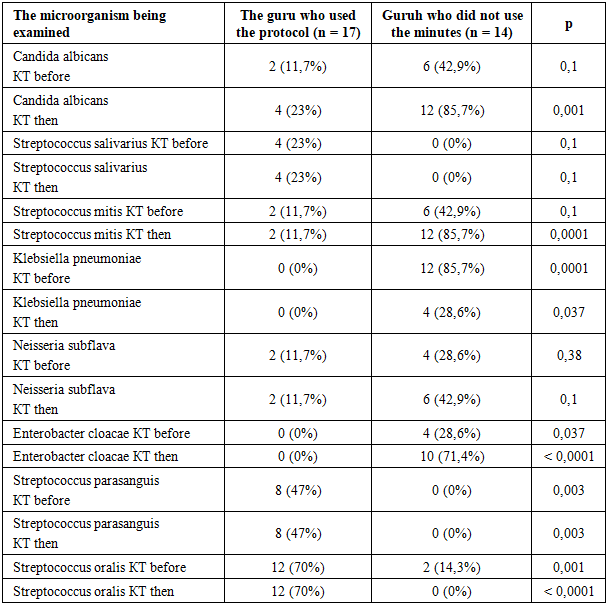
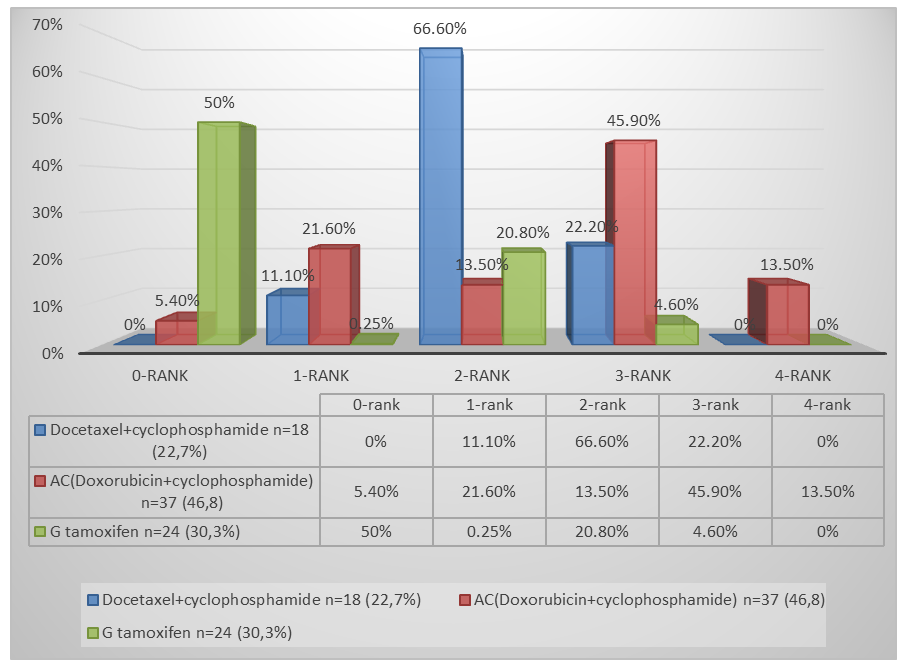
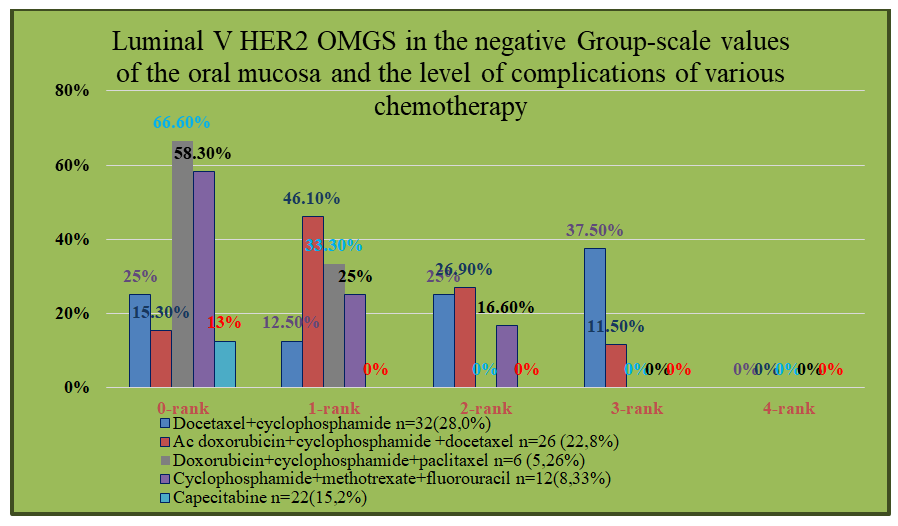
To determine the effect of a special mixture of drugs used for chemotherapy on the mucous membrane of the oral cavity, a correlation analysis was carried out between the values of the scale for assessing the severity of the oral mucosa and the drugs used in the patients included in the study. The average values of the measurement scale of the oral mucosa during treatment with different chemotherapy drugs and different chemotherapy regimens are presented in Tables 1, shown in Figures 1 and 2.
Table 1. The degree of occurrence of microorganisms under study in patient groups
     
Figure 1. Luminal Group A OMGS-oral mucosal scale values and different chemotherapy complication rates
Figure 2. Luminal V HER2 OMGS in the negative Group-scale values of the oral mucosa and the level of complications of various chemotherapy
The possible complications from chemotherapy drugs in the group of vaginal A in women with mammary cancer are as follows: - dosetaxel+cyclofosmid Grade II 66.6% swelling redness, pain when speaking,
Grade III 22.2% redness and swelling on the oral mucosa are clearly manifested, pains, Grade I 11.1% jaroxat slight redness, discomfort, at levels 0 - III we can see that the indicator is zero. - in drugs of the doxorubicin+cyclofosmide group, 45.9% of the III degree were clearly manifested redness and swelling of the oral mucosa, pains, IV-degree 13.5% severe pain, constant bleeding of the mucous membrane, inflammation from the mucous membrane to the hard tissue, II-degree 13.5% swelling redness, pain when speaking, 0-degree 5.40% during the incubation period, it was observed - tamoxifen was observed to have caraches on the 50% mucosa of Level 0, Level II was 20.8%, Level III was 4.6%, level I was 0.25% higher (figure 1).
Also mammary cancer luminal V HER2 possible complications from the negative group of chemotherapy drugs are as follows: - Dosetaxel+cyclofosmid - Level III 37.5% of redness and swelling on the oral mucosa is evident, pains, Level II 25% swelling redness, pain when speaking, Level 0 25% in the incubation period karash mucous covering the top, level I 11.1% jaroxat slight redness, levels IV can be seen as equal to 0%. - AS doxorubicin+cyclofosmide+dosetaxel - I-level 46.1% mild redness, Level II 26.9% swelling redness, level 0 15.3 in the incubation period, karash mucous covering the top, level III 11.5% redness and swelling on the oral mucosa are evident, levels IV are 0% equal.
Doxorubicin+cyclophosmide+paclitaxel - level 0 - 66.6% has been seen to cover the carash mucosa UST during the incubation period, level I-level 33.3% swelling redness, Level II - III-IV 0%. cyclofosmide+methotrexate+fluoruracil has been shown to cover the carash mucosa UST during the level 0 incubation period of 58.3%, level I-25% jaroxate slight redness, Level II 16.6% swelling redness, when speaking pain is 0% at levels III - IV. - capesitabine, Grade I-81.8% mild redness, grade 0 - 9.09% was seen to cover the carash mucous UST during the incubation period, Grade II - 9.09% swelling redness, Level III-IV-0%. Olaparib - level 0 was seen to cover the carash mucosa UST during the 37.5% incubation period, Level II 50.0% swelling redness, pain I-level 12.5% mild redness when speaking, and Level III - IV 0%.
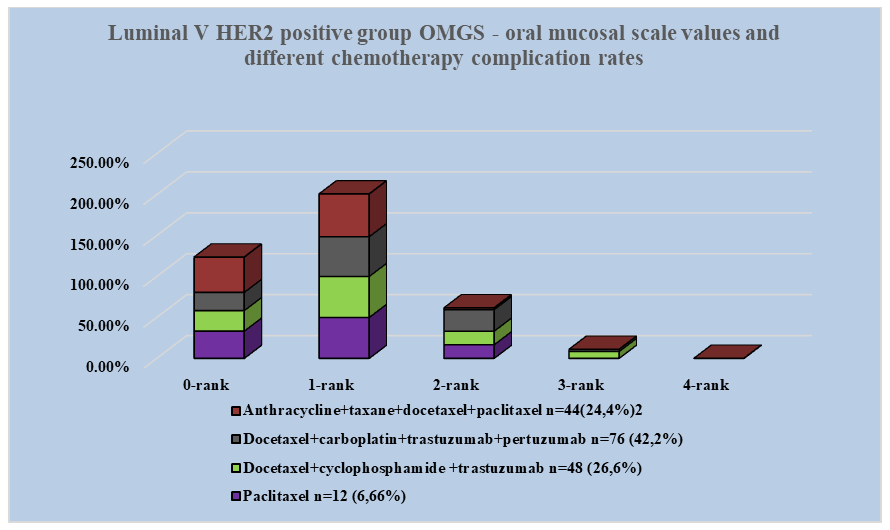
Figure 3. Luminal V HER2 positive group OMGS - oral mucosal scale values and different chemotherapy complication rates
As a result of the studies carried out, it is determined that: - Inflammation of the oral mucosa with paclitaxel medication I-level 50% jaroxat slight redness, level 0 33.3% during the incubation period karash mucous covering the top, level II 16.6% swelling redness, pain when speaking, Level III-IV was seen to be 0%. - dosetaxel+cyclophosmide+Trastuzumab effects have been studied.
Absolute values of the number of people with non-zero growth and share in the group are given. CT-chemotherapy. The event level was analyzed using Fisher's specific criterion. The Streptococcus oralis in the protocol group remained the same as the non-zero growth percentage and fell from 14.3% to zero in the comparison group. With the help of oral microflora, it helped to determine in advance the development of mucosal diseases and their complication. In women with breast cancer, light and chemistry are the main causes of the occurrence of chronic diffuse periodontitis after the exception of therapy oral mucosa. Early menopause in women after chemotherapy and light is an important factor in the development of the disease. It is a chronic hypoxia in the microcirculation of parodont tissue, with impaired nutrition contributing to the destruction of parodont tissue. Microcirculation, on the other hand, is primarily due to the inflammation of the tissues of their endothelial walls, ischemia and excessive damage in others, which eliminates the protective barrier, helping the periodonta to become one of the pathomechanisms of the disease. During the long-term treatment of patients with mammary gland cancer, large and small pain syndromes of the spine of the bones appear, joint pain that irritates and does not stop for a long time has been observed in dispensary control. The developmental pathogenesis of pain syndrome in patients is often caused by osteoporosis (op) in SBS. Chemotherapy and hormone therapy are factors that involve a great influence on the metabolic process of bone structure. [13].
Chemotherapy also affects the mineral density of the bone by affecting ovarian dysfunction with bone tissue against the background of cytotic therapy, which in due time causes the rapid development of early menopause and osteoporosis. In mammary gland cancer (SBS), drugs that affect tumors that occur in a hormone-dependent manner affect the patient's menstrual cycle and at the same time a change in bone density occurs. Tamoxifen or gonodotropic-rinsing hormone antogonists are used to treat aduvant breast cancer, causing up to 7% bone loss during one year of treatment [9]. Also surgery leads to artificial menopause according to the indications of an ovarektomy, which increases the risk of fractures characteristic of osteoporosis. [8]. Thus, changes in bones caused by the use of endocrine therapy, chemotherapy and surgical methods in the treatment of mammary cancer are currently a pressing problem. [9]. Osteoporosis has been negatively affecting patients with this cancer, leading to unpleasant symptoms. [6]. Solving the problem of spreading periodont tissue diseases is one of the most important and urgent tasks of modern dentistry. A healthy parodont in 12% of the population. In people over 35 years of age, the proportion of initial changes in parodont gradually decreased by 26-15%, while an increase in moderate to severe changes was observed to be as high as 75%. This in turn leads to the appearance of functional disorders in the dentition. According to the WHO, tooth loss as a result of periodont diseases functional disorders of the tooth-jaw system develops five barovars faster than complications of caries and is the second most common among all dental diseases in terms of prevalence. The results of the inspection are presented in the figure below. Orthopantomography was used to X-ray examination of the gums in patients with mammary cancer. It assesses the degree of resorption of the alveolar barrier relative to the length of the tooth root according to the Fuchsa - 4-score index: 4 - lack of resorption in the alveolar tumor; 3-score resorption up to 1/3 of the root length of the bone; 2-score resorption up to 2/3 of the root length of the bone; 1-score resorption; 0-complete resorption of the alveolar bone resulting from periodont pathology. The calculation of the Fuchsia index is carried out according to the following formula.
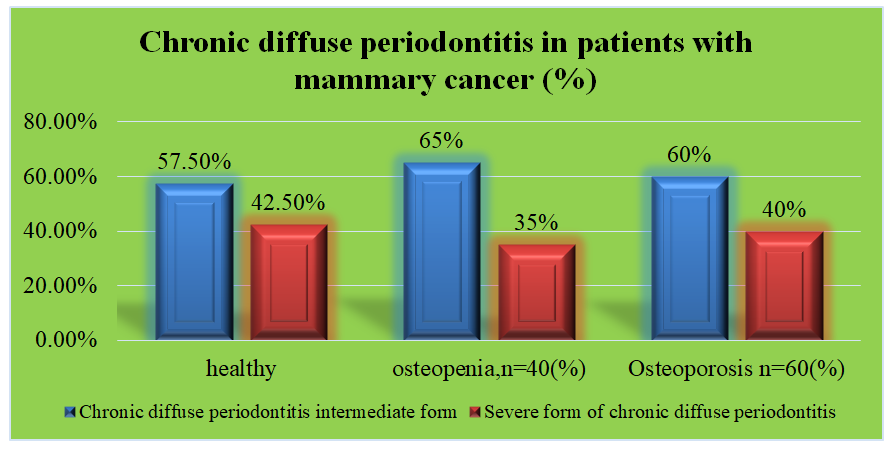
Figure 4. Chronic diffuse periodontitis in patients with breast cancer (%)
Index of characterization of the cortical layer of the lower jaw Clemetti E. and was increased to AML based on the MCI index by others. It was evaluated according to the morphological characteristics of the bone. Depending on its morphological characteristics, 3 types of it were distinguished: S1 - normal cortical layer with a clear inner border, cortical area without a bilinar unknown change. S2-one side of the cortical plate is crescent-shaped and significantly damaged cortical. The S3-cortical margin is uneven, the cortical plate is multilayered with many defect areas. The initial orthopantomograms were also analyzed 2 years after treatment. Chronic diffuse periodontitis (%) in patients with breast cancer. Among patients with chronic diffuse parodont and postmenopause osteoporosis, 60% had moderate-grade parodontitis, and 40% had severe-grade parodontitis, based on clinical and radiological data.Among the patients examined, STP 65% median periodontitis against the background of osteopenia was diagnosed with 35% severe periodontitis. It has a significant difference in statistical comparison of patients by group.

2. Conclusions

We planned to recommend Osteogenon and raloxifene tablets to prevent chronic diffuse periodontitis from the effects of chemotherapy in women with breast cancer. In oral mucositis, it was recommended to chew food, rinse and drink with dandelion plant flower to eliminate difficulty in pronunciation, swallowing, breathing problems. The dandelion plant prevents the growth of cancer cells in breast cancer and osteoporosis changes in the bone. The mechanism of action of the drug is described in detail in subsequent macolas.

References

[1]  Arzukanyan, A. V. Optimization of the oral hygiene care protocol in patients with diseases of the mucous membrane: dissertation of candidate of medical sciences: 14.01.14 / Arzukanyan Alina Vladimirovna; I.M. Sechenov First Moscow State Medical University, Ministry of Health of the Russian Federation (Sechenov University). - Moscow, 2021. - 134p.
[2]  Katola, V. M. The role of the oral microbiome in the development of inflammation and somatic pathology / V. M. Katola, V. E. Komogortseva // Bull. phys. and pat. respiration. - 2018. - No. 68. - P. 117.
[3]  Nurova Sh.N. Review characteristics of the etiology, diagnosis, treatment, and prevention of dentoalveolar deformities in women in early menopause. Oral medicine and craniofacial research. Volume: 03 Issue: 1| 2022 ISSN: 2181-096623-26.
[4]  Nurova Sh.N. Oral medicine and craniofacial research. Volume: 4 Issue: 2| 2023 ISSN: 2181-0966. B. 53-56.
[5]  Use of high doses of methotrexate in children with oncological diseases: features of concomitant therapy, toxicity assessment / Yu.V. Dinikina, A.Yu. Smirnova A.Yu., K.M. Golubeva [et al.] // Russian Railways and Oceanography. - 2018. - No. 2. - P. 11-18.
[6]  Enhancement of the cytotoxic effect of 5-fluorouracil when used in combination with ultrasound / D.I. Vodolazhsky, N.A. Nazaralieva, T.I. Moiseenko [et al.] // News of universities. North Caucasus region. Series: Natural sciences. - 2018. - No. 2. - P. 100-105.
[7]  Amrulloyevich, G. S., & Norpulatovna, N. S. (2019). Maxillofacial anomalies in children with chronic tonsillitis and immunity factors, hypoxia and endogenous intoxication for the development and formation of pathology. International Journal of Pharmaceutical Research, 11(3), 1018-1026. doi:10.31838/ijpr/2019.11.03.103.
[8]  Basson, M. D. In vitro evidence for matrix regulation of intestinal epithelial biology during mucosal healing / M.D. Basson // Life Sci. – 2001. – Vol. 69. – P. 3005– 3018.
[9]  Chemotherapy Induces Oral Mucositis in Mice Without Additional Noxious Stimuli / M. Bertolini, T. Sobue, A. Thompson, A. Dongari–Bagtzoglou // Translational Oncology. – Vol. 10. – № 4. – P. 612–620. – doi:10.1016/j.tranon.2017.05.001.
[10]  Chemotherapy–induced oral mucositis is associated with detrimental bacterial dysbiosis / B.Y. Hong, T. Sobue, L. Choquette, [et al.] // Microbiome. – 2019. – Vol. 7. – № 1. – P. 66. – doi: 10.1186/s40168–019–0679–5.
[11]  Clinical practice guidelines for the prevention and treatment of cancer therapy–induced oral and gastrointestinal mucositis / E.B. Rubenstein, D.E. Peterson, M. Schubert, [et al.] // Cancer. – 2004. – № 100 (9 Suppl). – P. 2026–2046. – doi: 10.1002/cncr.20163.
[12]  Goodman, M. K. Integumentary and mucous membrane alterations / M.K. Goodman, L. Ladd // In: Cancer Nursing: Principles and Practice by edition S. Groenwald, M.H. Frogge, M. Goodman, C.H. Yarbro. – Boston: Jones and Barlett, 1993. – P. 763–788.
[13]  Heimdahl, A. Oral infections in immunocompromised patients / A. Heimdahl, C.E. Nord // J Clin Periodontal. – 1990. – Vol. 17. – P. 501–503.
[14]  Interventions for preventing oral mucositis in patients with cancer receiving treatment: cytokines and growth factors / P. Riley, A.M. Glenny, H.V. Worthington, [et al.] // Cochrane Database Syst Rev. – 2017. – № 11. – CD011990. – doi:10.1002/14651858.CD011990.pub2.
[15]  Keskinbora, K. Gabapentin and an opioid combi– nation versus opioid alone for the management of neuropathic cancer pain: a randomized open trial / K. Keskinbora, A.F. Pekel, I.J. Aydinli // Pain Symptom Manage. – 2007. – Vol. 34. – P. 183–189.
[16]  Lalla, R. V. Chemotherapy or radiation–induced oral mucositis / R.V. Lalla, D.P. Saunders, D.E. Peterson // Dent Clin North Am. – 2014. – Apr. 58. – № 2. – P. 341– 349. – doi: 10.1016/j.cden.2013.12.005.
[17]  Nanoencapsulated Doxorubicin Prevents Mucositis Development in Mice / C.M. Pinto, L.S. Horta, A.P. Soares, [et al.] // Pharmaceutics. – 2021. – Jul 4. – Vol. 13. – № 7. – P. 1021. – doi: 10.3390/pharmaceutics13071021. – PMID: 34371713; PMCID: PMC8329927.
[18]  Nurova Sh.N. Treatment and Prevention of Dental Deformities in Women in Early Menopause, MEDICAL AND NATURAL SCIENCES Volume: 03 Issue: 03 | May- Jun 2022 ISSN: 2660-4159.
[19]  Nurova Sh.N. Prediction and Prevention of the Development of Partial and Complete Defects of the Dentition in Women in Early Menopause. MIDDLE EUROPEAN SCIENTIFIC BULLETIN Volume: 28, ISSN 2694-9970 11-15.
[20]  Nurova Sh.N. General Description of Changes in the Gums in Women with Breast Cancer / RESEARCH JOURNAL OF TRAUMA AND DISABILITY STUDIES Volume: 2, ISSN 2720-6866 220-224.
[21]  Nurov N.B. Analysis of data on the morphological structure and biomechanics of the temporomandibularis system World Bulletin of Public Health (WBPH) ISSN 2749– 3644 Volume 3, October-2021; 85-87 Impact factor: 7.635.
[22]  Nurov N.B. Prevalence of adentia in the elderly and development factors. World Bulletin of Public Health (WBPH) ISSN 2749– 3644 Volume 3,October-2021; 78-81 Impact factor: 7.635.
[23]  Nurov N.B. Treatment of old people according to age specialties World Bulletin of Public Health (WBPH) ISSN 2749– 361Х Volume 3,October-2021;125-128 Impact factor: 7.545.
[24]  Oncological–Therapy Related Oral Mucositis as an Interdisciplinary Problem–Literature Review / A. Kusiak, B.A. Jereczek–Fossa, D. Cichońska, D. Alterio // Int J Environ Res Public Health. – 2020. – Vol. 17. – № 7. – P. 24–64. – doi:10.3390/ijerph17072464.