Nazarov B. B.
Abu Ali ibn Sina Bukhara State Medical Institute, Uzbekistan
Correspondence to: Nazarov B. B., Abu Ali ibn Sina Bukhara State Medical Institute, Uzbekistan.
Copyright © 2025 The Author(s). Published by Scientific & Academic Publishing.
This work is licensed under the Creative Commons Attribution International License (CC BY).
http://creativecommons.org/licenses/by/4.0/

Abstract
Research results show that the prevention of tumor diseases, their early diagnosis, and uncomplicated treatment are of great importance. However, one of the most serious problems in these pathologies is their primary detection. One of the systems sensitive to pre-pathological conditions in the body is the immune system, whose cellular and humoral factors react with quantitative and qualitative changes to the ongoing pre-pathological states in the body, which occur asymptomatically and without external clinical manifestations. It has been shown that quantitative changes in these factors indicate pre-disease states of the body.
Keywords:
Immunoglobulin, Humoral immunity, Biological marker, Humoral factor, Plasma cells
Cite this paper: Nazarov B. B., Characteristics of Humoral Immunity Indicators in Women with Cervical Dysplastic Process, American Journal of Medicine and Medical Sciences, Vol. 15 No. 11, 2025, pp. 4177-4183. doi: 10.5923/j.ajmms.20251511.94.
1. Introduction
According to numerous studies, the prevention of tumor diseases, their early diagnosis, and uncomplicated treatment are of great importance. However, one of the most serious problems in these pathologies is their primary detection, since women consider themselves healthy and do not seek medical help in the absence of symptoms of concern.Cervical tumors in women are characterized by severe course, low treatment efficacy, and often end fatally. It has been proven that precancerous diseases of the cervix are one of the main risk factors for the formation of this medical and socio-economic problem.In many cases, precancerous changes in the cervix are detected accidentally during the patient's initial visit for other diseases, therefore it is advisable to have biological markers and clinical-laboratory criteria allowing for accurate diagnosis of these changes.One of the systems sensitive to pre-disease (precancerous) states of the body is the immune system, whose cellular and humoral factors react with quantitative and qualitative changes to the asymptomatic pre-disease states occurring in the body. As shown, quantitative changes in these factors indicate the presence of pre-disease states in the body.The aim of the research is a comparative study of the concentrations of humoral immunity factors in the blood serum of women with a precancerous condition of the cervix (dysplastic process).
2. Materials and Methods
A total of 252 women of different ages were included in the clinical study. Immunological testing was performed on 76 of them; none of these patients were found to have cervical tumors or precancerous diseases, and 15 healthy women without tumors or precancerous changes of the cervix constituted the control group.All examined women were divided into four research groups:1. First group – women with a cervical dysplastic process (precancerous condition) who did not receive treatment (n=23).2. Second group – women with a cervical dysplastic process who received conservative treatment (n=26).3. Third group – women with an initial stage cervical tumor (stage 0–I) who received radiation and chemotherapy (n=26).4. Fourth group – healthy women (control group) who showed no signs of cervical tumor or precancerous condition during the study (n=15).The concentration of IgA in blood serum was determined using the "Vector-Best" reagent kit (Novosibirsk, Russia), and IgM, IgG, and IgE – using "HEMA" kits (Moscow, Russia). Immunoglobulins were studied by the enzyme-linked immunosorbent assay (ELISA) method on an MR-96A apparatus (Mindray Co Ltd, China, manuf. 2022.Statistical processing of the obtained data was performed using standard methods of variation statistics in the Excel program. Since all groups were evenly distributed by age, social status, and place of residence of the patients, these groups were representative of each other. Strict adherence to the principles of evidence-based medicine during the work ensured the reliability of the results.
3. Discussion
To date, there are 5 classes of immunoglobulins (antibodies) in the human body, which include IgA, IgM, IgG, IgE, IgD. They differ from each other not only in structure and molecular weight but also in their functions; however, overall they all participate in the fight against antigens that have entered the body or formed within it and their elimination from the body. In pre-pathological and pathological conditions in various organisms, their concentration changes, increasing or decreasing in various biological fluids of the body.The degree of quantitative changes in these immunoglobulins in pre-tumor conditions of the cervix had not been determined. Taking this into account, their concentrations in blood serum were studied comparatively.The level of all immunoglobulins in the blood serum of patients was significantly higher (P<0.05 - P<0.001) than the corresponding indicators in healthy women. This fact showed that, despite the presence of significant changes in immunoglobulin concentration in this pathology, the inflammatory process is weakly developed, no significant changes occur in the activity of the immune system, and the formation of an immune response is observed at a low level. Based on the obtained results, it was shown that these proteins of the immune system are capable of reacting even to minimal antigenic stimulation.Considering the results for each immunoglobulin class, in patients with a precancerous condition of the cervix, the concentration of IgA averaged 6.05±0.35 g/l, which is 1.81 times significantly higher than in healthy women (3.35±0.33 g/l) (P<0.001). Such an increase fits the main functions of IgA.As known, IgA is contained in large quantities in blood serum, but it is mainly produced onto the surface of mucous membranes and is located in the "first echelon" of the fight against antigens in the form of secretory immunoglobulin A (sIgA). It is produced onto the surface of various mucous membranes as sIgA, and the secretory component protects it from digestion.Considering that in precancerous diseases of the cervix, under the influence of the human papillomavirus (HPV), structural changes can occur in the mucous membrane of the female genital tract, it becomes obvious that the increase in IgA is associated with providing immunity against the virus. The changes occurring in the mucous membrane under the influence of HPV are also supported by the formed vaginal dysbiosis. The disruption of the normal vaginal microbiota also creates a basis for the increase of IgA in blood serum and sIgA on the mucosal surface.Another immunoglobulin is IgM, which differs from other immunoglobulins by its large molecular weight, being a pentamer, having 10 active centers, and its primary responsibility for providing the primary immune response. Due to its large molecular weight, IgM is synthesized in small quantities, so normally its level in blood serum is comparatively low. However, in the conducted study, the increase in its concentration is associated with the existing antigenic stimulation in the body.The concentration of IgM in sick women was 4.21±0.34 g/l, while in healthy women it was 2.41±0.22 g/l; this indicates a statistically significant increase in IgM by 1.75 times (P<0.001).The practically identical increase in the level of both immunoglobulins (IgA and IgM) in the blood serum is explained by their similar response to antigenic stimulation, the presence of an adequate primary immune response, and the absence of disturbances in the activity of the immune system.Another immunoglobulin providing humoral immunity is IgG, which stands out among all antibodies due to its small molecular weight, the largest quantity in blood serum (75% of all immunoglobulins), the ability to provide a secondary immune response, and to pass through the placenta.The study notes that, along with other immunoglobulins, its level in blood serum also significantly increased (P<0.05). The level of IgG in healthy women was 15.05±0.62 g/l, and in patients – 18.76±0.65 g/l, which corresponds to a significant increase of 1.25 times (P<0.05). The trend of IgG increase was similar to IgM and IgA, but the intensity of changes was noticeably lower.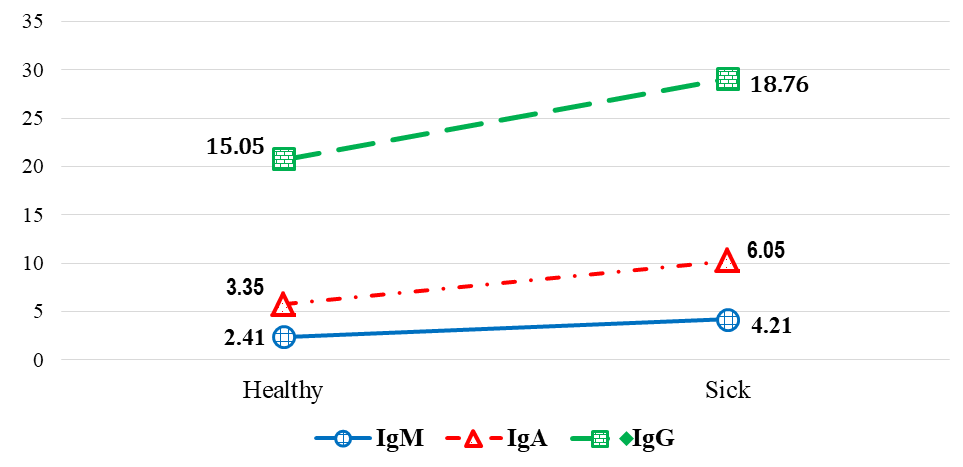 | Figure 1. Quantitative indicators of immunoglobulins (g/l) in the blood serum of women with cervical dysplastic process |
Thus, the study of the parameters of the main immunoglobulin classes in the blood serum of women with pre-tumor diseases of the cervix showed that the levels of all three immunoglobulin classes were significantly elevated in patients compared to healthy women (P<0.05 -- P<0.001). However, although the trend towards increase was the same, the intensity of changes differed: thus, the intensity of changes in IgG was lower than that of IgA and IgM. If IgA in patients was significantly higher than in healthy women by 1.81 times (P<0.001), IgM – by 1.75 times (P<0.001), then IgG was significantly higher only by 1.25 times (P<0.05).Their elevated level is associated with the inflammatory process formed in the body; however, since this process was not pronounced, their parameters remained within the reference ranges. It was shown that since quantitative changes in these immunoglobulins can be observed similarly in other pathologies, their use as markers for the early diagnosis of precancerous conditions of the cervix and as a prognostic factor for the transition of diseases to cervical cancer is not effective. However, the advisability of their use in combination with other indicators of the immune system as biological markers was demonstrated.Another studied indicator was IgE, which is considered responsible for the formation of allergic reactions in the body. As a result of its hyperproduction, it binds to receptors on the surface of mast cells, activating them and causing the production of biologically active substances (histamine, serotonin, bradykinin). It is this histamine and its derivatives that cause the formation of an allergic reaction in the body. The presence or absence of an allergic background in the body of women with the studied pathologies was tracked by determining the concentration of this particular immunoglobulin in the blood serum.In the study, if in healthy women (control group) the IgE level averaged 207.83±6.92 ng/ml (Figure 2), then in women with an identified pre-tumor condition of the cervix – dysplastic process, but not receiving treatment (1st group), its level significantly increased by 1.10 times, to 228.74±6.00 ng/ml (P<0.05).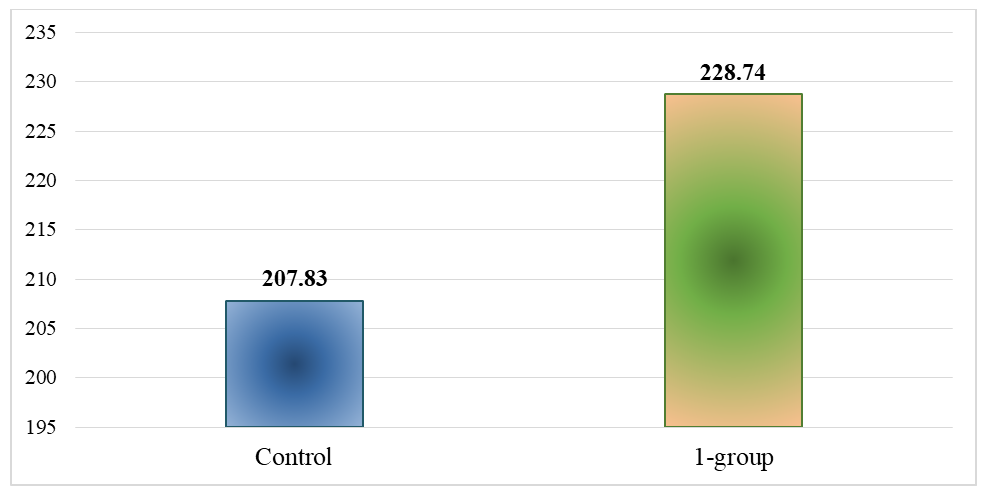 | Figure 2. Parameters of IgE level (ng/ml) in the blood serum of women with untreated cervical dysplastic process |
It can be seen that the intensity of quantitative changes in IgE was not high, and the quantitative indicator remained within the reference parameters. This indicates that, although these sick women had a certain hyperproduction of IgE, the allergic background was insufficiently formed. It was emphasized that this immunoglobulin can have diagnostic or prognostic significance only in combination with other indicators of humoral immunity.Another group involved in the study was a group similar to the 1st group of women mentioned above, but it included only patients receiving conservative treatment (2nd group, n=26). In this case, the same classes of immunoglobulins (IgA, IgM, IgG, IgE) were studied.If in the studied 1st group all parameters significantly differed from the control group (P<0.05 - P<0.001), then in the 2nd group a completely opposite picture was observed, i.e., all indicators were within the range of healthy individuals (control group), with the exception of IgE.Regarding IgA, no significant difference was found between the indicators of the control and 2nd groups (3.35±0.33 g/l vs. 3.13±0.15 g/l respectively, P>0.05). Compared to the 1st group, in treated patients (2nd group) this indicator significantly decreased by 1.93 times (6.05±0.35 g/l vs. 3.13±0.15 g/l respectively, P<0.001). The effect of treatment was clearly manifested in the quantitative parameter of this immunoglobulin.Regarding IgM, a similar trend was revealed, i.e., changes were also evident in its concentration in blood serum. If in the 1st group a statistically significant increase of 1.75 times compared to healthy individuals was recorded, then in the 2nd group this indicator decreased to the parameters of the control group (2.98±0.10 g/l vs. 2.41±0.22 g/l respectively, P>0.05). Compared to the 1st group, the statistically significant decrease in the 2nd group was 1.41 times (P<0.05).The same quantitative changes were identified for IgG – if in healthy individuals this parameter was 15.05±0.62 g/l, then in women of the 1st and 2nd groups it was at the level of 18.76±0.65 g/l and 15.15±0.47 g/l respectively. As can be seen, no significant difference in IgG was found between the control and 2nd groups (P>0.05), while the difference between the 1st and 2nd groups was statistically significant – in the 2nd group the indicator decreased by 1.24 times (P<0.05).When studying IgE indicators, it was found that in healthy women of the control group, the average IgE level in serum was 207.83±6.92 ng/ml, and in women with untreated dysplastic process it was increased to 228.74±6.00 ng/ml (1.10 times, P<0.05). In the group of treated patients, the concentration of IgE continued to grow and reached 276.10±9.41 ng/ml, which is 1.33 times (P<0.05) higher than the indicators of the control group.However, the intensity of changes in IgE was relatively low and was within the reference values. Such relative hyperproduction of IgE in these patients indicates an insufficiently formed allergic background, therefore this immunoglobulin can have diagnostic or prognostic significance only in combination with other indicators of humoral immunity.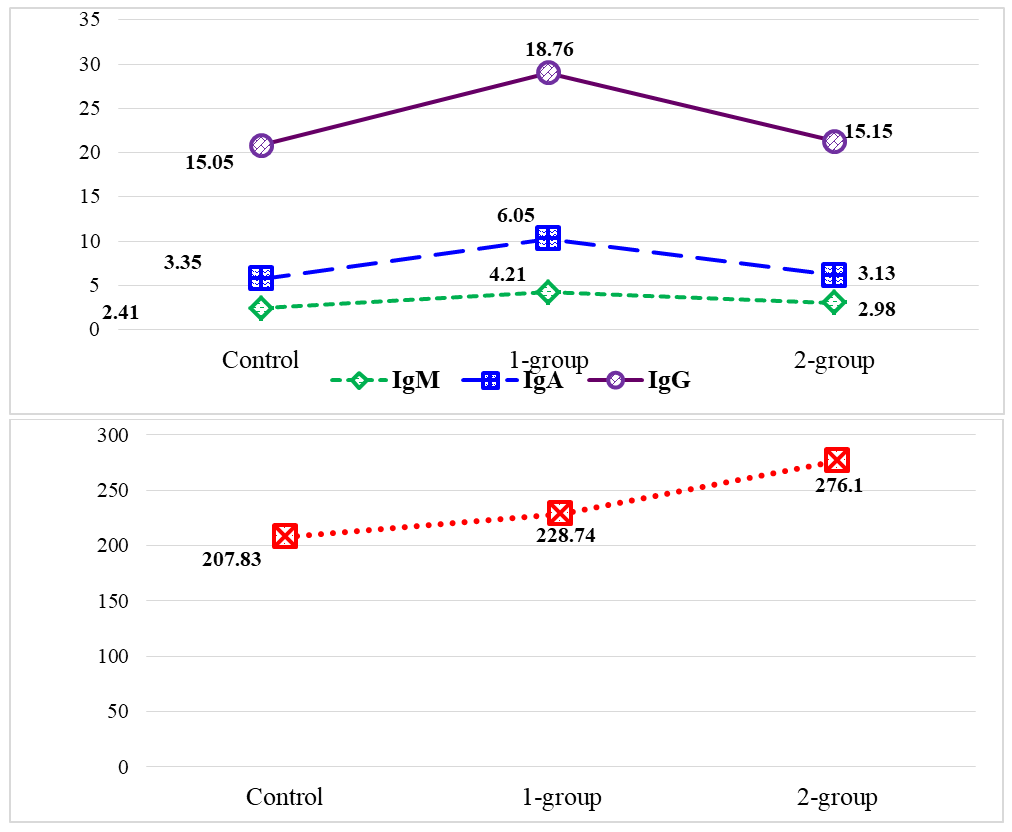 | Figure 3. Group comparative indicators of the concentration of IgM, IgA, IgG (A) and IgE (B) (g/l) in the blood serum of women with cervical dysplastic process |
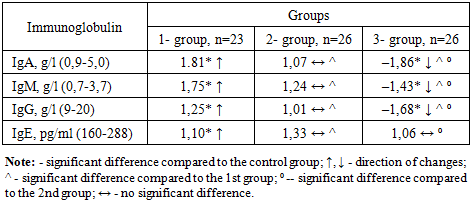
The figure shows that the trends and intensity of changes in immunoglobulins in different groups differ: in the 2nd group, a quantitative imbalance (sharp increase in IgE) was noted compared to other groups.Figure 3 reflects the comparative changes of the main immunoglobulin classes in the blood serum of the examined women. The trend and intensity of changes in these parameters by group were different, and a quantitative imbalance was identified in the 2nd group.Thus, a comparative study of the quantitative indicators of the main immunoglobulin classes (IgA, IgM, IgG, IgE) in the blood serum of women with an identified pre-tumor condition of the cervix (dysplastic process) – untreated (1st group) and treated (2nd group) – showed that in untreated women with this pathology, these indicators were significantly elevated. At the same time, although the trend of changes was the same, their intensity differed. In treated women with this pathology, these indicators significantly decreased (P<0.05), reached the indicators of healthy women and did not significantly differ from them (P>0.05). With the exception of the IgE level, which continued to remain elevated even after therapeutic measures and remained significantly higher than the indicators of both healthy and untreated women (P<0.05). Such quantitative changes and imbalance of immunoglobulins are associated with the inflammatory process that developed as a result of the dysplastic process and changes in the activity of the immune system. The decrease in their level after standard treatment is associated with the effectiveness of therapy, and the fact that IgE did not decrease is explained by the absence of anti-allergic agents in standard therapy and the strengthening of the allergic background as one of the main components of the inflammatory process.Indicators of the initial stages of tumor disease (stage 0-I) that developed against the background of a pre-tumor condition of the cervix (dysplastic process) were also compared. The main goal was to study the degree of changes in humoral immunity indicators in blood serum during the period from the dysplastic process to the formation of a tumor disease. From the obtained data, it is clear that the levels of immunoglobulins changed differently depending on the group. It was established that they differed both in the trend of changes and in their intensity and quantitative indicators. This condition is associated with their quantitative changes under the influence of external influences, including antigenic stimulation, the formation of a pathological condition, and therapeutic measures.As presented in the material, significant differences in these parameters were observed between the groups (P<0.05 - P<0.001). These changes were mainly associated with the formation of pathologies and the degree of impact of therapeutic measures.The results in the 3rd group involved in the study completely differed from the data of the previous groups. The indicators were characterized by significantly lower values compared to the main groups (1st and 2nd) (P<0.05). With the exception of IgE, for which there were partially differences similar to the previous groups, but the general trend for it remained the same. It is necessary to emphasize that the results obtained in women included in the mentioned 3rd group were remarkable in that they were significantly lower even than the indicators of this parameter in healthy individuals (P<0.05).In our opinion, this condition is explained by the negative impact of radiation and chemotherapy, used for the treatment of initial stages of cervical cancer, on the immune system. The presence of a negative influence of radiation and chemotherapy on the proliferation and differentiation of B-lymphocytes led to a decrease in the level of immunoglobulins in blood serum, which is explained by insufficient differentiation of B-lymphocytes into plasma cells. This, in turn, was expressed in a quantitative decrease of immunoglobulins in blood serum.During the determination of quantitative parameters of immunoglobulins in the blood serum of sick women, interpretation and analysis of the obtained digital results, the following patterns were identified from a scientific point of view:1. When observing a pre-tumor condition of the cervix (dysplastic process), the quantitative indicators of IgA, IgM, IgG, IgE in the blood serum of sick women significantly increased. However, this is not an independent diagnostic criterion and it was established to be associated with the symptoms of the disease, the formation of a pathological condition. Therefore, their use as an additional diagnostic criterion alongside the symptoms of the disease and the presence of a dysplastic process in the course of the disease is recommended.2. In this pre-pathological condition, the trend and direction of quantitative changes in immunoglobulins were the same, but the intensity of changes differed, which depended on their functions and degree of activity.3. When treating the pre-tumor condition of the cervix (dysplastic process) with a standard conservative method, the concentrations of immunoglobulins in the blood significantly decreased (P<0.05) to the parameters of healthy women. It was proven that this condition is associated not only with the effectiveness of treatment but also with the regression of the pre-pathological condition and the corresponding decrease in the activity of the immune system.4. In the initial stages of cervical cancer (stage 0-I) compared to the pre-tumor condition, no significant increase in the level of immunoglobulins was detected. This is explained by the immunosuppressive effect of tumor cells and the inability of immunocompetent cells of the immune system to "recognize" it. Active treatment of the tumor with radiation and chemotherapy led to increased immunosuppression against the background of already reduced activity of the immune system, which, in turn, was observed as a further decrease in the concentration of immunoglobulins.5. For the detection of a pre-tumor condition of the cervix, its transformation into a tumor, and determining the effectiveness of treatment, the use of determining IgA, IgM, IgG, IgE in the blood serum of sick women as an additional test as diagnostic and prognostic biomarkers is recommended, together with clinical symptoms and the identification of the pre-pathological condition. To assess the degree of identified quantitative changes in immunoglobulins, the coefficient of their change relative to the indicators of this parameter in healthy women was determined (Table 1).Table 1. Degree of change of immunoglobulins in the blood serum of women with pre-tumor conditions of the cervix and cervical cancer compared to healthy women, in times
 |
| |
|
From the presented table, it can be seen that the groups reflect the degree of changes in immunoglobulins in the blood serum, their quantitative imbalance, the influence of various pre-pathological and pathological conditions (cervical cancer), as well as the degree of impact of therapeutic measures. This position provides an opportunity to recommend these parameters as additional diagnostic and prognostic criteria (biomarkers).Thus, the study of quantitative parameters of immunoglobulins in the blood serum of women with an identified pre-tumor condition (dysplastic process) – untreated (1st group) and treated (2nd group), as well as women diagnosed with initial stages of cervical cancer who received radiation and chemotherapy (3rd group), alongside healthy individuals (control group), showed that when observing a pre-pathological condition, IgA, IgM, IgG, and IgE significantly increased to varying degrees (1.10-1.81 times). Their use as diagnostic criteria and criteria reflecting the effectiveness of therapeutic intervention was recommended. In cervical cancer and its treatment with radiation and chemotherapy methods, their decrease to 1.43-1.86 times compared to the indicators of healthy individuals was recommended as prognostic criteria. For the first time, their use in combination with clinical symptoms, diagnosis of pre-pathological and pathological conditions as diagnostic and prognostic criteria (biomarkers) was recommended.
4. Conclusions
1. In women with a precancerous condition of the cervix (dysplastic process), a trend towards quantitative increase of all immunoglobulins was observed. The severity of changes varied: the concentration of IgA in patients was 1.81 times, IgM – 1.75 times, IgG – 1.25 times higher than in healthy women (P<0.05--P<0.001).2. In untreated patients with cervical dysplastic process, the indicators of IgA, IgM, IgG, and IgE significantly increased, whereas in treated women these levels significantly decreased and reached normal values close to the control. After treatment, the IgE level continued to remain elevated and significantly exceeded the parameters of healthy and untreated patients.3. A significant (by 1.10–1.81 times) increase in IgA, IgM, IgG, and IgE in the presence of a precancerous condition of the cervix can serve as additional diagnostic indicators, and their decrease during radiation and chemotherapy in patients with cervical cancer (by 1.43–1.86 times) – as prognostic markers of treatment effectiveness. The use of these immunoglobulins in combination with clinical symptoms and the diagnosis of a precancerous condition as additional diagnostic and prognostic criteria (biomarkers) is proposed for the first time.
References
| [1] | Abakumova T.V., Myagdieva I.R., Dolgova D.R., Gening S.O., Antoneeva I.I., Gening T.P. IL-4 and its polymorphism (IL4-589C/T) in cervical neoplasia // Medical Immunology. – 2023. – Vol. 25, No. 5. – P. 1129-1134. |
| [2] | Belyavskaya V.A., Cherdyntseva N.V., Kzhyshkovskaya Yu.G., Litvyakov N.V. Microbiome, immune system and cancer: three sides of one medal // Siberian Journal of Oncology. – 2022. – No. 21(6). – P. 131-144. |
| [3] | Gizinger O.A. Immunomodulation in gynecology. Opinion of an immunologist and obstetrician-gynecologist. Questions of practical colposcopy // Genital Infections. – 2022. – No. 2. – P. 18-23. |
| [4] | Ikhtiyarova G.A., Navruzova N.O., Karimova G.K. Modern diagnostic methods for early detection of cervical diseases // Doctor Akborotnomasi. – 2019. – No. 4. – P. 78-80. |
| [5] | Loginova O.P., Shevchenko N.I., Gasich E.L. Features of local vaginal immunity in HPV-negative cervical dysplasia // News of Medical and Biological Sciences. – 2025. – Vol.25, No. 3. – P. 230-239. |
| [6] | Mazitova M.I., Bikineev M.S. Stages of development of cytological screening for cervical cancer // RMJ. Mother and Child. – 2019. – Vol. 2, No. 4. – P. 322-326. |
| [7] | Mamedov U.S., Mirakhamedova S.S. Dynamics of immune status of women during treatment of human papillomavirus of the cervix // Bulletin of Science and Education. – 2020. – No. 24 (102), Part 3. – P. 81-84. |
| [8] | Petrov Yu.A., Blesmanovich A.E., Bagnovskaya A.G. From background processes to cervical cancer: causes, diagnosis and prevention // Chief Physician of the South of Russia. – 2020. – Vol. 74, No. 4. – P. 36-39. |
| [9] | Semiglazov V.F. et al. Immunology and immunotherapy in the complex treatment of malignant tumors // Medical Council. – 2021. – No. 4. – P. 248-257. |
| [10] | Mamedov U.S., Pulatova D.SH. The Results of Cancer Treatment of the Oral Cavity Tumors in The Republic of Uzbekistan // European Journal of Pharmaceutical and Medical Research. – 2019. – V. 6, N9. – P. 326-329. |
| [11] | Oripova F.Sh., Ikhtiyarova G.A., Davlatov S.S. Pathomorphological characteristics of the vaginal mucosa in experimental nonspecific vaginitis and various methods of treatment // International Journal of Pharmaceutical Research. – 2021. – V. 13, N1. – P. 761-765. |
| [12] | Smola S., Trimble C., Stern P.L. Human papillomavirus-driven immune deviation: challenge and novel opportunity for immunotherapy // Ther Adv Vaccines. – 2017. – V. 5. – P. 69-82. |
| [13] | Wang Y., Li G. PD-1/PD-L1 blockade in cervical cancer: current studies and perspectives // Front Med. – 2019. – V. 13. – P. 438-450. |
| [14] | Zhen S. et al. Synergistic antitumor effect on cervical cancer by rational combination of PD1 blockade and CRISPR-Cas9-mediated HPV knockout // Cancer Gene Ther. – 2019. – V. 27. – P. 168-178. |


 Abstract
 Reference
 Full-Text PDF
 Full-text HTML