N. K. Kenjaeva1, J. A. Rizaev1, S. E. Umirov2, 3
1Samarkand State Medical University, Uzbekistan
2Center for the Development of Professional Qualifications of Medical Personnel, Uzbekistan
3Alfraganus University, Uzbekistan
Copyright © 2025 The Author(s). Published by Scientific & Academic Publishing.
This work is licensed under the Creative Commons Attribution International License (CC BY).
http://creativecommons.org/licenses/by/4.0/

Abstract
In the Samarkand region, following a 5.5-fold decrease in incidence of narcotic addiction between 2010 and 2017, a renewed increase in morbidity has been observed since 2018. From the standpoint of addiction morbidity, the areas at greatest risk include border districts and major cities of the region. During the period from 2010 to 2024, the proportion of men among individuals diagnosed with narcotic addiction in the Samarkand region (95.4%) was 20.7 times higher than that of women (4.6%). This disparity can be explained by the fact that men are more frequently exposed than women to socio-economic, psychological, criminogenic, and ethical factors that contribute to the risk of developing narcotic addiction. Drug use in the Samarkand region tends to increase primarily from the age of 30. While the incidence of narcotic addiction has decreased at the regional level and across most administrative territories during the period from 2010 to 2024, the persistently high morbidity rate in 2024 compared with 2010 in certain regional groups, the observed increase in incidence across all administrative areas since 2018, and the 2.5-fold rise in morbidity among individuals aged 40–64 years should be regarded as an unfavorable prognostic indicator. Therefore, based on the data obtained from this study, it is necessary to adjust and strengthen measures aimed at the prevention of narcotic addiction.
Keywords:
Drug addiction, Incidence, Causes, Dynamics, Territorial and demographic data
Cite this paper: N. K. Kenjaeva, J. A. Rizaev, S. E. Umirov, Regional and Demographic Characteristics of Narcotic Addiction in the Samarkand Region, American Journal of Medicine and Medical Sciences, Vol. 15 No. 11, 2025, pp. 4065-4072. doi: 10.5923/j.ajmms.20251511.70.
1. Introduction
Globally, both intensity and structure of narcotic addiction morbidity exhibit regional differences and undergo constant dynamic changes [3,7,8]. These variations are determined by numerous factors such as geographical location of regions, socio-economic potential, lifestyle of population, traditions, culture and value systems [1,2,4,6]. The geographical position of the Samarkand region, its transportation infrastructure, the terrain of its border areas with the neighboring country, intensive social and economic interactions between residents of bordering districts and those of adjacent state may create conditions conducive to illicit trafficking of various narcotic substances [5]. Therefore, a comprehensive analysis of the state of narcotic addiction morbidity in this region makes it possible to determine its intensity, dynamics, composition, and trends, to formulate hypotheses regarding risk factors, and to identify a set of targeted measures, all of which have significant scientific and practical importance. The aim of this study is to analyze territorial and demographic characteristics of narcotic addiction morbidity in Samarkand region and to improve preventive measures.
2. Materials and Methods
This study was conducted at the Samarkand State Medical University. As the primary data source, relevant medical records and official reports reflecting newly registered cases of narcotic addiction in Samarkand region from 2010 to 2024 were utilized (data obtained from the Samarkand Regional Branch of the Republican Specialized Scientific and Practical Medical Center for Mental Health, Narcology Department, concerning primary patients).The diagnosis of narcotic addiction and associated pathologies, as well as assessment of disease severity, were established based on patient complaints, objective clinical findings, epidemiological history, specific laboratory analyses, and results of additional examinations (including functional, instrumental, and laboratory methods). The severity of narcotic addiction among patients was evaluated in accordance with recommendations of the World Health Organization and relevant documents issued by the Ministry of Health of the Republic of Uzbekistan. During the research process, clinical, epidemiological, socio-hygienic, laboratory, and statistical methods were employed. The least squares method was used to determine main trend in dynamics of narcotic addiction morbidity.Data processing was carried out using standard statistical methods with software packages for Windows (StatSoft Inc., USA), MS Excel 7.0 (Microsoft Corp., USA), and Statistica. The mean error (m) and statistical significance level (p) were calculated.
3. Results and Discussion
To assess the intensity of spread of narcotic addiction in Samarkand region, a long-term analysis of the morbidity dynamics of narcotic addiction was conducted (Fig. 1).Average incidence rate of narcotic addiction per 100,000 population in the region during the period 2010–2024 was 5.1, increasing from 2.1 in 2017 to 11.5 in 2010. Median incidence rate was 4.4 (range: 2.8–9.2). It was found that incidence of narcotic addiction in the region was 1.3–2.3 times higher than average rate (5.1) during 2010–2012 and 2023–2024. In 2013–2022, morbidity rate was equal to or 1.1–2.4 times lower than average intensity. During the years 2010–2017, a continuous decline in morbidity was observed, resulting in a 5.5-fold decrease in incidence rate in 2017 (2.1) compared to 2010 (11.5). Average annual rate of decline in morbidity during these years was –11.7%. Since 2018, however, a renewed increase in narcotic addiction morbidity has been noted in the region, with the 2024 incidence rate (6.8) rising compared to that of 2017.Based on an analysis using the least squares method to determine main direction of narcotic addiction morbidity dynamics in the Samarkand region, it was established that overall morbidity demonstrates a downward trend (Fig. 1). This situation indicates that influence of persistent factors determining intensity of narcotic addiction morbidity in the region has been gradually diminishing over time. Average annual rate of decline in the morbidity trend is –0.28. 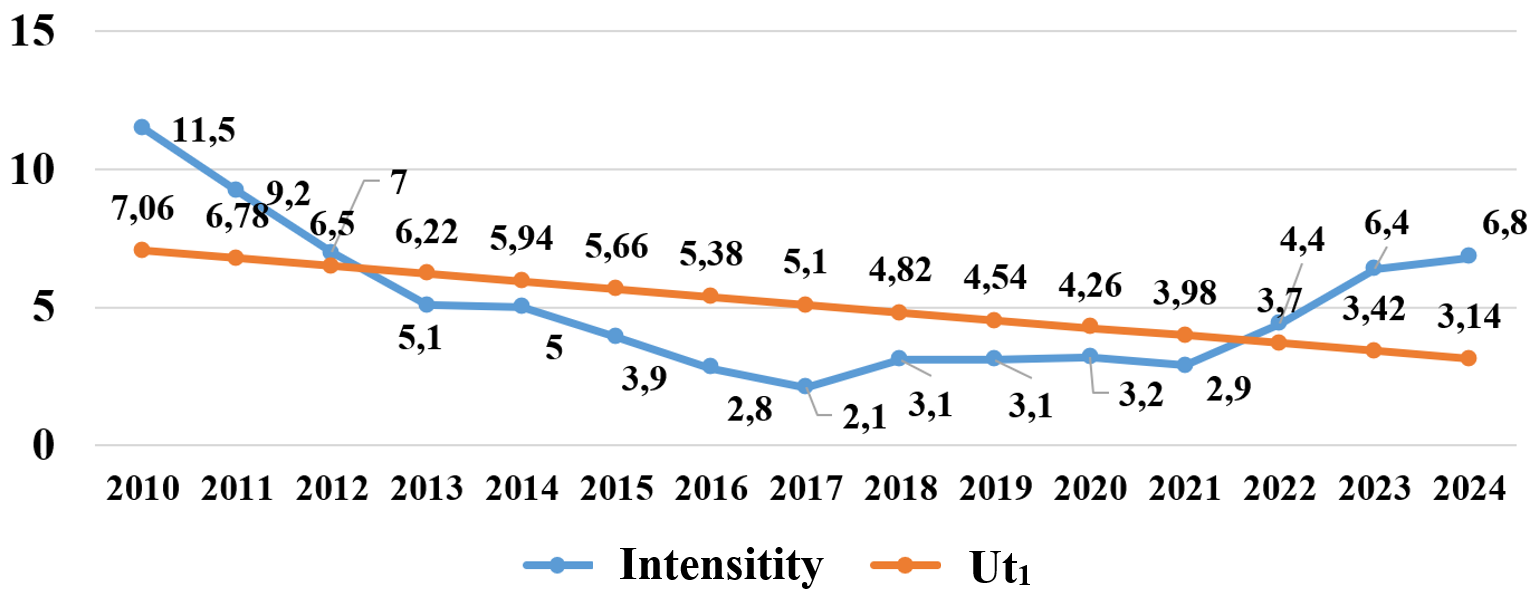 | Figure 1. Intensity and trend of drug addiction morbidity in the Samarkand region (Ut₁ = a + vx), per 100,000 population, 2010–2024 |
In Samarkand region, the share of patients from Urgut District in the structure of primary narcotic addiction morbidity by regional groups was predominant, averaging 33.8% over the period from 2010 to 2024 (Fig. 2). 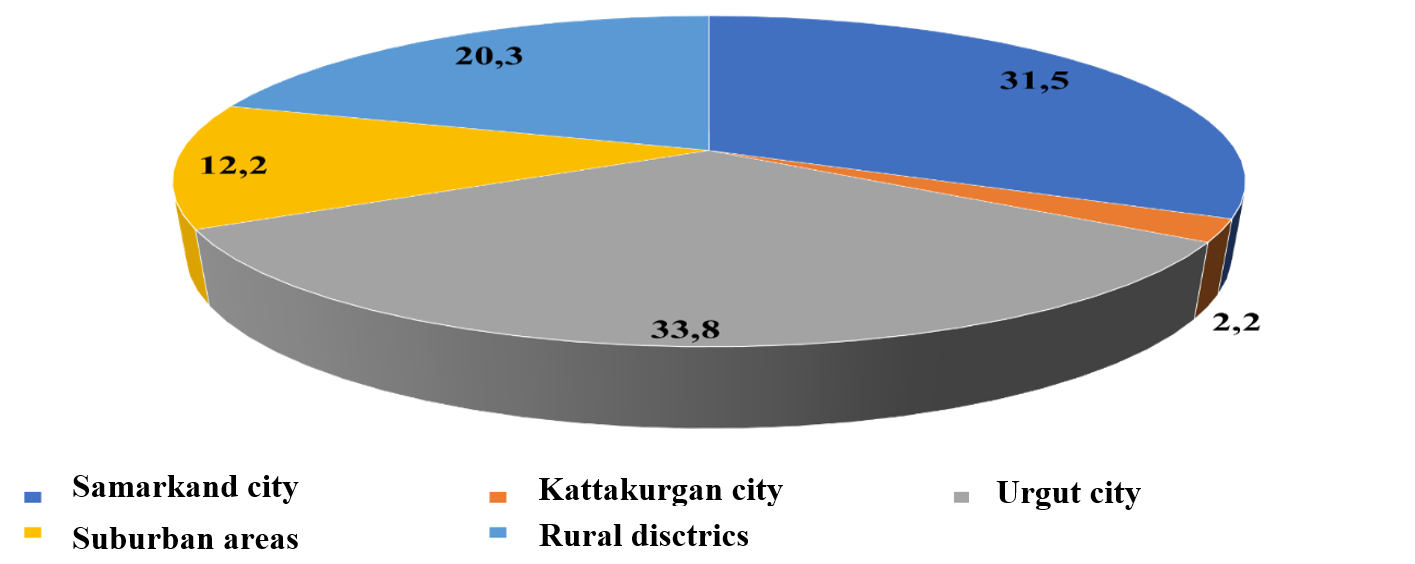 | Figure 2. Distribution of narcotic addiction morbidity by regional groups in the Samarkand region, %, 2010–2024 |
In the regional structure of narcotic addiction morbidity, average proportion of patients from cities of Samarkand and Kattakurgan (31.5% and 2.2%, respectively) demonstrates a sharp disparity — a 14.3-fold difference. Average proportion of patients from rural districts (20.3%) is 1.7 times higher than that of patients from suburban areas (12.2%).The results of analysis of narcotic addiction morbidity intensity by regional groups of Samarkand region (per 100,000 population) show that Urgut District (13.7) and the city of Samarkand (11.3) occupy leading positions in terms of the average morbidity rate for the period 2010–2024. Morbidity levels in these regions are 2.7 and 2.2 times higher, respectively, than regional average for the same period (5.1) (Fig. 3). In contrast, in city of Kattakurgan (4.7), suburban areas (3.9), and rural areas (1.8), morbidity rates are 1.1, 1.3, and 2.8 times lower, respectively, compared to regional average (5.1). 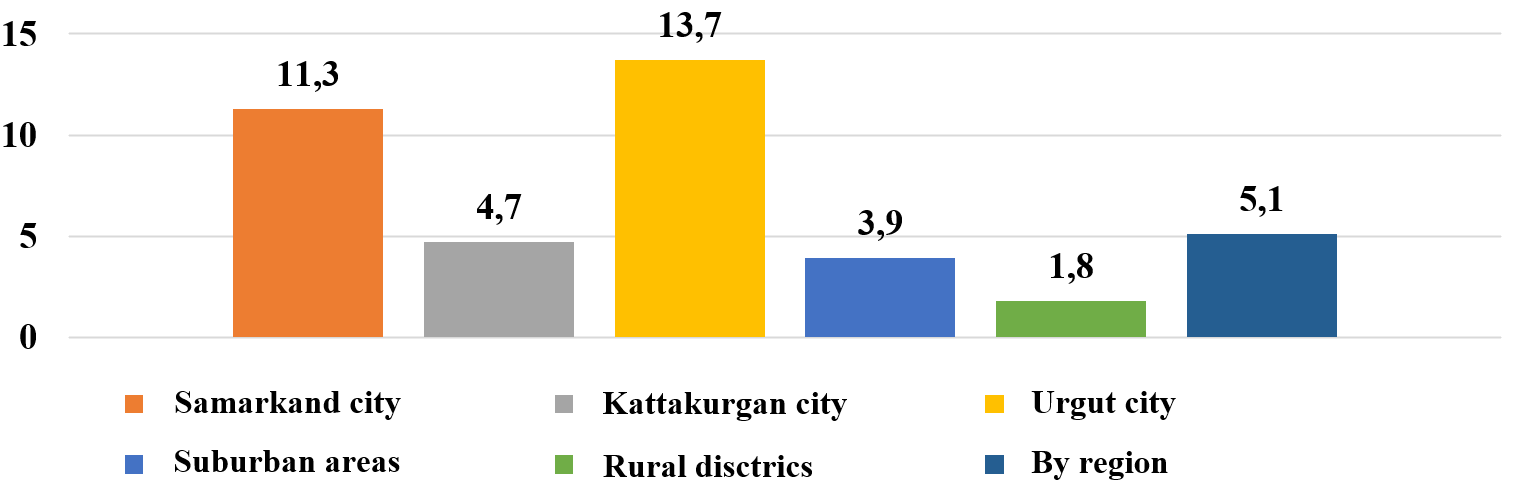 | Figure 3. Average narcotic addiction morbidity rate by territorial groups in the Samarkand region, 2010–2024, per 100,000 population |
Morbidity rate of narcotic addiction in Urgut District decreased by 41.3% in 2024 (19.9) compared to 2010 (34.5) (Fig. 4). 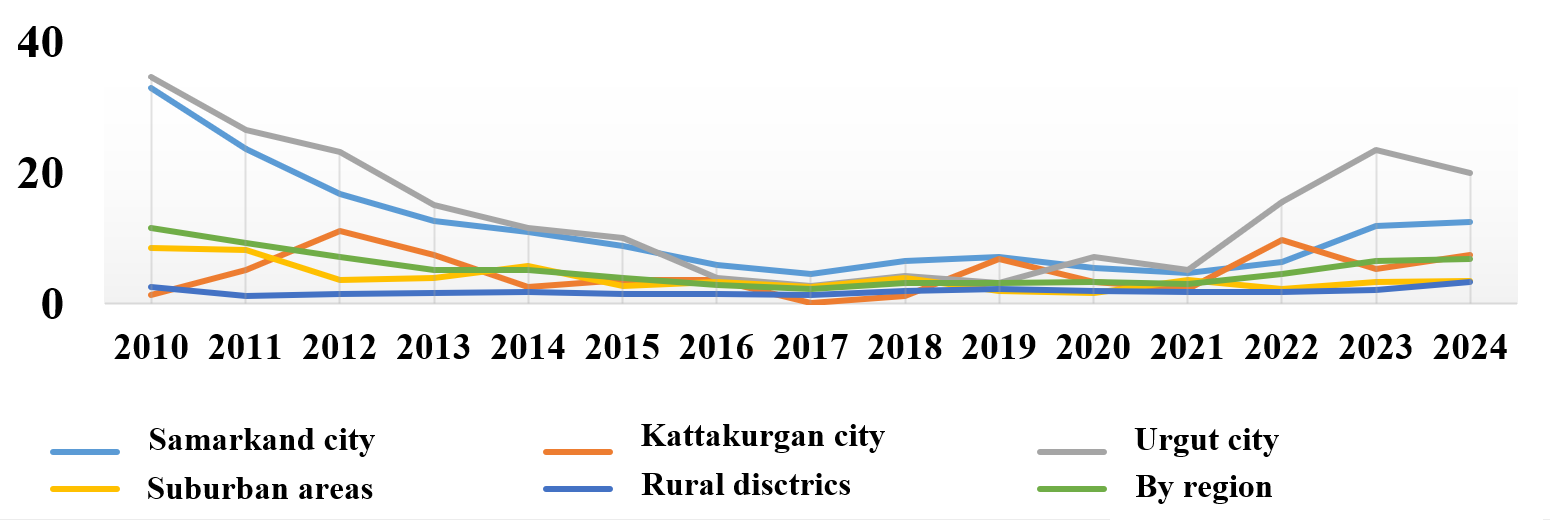 | Figure 4. The incidence rate of narcotic addiction in Urgut District decreased by 41.3% in 2024 (19.9) compared to 2010 (34.5) |
Median incidence rate was at level of 11.5 (range: 3.1–26.5). Morbidity rate for narcotic addiction during 2010–2013 and 2022–2024 was 1.1–2.5 times higher than average value (13.7), whereas during 2014–2021 it was 1.2–5.1 times lower. From 2010 to 2017, a continuous decline in morbidity was observed, and rate in 2017 (2.7) decreased 12.8-fold compared to 2010 (34.5). Average annual rate of decline during these years was –13.2%. Since 2018, a renewed increase in narcotic addiction morbidity has been recorded in district, with the 2024 rate (19.9) being 7.4 times higher than in 2017 (2.7), and average annual growth rate reaching +91.0%. In city of Samarkand incidence rate decreased in 2024 (12.4) by 62.3% compared to 2010 (32.9), i.e., 2.7 times lower. Morbidity increased from 4.4 (2017) to 32.9 (2010), with a fluctuation range of 7.5 times. Median incidence rate was 8.7 (range: 4.6–23.5). Morbidity level during 2010–2013 and 2023–2024 was 1.1–2.9 times higher than average value (11.3), while during 2014–2022, it was 1.1–2.6 times lower. A continuous decline was observed between 2010 and 2017, with morbidity rate in 2017 (4.4) decreasing 7.5-fold compared to 2010 (32.9). Average annual rate of decline during these years was –12.4%. Since 2018, a renewed increase in narcotic addiction morbidity has been observed in Samarkand, with 2024 rate (12.4) being 2.8 times higher than in 2017 (4.4), and average annual growth reaching +25.9%. In city of Kattakurgan, morbidity rate increased 5.6-fold in 2024 (7.3) compared to 2010 (1.3), with an average annual growth rate of +32.9%. Median incidence rate was 3.6 (range: 1.1–9.7). Morbidity level in 2011–2013, 2019, and 2022–2024 was 1.1–2.4 times higher than average (4.7), whereas in 2010, 2014–2018, and 2020–2021, it was 1.3–4.3 times lower. Since 2018, Kattakurgan has shown a renewed rise in narcotic addiction morbidity, with the 2024 rate (7.3) being 6.6 times higher than in 2018 (1.1), and average annual growth rate reaching +93.9%.In suburban areas, morbidity rate in 2024 (3.4) was 2.5 times lower compared to 2010 (8.5), with average annual decline rate of –4.2%. Median incidence rate was 3.4 (range: 1.8–8.2). Morbidity level during 2010–2011 was 1.5–2.2 times higher than average (3.9), while in other years analyzed (2012–2013, 2014–2015, etc.) it was 1.1–2.4 times lower or equal to average. In most regional groups of Samarkand region, the lowest narcotic addiction morbidity was observed in 2017, while in suburban areas, the lowest rate during the study period was recorded in 2020 (1.6). In 2024, morbidity rate in suburban areas (3.4) was 2.1 times higher than in 2020 (1.6), with an average annual growth rate of +28.1%.In rural areas, morbidity rate increased 1.3-fold in 2024 (3.3) compared to 2010 (2.5), with an average annual growth rate of +2.3%. Median incidence rate was 1.7 (range: 1.3–2.5). Morbidity rate during 2010 and 2023–2024 was 1.1–1.8 times higher than average (1.8), whereas in remaining years it was 1.1–1.6 times lower or equal to average. In recent years, rise in narcotic addiction morbidity in rural districts of the region should be regarded as an unfavorable prognostic sign, since this territorial group includes 10 administrative districts, which together account for approximately 55% of region’s total population. In Samarkand region and in most administrative districts, incidence of drug addiction decreased during the period from 2010 to 2024. At the same time, in regional groups of Kattakurgan city and rural districts, an increase in incidence of drug addiction was observed in 2024 compared to 2010.During 2010–2024, incidence rate of drug addiction in Urgut district increased from 2.7 (in 2017) to 34.5 (in 2010), with a fluctuation range of 12.8 times (Table 1). 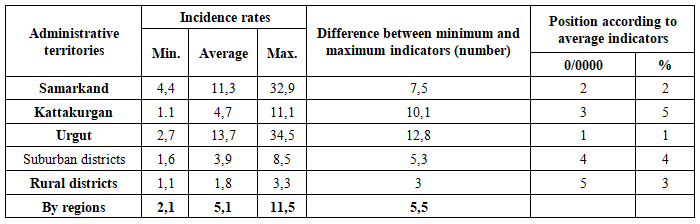 | Table 1. Position in the dynamics of the intensity of drug addiction morbidity according to the fluctuation scale, average morbidity intensity rates, and contribution, 2010–2024 |
In city of Samarkand, incidence rate increased from 4.4 (in 2017) to 32.9 (in 2010), with a fluctuation range of 7.5 times. In city of Kattakurgan, except for 2017 when no cases of drug addiction were registered, incidence decreased from 11.1 (in 2012) to 1.1 (in 2018), with a fluctuation range of 10.1 times. In suburban districts, incidence rate increased from 1.6 (in 2020) to 8.5 (in 2010), showing a fluctuation range of 5.3 times. In rural areas, incidence rate in 2024 increased 1.3 times (3.3) compared to 2010 (2.5), with an average annual growth rate of +2.3%. Median intensity indicator was 1.7 (1.3–2.5). Incidence rate ranged from 1.1 (in 2012) to 3.3 (in 2024), with a fluctuation range of 3 times. Over a long-term period, wide variations in incidence rate within a specific territory can be interpreted as changes (either decline or increase) in disease intensity or as an integrated reflection of risk factors influencing prevalence of drug addiction. At the same time, sharp differences in incidence rates of drug addiction between years may also be related to deficiencies in disease diagnosis.In Urgut district, in city of Samarkand and suburban districts, positions of territorial groups according to average intensity and contribution indicators of drug addiction morbidity were similar. However, in territorial groups of Kattakurgan city and rural districts, certain differences were identified in this regard (Table 1). This finding indicates that when analyzing drug addiction morbidity by region, it is necessary to consider not only contribution of each region to overall morbidity but also intensity rate relative to population size. In Samarkand region, from 2010 to 2024, proportion of men among patients with primary drug addiction was predominant, except in 2014 (73.4%). The share of male patients ranged from 94.9% (in 2019) to 99.4% (in 2022) (Figure 5).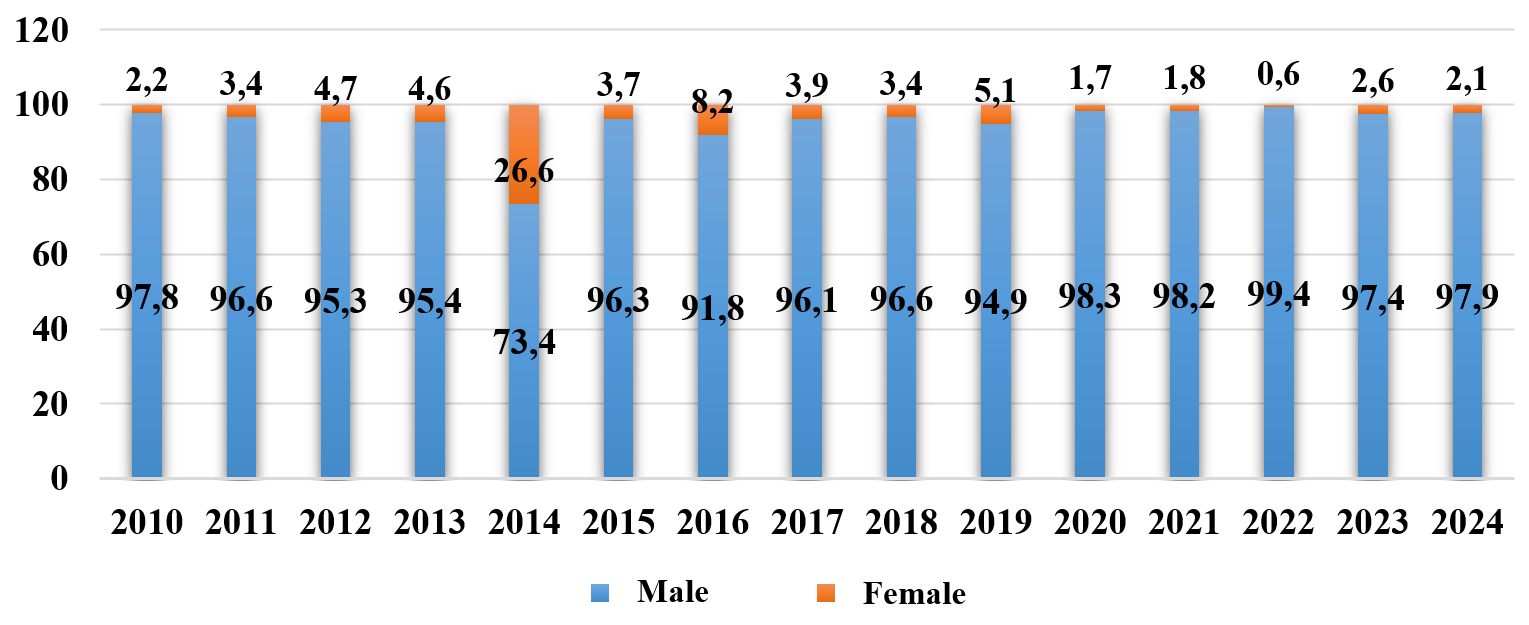 | Figure 5. Gender structure of drug addiction morbidity in the Samarkand region, 2010–2024, % |
Overall, during the study period, 2621 patients (95.4%) were male and 127 (4.6%) were female. Thus, proportion of men among primary drug addiction patients was 20.7 times higher than that of women (p < 0.001). This is explained by the fact that individuals of different genders have varying degrees of susceptibility to developing drug addiction. Analysis of dynamics of drug addiction morbidity by gender (per 100,000 population) showed that average incidence rate among men during this period (9.5) was 1.9 times higher, while incidence among women (0.5) was 10.2 times lower than average rate of total regional population during 2010–2024 (5.1) (Figure 6). Average level of drug addiction morbidity among men was 19 times higher than among women.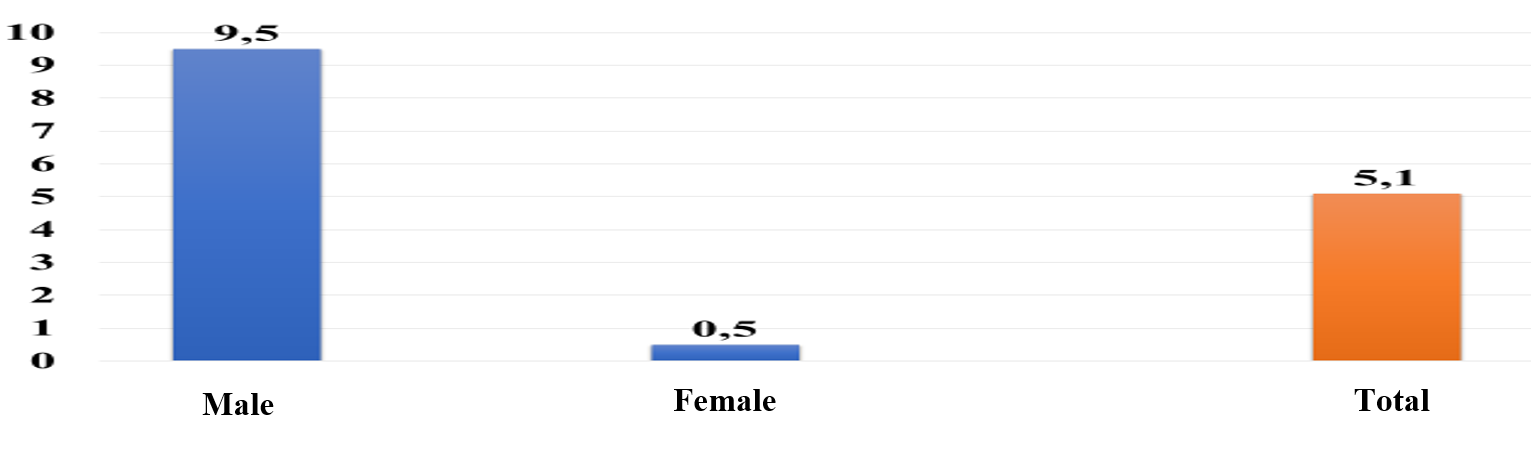 | Figure 6. Average incidence of drug addiction by gender in the Samarkand region, per 100,000 population, 2010–2024 |
Incidence rate of drug addiction among males decreased in 2024 (12.8) by 41.3% compared with 2010 (21.8), with an average annual decline rate of 2.9%. Incidence varied from 4.0 (in 2017) to 21.8 (in 2010), with a fluctuation range of 5.5 times (Figure 7). Level of drug addiction morbidity in 2010–2012 and 2023–2024 was 1.3–2.3 times higher than average indicator (9.5), in 2014–2022 it was 1.1–2.4 times lower, and in 2013 (9.5) it equaled average rate. 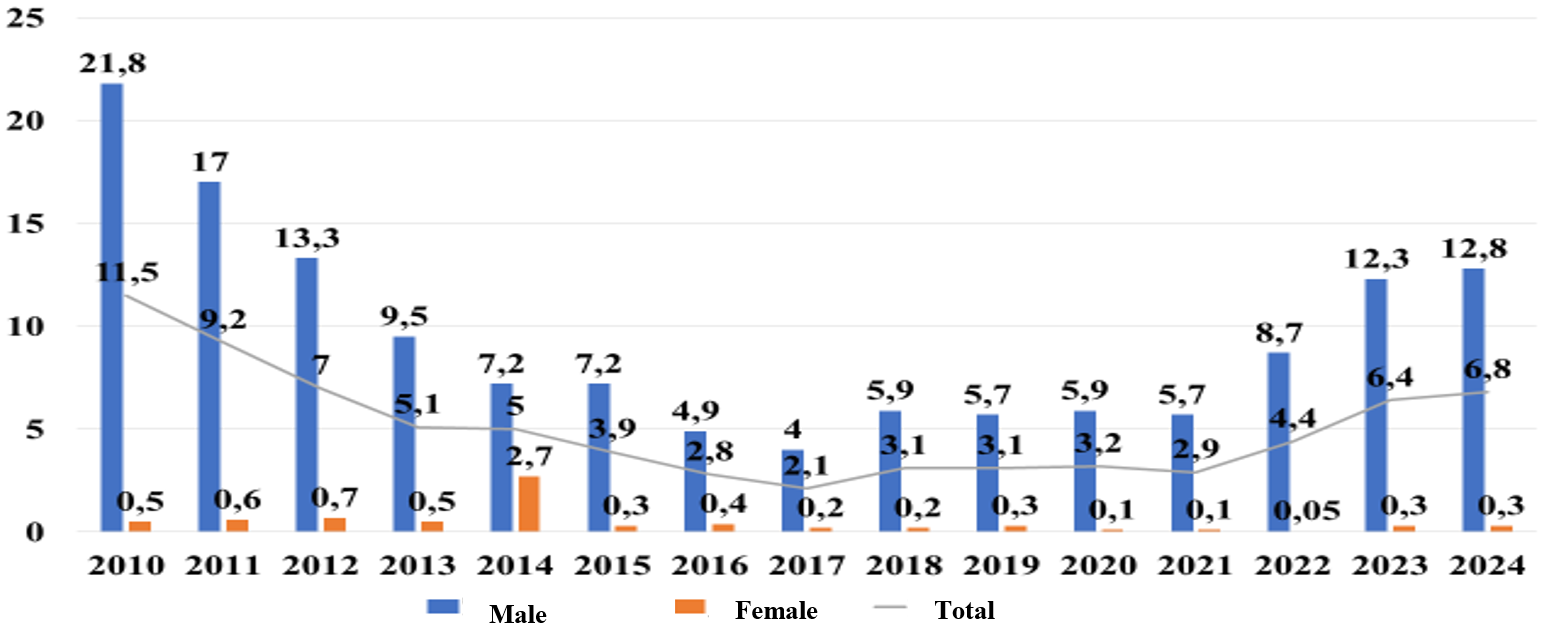 | Figure 7. Dynamics of drug addiction morbidity by gender in the Samarkand region, per 100,000 population, 2010–2024 |
During 2010–2017, a continuous decline in morbidity was observed, with rate in 2017 (4.0) being 5.5 times lower than in 2010 (21.8). Average annual decline rate for 2010–2017 was –11.7%. Since 2018, a recurrent increase in drug addiction incidence among men has been observed — in 2024 (12.8), incidence rate was 3.2 times higher than in 2017 (4.0), with an average annual growth rate of +31.4%.This situation requires identification of factors contributing to renewed increase in morbidity among men, as well as the development and implementation of appropriate preventive and corrective measures. During the analyzed years, incidence rate of drug addiction among females in 2024 (0.3) decreased by 40.0% compared with 2010 (0.5), with an average annual decline rate of 2.9%. The incidence ranged from 0.05 (in 2022) to 2.7 (in 2014), showing a fluctuation range of 54.0 times. The median intensity indicator was 0.3 (0.1–0.7). The level of drug addiction morbidity among women in 2011–2012 and 2014 was 1.2–5.4 times higher than the average indicator (0.5); in 2010 and 2013 it was equal to the average; and in all other years it was 1.3–10.0 times lower. While the dynamics of male morbidity generally mirrored the overall population trend (i.e., corresponding increases or decreases over time), the dynamics of female morbidity did not follow this pattern. This discrepancy is explained by the fact that in the Samarkand region, due to the high proportion (average 95.4%) and incidence rate (average 9.5) among men, the overall drug addiction morbidity is largely determined by male cases. Men in the region are significantly more exposed than women to the combined influence of socio-economic, psychological, criminogenic, and ethical factors that lead to drug addiction and determine its prevalence among the population. In our view, the relatively low incidence of drug addiction among women is primarily due to the positive influence of traditional Eastern moral values deeply rooted among the local female population. Therefore, it is considered advisable to enhance the effectiveness of drug addiction prevention by ensuring the preservation, strengthening, and further development of these moral values, as well as their promotion and adaptation to rapidly changing modern social conditions. Analysis of the distribution of drug addiction morbidity by age groups in the Samarkand region demonstrates that during the study period of 2010–2024, the proportion of both children aged 0–14 years and adolescents aged 15–17 years averaged 0.04% (Figure 8). With increasing age, the proportion of patients with drug addiction rose proportionally: the average share of patients aged 20–24 years (3.2%) and 25–29 years (9.0%) was 8 and 22.5 times higher, respectively, than that of patients aged 18–19 years (0.4%). This trend persisted across older age groups, as the proportion of individuals aged 30–34 years averaged 18.0%, while those aged 35–39 years and 40–64 years accounted for 21.8% and 43.9%, respectively. These findings indicate that drug use in the Samarkand region tends to increase primarily between the ages of 20 and 30. Among patients with drug addiction, the share of individuals aged ≥65 years constituted 3.6%, meaning that the proportion of those aged ≥60 years was 6.1 and 12.2 times lower than among individuals aged 35–39 years (21.8%) and 40–64 years (43.9%), respectively. 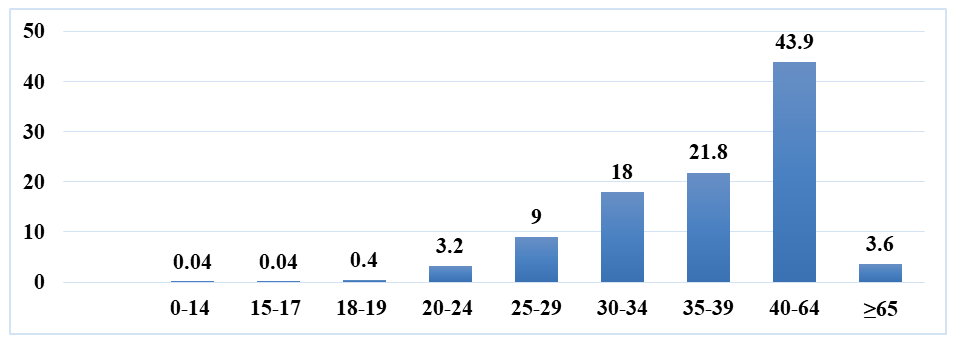 | Figure 8. Average proportion of various age groups in the structure of drug addiction morbidity in the Samarkand region, 2010–2024, % |
According to the analysis of drug addiction incidence by age groups (per 100,000 population of the corresponding age group), during the period 2010–2024, the incidence among individuals aged 0–14 years averaged 0.007, which is 728.6 times lower than the average for the entire regional population (5.1) (Figure 9). Compared to the average incidence rate of the entire regional population (5.1), the rate among individuals aged 15–17 years (0.04) was 127.5 times lower; among those aged 18–19 years (0.5) — 10.2 times lower; among those aged 20–24 years (1.7) — 3.0 times lower; among those aged 25–29 years (4.8) — 1.1 times lower; and among those aged ≥65 years (4.0) — 1.3 times lower. At the same time, in comparison with the average incidence rate of the total population (5.1), the incidence among individuals aged 30–34 years (11.5) was 2.3 times higher, among those aged 35–39 years (16.7) — 3.3 times higher, and among those aged 40–64 years (9.7) — 1.9 times higher.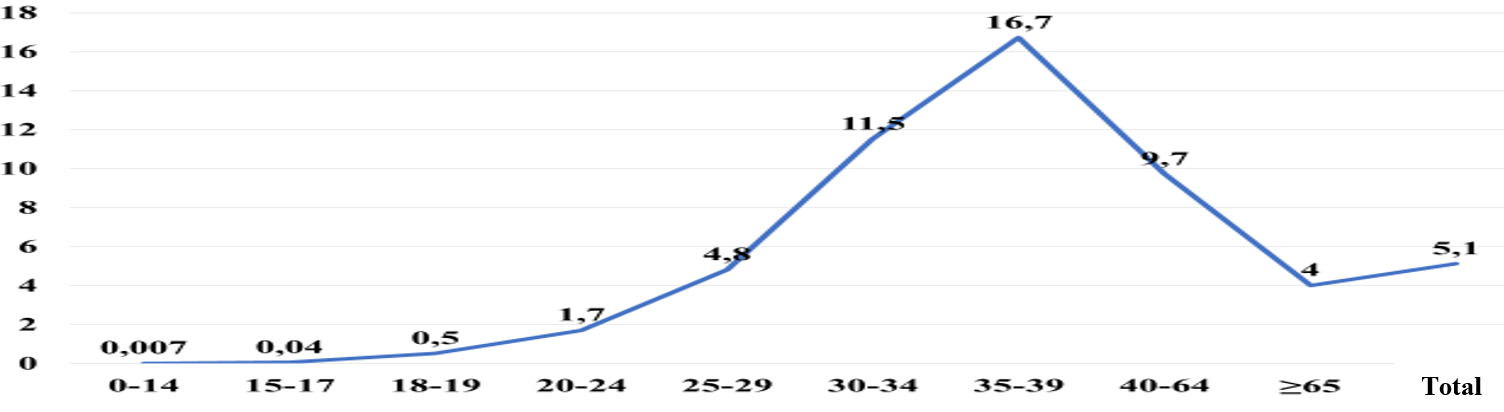 | Figure 9. Average incidence of drug addiction by age group of the population in the Samarkand region, per 100 thousand people of the corresponding age, for 2010-2024 |
According to the analysis of the dynamics of drug addiction morbidity (per 100,000 population of the corresponding age group) by age categories, the incidence of drug addiction during the period 2010–2024 among individuals aged 0–14 years and 15–17 years (0.1 and 0.6, respectively) was observed only in 2010 and was not registered in subsequent years (Table 2).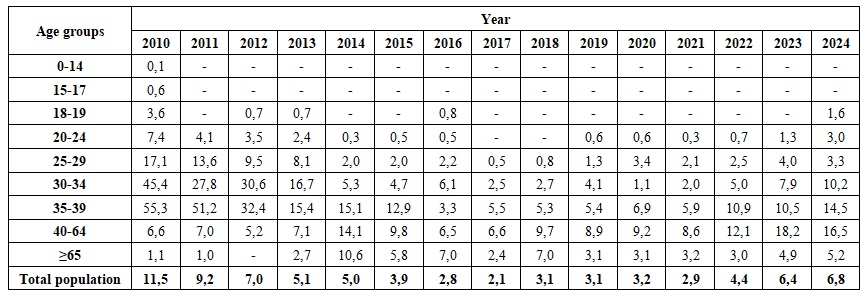 | Table 2. Dynamics of Drug Addiction Morbidity by Age Groups of the Population in Samarkand Region, per 100,000 Population, 2010–2024 |
The incidence rate in the 18–19 age group was recorded in 2010 (3.6), 2012 (0.7), 2013 (0.7), 2016 (0.8), and 2024 (1.6). The reemergence of cases in this age group in 2024, following a seven-year interruption (2017–2023), should be regarded as a warning sign of a potentially unfavorable future situation concerning the spread of drug addiction, warranting the implementation of preventive measures.Among individuals aged 20–24 years, the incidence of drug addiction demonstrated an almost continuous decline during 2010–2016, decreasing by 14.8 times in 2016 (0.5) compared to 2010 (7.4). No cases were registered in 2017–2018. The incidence rate in 2024 (3.0) was 2.5 times lower than in 2010 (7.4). At the same time, it should be noted that the 2024 rate (3.0) was five times higher than in 2019 (0.6), which should be considered an unfavorable prognostic indicator.The incidence of drug addiction among individuals aged 25–29 years decreased by 5.2 times in 2024 (3.3) compared to 2010 (17.1). In particular, during 2010–2017, the incidence showed an almost continuous downward trend, reaching its lowest level in 2017 (0.5), which was 34.2 times lower than in 2010 (17.1). However, starting from 2018 (0.8), the incidence began to rise again, and by 2024 (3.3) it had increased 6.6 times compared to 2017 (0.5).The incidence of drug addiction among individuals aged 30–34 years decreased by 4.5 times in 2024 (10.2) compared to 2010 (45.4). In the long-term dynamics, the lowest incidence rate among this age group was observed in 2020 (1.1), representing a 41.3-fold decrease between 2010 and 2020. However, the 2024 rate (10.2) was 9.3 times higher than in 2020 (1.1).The incidence of drug addiction among individuals aged 35–39 years decreased by 3.8 times in 2024 (14.5) compared to 2010 (55.3). Over the years, the lowest incidence rate for this age group was observed in 2016 (3.3), which was 16.8 times lower than in 2010 (55.3) and 4.4 times lower than in 2024 (14.5).In contrast, the incidence of drug addiction among individuals aged 40–64 years increased 2.5 times in 2024 (16.5) compared to 2010 (6.6), with an average annual growth rate of 10.7%. Unlike other age groups, this category did not demonstrate a decreasing trend in drug addiction incidence over the study period. Moreover, between 2010 and 2024, while the overall population incidence decreased 1.7-fold, the incidence within this age group increased 2.5-fold. The incidence of drug addiction among individuals aged ≥65 years increased by 4.7 times in 2024 (5.2) compared to 2010 (1.1), with an average annual growth rate of 26.6%. Among this age group, unlike other age groups, the processes of decrease and increase in the incidence of drug addiction during 2010-2018 were uneven, i.e. had an irregular nature of fluctuations. In 2019-2024, an almost uniform increase in incidence was observed, in 2024 the incidence increased by 1.7 times (5.2) compared to 2019 (3.1).
4. Conclusions
In the Samarkand region, the incidence rate of drug addiction per 100,000 population decreased by 1.7 times over the period 2010–2024, with an average incidence rate of 5.1. The incidence declined in 2017 (2.1) by 5.5 times compared to 2010 (11.5). Since 2018, however, the region has experienced a renewed increase in drug addiction incidence, with the 2024 rate (6.8) being 3.2 times higher than in 2017 (2.1). Across the administrative districts of the Samarkand region, the level of primary drug addiction incidence varies. Notably, the highest proportions were observed among patients from the Urgut district and the city of Samarkand, both located near the state border, accounting for an average of 33.8% and 31.5%, respectively, during 2010–2024. The incidence rate (per 100,000 population) in Urgut district (13.7) and the city of Samarkand (11.3) was 2.7 and 2.2 times higher, respectively, than the regional average (5.1) for the same period. Thus, border areas and large cities may be regarded as high-risk zones. In contrast, the incidence rates in Kattakurgan city (4.7), suburban districts (3.9), and rural districts (1.8) were 1.1, 1.3, and 2.8 times lower, respectively, than the regional average (5.1). In the long-term dynamics, wide fluctuations in incidence rates within specific regions can be interpreted as indicators of either a true change (increase or decrease) in the intensity of morbidity or as the integrated influence of various risk factors determining drug addiction incidence. Moreover, pronounced interannual variations in incidence levels may, in some cases, reflect deficiencies in disease diagnosis and registration.During 2010–2024, males constituted 95.4% of patients with primary drug addiction in the Samarkand region — 20.7 times higher than the proportion of females (4.6%). Compared with the regional average incidence rate (5.1), the mean male incidence rate (9.5) was 1.9 times higher, while the female rate (0.5) was 10.2 times lower. On average, the incidence of drug addiction among men was 19 times higher than among women. This disparity can be attributed to men’s greater exposure to the combined influence of socio-economic, psychological, criminogenic, and ethical factors contributing to the development and spread of addiction. Conversely, the relatively low incidence among women may primarily be explained by the positive impact of entrenched traditional moral and ethical values characteristic of local Eastern culture. Therefore, enhancing the sustainability, refinement, and promotion of these values — while harmonizing them with rapidly changing modern realities — appears to be an effective strategy for improving drug addiction prevention. During the same period, the average incidence rate (5.1) was 2.3 times higher among individuals aged 30–34 years (11.5), 3.3 times higher among those aged 35–39 years (16.7), and 1.9 times higher among those aged 40–64 years (9.7). Among individuals aged 40–64 years, unlike other age groups, the long-term dynamics did not show a decline in drug addiction incidence. Furthermore, while the overall population incidence decreased by 1.7 times from 2010 to 2024, the incidence within most age groups — particularly among those aged 40–64 — increased by 2.5 times. These findings indicate that drug use in the Samarkand region tends to rise primarily from the age of 30 onwards. Although the overall incidence of drug addiction in the region and in most administrative territories decreased between 2010 and 2024, the high 2024 incidence rates compared to 2010 in Kattakurgan city and rural areas, along with the upward trend observed since 2018 across all administrative districts — and the 2.5-fold increase in the 40–64 age group — should be considered unfavorable prognostic indicators. Therefore, based on the study findings, it is necessary to revise and strengthen preventive measures aimed at reducing drug addiction in the region.
References
| [1] | Altshuler VB, Mokhnachev S.O. Gender aspects of drug-related diseases / edited by N.N. Ivanets, I.P. Anokhina, M.A. Vinnikova. Moscow: GEOTAR-Media, 2008: 396–397. |
| [2] | Ashurov Z.Sh., Khairedinova I.I., Yadgarova N.F., Lyan E.M. Integral assessment of risk factors for the development of polydependency. Biology of the History of Drug Addiction 2022, no. 4 (137), pp. 21–25. |
| [3] | Bakhramov F.Sh. Assessment of the prevalence of drug addiction in Tashkent // I Congress of Psychiatrists of Uzbekistan with international participation. Proceedings of the Congress. Tashkent, 2015. – p. 49. |
| [4] | Zokirov A.Kh. Socio-demographic characteristics of dependent drug users. Avchi Zukhal. 2015; 3: 41. |
| [5] | Rizaev Zh.A., Umirov S.E., Kenzhaeva N.K. The role of socio-demographic, clinical characteristics and anosognosia indicators in opioid dependence // Biology of the human body 1(145), pp. 158-161. |
| [6] | Rybakova K.V., Ilyuk R.D., Pushina V.V., Vuks A.Ya., Anuchina A.A., Krupitsky E.M. Study of the relationship between socio-demographic, clinical characteristics and anosognosia indicators in opioid dependence. Issues of Narcology. 2018; 5: 63-6. |
| [7] | Topalov K.P., Yurchenko T.Yu. Main trends and patterns in the study of the incidence of drug addiction in the Khabarovsk Territory population. Far East Health. 2016; 3 (69): 4–11. |
| [8] | United Nations Office on Drugs and Crime (UNODC), 2024; "World Drug Report 2024." United Nations. |


 Abstract
 Reference
 Full-Text PDF
 Full-text HTML