
-
Paper Information
- Next Paper
- Previous Paper
- Paper Submission
-
Journal Information
- About This Journal
- Editorial Board
- Current Issue
- Archive
- Author Guidelines
- Contact Us
American Journal of Medicine and Medical Sciences
p-ISSN: 2165-901X e-ISSN: 2165-9036
2025; 15(9): 3197-3199
doi:10.5923/j.ajmms.20251509.79
Received: Sep. 2, 2025; Accepted: Sep. 25, 2025; Published: Sep. 29, 2025

Analysis of Jaw Electromyographic Examinations in Elderly Patients with Complete and Partial Adentia
 Abstract
 Reference
 Full-Text PDF
 Full-text HTML
Nurov Norpulot Boboqulovich
PhD., Department of Orthopedic Dentistry and Orthodontics, Bukhara State Medical Institute, Uzbekistan
Correspondence to: Nurov Norpulot Boboqulovich, PhD., Department of Orthopedic Dentistry and Orthodontics, Bukhara State Medical Institute, Uzbekistan.
| Email: |  |
Copyright © 2025 The Author(s). Published by Scientific & Academic Publishing.
This work is licensed under the Creative Commons Attribution International License (CC BY).
http://creativecommons.org/licenses/by/4.0/

On a global scale, it is argued that special importance should be attached to the diagnosis and orthopedic treatment of patients with complete absence of teeth in the lower and upper jaw at a sufficient level of scientific research (1) Background: The jaw-facial area manifests itself as a dynamically changing part in the process of development and growth in the body. Morphometric indicators of the craniofascial complex are influenced by internal and external factors (2) Methods: Methods for determining the degree of conformity of the mucous membrane of the prosthetic area, methods of differentiated distribution of the chewing load from a fully removable plate prosthetic to the underlying tissues, depending on its degree of conformity and the size of the prosthetic subspace, as well as finding ways to slow down the atrophy of the prosthetic process of For removable dentures, it is also indicated that the factors that cause the development of pathological reactions of the body include the action of microorganisms, the allergic and toxic effect of the substances that make up the prosthetic composition, the thermal insulation effect of the base of the prosthesis on the subcutaneous tissue (3).
Keywords: Orthopedic treatment, Dental defects, Complete absence of teeth, Membrane of the prosthetic removable plate prosthetic, Аnthropometric orthopantograms, Panoramic telerentgenograms
Cite this paper: Nurov Norpulot Boboqulovich, Analysis of Jaw Electromyographic Examinations in Elderly Patients with Complete and Partial Adentia, American Journal of Medicine and Medical Sciences, Vol. 15 No. 9, 2025, pp. 3197-3199. doi: 10.5923/j.ajmms.20251509.79.
1. Introduction
- The jaw-facial area manifests itself as a dynamically changing part in the process of development and growth in the body. Morphometric indicators of the craniofascial complex are influenced by internal and external factors. These indicators also depend on the age of the individual. In recent years, more and more importance has been attached to The Shape of the face, its appearance structure. According to data, The Shape of the face is influenced by the dimensions of the facial and partial brain sections in the head, their location, as well as their size, as well as the location of the soft tissues of the craniofacial sphere. Tooth decay has a significant effect on changes in face height, increasing by 17% at the eruption of milk teeth, another 14% at the initial permanent molars and subsequent tooth eruption, and 24% at the second permanent molar eruption [1,3,5,7,9].As it increases in size, the child's face ratio as well as its external shape changes as the bones of the facial skeleton shift relative to each other. An increase in the size of the facial bone occurs as a result of the overall growth of the bones that make up it. The main role is given to jaw growth. The growth of the facial bone from the base to the front and down occurs faster than the brain bone grows back and up. According to a number of authors, the shape and dimensions of the craniofacial sphere are directly influenced by environmental factors. Head and face shapes are determined using special indices of significant clinical significance, based on morphometric indicators of these areas. To determine the dimensions of the craniofacial sphere, various methods are used, which are carried out along certain points and lines, they are determined in pictures, telerentgenograms, tomograms, panoramic pictures.
2. Methods
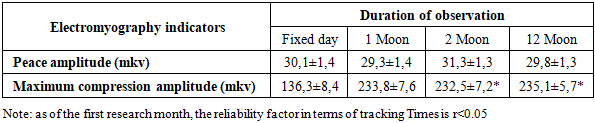
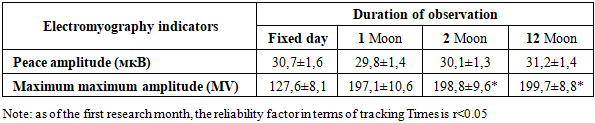
- The study of craniofascial complex indicators is of particular relevance in physician-orthodontists who diagnose pathology, determine the treatment plan and predict results based on the shape and dimensions of both the head and its individual areas. Anthropologists studied the law of proportions in individual parts of the body and found a "golden cross section", which is determined by dividing the value into two unequal parts, in which the large part belongs to the whole large part (13:8), as in the case of the small part (8:5), that is, the large part is The "Golden cut" of the face runs along the point between the eyes, through the gnatic part of the facial skeleton (from the tip of the nose to the chin point in the closed position of the mouth, along the line where the lips are adjacent; in the open position of the mouth, this distance is equal to the distance from the chin point to the upper lip). When describing the aesthetic peculiarities of the face, the following indicators are used: - anfas; - the dimensions of the top, middle and bottom of the face and their proportions; - fascial morphological index; - facial asymmetry; - face shape in profile, nose, lip, chin shape. In the main group of patients, m. masseter and m. When the data from the Temporalis electromyography study was processed, no statistical reliable difference was obtained in the numerical data of the original chewing and chakka muscles, so we decided to present them in Tables 1 and 2.
|
|
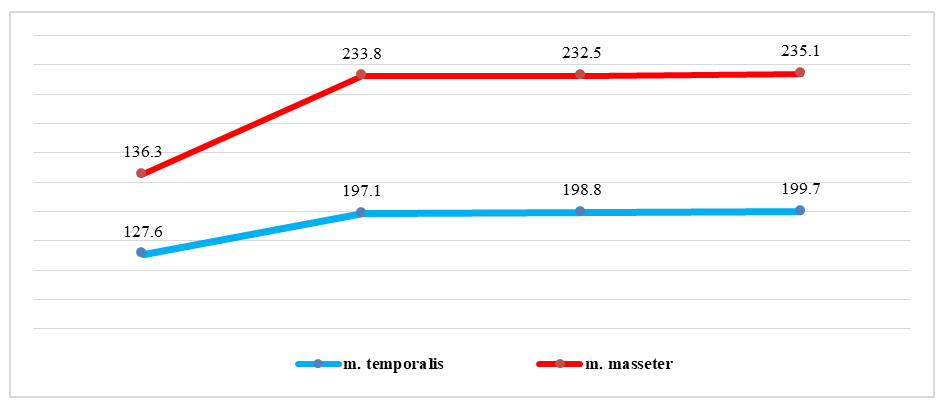 | Figure 1. In the main group of patients with bioelectric activity of the masticatory and chakra muscles, a graph of changes in the maximum compression amplitude (mcv) is presented |
3. Conclusions
- Adaptation to lamellar prostheses, which fully corresponds to the results obtained during the electromyographic examination of the main group of patients, occurs on average 1 month after orthopedic treatment. The self-assessment data of patients in the main group show that habituation to full mobility of prostheses occurs 28.0 ±4.0 days after the installation of full mobility of lamellar prostheses in the "toothless jaws" of patients. This number is confirmed by the electromyography of the original chewing gum, the same as Miss.