American Journal of Medicine and Medical Sciences

p-ISSN: 2165-901X    e-ISSN: 2165-9036

2025;  15(9): 3192-3196

doi:10.5923/j.ajmms.20251509.78

Received: Aug. 27, 2025; Accepted: Sep. 25, 2025; Published: Sep. 29, 2025

 

Protein-Energy Malnutrition Problem Among Children in Uzbekistan

Abdullaeva Dilafruz Gayratovna1, Khalilova Nargiza Kurbanovna2

1Doctor of Medical Sciences, Associate Professor, Department of Pediatric Diseases, Tashkent State Medical University, Ministry of Health Republic of Uzbekistan

2Independent Applicant, National Children’s Medical Center, Tashkent, Uzbekistan

Correspondence to: Abdullaeva Dilafruz Gayratovna, Doctor of Medical Sciences, Associate Professor, Department of Pediatric Diseases, Tashkent State Medical University, Ministry of Health Republic of Uzbekistan.

Email:

Copyright © 2025 The Author(s). Published by Scientific & Academic Publishing.

This work is licensed under the Creative Commons Attribution International License (CC BY).
http://creativecommons.org/licenses/by/4.0/

Abstract

Protein-energy malnutrition is a common childhood disorder and is primarily caused by deficiency of energy, protein, and micronutrients. Materials and Methods. In accordance with the principles of Good Clinical Practice, a single-center, non-comparative cross-sectional study was conducted. The study included 85 children scheduled for medium- or large-scale surgical intervention in the surgical department of the National Children’s Medical Center and the clinic of Tashkent State Medical University. Inclusion Criteria: children of both sexes aged from 1 month to 8 years. Results. We studied the level of albumin and prealbumin in the blood serum. Prealbumin is a small protein which has been widely evaluated as a nutritional and a prognostic marker. The small size and concentration of prealbumin in blood proposes challenges on measuring it with high sensitivity and specificity. Conclusion. Thus, adequate correction of nutritional disorders underlies normal growth and development rates of a child, supports learning ability and determines the resistance of a child's body to unfavorable environmental factors. Nutritional support of children is an integral factor in maintaining health and improving the quality of life.

Keywords: Protein-energy malnutrition, Albumin, Prealbumin, Nutritional status

Cite this paper: Abdullaeva Dilafruz Gayratovna, Khalilova Nargiza Kurbanovna, Protein-Energy Malnutrition Problem Among Children in Uzbekistan, American Journal of Medicine and Medical Sciences, Vol. 15 No. 9, 2025, pp. 3192-3196. doi: 10.5923/j.ajmms.20251509.78.

1. Introduction

Nutritive status is one of the essential pointers for crucial signs of health. Malnutrition is a public health problem of significant significance in growing countries [25].
Protein-Energy Malnutrition (PEM) has been recognized for over 60 years; the term was first used by FAO/WHO nutrition experts. PEM refers to a prolonged state of protein and/or energy deficiency, which may be accompanied by underweight and/or stunted growth. This condition is associated with metabolic disturbances and imbalances in water-electrolyte homeostasis.
Furthermore, patients with PEM often experience dysfunctions in the endocrine, immune, digestive, and nervous systems.
According to official statistics from the WHO, PEM accounts for about 45% of the causes of child mortality annually. By the end of 2017, about 16 million children under 5 years of age worldwide suffer from acute malnutrition and about 22% of children have chronic protein-energy malnutrition [36].
Protein-energy malnutrition (PEM) is a common childhood disorder and is primarily caused by deficiency of energy, protein, and micronutrients. PEM manifests as underweight (low body weight compared with healthy peers), stunting (poor linear growth), wasting (acute weight loss), or edematous malnutrition (kwashiorkor). Case fatality rates among children hospitalized with severe wasting or edema (also known as severe acute malnutrition [SAM]) range from 5% to 30% [32,35].

2. Materials and Methods

In accordance with the principles of Good Clinical Practice, a single-center, non-comparative cross-sectional study was conducted.

3. Results and Discussion

Eligibility Criteria
The study included 85 children scheduled for medium- or large-scale surgical intervention in the surgical department of the National Children’s Medical Center and the clinic of Tashkent State Medical University.
Inclusion Criteria: children of both sexes aged from 1 month to 8 years.
Study Setting
National Children’s Medical Center and the clinic of Tashkent State Medical University.
Study Duration: June 2025 – August 2025.
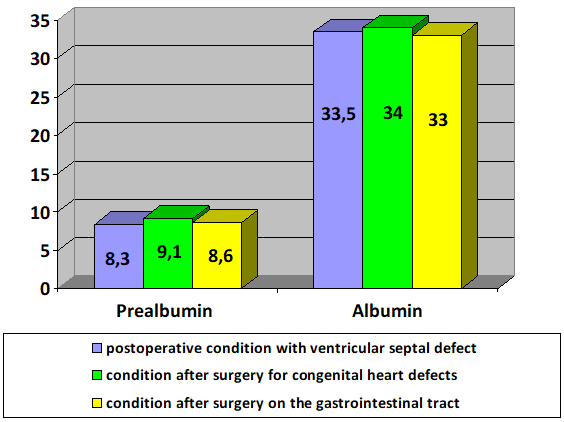
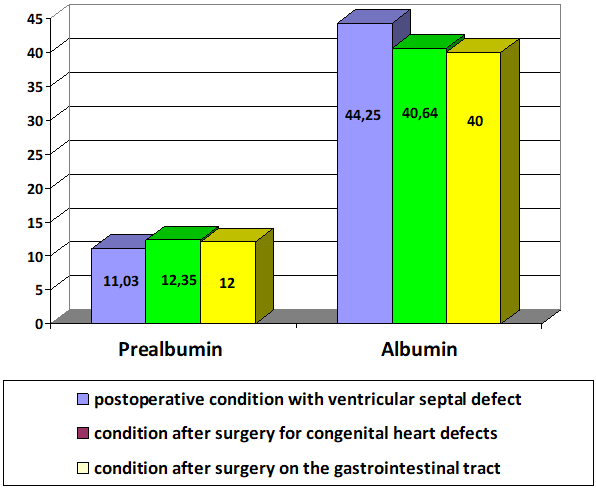
Figure 1. Before treatment (n=85), %
Before the study, informed consent was obtained from the parents. During the study, medical history and disease data were analyzed, clinical examinations were performed, and the nutritional status of the children was assessed [5].
When evaluating the concentrations of acute-phase inflammatory proteins, it was found that, regardless of the type of nutritional status (reduced or normal), the level of prealbumin was decreased.
After the implementation of nutritional support in children, the levels of prealbumin and albumin were normalized in patients of all three groups (Figure 2).
Figure 2. After treatment (n=85), %
Thus, monitoring protein levels and providing nutritional support to children after surgical interventions is of great importance for the prevention of protein-energy deficiency and the elimination of life-threatening conditions.
The results indicated that the serum level of transthyretin (prealbumin) was clearly reduced in patients with protein-energy malnutrition (PEM). The most likely cause of this was an unbalanced and insufficient diet in such patients [2].
A review article presented information on the most commonly used markers of nutritional status in clinical practice: albumin, prealbumin, and hemoglobin. The dynamics of changes in laboratory markers were analyzed both in conditions of alimentary starvation and in protein-energy malnutrition associated with acute or chronic disease [6].
According to multicenter randomized studies, upon hospital admission, 4 out of 10 surgical patients were already diagnosed with nutritional deficiency of varying severity [17]. The presence of alimentary risk factors for the development of nutritional deficiency (ND) upon hospitalization was identified in 25–90% of surgical patients [14].
Of particular importance are publications indicating that, depending on the type of pathology, PEM develops in 20–50% of patients directly in the hospital during the early postoperative period and requires timely nutritional support [23].
With PEM, there is always a deficiency of vitamins and essential fatty acids, clinically expressed by a decrease in the synthesis of prostaglandins, and a decrease in cholesterol in the blood. With the progression of PEM, when glycogen and adipose tissue are completely used, tissue protein is used, then catabolism of organs and tissues occurs, due to which their sizes are sharply reduced, functional impairment of organs is observed. As a result, protein metabolism metabolites (urea, creatinine) increase in the blood. Due to the vicious circle, the serum protein level decreases, hypoglycemia reaches a critical level (3 mmol/l and less), and cholesterol also decreases to 2.5 mmol/l and less. Water and microelements are lost, which leads to hypothermia and a sharp disruption of the cell function itself [1,41].
Malnutrition can be caused by low calorie and protein consumption, inflammation, malabsorption, altered nutrient metabolism, hormonal issues, hypermetabolism, and gut flora dysbiosis. Malnutrition is also affected by fasting intervals and other variables like alcohol use [33].
All forms of PEM are associated with increased risk of infectious illnesses and cognitive deficit [32,35].
Nutrition screening and nutrition assessment are essential parts of the nutrition care process, as accurate identification and diagnosis of malnutrition is required in order for patients to be adequately treated, and for nutrition resources to be used efficaciously [30,38].
Preoperative risk stratification has long been developed as a strategy to predict postoperative outcomes and potentially alter or optimize comorbidities and modifiable risk. Malnutrition is among the most common potentially modifiable risk factors and the strongest predictor of poor postsurgical outcomes. Historically, malnutrition has been difficult to address for healthcare providers because of the lack of a cohesive definition. Adding to the confusion has been the use of serum levels of albumin and prealbumin as biomarkers for malnutrition; many fail to understand that these visceral proteins are only valid as markers of nutrition status while at homeostasis [39].
The underlying causes of malnutrition, such as poverty, food insecurity, subpar sanitation, a lack of education, and social inequity, must be addressed to prevent PEM. Additionally, the coexistence of PEM and other infections, such as cancer, presents extra difficulties and necessitates specific consideration and treatment. To sum up, PEM is a complicated and diverse issue that necessitates international cooperation and action to lessen its impact and enhance the health and well-being of affected populations [25].
Accumulating research suggests ALB functions more as a negative acute phase reactant, with its concentration influenced by multidimensional factors, such as inflammatory status, disease severity, and fluid balance, rather than merely nutritional intake. In acute or chronic illnesses, inflammation-mediated physiological alterations can induce hepatic protein synthesis reprogramming and increased vascular permeability, leading to rapid declines in ALB levels. This process demonstrates weak correlation with nutritional intake, implying that ALB fluctuations may predominantly reflect inflammatory burdens and systemic physiological adaptations [13].
This study reveals that dynamic changes in ALB concentrations among hospitalized patients not only reflect nutritional status but also serve as a comprehensive indicator of inflammatory status changes, metabolic imbalances, and clinical outcome deterioration. As the first study systematically exploring the dynamic associations between ALB changes and multidimensional clinical indicators, we demonstrate the unique value of dynamic ALB monitoring in risk stratification and personalized intervention. These findings further challenge the conventional view of ALB as a mere nutritional biomarker [40].
Prealbumin is a small protein which has been widely evaluated as a nutritional and a prognostic marker. The small size and concentration of prealbumin in blood proposes challenges on measuring it with high sensitivity and specificity. Over the years, a number of analytical methodologies have been developed, which may help establish prealbumin as a useful biomarker in routine clinical practice [26].
Additionally, favorable characteristics such as short biological half-life, richness in tryptophan which gives it a high degree of reactivity to protein status8 and the highest essential to non-essential amino acids ratio1 make prealbumin an optimal predictor of nutritional status in the body [19].
Prealbumin synthesis is decreased in starvation, liver diseases, dialysis, hyperthyroidism, hyperglycemia, nephrotic syndrome, protein-losing enteropathy and acute blood loss. [9,11] Synthesis of prealbumin is increased by corticosteroids, NSAIDS, oral contraceptives and also in chronic renal failure and renal tubular damage due to reduced catabolism of prealbumin. The concentration of this protein tends to fluctuate with hydration status of the body [15,21].
Prealbumin is only mentioned in the guidelines in four countries: UK, Italy, Poland and France, but even within these countries, different cut-off values and purposes are cited. Interestingly, in the UK, prealbumin is mentioned in the NICE guidelines policy, but not used in clinical practice. Many years of poor consensus has led to prealbumin being popular among researchers, especially as a biomarker of nutritional recovery, but somewhat ignored in the larger nutritional community [26].
Compared with albumin, prealbumin has a short half-life of only 2 days. Due to its favorable amino acid composition, prealbumin can be used to assess changes in the patient’s diet, such as insufficient caloric intake or dietary improvement [8,13,22].
The most commonly used markers of nutritional status are serum albumin, transferrin, and prealbumin (transthyretin) [10,16,20,34]. The half-life of serum albumin is 3 weeks [18]. Transferrin has a shorter half-life (about 8 days). Therefore, it is believed to respond earlier to changes in nutritional status [10].
However, in cases of anemia, as well as during treatment with iron preparations and erythropoietin, the specificity of this protein as an index of nutritional status decreases sharply [9]. The half-life of prealbumin (transthyretin) is about 2 days. In this regard, some researchers suggest that it is even more sensitive to nutritional shifts than albumin or transferrin [18].
From this perspective, prealbumin may be considered the earliest marker of changes in nutritional status, transferrin an intermediate marker, and albumin a late one.
In patients with nutritional disorders, correlations were observed between serum levels of albumin, transferrin, and transthyretin [18,31].
Assessment of nutritional status included clinical, laboratory, anthropometric, calculated, and functional parameters. Anthropometric indicators included height, actual body weight, ideal body weight (IBW) or recommended body weight, skinfold thickness, mid-upper arm circumference, and others [3]. The obtained anthropometric results were compared with age norms [4].
Laboratory indices of nutritional status included serum concentrations of total protein, albumin, and prealbumin.
In our country, assessment of nutritional status (NS) and the risk of developing ND in children with surgical pathology during the perioperative period is generally not carried out, as it is not included in treatment standards and is not an obligatory component of the examination plan in pediatric surgical hospitals. This complicates the detection of nutritional deficiency, the prescription of adequate nutritional support, and negatively affects the course, prognosis, and outcomes of the disease [5,12,14].
Thus, Prealbumin has a shorter half-life — approximately 2–3 days — and this marker makes it possible to assess changes in nutritional status.

4. Conclusions

Thus, adequate correction of nutritional disorders underlies normal growth and development rates of a child, supports learning ability and determines the resistance of a child's body to unfavorable environmental factors. Nutritional support of children is an integral factor in maintaining health and improving the quality of life.

References

[1]  Abdullaeva Dilafruz Gayratovna, Khalilova Nargiza Kurbanovna. "PROTEIN-ENERGY MALFUNCTION IN CHILDREN: APPROACHES TO TREATMENT" Eurasian Journal of Medical and Natural Sciences, vol. 4, no. 5-1, 2024, pp. 90-96. doi:10.5281/zenodo.11178809.
[2]  А. G. Kucher, T.A. Ivanina, E.A. Evteeva, N.D. Grigorieva, M.M. Timofeev, Yu.A. Nikogosyan, I.G. Kayukov Nephrology. 2001. Volume 5. No. 4. P. 65-69.
[3]  Luft V.M., Khoroshilov I.E. Nutritional support of patients in clinical practice. - St. Petersburg: Publishing house of the Military Medical Academy, 1997. - 120 p.
[4]  Rudman D. Assessment of nutritional status // Internal diseases in 10 books / Ed. E. Braunwald, K. J. Isselbach, R. G. Petersdorf: Trans. from English. - M.: Medicine, 1993. - Book 2.-379 p.
[5]  Fomina M.V., Borovik T.E., Yatsyk S.P., Alkhasov A.B., Zvonkova N.G., Gusev A.A., Sokolov I., Bushueva T.V., Lebedeva L.V. Features of the nutritional status of children admitted for treatment to the surgical thoracic department. Pediatrics. Consilium Medicum. 2023; 1:86–94. DOI: 10.26442/26586630.2023.1.202130.
[6]  Yakovleva, M. N., Smirnova, K. I., Lisitsa, I. A., Meshkov, A. V., & Novikova, I. S. (2024). LABORATORY MARKERS OF PROTEIN-ENERGY MALFUNCTION. A LITERATURE REVIEW. University Therapeutic Bulletin, 6(1), 79-89.
[7]  Atukeren P., Aydin S., Uslu E., Gumustas M. K., and Cakatay U., Redox homeostasis of albumin in relation to alpha-lipoic acid and dihydrolipoic acid, Oxidative Medicine and Cellular Longevity. (2010) 3, no. 3, 206–213, https://doi.org/10.4161/oxim.3.3.11786.
[8]  Beck F. K. Rosenthal T. C. (2002). Prealbumin: a marker for nutritional evaluation. Am. Fam. Physician 65 (8), 1575–1578.
[9]  Bernstein L.H., Lewkhzdt-Fairfield C.J., Pleban W., Rudolph R. Usefulness of data on albumin and prealbumin concentrations in determining effectiveness of nutritional support // Clin. Chem. - 1989. - Vol. 35, № 2. - Р. 271-274.
[10]  Bernstein L., Pleban W. Prealbumin in nutrition evaluation // Nutrition. - 1996. - Vol. 12, № 4. - Р. 255-259.
[11]  Bharadwaj S. Ginoya S. Tandon P. Gohel T.D. Guirguis J. Vallabh H. et al (2016). Malnutrition: laboratory markers vs nutritional assessment. Gastroenterol. Rep. 4 (4), 272–280. 10.1093/gastro/gow013.
[12]  Borovik TE, Fomina МV, Yatsyk SP, et al. Assessment of nutritional status and risks of the development of malnutrition in children in the surgical hospital. Pediatria n.a. GN Speransky. 2022; 101(2): 103-12 (in Russian)]. DOI:10.24110/0031-403X-2022-101-2-103-112.
[13]  Bretschera C, Boesiger F, Kaegi-Braun N, Hersberger L, Lobo DN, Evans DC, Tribolet P, Gomes F, Hoess C, Pavlicek V, Bilz S, Sigrist S, Brändle M, Henzen C, Thomann R, Rutishauser J, Aujesky D, Rodondi N, Donzé J, Stanga Z, Mueller B, Schuetz P. Admission serum albumin concentrations and response to nutritional therapy in hospitalised patients at malnutrition risk: Secondary analysis of a randomised clinical trial. EClinicalMedicine. 2022; 45: 101301.
[14]  Cahill NE, Murch L, Jeejeebhoy K, et al. When early enteral feeding is not possible in critically ill patients: results of a multicenter observational study. J Parenter Enteral Nutr. 2011; 35(2): 160-8. DOI:10.1177/0148607110381405.
[15]  Dellière S, Cynober Is transthyretin a good marker of nutritional status? Clin Nutr 2017; 36: 364–370.
[16]  Duggan A., Huffman F.G. Validation of serum transthyretin (prealbumin) as a nutritional parameter in hemodialysis patients // J. Renal Nutr. (Philadelphia). - 1998. - Vol. 8, № 3. - Р. 142-149.
[17]  Dizdar OS, Baspınar O, Kocer D, et al. Nutritional Risk Nutritional Risk, Micronutrient Status and Clinical Outcomes: A Prospective Observational Study in an Infectious Disease Clinic. Nutrients. 2016; 8(3): 124. DOI:10.3390/nu8030124.
[18]  Fletcher J.P., Lihle J.M., Guest P.K. A comparison of serum prealbumin as nutrition parameters // J. P. E. N.: Journal of parenteral and enteral nutrition. - 1987. - Vol. 11, № 2. - P. 144-148.
[19]  Ingenbleek Y. Why should plasma transthyretin become a routine screening tool in elderly persons? J Nutr Health Aging 2009; 13: 640–642.
[20]  Ingenbleek Y., Young V. Transthyretin (prealbumin) in health and disease: nutritional implications // Annual Review of Nutrition / Ed. Olson R.E et al. (Palo Alto, Calif). - 1994. - Vol. 14. - Р. 495-533.
[21]  Johnson MA, Merlini G, Sheldon J, et al. Clinical indications for plasma protein assays: transthyretin (prealbumin) in inflammation and malnutrition: International Federation of Clinical Chemistry and Laboratory Medicine (IFCC): IFCC Scientific Division Committee on Plasma Proteins (C-PP). Clin Chem Lab Med 2007; 45: 419–426.
[22]  Keller U. Nutritional laboratory markers in malnutrition // Journal of clinical medicine. – 2019. – Т. 8. – №. 6. – С. 775.
[23]  Leyderman IN, Gritsan AI, Zabolotskikh IB, et al. Perioperative nutritional support. Clinical ractice recommendations of the national “Federation of Anesthesiologists and Reanimatologists”. Annals of Critical Care. 2021; 4: 7-20 (in Russian).
[24]  Machlin L. J. and Bendich A., Free radical tissue damage: protective role of antioxidant nutrients, The FASEB Journal. (1987) 1, no. 6, 441–445, 2-s2.0-0023464342.
[25]  Muhammad Zubair, Meenakshi Mishra, Umesh Kumar and Pankaj Kishor Mishra, The Effects of Protein-Energy Malnutrition On Children Under Five Years of Age. (2024). Int J Pharm Sci. 15(1), b39-53 http://dx.doi.org/10.22376/ijpbs.2024.15.1.b39-53.
[26]  Ranasinghe RN, Biswas M, Vincent RP. Prealbumin: The clinical utility and analytical methodologies. Annals of Clinical Biochemistry. 2020; 59(1): 7-14. doi:10.1177/0004563220931885.
[27]  Rizzo A. M., Berselli P., Zava S., Montorfano G., Negroni M., Corsetto P., and Berra B., Endogenous antioxidants and radical scavengers, Advances in Experimental Medicine and Biology. (2010) 698, 52–67, 2-s2.0-79956332947.
[28]  Sies H., Glutathione and its role in cellular functions, Free Radical Biology and Medicine. (1999) 27, no. 9-10, 916–921, 2-s2.0-0033230043, https://doi.org/10.1016/S0891-5849(99)00177-X.
[29]  Sitar, Aydin S., and Cakatay U., Human serum albumin and its relation with oxidative stress, Clinical Laboratory. (2013) 59, no. 9-10, 945–952.
[30]  Skye Marshall, Protein-energy malnutrition in the rehabilitation setting: Evidence to improve identification, Maturitas, Volume 86, 2016, Pages 77-85, ISSN 0378-5122, https://doi.org/10.1016/j.maturitas.2016.01.014.
[31]  Sreedhara R., Avram M.M., Blanco M. et al. Prealbumin is the best nutritional predictor of survival in hemodialysis and peritoneal dialysis // Amer. J. Kidney Dis. - 1996. - Vol. 28, № 6. - Р. 937-942.
[32]  Tahmeed Ahmed, M. Iqbal Hossain, Munirul Islam, A.M. Shamsir Ahmed, Farzana Afroze, M. Jobayer Chisti, 143 - Protein-Energy Malnutrition in Children, Editor(s): Edward T. Ryan, David R. Hill, Tom Solomon, Naomi E. Aronson, Timothy P. Endy, Hunter's Tropical Medicine and Emerging Infectious Diseases (Tenth Edition), Elsevier, 2020, Pages 1034-1041, ISBN 9780323555128.
[33]  Traub J, Reiss L, Aliwa B, Stadlbauer V. Malnutrition in patients with livercirrhosis. Nutrients. 2021; 13(2): 540. doi: 10.3390/nu13020540, PMID 33562292.
[34]  Winkler M.F., Gerrior S.A., Pomp A., Albina J.E. Use of retinol-binding protein and prealbumin as indicators of the response to nutrition therapy // J. Amer. Diet. Assoc. (Chicago). -1989. - Vol. 89, № 5. - Р. 684-687.
[35]  https://doi.org/10.1016/B978-0-323-55512-8.00143-5.
[36]  https://www.who.int/gho/child-malnutrition.
[37]  https://doi.org/10.1155/2014/254396.
[38]  https://doi.org/10.1016/j.jamda.2011.01.003.
[39]  https://doi.org/10.1002/ncp.10271.
[40]  https://doi.org/10.1186/s40001-025-02925-5.
[41]  https://in-academy.uz/index.php/EJMNS/article/view/31215/19951.