
-
Paper Information
- Next Paper
- Paper Submission
-
Journal Information
- About This Journal
- Editorial Board
- Current Issue
- Archive
- Author Guidelines
- Contact Us
American Journal of Medicine and Medical Sciences
p-ISSN: 2165-901X e-ISSN: 2165-9036
2025; 15(6): 1826-1830
doi:10.5923/j.ajmms.20251506.40
Received: Apr. 19, 2025; Accepted: May 20, 2025; Published: Jun. 10, 2025

Autonomic Nervous System Adaptation: Impact on the Physical Performance of Martial Arts Athletes
 Abstract
 Reference
 Full-Text PDF
 Full-text HTML
Akbarkhodjaeva Z. A.1, 2, Rakhimbaeva G. S.3, Sadikov А. А.2
1Republican Scientific-Practical Center of Sports Medicine, Tashkent, Uzbekistan
2National Anti-Doping Agency of Uzbekistan, Tashkent, Uzbekistan
3Department of Neurology and Medical Psychology of Tashkent Medical Academy, Tashkent, Uzbekistan
Copyright © 2025 The Author(s). Published by Scientific & Academic Publishing.
This work is licensed under the Creative Commons Attribution International License (CC BY).
http://creativecommons.org/licenses/by/4.0/

The autonomic nervous system (ANS) plays a critical role in maintaining homeostasis and optimizing athletic performance, particularly in martial arts, where physical and mental demands fluctuate rapidly. This study aims to evaluate the ANS adaptation in martial arts athletes and its impact on their physical performance. The analysis of the functional state of the ANS in 136 martial arts athletes revealed that 24.3% (33 athletes) exhibited ANS tension, leading to disturbances in vegetative homeostasis and a decreased regulatory-adaptive capacity of the body, which negatively influenced performance outcomes. Additionally, the predominance of sympatheticotonic changes in 10.3% of cases was observed, reflecting impaired heart adaptability. However, the majority of athletes (64%) demonstrated adequate ANS adaptation, indicating well-maintained autonomic function and a high level of qualification. These findings emphasize the importance of monitoring autonomic function in martial arts athletes to assess their adaptive responses to physical loads and inform training regimens to optimize performance and prevent potential health risks.
Keywords: Regulatory-adaptive capacity, Heart rate variability, Sports performance, Training adaptation, Cardiovascular function, Autonomic dysfunction, Sympathetic and parasympathetic balance, Sports medicine
Cite this paper: Akbarkhodjaeva Z. A., Rakhimbaeva G. S., Sadikov А. А., Autonomic Nervous System Adaptation: Impact on the Physical Performance of Martial Arts Athletes, American Journal of Medicine and Medical Sciences, Vol. 15 No. 6, 2025, pp. 1826-1830. doi: 10.5923/j.ajmms.20251506.40.
Article Outline
1. Relevance
- Disturbances in vegetative regulation are often an early indicator of a decline in the body’s adaptation to physical loads, which can result in decreased performance [1,6,8]. When the body's reserve capabilities are exhausted, dysregulatory disturbances in vegetative function at both suprasegmental and segmental levels can occur. These disturbances are frequently associated with the pathogenesis of cardiovascular diseases [1,4,9]. The autonomic nervous system (ANS) plays a critical role in maintaining homeostasis and regulating vital functions in the body, enabling athletes to perform under varying levels of stress and fatigue. As such, ANS disorders, especially those involving imbalances between the sympathetic and parasympathetic divisions, are significant markers of compromised physiological states in athletes [2,7].The autonomic nervous system dysfunction in athletes, particularly in martial arts, can influence both physical endurance and mental resilience. Martial arts athletes, who are subjected to high-intensity, acyclic training involving both aerobic and anaerobic components, face substantial stress on the body. The body’s capacity to adapt to these varied and strenuous physical demands is determined in large part by the functional state of the ANS. The imbalance in autonomic regulation can thus lead to decreased ability to recover, increased injury susceptibility, and, ultimately, reduced performance [3,7].Research has shown that proper autonomic regulation is essential for ensuring that athletes maintain optimal physiological balance during training and competition. When these autonomic processes are disturbed, athletes may experience symptoms such as increased fatigue, diminished endurance, altered cardiovascular responses, and heightened stress sensitivity. This highlights the importance of assessing the vegetative adaptation of martial arts athletes to physical loads and stress [5,10]. Given the unique physiological demands of martial arts, understanding the relationship between autonomic function and athletic performance is crucial for optimizing training regimens, enhancing performance, and reducing health risks.
2. Objective of the Study
- The aim of this study is to assess the autonomic status of martial arts athletes and examine the impact of physical training on their vegetative adaptation.
3. Materials and Methods
- The study was conducted at the base of the Research Institute of Sports Medicine and Rehabilitation. A total of 136 martial arts athletes participated in the research, including 85 men (62.5%) and 51 women (37.5%), aged between 18 and 33 years (mean age = 25.5 ± 2.6 years). Martial arts, classified as acyclic sports, are distinguished by their emphasis on speed and strength during training, involving variable intensity loads during competition [2]. Of the athletes examined, 23 practiced taekwondo, 48 participated in boxing, 29 practiced Greco-Roman wrestling, and 36 were judo athletes.The athletes underwent a neuropsychological assessment using several scales, including:• Asthenic State Scale (ASS)• Kerdo Autonomic Index (AI)• Hospital Anxiety and Depression Scale (HADS)• Mental Stress Scale (PSM-25)An express diagnostic evaluation of the asthenic condition was performed using the Asthenic State Scale, which consists of 30 questions. The results were interpreted as follows:• Less than 50 points: No asthenia• 51-75 points: Mild asthenia• 76-100 points: Moderate asthenia• 101-120 points: Severe astheniaThe Kerdo Autonomic Index (AI) was used to assess the balance between the sympathetic and parasympathetic divisions of the autonomic nervous system. The AI is calculated using the following formula:AI = (1 – Diastolic Pressure / Pulse) × 100The interpretation of the data is as follows:• Sympathicotonia: +16 to +30• Pronounced sympathicotonia: ≥ +31• Parasympathicotonia: -16 to -30• Pronounced parasympathicotonia: ≤ -30• Sympathetic-parasympathetic balance: -15 to +15Statistical analysis was performed using Microsoft Excel 2016, utilizing built-in statistical functions.
4. Results of the Study
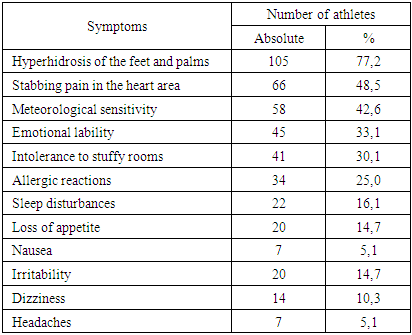
- During the objective examination of 136 martial arts athletes, 24.3% (33 out of 136) were diagnosed with autonomic dysfunction. The following symptoms were observed among athletes with autonomic dysfunction:• Hyperhidrosis (excessive sweating) of the feet and palms: 77.2% (25 out of 33 athletes)• Stabbing pain in the heart area: 48.5% (16 out of 33 athletes)• Meteorological sensitivity (sensitivity to weather changes): 42.6% (14 out of 33 athletes)• Emotional lability (frequent mood swings): 33.1% (11 out of 33 athletes)• Intolerance to stuffy rooms: 30.1% (10 out of 33 athletes)• Allergic reactions (various types of allergic symptoms): 25.0% (8 out of 33 athletes)The following symptoms were observed less frequently:• Sleep disturbances: 16.1% (5 out of 33 athletes)• Loss of appetite: 14.7% (5 out of 33 athletes)• Nausea: 5.1% (2 out of 33 athletes)• Irritability: 14.7% (5 out of 33 athletes)• Dizziness: 10.3% (3 out of 33 athletes)• Headaches: 5.1% (2 out of 33 athletes)These symptoms reflect a range of autonomic dysfunction indicators that could impact the performance and well-being of martial arts athletes. The frequency of symptoms such as hyperhidrosis, heart-related pain, and meteorological sensitivity suggests that athletes may experience significant physiological and emotional stress that warrants further examination and possible intervention.The data collected are presented in Table 1 for a clearer understanding of the prevalence of symptoms associated with autonomic dysfunction.
|
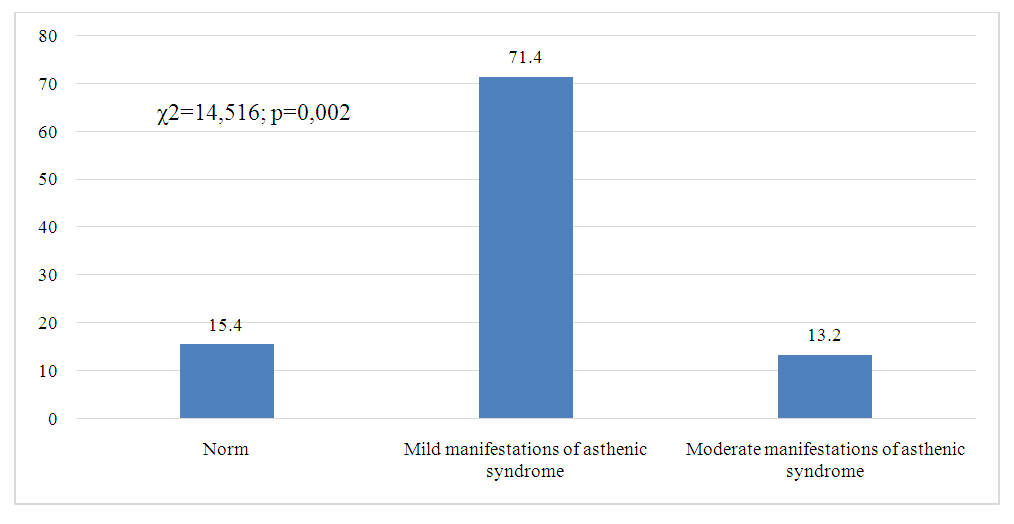 | Figure 1. Scale of Asthenic State Scores Among the Examined Martial Arts Athletes |
|
5. Discussion
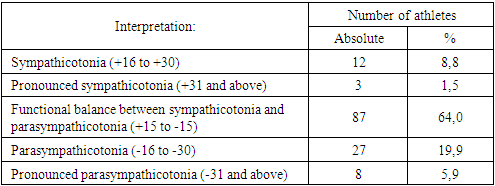
- The findings of this study emphasize the significant role of the autonomic nervous system (ANS) in the adaptation of martial arts athletes to physical loads and stressors. As shown in the results, 24.3% of athletes exhibited autonomic dysfunction, highlighting that a substantial portion of martial artists face challenges in maintaining proper vegetative regulation under intense training and competition conditions. This dysfunction can disrupt homeostasis and compromise the athletes' regulatory-adaptive capacity, potentially leading to fatigue, reduced performance, and increased vulnerability to stress-related illnesses [1,3].The study's results align with previous research suggesting that disturbances in the autonomic nervous system are common among athletes, particularly those engaged in high-intensity sports such as martial arts. The sympathicotonic shifts (10.3% of the athletes) observed in this study suggest an overactivation of the sympathetic-adrenal system, which could be linked to chronic stress, overtraining, or inadequate recovery. This condition, if persistent, could result in cardiovascular strain and immune system suppression, thus increasing the risk of injury or illness [2,4]. These findings are consistent with those of studies focusing on the relationship between sympathetic dominance and impaired cardiovascular adaptation in athletes [5].Conversely, the parasympathetic predominance (25.7% of athletes) points to a state of overstrain and a deficiency in adaptive mechanisms, which suggests that some athletes may not be able to handle physical and mental stressors effectively. This could result in a reduced capacity for recovery, increasing the risk of overtraining syndrome. Parasympathetic predominance can also be indicative of an athlete's inability to optimally manage physical loads, which might contribute to suboptimal performance during competitions [6,7].Interestingly, 64.0% of athletes exhibited normotonia, reflecting the fact that the majority of the martial arts athletes included in this study had well-balanced autonomic regulation. This observation suggests that martial arts training, which combines physical exertion, mental focus, and discipline, may help athletes achieve a healthy balance between sympathetic and parasympathetic activity. This balance is essential for sustained performance and optimal adaptation to training stress. It is particularly notable that normotonia was the most common finding, supporting the idea that martial arts athletes are generally well-prepared to manage physical and mental stress through effective regulation of their autonomic nervous system [8,9].While most athletes displayed adequate autonomic adaptation, 24.3% of athletes with autonomic dysfunction might benefit from further attention to their training loads, recovery strategies, and psychological support. Monitoring and managing autonomic dysfunction in athletes is crucial, as it could potentially lead to suboptimal physical performance, delayed recovery, and a higher risk of developing chronic health issues [10].In conclusion, this study highlights the importance of monitoring the autonomic nervous system in martial arts athletes to prevent overtraining, ensure effective adaptation, and maintain long-term health and performance. Future research could focus on interventions to help athletes with autonomic imbalances, including tailored training programs, psychological stress management techniques, and nutritional support to promote better autonomic regulation.
6. Conclusions
- 1. The analysis of the functional state of the autonomic nervous system (ANS) in martial arts athletes revealed that 24.3% (33 athletes) exhibited ANS tension, leading to disturbances in vegetative hemostasis and a reduction in the regulatory-adaptive capacity of the body. This dysfunction affects the athlete's ability to effectively adapt to physical and psychological stressors, which can negatively impact their performance and success in achieving sports accomplishments.2. The predominance of sympathicotonic changes in 10.3% of athletes (15 out of 136) suggests poorer adaptive heart capacity, which may result in an excessive activation of the sympathetic-adrenal system. This finding highlights the potential for reduced cardiovascular efficiency and overall performance, as athletes in this group may experience difficulties in handling intense physical stress during competitions and training.3. Based on the data obtained, the majority of martial arts athletes demonstrated adequate autonomic nervous system adaptation, as evidenced by the presence of normotonia in 64.0% of cases. This indicates a high level of qualification and the ability of these athletes to effectively manage both physical and emotional stress, thus optimizing their performance and reducing the risk of health-related issues associated with autonomic dysfunction.In conclusion, while the majority of athletes exhibited proper autonomic adaptation, attention must be given to those with autonomic dysfunction, especially to manage the potential negative impacts on their training, health, and long-term performance.