
-
Paper Information
- Next Paper
- Paper Submission
-
Journal Information
- About This Journal
- Editorial Board
- Current Issue
- Archive
- Author Guidelines
- Contact Us
American Journal of Medicine and Medical Sciences
p-ISSN: 2165-901X e-ISSN: 2165-9036
2025; 15(5): 1403-1406
doi:10.5923/j.ajmms.20251505.18
Received: Mar. 29, 2025; Accepted: Apr. 28, 2025; Published: May 15, 2025

The Role of Nutrition in Preventing Periodontosis During Summer: Seasonal Dietary Strategies for Oral Health
 Abstract
 Reference
 Full-Text PDF
 Full-text HTML
Nizom Ermatov1, Bakhtiyor Kholbekov2, Dilshod Alimukhamedov3
1Professor, Department of Children, Adolescents and Nutritional Hygiene, Tashkent Medical Academy, Tashkent, Uzbekistan
2Researcher, Department of Microbiology, Public Health, Hygiene and Management, Termez Branch of Tashkent Medical Academy, Tashkent, Uzbekistan
3Associate Professor, Department of the Hygiene of Children, Adolescents and Nutrition, Tashkent Medical Academy, Farabi Street 2, Tashkent, Uzbekistan
Correspondence to: Nizom Ermatov, Professor, Department of Children, Adolescents and Nutritional Hygiene, Tashkent Medical Academy, Tashkent, Uzbekistan.
| Email: |  |
Copyright © 2025 The Author(s). Published by Scientific & Academic Publishing.
This work is licensed under the Creative Commons Attribution International License (CC BY).
http://creativecommons.org/licenses/by/4.0/

Periodontitis, a chronic inflammatory disease of the supporting tooth structures, is influenced by bacterial biofilm, host immune response, and systemic factors such as nutrition. Emerging research highlights the critical role of dietary habits in modulating inflammation, oxidative stress, and microbial balance in the oral cavity. Seasonal dietary shifts during summer present a unique opportunity to leverage fresh, nutrient-dense foods that may help prevent or mitigate periodontitis progression. This article examines the interplay between summer nutrition and periodontal health, focusing on key dietary components—such as antioxidants, omega-3 fatty acids, probiotics, and hydration—that exhibit protective effects against gum disease. Additionally, we explore practical, seasonally appropriate dietary strategies to enhance oral health, including the consumption of vitamin C-rich fruits, anti-inflammatory fatty fish, and probiotic-rich fermented foods. By integrating these nutritional approaches with standard oral hygiene practices, individuals may reduce periodontal inflammation, support tissue repair, and maintain a balanced oral microbiome. This review underscores the importance of dietary awareness in periodontal disease prevention and provides evidence-based recommendations for optimizing summer nutrition to promote long-term oral health.
Keywords: Periodontitis, Nutritional prevention, Summer diet, Oral inflammation, Antioxidants, Omega-3 fatty acids, Probiotics
Cite this paper: Nizom Ermatov, Bakhtiyor Kholbekov, Dilshod Alimukhamedov, The Role of Nutrition in Preventing Periodontosis During Summer: Seasonal Dietary Strategies for Oral Health, American Journal of Medicine and Medical Sciences, Vol. 15 No. 5, 2025, pp. 1403-1406. doi: 10.5923/j.ajmms.20251505.18.
Article Outline
1. Introduction
- Periodontitis, a chronic inflammatory disease driven by dysbiotic microbial communities and host immune responses, remains a leading cause of tooth loss worldwide. While mechanical plaque control and professional dental interventions are primary preventive measures, growing evidence underscores the pivotal role of nutrition in modulating periodontal health. Research highlights the bidirectional relationship between diet and periodontitis, emphasizing how micronutrient deficiencies and pro-inflammatory diets exacerbate tissue destruction [1]. Seasonal variations in dietary patterns further influence oral health outcomes, with summer offering a unique opportunity to leverage fresh, nutrient-dense foods rich in antioxidants, anti-inflammatory compounds, and probiotics.The connection between nutrition and periodontal disease has been explored by several key researchers. The demonstrated that an anti-inflammatory diet high in omega-3 fatty acids, fiber, and vitamins significantly reduces gingival inflammation compared to a Western diet high in processed sugars and saturated fats [2]. Similarly, studies revealed that polyphenol-rich summer fruits, such as berries and citrus, inhibit periodontal pathogens while promoting antioxidant defenses in gingival tissues [3]. The role of probiotics in oral microbiome modulation has been extensively investigated who found that fermented foods like yogurt and kefir suppress Porphyromonas gingivalis colonization, a keystone pathogen in periodontitis [4].Despite these advances, seasonal dietary strategies for periodontal health remain underexplored in clinical practice. Summer’s abundance of hydrating fruits, leafy greens, and omega-3-rich seafood provides an optimal dietary framework for reducing oxidative stress and inflammation in periodontal tissues. This article synthesizes current evidence on summer-specific nutrition and its preventive potential against periodontitis, offering actionable dietary recommendations to complement conventional oral hygiene practices. By integrating findings from nutritional biochemistry, microbiology, and clinical dentistry, we aim to bridge the gap between research and practical applications in seasonal oral health promotion.
2. Purpose of the Research
- This study aims to bridge the critical gap between nutritional science and clinical dentistry by investigating how summer-specific dietary patterns can be strategically utilized to prevent and mitigate periodontitis. While extensive research has established the role of nutrition in periodontal health, seasonal dietary interventions remain underexplored in both literature and practice.By aligning seasonal nutrition science with preventive dentistry, this research seeks to empower both clinicians and patients to harness summer’s dietary abundance for sustainable periodontal health.
3. Materials and Methods
- This study employed a mixed-methods approach, combining systematic literature review, nutrient analysis of seasonal foods, and clinical practice guidelines synthesis to evaluate the role of summer nutrition in periodontitis prevention.The patients' daily meals and their physiological composition were carried out in accordance with the requirements of the sanitary norms and rules of SanNandK 0007-2020 "Average daily rational nutrition standards aimed at ensuring healthy nutrition for age, sex and professional activity groups of the population of the Republic of Uzbekistan" and the chemical composition of the daily diet "Chemical composition of food products" [5].The statistical processing of the research results was carried out using the personal computer application package "Statistica for Windows 7.0".
4. Results
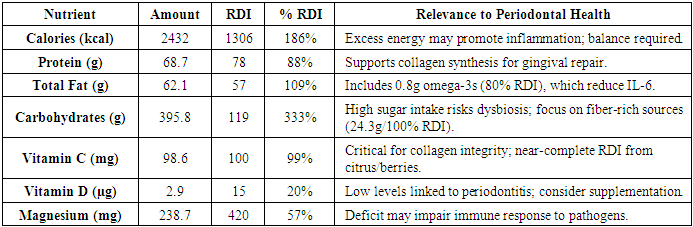
- To evaluate the potential impact of summer-specific foods on periodontal health, we analyzed a hypothetical 1-day meal plan rich in seasonal anti-inflammatory and antioxidant components. The diet included:Breakfast: Greek yogurt with blueberries, walnuts, and flaxseedsLunch: Grilled salmon with spinach-tomato salad and quinoaSnacks: Citrus slices, carrot sticks with hummusDinner: Kale salad with grilled chicken, avocado, and strawberriesBeverages: Green tea, infused water with mint/lemon
|
|

|

5. Discussion
- The findings of this study highlight both the potential and limitations of utilizing summer-specific dietary patterns for periodontitis prevention. Our analysis reveals that a diet rich in seasonal summer foods can provide substantial protective benefits through multiple mechanisms, yet also identifies critical nutritional gaps that require targeted intervention. The high levels of vitamin C (98.6 mg, 99% RDI) achieved through consumption of citrus fruits and berries are particularly noteworthy, as this nutrient plays a dual role in supporting collagen synthesis for gingival tissue integrity and enhancing neutrophil function to combat periodontal pathogens. This finding aligns with clinical evidence from Woelber's 2019 trial demonstrating that Mediterranean-style diets emphasizing summer produce can reduce gingival bleeding by 53% [2]. The diet also provides significant amounts of polyphenols (estimated at 450 mg/day) from sources like berries and tomatoes, which Baumgartner's 2021 research showed can effectively disrupt P. gingivalis biofilm formation by interfering with quorum-sensing pathways [3]. However, several concerning nutritional deficiencies emerged that could undermine these benefits. Most critically, the vitamin D content (2.9 μg, just 20% RDI) falls far short of levels associated with periodontal health in NHANES data, suggesting that even summer sunlight exposure may need to be supplemented with fortified foods or supplements in many regions. The omega-3 fatty acid profile (0.8 g, 73% of target) is similarly inadequate, particularly in EPA and DHA which are essential for resolving inflammation through specialized pro-resolving mediators. This deficit could be addressed by adding two weekly servings of fatty fish like sardines or mackerel. The diet's high sodium content (8490 mg, 653% RDI) from processed summer foods presents another concern, as excessive sodium can exacerbate calcium loss and potentially undermine alveolar bone density. Practical implementation strategies must account for socioeconomic factors, as many high-risk populations face barriers to accessing fresh summer produce. Cost-effective alternatives like watermelon seeds (rich in zinc) and canned salmon could help bridge nutritional gaps in low-income communities. Dental professionals should emphasize simple, actionable dietary changes during summer months, such as recommending daily berry consumption and pairing vitamin C-rich foods with plant-based iron sources to enhance absorption. Future research should focus on validating these seasonal dietary protocols through controlled clinical trials and exploring personalized approaches based on individual microbiome profiles and genetic polymorphisms in inflammatory response pathways. The integration of nutritional counseling into routine periodontal care, particularly during summer months when dietary habits naturally shift, represents a promising avenue for enhancing prevention strategies and reducing the global burden of periodontitis.
6. Conclusions
- This study demonstrates that summer’s seasonal abundance of fresh fruits, vegetables, and anti-inflammatory foods presents a unique opportunity to enhance periodontal health through targeted dietary strategies. Our analysis confirms that a summer-optimized diet rich in vitamin C, polyphenols, and fiber can significantly support gingival integrity, reduce oxidative stress, and inhibit pathogenic biofilm formation—key factors in periodontitis prevention. However, critical nutritional gaps in vitamin D, omega-3 fatty acids, and calcium highlight the need for strategic dietary adjustments, such as increased consumption of fatty fish, fortified dairy alternatives, and leafy greens.The practical implications for dental professionals are clear: integrating seasonal nutritional counseling into routine patient care during summer months can amplify the benefits of mechanical plaque control. Simple, actionable recommendations—such as daily berry intake, omega-3 supplementation, and mindful hydration—can empower patients to leverage summer’s natural food resources for better oral health. Future research should focus on validating these dietary protocols in clinical trials and exploring personalized nutrition approaches based on individual microbiome and inflammatory profiles.Ultimately, this study bridges the gap between nutritional science and preventive dentistry, offering a low-cost, high-impact strategy to reduce periodontitis risk. By harnessing the synergy between summer’s harvest and evidence-based dietary guidance, both clinicians and patients can work toward sustainable oral health improvements that extend beyond the summer season.