
-
Paper Information
- Paper Submission
-
Journal Information
- About This Journal
- Editorial Board
- Current Issue
- Archive
- Author Guidelines
- Contact Us
American Journal of Medicine and Medical Sciences
p-ISSN: 2165-901X e-ISSN: 2165-9036
2025; 15(2): 387-393
doi:10.5923/j.ajmms.20251502.25
Received: Jan. 30, 2025; Accepted: Feb. 20, 2025; Published: Feb. 24, 2025

Analysis of Indications for Cesarean Section and the Effect of Antibacterial Drugs on Intestinal Microflora in Newborns Born by Cesarean Section (On the Example of Samarkand Region)
 Abstract
 Reference
 Full-Text PDF
 Full-text HTML
Shaxlo A. Rustamova1, Nargiz X. Vafokulova2
1Assistant Infectious Diseases Department of Samarkand State Medical University, Samarkand, Uzbekistan
2Infectious Diseases Specialist of Samarkand Regional Clinical Infectious Diseases Hospital, Samarkand, Uzbekistan
Correspondence to: Shaxlo A. Rustamova, Assistant Infectious Diseases Department of Samarkand State Medical University, Samarkand, Uzbekistan.
| Email: |  |
Copyright © 2025 The Author(s). Published by Scientific & Academic Publishing.
This work is licensed under the Creative Commons Attribution International License (CC BY).
http://creativecommons.org/licenses/by/4.0/

This article is devoted to the analysis of the consequences of cesarean section operation performed in Samarkand region and the influence of antibacterial drugs used in the subsequent period on the intestinal microbiocenosis of newborns. The article analyzes the causes and consequences of disruption of intestinal microflora as a result of antibacterial drugs prescribed to mother and child in early age, born by caesarean section, methods of restoration of intestinal microbiocenosis. Factors that cause disturbances of intestinal microbiocenosis from the first days of birth in children after cesarean section operation increase the risk of acute infectious intestinal infections in the future. Cesarean section operation leads to impaired intestinal microbiocenosis in infancy, when antibacterial drugs are prescribed not only for women but also for newborns. Prescription of antibacterial drugs in the first days of the child and disruption of intestinal microbiocenosis is the cause of various infectious diseases among young children.
Keywords: Cesarean section operation, Indications, Antibiotics, Intestinal microflora, Physiologic labor, Acute intestinal infections
Cite this paper: Shaxlo A. Rustamova, Nargiz X. Vafokulova, Analysis of Indications for Cesarean Section and the Effect of Antibacterial Drugs on Intestinal Microflora in Newborns Born by Cesarean Section (On the Example of Samarkand Region), American Journal of Medicine and Medical Sciences, Vol. 15 No. 2, 2025, pp. 387-393. doi: 10.5923/j.ajmms.20251502.25.
Article Outline
1. Introduction
- In recent years, there has been a tendency to increase the indications for cesarean section surgery to prevent maternal and perinatal mortality [1,3,5]. The growth of extra-genital and genital pathologies among women, increase in the number of unwanted pregnancies, increase in the level of sexually transmitted diseases determine the relevance of this problem. The number of both planned cesarean sections and unplanned ("emergency") operations has increased. In this regard, the World Health Organization published a statement on the incidence of caesarean sections in 2015 [3,4], in which they called for further research to better understand the health consequences of caesarean sections, including long-term manifestations in children. At the same time, the incidence of surgical delivery continues to increase in both developed and developing countries due to many reasons: expansion of indications for cesarean section for the benefit of the fetus, performance of cesarean section for the slightest deviation from the normal course of labor. In addition, cesarean sections have become optional. Thus, no significant decrease in the frequency of this operation should be expected in the coming years [6,7,13].The global increase in the number of caesarean sections, especially in developed countries, remains a subject of debate in the medical community. Not only are the reasons for the increasing frequency of abdominal delivery discussed, but also its consequences for the health of mother and child. Undoubtedly, cesarean section is a life-saving operation in case of certain complications during pregnancy and labor. According to statistics, in the following years there has been a sharp increase in the number of people born by caesarean section operation, both in foreign countries and in Uzbekistan. Analysis of cesarean section operations for 2018-2020 in districts and cities in Samarkand region showed that this indicator increased from 20% to 100%. It is known from the literature that in children born after cesarean section operation, the formation of intestinal microflora continues for a long time compared to children born normally. The occurrence of primary microbial colonization of the organism of a child who is sterile before birth is associated with the ingestion of the microflora of the skin and vagina of the mother by the natural birth canal during delivery [11,12,13].Children born by caesarean section are affected by a variety of physical, hormonal, bacterial and medical influences in the intrapartum and early postnatal period. They are often exposed to antibacterial drugs both before and after birth [3,9,10]. It should be noted that due to cesarean section surgery, the baby does not receive breast milk from the first minutes of life, but then they are switched to breastfeeding after antibiotic therapy. This condition also affects the intestinal microflora. Among modern antibacterial drugs, it is almost impossible to find those that do not affect the microflora of the digestive tract.The development of diarrhea caused by side effects of antibiotics in early childhood is associated with the content of intestinal microflora in children [6,12]. The incidence of antibiotic-induced diarrhea, according to different authors, ranges from 5 to 39%, reaching up to 62% in some observations [4,7,12]. Disturbances of intestinal microflora during this period are often caused by such drugs as clindamycin, lincomycin, aminopenicillin, cephalosporins, tetracycline, erythromycin [2,3]. According to some authors, when using cephalosporins, antibiotic-induced diarrhea is observed in 3-9% of cases, amoxicillin/clavulanate - 23%, other broad-spectrum penicillins - 11%, erythromycin - 16%, when prescribing other macrolides - 8% of cases [4,8,9,12].Thus, from the first days in children born after cesarean section operation, the risk of purulent-inflammatory diseases in the postpartum period will also be higher, because the risk of microbial colonization is higher. The normal intestinal microbiocenosis or normal autoflora consists of a complex combination of microorganisms that influence each other's vital activity and are in constant contact with the body. This balance of different microbial populat6ions that maintain biochemical, metabolic, and immunologic balance is necessary to maintain health [6,12].It is known from the literature that observation and preparation of bermen for labor, psychoprophylaxis, demonstration of useful aspects of natural childbirth lead to an increase in the number of physiological births [3,9,10]. An important aspect of cesarean section operation is its planned preparation. Taking this into account, we set a goal to analyze the indications of those who underwent cesarean section operation in Samarkand region, and also, the postoperative effect of antibacterial drugs on intestinal microflora in newborns was studied.Purpose of the study: to analyze the indications for caesarean section operation and antibacterial drugs used after the operation in women and their impact on intestinal microflora in newborns in Samarkand region.
2. Materials and Methods of the Study
- Case history reports of 40 women who underwent cesarean section in Samarkand region were taken as material for the study. Also in Samarkand city maternity complex No 1 during 2021, the protocols of case histories of 40 infants born by cesarean section were obtained. The materials for the study were blood, urine, feces. General blood, urine, feces, and bacteriologic methods were performed as research methods. The results were analyzed retrospectively.
3. Results and Discussion
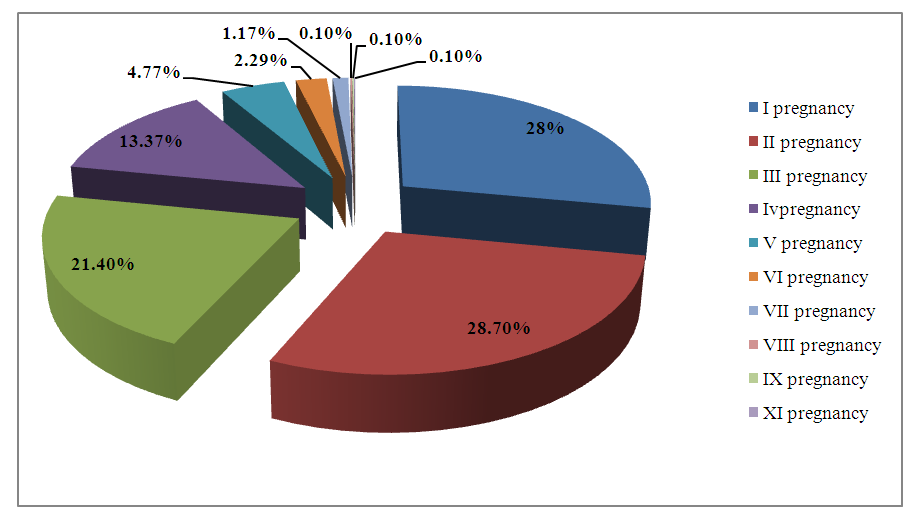
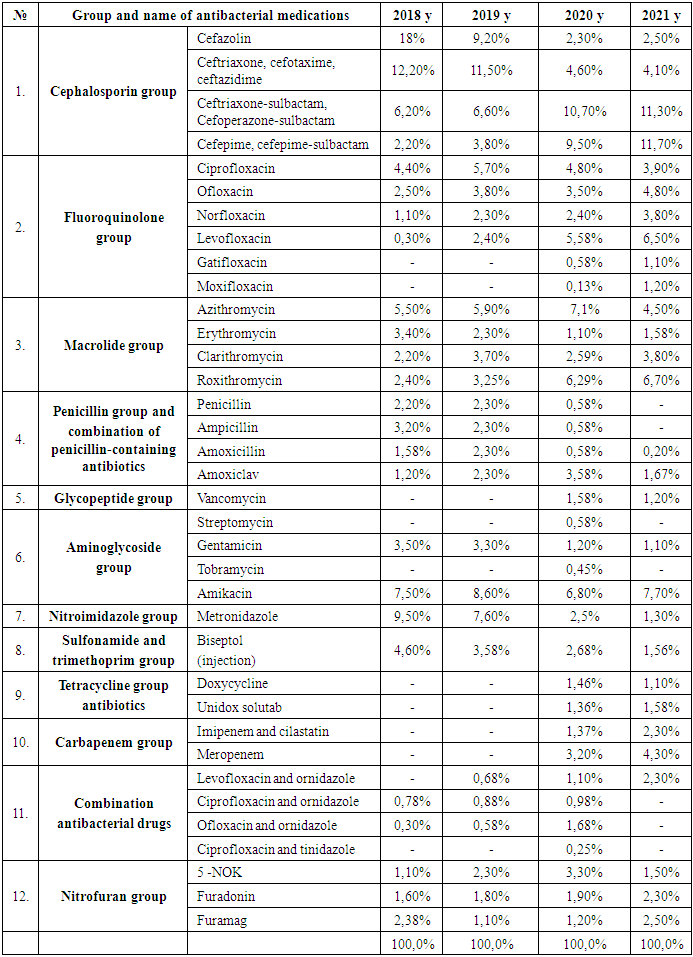
- Based on the results of the analysis of indications for surgical intervention in women who underwent cesarean section and the impact of antibacterial drugs used after surgery on the intestinal microflora of newborns in Samarkand region. In addition, a comparative analysis of the intestinal microbiocenosis in children born after cesarean section surgery was carried out in relation to physiologic labor (control group).Our main attention was paid to the performance of planned and unplanned cesarean section surgery in the studied pregnant women: in 61% of cases, cesarean section surgery was performed mainly on a planned basis. The leading cause of elective surgery was repeat cesarean section in women (Table 1,2). Usually, in women who underwent cesarean section in their first labor, the next labor with surgical procedure is performed on a planned basis (Figure 1). In this case, all factors in the pregnant woman are taken into account and the indications are analyzed. In 38.7% of cases, cesarean section surgery was performed by emergency. When performed in an emergency way, not only the condition of the mother, but also the health of the child is taken into account.
|
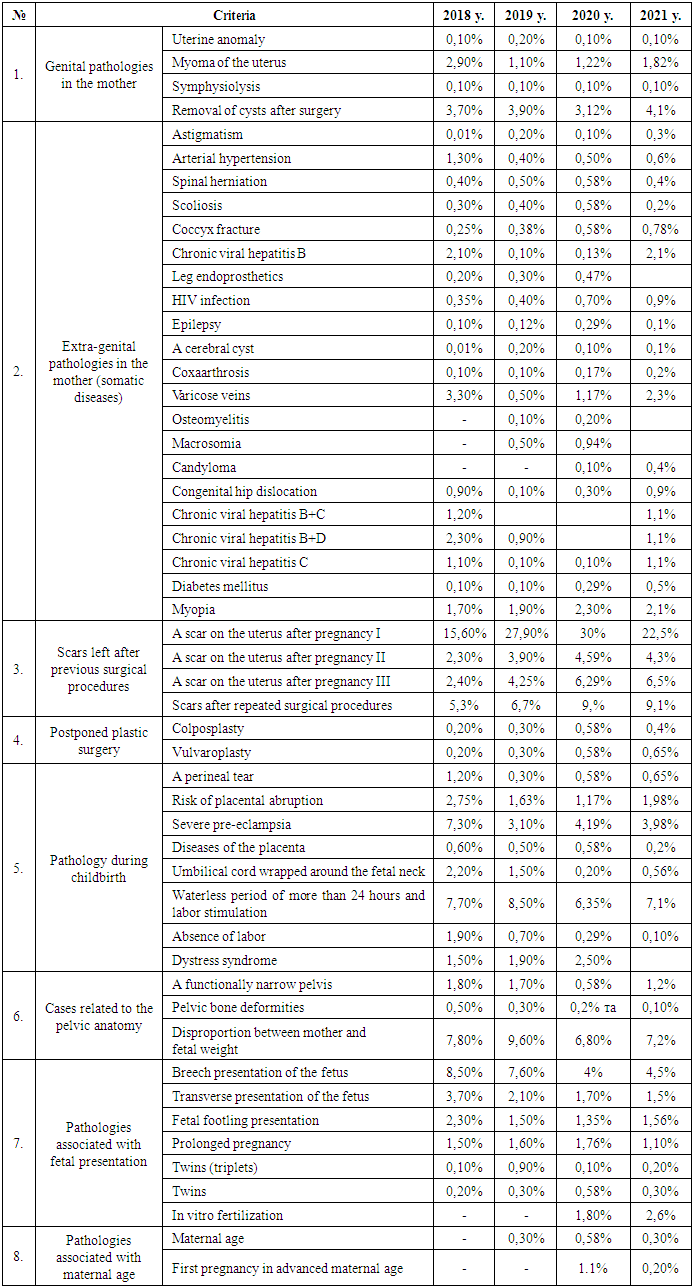
 | Figure 1. Number of pregnant women who underwent caesarean section in Samarkand region in 2018-2021 yy |
 | Figure 2. Distribution of Caesarean sections performed on pregnant women by number of pregnancies in Samarkand region |
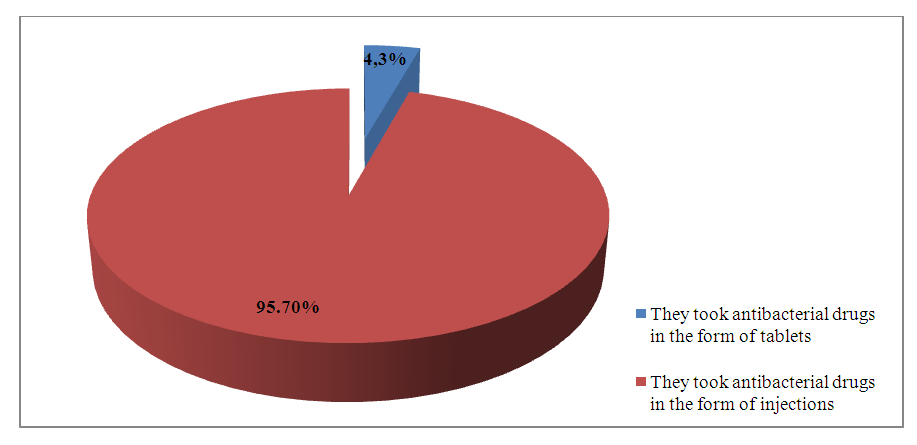
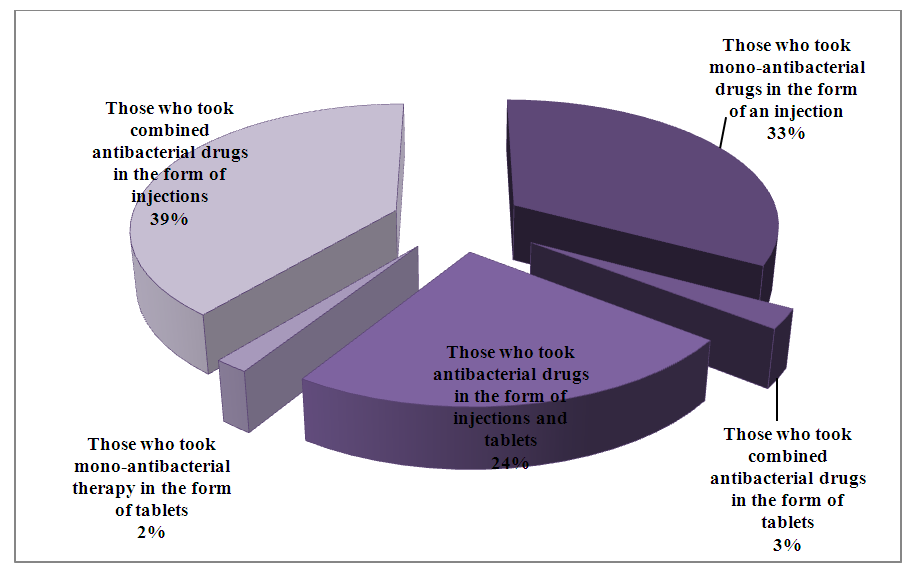 | Figure 3. Distribution of combinations of antibacterial drugs in women who underwent cesarean section |
|
4. Conclusions
- Thus, analyzing and reducing the number of caesarean section operations among women of childbearing age leads to a decrease in the occurrence of various infectious diseases among young children. Reducing the rates of cesarean section operations, analyzing the indications for it will help to protect the health of mother and child. Taking antibacterial drugs by the mother from the first days leads to predisposition to disorders of intestinal microbiocenosis and acute infectious intestinal infections in children born after cesarean section. Selective use of antibacterial drugs in early infancy and the recommendation of probiotics, which help prevent gut microbiocenosis disorders, may help prevent various infectious diseases occurring in young children.