
-
Paper Information
- Next Paper
- Paper Submission
-
Journal Information
- About This Journal
- Editorial Board
- Current Issue
- Archive
- Author Guidelines
- Contact Us
American Journal of Medicine and Medical Sciences
p-ISSN: 2165-901X e-ISSN: 2165-9036
2024; 14(12): 3312-3316
doi:10.5923/j.ajmms.20241412.50
Received: Dec. 10, 2024; Accepted: Dec. 25, 2024; Published: Dec. 28, 2024

Hygienic Analysis of Winter Nutritional Status in Patients with Toxic Hepatitis
 Abstract
 Reference
 Full-Text PDF
 Full-text HTML
Ermatov Nizom, Mamasadikov Nurillo, Ulugnazarova Irina
Department of the Hygiene of Children, Adolescents and Nutrition, Tashkent Medical Academy, Farabi Street 2, Tashkent, Uzbekistan
Correspondence to: Ermatov Nizom, Department of the Hygiene of Children, Adolescents and Nutrition, Tashkent Medical Academy, Farabi Street 2, Tashkent, Uzbekistan.
| Email: |  |
Copyright © 2024 The Author(s). Published by Scientific & Academic Publishing.
This work is licensed under the Creative Commons Attribution International License (CC BY).
http://creativecommons.org/licenses/by/4.0/

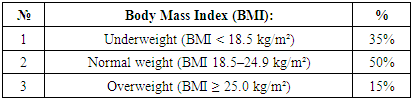
Toxic hepatitis, characterized by liver damage due to exposure to hepatotoxic substances, poses significant challenges to patients’ nutritional status, particularly during winter. Seasonal factors, such as reduced sunlight exposure, limited availability of fresh produce, and decreased physical activity, exacerbate nutritional deficiencies that can impair liver function and overall health. This study aimed to analyze the winter nutritional status of patients with toxic hepatitis, evaluating dietary intake, anthropometric parameters, and biochemical markers. Findings revealed widespread deficiencies in energy, protein, and micronutrients, including vitamin D, vitamin C, and zinc. 80 patients diagnosed with toxic hepatitis, aged 30–60 years, receiving outpatient or inpatient care during the winter season. The 40% of patients consumed less than 75% of their daily energy requirements. The average daily caloric intake was 1,480 ± 320 kcal, significantly lower than the recommended 2,000–2,200 kcal for adults with liver disease. Mean protein intake was 0.6 ± 0.2 g/kg/day, below the recommended 1.0–1.5 g/kg/day for liver regeneration. 55% of patients reported limited access to protein-rich foods such as eggs, fish, and legumes. Confirmed diagnosis of toxic hepatitis, willingness to participate, and ability to provide informed consent. Presence of comorbid conditions affecting nutritional status (e.g., advanced kidney disease, malignancies, or severe metabolic disorders). Anthropometric assessments showed significant undernutrition in a substantial proportion of patients, while biochemical markers indicated compromised liver and nutritional health. The results highlight the need for tailored seasonal interventions, including dietary diversification, supplementation, and lifestyle modifications, to improve the nutritional and health outcomes of patients with toxic hepatitis during winter. These findings underscore the importance of integrating nutrition-focused care into hepatology practice.
Keywords: Toxic hepatitis, Winter nutrition, Nutritional status, Liver health, Dietary deficiencies, Vitamin D deficiency, Seasonal influence
Cite this paper: Ermatov Nizom, Mamasadikov Nurillo, Ulugnazarova Irina, Hygienic Analysis of Winter Nutritional Status in Patients with Toxic Hepatitis, American Journal of Medicine and Medical Sciences, Vol. 14 No. 12, 2024, pp. 3312-3316. doi: 10.5923/j.ajmms.20241412.50.
Article Outline
1. Introduction
- Toxic hepatitis is a form of liver inflammation caused by exposure to hepatotoxic substances such as medications, alcohol, chemicals, or environmental toxins. The condition disrupts liver function, impairs detoxification processes, and can lead to acute or chronic liver damage. Nutritional status plays a critical role in managing liver diseases, as the liver relies heavily on adequate nutrient intake to regenerate and perform its functions. In patients with toxic hepatitis, malnutrition can exacerbate disease progression, reduce immune competence, and hinder recovery [1,2,3,4,5].Winter presents unique challenges to maintaining optimal nutritional status. Seasonal changes, including reduced sunlight exposure, limited availability of fresh produce, and altered dietary habits, often lead to deficiencies in essential nutrients such as vitamin D, antioxidants, and protein. These deficiencies are particularly concerning for individuals with liver disorders, as they impair liver regeneration, increase oxidative stress, and exacerbate inflammation. Additionally, lower physical activity during the colder months’ further affects metabolic health [6,7,8,9].Despite the critical link between nutrition and liver health, there is limited research focusing on the seasonal variations in nutritional status among patients with toxic hepatitis. Understanding the specific nutritional challenges faced during winter is essential for developing targeted interventions to improve patient outcomes [10].This study aims to provide a comprehensive hygienic analysis of the winter nutritional status of patients with toxic hepatitis by evaluating dietary intake, anthropometric measurements, and key biochemical markers. The findings will highlight the seasonal impact on nutrition and provide insights into strategies to optimize care for this vulnerable population [11,12,13,14].
2. Purpose of the Research
- The purpose of this research is to analyze the spring nutritional status of patients with toxic hepatitis by evaluating their dietary intake, anthropometric parameters, and biochemical markers. This study aims to identify specific nutritional deficiencies and seasonal challenges that impact the health and recovery of these patients. By highlighting these factors, the research seeks to provide evidence-based recommendations for optimizing dietary and lifestyle interventions during the winter season, thereby improving liver function, enhancing overall health outcomes, and supporting the management of toxic hepatitis.
3. Materials and Method
- 80 patients diagnosed with toxic hepatitis, aged 30–60 years, receiving outpatient or inpatient care during the winter season. Confirmed diagnosis of toxic hepatitis, willingness to participate, and ability to provide informed consent. Presence of comorbid conditions affecting nutritional status (e.g., advanced kidney disease, malignancies, or severe metabolic disorders). Venous blood samples collected for serum albumin and transferrin levels (indicators of protein status), Vitamin D levels (25-hydroxyvitamin D), Antioxidant biomarkers (e.g., glutathione levels) and Zinc and selenium concentrations. These materials ensure a comprehensive evaluation of the nutritional status and health indicators in patients with toxic hepatitis during winter.This study employed a cross-sectional design to evaluate the winter nutritional status of patients with toxic hepatitis. The methods are outlined as follows: study population and recruitment, data collection, data management and statistical analysis and ethical considerations.This structured approach enabled a comprehensive evaluation of the winter nutritional challenges faced by patients with toxic hepatitis, facilitating evidence-based recommendations for dietary interventions.
4. Results
- The study included 80 patients with toxic hepatitis, aged 30–60 years (mean age: 45.3 ± 8.4 years). The male-to-female ratio was 1.2:1. (Fig.1.). The mean duration of toxic hepatitis symptoms was 2.8 ± 1.3 years.
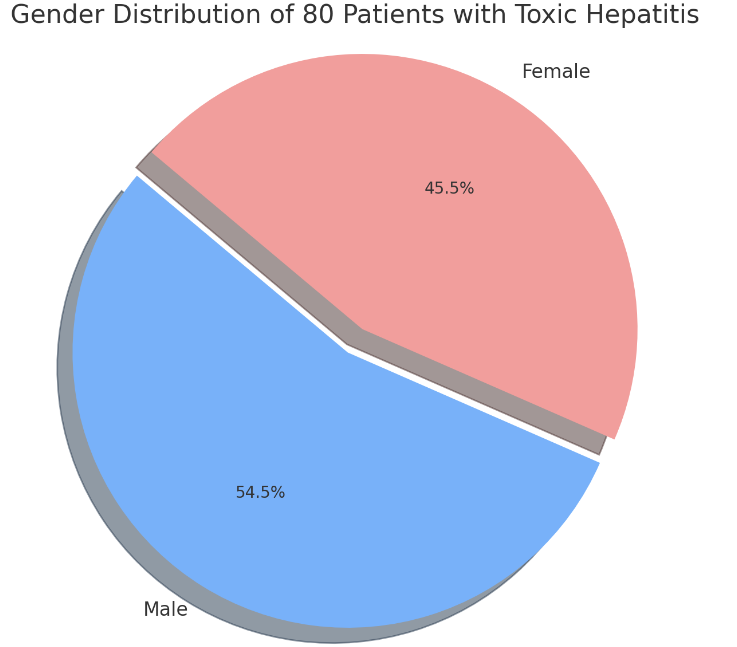 | Figure 1. The diagram above illustrates the gender distribution of 80 patients with toxic hepatitis, where the male-to-female ratio is 1.2:1. The pie chart shows that approximately 57.14% of the patients are male, and 42.86% are female |
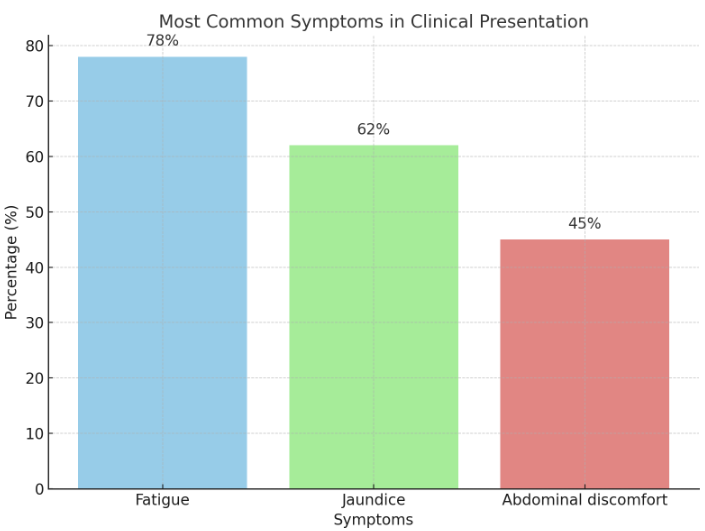 | Figure 2. The histogram displaying the most common symptoms and their respective percentages |
|
|
5. Conclusions
- This study highlights the significant nutritional challenges faced by patients with toxic hepatitis during the winter season. The findings demonstrate widespread deficiencies in energy, protein, and key micronutrients, including vitamin D, zinc, and antioxidants, which are exacerbated by seasonal factors such as reduced sunlight exposure and limited access to fresh produce. These deficiencies were reflected in poor anthropometric indicators, such as low BMI, reduced muscle mass, and depleted fat stores, as well as compromised biochemical markers, including low serum albumin and glutathione levels.The results emphasize the critical role of nutritional support in the management of toxic hepatitis, particularly during winter. Tailored interventions, such as dietary diversification, micronutrient supplementation, and lifestyle modifications, are essential to address these deficiencies and enhance liver function. This study underscores the importance of integrating seasonal and hygienic considerations into clinical care for patients with toxic hepatitis to improve their overall health outcomes and quality of life.Future research should focus on evaluating the long-term effects of targeted nutritional interventions and exploring innovative strategies to overcome seasonal dietary challenges in resource-constrained settings.