American Journal of Medicine and Medical Sciences

p-ISSN: 2165-901X    e-ISSN: 2165-9036

2022;  12(9): 975-982

doi:10.5923/j.ajmms.20221209.26

Received: Sep. 7, 2022; Accepted: Sep. 21, 2022; Published: Sep. 28, 2022

 

Description of the Immediate Results of a Multimodal Optimized Approach in the Treatment of Breast Cancer in Combination with Conventional Therapy

Sabirov Jahongir Ruzievich1, Gafur-Akhunov Mirza Aliyarovich2

1Associate Professor of the Department of the Tashkent Medical Academy, Uzbekistan

2Head of the Department of Oncology of the Center for the Development of Professional Qualification of Medical Workers of the Ministry of Health of the Republic of Uzbekistan

Copyright © 2022 The Author(s). Published by Scientific & Academic Publishing.

This work is licensed under the Creative Commons Attribution International License (CC BY).
http://creativecommons.org/licenses/by/4.0/

Abstract

The aim of the study is to conduct an in-depth analysis of the immediate results of a multimodal optimized approach in the treatment of breast cancer with conventional therapy. In this work, we used combinations of some well-known therapeutic methods and an algorithm for their application. Materials and methods. An analysis was made of the immediate results of treatment of 118 patients with breast cancer in the initial stages who were treated in a hospital. The patients were divided into two groups: the control group (64 patients) who received traditional therapy and the main group (54 patients) who received traditional therapy with modulated accompanying immunocorrective drug therapy with preliminary exposure to medium frequency radio waves (350+15 kHz). The age of the studied women ranged from 31 to 73 years: 30-40 years-16 (13.5%); 41-50 years old - 32 (27.2%), 51-60 years old - 41 (34.7%), 61-70 years old -25 (21.2%), 71 and older - 4 (3.4%). 83 (70.3%) patients were young and of working age. Results. The evaluation of the effectiveness of the proposed method of the multimodal approach was carried out depending on the time of onset of partial lysis, a decrease in the volume of tumor formation and regional lymph nodes, changes in immunological parameters, and improvement in the quality of life of patients. One of the evaluation criteria was the time of onset of tumor lysis. A statistically significant difference was shown during the proposed EMRWT (electromagnetic radio wave therapy) and its combinations in comparison with the traditional one, in the control group, the onset of lysis was 21 days, in the main group - 7 days. In visual diagnostics (ultrasound was preferred, except for MSCT and mammography), the size of the tumor and regional lymph nodes, regression of the perfocal inflammatory process, echocardiography of tumor lysis were determined. There was a difference in the onset time and a decrease in the volume of tumor formation, enlarged regional lymph nodes of the proposed multimodal approach compared to the traditional one (p<0.05): in the control group - 7 days, the main one - 21 days. Conclusions: To activate antitumor immunity, both physical and medicinal agents can be used, which enhance the cytotoxic reactions of the cellular immune response. Immunity correction prior to oncolytic therapy makes it possible to effectively carry out measures for the destruction of tumor tissue. Degraded tumor antigens can already be perceived by the immune system and an immune response can be developed against them. At the same time, the tumor becomes more “recognizable” for the immune system. It is very important that under conditions of immunosuppressive effects of chemotherapy or radiotherapy, the functional activity of the immune system remains within the physiological norm.

Keywords: Breast cancer, Accompanying immunocorrective therapy, Medium and low frequency radio waves, Cellular and humoral factors of immunity

Cite this paper: Sabirov Jahongir Ruzievich, Gafur-Akhunov Mirza Aliyarovich, Description of the Immediate Results of a Multimodal Optimized Approach in the Treatment of Breast Cancer in Combination with Conventional Therapy, American Journal of Medicine and Medical Sciences, Vol. 12 No. 9, 2022, pp. 975-982. doi: 10.5923/j.ajmms.20221209.26.

Breast cancer is a heterogeneous disease, the pathogenesis of which is caused by a complex interaction of genetic, hormonal, metabolic, exogenous and other factors and is the most common malignant neoplasm among women in the world [1-9]. Of the 184 countries covered by the World Health Organization's GLOBOCAN database, breast cancer (BC) is the most common cancer in women in 140 countries (76%) and the most common cause of cancer death in 101 countries (55%). Approximately one in twelfth women will develop breast cancer during their lifetime. In 2020, approximately 685,000 women die from this disease. Most breast cancer cases and deaths occur in low- and middle-income countries (LMICs) [10-13]. Five-year life expectancy for breast cancer exceeds 90% in HIC, but is only 66% in India and 40% in South Africa [14-16].
Significant progress has been made in the treatment of breast cancer since the 1980y. till 2020 y. in HIC, age-standardized mortality from this type of cancer was reduced by 40%. But LMICs have yet to achieve comparable performance. Improving outcomes and survival is possible with a combination of early detection and subsequent effective treatment using existing methods - surgery, radiation therapy and drug treatment. In order to increase and enhance the effectiveness of treatment, there are different approaches and techniques. The treatment of this disease requires an integrated approach that combines local (surgical and / or radiation) and systemic drug treatment at stages I-III, [17-19].
Immunotherapy is one of the most promising and rapidly developing areas in the treatment of cancer. However, it is constrained by a number of factors that do not allow this method to be completely successful. First, the tumor successfully masks or eliminates antigens that might be recognized by the immune system. Secondly, the tumor not only masks itself, but also actively affects the immune system, enhancing the tolerogenic and suppressive properties of its cells, reprogramming the functions of tumor-associated macrophages and suppressing cell killing reactions. Thirdly, the tumor behaves like a parasitic, alien organism, using all the mechanisms of Darwinian evolution. That is, it actively changes and adapts to adverse conditions arising from chemotherapy, radiotherapy or other methods of exposure. The most important issue is to increase the effectiveness of the methods and approaches used in treatment of breast cancer [20-24]. Despite the introduction of modern high information technologies and IT solutions into clinical practice, screening programs to improve methods of early diagnosis and effective systemic treatment, high rates of morbidity and mortality from oncological diseases remain. Therefore, the problem of increasing the effectiveness of cancer treatment is one of the most important and topical issues in modern medicine. Moreover, it is known that disturbances in various regulatory systems of the body and disruption of homeostasis mechanisms associated with the tumor process can be aggravated during intensive courses of chemotherapy and radiation therapy, and at the same time, the principle of a "vicious circle" can develop, which can cause even more decrease in antitumor resistance. In this regard, recently in oncology and immunology, more and more attention is paid to areas that are focused on the need to mobilize the body's natural defense mechanisms against a tumor, i.e., antitumor immunity [25-29]. Thus, studies of the influence of electromagnetic fields on living organisms have been conducted for more than a decade. It is known that electromagnetic fields are an environmentally significant environmental factor, since all living organisms on the planet are under the influence of the natural geomagnetic field and man-made fields [30,31]. This information served as an impetus for the development of magnetotherapy, especially in oncology. Various authors provide data on the benefits of magnetic therapy in the rehabilitation treatment of cancer patients, which is expressed in the normalization of blood counts, the elimination of postoperative complications, the acceleration of reparative processes, and the removal of severe pain. Thus, the widespread use of electromagnetic fields, especially in oncology, contributes to the accumulation of information about the mechanisms of action of this physical factor on the course of the oncological process. Actively studied are the mechanisms of antitumor immunity under the influence of electromagnetic fields, both at the cellular and molecular levels [32-34]. It was previously known that magnetic fields increase blood circulation in tissues and stimulate the body's metabolism. Also, it has been proven that low and medium frequency electromagnetic waves inhibit the growth of malignant tumors, thereby stopping the neoangiogenesis necessary for tumor growth. Magnetic therapy induces weak electrical currents in tissues, which increases the surface potential of cells, which leads to increased blood circulation, oxygenation, nutrient supply and better removal of metabolic waste from the body. Also, magnetic fields have been used as natural pain relievers, promoting recovery and healing, reducing swelling, stiffness and acidity of wounds. As regards research on the immune system, it should be said that we are now in a state of active accumulation of material on the study of the effect of magnetic radio waves in tumor processes.

1. The Aim of the Study

To conduct an in-depth analysis of the immediate results of a multimodal optimized approach in the treatment of breast cancer with conventional therapy. In this work, we used combinations of some well-known therapeutic methods and an algorithm for their application. When carrying out complex treatment of breast cancer, a differentiated and selective combination was used. Treatment fits well into the system of traditional therapy and allows you to gradually influence the processes of tumor elimination:
a) the course of therapy begins with a non-specific correction of the immune system. As a device for non-specific immunocorrection, the “TOR” technology (technology of operational rehabilitation) was used with a non-localized point of influence using a copper coil on the patient’s body, which affects the immune system with an alternating magnetic field in the medium frequency range of 350 + 15 kHz, at a wavelength of 909-857 meters and with an impact energy of 20V. During preliminary immunological experiments, it was found that when exposed to a given alternating magnetic field, the number of T-lymphocytes and CD16 NK cells significantly increases. At the same time, the patient is taking oral immunomodulatory drug "RCV" (Uzbekistan). It has been shown that this drug activates the cytotoxic functions of macrophages (i.e., it is likely that reprogramming from M2 to M1), intensively enhances the synthesis of interferons (IFN) and increases the number of active CD4+ and CD8+ subpopulations of T-lymphocytes. According to the indications of the immunogram and the data of biochemical blood tests, additional immunotropic drugs, macro- and microelements, as well as vitamins and other drugs can be prescribed.
b) After such a preparatory course, antitumor treatment begins within 2-3 weeks. Low-dose chemotherapy or radiotherapy can be carried out for quite a long time (1-2 months) and even more. The main thing is to periodically carry out clinical and laboratory monitoring of the patient's condition, preventing deterioration of his condition. At the same time, one should not strive at all costs to destroy the entire tumor at once. The main thing here is not to suppress immune responses. The processes of tumor lysis, in conditions of full-fledged work of the immune system, will continue even after the end of the course of chemotherapy. Lysis can be carried out by activated cells of innate (M1 and NK cells) and acquired (CD8+ - T - cytotoxic lymphocytes) immunity. Even if small doses of chemotherapy no longer kill cancer cells, they can significantly change their metabolism. This already leads to a decrease in the immunosuppressiveness of tumor cells, a slowdown in their growth and, often, simply to aging. Moreover, low doses of cytostatics can very actively suppress angiogenesis in the tumor by blocking vascular endothelial growth factors (VEGF). All this further inhibits tumor growth.
c) Before the end of the course of chemotherapy (7-10 days in advance), the patient begins to take drugs that suppress the explosive growth of tumor cells. The group of such drugs may include Ablast (Uzbekistan), Celecoxib, Aspirin, Metformin, selenium preparations and others. This stage lasts for 15-25 days.
d) During the next, recovery stage (1-2 months), the patient takes adaptogens (Ginseng, Eleutherococcus, vitamin C and D3 and other drugs) and continues the course of therapy with TOR according to a certain scheme. At this time, the effectiveness of the completed course is determined. With incomplete destruction of the tumor, after the recovery period, the above course, taking into account the necessary adjustments, especially in chemotherapy agents, can be repeated.
It should be noted that the goal of this optimized approach is at least partial regression of the tumor mass and the absence of its further growth. One should not strive to quickly and by any means destroy the entire tumor to the last cell, as this can enhance the already pronounced effects of intoxication of the body and immunosuppression.

2. Materials and Research Methods

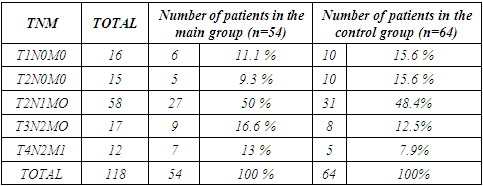
An analysis was made of the immediate results of treatment of 118 patients with breast cancer in the initial stages who were treated in a hospital. The patients were divided into two groups: the control group (64 patients) who received traditional therapy and the main group (54 patients) who received traditional therapy with modulated accompanying immunocorrective drug therapy with preliminary exposure to medium frequency radio waves (350+15 kHz). The age of the studied women ranged from 31 to 73 years: 30-40 years-16 (13.5%); 41-50 years old - 32 (27.2%), 51-60 years old - 41 (34.7%), 61-70 years old -25 (21.2%), 71 and older - 4 (3.4%). 83 (70.3%) patients were young and of working age. According to the histological picture: infiltrative form - 59 (50%), invasive - 33 (28%), ductal - 18 (15.3%), adenocarcinoma - 7 (5.9%) and Paget's cancer 1 (0.8%). Depending on the molecular genetic features of breast cancer, Luminal subtype A was found in 8- (6.9%), luminal subtype B in 20- (16.5%), HER2-positive subtype in 33- (28%) and Triple negative » subtype in 27 (23%) and in 30 patients (25.6%) molecular genetic study was not performed.
For the diagnosis of breast cancer, a complex of laboratory and instrumental studies was used. General clinical blood tests, detailed immunograms were performed in almost all patients at admission and during treatment according to the standard method. Studies were carried out: biochemical parameters of blood, coagulograms, blood electrolytes. To assess the functional state of the liver, pancreas, kidneys, patients underwent biochemical studies and paid attention to the levels of bilirubin, total protein, sugar, transaminase, amylase, etc. diagnostics, monitoring, control of treatment effectiveness). MSCT, chest MRI and mammogram data were taken into account in preoperative preparation. With pathological changes, corrective therapy was carried out, the effectiveness of which was evaluated by repeating the study. Non-invasive intervention in patients with breast cancer was performed in different combinations. Table 1 shows combinations of the optimized approach.
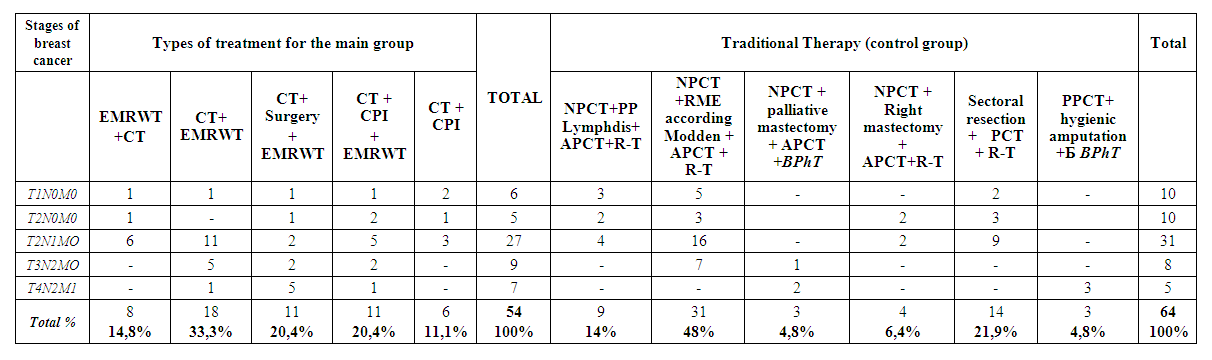
Table 1. Combinations of the Optimized Approach
In most cases, EMRWT (electromagnetic radio wave therapy) was performed with a frequency of 350 kHz in 20 patients, as well as 345 kHz in 18 patients and 330 kHz in 10 patients.
An important task was to ensure the comparability of the main and control groups, without which it is impossible to objectively compare the immediate results of treatment. Comparability was achieved by individual selection of patients in the control group according to the parameters of individual patients of the main group, considering only age, stage of the process, combination of drug therapy and assessment of quality of life according to the international scale ECOG and Karnofsky.
Table 2. Distribution of patients according to the TNM classification system
     
The optimized course of the multimodal approach begins with a non-specific correction of the immune system: patients are exposed daily for 14-15 days during the daytime to an alternating magnetic field with radio waves 909-857 meters long with a medium frequency range of the electromagnetic spectrum of the hardware (TOR) technology of an external oscillatory circuit 350 + 15 kHz and a voltage of 12-16 V for 45-60 minutes with amplitude modulation for the 1st course of therapy [10-14 sessions], then the 2nd course of a similar effect is repeated [minimum 10 sessions] in the dynamics of treatment with a 10-15 day interval. At the same time, the radio waves of the medium frequency range generated by the generator of the original design are transmitted to the solenoid coil and, directly in contact with the human body, begin to act systematically. After such a preparatory course, a course aimed at the destruction of the tumor begins. Preference has been directed to low-dose chemotherapy which can be carried out for a sufficiently long time. Before the end of the course of chemotherapy (7-10 days) according to the standard scheme, the patient begins to take drugs that suppress the explosive growth of tumor cells. The group of such drugs may include Ablast, Celecoxib, Aspirin, Metformin, selenium preparations and others (total duration 15-25 days). During the next, recovery stage (1-2 months), patients take adaptogens (Ginseng, Eleutherococcus, vitamin C and D3, etc.) and continue the course of EMRWT according to a certain scheme.
For comparison, a group of control patients was selected, who in the period from 2020 to 2022 underwent the traditional scheme according to international standards. Of these: NPCT + Modden Radical Mastectomy + APCT + Radiation therapy in 31 (48%), NPCT + Radical Resection with lymphdissixia + APCT + Radiation therapy in 9 patients (14%), Sectoral breast resection + PCT + Radiation therapy in 14 (21.9%), NPCT+palliative mastectomy+APCT+BPhT in 3 (4.8%) and PPCT+hygienic breast amputation+ BPhT in 3 (4.8%).
It should be noted that the goal of this multimodal approach is at least partial regression (lysis) of the tumor mass and the absence of its further growth. One should not strive to quickly and by any means destroy the entire tumor to the last cell, as this can enhance the already pronounced effects of intoxication of the body and immunosuppression.
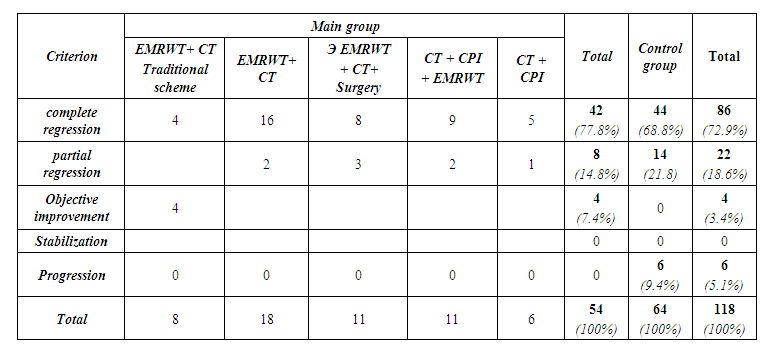
The results obtained and their discussion. Evaluation of the effectiveness of the proposed methodology of the multimodal approach was carried out depending on the time of onset of partial lysis, reduction in the volume of tumor formation and regional lymph nodes, changes in immunological parameters, and improvement in the quality of life of patients. One of the evaluation criteria was the time of onset of tumor lysis. A statistically significant difference was shown during the proposed EMRWT and its combinations in comparison with the traditional one; in the control group, the onset of lysis was 21 days, in the main group - 7 days.
In visual diagnostics (ultrasound was preferred, except for MSCT and mammography), the size of the tumor and regional lymph nodes, regression of the perfocal inflammatory process, and echocardiography of tumor lysis were determined. There was a difference in the onset time and a decrease in the volume of tumor formation, enlarged regional lymph nodes of the proposed multimodal approach compared to the traditional one (p<0.05): in the control group - 7 days, the main one - 21 days.
So, when conducting a comprehensive study of the immune system before and after the use of magnetic radio wave therapy, the proliferation of NK - cells (CD16+) and T-helpers/inducers (CD4+) was revealed, which indicates the activity of antitumor resistance and modulation of T-cell immunity relative to the data when compared with the control group. Consequently, at the cellular immune level, the activation of the T-cell link of the immune system occurs, stimulation of T-cytotoxic lymphocytes, which helps to reduce the damaging effect of non-ionizing effects on immunocompetent cells. There is an increase in the ratio of helper/suppressor subpopulations of T-lymphocytes in favor of T-helpers/inducers, which affects the increase in the immunoregulatory index (IRI) and the increase in CD16+ killer cells, which is a positive criterion for assessing immunological, therapeutic and clinical improvement.
We know that, according to preclinical studies, it was concluded that the therapeutic apparatus "TOR" has an immunomodulatory effect, while stimulating the body's adaptive reactions. The results of preclinical testing of this equipment showed that under the influence of such waves, a decrease in tumors in laboratory animals was observed. Conducting immunological studies against the background of the use of the apparatus "TOR" in combination with immunotropic drugs showed that there are changes not only in cellular immunity, but also in humoral immunity. Thus, a significant decrease in the content of immunoglobulin A and circulating immune complexes of various values was revealed after the appointment of complex therapy. Such changes are often associated with an increase in phagocytosis, a decrease in tumor autoimmune inflammation, and neutralization of decayed tumor tissue. Moreover, at the molecular level, exposure to an electromagnetic field alters the production of major cytokines, interleukins, and chemokines by cells of the immune system, thereby exerting anti-inflammatory activity, which has been demonstrated according to our materials, by suppressing the secretion of pro-inflammatory cytokines such as IL-6, IL-8, TNF. -α and increased production of anti-inflammatory cytokines such as IL-4 and IL-10. Since inflammation is closely associated with the oncological process and probably increases the risk of oncological progression due to chronic subclinical inflammation, exposure to electromagnetic waves may be a potential method of cancer treatment due to the possibility of producing cytokines with a pronounced anti-inflammatory potential. Our results are of great clinical and immunological interest, requiring a more detailed analysis of the mechanisms of formation of the antitumor immune response.
The use of radio waves causes oxidative stress, leading to damage to the ion channels of the cancerous cell membrane, followed by their apoptosis. Moreover, the interaction between electromagnetic waves and polar ionic molecules of the cellular compartment leads to the formation of reactive oxygen species (ROS) due to pro-inflammatory changes within the cancer cell, which also suppress their growth and proliferation. Consequently, the effect of magnetic fields on blood and bone marrow cells did not adversely affect their immunological and growth characteristics. On the contrary, the phagocytic activity of leukocytes increased, and a positive trend in the content of T-lymphocytes was observed. In this regard, data on an increase in the phagocytic activity of peripheral blood leukocytes of cancer patients are interesting. Such an effect has a pronounced anti-stress, self-organizing systemic effect inherent in non-specific reactions of the anti-stress type, and is accompanied by an increase in non-specific antitumor resistance, intensification of metabolic processes in blood neutrophils, due to which phagocytosis is activated. Thus, during treatment with the TOR apparatus and complex therapy in combination with the appointment of an immunocorrective drug, activation of antitumor resistance and modulation of T-cell immunity with stimulation of T-cytotoxic lymphocytes, an increase in the ratio of helper/suppressor subpopulations of T-lymphocytes in favor of T-helpers are observed / inductors, which affects the increase in IRI and the increase in CD16 + killer cells, as well as a decrease in the content of immunoglobulin A and circulating immune complexes of various sizes, suppression of the secretion of pro-inflammatory cytokines - IL-6, IL-8, TNF-α and increased production of anti-inflammatory cytokines - IL- 4 and IL-10, and intensification of metabolic processes in blood neutrophils due to which phagocytosis is activated.
Table 3. Evaluation of the effectiveness of breast cancer treatment
Thus, to activate antitumor immunity, both physical and drug agents can be used, which enhance the cytotoxic reactions of the cellular immune response. Immunity correction prior to oncolytic therapy makes it possible to effectively carry out measures for the destruction of tumor tissue. Degraded tumor antigens can already be perceived by the immune system and an immune response can be developed against them. At the same time, the tumor becomes more “recognizable” for the immune system. It is very important that under conditions of immunosuppressive effects of chemotherapy or radiotherapy, the functional activity of the immune system remains within the physiological norm. Due to this, the previous immunocorrection reduces the toxic effects of oncolytic therapy. The most important point of the proposed method is the prevention of "explosive" recurrent tumor growth, which, as a rule, follows oncolytic therapy in case of survival of cancer stem cells. Despite the large number of existing studies, there is no unambiguous information about the mechanisms of the antitumor effect of EMF, questions about the mechanisms of physiological and analgesic effects remain unclear or controversial, and this determines the prospects for their further study.

References

[1]  Ferlay J, Colombet M, Soerjomataram I, Dyba T, Randi G, Bettio M, Gavin A, Visser O, Bray F. Cancer incidence and mortality patterns in Europe: Estimates for 40 countries and 25 major cancers in 2018. Eur J Cancer. 2018 Nov; 103: 356-387. doi: 10.1016/j.ejca.2018.07.005. Epub 2018 Aug 9. PMID: 30100160.
[2]  Sanguedolce F, Landriscina M, Ambrosi A, Tartaglia N, Cianci P, Di Millo M, Carrieri G, Bufo P, Cormio L. Bladder Metastases from Breast Cancer: Managing the Unexpected. A Systematic Review. Urol Int. 2018; 101(2): 125-131. doi: 10.1159/000481576. Epub 2017 Oct 20. PMID: 29055945.
[3]  Global Burden of Disease Cancer Collaboration, Fitzmaurice C, Akinyemiju TF, et al. Global, Regional, and National Cancer Incidence, Mortality, Years of Life Lost, Years Lived With Disability, and Disability-Adjusted Life-Years for 29 Cancer Groups, 1990 to 2016: A Systematic Analysis for the Global Burden of Disease Study. JAMA Oncol. 2018 Nov 1; 4(11): 1553-1568. doi: 10.1001/jamaoncol.2018.2706. PMID: 29860482; PMCID: PMC6248091.
[4]  Barrios CH, Reinert T, Werutsky G. Global Breast Cancer Research: Moving Forward. Am Soc Clin Oncol Educ Book. 2018 May 23; 38: 441-450. doi: 10.1200/EDBK_209183. PMID: 30231347.
[5]  He X, Xu T, Hu W, Tan Y, Wang D, Wang Y, Zhao C, Yi Y, Xiong M, Lv W, Wu M, Li X, Wu Y, Zhang Q. Circular RNAs: Their Role in the Pathogenesis and Orchestration of Breast Cancer. Front Cell Dev Biol. 2021 Mar 11; 9: 647736. doi: 10.3389/fcell.2021.647736. PMID: 33777954; PMCID: PMC7991790.
[6]  Trapani D, Douillard JY, Winer EP, Burstein H, Carey LA, Cortes J, Lopes G, Gralow JR, Gradishar WJ, Magrini N, Curigliano G, Ilbawi AM. The Global Landscape of Treatment Standards for Breast Cancer. J Natl Cancer Inst. 2021 Sep 4; 113(9): 1143-1155. doi: 10.1093/jnci/djab011. PMID: 33502535.
[7]  Rivera-Franco MM, Leon-Rodriguez E. Delays in Breast Cancer Detection and Treatment in Developing Countries. Breast Cancer (Auckl). 2018 Jan 8; 12: 1178223417752677. doi: 10.1177/1178223417752677. Erratum in: Breast Cancer (Auckl). 2019 Mar 11; 13: 1178223419834790. PMID: 29434475; PMCID: PMC5802601.
[8]  Halvaei S, Daryani S, Eslami-S Z, Samadi T, Jafarbeik-Iravani N, Bakhshayesh TO, Majidzadeh-A K, Esmaeili R. Exosomes in Cancer Liquid Biopsy: A Focus on Breast Cancer. Mol Ther Nucleic Acids. 2018 Mar 2; 10: 131-141. doi: 10.1016/j.omtn.2017.11.014. Epub 2017 Dec 1. PMID: 29499928; PMCID: PMC5862028.
[9]  Erfani P, Bhangdia K, Stauber C, Mugunga JC, Pace LE, Fadelu T. Economic Evaluations of Breast Cancer Care in Low- and Middle-Income Countries: A Scoping Review. Oncologist. 2021 Aug; 26(8): e1406-e1417. doi: 10.1002/onco.13841. Epub 2021 Jun 5. PMID: 34050590; PMCID: PMC8342576.
[10]  Martei YM, Pace LE, Brock JE, Shulman LN. Breast Cancer in Low- and Middle-Income Countries: Why We Need Pathology Capability to Solve This Challenge. Clin Lab Med. 2018 Mar; 38(1): 161-173 doi: 10.1016/j.cll.2017.10.013. Epub 2017 Dec PMID: 29412880; PMCID: PMC6277976.
[11]  Barrios CH, Reinert T, Werutsky G. Global Breast Cancer Research: Moving Forward. Am Soc Clin Oncol Educ Book. 2018 May 23; 38: 441-450. doi:10.1200/EDBK_209183. PMID: 30231347.
[12]  Oliveira NPD, Cancela MC, Martins LFL, de Souza DLB. Spatial distribution of advanced stage diagnosis and mortality of breast cancer: Socioeconomic and health service offer inequalities in Brazil. PLoS One. 2021 Feb 3; 16(2): e0246333. doi: 10.1371/journal.pone.0246333. PMID: 33534799; PMCID: PMC7857585.
[13]  Vidal GA, Carter GC, Gilligan AM, Saverno K, Zhu YE, Price GL, DeLuca A, Smyth EN, Rybowski S, Huang YJ, Schwartzberg LS. Development of a Prognostic Factor Index Among Women With HR<sup>+</sup>/HER2<sup>-</sup> Metastatic Breast Cancer in a Community Oncology Setting. Clin Breast Cancer. 2021 Aug; 21(4): 317-328.e7. doi: 10.1016/j.clbc.2020.12.012. Epub 2021 Jan 1. PMID: 33678566.
[14]  Cazap E. Breast Cancer in Latin America: A Map of the Disease in the Region. Am Soc Clin Oncol Educ Book. 2018 May 23; 38: 451-456. doi: 10.1200/EDBK_201315. PMID: 30231404.
[15]  Azubuike SO, Muirhead C, Hayes L, McNally R. Rising global burden of breast cancer: the case of sub-Saharan Africa (with emphasis on Nigeria) and implications for regional development: a review. World J Surg Oncol. 2018 Mar 22; 16(1): 63. doi: 10.1186/s12957-018-1345-2. PMID: 29566711; PMCID: PMC5863808.
[16]  Anyigba CA, Awandare GA, Paemka L. Breast cancer in sub-Saharan Africa: The current state and uncertain future. Exp Biol Med (Maywood). 2021 Jun; 246(12): 1377-1387. doi: 10.1177/15353702211006047. Epub 2021 Apr 29. PMID: 33926257; PMCID: PMC8243219.
[17]  Grover S, Martei YM, Puri P, Prabhakar P, Mutebi M, Balogun OD, Price AJ, Freeman AH, Narasimhamurthy M, Rodin D, Rayne S, Zetola NM. Breast Cancer and HIV in Sub-Saharan Africa: A Complex Relationship. J Glob Oncol. 2018 Sep; 4: 1-11. doi: 10.1200/JGO.2016.006585. Epub 2017 Jan 11. PMID: 30241185; PMCID: PMC6180795.
[18]  Lukong KE, Ogunbolude Y, Kamdem JP. Breast cancer in Africa: prevalence, treatment options, herbal medicines, and socioeconomic determinants. Breast Cancer Res Treat. 2017 Nov; 166(2): 351-365. doi: 10.1007/s10549-017-4408-0. Epub 2017 Aug 4. PMID: 28776284.
[19]  Mittra I, Mishra GA, Dikshit RP, Gupta S, Kulkarni VY, Shaikh HKA, Shastri SS, Hawaldar R, Gupta S, Pramesh CS, Badwe RA. Effect of screening by clinical breast examination on breast cancer incidence and mortality after 20 years: prospective, cluster randomised controlled trial in Mumbai. BMJ. 2021 Feb 24; 372: n256. doi: 10.1136/bmj.n256. Erratum in: BMJ. 2021 Mar 19; 372: n738. PMID:33627312; PMCID: PMC7903383.
[20]  Ebell MH, Thai TN, Royalty KJ. Cancer screening recommendations: an international comparison of high income countries. Public Health Rev. 2018 Mar 2; 39: 7. doi: 10.1186/s40985-018-0080-0. PMID: 29507820; PMCID: PMC5833039.
[21]  Loibl S, Poortmans P, Morrow M, Denkert C, Curigliano G. Breast cancer. Lancet. 2021 May 8; 397(10286): 1750-1769. doi: 10.1016/S0140-6736(20)32381-3. Epub 2021 Apr 1. Erratum in: Lancet. 2021 May 8; 397(10286):1710. PMID: 33812473.
[22]  Emens LA. Breast Cancer Immunotherapy: Facts and Hopes. Clin Cancer Res. 2018 Feb 1; 24(3): 511-520. doi: 10.1158/1078-0432.CCR-16-3001. Epub 2017 Aug 11. PMID: 28801472; PMCID: PMC5796849.
[23]  Wöckel A, Albert US, Janni W, Scharl A, Kreienberg R, Stüber T. The Screening, Diagnosis, Treatment, and Follow-Up of Breast Cancer. Dtsch Arztebl Int. 2018 May 4; 115(18): 316-323. doi: 10.3238/arztebl.2018.0316. PMID: 29807560; PMCID: PMC5987060.
[24]  Moo TA, Sanford R, Dang C, Morrow M. Overview of Breast Cancer Therapy. PET Clin. 2018 Jul; 13(3): 339-354. doi: 10.1016/j.cpet.2018.02.006. PMID: 30100074; PMCID: PMC6092031.
[25]  Palomeras S, Ruiz-Martínez S, Puig T. Targeting Breast Cancer Stem Cells to Overcome Treatment Resistance. Molecules. 2018 Aug 30; 23(9): 2193. doi: 10.3390/molecules23092193. PMID: 30200262; PMCID: PMC6225226.
[26]  Marabelle A, Tselikas L, de Baere T, Houot R. Intratumoral immunotherapy: using the tumor as the remedy. Ann Oncol. 2017 Dec 1; 28 (suppl_12): xii33-xii43. doi: 10.1093/annonc/mdx683. PMID: 29253115. Sun C, Mezzadra R, Schumacher TN. Regulation and Function of the PD-L1 Checkpoint. Immunity. 2018 Mar 20; 48(3): 434-452. doi:10.1016/j.immuni.2018.03.014. PMID: 29562194; PMCID: PMC7116507.
[27]  June CH, O'Connor RS, Kawalekar OU, Ghassemi S, Milone MC. CAR T cell immunotherapy for human cancer. Science. 2018 Mar 23; 359(6382): 1361-1365. doi: 10.1126/science.aar6711. PMID: 29567707.
[28]  Xia L, Oyang L, Lin J, Tan S, Han Y, Wu N, Yi P, Tang L, Pan Q, Rao S, Liang J, Tang Y, Su M, Luo X, Yang Y, Shi Y, Wang H, Zhou Y, Liao Q. The cancer metabolic reprogramming and immune response. Mol Cancer. 2021 Feb 5; 20(1): 28. doi: 10.1186/s12943-021-01316-8. PMID: 33546704; PMCID: PMC7863491.
[29]  Conlon KC, Miljkovic MD, Waldmann TA. Cytokines in the Treatment of Cancer. J Interferon Cytokine Res. 2019 Jan; 39(1): 6-21. doi: 10.1089/jir.2018.0019. Epub 2018 Jun 11. PMID: 29889594; PMCID: PMC6350412.
[30]  Ostrand-Rosenberg S, Fenselau C. Myeloid-Derived Suppressor Cells: Immune-Suppressive Cells That Impair Antitumor Immunity and Are Sculpted by Their Environment. J Immunol. 2018 Jan 15; 200(2): 422-431. doi:10.4049/jimmunol.1701019. PMID: 29311384; PMCID: PMC5765878.
[31]  Krylov VV. Biological effects related to geomagnetic activity and possible mechanisms. Bioelectromagnetics. 2017 Oct; 38(7): 497-510. doi: 10.1002/bem.22062. Epub 2017 Jun 21. PMID: 28636777.
[32]  Schuermann D, Mevissen M. Manmade Electromagnetic Fields and Oxidative Stress-Biological Effects and Consequences for Health. Int J Mol Sci. 2021 Apr 6; 22(7): 3772. doi: 10.3390/ijms22073772. PMID: 33917298; PMCID: PMC8038719.
[33]  Zhou W, Yu M, Pan H, Qiu W, Wang H, Qian M, Che N, Zhang K, Mao X, Li L, Wang R, Xie H, Ling L, Zhao Y, Liu X, Wang C, Ding Q, Wang S. Microwave ablation induces Th1-type immune response with activation of ICOS pathway in early-stage breast cancer. J Immunother Cancer. 2021 Apr; 9(4): e002343. doi:10.1136/jitc-2021-002343. PMID: 33795388; PMCID: PMC8021888.
[34]  Zaitoun MMA, Elsayed SB, Zaitoun NA, Soliman RK, Elmokadem AH, Farag AA, Amer M, Hendi AM, Mahmoud NEM, Salah El Deen D, Alsowey AM, Shahin S, Basha MAA. Combined therapy with conventional trans-arterial chemoembolization (cTACE) and microwave ablation (MWA) for hepatocellular carcinoma >3-<5 cm. Int J Hyperthermia. 2021; 38(1): 248-256. doi: 10.1080/02656736.2021.1887941. PMID: 33615957.
[35]  Li C, Li C, Ge H, Liang M, Ma G, Ling L, Pan H, Gong H, Xie H, Ding Q, Zhou W, Wang S. Technical analysis of US imaging for precise microwave ablation for benign breast tumours. Int J Hyperthermia. 2018 Dec; 34(8): 1179-1185. doi: 10.1080/02656736.2018.1442589. Epub 2018 Mar 6. PMID: 29458284.