American Journal of Medicine and Medical Sciences

p-ISSN: 2165-901X    e-ISSN: 2165-9036

2016;  6(2): 40-45

doi:10.5923/j.ajmms.20160602.02

 

Pathogenesis of Vitiligo and Development of Formulation for Its Treatment

Botir Saatov 1, Saidkasim Arifov 1, Oibek Umerov 2

1Department of Dermatology, Republican Center of Dermatology and Venereology, Uzbekistan Ministry of Public Health, Tashkent, Republic of Uzbekistan

2Laboratory of Metabolomics, Institute of Bioorganic Chemistry, Uzbekistan Academy of Sciences, Tashkent, Republic of Uzbekistan

Correspondence to: Botir Saatov , Department of Dermatology, Republican Center of Dermatology and Venereology, Uzbekistan Ministry of Public Health, Tashkent, Republic of Uzbekistan.

Email:

Copyright © 2016 Scientific & Academic Publishing. All Rights Reserved.

This work is licensed under the Creative Commons Attribution International License (CC BY).
http://creativecommons.org/licenses/by/4.0/

Abstract

Key pathogenetic factors of vitiligo, a widely spread skin disease, have been studied. High level of oxidative stress and phospholipid composition disorders in the depigmentated skin area in patients with vitiligo has been established. On the basis of findings, multi-component liposomal formulation intended for pathogenetic therapy of vitiligo has been obtained. Liposomes were constructed from phospholipids and cholesterol isolated and purified from the bovine brain extracts. The liposomal formulation for topical application on the affected skin area of the patients was used in combination with ultraviolet light therapy in treatment of 42 patients with vitiligo. Following three courses of therapy, depigmentation with various degrees of intensity was registered in 97.6% of the patients; in 14 patients (33.3%) total clinical cure was observed. The liposomal formulation demonstrated high efficacy while applied topically in therapy of vitiligo.

Keywords: Catalase, Liposomes, Oxidative stress, Phospholipids, Vitiligo

Cite this paper: Botir Saatov , Saidkasim Arifov , Oibek Umerov , Pathogenesis of Vitiligo and Development of Formulation for Its Treatment, American Journal of Medicine and Medical Sciences, Vol. 6 No. 2, 2016, pp. 40-45. doi: 10.5923/j.ajmms.20160602.02.

1. Introduction

Vitiligo, also called leukoderma, is an acquired dermatosis of chronic course with typical manifestations in the form of white patches resulting from sharp reduction or absence of melanocytes producing melanin. Vitiligo is a widely spreadhuman disease with mean prevalence in the world population of 1-2% [1-3]. Recently, number of patients with vitiligo has intensively increased, among children, young adults and persons of workable age, in particular, significantly deteriorating their life’s quality and imparting social value to the dermatosis. Nevertheless, pathogenesis of the disorder remains unestablished, and there are no efficient methods to manage the disease. As to pathogenesis of vitiligo, there are several consistent hypotheses, such as, genetic, neuroendocrine and autoimmune ones, as well as a theory of biochemical disorders, and oxidative stress [4, 5, 2, 6]. Significance of oxidative stress for mechanism of vitiligo onset and progression was confirmed by some authors demonstrating imbalance between oxidative effects and anti-oxidant protection of the skin [4, 7-9]. In its turn, oxidative stress results in damage of melanocytes and appearance of the depigmentated skin areas due to excessive accumulation of toxic free radicals [9-11]. Information on positive effect of antioxidants in therapy of vitiligo can serve as an indirect proof of the role oxidative stress plays in pathogenesis of vitiligo [5]. Of note, oxidative stress was proposed as a causative factor in vitiligo pathogenesis while ago [5]. It follows that medical interventions designed for inhibition of oxidative stress can be an efficient approach in therapy of vitiligo.
It should be noted that structural-metabolic studies of the skin in vitiligo, in particular, are practically absent. There is no literature data about studies on the human skin phospholipids, structural basis for membranes of pigment cells. It is a destruction of membrane structures of melanocytes under various effects that is considered a key factor of vitiligo’s pathogenesis.
Liposomes are nano-vesicles formed from phospholipids and cholesterol under the effect of physical and chemical factors. They serve as a substance for liposomal medications and cosmetics. Liposomes are able to include various agents soluble both in water and in lipids. The delivery of physiologically active substances and medications into a cell is the essential function of liposomes. Extreme durability, flexibility, non-toxicity, biocompatibility and biodegradability are the unique properties of liposomes allowing their wide use in medical and cosmetic formulations [11, 12].
Thus, by encapsulation of biologically active substances, vitamins, antioxidants and microelements it is possible to deliver them into the deep layers of the skin, to change metabolic processes, and to improve physiological and pathological conditions of the skin. The work was initiated to study basic links of metabolic disorders in the skin in vitiligo, and to reduce oxidative stress and modify phospholipids composition of the skin in patients with vitiligo by means of a liposomal formulation.

2. Materials and Methods

2.1. Patients

There were 195 patients with vitiligo, 88 (45.2%) women and 107 (54.8%) men among them, aged from 12 to 55 years with the disease duration from 5 months to 12 years under therapy at the Republican Specialized Research Center of Dermatology and Venereology, Uzbekistan Public Health Ministry.

2.2. Biochemical Investigations

Biochemical investigations were performed on biopsy material of healthy skin and the depigmentated areas of patients with vitiligo, as well as on the patients’ blood serum samples. Extraction of total lipids from biological objects and their purification from non-lipid impurities was performed by Folch’s method (1957) [13] with recommendations of Kates (1975) [14] with chloroform- methanol mixture (2:1). The purified total lipid extracts of skin and blood serum were used to determine sum of phospholipids and their fraction composition.

2.3. Quantitative Assay of Phospholipids and Their Fractions

Content of phospholipids and their individual fractions was determined by amount of phosphorous in them after mineralization of total lipid samples and their fractions with subsequent colorimetric assay of the non-organic phosphorus formed [15]. Fraction composition of phospholipids was investigated by thin-layer chromatography on KCK silica gel in the system of solvents (chloroform-methanol-acetic acid-water, 16:4:1:4). Each of the fractions was scraped from the plates which were subjected to mineralization in the presence of the concentrated perchloric acid within aluminum blocks at 200°C. Non-organic phosphorus formed as the result was determined as above by Vaskovsky et al., (1975) [15].

2.4. Determination of Lipid Peroxidation and Activity of Catalase

Lipid peroxidation in the skin and blood serum was studied by amount of its end product, malondialdehyde (MDA) by means of thiobarbituric acid [16]. Activity of catalase in blood and homogenates of biopsy skin material was measured by intensity of disintegration of H2O2 in the presence of ammonium molybdate [17].

2.5. Preparation of Liposomal Formulation

Liposomes were produced from phospholipids and cholesterol obtained from the bovine brain. To isolate lipids definite weighted amount of the brain tissues was thoroughly washed from blood by means of cold physiological solution, purified of connective tissue, desiccated and weighted with subsequent homogenization. The homogenate was embathed with chloroform-methanol (2:1, v/v) mixture in an amount 20 ml per 1g of tissue. Extraction was performed within 60 minutes with regular shaking of content of flasks at the room temperature. The method allowed getting almost complete (up to 98%) extraction of tissue lipids. Subsequently, the extract was filtered through glass filters in the vacuum. 0.74% KCl solution was added to the filtrated extract (5:1). Following thorough mixing to separate organic and aqueous-methanol phases, the mixture was centrifuged for 30 minutes at 5,000 rpm. Upper, aqueous-methanol phases including non-lipid additive elements were removed. Lower, chloroform-methanol phase including all tissue lipids was dried lyophilically. Dry residue was embathed with acetone to precipitate phospholipids. Cholesterol from acetone solution was isolated chromatographically to separate cholesterol by a system of solvents consisting of ether- benzol-ethanol-acetic acid (40:50:2.02, v/v). Preparations of phospholipids from the bovine brain and cholesterol were used to prepare liposomes. Liposomes were constructed from phospholipids and cholesterol (7:1) by conventional methods with ultrasound processing. Tyrosine, cupirum (copper preparation), selenium and α-tocopherol were encapsulated into the liposomes. The end product, a liposomal formulation, is a milky, slightly opalescent viscous emulsion. The formulation was approved for topical application in patients with vitiligo by the National Ethical Committee, Uzbekistan Public Health Ministry (Abstract of the minutes No.4 dated April 7, 2010).

3. Results and Discussion

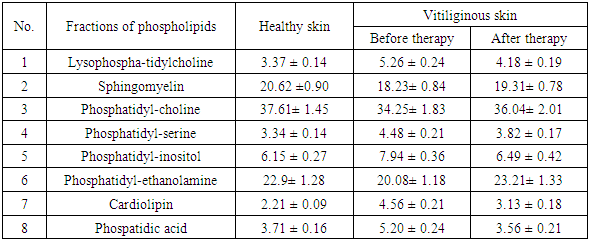
We compared phospholipid composition in the skin of patients with vitiligo and healthy controls. Significant reduction in the content of total phospholipids in the depigmentated areas of the patients as compared with the similar parameters in healthy subjects was established.
Total phospholipids in healthy and the affected skin are 1324.4 ± 57.9 μg and 1157.5 ± 52.8 μg of lipid phosphorus per 1 g of dry tissue, respectively (Table 1). In contrast to the normal skin, increase in the content of lysophosphatidylcholine and phospatidic acid was observed in the depigmentated areas of the patients’ skin. In the skin of patients with vitiligo neutral fractions of phospholipids, such as phosphatidylcholine, phosphatidylethanolamine and sphingomyelin were found significantly reduced. Thus, considerable changes can be seen in the phospholipid composition of the vitiliginous skin.
Table 1. Fraction composition of human skin phospholipids in the normal conditions and in vitiligo (%)
     
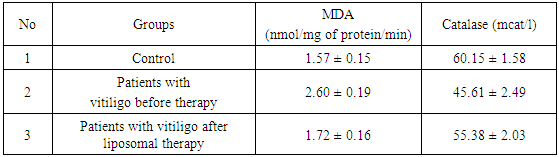
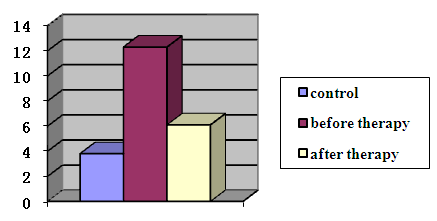
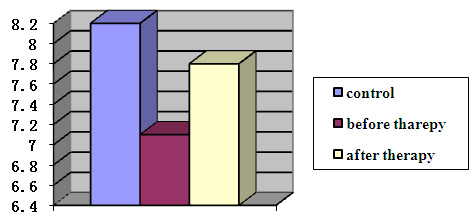
As mentioned above, as far as pathogenesis of the disorder is considered, impact of oxidative stress in the vitiligous patient’s organism is hypothesized more frequently. However, due to few studies and absence of experimental evidence, the hypothesis remained accepted partially. Hence, we studied key parameters of oxidative stress to name intensive lipid peroxidation (LPO) as per content of malondialdehyde (MDA) and activity of catalase, an anti-oxidative system (AOS) enzyme, in the skin and blood serum of the vitiligous patients (Table 2, Fig. 1 and 2).
Table 2. Parameters of oxidative stress in the blood serum of healthy subjects and patients with vitiligo
     
Figure 1. Content of MDA in the skin of healthy subjects and patients with vitiligo (nmol/mg of protein/min)
Figure 2. Catalase activity in the skin of healthy subjects and patients with vitiligo (mcM H2O2/mg of protein/min)
The study demonstrated sharp increase in MDA level and considerable inhibition of catalase activity both in the affected skin area and blood serum in vitiligous patients. As compared with the normal, there is more than 3-fold increase in the MDA content in the depigmentated skin area of vitiligous patients, the catalase activity was found reducing by 15%. Similarly, in these patients serum MDA increases by 65%, the catalase activity reduced by 1.32 times. Thus, the findings confirm considerable imbalance in the LPO-AOS as well as progression of oxidative stress in patients with vitiligo to be of specific value in pathogenesis of the dermatosis.
On the basis of the findings we have developed a liposomal formulation intended for pathogenetic therapy of vitiligo. Multifactor character of vitiligo taken into account, to treat the disease we have developed a multi-component liposomal formulation including agents playing a significant role in onset and progression mechanisms of the disorder. There were tyrosine (a substrate for melanin synthesis), bioantioxidants (α-tocopherol, selenium) and a copper preparation, cupirum (a tyrosinase activity inductor). As it was shown above, the liposomes were constructed from phospholipids and cholesterol isolated from the bovine brain. They were prepared by methods described elsewhere with ultrasound processing.
The liposomal formulation was used topically in 42 patients with vitiligo in combination with ultraviolet light therapy. The liposomes were applied on the depigmentated zones of the patients’ skin by thin layer an hour before the photochemotherapy three times a week. One course of therapy included 15 applications with 21- or 25-day intervals between the courses. 153 patients with vitiligo receiving conventional therapy in combination with ultraviolet light therapy were included into the control group. Total cure rate of patients with vitiligo was assessed after three courses of therapy. Our findings showed that of 153 vitiligous patients receiving conventional therapy in combination with ultraviolet light therapy repigmentation of various degrees was observed in 111 (73.1%). Total clinical cure was registered in 16 patients (10.6%), significant improvement and improvement was observed in 50 (32.7%) and 45 (29.8%). Any post-therapy effect was absent in 36 patients (23.5%), in 6 people (3.8%) the skin process was found worsening.
Upon topical application of our liposomal formulation in combination with the ultraviolet light therapy in 42 patients with vitiligo clinical cure was found in 14 (33.3%), significant improvement and improvement was observed in 17 (40.5%) and 10 (23.8%) patients, respectively. No effect was registered in one patient (2.4%). As a whole, repigmentation was 97.6%. No side effects were observed.
The data above demonstrated high efficacy of our liposomal formulation topically applied in therapy of vitiligo.
Improvement in clinical picture and increase in repigmentation of the affected skin areas in patients with vitiligo under the effect of the liposomal formulation was found to correlate with the alterations we have found in the biochemical parameters of the skin. Under the effect of liposome therapy fraction composition of phospholipids in the vitiligous patients’ depigmentated skin areas can be seen to change toward the normal values (Table 1). In particular, in the patients undergoing the liposome therapy significant reduction in lysophosphatidylcholine and phosphatidic acid can be seen. Treatment of vitiligo with the liposomal formulation produced similarly positive effect onparameters of oxidative stress in the patients’ blood serum. Thus, following the therapy, MDA was found to reduce by 34%, and catalase activity was observed to increase by 21% (Table 2).
Similarly to the above, topical application of liposomes as medicine for pathogenetic therapy of vitiligo resulted in norm-oriented alterations in the oxidative stress parameters (Fig.1 and 2). Following the liposome therapy, the MDA content in the vitiligous patients’ affected skin area reduced nearly by 2 times, the catalase activity increased by 14%.
Thus, clinical trial of the liposome formulation produced in our laboratory for therapy of patients with vitiligo provides convincing evidence for the advantage of the formulation’s therapeutic efficacy over other methods for treatment of the dermatosis. The treatment demonstrated the tendency towards the oxidative stress reduction and phospholipid composition normalization in the vitiligous patients’ skin. Shift of the oxidative stress parameters in patients with vitiligo toward normal values under the effect of topical application of liposomes can be explained by the effect of anti-oxidants, since α-tocopherol, a powerful anti-oxidant, and selenium, a bioantioxidant, were included into the liposomal formulation. Our liposomal formulation is stabilized, and contains anti-oxidants to prevent MDA accumulation.
Phospholipids comprising liposome membrane possess anti-oxidative capacity, as well. In addition, liposomes possessing transdermal permeability can deliver into the deep layers of the skin formulations contributing to maturation of immature functionally inactive melanocytes, surrounding hair follicles, and to their migration into the epidermis [11, 18-20]. A precursor of melanin, tyrosine, included into the liposomes can stimulate biosynthesis of this pigment in the skin. Thus, the liposomes with the ingredients encapsulated into them are thought to contribute to increase in repigmentation of the affected skin areas in vitiligo.
Recently, evidence for significance and advantages of topical therapy for patients with vitiligo has been obtained [11, 12, 21, 22]. This is, probably, associated not only with high efficacy resulting from direct application of formulations on vitiligous foci, but also with low absorption of topically applied drugs, that is, with lower probability of systemic side effects. Accordingly, delivery of drugs through the skin is advantageous in comparison with administration per os [23]. As transdermal transfer of drugs in the liposomal form is an indisputably proved fact, topical application of liposomal formulations for therapy of the skin diseases seems to be more reasonable and promising [19, 24-26]. Recently, liposomal technologies have been used more widely in dermatology and cosmetology. Encouraging results with liposome encapsulated drugs were obtained in treatment of some skin diseases, such as acne vulgaris [27], atopic dermatitis [28, 11] psoriasis [29, 30], alopecia [31] and vitiligo [32-34]), and others.
As mentioned above, vitiligo has a polyetiological pathogenesis, and attention in development of medical interventions should be focused on multifactorial and integrated effect on the vitiligo lesion [35-37]). This calls for multicomponent formulation with a number of biologically active substances incorporated into one single drug. Liposomal technology is an ideal solution for the problem.
Taking into account multifactorial pathogenesis of vitiligo and based on the findings from our own studies, such as significant reduction in content of total phospholipids and their fractions, as well as sharp increase in malondialdehyde and pronounced reduction in activity of catalase in the depigmentated skin areas in patients with vitiligo as compared with similar parameters in healthy subjects, we have developed a liposomal formulation incorporating antioxidants, microelements and L-tyrosine in addition to phospholipids and cholesterol. Owing to multicomponent composition, our liposomal formulation, designated as lipovitilin, produces simultaneous effect on several pathologically changed links taking place in vitiligo. Lipovotilin (a) provides reconstruction of lipid composition of membranes in melanocytes, (b) prevents excessive generation of toxic peroxidase radicals, and (c) participates in the processes of melanin synthesis,proliferation and migration of melanocytes. Thus, topical application of our liposomal formulation in combination with phototherapy yielded more than 97% repigmentation of the skin without side effects (Fig.3).
Figure 3. Patient A. with vitiligo (a) before and (b) after liposomal therapy
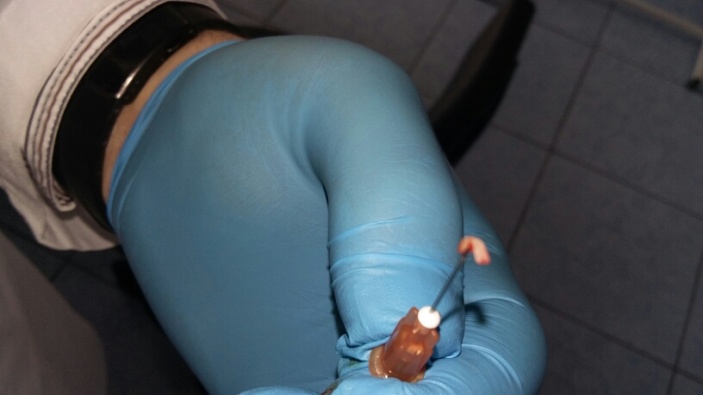
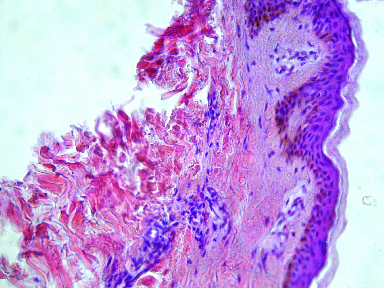
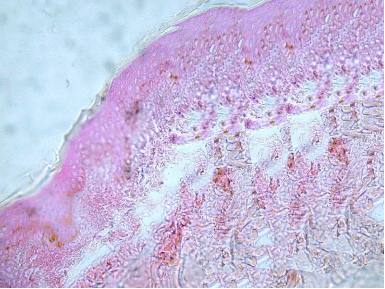
Images of biopsies (skin bioptate as an object of biochemical investigation)
Morphology of skin bioptates in vitiligo
Non-affected area
Affected area
There are only few papers on topical application of liposomes to treat vitiligo. De Leeuw J. et al. used khellin-containing phosphatidylcholine liposomes in combination with ultraviolet light therapy to treat 65 patients with vitiligo [32]. As a result, in 12 months repigmentation of various intensities could be seen in 72% of the patients. Later on, the authors demonstrated high efficacy of therapy of vitiligo with khellin liposomes in combination with ultraviolet and blister roof transplantation in treatment of the affected skin areas in patients with vitiligo [34]. As the result, more than 75% repigmentation of the vitiliginous areas in 47% of patients could be seen.
Thus, our findings and the data of other authors, such as de Leeuw et al. (2009 [11], 2011 [34]; Vaniċ, 2015 [12]) allowed suggesting that topical application of liposomes is an efficient method of treatment for skin diseases.

4. Conclusions

Fraction composition of the human’s skin phospholipids in healthy subjects and patients with vitiligo was studied. Phospholipid composition of the depigmentated areas in patients with vitiligo was found to significantly differ from the one in healthy subjects. In contrast to healthy subjects, high level of oxidative stress both in the skin and blood of patients with vitiligo was established. Abnormalities in phospholipid composition of the skin and increased intensity of oxidative stress are thought to be essential pathogenetic factors contributing to onset and progression of vitiligo. A multi-component liposomal formulation intended for topical application in pathogenetic therapy of vitiligo has been developed. Topical application of the liposomal formulation demonstrated high efficacy as compared with other methods of treatment of vitiligo; the formulation was recommended for wide use in therapy of the dermatosis.

ACKNOWLEDGMENTS

The authors are very grateful to Prof. T. Saatov for valuable discussion and suggestions to improve the quality of paper.

References

[1]  Ortonne, J. P. and Bose, S. K., 1993, Vitiligo: where do we stand? Pigment Cell Res., 8, 61-72.
[2]  Bordere, A. C., Lambert J., van Geel N., 2009, Current and emerging therapy for the management of vitiligo. Clinical Cosmetic and Investigational Dermatology, 2, 15-25.
[3]  Salinas-Santander, M., Diaz-Garcia D., Rojas-Martinez A. et al., 2012, Tumor necrosis factor-α -308G/A polymorphism is associated with active vitiligo vulgaris in a northeastern Mexican population. Experimental and Therapeutic Medicine, 3, 893-897.
[4]  Della’Anna, M.K., and Picardo, M., 2006, A review and a new hypothesis for non-immunological pathogenetic mechanisms in vitiligo, Pigment Cell Res., 19, 406-411.
[5]  Zhavoronkova, E.V., Gornostaeva, M.A., Korsunskaya, I.M., 2009, Experience with the use of eltamine for the treatment of vitiligo. Clin.Dermatol. Venereol, 4, 9-12.
[6]  Korsunskaya, I.M., Suvorova, K.N., Dvoryankova, E.V., 2003, Modern aspects of vitiligo pathogenesis. Doklady Biological Sciences (Moscow), 388, 38-40.
[7]  Schallreuter, K.U., Moore, J., Wood, J.M. et al. 1999, In vivo and in vitro evidence for hydrogen peroxide (H2O2) accumulation in the epidermis of patients with vitiligo and its successful removal by a UVB-activated pseudocatalase, J. Invest. Dermatol. Symp. Proc., 4, 91-96.
[8]  Rokos, H., Beazley, W. D, Schallreuter, K. U., 2002, Oxidative stress in vitiligo: photo-oxidation of pterins produces H2O2 and petrin-6-carboxylic acid. Biochem. Biophys. Res. Commun., 292, 805-811.
[9]  Schallreuter, K. U., Elwarya, S. M. A., Gibbens, N. C. J., Rokos, H., Wood, J. M., 2004, Activation/deactivation of acetylcholinesterase by H2O2: more evidence for oxidative stress in vitiligo, Biochem. Biophys. Res. Commun., 315, 502-508.
[10]  Laddha, N.C., Dwiverdi, M., Mansuri, M.S. et al. Vitiligo: interplay between oxidative stress and immune system, 2013 John Wiley and Sons A/S, Experimental Dermatology, 1-6 DOI:10.1111/exd, 12103 www.blackwellpublishing.com/EXD.
[11]  de Leeuw, J., de Vijlder, H. C., Bjerring, P., Neumann, H.A., 2009, Liposomes in dermatology today, J. European Academy of Dermatology and Venereology, 23, 505-516.
[12]  Vaniċ, Z., 2015, Phospholipid vesicles for enhanced drug delivery in dermatology, J. Drug. Disco. Develop and Deliv., 2(1), 1-9.
[13]  Folch, J., 1957, Simple method for the isolation and purification on total lipids from animal tissues, J. Biol. Chem., 226, 494-509.
[14]  M. Kates, 1972, Techniques of lipidology. Isolation, analysis and identification of lipids, North-Holland Publishing Company. Translated into Russian, Mir Publishing Company (Moscow), 1975.
[15]  Vaskovsky, V. E., Kostetsky, E. Y., Vasensky, T., 1975, Universal reagent for phospholipid analysis. J. Chromatogr., 114, 129-141.
[16]  I. D. Stalnaya and T. G. Garishvili, Method for determination of malondialdehyde by means of thiobarbituric acid. Modern methods in biochemistry (Ed. By Orekhovitch V.N.), Moscow, USSR: Medistina, 1977. (in Russian)
[17]  Korolyuk, M. A., Ivanova, L.I., Mayorova, I. G., 1988, Method for determination of catalase activity, Laboratory business, 1, 16-18. (In Russian).
[18]  Hoffman, R.M., 1998, Topical targeting of dyes, melanins, genes and proteins selectively to hair follicles, J. Drug Target, 5, 67-74.
[19]  G. Cevc, A. Schatzlein, and G., Blume, “Penetration of lipid vesicles into and across the skin”, in Proc. Fourth Liposomes Research Days Conference. 1995, Freiburg, Germany, p. L22.
[20]  T. Saatov, M. Ergashova, and E. Isaev, “Study on transdermal transfer of drugs by autologous liposomes”, in Proc. Liposome Advances. Progress in drug and vaccine delivery, London, UK, 1996, p.127.
[21]  Hossani-Madani, A.R., Halder, R.M., 2010, Topical treatment and combination approaches for vitiligo: new insights, new developments. J. Ital. Dermatol. Venereol., 145(1), 57-78.
[22]  Garg, B.J., Saraswat, A., Bhatia, A., Katare, O.P., 2010 Topical treatment in vitiligo and the potential uses of new drug delivery systems. Indian J. Dermatol. Venereol. Leprol., 76 (3): 231-238.
[23]  Sharafutdinova, L.A. Lomonosov, K.M., 2014, Modern aspects of topical therapy in vitiligo, Russian Journal of skin and venereal diseases, 5, 40-45 (in Russian).
[24]  Cevc, G., Gebauer, D., Steiber, J., Schatzlein, A., Blume, G., 2002, Ultradeformable lipid vesicles can penetrate the skin and other semi-permeable barriers unfragmented. Evidence from double label CLSM experiments and direct size measurements, Biochim. Biophys. Acta, 1564, 21-30.
[25]  Saatov, B.T., Umerov, O.I., 2009, Study of skin and blood serum phospholipids in patients with vitiligo, Medical Chemistry (Ukraine), 11(2), 25-29.
[26]  Bouwstra, J.A., Gooris, G.S., 2010, The lipid organization in human stratum corneum and model systems. The Open Dermatology Journal, 4, 10-13.
[27]  Honzak, L., Senture, M., 2000, Development of liposome encapsulated clindamycin for treatment of acne vulgaris. Eur. J. Physiol.,440 (Suppl) 44-45.
[28]  Wohlrab, W., Lasch, J., 1989, The effect of liposomal incorporation of topically applied hydrocortisone on its serum concentration and urinary excretion. Dermatol.. Monatschr., 175, 348-352.
[29]  Agarwal, R., Katare, O.P., Byas, S.P., 2001, Preparation and in vitro evaluation of liposomal/niosomal delivery systems for antipsoriatic drug dithranal. Int. J. Pharmac, 228,43-52.
[30]  Saraswat, A., Agarwal, R., Katare, O.P., Kaur, I., Kumar, B., 2007, A randomized, double-blind, vehicle-controlled study of a novel liposomal dithranal formulation in psoriasis, J. Dermatol Treat, 18, 40-45.
[31]  Meidan, V.M., Touitou, E., 2001, Treatment for androgenetic alopecia and alopecia areata: current options and future prospects. Drugs, 61:53-69.
[32]  de Leeuw, J., van der Beek, N., Maierhoffer, G., Neugebauer, W. D., 2003, A case study to evaluate the treatment of vitiligo with khellin encapsulated in L-phenylalanin stabilized phosphatidylcholine liposome in combination with ultraviolet light therapy. Eur. J. Dermatol., 13, 474-4.
[33]  de Leeuw, J., Assen, Y. J., van der Beek, N., Bjerring, P., Neumann, H. A. M., 2011, Treatment of vitiligo with khellin liposomes, ultraviolet light and blister roof transplantation, J. Eur.Acad.Dermatol. Venereol., 25, 74-81.
[34]  Saatov T.S., Umerov O.I., Saatov B.T., Arifov S.S., 2012, Creation of liposomal medicine for treatment of vitiligo. Vestnik novykh medistinskikh tekhnologyi, 1 (in Russian).
[35]  M. Picardo andA.Taieb, Pathophysiology. Overview. In Picardo M., Taieb A. eds. Vitiligo, Heidelberg: Springer Verlag; 2010:149-152.
[36]  Simonova, N.I., Lomonosov, K.M., Babeshko, O.A., 2012 Genetic aspects of vitiligo. Russian Journal of skin and venereal diseases, 5, 56-59 (in Russian).
[37]  Sprits, R.A. The genetics of generalized vitiligo and associated autoimmune diseases. Pigment Cell Res., 2007, 20: 271-278.